

 Product
 Brand
Brand Articles
 Tools
Tools
ATmega128A 128KB AVR Microcontroller: Datasheet, Pinout, and Design Analysis

128KB 64K x 16 FLASH AVR 8-Bit Microcontroller AVR® ATmega Series ATMEGA128A 64 Pin 16MHz 64-TQFP


128KB 64K x 16 FLASH AVR 8-Bit Microcontroller AVR® ATmega Series ATMEGA128A 64 Pin 16MHz 64-TQFP
Discover the Microchip ATmega128A, a robust 8-bit MCU with 128KB Flash. Perfect for industrial and legacy designs. View specs, pinouts, and alternatives here.
- Executive Summary: What is the ATmega128A?
- 1. Technical Specifications & Performance Analysis
- 2. Pinout, Package, and Configuration
- 3. Design & Integration Guide (For Engineers & Makers)
- 4. Typical Applications & Use Cases
- 5. Alternatives and Cross-Reference Guide
- 6. Frequently Asked Questions (FAQ)
- 7. Resources
- Specifications
- Parts with Similar Specs
- Datasheet PDF
Executive Summary: What is the ATmega128A?
The ATmega128A is a low-power CMOS 8-bit microcontroller based on the AVR enhanced RISC architecture designed for applications requiring high program memory and robust I/O capabilities. By executing powerful instructions in a single clock cycle, it achieves throughputs approaching 1 MIPS per MHz, allowing designers to optimize power consumption versus processing speed.
Market Position: A mature, high-capacity 8-bit MCU; often considered a "workhorse" for legacy industrial systems and complex 8-bit projects.
Top Features: 128KB In-System Self-programmable Flash, 53 programmable I/O lines, and a dedicated JTAG interface for on-chip debugging.
Primary Audience: Ideal for industrial control engineers, procurement managers maintaining legacy BOMs, and advanced hobbyists building complex robotics.
Supply Status: Active (Widely available through major distributors like Microchip).
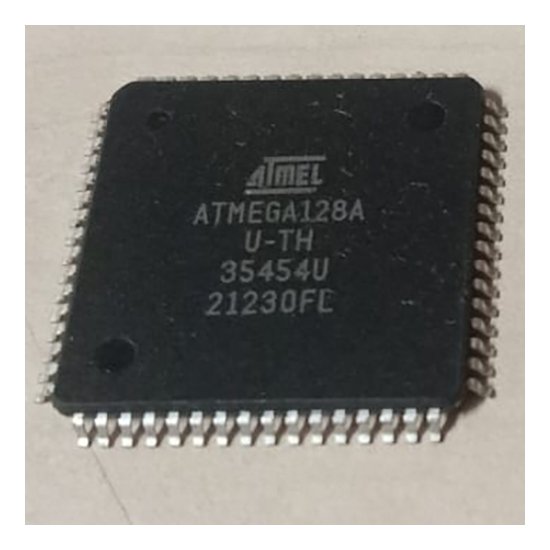
1. Technical Specifications & Performance Analysis
The ATmega128A is defined by its balance of memory density and peripheral richness within the 8-bit AVR ecosystem.
1.1 Core Architecture (CPU/Logic/Power)
The ATmega128A utilizes the AVR RISC engine, which features 32 general-purpose working registers. This architecture allows the ALU (Arithmetic Logic Unit) to access two independent registers in a single instruction executed in one clock cycle. This results in significantly better code efficiency than conventional CISC microcontrollers.
1.2 Key Electrical Characteristics
For hardware engineers, the power profile of the ATmega128A is highly flexible:
- Operating Voltage: 2.7V to 5.5V, making it compatible with both 3.3V and 5V logic systems.
- Clock Speed: Up to 16 MHz, providing reliable timing for most industrial control loops.
- Memory: It boasts a massive 128KB Flash, 4KB EEPROM, and 4KB Internal SRAM, which is substantial for an 8-bit architecture.
1.3 Interfaces and Connectivity
The device is a connectivity hub for sensors and actuators:
- Dual USARTs: Allows simultaneous communication with a PC and a secondary peripheral (like a GPS module).
- Master/Slave SPI & I2C (TWI): Industry-standard buses for interfacing with digital sensors and displays.
- 8-Channel 10-bit ADC: Provides precise analog-to-digital conversion for sensor data acquisition.
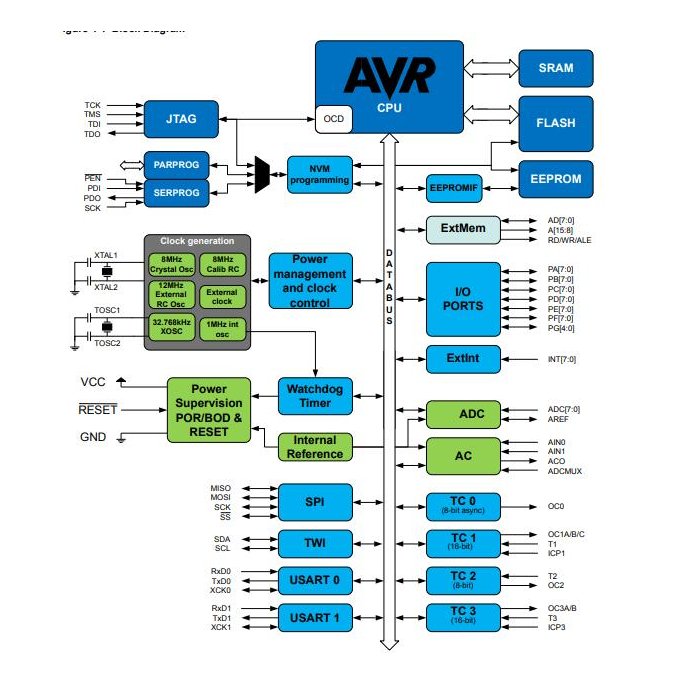
2. Pinout, Package, and Configuration
Understanding the physical layout is critical for PCB routing and signal integrity.
2.1 Pin Configuration Guide
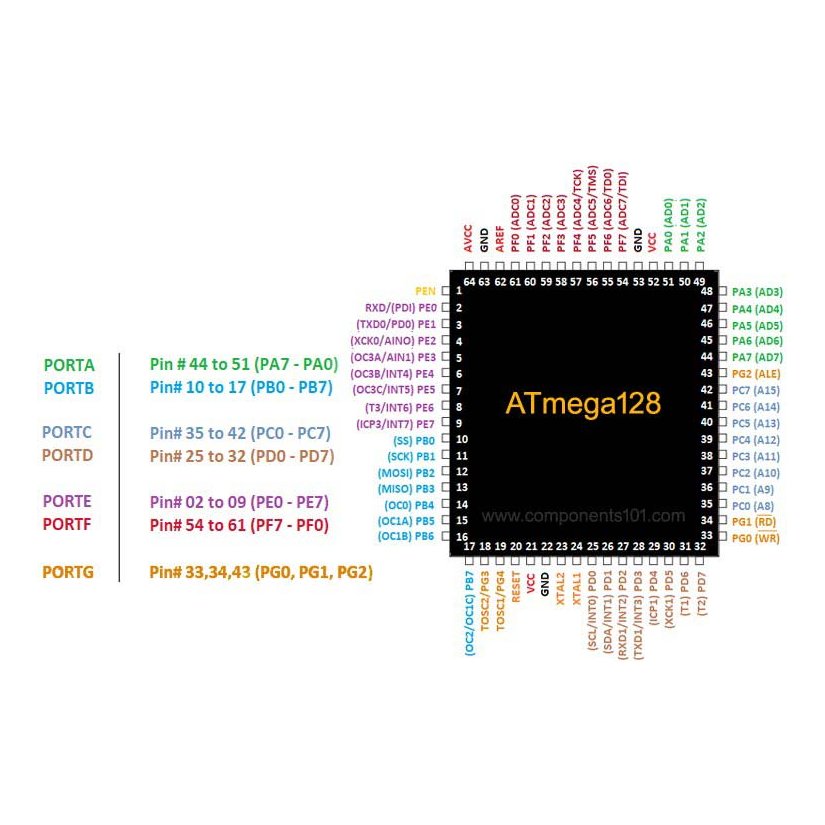
The ATmega128A typically comes in a 64-lead package. The pins are grouped into several ports:
- VCC/GND: Multiple power and ground pins to ensure stable operation.
- Port A-F: General purpose I/O pins, many of which have multiplexed functions (e.g., Port F serves as the ADC inputs).
- RESET: Active low reset pin.
- XTAL1/XTAL2: Connections for the external crystal oscillator.
2.2 Naming Convention & Ordering Codes
When ordering, pay close attention to the suffixes:
- ATmega128A-AU: TQFP Package (Tray).
- ATmega128A-AUR: TQFP Package (Tape & Reel).
- ATmega128A-MU: VQFN Package (Tray).
2.3 Available Packages
| Package Type | Dimensions | Common Use Case |
|---|---|---|
| TQFP-64 | 14mm x 14mm | Standard PCB assembly, easier to probe. |
| VQFN-64 | 9mm x 9mm | Space-constrained IoT or portable devices. |
3. Design & Integration Guide (For Engineers & Makers)
Pro Tip: When migrating from the older ATmega128 to the ATmega128A, check the "A" series migration notes as the electrical characteristics and power consumption profiles have been improved.
3.1 Hardware Implementation
Bypass Capacitors: Place 0.1µF ceramic capacitors as close as possible to every VCC/GND pair to filter high-frequency noise.
PCB Layout: Keep the crystal oscillator traces as short as possible and surround them with a guard ring to prevent EMI issues.
Thermal Management: Operating at 16MHz at 5V generates minimal heat; however, ensure the bottom pad of the VQFN package is soldered to a copper plane for stability.
3.2 Common Design Challenges
Issue: Lack of Native USB. The ATmega128A cannot talk to a PC via USB directly.
Fix: Integrate a CH340 or FT232RL USB-to-UART bridge on your PCB.
Issue: Fuse Bit Bricking. Incorrectly setting the clock source fuses can make the chip unresponsive.
Fix: Always use a verified fuse calculator and keep an external 1MHz clock source handy for emergency recovery.
4. Typical Applications & Use Cases
Watch Tutorial: ATMEGA128A
4.1 Real-World Example: Industrial Data Logger
In an industrial setting, the ATmega128A is frequently used as a Sensor Hub. - How it works: The 8-channel ADC reads temperature and pressure sensors, the 128KB Flash stores complex calibration tables, and the Dual USARTs send data to both a local HMI (Human Machine Interface) and a long-range radio module.
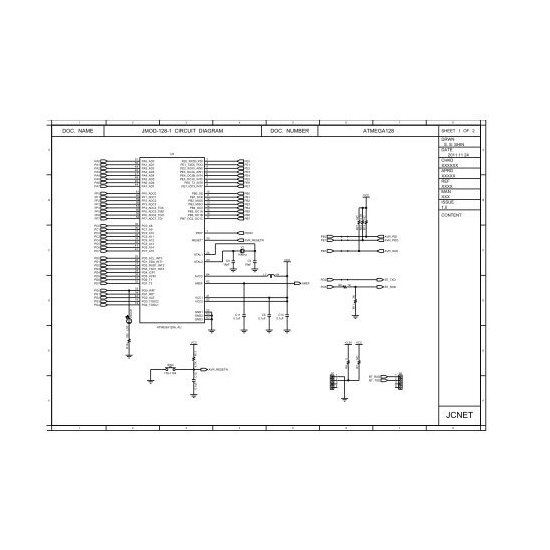
5. Alternatives and Cross-Reference Guide
If the ATmega128A doesn't fit your cost or performance profile, consider these alternatives:
Direct Replacements: The ATmega1284P offers more RAM (16KB) and is often easier to find for new 8-bit designs.
Performance Upgrade: Migrate to the STM32F103 (Blue Pill). It is a 32-bit ARM Cortex-M3 that is often cheaper and significantly faster, though it has a steeper learning curve.
Cost-Effective Option: For simpler tasks, the ATmega328P (used in Arduino Uno) is more affordable if you don't need the high pin count or 128KB of Flash.
6. Frequently Asked Questions (FAQ)
Q: What is the difference between ATmega128 and ATmega128A?
A: The "A" version is a newer process technology that merges the features of the original ATmega128 and ATmega128L, offering a wider voltage range (2.7V-5.5V) and lower power consumption.
Q: Can I program the ATmega128A with an Arduino IDE?
A: Yes, by using "MegaCore" or similar hardware packages, you can use the Arduino environment via an ISP programmer like the USBasp.
Q: Is ATmega128A suitable for battery-operated devices?
A: While it has power-saving modes, modern 32-bit MCUs (like the SAM L series) or low-power MSP430s are generally more efficient for long-term battery use.
Q: How do I recover a "bricked" ATmega128A?
A: If the fuse bits were set to an external crystal that isn't present, apply a 1MHz square wave to the XTAL1 pin to regain access via the ISP programmer.
7. Resources
Official Datasheet: Available via Microchip Technology’s website.
Development Tools: Microchip Studio (formerly Atmel Studio), AVR-GCC, and various JTAG debuggers.
Community: AVRFreaks is the primary forum for technical support and code snippets.
Specifications
Parts with Similar Specs
- ImagePart NumberManufacturerPackage / CaseNumber of PinsData Bus WidthNumber of I/OInterfaceMemory SizeSupply VoltagePeripheralsView Compare
![ATMEGA128A-AUR]()
ATMEGA128A-AUR
64-TQFP
64
8 b
53
EBI/EMI, I2C, SPI, UART, USART
128 kB
5 V
Brown-out Detect/Reset, POR, PWM, WDT
![AT90USB1287-AU]()
64-TQFP
64
8 b
53
CAN, EBI/EMI, Ethernet, I2C, SPI, UART, USART, USB
16 kB
5 V
Brown-out Detect/Reset, POR, PWM, WDT
![AT90USB1286-AUR]()
64-TQFP
64
8 b
48
2-Wire, EBI/EMI, I2C, SPI, UART, USART, USB
128 kB
5 V
Brown-out Detect/Reset, POR, PWM, WDT
![AT90CAN128-16AUR]()
64-TQFP
64
8 b
48
EBI/EMI, I2C, SPI, UART, USART, USB
128 kB
-
Brown-out Detect/Reset, POR, PWM, WDT


Datasheet PDF
- Datasheets :
- PCN Assembly/Origin :
- PCN Packaging :
- PCN Design/Specification :
- ConflictMineralStatement :
 DLW21HN900SQ2L CMC 330MA 2LN 90 OHM SMD: Datasheet, Features, and Equivalent Circuit
02 March 20221311
 CSR8675 Premium Single-Chip : Datasheet, Features and Specifications
28 July 202110399
 BR2032 Battery: Panasonic BR2032, BR2032 vs. CR2032, Datasheet
23 April 202212329
 MAX232ACSE Driver/Receiver: Features, Pinout, and Datasheet
17 April 2025929
 BR2325 23.0mm Lithium Poly-Carbon 3 V Battery: Datasheet, BR2325 VS CR2032, and Equivalents
30 March 20226735
 LM301A Operational Amplifier: Pinout, Features and Datasheet
08 November 20212151
 A Comprehensive Guide to LTC691CSW#TRPBF PMIC Supervisors
06 March 2024249
 SI5345 Jitter Attenuator:Pinout, Application and Detailed Block Diagrams
09 July 20211660
 Basic Introduction to Memristor
12 January 202112880
 What are Laser Diodes?
20 October 202517959
 RF Front End in the 5G Era
25 October 20217875
 Types and Application of Position Sensors
31 October 20257802
 Enhancing Wi-Fi Security and Its Impacts on IoT Connectivity
25 October 20242790
 Three-Phase WBG Resonant Converter Integrated with PCB Winding Transformer
20 October 20232729
 Essential Tips for Maintaining Safety Relays in Industrial Settings
10 July 20252769
 5 Easy Ways to Choose Sample-and-Hold Amplifiers
06 June 20253737
Microchip Technology
In Stock: 100
United States
China
Canada
Japan
Russia
Germany
United Kingdom
Singapore
Italy
Hong Kong(China)
Taiwan(China)
France
Korea
Mexico
Netherlands
Malaysia
Austria
Spain
Switzerland
Poland
Thailand
Vietnam
India
United Arab Emirates
Afghanistan
Åland Islands
Albania
Algeria
American Samoa
Andorra
Angola
Anguilla
Antigua & Barbuda
Argentina
Armenia
Aruba
Australia
Azerbaijan
Bahamas
Bahrain
Bangladesh
Barbados
Belarus
Belgium
Belize
Benin
Bermuda
Bhutan
Bolivia
Bonaire, Sint Eustatius and Saba
Bosnia & Herzegovina
Botswana
Brazil
British Indian Ocean Territory
British Virgin Islands
Brunei
Bulgaria
Burkina Faso
Burundi
Cabo Verde
Cambodia
Cameroon
Cayman Islands
Central African Republic
Chad
Chile
Christmas Island
Cocos (Keeling) Islands
Colombia
Comoros
Congo
Congo (DRC)
Cook Islands
Costa Rica
Côte d’Ivoire
Croatia
Cuba
Curaçao
Cyprus
Czechia
Denmark
Djibouti
Dominica
Dominican Republic
Ecuador
Egypt
El Salvador
Equatorial Guinea
Eritrea
Estonia
Eswatini
Ethiopia
Falkland Islands
Faroe Islands
Fiji
Finland
French Guiana
French Polynesia
Gabon
Gambia
Georgia
Ghana
Gibraltar
Greece
Greenland
Grenada
Guadeloupe
Guam
Guatemala
Guernsey
Guinea
Guinea-Bissau
Guyana
Haiti
Honduras
Hungary
Iceland
Indonesia
Iran
Iraq
Ireland
Isle of Man
Israel
Jamaica
Jersey
Jordan
Kazakhstan
Kenya
Kiribati
Kosovo
Kuwait
Kyrgyzstan
Laos
Latvia
Lebanon
Lesotho
Liberia
Libya
Liechtenstein
Lithuania
Luxembourg
Macao(China)
Madagascar
Malawi
Maldives
Mali
Malta
Marshall Islands
Martinique
Mauritania
Mauritius
Mayotte
Micronesia
Moldova
Monaco
Mongolia
Montenegro
Montserrat
Morocco
Mozambique
Myanmar
Namibia
Nauru
Nepal
New Caledonia
New Zealand
Nicaragua
Niger
Nigeria
Niue
Norfolk Island
North Korea
North Macedonia
Northern Mariana Islands
Norway
Oman
Pakistan
Palau
Palestinian Authority
Panama
Papua New Guinea
Paraguay
Peru
Philippines
Pitcairn Islands
Portugal
Puerto Rico
Qatar
Réunion
Romania
Rwanda
Samoa
San Marino
São Tomé & Príncipe
Saudi Arabia
Senegal
Serbia
Seychelles
Sierra Leone
Sint Maarten
Slovakia
Slovenia
Solomon Islands
Somalia
South Africa
South Sudan
Sri Lanka
St Helena, Ascension, Tristan da Cunha
St. Barthélemy
St. Kitts & Nevis
St. Lucia
St. Martin
St. Pierre & Miquelon
St. Vincent & Grenadines
Sudan
Suriname
Svalbard & Jan Mayen
Sweden
Syria
Tajikistan
Tanzania
Timor-Leste
Togo
Tokelau
Tonga
Trinidad & Tobago
Tunisia
Turkey
Turkmenistan
Turks & Caicos Islands
Tuvalu
U.S. Outlying Islands
U.S. Virgin Islands
Uganda
Ukraine
Uruguay
Uzbekistan
Vanuatu
Vatican City
Venezuela
Wallis & Futuna
Yemen
Zambia
Zimbabwe
![ATMEGA8515L-8AU]() ATMEGA8515L-8AU
ATMEGA8515L-8AUMicrochip Technology
![DSPIC30F6014A-30I/PF]() DSPIC30F6014A-30I/PF
DSPIC30F6014A-30I/PFMicrochip Technology
![ATMEGA32A-AU]() ATMEGA32A-AU
ATMEGA32A-AUMicrochip Technology
![ATXMEGA128A1U-AU]() ATXMEGA128A1U-AU
ATXMEGA128A1U-AUMicrochip Technology
![PIC18F46K20-I/PT]() PIC18F46K20-I/PT
PIC18F46K20-I/PTMicrochip Technology
![PIC18F6722-I/PT]() PIC18F6722-I/PT
PIC18F6722-I/PTMicrochip Technology
![PIC16F883-I/SS]() PIC16F883-I/SS
PIC16F883-I/SSMicrochip Technology
![PIC16F877-20I/PT]() PIC16F877-20I/PT
PIC16F877-20I/PTMicrochip Technology
![ATMEGA8535L-8AU]() ATMEGA8535L-8AU
ATMEGA8535L-8AUMicrochip Technology
![PIC18F4685-I/PT]() PIC18F4685-I/PT
PIC18F4685-I/PTMicrochip Technology


