Product
 Brand
Brand Articles
 Tools
Tools
LMR®-400 VS RG213[Video]: Pros and Cons of LMR400 VS RG213
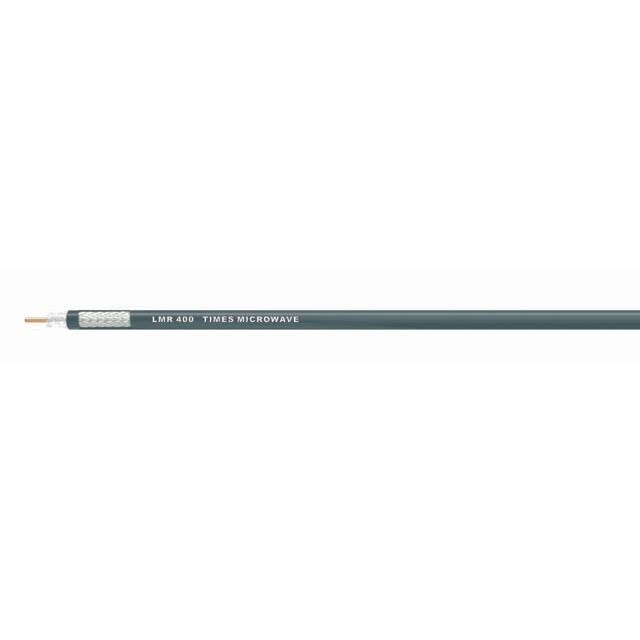


COAXIAL CABLE, ANTENNA, RG8, 50 OHM, BCC
Both RG213 and LMR400 are coaxial cables with a wide range of applications. Although there are many similarities between LMR400 and RG213, there are a few differences that distinguish them. These distinctions can make a major impact when it comes to determining which cable would work best for your electrical needs. This article is going to talk about the detailed information about LMR400 VS RG213, and interpret the differences between them.

This vs That: LMR400 vs RG213
- Overview of LMR400
- Overview of RG213
- LMR400 VS RG213 Features
- LMR400 VS RG213 Coaxial Cable Structure Figure
- LMR400 VS RG213 Frequency
- LMR400 VS RG213 Electrical Characteristics
- LMR400 VS RG213 Specifications
- Conclusion of LMR400 VS RG213 Specifications
- LMR400 VS RG213 Applications
- Conclusion of LMR400 VS RG213
- LMR400 Manufacturer
- Related Article
- Datasheet PDF
- Popularity by Region
Overview of LMR400
The LMR®-400 from Times Microwave is built for versatility, low loss, RF shielding, and wearability. The cable design of the LMR-400 allows for the tightest bend radius of any cable of comparable size and performance. The cable has the least amount of loss of any similar cable. This cable has 90 dB of RF shielding and is suited for situations with a lot of EMI. The LMR-400 may be used both indoors and out. Use Times Microwave's LMR-400 cable for any application that requires an easily routed, low loss RF wire (e.g. WLL, GPS, LMR, WLAN, WISP, WiMax, SCADA, Mobile Antennas). The LMR-400 is a direct replacement for the RG-8 cable.
Overview of RG213
A flexible RG213 coax cable with the part number RG213/U is from Pasternack. The RG213 flexible coax cable from Pasternack is 50 Ohm and features a PE dielectric. RG213 coax has a PVC jacket with a thickness of 0.405. The shield count for RG213 coax is one, and the maximum frequency for this Pasternack cable is one GHz. At 1 GHz, the RG213 coax cable has a 9 dB attenuation and a maximum power of 190 watts.
Over 40,000 RF, microwave, and millimeter-wave components are made up of Pasternack RG213 coax cables. Same-day shipping of RG213 cables and other RF parts is available worldwide. RF cable assemblies made from RG213 or another coax can be constructed and dispatched the same day.
LMR400 VS RG213 Features
LMR400 Features
Priced Per Foot
Cable Type: LMR-400
Impedance: 50 ohm
Center Conductor: Bare Copper Covered Aluminum (BCCAI)
Jacket: Polyethylene (PE)
Outer Diameter: .405 inch
Indoor/Outdoor Rated
Drop-in replacement for RG-8
Attenuation @ 900 MHz/100 ft: 3.9dB/100ft
Attenuation @ 2.4 GHz/100 ft: 6.65dB/100ft
Any application (e.g. WLL, GPS, LMR, WLAN, WISP, WiMax, SCADA, Mobile Antennas) requiring an easily routed, low loss RF cable
Max Continuous Length: 1000 FT
RG213 Features
Impedance: 50 ohm
Capacitance: 98 pF/M
Center Conductor: Strand Bare Copper Wire
Shield Coverage: 96%
Minimum Bend Radius: 42mm
LMR400 VS RG213 Coaxial Cable Structure Figure


LMR400 Structure Figure
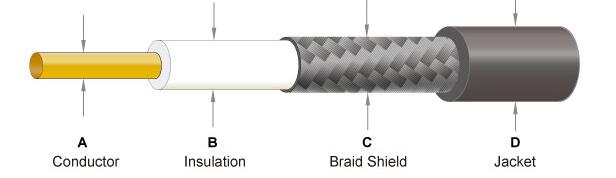

RG213 Structure Figure
LMR400 VS RG213 Frequency
| Frequency | RG213 Loss (Attenuation dB/100ft) | LMR400 Loss (Attenuation dB/100ft) |
| 100 MHz | 2.2 | 1.2 |
| 400 MHz | 4.8 | 2.5 |
| 1000 MHz | 8.2 | 4.1 |
LMR400 VS RG213 Electrical Characteristics
| LMR400 | RG213 | |
| Min. Temperature Rating | -40°C | -40°C |
| Max. Temperature Rating | 75°C | 85°C |
| Max. Voltage | 5,000 | 2,500 |
| Impedance (ohms) | 50 | 50 |
| Capacitance (pF/ft) | 32.2 | 23.9 |
| Max. Freq. (GHz) | 11 | 6 |
LMR400 VS RG213 Specifications
| Generic Name | RG213 | LMR-400 |
| Flex Type | Flexible | Flexible |
| Impedance | 50 Ohm | 50 Ohm |
| Dielectric Type | PE | PE (F) |
| Velocity of Propagation | 66% | 85% |
| Jacket Diameter | 0.405 in | 0.405 in |
| Jacket Material | PVC | PE |
| No. of Shields | 1 | 2 |
| Attenuation at 1 Ghz. | 9 dB | 4.25 dB |
| Power, Max at 1 Ghz. | 190 Watts | 90 dB |
| Frequency, Max | 1 GHz | 6 GHz |
| Max Operating Temperature | 70 deg C | 85 deg C |
| Center Conductor Type | Stranded | Solid |
| Inner Conductor, Number of Strands | 7 | 1 |
| Minimum Bend Radius, Repeated | 1.6 in | 1 in |
| Coax Type | Coax | Coax |
Conclusion of LMR400 VS RG213 Specifications
For high-end radio frequency antennas, LMR400 versus RG213 are two excellent coaxial cables. Although the two cables are quite similar in size, they are constructed differently. The key difference between the two is that the RG213 coaxial cable is less expensive and has a stranded bare copper center conductor. The LMR400 coax cable, on the other hand, contains a solid bare copper wrapped aluminum conductor. The RG213 coaxial cable also has a PVC jacket, unlike the LMR400 coaxial wire, which has a PE jacket, These two outer jackets, on the other hand, are intriguing.
Polyvinyl chloride is commonly used in domestic applications such as pipes, garden hoses, waterbeds, and vinyl raincoats (PVC). Because of its qualities and versatility, polyethylene is utilized in bulletproof vests and a range of other high-temperature products. As a result, because the LMR400 's outer jacket is made of polyethylene, it wins in terms of cable protection. The shielding conductor of these cables is another important distinction between LMR400 and RG213 coaxial cable s. The RG213 features a single bare copper braid shield, but the LMR400 has two shields, one constructed of aluminum braid and the other of braided tinned copper. LMR400 is the winner once more.
LMR400 VS RG213 Applications
LMR400 Applications
Wireless communication systems
Drop-in replacement for RG8/9913 air-dielectric type cable
Short antenna
Feeder runs
Easily-routed, low loss RF cable.
RG213 Applications
Telecommunications
Radio communications
Broadcast
Computer applications
Conclusion of LMR400 VS RG213
The RG213 shield is made up of a single bare copper braid, whereas the LMR400 shield is made up of an aluminum braid and a braided tinned copper braid. These cables differ mostly in terms of maximum voltage rating, capacitance, and maximum frequency when it comes to electrical specs.
Signal loss is caused by a variety of sources, but in this case, the conductors are to blame for the attenuation variances. The lower the attenuation, the greater the conductor is. Due to the fact that LMR400 has a larger conductor than RG213, RG213 suffers from a higher signal loss than LMR400.
The RG213 coax cable is utilized in a wide range of military and commercial applications, including radio communications, high-performance electrical and data transmission, broadcast, and computer applications, to name a few. When low signal loss and high operating voltages are necessary, it can also be utilized as an antenna feed cable. It also performs well in heat-sensitive situations, with a maximum temperature rating of 75°Celsius. The M17/74-RG213 is the military's version of the M17/74-RG213.
LMR400 is designed as a drop-in replacement for RG8 /9913 air-dielectric type cable and short antenna, feeder runs in wireless communication systems. It's also appropriate for applications that demand a low-loss, conveniently routed RF connection.
LMR400 Manufacturer
Times Microwave Systems is a pioneer in the development and manufacture of coaxial transmission lines. For military, aerospace, wireless communications, and industrial applications, they offer a wide range of RF and microwave transmission line solutions. In the industry, its engineering competence and range of manufacturing capabilities are well acknowledged. They can serve both specialist applications with extremely demanding performance requirements and high volume commercial applications at frequencies ranging from a few kHz to 110 GHz, thanks to production sites in the United States and China. Since 2009, Times Microwave Systems has had access to the resources of Amphenol, one of the world's largest makers of interconnect components. Amphenol Corporation is a manufacturer of electrical, electronic, and fiber-optic connectors, as well as connection systems and coaxial and specialized cable.
Note: LMR® is a registered trademark of Times Microwave Systems.
Related Article
If you want to learn more information about LMR400, you can see the article about LMR400 VS RG58.
Datasheet PDF
- Datasheets :
Popularity by Region
Parts with Similar Specs
Which is better LMR400 or RG213?
The RG213 is rated at 5000 volts, which is twice the voltage of the LMR400, which is rated for 2500 volts. LMR400 coax cables, on the other hand, outperform RG213 in terms of both loss and power handling.
Is LMR400 the same as rg8?
LMR-400 was designed to replace low-quality RG-8 wires because it offers greater flexibility, a simpler connection, and the lowest signal loss. In general, the LMR-400 can be utilized in any application where low signal loss is required.
What is RG213 cable used for?
The coaxial cables RG214 and RG213 are used to transmit high-frequency signals. These coax cables are suitable for telecommunications, radio communications, broadcast, and computer applications.
Is RG213 coax good?
At 400 MHz and higher, RG-213 has a large loss of 7.2 dB at 100 feet. If these stations are just used for monitoring, RG-6 at 75 ohms will suffice, as it has a loss of 5.9 dB at 1 GHz per 100 feet of cable. LMR 600 or LMR1200 are good options for transmitting on frequencies above 100 MHz.
Is LMR-400 good coax?
LMR-400 is the best and lowest-loss coax out there. For UHF, there's no other sensible choice. The higher the frequency, the greater the loss in coaxial cable.
Is LMR400 the same as rg8?
LMR-400 was designed to replace low-quality RG-8 wires because it offers greater flexibility, a simpler connection, and the lowest signal loss. In general, the LMR-400 can be utilized in any application where low signal loss is required.
 NRF52833 RF Transceiver Bluetooth 2.4GHz 73-VFQ: Datasheet, Pinout, and nRf52833 vs nRF52840
11 April 20225257
 LM358AP OPAMP: Pinout, Specification, Datasheet
14 August 20246953
 TL081 Single Op-Amp : Pinout, Application and Datasheet
23 July 202110893
 MP160 Quartz Crystal: Application, Pinout, Datasheet
06 August 2021482
 PIC16F877A Microcontroller: Datasheet, Pinout and Features
16 May 202337861
![1SMB5923BT3G Zener Voltage Regulator: Pinout, Equivalent and Datasheet [Video]](https://res.utmel.com/Images/Article/46c3c894-7e2a-42f2-83a6-e6186e06548a.png) 1SMB5923BT3G Zener Voltage Regulator: Pinout, Equivalent and Datasheet [Video]
1SMB5923BT3G Zener Voltage Regulator: Pinout, Equivalent and Datasheet [Video]29 April 20221213
 PIC16F887 8-bit Microcontroller: Programming, Datasheet and Pinout
02 November 202114531
 KSZ9893R Gigabit Ethernet Switch: Pinout, Equivalent and Datasheet
17 February 20223882
 MIT Technology Review Officially Released 2022 Top 10 Breakthrough Technologies in the World
26 April 20227685
 Introduction to Temperature Sensors
24 October 202510835
 Amkor Technology to Invest $2 Billion in Semiconductor Testing Plant in Peoria, Creating 2,000 Jobs
11 December 20234575
 LDO vs Buck Converter: Which Power Regulator Is Best For Your Application?
28 August 20269056
 What is RF Power Amplifier?
08 November 202512823
 Current Shunt Resistor Pulse Rating Selection: Sizing for Inrush Energy, TCR Drift, and Kelvin Connections
12 September 2026343
 Lattice FPGA vs Competitors A Comprehensive Comparison
09 June 202511361
 Understanding the Flight Sensing Modules of Drones
06 September 20212157
Amphenol Times Microwave Systems
In Stock
United States
China
Canada
Japan
Russia
Germany
United Kingdom
Singapore
Italy
Hong Kong(China)
Taiwan(China)
France
Korea
Mexico
Netherlands
Malaysia
Austria
Spain
Switzerland
Poland
Thailand
Vietnam
India
United Arab Emirates
Afghanistan
Åland Islands
Albania
Algeria
American Samoa
Andorra
Angola
Anguilla
Antigua & Barbuda
Argentina
Armenia
Aruba
Australia
Azerbaijan
Bahamas
Bahrain
Bangladesh
Barbados
Belarus
Belgium
Belize
Benin
Bermuda
Bhutan
Bolivia
Bonaire, Sint Eustatius and Saba
Bosnia & Herzegovina
Botswana
Brazil
British Indian Ocean Territory
British Virgin Islands
Brunei
Bulgaria
Burkina Faso
Burundi
Cabo Verde
Cambodia
Cameroon
Cayman Islands
Central African Republic
Chad
Chile
Christmas Island
Cocos (Keeling) Islands
Colombia
Comoros
Congo
Congo (DRC)
Cook Islands
Costa Rica
Côte d’Ivoire
Croatia
Cuba
Curaçao
Cyprus
Czechia
Denmark
Djibouti
Dominica
Dominican Republic
Ecuador
Egypt
El Salvador
Equatorial Guinea
Eritrea
Estonia
Eswatini
Ethiopia
Falkland Islands
Faroe Islands
Fiji
Finland
French Guiana
French Polynesia
Gabon
Gambia
Georgia
Ghana
Gibraltar
Greece
Greenland
Grenada
Guadeloupe
Guam
Guatemala
Guernsey
Guinea
Guinea-Bissau
Guyana
Haiti
Honduras
Hungary
Iceland
Indonesia
Iran
Iraq
Ireland
Isle of Man
Israel
Jamaica
Jersey
Jordan
Kazakhstan
Kenya
Kiribati
Kosovo
Kuwait
Kyrgyzstan
Laos
Latvia
Lebanon
Lesotho
Liberia
Libya
Liechtenstein
Lithuania
Luxembourg
Macao(China)
Madagascar
Malawi
Maldives
Mali
Malta
Marshall Islands
Martinique
Mauritania
Mauritius
Mayotte
Micronesia
Moldova
Monaco
Mongolia
Montenegro
Montserrat
Morocco
Mozambique
Myanmar
Namibia
Nauru
Nepal
New Caledonia
New Zealand
Nicaragua
Niger
Nigeria
Niue
Norfolk Island
North Korea
North Macedonia
Northern Mariana Islands
Norway
Oman
Pakistan
Palau
Palestinian Authority
Panama
Papua New Guinea
Paraguay
Peru
Philippines
Pitcairn Islands
Portugal
Puerto Rico
Qatar
Réunion
Romania
Rwanda
Samoa
San Marino
São Tomé & Príncipe
Saudi Arabia
Senegal
Serbia
Seychelles
Sierra Leone
Sint Maarten
Slovakia
Slovenia
Solomon Islands
Somalia
South Africa
South Sudan
Sri Lanka
St Helena, Ascension, Tristan da Cunha
St. Barthélemy
St. Kitts & Nevis
St. Lucia
St. Martin
St. Pierre & Miquelon
St. Vincent & Grenadines
Sudan
Suriname
Svalbard & Jan Mayen
Sweden
Syria
Tajikistan
Tanzania
Timor-Leste
Togo
Tokelau
Tonga
Trinidad & Tobago
Tunisia
Turkey
Turkmenistan
Turks & Caicos Islands
Tuvalu
U.S. Outlying Islands
U.S. Virgin Islands
Uganda
Ukraine
Uruguay
Uzbekistan
Vanuatu
Vatican City
Venezuela
Wallis & Futuna
Yemen
Zambia
Zimbabwe
![LMR-400-PVC]() LMR-400-PVC
LMR-400-PVCTimes Microwave Systems
![LMR-600-LLPX]() LMR-600-LLPX
LMR-600-LLPXTimes Microwave Systems
![LMR-900-FR]() LMR-900-FR
LMR-900-FRTimes Microwave Systems
![LMR-600-75]() LMR-600-75
LMR-600-75Times Microwave Systems
![LMR-600-FR]() LMR-600-FR
LMR-600-FRAmphenol Times Microwave Systems
![LMR-900-FR]() LMR-900-FR
LMR-900-FRAmphenol Times Microwave Systems
![LMR-240]() LMR-240
LMR-240Amphenol Times Microwave Systems
![LMR-300]() LMR-300
LMR-300Amphenol Times Microwave Systems
![FBT-240]() FBT-240
FBT-240Amphenol Times Microwave Systems