Product
 Brand
Brand Articles
 Tools
Tools
RG8 VS LMR400[FAQ]: Differentiate the differences between them.
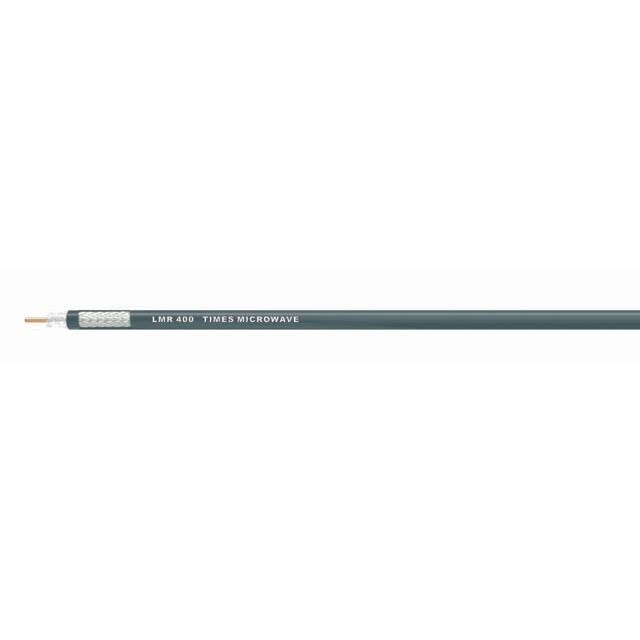


COAXIAL CABLE, ANTENNA, RG8, 50 OHM, BCC
RG8 and LMR400 all coax cables. This article is going to talk about the detailed information about RG8 and LMR400, and interpret the differences between them.
PL259 install RG8 - LMR400 - RG213
Overview of LMR400
Times Microwave's LMR®-400 is designed for adaptability, low loss, RF shielding, and wearability. The LMR-400 has the narrowest bend radius of any cable of comparable size and performance due to its cable architecture. The cable has the lowest loss of any comparable cable. This cable offers 90 dB of RF shielding and is ideal for EMI-prone environments. The LMR-400 is suitable for both indoor and outdoor use. Use Times Microwave's LMR-400 cable for any application that necessitates a low-loss, conveniently routed RF cable (e.g. WLL, GPS, LMR, WLAN, WISP, WiMax, SCADA, Mobile Antennas). The LMR-400 cable can be used in place of an RG-8 cable.
Note: LMR® is a registered trademark of Times Microwave Systems.
Overview of RG8
Pasternack's RG8 product number refers to a flexible RG8 coax cable. The RG8 flexible coax cable from Pasternack is 50 Ohm and features a PE dielectric. Our RG8 coax has a PVC jacket with a thickness of 0.405. (NC). The shield count on RG8 coax is one, and the maximum frequency for this Pasternack wire is one GHz. At 1 GHz, the RG8 coax cable has an attenuation of 8 dB and a maximum power of 190 watts.
Over 40,000 RF, microwave, and millimeter-wave components are made up of Pasternack RG8 coax cables. RG8 cables and other RF components are available for same-day shipping anywhere in the world. Custom RF cable assemblies using RG8 or another coax can be built and shipped the same day as well.
RG8 VS LMR400 Features
LMR400 Features
Priced Per Foot
Cable Type: LMR-400
Impedance: 50 ohm
Center Conductor: Bare Copper Covered Aluminum (BCCAI)
Jacket: Polyethylene (PE)
Outer Diameter: .405 inch
Indoor/Outdoor Rated
Drop-in replacement for RG-8
Attenuation @ 900 MHz/100 ft: 3.9dB/100ft
Attenuation @ 2.4 GHz/100 ft: 6.65dB/100ft
Any application (e.g. WLL, GPS, LMR, WLAN, WISP, WiMax, SCADA, Mobile Antennas) requiring an easily routed, low loss RF cable
Max Continuous Length: 1000 FT
RG8 Features
Conductor: Bare Copper
Insulation: Solid Low-Density Polyethylene
Shielding: Bare Copper Shield
Jacket: PVC (contaminating) Type 1 per MIL-C-17
Jacket Color: Black
12 AWG stranded copper center conductor
95% bare copper braid shielding
PVC Jacket
50 Ohm
UL Listed
Sold per ft.
Max Continuous Length: 1000 FT
RG8 VS LMR400 Applications
LMR400 Applications
Wireless communication systems
Drop-in replacement for RG8/9913 air-dielectric type cable
Short antenna
Feeder runs
Easily routed, low loss RF cable.
RG8 Applications
Carrying radio transmission signals
Audio control rooms
Radio stations
Connections for external radio antennas.
Comparison between the LMR400 and RG8 of Attentuation VS Frenquency
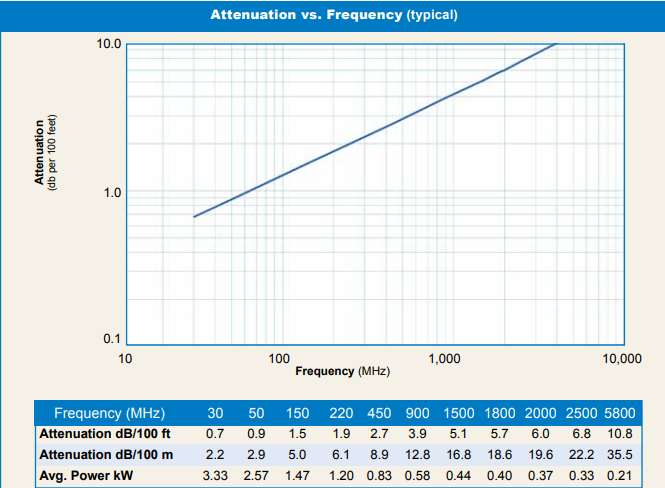
LMR400 Attentuation VS Frequency
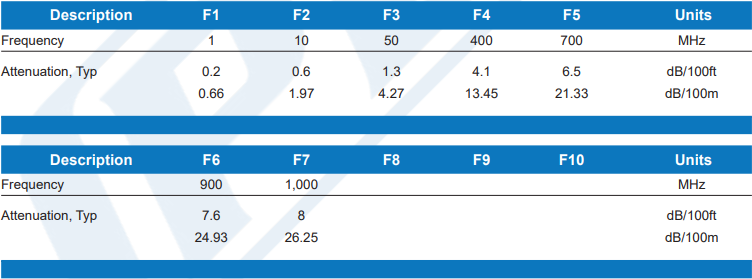
RG8 Attentuation VS Frequency
LMR400 VS RG8 Specifications
| Generic Name | LMR-400 | RG8 |
| Flex Type | Flexible | Flexible |
| Impedance | 50 Ohm | 50 Ohm |
| Dielectric Type | PE (F) | PE |
| Velocity of Propagation | 85% | 66% |
| Jacket Diameter | 0.405 in | 0.405 in |
| Jacket Material | PE | PVC (NC) |
| No. of Shields | 2 | 1 |
| Attenuation at 1 GHz. | 4.25 dB | 8 dB |
| Frequency, Max | 6 GHz | 1 GHz |
| Max Operating Temperature | 85 deg C | 80 deg C |
| Center Conductor Type | Solid | Stranded |
| Inner Conductor, Number of Strands | 1 | 7 |
| Coax Type | Coax | Coax |
Conclusion of LMR400 VS RG8
Although LMR400 cable has low loss, it is thicker and less flexible than RG58 or LMR240 cable, making it more difficult to work with. Meanwhile, the impedances of LMR400 and RG8 are both 50 Ohm. The major differences between the LMR400 and RG8 are the attenuation and frequency. The Attenuation at 1 GHz of LMR400 is 4.25 dB, while the Attenuation at 1 GHz of RG8 is 8 dB. Additionally, the maximum frequency of LMR400 is 6 GHz, while the maximum frequency of RG8 is 1 GHz. What’s more, the maximum operating temperature of LMR400 is 85 deg C, while the maximum operating temperature of RG8 is 80 deg C. LMR-400 was designed to replace low-quality RG-8 wires because it offers greater flexibility, a simpler connection, and the lowest signal loss. In general, the LMR-400 can be utilized in any application where low signal loss is required.
LMR400 VS RG8 Datasheet
Related articles about cables
LMR400 Manufacturer
Times Microwave Systems is a pioneer in the development and manufacture of coaxial transmission lines. For military, aerospace, wireless communications, and industrial applications, they offer a wide range of RF and microwave transmission line solutions. In the industry, its engineering competence and range of manufacturing capabilities are well acknowledged. They can serve both specialist applications with extremely demanding performance requirements and high volume commercial applications at frequencies ranging from a few kHz to 110 GHz, thanks to production sites in the United States and China. Since 2009, Times Microwave Systems has had access to the resources of Amphenol, one of the world's largest makers of interconnect components. Amphenol Corporation is a manufacturer of electrical, electronic, and fiber-optic connectors, as well as connection systems and coaxial and specialized cable.
Popularity by Region
Is LMR-400 the same as RG-58?
Although LMR400 cable has low loss, it is thicker and less flexible than RG58 or LMR240 cable, making it more difficult to work with. It comes in lengths ranging from 2' to 100' and is designed to be used with antennas and amplifiers that don't come with cabling.
What is LMR-400 cable used for?
LMR400 is designed as a drop-in replacement for RG8/9913 air-dielectric type cable and short antenna, feeder runs in wireless communication systems. It's also appropriate for applications that demand a low-loss, conveniently routed RF connection.
What is better than LMR400?
RG-8, RG 213, and RG 214 coaxial cables are the same physical size as LMR-400, but their attenuation is up to 40% higher and their RF shielding performance is much worse.
What is RG8 used for?
RG8 is a type of coaxial cable that can be used to transmit radio transmissions. They're mostly seen in audio control rooms, radio stations, or as radio antenna hookups.
Which is better RG8 vs RG-58?
RG8. RG8 is a thicker 50-ohm cable, with a 12 AWG wire gauge, than RG58, and can carry a stronger signal. It is mostly used for amateur radio transmissions. A variation known as RG8X is also available, which is thinner at 16 AWG but delivers equivalent signal quality.
 STM8AF6223: Technical Analysis of the 8-bit Automotive Microcontroller by STMicroelectronics
29 February 2024196
 2N5088 Transistor : Pinout, Equivalent, Datasheet
02 September 20217505
 LM311D Linear Comparator: Feature, Specification, and Datasheet
09 June 20213870
 A Comprehensive Guide to LTC6943IGN#PBF PMIC Voltage Regulator
06 March 2024294
 A Comprehensive Guide to LTC6812HLWE-1#3ZZPBF Battery Management PMIC
06 March 2024258
 A Comprehensive Guide to LTC6992CS6-4#TRPBF Programmable Timer and Oscillator
06 March 2024359
![How to use 2N3055 NPN Power Transistor? [Video]](https://res.utmel.com/Images/Article/07e050da-bc63-4dd7-8f09-87fadcf3a094.png) How to use 2N3055 NPN Power Transistor? [Video]
How to use 2N3055 NPN Power Transistor? [Video]28 April 20228745
 A Comprehensive Guide to LTC6955IUKG#TRPBF Clock Generator by Linear Technology/Analog Devices
06 March 2024276
 Capacitor Networks Complete Guide: From Basic Calculations to Advanced Applications
18 August 20254901
 Basic Introduction to Hall Effect Sensors
13 November 202512746
 What is Digital Signal Processing (DSP)?
17 March 20225329
 Will Sodium-ion Battery be the Next Gen of Battery?
29 September 20214677
 The Historical Milestones of Coaxial Cable Development
19 July 20254692
 Introduction to MD8002A Audio Amplifier
27 March 20259709
 Bluetooth Explained: Characteristics and Applications
02 June 202121649
 Does the Terminal Resistance of the CAN Bus Have to be 120Ω?
19 April 202237429
Amphenol Times Microwave Systems
In Stock
United States
China
Canada
Japan
Russia
Germany
United Kingdom
Singapore
Italy
Hong Kong(China)
Taiwan(China)
France
Korea
Mexico
Netherlands
Malaysia
Austria
Spain
Switzerland
Poland
Thailand
Vietnam
India
United Arab Emirates
Afghanistan
Åland Islands
Albania
Algeria
American Samoa
Andorra
Angola
Anguilla
Antigua & Barbuda
Argentina
Armenia
Aruba
Australia
Azerbaijan
Bahamas
Bahrain
Bangladesh
Barbados
Belarus
Belgium
Belize
Benin
Bermuda
Bhutan
Bolivia
Bonaire, Sint Eustatius and Saba
Bosnia & Herzegovina
Botswana
Brazil
British Indian Ocean Territory
British Virgin Islands
Brunei
Bulgaria
Burkina Faso
Burundi
Cabo Verde
Cambodia
Cameroon
Cayman Islands
Central African Republic
Chad
Chile
Christmas Island
Cocos (Keeling) Islands
Colombia
Comoros
Congo
Congo (DRC)
Cook Islands
Costa Rica
Côte d’Ivoire
Croatia
Cuba
Curaçao
Cyprus
Czechia
Denmark
Djibouti
Dominica
Dominican Republic
Ecuador
Egypt
El Salvador
Equatorial Guinea
Eritrea
Estonia
Eswatini
Ethiopia
Falkland Islands
Faroe Islands
Fiji
Finland
French Guiana
French Polynesia
Gabon
Gambia
Georgia
Ghana
Gibraltar
Greece
Greenland
Grenada
Guadeloupe
Guam
Guatemala
Guernsey
Guinea
Guinea-Bissau
Guyana
Haiti
Honduras
Hungary
Iceland
Indonesia
Iran
Iraq
Ireland
Isle of Man
Israel
Jamaica
Jersey
Jordan
Kazakhstan
Kenya
Kiribati
Kosovo
Kuwait
Kyrgyzstan
Laos
Latvia
Lebanon
Lesotho
Liberia
Libya
Liechtenstein
Lithuania
Luxembourg
Macao(China)
Madagascar
Malawi
Maldives
Mali
Malta
Marshall Islands
Martinique
Mauritania
Mauritius
Mayotte
Micronesia
Moldova
Monaco
Mongolia
Montenegro
Montserrat
Morocco
Mozambique
Myanmar
Namibia
Nauru
Nepal
New Caledonia
New Zealand
Nicaragua
Niger
Nigeria
Niue
Norfolk Island
North Korea
North Macedonia
Northern Mariana Islands
Norway
Oman
Pakistan
Palau
Palestinian Authority
Panama
Papua New Guinea
Paraguay
Peru
Philippines
Pitcairn Islands
Portugal
Puerto Rico
Qatar
Réunion
Romania
Rwanda
Samoa
San Marino
São Tomé & Príncipe
Saudi Arabia
Senegal
Serbia
Seychelles
Sierra Leone
Sint Maarten
Slovakia
Slovenia
Solomon Islands
Somalia
South Africa
South Sudan
Sri Lanka
St Helena, Ascension, Tristan da Cunha
St. Barthélemy
St. Kitts & Nevis
St. Lucia
St. Martin
St. Pierre & Miquelon
St. Vincent & Grenadines
Sudan
Suriname
Svalbard & Jan Mayen
Sweden
Syria
Tajikistan
Tanzania
Timor-Leste
Togo
Tokelau
Tonga
Trinidad & Tobago
Tunisia
Turkey
Turkmenistan
Turks & Caicos Islands
Tuvalu
U.S. Outlying Islands
U.S. Virgin Islands
Uganda
Ukraine
Uruguay
Uzbekistan
Vanuatu
Vatican City
Venezuela
Wallis & Futuna
Yemen
Zambia
Zimbabwe
![LMR-400-PVC]() LMR-400-PVC
LMR-400-PVCTimes Microwave Systems
![LMR-600-LLPX]() LMR-600-LLPX
LMR-600-LLPXTimes Microwave Systems
![LMR-900-FR]() LMR-900-FR
LMR-900-FRTimes Microwave Systems
![LMR-600-75]() LMR-600-75
LMR-600-75Times Microwave Systems
![LMR-600-FR]() LMR-600-FR
LMR-600-FRAmphenol Times Microwave Systems
![LMR-900-FR]() LMR-900-FR
LMR-900-FRAmphenol Times Microwave Systems
![LMR-240]() LMR-240
LMR-240Amphenol Times Microwave Systems
![LMR-300]() LMR-300
LMR-300Amphenol Times Microwave Systems
![FBT-240]() FBT-240
FBT-240Amphenol Times Microwave Systems