

 Product
 Brand
Brand Articles
 Tools
Tools
Broadcom PEX87xx RDK Series Design Guide: PCIe Gen 3.0 Switch Architecture & Evaluation
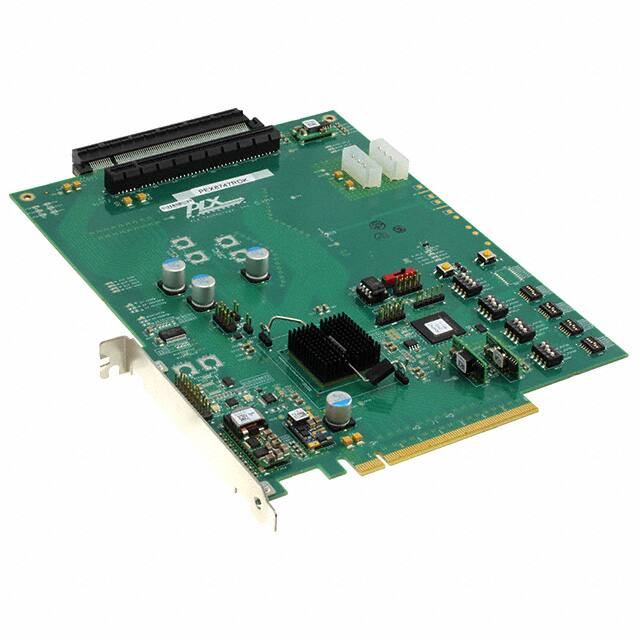


Interface Development Tools GEN 3 PCIe Switch Dev Tool
Deep dive into Broadcom PEX87xx RDKs. Validate 12-48 lane PCIe Gen 3.0 switches with non-blocking fabric, low latency, and multi-host DMA support.
Product Introduction
Engineer's Takeaway
Positioning: The Broadcom PEX87xx RDK Series serves as the primary validation platform for the PEX8700 family of PCIe Gen 3.0 switches, enabling developers to prototype high-bandwidth connectivity for storage and server architectures before custom PCB fabrication.
Key Spec Highlight: Supports 48 Lanes / 12 Ports (PEX8748 variant) with a non-blocking switch fabric operating at 8.0 GT/s per lane.
Supply Chain Status: Special Order / Low Stock. Due to high competition and component scarcity, utilize simulation models early in the design cycle while awaiting hardware lead times.
1. Technical Architecture and Core Advantages
The Broadcom PEX87xx RDK Series provides a hardware reference design for implementing Packet Switching architectures based on the PCI Express Base Specification 3.0. These boards demonstrate the capabilities of the PEX87xx silicon, focusing on low-latency data movement between multiple hosts and endpoints.
1.1 Processing & Control (The "Brain")
Unlike general-purpose microcontrollers, the "brain" here is a dedicated PCIe Packet Switching Engine.
Cut-Through Architecture: The PEX87xx switches utilize a cut-through architecture rather than store-and-forward, drastically reducing latency for packets passing between ports.
Link Speed: Validated for Gen 3.0 speeds (8.0 GT/s), auto-negotiating down to Gen 2.0 (5.0 GT/s) and Gen 1.0 (2.5 GT/s).
Management: Includes an on-chip management processor for initializing the switch, handling hot-plugs, and configuring port width/lane reversal without intervention from the host CPU.
1.2 Peripherals & Interfaces (The "Limbs")
The RDK exposes specific high-speed interconnect features critical for High-Performance Computing (HPC):
DMA Engines: Integrated engines offload data movement tasks from the host CPU, essential for NVMe storage aggregation.
Multi-Host / NTB: Supports Non-Transparent Bridging (NTB), allowing multiple hosts (servers) to share the switch or create failover clusters.
Debug Interfaces: The RDK typically exposes JTAG and I2C/SMBus headers for side-band management and diagnostics.
2. Naming / Variant Map and Selection Guide
2.1 Part Number Decoding
The RDK part numbers follow a structured convention indicating lane and logic capability:
PEX: Product Family (PCI Express Switch).
87: Series Generation (Gen 3.0, 8000 series).
xx: Lane Count (e.g., 24 = 24 lanes).
CA: Silicon revision/grade (specific to the chip mounted).
RDK: Rapid Development Kit hardware.
2.2 Core Variant Comparison
| Variant | Key Differences | Lane Count | Port Count | Target Use |
|---|---|---|---|---|
| PEX8713-CA-RDK | Entry-level aggregation | 12 Lanes | 3 Ports | Small Control Planes, Embedded Networking |
| PEX8724-CA-RDK | Mid-range expansion | 24 Lanes | 6 Ports | Storage Arrays, Video Surveillance |
| PEX8748-CA-RDK | High-density fabric | 48 Lanes | 12 Ports | High-end Servers, HPC Clusters |
3. Key Specifications Explained
Engineer's Note: Values below are typical. Always consult the specific datasheet for max/min limits.
3.1 Power & Operating Conditions
PCIe Gen 3.0 switching requires significant power budgets, particularly for the PHYs processing 8.0 GT/s signals.
- Power Methodology: The RDK is typically powered via the PCIe slot (up to 75W) or an external ATX/12V connector for high-lane variants.
- Thermal Management: The PEX87xx silicon on these RDKs usually requires active cooling (heatsink + fan) or significant airflow, as junction temperatures can rise quickly under full load.
3.2 Performance & Efficiency
The defining metric for this series is throughput and latency.
- Throughput: 8.0 GT/s raw bit rate per lane.
- Fabric Efficiency: Non-blocking internal interconnect ensures that traffic on one port does not artificially throttle traffic on another.
- Latency: Low-latency forwarding (typical <150ns range [AI Added], refer to datasheet for specific packet size curves).
4. Design Notes and Common Integration Issues
The leap from Gen 2 to Gen 3 PCIe imposes strict rules on physical design.
4.1 PCB Layout Guidelines
Trace Impedance: Must maintain strict 85Ω or 100Ω differential impedance (depending on stack-up specifications provided in the Broadcom PEX87xx RDK Series datasheet).
Insertion Loss: At 4GHz (Nyquist for 8GT/s), FR4 materials may be insufficient for long traces. Low-loss substrates (e.g., Megtron 6) are often recommended.
AC Coupling: Requires carefully placed AC coupling capacitors (typically 176-265nF) on TX lines.
4.2 Debugging Common Faults (Pain Points)
Integration of Broadcom PEX switches often encounters specific hurdles:
High Entry Cost
Problem: RDKs for high-lane-count switches (PEX8748) are expensive, straining budgets for small prototypes.
Fix: Utilize simulation models (IBIS/HSPICE) or procure lower-lane-count variants (PEX8713) for initial driver/software development before committing to high-density hardware.
Signal Integrity Complexity
Problem: Designing custom boards to match RDK performance at 8GT/s is difficult; links may train down to Gen 2 or Gen 1 speeds due to bit errors.
Fix: Strictly adhere to Broadcom's layout guidelines regarding via stubs and intra-pair skew. Use high-quality dielectric materials and perform post-layout signal integrity simulations.
5. Typical Applications
5.1 System Integration Analysis: Enterprise Storage Arrays
In All-Flash Arrays (AFA), the Broadcom PEX8748-CA-RDK acts as the central fabric connecting a CPU root complex to multiple NVMe SSDs.
- Problem: A typical CPU has limited PCIe lanes (e.g., 64 or 128), insufficient for connecting 24+ NVMe drives directly.
- Solution: The PEX8748 provides fan-out capabilities, aggregating bandwidth. Its internal DMA engines enable Peer-to-Peer (P2P) transfers between drives or network cards (RDMA) without burdening the host CPU, significantly increasing IOPS.
6. Competitors and Alternatives
The PCIe switch market is consolidated.
- Vs. Microchip (Switchtec): Switchtec switches often emphasize diagnostic features and cable management for heavy storage users. Broadcom PEX series generally leads in widely established driver support and legacy integration.
- Vs. Renesas (formerly IDT): Renesas provides strong alternatives in the timing and interconnect space. Selection often comes down to specific lane configuration availability and power consumption profiles suitable for the specific design constraint.
- Migration: Migration between brands is generally not pin-compatible. A redesign of the PCB is required.
7. FAQ
Q: What is the maximum data rate supported by the Broadcom PEX87xx RDK Series? The series supports PCIe Gen 3.0, achieving data rates of 8.0 GT/s per lane.
Q: Can the PEX8748-CA-RDK operate in Gen 1 or Gen 2 modes? Yes, the PEX87xx switches are backward compatible and will auto-negotiate link speeds based on the connected device's capabilities.
Q: Does the Broadcom PEX87xx RDK Series support multi-host configurations? Yes, these switches support multi-host architectures and Non-Transparent Bridging (NTB), allowing for complex redundancy and failover designs.
Q: Why is the price of these RDKs high compared to standard dev boards? These acts as enterprise-grade reference designs with expensive high-speed substrate materials and complex BGA silicon, targeting specialized infrastructure development rather than hobbyist uses
Specifications
- TypeParameter
- Factory Lead Time16 Weeks
- Packaging
Semiconductor package is a carrier / shell used to contain and cover one or more semiconductor components or integrated circuits. The material of the shell can be metal, plastic, glass or ceramic.
Bulk - Series
In electronic components, the "Series" refers to a group of products that share similar characteristics, designs, or functionalities, often produced by the same manufacturer. These components within a series typically have common specifications but may vary in terms of voltage, power, or packaging to meet different application needs. The series name helps identify and differentiate between various product lines within a manufacturer's catalog.
ExpressLane™ - Published2005
- Part Status
Parts can have many statuses as they progress through the configuration, analysis, review, and approval stages.
Active - Moisture Sensitivity Level (MSL)
Moisture Sensitivity Level (MSL) is a standardized rating that indicates the susceptibility of electronic components, particularly semiconductors, to moisture-induced damage during storage and the soldering process, defining the allowable exposure time to ambient conditions before they require special handling or baking to prevent failures
1 (Unlimited) - TypeInterface
- Function
The parameter "Function" in electronic components refers to the specific role or purpose that the component serves within an electronic circuit. It defines how the component interacts with other elements, influences the flow of electrical signals, and contributes to the overall behavior of the system. Functions can include amplification, signal processing, switching, filtering, and energy storage, among others. Understanding the function of each component is essential for designing effective and efficient electronic systems.
PCIe Switch - Utilized IC / Part
Utilized IC / Part is a parameter that refers to the extent to which an integrated circuit (IC) or electronic component is being used or consumed within a system or application. It typically indicates the percentage or ratio of the component's capabilities that are being utilized in a given scenario. This parameter is important for assessing the efficiency and performance of the component, as well as for determining if the component is being underutilized or overburdened in a particular application. Monitoring and optimizing the utilization of ICs and electronic parts can help improve overall system reliability, efficiency, and cost-effectiveness.
PEX8747 - Supplied Contents
Supplied Contents in electronic components refers to the items or materials that are included with the component when it is purchased. These contents can vary depending on the specific component and manufacturer, but typically include things like user manuals, installation guides, cables, connectors, and any additional accessories needed for the component to function properly. The supplied contents are important for ensuring that the user has everything they need to set up and use the electronic component correctly. It is recommended to carefully check the supplied contents upon receiving a new electronic component to make sure that nothing is missing and to familiarize oneself with the included materials for optimal use.
Board(s) - RoHS Status
RoHS means “Restriction of Certain Hazardous Substances” in the “Hazardous Substances Directive” in electrical and electronic equipment.
ROHS3 Compliant
Parts with Similar Specs
 STM32L010F4P6: Features, Applications, and Datasheet
29 November 20232233
 In-Depth Analysis of the Microchip PIC16F873/874/876/877 Microcontrollers
29 February 2024557
 MTFC8GAKAJCN-4M IT Flash Card 8G-byte 3.3V 153-Pin VFBGA: Datasheet, Pinout, and Equivalents
14 February 20222599
 Introduction to Microchip dsPIC33EP32MC202TESS
29 February 2024172
 Si3865BDV Load Switch with Level-Shift: Datasheet, Pinout, Application
21 January 2022948
 ATxmega64A1U and ATxmega128A1U Microcontrollers: Technical Overview and Specifications
29 February 2024331
 2N5401 PNP Transistor: Pinout, Datasheet, and Equivalents
06 July 202129120
 cr2016 vs cr2025 Battery: Which one do you prefer?
02 April 202282293
 Varistor: Definition, Function, Working and Testing
03 April 202585394
 Current Shunt Resistor Pulse Rating Selection: Sizing for Inrush Energy, TCR Drift, and Kelvin Connections
12 September 2026340
 What is a USB Type-C Connector?
28 October 20256914
 Semiconductor Industry's Water Risk Underpriced, Warn Fund Managers
14 September 20234012
 How to make an Obstacle Avoiding Robot?
29 August 202315921
 2026 Advanced Packaging Components Trends: Navigating Shortages and Ecosystem Impacts
20 July 20262648
 Discovering New and Advanced Methodology for Determining the Dynamic Characterization of Wide Bandgap Devices
15 March 20242876
 Can ARM challenge X86 in the field of PC chips?
06 June 20226267
Broadcom Limited
In Stock
United States
China
Canada
Japan
Russia
Germany
United Kingdom
Singapore
Italy
Hong Kong(China)
Taiwan(China)
France
Korea
Mexico
Netherlands
Malaysia
Austria
Spain
Switzerland
Poland
Thailand
Vietnam
India
United Arab Emirates
Afghanistan
Åland Islands
Albania
Algeria
American Samoa
Andorra
Angola
Anguilla
Antigua & Barbuda
Argentina
Armenia
Aruba
Australia
Azerbaijan
Bahamas
Bahrain
Bangladesh
Barbados
Belarus
Belgium
Belize
Benin
Bermuda
Bhutan
Bolivia
Bonaire, Sint Eustatius and Saba
Bosnia & Herzegovina
Botswana
Brazil
British Indian Ocean Territory
British Virgin Islands
Brunei
Bulgaria
Burkina Faso
Burundi
Cabo Verde
Cambodia
Cameroon
Cayman Islands
Central African Republic
Chad
Chile
Christmas Island
Cocos (Keeling) Islands
Colombia
Comoros
Congo
Congo (DRC)
Cook Islands
Costa Rica
Côte d’Ivoire
Croatia
Cuba
Curaçao
Cyprus
Czechia
Denmark
Djibouti
Dominica
Dominican Republic
Ecuador
Egypt
El Salvador
Equatorial Guinea
Eritrea
Estonia
Eswatini
Ethiopia
Falkland Islands
Faroe Islands
Fiji
Finland
French Guiana
French Polynesia
Gabon
Gambia
Georgia
Ghana
Gibraltar
Greece
Greenland
Grenada
Guadeloupe
Guam
Guatemala
Guernsey
Guinea
Guinea-Bissau
Guyana
Haiti
Honduras
Hungary
Iceland
Indonesia
Iran
Iraq
Ireland
Isle of Man
Israel
Jamaica
Jersey
Jordan
Kazakhstan
Kenya
Kiribati
Kosovo
Kuwait
Kyrgyzstan
Laos
Latvia
Lebanon
Lesotho
Liberia
Libya
Liechtenstein
Lithuania
Luxembourg
Macao(China)
Madagascar
Malawi
Maldives
Mali
Malta
Marshall Islands
Martinique
Mauritania
Mauritius
Mayotte
Micronesia
Moldova
Monaco
Mongolia
Montenegro
Montserrat
Morocco
Mozambique
Myanmar
Namibia
Nauru
Nepal
New Caledonia
New Zealand
Nicaragua
Niger
Nigeria
Niue
Norfolk Island
North Korea
North Macedonia
Northern Mariana Islands
Norway
Oman
Pakistan
Palau
Palestinian Authority
Panama
Papua New Guinea
Paraguay
Peru
Philippines
Pitcairn Islands
Portugal
Puerto Rico
Qatar
Réunion
Romania
Rwanda
Samoa
San Marino
São Tomé & Príncipe
Saudi Arabia
Senegal
Serbia
Seychelles
Sierra Leone
Sint Maarten
Slovakia
Slovenia
Solomon Islands
Somalia
South Africa
South Sudan
Sri Lanka
St Helena, Ascension, Tristan da Cunha
St. Barthélemy
St. Kitts & Nevis
St. Lucia
St. Martin
St. Pierre & Miquelon
St. Vincent & Grenadines
Sudan
Suriname
Svalbard & Jan Mayen
Sweden
Syria
Tajikistan
Tanzania
Timor-Leste
Togo
Tokelau
Tonga
Trinidad & Tobago
Tunisia
Turkey
Turkmenistan
Turks & Caicos Islands
Tuvalu
U.S. Outlying Islands
U.S. Virgin Islands
Uganda
Ukraine
Uruguay
Uzbekistan
Vanuatu
Vatican City
Venezuela
Wallis & Futuna
Yemen
Zambia
Zimbabwe
![BCM954811_MC]() BCM954811_MC
BCM954811_MCBroadcom Limited
![AFBR-0548Z]() AFBR-0548Z
AFBR-0548ZBroadcom Limited
![AFBR-0547Z]() AFBR-0547Z
AFBR-0547ZBroadcom Limited
![03-50031-18]() 03-50031-18
03-50031-18Broadcom
![NAS7821-AA RDK]() NAS7821-AA RDK
NAS7821-AA RDKBroadcom
![500021738]() 500021738
500021738Broadcom
![05-50132-00]() 05-50132-00
05-50132-00Broadcom Limited
![AFBR-POMEK2204]() AFBR-POMEK2204
AFBR-POMEK2204Broadcom Limited
![AFBR-FSEK50B00E]() AFBR-FSEK50B00E
AFBR-FSEK50B00EBroadcom Limited
![AFBR-FSEK50B00S]() AFBR-FSEK50B00S
AFBR-FSEK50B00SBroadcom Limited


