

 Product
 Brand
Brand Articles
 Tools
Tools
HMC Series (Hittite/ADI): High-Frequency RF and Microwave IC Design Guide

Log Detector Board(s) 1GHz~23GHz 0 Pins
Unit Price: $1,207.070307
Ext Price: $1,207.07


Log Detector Board(s) 1GHz~23GHz 0 Pins
Master the HMC Series (Analog Devices/Hittite). High-linearity GaAs/GaN MMIC amplifiers and modules covering DC to 110 GHz for Radar, EW, and SatCom.
Product Introduction
Engineer's Takeaway
Positioning: The HMC Series, originally from Hittite Microwave Corporation (acquired by Analog Devices), represents the industry standard for wideband RF/Microwave signal chain components. They are critical for Electronic Warfare (EW), Radar, and high-frequency instrumentation where flat gain across octaves is required.
Key Spec Highlight: The HMC-AUH312 offers an exceptional 500 MHz to 65 GHz bandwidth, enabling single-chip solutions for multi-band systems that previously required switched filter banks.
Supply Chain Status: While many legacy Hittite parts are active, always verify specific lifecycle status via Analog Devices, as consolidation often leads to part number migrations (e.g., Die vs. Gel-Pak variants).
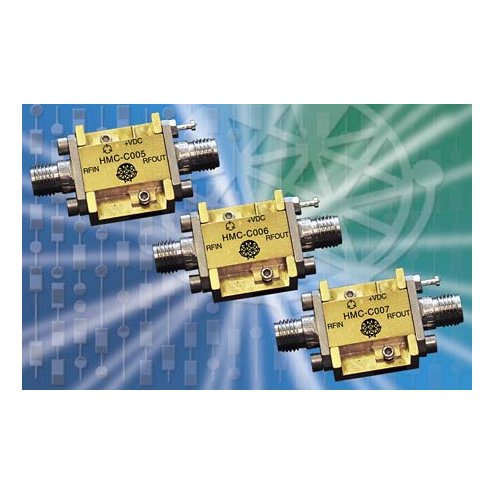
Figure 1: HMC Series (Hittite Microwave Corporation) overview: Bare die and connectorized modules.
1. Technical Architecture and Core Advantages
The HMC Series is not a microcontroller family but a portfolio of high-frequency Analog/RF Integrated Circuits (MMICs). The architecture focuses on signal fidelity rather than digital logic processing.
1.1 RF Core Technology (The "Brain")
The "brain" of the HMC Series (specifically the HMC-AUH312) is the GaAs (Gallium Arsenide) pHEMT (Pseudomorphic High-Electron-Mobility Transistor) technology. Unlike silicon-based amplifiers, GaAs provides superior electron mobility, which translates to:
Distributed Amplifier Topology: By treating the gate and drain capacitances as part of artificial transmission lines, these chips achieve ultra-wide bandwidths (DC to 65 GHz) that lumped-element designs cannot match.
Low Noise Figure: Essential for maintaining signal-to-noise ratios in receiver chains before digitization.
1.2 Packaging & RF Interfaces (The "Limbs")
The interface strategy depends heavily on the form factor:
Bare Die (e.g., HMC-AUH312): Requires precision wire-bonding. The I/O pads are matched to 50 Ohms to minimize reflections at high frequencies.
Connectorized Modules (e.g., HMC-C024): These "drop-in" hermetically sealed modules feature field-replaceable SMA or 2.92mm connectors. They integrate internal voltage regulation and bias sequencing, acting as a complete subsystem block.
2. Naming / Variant Map and Selection Guide
2.1 Part Number Decoding
The HMC nomenclature generally follows a sequential logic, but prefixes indicate the package type:
HMC: Standard prefix (Hittite Microwave Corp).
-AUH / -ALH: Typically indicates Die / Chip level products (often requiring wire bonding).
-C: Indicates Connectorized Modules (hermetically sealed with coaxial connectors).
-T / -E: Suffixes usually denote Tape & Reel or RoHS compliance status.
2.2 Core Variant Comparison
| Variant | Frequency Range | Gain (Typ) | Package / Form Factor | Target Use |
|---|---|---|---|---|
| HMC-AUH312 | 500 MHz - 65 GHz | 10 dB | Bare Die (MMIC) | Wideband EW, Test Instrumentation |
| HMC-C024 | 10 MHz - 20 GHz | ~14 dB* | Connectorized Module | Lab Bench, Rapid Prototyping, Radar Driver |
| HMC-C026 | 2 GHz - 20 GHz | High Gain | Connectorized Module | Amplification in space-constrained racks |
*Consult datasheet for exact gain vs frequency plots.
3. Key Specifications Explained
Engineer's Note: RF specifications are highly frequency-dependent. The "10 dB" gain quote is an average; always consult the S21 curves in the datasheet for your specific operating band.
3.1 Power & Operating Conditions
Input Voltage:
Modules (HMC-C024): simplified single-supply operation (often +8V to +15V) due to internal regulators.
Die (HMC-AUH312): Requires dual rails. Typical drain voltage ($V_{DD}$) is +5V, but crucial negative gate voltage ($V_{GG}$) is required to set the quiescent current ($I_{DQ}$). Failure to sequence the negative gate bias before the positive drain voltage can instantly destroy the HEMT device.
Current Consumption: These are Class-A linear amplifiers. Expect high quiescent current (e.g., 60-80 mA for AUH312) regardless of RF input presence. Usage in battery-powered IoT is rare; they are designed for line-powered infrastructure.
3.2 Performance & Efficiency
Bandwidth: The 500 MHz to 65 GHz range of the AUH312 is the headline metric. It allows a single signal chain to handle UHF, L, S, C, X, Ku, K, and Ka bands simultaneously.
Linearity (P1dB): The HMC-C024 offers +24 dBm Output P1dB. This is the 1dB compression point, indicating the maximum power level before the amplifier saturates and generates harmonics. This provides sufficient drive for mixer LOs or transmitter output stages.
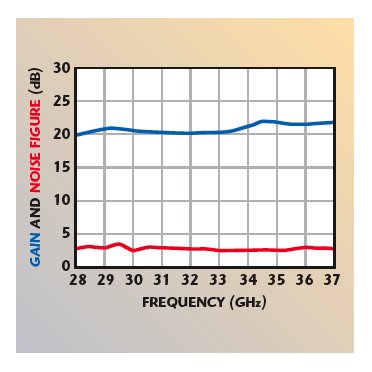
Figure 2: Typical Gain and Return Loss characteristics vs. Frequency.
4. Design Notes and Common Integration Issues
4.1 PCB Layout Guidelines
For MMIC die implementations (AUH312), layout is physics-critical: * RF Grounding: The die back-side is the RF ground. It must be attached to the carrier/heat sink using AuSn (Gold-Tin) eutectic solder or conductive epoxy with minimal voids. * Wire Bonding: Use minimal length gold bond wires (0.7 mil or 1.0 mil). Excessive wire length introduces parasitic inductance ($L \approx 1nH/mm$), effectively acting as a low-pass filter that kills performance above 20 GHz. * Transmission Lines: PCB traces approaching the die must be controlled impedance (50 Ohm) microstrip or coplanar waveguide.
4.2 Debugging Common Faults (Pain Points)
Problem 1: Thermal Shutdown or Gain Slump
Symptom: Gain drops significantly after minutes of operation, or module casing becomes too hot to touch.
Cause: "High-power connectorized modules like the HMC-C024 generate significant heat and require robust heat sinking." (Source 1)
Fix: Ensure the module is mounted to a metal thermal plane (chassis) with thermal grease. For bench use, clamp it to a heatsink.
Problem 2: Permanent Device Failure upon Installation* Symptom: device shows valid DC current but zero RF gain (Gate blown).
Cause: "GaAs MMIC components in the HMC series are extremely sensitive to Electrostatic Discharge (ESD)." (Source 2)
Fix: Implement strictly Class 0 ESD handling. Use ionized air blowers and grounded wrist straps. Never touch the die pads or connector center pins without grounding.
5. Typical Applications
The HMC Series excels where wide bandwidth and linearity are paramount.
5.1 System Integration Analysis: Electronic Warfare (EW) & Test Gear
In Spectrum Analyzers or EW Jamming pods, the system must sweep across vast frequency ranges instantly.
The Problem: Traditional designs require multiple narrow-band amplifiers switched via relays to cover 0.5–65 GHz.
The HMC Solution: The HMC-AUH312 (Traveling Wave Amplifier) covers the entire spectrum in one pass. This eliminates complex switching matrices, reduces size (SWaP), and improves reliability by removing mechanical components.
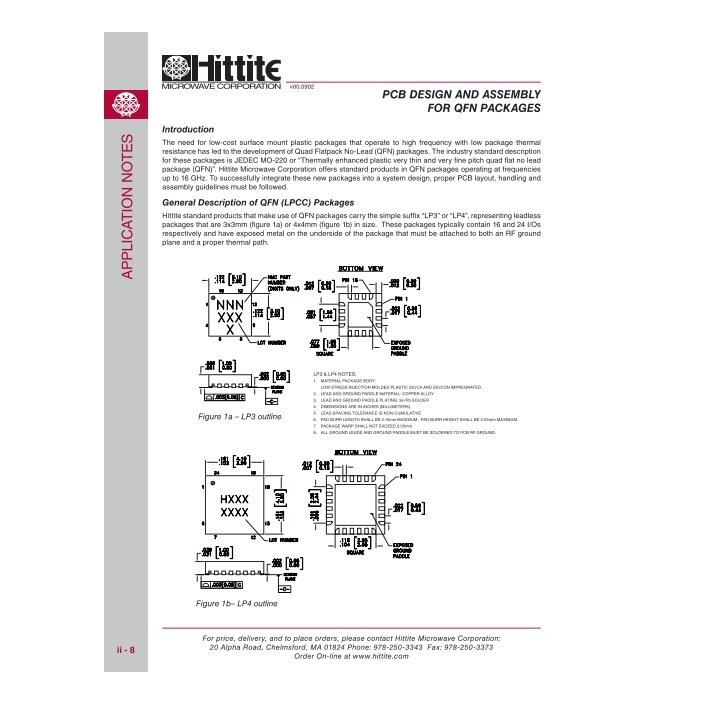
Figure 5: HMC Series (Hittite Microwave Corporation) typical application circuit schematic
6. Competitors and Alternatives
Vs. MACOM: MACOM is a direct competitor in the Distributed Amplifier space. MACOM parts often compete on price, while legacy Hittite parts are renowned for phase linearity.
Vs. Qorvo: Qorvo focuses heavily on GaN technology. For applications requiring significantly higher power (e.g., >10W) at the cost of bandwidth, Qorvo GaN is a strong alternative.
Vs. Mini-Circuits: Excellent for lower frequency (<6 GHz) low-cost modules, but they generally lack the ultra-wideband (65 GHz+) reach of the high-end HMC series.
7. FAQ
Q: What is the main difference between HMC-AUH312 and HMC-C024?
The AUH312 is a bare die requiring wire bonding (chip-and-wire assembly), whereas the C024 is a fully packaged, connectorized module ready for immediate cable connection.
Q: Does the HMC series require power supply sequencing?
Yes, for bare die components (pHEMT), you must apply negative gate voltage ($V_{GG}$) before applying positive drain voltage ($V_{DD}$) to prevent burnout. Modules typically handle this internally.
Q: Can I use the HMC-C024 for battery-powered devices?
It is possible but inefficient. The device draws significant quiescent current and typically requires +8V to +15V, necessitating a step-up converter and substantial battery capacity.
Q: What is the upper frequency limit of the HMC Series?
Specific parts in the portfolio, utilizing advanced nodes, extend up to 110 GHz, though the standard AUH312 tops out at 65 GHz.
8. Resources and Downloads
Datasheet (Die): HMC-AUH312 Datasheet
Datasheet (Module): HMC-C024 Datasheet
Manufacturer Page: Analog Devices (RF & Microwave)
Specifications
- TypeParameter
- Lifecycle Status
Lifecycle Status refers to the current stage of an electronic component in its product life cycle, indicating whether it is active, obsolete, or transitioning between these states. An active status means the component is in production and available for purchase. An obsolete status indicates that the component is no longer being manufactured or supported, and manufacturers typically provide a limited time frame for support. Understanding the lifecycle status is crucial for design engineers to ensure continuity and reliability in their projects.
PRODUCTION (Last Updated: 3 weeks ago) - Factory Lead Time8 Weeks
- Number of Pins0
- Part Status
Parts can have many statuses as they progress through the configuration, analysis, review, and approval stages.
Active - Moisture Sensitivity Level (MSL)
Moisture Sensitivity Level (MSL) is a standardized rating that indicates the susceptibility of electronic components, particularly semiconductors, to moisture-induced damage during storage and the soldering process, defining the allowable exposure time to ambient conditions before they require special handling or baking to prevent failures
1 (Unlimited) - TypeLog Detector
- Frequency
In electronic components, the parameter "Frequency" refers to the rate at which a signal oscillates or cycles within a given period of time. It is typically measured in Hertz (Hz) and represents how many times a signal completes a full cycle in one second. Frequency is a crucial aspect in electronic components as it determines the behavior and performance of various devices such as oscillators, filters, and communication systems. Understanding the frequency characteristics of components is essential for designing and analyzing electronic circuits to ensure proper functionality and compatibility with other components in a system.
1GHz~23GHz - Supplied Contents
Supplied Contents in electronic components refers to the items or materials that are included with the component when it is purchased. These contents can vary depending on the specific component and manufacturer, but typically include things like user manuals, installation guides, cables, connectors, and any additional accessories needed for the component to function properly. The supplied contents are important for ensuring that the user has everything they need to set up and use the electronic component correctly. It is recommended to carefully check the supplied contents upon receiving a new electronic component to make sure that nothing is missing and to familiarize oneself with the included materials for optimal use.
Board(s) - Evaluation Kit
An Evaluation Kit is a collection of hardware and software components designed to help engineers and developers assess and test the functionality of a particular electronic component or system. It typically includes a development board, sample code, utilities, and documentation to facilitate development and prototype testing. Evaluation Kits enable users to quickly prototype applications, evaluate performance characteristics, and determine compatibility with other systems. They are commonly used in the design and development phases of electronic projects to simplify the integration of complex components.
Yes - RoHS Status
RoHS means “Restriction of Certain Hazardous Substances” in the “Hazardous Substances Directive” in electrical and electronic equipment.
ROHS3 Compliant - Lead Free
Lead Free is a term used to describe electronic components that do not contain lead as part of their composition. Lead is a toxic material that can have harmful effects on human health and the environment, so the electronics industry has been moving towards lead-free components to reduce these risks. Lead-free components are typically made using alternative materials such as silver, copper, and tin. Manufacturers must comply with regulations such as the Restriction of Hazardous Substances (RoHS) directive to ensure that their products are lead-free and environmentally friendly.
Contains Lead
Parts with Similar Specs
- ImagePart NumberManufacturerNumber of PinsEvaluation KitFrequencySupplied ContentsMoisture Sensitivity Level (MSL)RoHS StatusLead FreeView Compare
![132032-HMC948LP3E]()
132032-HMC948LP3E
0
Yes
1GHz ~ 23GHz
Board(s)
1 (Unlimited)
ROHS3 Compliant
Contains Lead
![112409-HMC814LC3B]()
0
Yes
21GHz ~ 29GHz
Board(s)
1 (Unlimited)
ROHS3 Compliant
Contains Lead
![EVAL01-HMC1041LC4]()
0
Yes
13GHz ~ 24.6GHz
Board(s)
1 (Unlimited)
ROHS3 Compliant
Contains Lead
![112646-HMC341LC3B]()
0
Yes
17GHz ~ 27GHz
Board(s)
1 (Unlimited)
ROHS3 Compliant
Contains Lead


Datasheet PDF
- Datasheets :
- ConflictMineralStatement :
 A Practical Guide to STM32F429IIT6 in Embedded Systems
24 July 2025282
 LM741CN vs UA741CN : Which one is better?
26 February 202210200
 TSOP4838: Description, datasheet, and features
15 March 20224869
 1N5406 Diodes: Datasheet, Specifications and Equivalent
11 October 202110708
 Understanding the dsPIC33EPXXXGP50X, dsPIC33EPXXXMC20X/50X, and PIC24EPXXXGP/MC20X Microcontrollers
29 February 2024217
 CD4503 Tri-state Hex Buffer: CD4503 Datasheet PDF, Pinout, CD4503 vs. MC14503
18 January 20222283
 Designing with AD9850: Datasheet, Pinout, and Sine Wave Synthesis Guide
05 February 2026349
 PT2399 Delay Echo Processor IC: Datasheet, Schematic and Circuit
04 November 202135209
 Rectifier Diode: Function and Circuit
12 August 202022963
 What is UART(Universal Asynchronous Receiver And Transmitter) ?
25 September 20216628
 Analysis and Solutions of Common Causes of Serial Port Lost Data
15 August 20225300
 Guide to Manufacturer Part Number Suffixes: How to Decode IC Ordering Codes and Prevent Procurement Errors
09 September 2026360
 What is Vacuum Circuit Breaker?
12 October 202110347
 What is Smoke Detector?
26 October 20213953
 How Do We Seize Investment Opportunities on the Eve of the Ultimate Human Energy Final?
12 July 20222316
 Memory ICs: Types, Applications & Selection (2025)
30 April 20255112
Analog Devices Inc.
In Stock: 512
Minimum: 1 Multiples: 1
Qty
Unit Price
Ext Price
1
$1,207.070307
$1,207.07
10
$1,167.379407
$11,673.79
25
$1,159.264555
$28,981.61
50
$1,151.206112
$57,560.31
100
$1,127.528024
$112,752.80
500
$1,046.915528
$523,457.76
Not the price you want? Send RFQ Now and we'll contact you ASAP.
Inquire for More Quantity
![108721-HMC453QS16G]() 108721-HMC453QS16G
108721-HMC453QS16GAnalog Devices Inc.
![120202-HMC451LP3]() 120202-HMC451LP3
120202-HMC451LP3Analog Devices Inc.
![108709-HMC453QS16G]() 108709-HMC453QS16G
108709-HMC453QS16GAnalog Devices Inc.
![108718-HMC453ST89]() 108718-HMC453ST89
108718-HMC453ST89Analog Devices Inc.
![110957-HMC453ST89]() 110957-HMC453ST89
110957-HMC453ST89Analog Devices Inc.
![110865-HMC453QS16G]() 110865-HMC453QS16G
110865-HMC453QS16GAnalog Devices Inc.
![109994-HMC453QS16G]() 109994-HMC453QS16G
109994-HMC453QS16GAnalog Devices Inc.
![111560-HMC441LH5]() 111560-HMC441LH5
111560-HMC441LH5Analog Devices Inc.
![EVAL01-HMC996LP4E]() EVAL01-HMC996LP4E
EVAL01-HMC996LP4EAnalog Devices Inc.
![AD8314ACP-EVAL]() AD8314ACP-EVAL
AD8314ACP-EVALAnalog Devices Inc.


