

 Product
 Brand
Brand Articles
 Tools
Tools
74LS74 Dual D Flip-Flop: How to Use it?


4.75V~5.25V 20MHz D-Type Flip Flop 74LS74 8mA 74LS Series 14-DIP (0.300, 7.62mm)
74LS74 dual d flip-flop contains two independent positive-edge-triggered D flip-flops with complementary outputs. This article will unlock more details about 74LS74. There is a huge range of Semiconductors, Capacitors, Resistors and ICs in stock. Welcome RFQ.

Flip Flops D con 74LS74
74LS74 Pinout

74LS74 Pinout
| Pin Number | Pin Symbol | Name | Description |
| 5,9 | 1Q / 2Q | Output | Output Pin of the Flip Flop |
| 6,8 | 1Q’(bar) / 2Q’(bar) | Complementary Output | The inverted output pin of Flip Flop |
| 3, 11 | 1CLK / 2CLK | Clock Input Pin | These pins must be provided with a clock pulse for the flip flop |
| 1,13 | 1CLR (bar) / 2CLR (bar) | Clear Data | Resets the flip flop by clearing its memory |
| 2,12 | 1D /2D | Data Input Pin | Input pin of the Flip Flop |
| 4, 10 | 1PRE (bar) / 2PRE (bar) | PRE Input | Another Input pin for Flip Flop. Also referred to as a set pin |
| 7 | Vss | Ground | Connected to the ground of the system |
| 14 | Vdd/Vcc | Supply Voltage | Powers the IC typically with 5V |
74LS74 CAD Model
Symbol

74LS74 Symbol
Footprint
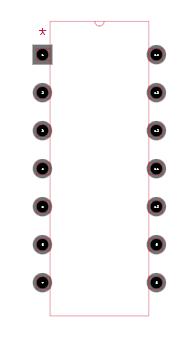
74LS74 Footprint
3D Model
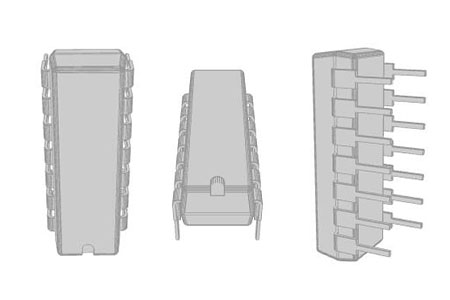
74LS74 3D Model
74LS74 Features
Dual D Flip Flop Package IC
Operating Voltage: 2V to 15V
Propagation Delay: 40nS
Minimum High-Level Input Voltage: 2 V
Maximum Low-Level Input Voltage: 0.8V
Operating Temperature: 0 to 70°C
High-Level Output Current: 8mA
Available in 14-pin SO-14, SOT42 packages
74LS74 Application
Used as Shift Registers
Memory/Control Registers
Buffer Circuits
Sampling Circuits
Latching devices
74LS74 Equivalent
The equivalents for 74LS74:
74LVC2G80
HEF40312B
What is 74LS74?
74LS74 dual d flip-flop contains two independent positive-edge-triggered D flip-flops with complementary outputs. The information on the D input is accepted by the flip-flops on the positive-going edge of the clock pulse. The triggering occurs at a voltage level and is not directly related to the transition time of the rising edge of the clock. The data on the D input may be changed while the clock is LOW or HIGH without affecting the outputs as long as the data setup and hold times are not violated. A low logic level on the preset or clear inputs will set or reset the outputs regardless of the logic levels of the other inputs.
How to Use 74LS74
It is rather simple to use a Flip-Flop. Simply use the Vcc and GND pins to power the IC. As previously stated, each flip-flop works separately; simply connect the input signals 2 and 3 to use the first flip-flop, and the output will be at pins 5 and 6. A clock source should be given for pin 3, which is usually a PWM signal from an MCU or 555 timers. By making the pin high, you can clear the data and reset the flip flop. Taking a look at the function table below will help you understand how the Flip flop works. The symbol "X" stands for "don't care," while the up-arrow represents the signal's rising edge.
| INPUTS | OUTPUTS | ||||
| PRE (bar) | CLR (bar) | CLK | D | Q | Q (bar) |
| L | H | X | X | H | L |
| H | L | X | X | L | H |
| L | L | X | X | H | H |
| H | H | H | H | L | |
| H | H | L | L | H | |
| H | H | L | X | Q0 | Q0 (bar) |
You can also run a simulation of the IC to see if it performs as expected. I've used logic state and logic bits to see if the IC works as it should, but you could use actual circuitry from your application to see if it meets your requirements. The gif file below can be compared to the truth table above to ensure that the IC is functioning properly.

How to use 74LS74
74LS74 Connection Diagram

74LS74 Connection Diagram
74LS74 Package

74LS74 Package
74LS74 Manufacturer
On Semiconductor (Nasdaq: ON) is a manufacturer engaging itself in reducing energy use. It features a comprehensive portfolio of power, signal management, and logic, custom solutions that are energy efficient. It acts as a world-class supply chain with high reliability and a network of manufacturing facilities, sales, offices, and design centres in key markets through North America, Europe, and the Asia Pacific regions.
Specifications
- TypeParameter
- Mount
In electronic components, the term "Mount" typically refers to the method or process of physically attaching or fixing a component onto a circuit board or other electronic device. This can involve soldering, adhesive bonding, or other techniques to secure the component in place. The mounting process is crucial for ensuring proper electrical connections and mechanical stability within the electronic system. Different components may have specific mounting requirements based on their size, shape, and function, and manufacturers provide guidelines for proper mounting procedures to ensure optimal performance and reliability of the electronic device.
Through Hole - Mounting Type
The "Mounting Type" in electronic components refers to the method used to attach or connect a component to a circuit board or other substrate, such as through-hole, surface-mount, or panel mount.
Through Hole - Package / Case
refers to the protective housing that encases an electronic component, providing mechanical support, electrical connections, and thermal management.
14-DIP (0.300, 7.62mm) - Clock-Edge Trigger TypePositive Edge
- Operating Temperature
The operating temperature is the range of ambient temperature within which a power supply, or any other electrical equipment, operate in. This ranges from a minimum operating temperature, to a peak or maximum operating temperature, outside which, the power supply may fail.
0°C~70°C TA - Packaging
Semiconductor package is a carrier / shell used to contain and cover one or more semiconductor components or integrated circuits. The material of the shell can be metal, plastic, glass or ceramic.
Tube - Series
In electronic components, the "Series" refers to a group of products that share similar characteristics, designs, or functionalities, often produced by the same manufacturer. These components within a series typically have common specifications but may vary in terms of voltage, power, or packaging to meet different application needs. The series name helps identify and differentiate between various product lines within a manufacturer's catalog.
74LS - Published2000
- Part Status
Parts can have many statuses as they progress through the configuration, analysis, review, and approval stages.
Obsolete - Moisture Sensitivity Level (MSL)
Moisture Sensitivity Level (MSL) is a standardized rating that indicates the susceptibility of electronic components, particularly semiconductors, to moisture-induced damage during storage and the soldering process, defining the allowable exposure time to ambient conditions before they require special handling or baking to prevent failures
1 (Unlimited) - TypeD-Type
- Voltage - Supply
Voltage - Supply refers to the range of voltage levels that an electronic component or circuit is designed to operate with. It indicates the minimum and maximum supply voltage that can be applied for the device to function properly. Providing supply voltages outside this range can lead to malfunction, damage, or reduced performance. This parameter is critical for ensuring compatibility between different components in a circuit.
4.75V~5.25V - Base Part Number
The "Base Part Number" (BPN) in electronic components serves a similar purpose to the "Base Product Number." It refers to the primary identifier for a component that captures the essential characteristics shared by a group of similar components. The BPN provides a fundamental way to reference a family or series of components without specifying all the variations and specific details.
74LS74 - Function
The parameter "Function" in electronic components refers to the specific role or purpose that the component serves within an electronic circuit. It defines how the component interacts with other elements, influences the flow of electrical signals, and contributes to the overall behavior of the system. Functions can include amplification, signal processing, switching, filtering, and energy storage, among others. Understanding the function of each component is essential for designing effective and efficient electronic systems.
Set(Preset) and Reset - Output Type
The "Output Type" parameter in electronic components refers to the type of signal or data that is produced by the component as an output. This parameter specifies the nature of the output signal, such as analog or digital, and can also include details about the voltage levels, current levels, frequency, and other characteristics of the output signal. Understanding the output type of a component is crucial for ensuring compatibility with other components in a circuit or system, as well as for determining how the output signal can be utilized or processed further. In summary, the output type parameter provides essential information about the nature of the signal that is generated by the electronic component as its output.
Differential - Polarity
In electronic components, polarity refers to the orientation or direction in which the component must be connected in a circuit to function properly. Components such as diodes, capacitors, and LEDs have polarity markings to indicate which terminal should be connected to the positive or negative side of the circuit. Connecting a component with incorrect polarity can lead to malfunction or damage. It is important to pay attention to polarity markings and follow the manufacturer's instructions to ensure proper operation of electronic components.
Non-Inverting - Number of Circuits2
- Clock Frequency
Clock frequency, also known as clock speed, refers to the rate at which a processor or electronic component can execute instructions. It is measured in hertz (Hz) and represents the number of cycles per second that the component can perform. A higher clock frequency typically indicates a faster processing speed and better performance. However, it is important to note that other factors such as architecture, efficiency, and workload also play a significant role in determining the overall performance of a component. In summary, clock frequency is a crucial parameter that influences the speed and efficiency of electronic components in processing data and executing tasks.
20MHz - Propagation Delay
the flight time of packets over the transmission link and is limited by the speed of light.
35 ns - Turn On Delay Time
Turn-on delay, td(on), is the time taken to charge the input capacitance of the device before drain current conduction can start.
35 ns - Logic Function
In electronic components, the term "Logic Function" refers to the specific operation or behavior of a component based on its input signals. It describes how the component processes the input signals to produce the desired output. Logic functions are fundamental to digital circuits and are used to perform logical operations such as AND, OR, NOT, and XOR.Each electronic component, such as logic gates or flip-flops, is designed to perform a specific logic function based on its internal circuitry. By understanding the logic function of a component, engineers can design and analyze complex digital systems to ensure proper functionality and performance. Different logic functions can be combined to create more complex operations, allowing for the creation of sophisticated digital devices and systems.
AND - Current - Quiescent (Iq)
The parameter "Current - Quiescent (Iq)" in electronic components refers to the amount of current consumed by a device when it is in a quiescent or idle state, meaning when it is not actively performing any tasks or operations. This parameter is important because it represents the baseline power consumption of the device even when it is not actively being used. A lower quiescent current (Iq) value is desirable as it indicates that the device is more energy-efficient and will consume less power when not in use, which can help extend battery life in portable devices and reduce overall power consumption in electronic systems. Designers often pay close attention to the quiescent current specification when selecting components for low-power applications or battery-operated devices.
8mA - Number of Bits per Element1
- Max Propagation Delay @ V, Max CL
The parameter "Max Propagation Delay @ V, Max CL" in electronic components refers to the maximum amount of time it takes for a signal to propagate through the component from input to output when operating at a specific voltage (V) and driving a maximum specified load capacitance (CL). This parameter is crucial in determining the speed and performance of the component in a circuit. A shorter propagation delay indicates faster signal processing and better overall performance. Designers use this parameter to ensure that signals can be transmitted and received within the required timing constraints in their electronic systems.
35ns @ 5V, 50pF - Trigger Type
Trigger Type in electronic components refers to the mechanism or method by which a device, such as a flip-flop or timer, responds to an input signal. It defines how the device transitions between states based on specific conditions, such as rising or falling edges of a signal, levels, or pulses. Different trigger types such as edge-triggered, level-triggered, or pulse-triggered influence the timing and behavior of the circuit, thereby determining how input signals affect the output in various applications.
Positive Edge - Number of Output Lines1
- RoHS Status
RoHS means “Restriction of Certain Hazardous Substances” in the “Hazardous Substances Directive” in electrical and electronic equipment.
Non-RoHS Compliant - Lead Free
Lead Free is a term used to describe electronic components that do not contain lead as part of their composition. Lead is a toxic material that can have harmful effects on human health and the environment, so the electronics industry has been moving towards lead-free components to reduce these risks. Lead-free components are typically made using alternative materials such as silver, copper, and tin. Manufacturers must comply with regulations such as the Restriction of Hazardous Substances (RoHS) directive to ensure that their products are lead-free and environmentally friendly.
Contains Lead
Parts with Similar Specs
Datasheet PDF
- ReachStatement :
- Datasheets :
Popularity by Region
What is the purpose of a 74LS74?
Introduction to 74LS74 Dual D Flip-Flop, the IC 74LS74 is the double D type edge-triggered category of flip flops comprised of clear preset and complementary output terminals. It has the ability to store data in the form of binary numbers and it also comes with features that stored data can be changed when required.
What is D flip flop truth table?
The D flip flop is the most important flip flop from other clocked types. It ensures that at the same time, both the inputs, i.e., S and R, are never equal to 1. The Delay flip-flop is designed using a gated SR flip-flop with an inverter connected between the inputs allowing for a single input D(Data).
What is the difference between latch and flip flop?
The major difference between flip-flop and latch is that the flip-flop is an edge-triggered type of memory circuit while the latch is a level-triggered type. It means that the output of a latch changes whenever the input changes.
What does the triangle on the 74ls74 mean?
The triangle indicates that the clock signal is an edge-triggered signal.
The circle indicates that the signal is low-active (ie., inverted).
The 74LS74 has a positive-edge trigger clock (low to high).
 Z8 Encore! XP® Z8F0823 Series Microcontrollers: Technical Overview and Specifications
29 February 2024285
 A Comprehensive Guide to LTC6820HMS#3ZZTRPBF Isolated Communications Interface
06 March 2024629
 CD4027 JK Flip-Flop IC:Pinout, Diagram and Datasheet
12 August 20217780
 How to Download and Use the STM32F051K6T6 Datasheet
07 June 2025283
 TXS0104ERGYR: 4-Bit Bidirectional Voltage-Level Translator, Datasheet
22 March 20222074
 LM63625 Step-down Voltage Converter: Datasheet, Price, Circuit
02 April 20225956
 XC6206 Low ESR Voltage Regulator: Datasheet pdf, Pinout and Equivalents
26 November 20215562
 4N25 Optocoupler: Pinout, Circuit and Datasheet
06 August 202114542
 Clamp Diodes: Principles, Functions, and Applications
23 March 202660210
 PCB Design Guidelines
21 December 20217859
 A Selection of the Most Representative Charts——Artificial Intelligence Index Report
18 March 20221070
 How do Solar Cells Work?
20 November 20203347
 What is a 555 Timer?
09 April 202512684
 Intel Launches Industry's First Stackable, Shareable and Transferable One-Year Semiconductor Technician Certificate Program
26 September 20233193
 Applications of FPGAs in Artificial Intelligence: A Comprehensive Guide
29 August 20255521
 Top 5 Microcontrollers Defining IoT, Edge AI, and Power Efficiency in 2026: Sourcing and Selection Guide
15 August 2026707
ON Semiconductor
In Stock
United States
China
Canada
Japan
Russia
Germany
United Kingdom
Singapore
Italy
Hong Kong(China)
Taiwan(China)
France
Korea
Mexico
Netherlands
Malaysia
Austria
Spain
Switzerland
Poland
Thailand
Vietnam
India
United Arab Emirates
Afghanistan
Åland Islands
Albania
Algeria
American Samoa
Andorra
Angola
Anguilla
Antigua & Barbuda
Argentina
Armenia
Aruba
Australia
Azerbaijan
Bahamas
Bahrain
Bangladesh
Barbados
Belarus
Belgium
Belize
Benin
Bermuda
Bhutan
Bolivia
Bonaire, Sint Eustatius and Saba
Bosnia & Herzegovina
Botswana
Brazil
British Indian Ocean Territory
British Virgin Islands
Brunei
Bulgaria
Burkina Faso
Burundi
Cabo Verde
Cambodia
Cameroon
Cayman Islands
Central African Republic
Chad
Chile
Christmas Island
Cocos (Keeling) Islands
Colombia
Comoros
Congo
Congo (DRC)
Cook Islands
Costa Rica
Côte d’Ivoire
Croatia
Cuba
Curaçao
Cyprus
Czechia
Denmark
Djibouti
Dominica
Dominican Republic
Ecuador
Egypt
El Salvador
Equatorial Guinea
Eritrea
Estonia
Eswatini
Ethiopia
Falkland Islands
Faroe Islands
Fiji
Finland
French Guiana
French Polynesia
Gabon
Gambia
Georgia
Ghana
Gibraltar
Greece
Greenland
Grenada
Guadeloupe
Guam
Guatemala
Guernsey
Guinea
Guinea-Bissau
Guyana
Haiti
Honduras
Hungary
Iceland
Indonesia
Iran
Iraq
Ireland
Isle of Man
Israel
Jamaica
Jersey
Jordan
Kazakhstan
Kenya
Kiribati
Kosovo
Kuwait
Kyrgyzstan
Laos
Latvia
Lebanon
Lesotho
Liberia
Libya
Liechtenstein
Lithuania
Luxembourg
Macao(China)
Madagascar
Malawi
Maldives
Mali
Malta
Marshall Islands
Martinique
Mauritania
Mauritius
Mayotte
Micronesia
Moldova
Monaco
Mongolia
Montenegro
Montserrat
Morocco
Mozambique
Myanmar
Namibia
Nauru
Nepal
New Caledonia
New Zealand
Nicaragua
Niger
Nigeria
Niue
Norfolk Island
North Korea
North Macedonia
Northern Mariana Islands
Norway
Oman
Pakistan
Palau
Palestinian Authority
Panama
Papua New Guinea
Paraguay
Peru
Philippines
Pitcairn Islands
Portugal
Puerto Rico
Qatar
Réunion
Romania
Rwanda
Samoa
San Marino
São Tomé & Príncipe
Saudi Arabia
Senegal
Serbia
Seychelles
Sierra Leone
Sint Maarten
Slovakia
Slovenia
Solomon Islands
Somalia
South Africa
South Sudan
Sri Lanka
St Helena, Ascension, Tristan da Cunha
St. Barthélemy
St. Kitts & Nevis
St. Lucia
St. Martin
St. Pierre & Miquelon
St. Vincent & Grenadines
Sudan
Suriname
Svalbard & Jan Mayen
Sweden
Syria
Tajikistan
Tanzania
Timor-Leste
Togo
Tokelau
Tonga
Trinidad & Tobago
Tunisia
Turkey
Turkmenistan
Turks & Caicos Islands
Tuvalu
U.S. Outlying Islands
U.S. Virgin Islands
Uganda
Ukraine
Uruguay
Uzbekistan
Vanuatu
Vatican City
Venezuela
Wallis & Futuna
Yemen
Zambia
Zimbabwe
![74LCX74MTCX]() 74LCX74MTCX
74LCX74MTCXON Semiconductor
![MM74HC74AMTCX]() MM74HC74AMTCX
MM74HC74AMTCXON Semiconductor
![MM74HC74AM]() MM74HC74AM
MM74HC74AMON Semiconductor
![MM74HC74AMX]() MM74HC74AMX
MM74HC74AMXON Semiconductor
![NC7SZ175P6X]() NC7SZ175P6X
NC7SZ175P6XON Semiconductor
![MM74HC374WM]() MM74HC374WM
MM74HC374WMON Semiconductor
![MM74HC273WMX]() MM74HC273WMX
MM74HC273WMXON Semiconductor
![74LCX16374MTDX]() 74LCX16374MTDX
74LCX16374MTDXON Semiconductor
![NL17SZ74USG]() NL17SZ74USG
NL17SZ74USGON Semiconductor
![MC74LCX374DTR2G]() MC74LCX374DTR2G
MC74LCX374DTR2GON Semiconductor


