

 Product
 Brand
Brand Articles
 Tools
Tools
ATmega328P Series: 8-bit AVR Microcontroller Design Guide


ATMEL ATMEGA328P-XMINIEVAL BRD, ATMEGA328 INTEGRATED DEBUGGER
The definitive engineering guide for the ATmega328P. Analyze specs, pinout, critical ISP design fixes, and PCB best practices for this 8-bit AVR MCU.
Product Introduction
Engineer's Takeaway
Positioning: The ATmega328P is the industry-standard 8-bit AVR microcontroller ensuring massive community support and code portability, primarily driven by its ubiquity in the Arduino ecosystem.
Key Spec Highlight: Achieves 20 MIPS throughput at 20MHz, ensuring execution of powerful instructions in a single clock cycle.
Supply Chain Status: High Counterfeit Risk. Due to extreme popularity, market signals indicate a prevalence of generic clones and unauthorized silicon. Procurement from authorized distributors (DigiKey, Mouser) is mandatory to guarantee specification adherence.
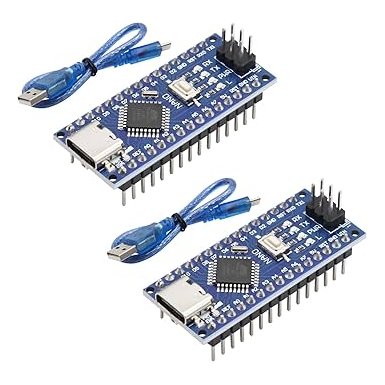
Figure 1: ATmega328P overview - ATmega328P product photo
1. Technical Architecture and Core Advantages
The ATmega328P is a high-performance 8-bit AVR RISC-based microcontroller. It utilizes a modified Harvard architecture with separate memories and buses for program and data, allowing instructions to be executed with a single clock cycle per instruction efficiency.
1.1 Processing & Control (The "Brain")
Core Architecture: 8-bit AVR RISC.
Throughput: Up to 20 MIPS at 20 MHz. This 1 MIPS/MHz ratio is significantly more efficient than conventional CISC architectures, optimizing power versus processing speed.
Memory Map:
Flash: 32KB In-System Self-Programmable (ISP) capability allows firmware updates without removing hardware (Read-While-Write).
SRAM: 2KB internal data memory.
EEPROM: 1KB for non-volatile data storage (critical for storing calibration data or device settings across power cycles).
1.2 Peripherals & Interfaces (The "Limbs")
The device integrates robust I/O capabilities directly addressing industrial control and sensor node requirements:
I/O Lines: 23 General Purpose I/O lines.
Timers: Three flexible timer/counters (two 8-bit, one 16-bit) with compare modes and PWM support.
Communication Buses:
USART: Programmable serial USART for RS-232/485 communication.
SPI: High-speed serial peripheral interface.
I2C (2-wire): Byte-oriented interface for sensor integration.
Analog: 6-channel 10-bit A/D converter (ADC) for precise sensor data acquisition.
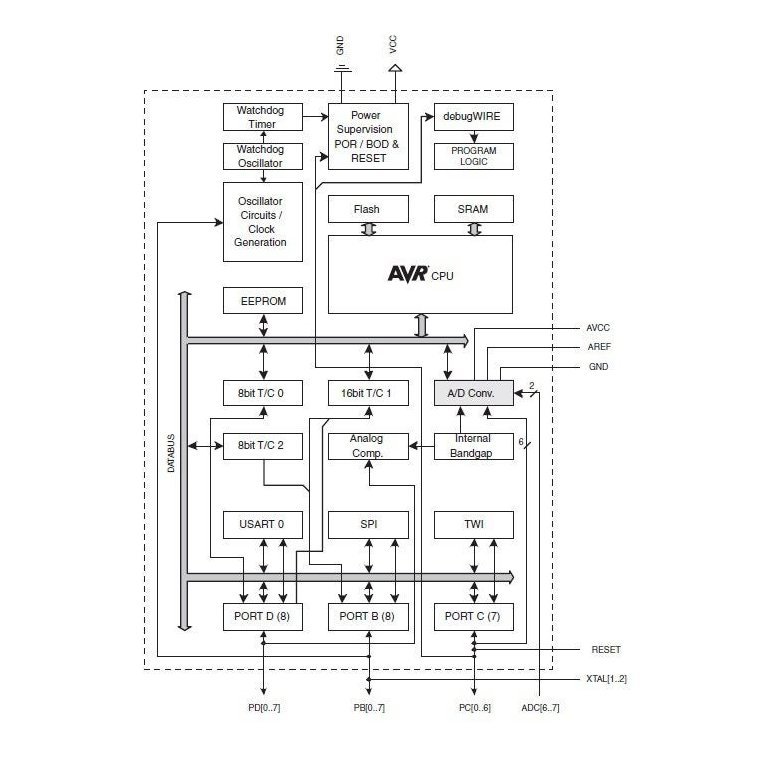
Figure 2: Functional block diagram - ATmega328P functional block diagram internal architecture
2. Naming / Variant Map and Selection Guide
2.1 Part Number Decoding
The suffix determines the package type and temperature rating.
P: PicoPower technology (Low power optimization).
AU: TQFP package (Industrial temp range).
PU: PDIP package (Industrial temp range, through-hole).
MU/MMH: VQFN package (Surface mount, space-constrained).
2.2 Core Variant Comparison
| Variant | Key Differences | Flash/RAM | Package | Target Use |
|---|---|---|---|---|
| ATmega328P-PU | Through-hole, easy prototyping | 32KB / 2KB | 28-pin PDIP | Breadboarding, Education, Repair |
| ATmega328P-AU | Surface mount, standard | 32KB / 2KB | 32-lead TQFP | Industrial PCBs, Consumer Electronics |
| ATmega328P-MU | Compact surface mount | 32KB / 2KB | 32-pad VQFN | Space-constrained sensors, Wearables |
| ATmega328P-MMH | Compact, thermal enhanced | 32KB / 2KB | 28-pad VQFN | High-density designs |
3. Key Specifications Explained
Engineer's Note: Values below are typical. Always consult the specific datasheet for max/min limits to ensure reliability.
3.1 Power & Operating Conditions
The ATmega328P is designed for battery-operated applications with a wide operating voltage window. - Voltage Range: 1.8V to 5.5V.
Implication: Can run directly off 2xAA cells, a single Li-Po cell (with regulation), or standard 5V USB trails.
Power Saving: Features five software-selectable power saving modes to minimize consumption during idle states.
3.2 Performance & Efficiency
Clock Speed: 0 - 20 MHz. (Note: 20MHz requires 4.5V-5.5V; lower voltages limit maximum frequency, e.g., 4MHz at 1.8V).
Working Registers: 32 general-purpose working registers connected directly to the ALU, allowing two independent registers to be accessed in one single instruction executed in one clock cycle.
4. Design Notes and Common Integration Issues
This section addresses real-world "gotchas" discovered during PCB layout and manufacturing.
4.1 PCB Layout Guidelines
Clock Source: When using an external crystal (e.g., 16MHz or 20MHz), place the crystal and load capacitors (typically 18pF-22pF) as close to XTAL1 and XTAL2 pins as possible to reduce noise.
Power Rails: Place 0.1µF decoupling capacitors immediately next to the VCC and AVCC pins.
Grounding: Separate Analog Ground (AGND) and Digital Ground (GND) if high ADC precision is required, joining them at a single "star" point.
Reset Line: Include a 10kΩ pull-up resistor on the RESET pin to prevent spurious resets in noisy environments.
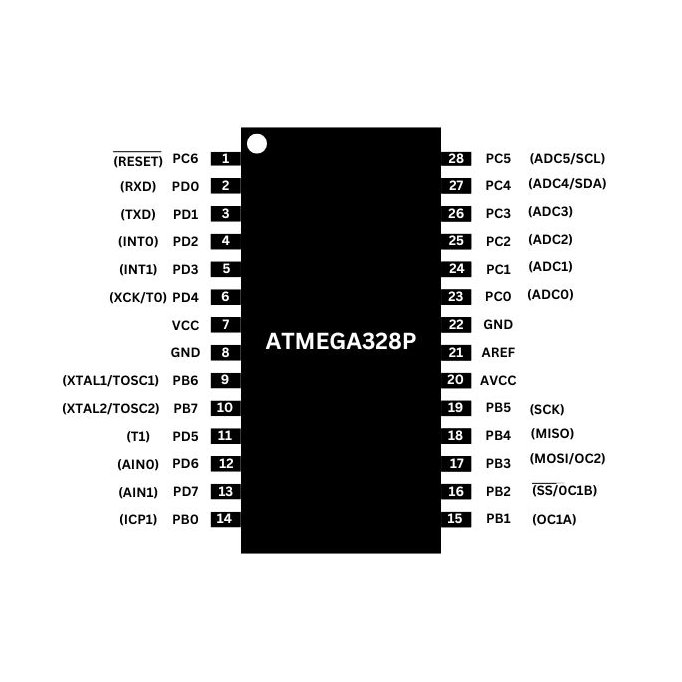
Figure 4: Pinout and package footprint - ATmega328P pinout diagram and footprint
4.2 Debugging Common Faults (Pain Points)
Problem 1: Device Signature Read Failures (0x000000)- Symptom: ISP programmer fails to recognize the chip. - Root Cause: Often caused by fuse bits set for an external crystal when none is present on the board. - Fix: Verify ISP wiring and ensure a valid clock source is present. If fuses were set incorrectly, inject an external clock signal to the XTAL1 pin to recover the device.
Problem 2: "Fried" or Non-functional Chips- Symptom: Chip draws excessive current or does not respond. - Root Cause: Counterfeit or defective units from non-authorized distributors (e.g., AliExpress).
Fix: Purchase strictly from authorized distributors like DigiKey or Mouser. The market is flooded with re-marked silicon or failed wafers.
Problem 3: Missing Bootloader on Fresh ICs- Symptom: Raw ATmega328P purchased from a supplier does not accept code via UART (USB-to-Serial).
Root Cause: Raw chips do not come pre-flashed with the Arduino bootloader.
Fix: Use an ISP programmer (e.g., USBasp, AVR Dragon, or another Arduino as ISP) to burn the bootloader via the SPI bus (MISO/MOSI/SCK/RESET) before attempting UART programming.
5. Typical Applications
📺 Video Recommendation: ATMEGA328P Guide
5.1 System Integration Analysis
Primary Application: Industrial Control and Automation
The ATmega328P is frequently used in smart sensor nodes and motor controllers.
How it works: The 16-bit Timer1 is utilized to generate precise PWM signals for motor speed control, while the ADC continuously monitors current or back-EMF feedback. The robust Watchdog Timer ensures the system resets safely if a firmware hang occurs in noisy industrial environments.
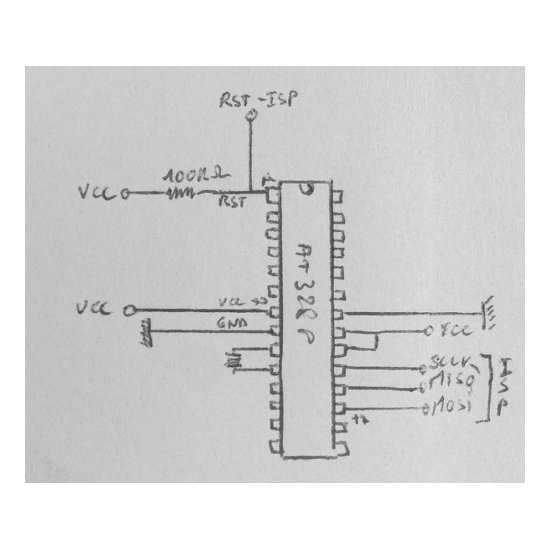
Figure 5: Typical application circuit - ATmega328P typical application circuit schematic
6. Competitors and Alternatives
The 8-bit MCU market is crowded. Here is how the ATmega328P stacks up:
Vs. STM8S Series: The STM8S often offers a lower price point for high-volume consumer goods but lacks the massive "maker" ecosystem and library support of the AVR architecture.
Vs. MSP430G2553 (TI): The MSP430 excels in ultra-low-power applications (better for coin-cell devices) but operates on a 16-bit architecture which may require toolchain adjustments for AVR developers.
Vs. PIC16F18446: Microchip's PIC series offers Core Independent Peripherals (CIPs) which can offload CPU tasks, offering a technical advantage in complex signal processing tasks compared to the pure software approach of the ATmega328P.
Migration Path: For designs requiring more flash, the ATmega32u4 (USB integrated) or newer AVR128DB series are logical upgrades.
7. FAQ
Q: What is the absolute maximum voltage for the ATmega328P? The absolute maximum rating is 6.0V, but the recommended operating maximum is 5.5V. Exceeding 6.0V will likely permanently damage the device.
Q: Does the ATmega328P support a hardware CAN Bus interface? No, the ATmega328P does not have a native CAN controller. You must use an external controller like the MCP2515 interacting via SPI.
Q: What is the main difference between ATmega328P-AU and ATmega328P-PU? The main difference is the package; the -AU is a surface-mount TQFP package, while the -PU is a through-hole PDIP package. The silicon core is identical.
Q: Why does my new ATmega328P not work with the Arduino IDE upload button? Fresh chips from the factory do not contain the Arduino bootloader. You must burn the bootloader using an ICSP programmer first.
8. Resources and Downloads
Datasheet: ATmega328P Technical Data
Dev Tools: Microchip Studio, MPLAB X IDE, Arduino IDE
Specifications
- TypeParameter
- Factory Lead Time14 Weeks
- Mounting Type
The "Mounting Type" in electronic components refers to the method used to attach or connect a component to a circuit board or other substrate, such as through-hole, surface-mount, or panel mount.
Fixed - Series
In electronic components, the "Series" refers to a group of products that share similar characteristics, designs, or functionalities, often produced by the same manufacturer. These components within a series typically have common specifications but may vary in terms of voltage, power, or packaging to meet different application needs. The series name helps identify and differentiate between various product lines within a manufacturer's catalog.
AVR® ATmega - Published2014
- Part Status
Parts can have many statuses as they progress through the configuration, analysis, review, and approval stages.
Active - Moisture Sensitivity Level (MSL)
Moisture Sensitivity Level (MSL) is a standardized rating that indicates the susceptibility of electronic components, particularly semiconductors, to moisture-induced damage during storage and the soldering process, defining the allowable exposure time to ambient conditions before they require special handling or baking to prevent failures
1 (Unlimited) - TypeMCU 8-Bit
- Base Part Number
The "Base Part Number" (BPN) in electronic components serves a similar purpose to the "Base Product Number." It refers to the primary identifier for a component that captures the essential characteristics shared by a group of similar components. The BPN provides a fundamental way to reference a family or series of components without specifying all the variations and specific details.
ATMEGA328P - Number of Bits8
- Core Processor
The term "Core Processor" typically refers to the central processing unit (CPU) of a computer or electronic device. It is the primary component responsible for executing instructions, performing calculations, and managing data within the system. The core processor is often considered the brain of the device, as it controls the overall operation and functionality. It is crucial for determining the speed and performance capabilities of the device, as well as its ability to handle various tasks and applications efficiently. In modern devices, core processors can have multiple cores, allowing for parallel processing and improved multitasking capabilities.
AVR - Utilized IC / Part
Utilized IC / Part is a parameter that refers to the extent to which an integrated circuit (IC) or electronic component is being used or consumed within a system or application. It typically indicates the percentage or ratio of the component's capabilities that are being utilized in a given scenario. This parameter is important for assessing the efficiency and performance of the component, as well as for determining if the component is being underutilized or overburdened in a particular application. Monitoring and optimizing the utilization of ICs and electronic parts can help improve overall system reliability, efficiency, and cost-effectiveness.
ATmega328P - Evaluation Kit
An Evaluation Kit is a collection of hardware and software components designed to help engineers and developers assess and test the functionality of a particular electronic component or system. It typically includes a development board, sample code, utilities, and documentation to facilitate development and prototype testing. Evaluation Kits enable users to quickly prototype applications, evaluate performance characteristics, and determine compatibility with other systems. They are commonly used in the design and development phases of electronic projects to simplify the integration of complex components.
Yes - Core Architecture
In electronic components, the term "Core Architecture" refers to the fundamental design and structure of the component's internal circuitry. It encompasses the arrangement of key components, such as processors, memory units, and input/output interfaces, within the device. The core architecture plays a crucial role in determining the component's performance, power efficiency, and overall capabilities. Different core architectures are optimized for specific applications and requirements, such as high-speed processing, low power consumption, or specialized functions. Understanding the core architecture of electronic components is essential for engineers and designers to select the most suitable components for their projects.
AVR - ContentsBoard(s)
- Board Type
Board Type refers to the specific configuration or category of a printed circuit board (PCB) used in electronic devices. It defines the characteristics and design of the board, such as single-sided, double-sided, or multilayer constructions. The Board Type impacts factors like signal integrity, power distribution, and thermal management, influencing the overall performance and functionality of the electronic component. Different applications and environments may require specific Board Types to meet durability and operational requirements.
Evaluation Platform - Platform
In the context of electronic components, the parameter "Platform" typically refers to the specific hardware or software environment on which the component is designed to operate. This could include the type of operating system, processor architecture, communication protocols, or other technical specifications that the component is compatible with. Understanding the platform requirements of electronic components is crucial for ensuring proper functionality and integration within a larger system. Manufacturers often provide detailed information about the supported platforms to help users select the right components for their applications.
ATmega328P Xplained Mini - REACH SVHC
The parameter "REACH SVHC" in electronic components refers to the compliance with the Registration, Evaluation, Authorization, and Restriction of Chemicals (REACH) regulation regarding Substances of Very High Concern (SVHC). SVHCs are substances that may have serious effects on human health or the environment, and their use is regulated under REACH to ensure their safe handling and minimize their impact.Manufacturers of electronic components need to declare if their products contain any SVHCs above a certain threshold concentration and provide information on the safe use of these substances. This information allows customers to make informed decisions about the potential risks associated with using the components and take appropriate measures to mitigate any hazards.Ensuring compliance with REACH SVHC requirements is essential for electronics manufacturers to meet regulatory standards, protect human health and the environment, and maintain transparency in their supply chain. It also demonstrates a commitment to sustainability and responsible manufacturing practices in the electronics industry.
No SVHC - RoHS Status
RoHS means “Restriction of Certain Hazardous Substances” in the “Hazardous Substances Directive” in electrical and electronic equipment.
ROHS3 Compliant - Lead Free
Lead Free is a term used to describe electronic components that do not contain lead as part of their composition. Lead is a toxic material that can have harmful effects on human health and the environment, so the electronics industry has been moving towards lead-free components to reduce these risks. Lead-free components are typically made using alternative materials such as silver, copper, and tin. Manufacturers must comply with regulations such as the Restriction of Hazardous Substances (RoHS) directive to ensure that their products are lead-free and environmentally friendly.
Lead Free
Datasheet PDF
- PCN Packaging :
- PCN Design/Specification :
- ConflictMineralStatement :
- Datasheets :
- Design Resources :
 W25Q64JVSSIQ: Overview, Features, and Datasheet
25 October 20236789
 2SC5200 NPN Transistor: Pinout, Datasheet, and Circuit
02 September 202144501
 ULN2004A Darlington Array: Pinout, Equivalent and Datasheet
29 November 20217621
 4N35 Optocoupler: Pinout, Application and Datasheet
13 July 202112750
 J111 JFET Transistor: J111 Datasheet, Pinout, Equivalent
12 April 20228945
 CST-1005 Transformer: Pinout, Datasheet, CAD Model
21 July 2021833
 IXBK55N300 Monolithic Bipolar MOS Transistor: Package, Pinout, and Datasheet
01 March 2022809
 2N3819 JFET: Substitute, Pinout and Datasheet
23 August 20217826
 Introduction of 55 ADC and DAC Commonly Used Terms
02 December 20215765
 GenAI Boosts Semiconductor Market with First Revenue Increase in Five Quarters
25 March 20244239
 Introduction to Wireless Sensor Networks
20 August 20205073
 Building a Smart Home System: Exploring Arduino Applications
13 March 20243307
 What is a Cell Phone Antenna?
21 July 202133255
 What is a SAW Sensor? Types, Working and Applications
29 March 202120439
 C1815 vs C945 Key Features and Application Guide
01 September 20254325
 Introduction to Inductive Reactance
16 April 202115100
Microchip Technology
In Stock: 123
United States
China
Canada
Japan
Russia
Germany
United Kingdom
Singapore
Italy
Hong Kong(China)
Taiwan(China)
France
Korea
Mexico
Netherlands
Malaysia
Austria
Spain
Switzerland
Poland
Thailand
Vietnam
India
United Arab Emirates
Afghanistan
Åland Islands
Albania
Algeria
American Samoa
Andorra
Angola
Anguilla
Antigua & Barbuda
Argentina
Armenia
Aruba
Australia
Azerbaijan
Bahamas
Bahrain
Bangladesh
Barbados
Belarus
Belgium
Belize
Benin
Bermuda
Bhutan
Bolivia
Bonaire, Sint Eustatius and Saba
Bosnia & Herzegovina
Botswana
Brazil
British Indian Ocean Territory
British Virgin Islands
Brunei
Bulgaria
Burkina Faso
Burundi
Cabo Verde
Cambodia
Cameroon
Cayman Islands
Central African Republic
Chad
Chile
Christmas Island
Cocos (Keeling) Islands
Colombia
Comoros
Congo
Congo (DRC)
Cook Islands
Costa Rica
Côte d’Ivoire
Croatia
Cuba
Curaçao
Cyprus
Czechia
Denmark
Djibouti
Dominica
Dominican Republic
Ecuador
Egypt
El Salvador
Equatorial Guinea
Eritrea
Estonia
Eswatini
Ethiopia
Falkland Islands
Faroe Islands
Fiji
Finland
French Guiana
French Polynesia
Gabon
Gambia
Georgia
Ghana
Gibraltar
Greece
Greenland
Grenada
Guadeloupe
Guam
Guatemala
Guernsey
Guinea
Guinea-Bissau
Guyana
Haiti
Honduras
Hungary
Iceland
Indonesia
Iran
Iraq
Ireland
Isle of Man
Israel
Jamaica
Jersey
Jordan
Kazakhstan
Kenya
Kiribati
Kosovo
Kuwait
Kyrgyzstan
Laos
Latvia
Lebanon
Lesotho
Liberia
Libya
Liechtenstein
Lithuania
Luxembourg
Macao(China)
Madagascar
Malawi
Maldives
Mali
Malta
Marshall Islands
Martinique
Mauritania
Mauritius
Mayotte
Micronesia
Moldova
Monaco
Mongolia
Montenegro
Montserrat
Morocco
Mozambique
Myanmar
Namibia
Nauru
Nepal
New Caledonia
New Zealand
Nicaragua
Niger
Nigeria
Niue
Norfolk Island
North Korea
North Macedonia
Northern Mariana Islands
Norway
Oman
Pakistan
Palau
Palestinian Authority
Panama
Papua New Guinea
Paraguay
Peru
Philippines
Pitcairn Islands
Portugal
Puerto Rico
Qatar
Réunion
Romania
Rwanda
Samoa
San Marino
São Tomé & Príncipe
Saudi Arabia
Senegal
Serbia
Seychelles
Sierra Leone
Sint Maarten
Slovakia
Slovenia
Solomon Islands
Somalia
South Africa
South Sudan
Sri Lanka
St Helena, Ascension, Tristan da Cunha
St. Barthélemy
St. Kitts & Nevis
St. Lucia
St. Martin
St. Pierre & Miquelon
St. Vincent & Grenadines
Sudan
Suriname
Svalbard & Jan Mayen
Sweden
Syria
Tajikistan
Tanzania
Timor-Leste
Togo
Tokelau
Tonga
Trinidad & Tobago
Tunisia
Turkey
Turkmenistan
Turks & Caicos Islands
Tuvalu
U.S. Outlying Islands
U.S. Virgin Islands
Uganda
Ukraine
Uruguay
Uzbekistan
Vanuatu
Vatican City
Venezuela
Wallis & Futuna
Yemen
Zambia
Zimbabwe
![ATSAMD21-XPRO]() ATSAMD21-XPRO
ATSAMD21-XPROMicrochip Technology
![ATXMEGAA3BU-XPLD]() ATXMEGAA3BU-XPLD
ATXMEGAA3BU-XPLDMicrochip Technology
![DM240004]() DM240004
DM240004Microchip Technology
![DM320103]() DM320103
DM320103Microchip Technology
![ATSAMV71-XULT]() ATSAMV71-XULT
ATSAMV71-XULTMicrochip Technology
![ATSAMD20-XPRO]() ATSAMD20-XPRO
ATSAMD20-XPROMicrochip Technology
![DM164137]() DM164137
DM164137Microchip Technology
![ATSAMC21-XPRO]() ATSAMC21-XPRO
ATSAMC21-XPROMicrochip Technology
![ATSAM4S-XPRO]() ATSAM4S-XPRO
ATSAM4S-XPROMicrochip Technology
![DV164122]() DV164122
DV164122Microchip Technology


