

 Product
 Brand
Brand Articles
 Tools
Tools
ATmega328 8-Bit MCU Design Guide: Architecture, Variants, and Pinout
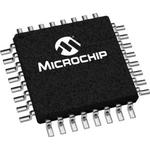


32KB Flash Microcontroller 32 Pin
The ATmega328 is a low-power AVR RISC microcontroller delivering 1 MIPS/MHz. It is the core engine behind the Arduino Uno, widely used in industrial and reliable embedded systems.
Product Introduction
Engineer's Takeaway
Positioning: The ATmega328 serves as the industry-standard 8-bit AVR microcontroller, most famously recognized as the core processor of the Arduino Uno development board ecosystem.
Key Spec Highlight: Achieves throughputs approaching 1 MIPS per MHz by executing powerful instructions in a single clock cycle, optimizing power-to-performance ratios.
Supply Chain Status: High Counterfeit Risk. Market signals indicate a high prevalence of clones (e.g., LGT8F328P) and "fried" units in non-authorized channels. Sourcing from Tier-1 distributors is mandatory.
1. Technical Architecture and Core Advantages
The ATmega328 is a low-power, CMOS 8-bit microcontroller built on the AVR® enhanced RISC architecture. Unlike conventional specific-purpose CISC microcontrollers, the AVR design allows for single-cycle instruction execution, providing high processing speed relative to clock frequency.
1.1 Processing & Control (The "Brain")
The core relies on a Modified Harvard Architecture. By separating program and data memories, the CPU can access instructions and data simultaneously, a key factor in its 1 MIPS/MHz performance metric.
- Core Type: 8-bit AVR Enhanced RISC.
- Throughput: ~1 MIPS per MHz.
- Memory Architecture: Integrated Flash memory for code, SRAM for runtime data, and EEPROM for non-volatile data storage. This integration minimizes external component count for basic applications.
1.2 Peripherals & Interfaces (The "Limbs")
While specific peripheral counts vary by configuration, the ATmega328 architecture interacts with the external world via an 8-bit data bus.
I/O Capabilities: Designed for flexibility in controlling sensors and actuators.
Target Applications: The architecture is specifically optimized for embedded systems requiring direct hardware control, such as industrial automation nodes and low-power sensor networks.
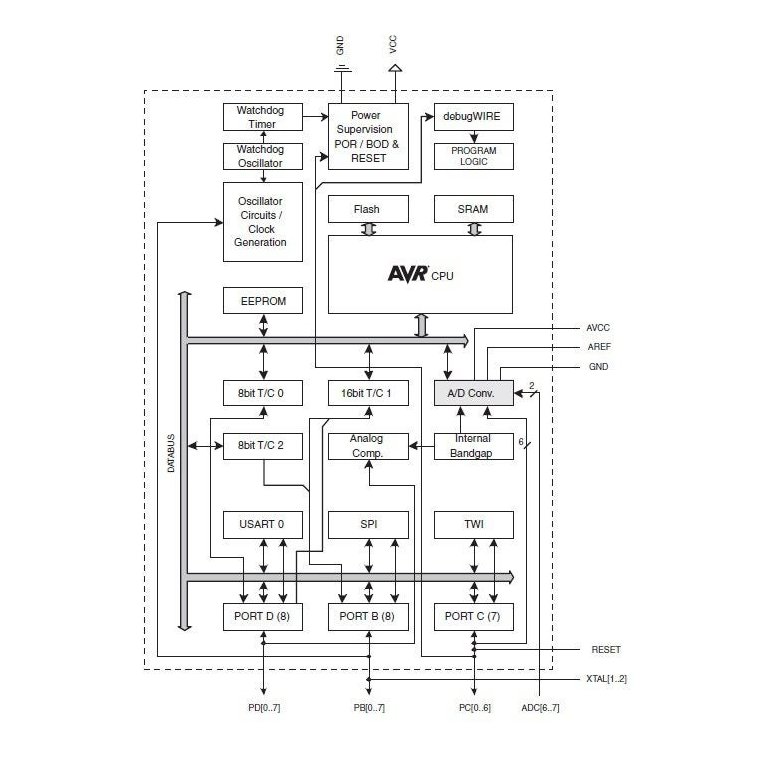
ATmega328 functional block diagram internal architecture
2. Naming / Variant Map and Selection Guide
2.1 Part Number Decoding
The suffix dictates power, temperature range, and importantly, the package type.
- PU: PDIP-28 (Plastic Dual In-line Package). Best for breadboarding and socketed PCBs.
- AU: TQFP-32 (Thin Quad Flat Package). Standard for surface mount compact designs.
- MUR: VQFN-32 (Very Thin Quad Flat No-lead). Optimized for ultra-compact, space-constrained footprints.
2.2 Core Variant Comparison
| Variant | Key Differences | Package | Target Use |
|---|---|---|---|
| ATmega328-PU | Through-hole, socket-compatible | PDIP-28 | Prototyping, Repairable Industrial Controllers |
| ATmega328-AU | Surface mount, gull-wing leads | TQFP-32 | Mass Production, Consumer Electronics |
| ATmega328-MUR | Surface mount, no leads (pad only) | VQFN-32 | High-density Wearables, Sensor Nodes |
3. Key Specifications Explained
Engineer's Note: Values below are typical. Always consult the specific datasheet for max/min limits.
3.1 Power & Operating Conditions
The ATmega328 utilizes Low-power CMOS technology.
Efficiency: The 1 MIPS/MHz ratio allows the system to run at lower clock speeds (and thus lower voltages) while maintaining necessary computational throughput, critical for battery-powered sensor nodes.
Voltage Range: Refer to datasheet for specific frequencies (e.g., 1.8V vs 5.5V operation [AI Added]).
3.2 Performance & Efficiency
Architecture: AVR Enhanced RISC.
Execution Speed: Single clock cycle execution for most instructions.
Bus Width: 8-bit data path.
4. Design Notes and Common Integration Issues
This section addresses real-world integration challenges derived from community engineering data.
4.1 PCB Layout Guidelines
Power Rails: Decoupling capacitors (typically 100nF [AI Added]) must be placed as close as possible to the VCC and GND pins to prevent logic instability.
Grounding: In mixed-signal designs (e.g., using the ADC), separate Analog Ground (AGND) and Digital Ground (DGND) tracks, joining them at a single "star" point.
Oscillator: Short trace lengths are critical for external crystals to prevent capacitive loading and startup failure.
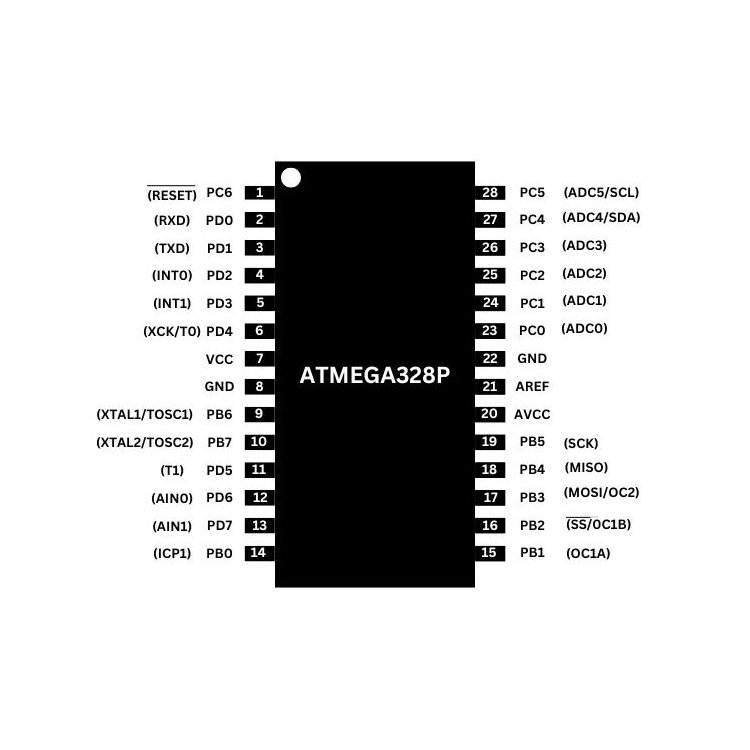
ATmega328 pinout diagram and footprint
4.2 Debugging Common Faults
Problem : Device Signature Read Errors- Symptom: ISP Programmer reports "Unable to read device signature" or signature 0x000000.
Root Cause: Often caused by incorrect clock fuse settings (expecting an external crystal that isn't present) or poor wiring.
Fix: Verify ISP wiring continuity. Inject an external clock signal to the XTAL1 pin to recover "bricked" fuses.
Problem : Atmel-ICE Firmware Upload Issues- Symptom: Failure to upload firmware specifically when using the official Atmel-ICE tool.
- Root Cause: Toolchain version mismatch or physical connection reversal. - Fix: Update Microchip Studio/Atmel Studio to the latest release. Double-check the 6-pin ISP header orientation (Pin 1 alignment).
Problem : Counterfeit and "Fried" Parts- Symptom: Chips run hot, fail basic "Blink" tests, or have erratic GPIO behavior.
- Context: High prevalence of re-marked or damaged chips in discount bins (Risk: High).
Fix: Strictly source from authorized distributors (Mouser, Digi-Key). Validate new batches with a Device ID check before soldering.
5. Typical Applications
📺 Video Recommendation: ATMEGA328 Guide
5.1 System Integration Analysis
Primary Use Case: Maker & Industrial Control The ATmega328 is the defining silicon for the Arduino Uno and Pro Mini platforms. Its balance of I/O lines and processing power makes it ideal for:
Industrial Automation: Managing simple logic control loops where 32-bit overkill adds cost.
Sensor Nodes: Reading analog sensors and communicating via serial protocols.
Consumer Electronics: Managing user interfaces (buttons/LEDs) and state machines.
6. Competitors and Alternatives
The 8-bit market is competitive. The ATmega328 competes directly with:
STM8S Series (STMicroelectronics): A strong 8-bit alternative, often cheaper in high volume, but lacks the massive "Arduino" community library support.
PIC16F18446 (Microchip): An internal competitor. Offers distinct Core Independent Peripherals (CIPs) which may offload the CPU better than the standard AVR architecture for specific hardware tasks.
MSP430G2553 (Texas Instruments): Known for extreme low power context, often preferred in battery-critical applications over standard AVRs.
LGT8F328P (LogicGreen): A clone/derivative. Offers higher clock speeds but suffers from compatibility quirks and non-native documentation.
7. FAQ
Q: What is the main difference between the ATmega328-PU and ATmega328-AU?
The difference is the package type; the PU is a PDIP-28 (through-hole) ideal for breadboarding, while the AU is a TQFP-32 (surface mount) used in compact production PCBs.
Q: Does the ATmega328 suffer from clone issues?
Yes, market signals indicate a high risk of clones (e.g., LogicGreen variants) and counterfeit units. Authentication of the device signature is recommended.
Q: What architecture does the ATmega328 use?
It uses the AVR® enhanced RISC architecture, which allows it to execute most instructions in a single clock cycle.
Q: Why do I get a "Device Signature Read Error" when programming?
This commonly occurs due to loose ISP wiring or fuse settings configured for an external crystal that is not physically present on the board.
8. Resources and Downloads
Datasheet: ATmega328 Data Source
Dev Tools: Microchip Studio, Arduino IDE
Specifications
- TypeParameter
- Number of Pins32
- Lead ShapeGull-wing
- PCB changed32
- Package Width7
- Package Length7
- Package Height1
- MountingSurface Mount
- Supplier PackageTQFP
- Standard Package NameQFP
- Supplier Temperature GradeIndustrial
- Maximum Operating Temperature (°C)85
- Minimum Operating Temperature (°C)-40
- Maximum Operating Supply Voltage (V)5.5
- Typical Operating Supply Voltage (V)5|2.5|3.3
- Minimum Operating Supply Voltage (V)1.8
- Real Time ClockNo
- Parallel Master PortNo
- Analog Comparators1
- Watchdog1
- I2S0
- I2C0
- UART0
- USART1
- ADC Resolution (bit)10
- Number of ADCsSingle
- Timers Resolution (bit)16
- No. of Timers3
- Number of I/Os23
- Interface TypeSPI/TWI/USART
- ProgrammabilityYes
- Data Bus Width (bit)8
- Maximum Clock Rate (MHz)20
- Maximum CPU Frequency (MHz)20
- Instruction Set ArchitectureRISC
- Family NameATmega
- HTS8542.31.00.01
- ECCN (US)EAR99
- Packaging
Semiconductor package is a carrier / shell used to contain and cover one or more semiconductor components or integrated circuits. The material of the shell can be metal, plastic, glass or ceramic.
Tape and Reel - RAM Size
RAM size refers to the amount of random access memory (RAM) available in an electronic component, such as a computer or smartphone. RAM is a type of volatile memory that stores data and instructions that are actively being used by the device's processor. The RAM size is typically measured in gigabytes (GB) and determines how much data the device can store and access quickly for processing. A larger RAM size allows for smoother multitasking, faster loading times, and better overall performance of the electronic component. It is an important factor to consider when choosing a device, especially for tasks that require a lot of memory, such as gaming, video editing, or running multiple applications simultaneously.
2KB - Program Memory Type
Program memory typically refers to flash memory when it is used to hold the program (instructions). Program memory may also refer to a hard drive or solid state drive (SSD). Contrast with data memory.
Flash - Program Memory Size
Program Memory Size refers to the amount of memory available in an electronic component, such as a microcontroller or microprocessor, that is used to store program instructions. This memory is non-volatile, meaning that the data stored in it is retained even when the power is turned off. The program memory size determines the maximum amount of code that can be stored and executed by the electronic component. It is an important parameter to consider when selecting a component for a specific application, as insufficient program memory size may limit the functionality or performance of the device.
32KB - Core Architecture
In electronic components, the term "Core Architecture" refers to the fundamental design and structure of the component's internal circuitry. It encompasses the arrangement of key components, such as processors, memory units, and input/output interfaces, within the device. The core architecture plays a crucial role in determining the component's performance, power efficiency, and overall capabilities. Different core architectures are optimized for specific applications and requirements, such as high-speed processing, low power consumption, or specialized functions. Understanding the core architecture of electronic components is essential for engineers and designers to select the most suitable components for their projects.
AVR - Ethernet
Ethernet is a widely used networking technology that allows devices to communicate with each other over a local area network (LAN). It is a set of standards that define how data is transmitted over a physical medium, typically using twisted-pair cables or fiber optics. Ethernet specifies the protocols for data transmission, addressing, and error detection, ensuring reliable and efficient communication between devices. It is commonly used in homes, businesses, and data centers to connect computers, printers, routers, and other networked devices. Ethernet has evolved over the years to support faster speeds and improved performance, making it a fundamental component of modern networking infrastructure.
0 - USB
USB stands for Universal Serial Bus, which is a common interface used for connecting various electronic devices to a computer or other host device. It allows for the transfer of data, power, and communication between devices. USB ports are found on a wide range of devices such as computers, smartphones, printers, cameras, and more. The USB standard has evolved over the years to include different versions with varying data transfer speeds and power delivery capabilities. Overall, USB has become a widely adopted and versatile standard for connecting and interacting with electronic components.
0 - SPI
SPI stands for Serial Peripheral Interface. It is a synchronous serial communication protocol used for short-distance communication between microcontrollers and peripheral devices. SPI uses a master-slave architecture, allowing a single master to control multiple slave devices. It features separate lines for data transmission, clock signals, and chip selection, enabling high-speed data exchange and simple hardware connections.
2 - CAN0
- PWM
PWM stands for Pulse Width Modulation. It is a method used in electronic devices to control the amount of power delivered to a load by varying the width of the pulse signal. In PWM, the signal is turned on and off at a specific frequency, with the ratio of the on-time (duty cycle) to the off-time determining the average power delivered to the load. This technique is commonly used in applications such as motor speed control, LED dimming, and power regulation in electronic circuits. PWM allows for efficient control of power output and is widely used in various electronic components and systems.
6 - ADC Channels8
- Device Core
Used in casting and moulding processes to produce internal cavities and reentrant angles (an interior angle that is greater than 18°).
AVR
Datasheet PDF
- datasheets :
 Unraveling the Silicon Labs C8051F000/1/2/5/6/7 and C8051F010/1/2/5/6/7 Series Mixed-Signal 32KB ISP FLASH MCUs
29 February 2024279
 LL4148-GS08:Discrete Semiconductor Products Diodes
17 April 2025539
 BC556B Transistor: TO-92 PNP Transistor, Datasheet and Equivalents
25 March 20224684
 LM4562 Operational Amplifier: Pinout, Features and Datasheet
17 September 20218751
 A Comprehensive Guide to LTC6820HMS#3ZZTRPBF Isolated Communications Interface
06 March 2024636
 1N4005 Diode: Datasheet, Pinout, and Equivalents
30 August 202111928
 LM339S Quad Comparator: Pinout, Applications and Datasheet
24 November 20211034
 2N3772 NPN Silicon Transistor: 2N3772 vs. 2N3055, 2N3772 Equivalent, Datasheet PDF
20 January 20225728
 CAN FD Transceiver Selection Guide: Loop Delay, Bus Faults, and Low-Power Architecture
30 September 2026486
 A Simple Method to Build a Programmable Oscillator
27 May 20227704
 Basic Introduction to Memristor
12 January 202112901
 How Many Smart Sensors Should a Car Be Equipped With?
28 March 20224938
 Introduction to Silicon Controlled Rectifier
25 September 20209707
 TSMC's Global Distribution
25 March 20224042
 What is ToF Technology?
22 January 20213744
 Understanding the Low Noise Amplifier (LNA)
20 March 202526438
Microchip Technology
In Stock
United States
China
Canada
Japan
Russia
Germany
United Kingdom
Singapore
Italy
Hong Kong(China)
Taiwan(China)
France
Korea
Mexico
Netherlands
Malaysia
Austria
Spain
Switzerland
Poland
Thailand
Vietnam
India
United Arab Emirates
Afghanistan
Åland Islands
Albania
Algeria
American Samoa
Andorra
Angola
Anguilla
Antigua & Barbuda
Argentina
Armenia
Aruba
Australia
Azerbaijan
Bahamas
Bahrain
Bangladesh
Barbados
Belarus
Belgium
Belize
Benin
Bermuda
Bhutan
Bolivia
Bonaire, Sint Eustatius and Saba
Bosnia & Herzegovina
Botswana
Brazil
British Indian Ocean Territory
British Virgin Islands
Brunei
Bulgaria
Burkina Faso
Burundi
Cabo Verde
Cambodia
Cameroon
Cayman Islands
Central African Republic
Chad
Chile
Christmas Island
Cocos (Keeling) Islands
Colombia
Comoros
Congo
Congo (DRC)
Cook Islands
Costa Rica
Côte d’Ivoire
Croatia
Cuba
Curaçao
Cyprus
Czechia
Denmark
Djibouti
Dominica
Dominican Republic
Ecuador
Egypt
El Salvador
Equatorial Guinea
Eritrea
Estonia
Eswatini
Ethiopia
Falkland Islands
Faroe Islands
Fiji
Finland
French Guiana
French Polynesia
Gabon
Gambia
Georgia
Ghana
Gibraltar
Greece
Greenland
Grenada
Guadeloupe
Guam
Guatemala
Guernsey
Guinea
Guinea-Bissau
Guyana
Haiti
Honduras
Hungary
Iceland
Indonesia
Iran
Iraq
Ireland
Isle of Man
Israel
Jamaica
Jersey
Jordan
Kazakhstan
Kenya
Kiribati
Kosovo
Kuwait
Kyrgyzstan
Laos
Latvia
Lebanon
Lesotho
Liberia
Libya
Liechtenstein
Lithuania
Luxembourg
Macao(China)
Madagascar
Malawi
Maldives
Mali
Malta
Marshall Islands
Martinique
Mauritania
Mauritius
Mayotte
Micronesia
Moldova
Monaco
Mongolia
Montenegro
Montserrat
Morocco
Mozambique
Myanmar
Namibia
Nauru
Nepal
New Caledonia
New Zealand
Nicaragua
Niger
Nigeria
Niue
Norfolk Island
North Korea
North Macedonia
Northern Mariana Islands
Norway
Oman
Pakistan
Palau
Palestinian Authority
Panama
Papua New Guinea
Paraguay
Peru
Philippines
Pitcairn Islands
Portugal
Puerto Rico
Qatar
Réunion
Romania
Rwanda
Samoa
San Marino
São Tomé & Príncipe
Saudi Arabia
Senegal
Serbia
Seychelles
Sierra Leone
Sint Maarten
Slovakia
Slovenia
Solomon Islands
Somalia
South Africa
South Sudan
Sri Lanka
St Helena, Ascension, Tristan da Cunha
St. Barthélemy
St. Kitts & Nevis
St. Lucia
St. Martin
St. Pierre & Miquelon
St. Vincent & Grenadines
Sudan
Suriname
Svalbard & Jan Mayen
Sweden
Syria
Tajikistan
Tanzania
Timor-Leste
Togo
Tokelau
Tonga
Trinidad & Tobago
Tunisia
Turkey
Turkmenistan
Turks & Caicos Islands
Tuvalu
U.S. Outlying Islands
U.S. Virgin Islands
Uganda
Ukraine
Uruguay
Uzbekistan
Vanuatu
Vatican City
Venezuela
Wallis & Futuna
Yemen
Zambia
Zimbabwe
![ATMEGA8515L-8AU]() ATMEGA8515L-8AU
ATMEGA8515L-8AUMicrochip Technology
![DSPIC30F6014A-30I/PF]() DSPIC30F6014A-30I/PF
DSPIC30F6014A-30I/PFMicrochip Technology
![ATMEGA32A-AU]() ATMEGA32A-AU
ATMEGA32A-AUMicrochip Technology
![ATXMEGA128A1U-AU]() ATXMEGA128A1U-AU
ATXMEGA128A1U-AUMicrochip Technology
![PIC18F46K20-I/PT]() PIC18F46K20-I/PT
PIC18F46K20-I/PTMicrochip Technology
![PIC18F6722-I/PT]() PIC18F6722-I/PT
PIC18F6722-I/PTMicrochip Technology
![PIC16F883-I/SS]() PIC16F883-I/SS
PIC16F883-I/SSMicrochip Technology
![PIC16F877-20I/PT]() PIC16F877-20I/PT
PIC16F877-20I/PTMicrochip Technology
![ATMEGA8535L-8AU]() ATMEGA8535L-8AU
ATMEGA8535L-8AUMicrochip Technology
![PIC18F4685-I/PT]() PIC18F4685-I/PT
PIC18F4685-I/PTMicrochip Technology


