

 Product
 Brand
Brand Articles
 Tools
Tools
STM32H750 Value Line 480 MHz MCU: Maximizing 1MB RAM for High-Performance Designs

128KB Flash ARM® Cortex®-M7 32-Bit Single-Core Microcontroller STM32H7 Series LQFP-100


128KB Flash ARM® Cortex®-M7 32-Bit Single-Core Microcontroller STM32H7 Series LQFP-100
STM32H750 Value Line: A 480 MHz Cortex-M7 MCU with 1MB RAM. Perfect for HMI and IoT. Learn about its 128KB Flash trade-off and design your next BOM today.
- Executive Summary: What is the STM32H750 Value Line?
- 1. Technical Specifications & Performance Analysis
- 2. Pinout, Package, and Configuration
- 3. Design & Integration Guide (For Engineers & Makers)
- 4. Typical Applications & Use Cases
- 5. Alternatives and Cross-Reference Guide
- 6. Frequently Asked Questions (FAQ)
- 7. Datasheets & Resources
- Specifications
- Datasheet PDF
Executive Summary: What is the STM32H750 Value Line?
The STM32H750 Value Line is a high-performance 32-bit microcontroller based on the Arm Cortex-M7 core designed for applications requiring high computational power and large internal RAM buffers. Unlike standard STM32H7 chips, the Value Line provides a massive 1MB of RAM but limits internal Flash to 128KB, making it a cost-effective "crossover" solution for systems that execute code from external memory.
Market Position: High-performance, cost-optimized "Crossover" MCU.
Top Features: 480 MHz clock speed, 1MB internal SRAM, and dedicated hardware graphics acceleration.
Primary Audience: Ideal for HMI (Human Machine Interface) designers, IoT gateway developers, and industrial engineers.
Supply Status: Active (Widely available for new designs).
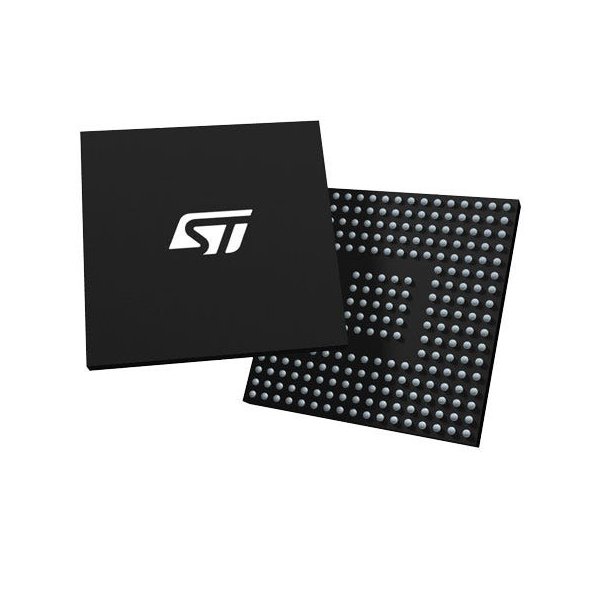
1. Technical Specifications & Performance Analysis
The STM32H750 Value Line datasheet reveals a device that punches far above its price bracket, provided the designer understands its unique memory architecture.
1.1 Core Architecture (CPU/Logic/Power)
At the heart of the series is the Arm Cortex-M7 core, running at a blistering 480 MHz. This architecture includes a double-precision Floating Point Unit (FPU) and L1 cache (Instruction/Data). The "Brain" is designed to handle complex DSP tasks and high-speed data manipulation that would overwhelm standard M4-based controllers.
1.2 Key Electrical Characteristics
Operating Voltage: Flexible range from 1.62 V to 3.6 V, supporting various power rail designs.
Current Consumption: Highly dependent on power domain configuration (D1, D2, and D3).
Temperature Range: Industrial grade performance from -40°C to +85°C.
1.3 Interfaces and Connectivity
The STM32H750 Value Line is a connectivity powerhouse. It features:
- Dual-mode Quad-SPI / Octal-SPI: Crucial for connecting external Flash to overcome the 128KB internal limit.
- Chrom-ART Accelerator (DMA2D): Reduces CPU load by up to 90% during graphics rendering.
- Hardware JPEG Codec: Enables rapid image processing for HMI displays.
- Ethernet & USB: Full-speed and high-speed support for IoT networking.
2. Pinout, Package, and Configuration
Choosing the right package is vital for both PCB routing complexity and manufacturing costs.
2.1 Pin Configuration Guide
The pinout is dense, typically featuring:
- Power Pins: Multiple VDD/VSS pairs to support the high-speed core.
- Memory Interface Pins: Dedicated pins for QSPI and SDRAM (for external expansion).
- Analog I/O: High-speed 16-bit ADCs for precision sensing.
2.2 Naming Convention & Ordering Codes
When reviewing the STM32H750 Value Line price vs performance, pay attention to the suffix:
- STM32H750VBT6: "V" indicates the 100-pin package, "B" for 128KB Flash, and "T" for LQFP.
- STM32H750IBT6: "I" indicates the 176-pin package, offering more I/O for complex HMI.
2.3 Available Packages
| Package Type | Dimensions | Common Use Case |
|---|---|---|
| LQFP100 | 14 x 14 mm | General purpose, easier to probe. |
| TFBGA240 | 14 x 14 mm | High-density designs requiring maximum I/O. |
| LQFP176 | 24 x 24 mm | Balance of pin count and hand-solderability. |
3. Design & Integration Guide (For Engineers & Makers)
Pro Tip: Always verify pin compatibility before migrating from older STM32F7 series. While similar, the power domain requirements are more strict on the H7 series.
3.1 Hardware Implementation
Bypass Capacitors: Use 100nF ceramic capacitors on every VDD pin, with larger 4.7µF to 10µF capacitors near the main power entry points.
PCB Layout: High-speed memory signals (QSPI/SDRAM) must have matched trace lengths. Use a 4-layer PCB minimum to provide a solid ground plane for EMI reduction.
Thermal Management: At 480 MHz, the chip can generate significant heat. Ensure the thermal pad (on BGA) or ground pins are well-connected to a large copper area.
3.2 Common Design Challenges
Issue: Limited 128KB Internal Flash.
Fix: Use the internal Flash only for the bootloader. Store the main application in external QSPI Flash and use "Execute-in-Place" (XIP) mode.
Issue: Complex Power-Up Sequences.
Fix: Use STM32CubeMX to generate initialization code. This ensures the D1, D2, and D3 power domains are clocked in the correct order to avoid hard faults.
4. Typical Applications & Use Cases
📺 Video Recommendation: STM32H750 Guide
4.1 Real-World Example: Smart HMI Thermostat
In a modern smart thermostat, the STM32H750 Value Line manages a 480x272 LCD. The Chrom-ART Accelerator handles the UI transparency and animations, while the 1MB RAM stores the frame buffer. Because the UI assets (images/icons) are large, they are stored in an external 16MB QSPI Flash chip, which the MCU accesses seamlessly at high speed.
5. Alternatives and Cross-Reference Guide
If the STM32H750 Value Line is unavailable or doesn't fit your specs, consider these:
Direct Replacements: NXP i.MX RT1050. This is the closest "crossover" competitor, often offering higher speeds but different peripheral sets.
Better Performance: STM32H753. If you need more internal Flash (up to 2MB) and hardware crypto-acceleration, this is the logical upgrade.
Cost-Effective Options: STM32F746. Lower clock speed (216 MHz) but more internal Flash, which might simplify your BOM by removing the need for external memory.
6. Frequently Asked Questions (FAQ)
Q: What is the difference between STM32H750 Value Line and STM32H743?
A: The H750 has only 128KB of Flash compared to the 2MB on the H743. However, the H750 is significantly more affordable, designed for users who plan to use external Flash anyway.
Q: Can STM32H750 Value Line be used in Automotive applications?
A: While it is industrial-grade (-40 to +85°C), it is not AEC-Q100 qualified. For automotive, look at the STM32H7 "A" or "B" series specifically rated for those environments.
Q: Where can I find the STM32H750 Value Line datasheet and library files?
A: These are available on the STMicroelectronics official website. For software, the STM32CubeH7 expansion pack contains all necessary HAL drivers.
Q: Is STM32H750 Value Line suitable for battery-operated devices?
A: Yes, but it requires careful use of low-power modes (Stop, Standby). At full 480 MHz, it consumes significant power, so it is best for devices with rechargeable batteries or mains power.
7. Datasheets & Resources
Official Datasheet: Available via ST’s document portal (Search: DS12556).
Development Tools: STM32CubeIDE, Keil MDK, and the NUCLEO-H753ZI (can be used for H750 evaluation).
Schematic Symbol: Available in standard EDA libraries like Altium, KiCad, and Eagle.
Disclaimer: Specifications are subject to change. Always refer to the latest manufacturer datasheet before finalizing a hardware design.
Specifications
Datasheet PDF
- datasheets :
- Datasheets :
 PIC18F26K20 Microcontroller: Detailed Technical Analysis
29 February 2024400
 LT3750 Capacitor Charger Controller: Datasheet, Circuit, Equivalent
13 October 20212569
 Atmel ATmega48/V, ATmega88/V, ATmega168/V: Unveiling the 8-bit Microcontroller with In-System Programmable Flash
28 February 2024241
 TDA7492 Amplifier: Pinout, Datasheet, and Block Diagram
07 July 20217752
 Microchip PIC32MX130F064DVPT Technical Datasheet
29 February 2024178
 LM301AN Operational Amplifier: 1MHZ, DIP-8 LM301AN Amplifier, Circuit and Equivalents
11 January 20224631
 Arduino Uno R4 WiFi: Description, Features and applications
06 October 20237186
 rj11 vs rj45: What’s the difference?
30 March 20225165
 FPGA in Industry and Communication: Key Players, Technologies, and Future Trends
07 March 20252426
 Classification and Selection of Industrial Connectors
11 February 20226060
 Comparison of Advantages and Disadvantages of Common Switch Mode Power Supply(SMPS)
21 January 20228393
 The Art of Microchips: A Journey from Sand to Silicon
12 September 20233978
 Power Converter with Inbuilt Charging technology using WBG Devices
18 January 20242682
 Samsung Austin Semiconductor Pledges $1M to UIUC's Grainger College of Engineering to Support U.S. Semiconductor Ecosystem
20 September 20233830
 How to make an Obstacle Avoiding Robot?
29 August 202315331
 Weak Current Control Strong Current: How to use the Relay?
28 November 20226654
STMicroelectronics
In Stock
United States
China
Canada
Japan
Russia
Germany
United Kingdom
Singapore
Italy
Hong Kong(China)
Taiwan(China)
France
Korea
Mexico
Netherlands
Malaysia
Austria
Spain
Switzerland
Poland
Thailand
Vietnam
India
United Arab Emirates
Afghanistan
Åland Islands
Albania
Algeria
American Samoa
Andorra
Angola
Anguilla
Antigua & Barbuda
Argentina
Armenia
Aruba
Australia
Azerbaijan
Bahamas
Bahrain
Bangladesh
Barbados
Belarus
Belgium
Belize
Benin
Bermuda
Bhutan
Bolivia
Bonaire, Sint Eustatius and Saba
Bosnia & Herzegovina
Botswana
Brazil
British Indian Ocean Territory
British Virgin Islands
Brunei
Bulgaria
Burkina Faso
Burundi
Cabo Verde
Cambodia
Cameroon
Cayman Islands
Central African Republic
Chad
Chile
Christmas Island
Cocos (Keeling) Islands
Colombia
Comoros
Congo
Congo (DRC)
Cook Islands
Costa Rica
Côte d’Ivoire
Croatia
Cuba
Curaçao
Cyprus
Czechia
Denmark
Djibouti
Dominica
Dominican Republic
Ecuador
Egypt
El Salvador
Equatorial Guinea
Eritrea
Estonia
Eswatini
Ethiopia
Falkland Islands
Faroe Islands
Fiji
Finland
French Guiana
French Polynesia
Gabon
Gambia
Georgia
Ghana
Gibraltar
Greece
Greenland
Grenada
Guadeloupe
Guam
Guatemala
Guernsey
Guinea
Guinea-Bissau
Guyana
Haiti
Honduras
Hungary
Iceland
Indonesia
Iran
Iraq
Ireland
Isle of Man
Israel
Jamaica
Jersey
Jordan
Kazakhstan
Kenya
Kiribati
Kosovo
Kuwait
Kyrgyzstan
Laos
Latvia
Lebanon
Lesotho
Liberia
Libya
Liechtenstein
Lithuania
Luxembourg
Macao(China)
Madagascar
Malawi
Maldives
Mali
Malta
Marshall Islands
Martinique
Mauritania
Mauritius
Mayotte
Micronesia
Moldova
Monaco
Mongolia
Montenegro
Montserrat
Morocco
Mozambique
Myanmar
Namibia
Nauru
Nepal
New Caledonia
New Zealand
Nicaragua
Niger
Nigeria
Niue
Norfolk Island
North Korea
North Macedonia
Northern Mariana Islands
Norway
Oman
Pakistan
Palau
Palestinian Authority
Panama
Papua New Guinea
Paraguay
Peru
Philippines
Pitcairn Islands
Portugal
Puerto Rico
Qatar
Réunion
Romania
Rwanda
Samoa
San Marino
São Tomé & Príncipe
Saudi Arabia
Senegal
Serbia
Seychelles
Sierra Leone
Sint Maarten
Slovakia
Slovenia
Solomon Islands
Somalia
South Africa
South Sudan
Sri Lanka
St Helena, Ascension, Tristan da Cunha
St. Barthélemy
St. Kitts & Nevis
St. Lucia
St. Martin
St. Pierre & Miquelon
St. Vincent & Grenadines
Sudan
Suriname
Svalbard & Jan Mayen
Sweden
Syria
Tajikistan
Tanzania
Timor-Leste
Togo
Tokelau
Tonga
Trinidad & Tobago
Tunisia
Turkey
Turkmenistan
Turks & Caicos Islands
Tuvalu
U.S. Outlying Islands
U.S. Virgin Islands
Uganda
Ukraine
Uruguay
Uzbekistan
Vanuatu
Vatican City
Venezuela
Wallis & Futuna
Yemen
Zambia
Zimbabwe
![STM32F103RBT6]() STM32F103RBT6
STM32F103RBT6STMicroelectronics
![STM32F103ZET6]() STM32F103ZET6
STM32F103ZET6STMicroelectronics
![STM32H743IIT6]() STM32H743IIT6
STM32H743IIT6STMicroelectronics
![STM32F407VET6]() STM32F407VET6
STM32F407VET6STMicroelectronics
![STM32F405RGT6]() STM32F405RGT6
STM32F405RGT6STMicroelectronics
![STM32F030C8T6]() STM32F030C8T6
STM32F030C8T6STMicroelectronics
![STM32F100C8T6B]() STM32F100C8T6B
STM32F100C8T6BSTMicroelectronics
![STM32F103VBT6]() STM32F103VBT6
STM32F103VBT6STMicroelectronics
![STM8S003F3U6TR]() STM8S003F3U6TR
STM8S003F3U6TRSTMicroelectronics
![STM32F429ZIT6]() STM32F429ZIT6
STM32F429ZIT6STMicroelectronics


