

 Product
 Brand
Brand Articles
 Tools
Tools
AVR® ATtiny 2KB Flash MCU: Hardware UART & 20MHz Performance Analysis
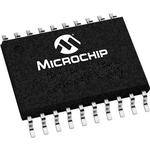


2KB Flash Microcontroller
Explore the AVR® ATtiny2313A 8-bit MCU featuring a full hardware USART and 20MHz speed. Ideal for protocol bridging. Download the datasheet and start your design today.
- Executive Summary: What is the AVR® ATtiny?
- 1. Technical Specifications & Performance Analysis
- 2. Pinout, Package, and Configuration
- 3. Design & Integration Guide (For Engineers & Makers)
- 4. Typical Applications & Use Cases
- 5. Alternatives and Cross-Reference Guide
- 6. Frequently Asked Questions (FAQ)
- 7. Datasheets & Resources
- Specifications
- Datasheet PDF
Executive Summary: What is the AVR® ATtiny?
The AVR® ATtiny is a low-power CMOS 8-bit microcontroller designed for cost-sensitive applications requiring efficient processing and robust serial communication. Based on the AVR enhanced RISC architecture, it executes powerful instructions in a single clock cycle, achieving throughputs approaching 1 MIPS per MHz.
Market Position: High-efficiency, low-cost 8-bit MCU; highly active in industrial and consumer legacy support.
Top Features: Full Hardware USART (rare for this size), 20 MHz max frequency, and 18 General Purpose I/O lines.
Primary Audience: Ideal for IoT designers, procurement managers sourcing for protocol bridges, and hobbyists building keypad or LED interfaces.
Supply Status: Generally Active; widely available in PDIP and SOIC packages.
1. Technical Specifications & Performance Analysis
The AVR® ATtiny (specifically the 2313A series) occupies a unique niche in the Microchip portfolio. While it lacks some modern peripherals, its raw speed and communication capabilities make it a "Swiss Army Knife" for digital logic replacement.
1.1 Core Architecture (CPU/Logic/Power)
The "brain" of this series is the AVR RISC core. Unlike many 8-bit competitors that require multiple clock cycles per instruction, the ATtiny executes most instructions in a single cycle. This allows for significantly lower power consumption at a given processing speed compared to older architectures. It features 32 general-purpose working registers directly connected to the Arithmetic Logic Unit (ALU).
1.2 Key Electrical Characteristics
For engineers and buyers, the electrical flexibility is a major selling point:
- Operating Voltage: A wide 1.8V to 5.5V range, making it compatible with both legacy 5V systems and modern 3.3V/1.8V battery-operated circuits.
- Clock Speed: Capable of running up to 20 MHz at 4.5V - 5.5V.
- Power Efficiency: Features three sleep modes (Idle, Power-down, and Standby) to maximize battery life in remote sensors.
1.3 Interfaces and Connectivity
The standout feature of this specific ATtiny variant is the Full Duplex USART. While many small MCUs use "bit-banging" or limited "Universal Serial Interfaces" (USI) for communication, the hardware USART here ensures reliable serial data transfer without taxing the CPU. It also includes a USI that can be configured for SPI or I2C (TWI) communication.
2. Pinout, Package, and Configuration
The 20-pin footprint provides a high I/O-to-size ratio, making it a favorite for dense PCB designs.
2.1 Pin Configuration Guide
- VCC/GND: Power pins (1.8V - 5.5V).
- Port B & Port D: 18 total I/O lines.
- RESET: Used for programming and system resets.
- RXD/TXD (Pins 2 & 3): Dedicated hardware serial communication pins.
- XTAL1/XTAL2: Connections for an external crystal if the internal RC oscillator isn't precise enough for your timing needs.
2.2 Naming Convention & Ordering Codes
Understanding the Part Numbers:
- ATtiny2313A-PU: 20-pin Plastic Dual Inline Package (PDIP), through-hole, industrial temperature.
- ATtiny2313A-SU: 20-pin Small Outline Integrated Circuit (SOIC), surface mount.
- ATtiny2313A-MUR: 20-pad Quad Flat No-lead (VQFN), ultra-compact for mobile devices.
2.3 Available Packages
| Package Type | Dimensions | Common Use Case |
|---|---|---|
| PDIP-20 | 26.92mm x 6.35mm | Prototyping, Breadboards, Educational kits |
| SOIC-20 | 12.8mm x 7.5mm | Standard industrial PCB assembly |
| VQFN-20 | 4mm x 4mm | Space-constrained IoT and Wearables |
3. Design & Integration Guide (For Engineers & Makers)
Pro Tip: Always verify pin compatibility before migrating from older series. The "A" suffix in 2313A denotes a newer process with lower power consumption than the original 2313.
3.1 Hardware Implementation
Bypass Capacitors: Place a 0.1µF ceramic capacitor as close to the VCC and GND pins as possible to filter high-frequency noise.
PCB Layout: Keep the crystal oscillator traces short to minimize EMI and ensure clock stability.
Thermal Management: At 20MHz, the chip remains cool; no heatsink is required for standard operations.
3.2 Common Design Challenges
Issue: No ADC. The ATtiny2313 does not have an Analog-to-Digital Converter.
Fix: If you need to read an analog sensor, use an external I2C ADC chip or utilize the internal Analog Comparator with an RC timing circuit.
Issue: Limited RAM (128 Bytes). This is very small for complex C++ libraries.
Fix: Avoid using
Stringobjects in Arduino; usechararrays and write optimized C code to prevent stack overflows.Issue: Fuse Bricking. Setting the clock fuse to an external crystal without one present will make the chip unresponsive.
Fix: Use a High-Voltage Parallel Programmer (HVPP) to reset the fuses to factory defaults.
4. Typical Applications & Use Cases
📺 Video Recommendation: ATTINY2313 Guide
4.1 Real-World Example: Serial-to-Parallel Bridge
In many systems, a main processor runs out of GPIO pins. The ATtiny can act as a "Port Expander." It receives serial commands via its USART and toggles its 18 I/O pins to drive LEDs or scan a 4x4 keypad matrix, offloading simple tasks from the primary CPU.
5. Alternatives and Cross-Reference Guide
If the ATtiny2313A doesn't fit your exact requirements, consider these alternatives:
Direct Upgrades: ATtiny4313 (Pin-compatible but doubles the Flash to 4KB and SRAM to 256B).
Analog-Heavy Projects: ATtiny85 (Fewer pins, but includes a 10-bit ADC).
New Generation: ATtiny412 (Microchip's newer 1-series with improved peripherals and single-pin programming).
Cost-Effective Competitor: STM8S003F3 (Offers more peripherals like ADC and Timers at a lower price point, but uses a different architecture).
6. Frequently Asked Questions (FAQ)
Q: What is the difference between AVR® ATtiny and ATmega?A: ATtiny chips generally have smaller memory (under 16KB) and fewer pins, making them cheaper and better for simple, dedicated tasks, whereas ATmega (like the Arduino Uno's chip) offers more features and memory.
Q: Can I program the AVR® ATtiny with an Arduino?A: Yes, you can use an "Arduino as ISP" sketch to program the ATtiny series using the SPI pins (MOSI, MISO, SCK).
Q: Does the ATtiny2313 have a built-in oscillator?A: Yes, it features an internal calibrated RC oscillator (typically 8MHz), allowing it to run without any external components.
Q: Is the ATtiny suitable for battery-operated devices?A: Absolutely. With a supply voltage as low as 1.8V and ultra-low power sleep modes, it is excellent for long-term battery applications.
7. Datasheets & Resources
Official Datasheet: Microchip ATtiny2313A Full Datasheet
Development Tools: Microchip Studio (formerly Atmel Studio), MPLAB X, and the AVR-GCC compiler.
Libraries: ATTinyCore (for Arduino IDE support).
Specifications
Datasheet PDF
- datasheets :
 TXB0108PWR Translator:Features, Applications and Datasheet
23 October 20231147
 KSP2222A NPN Transistor: Pinout, Datasheet and Equivalents
03 November 20218133
 6N138 Optocouplers: Features, Pinout, and Datasheet
15 December 20216694
 AD600: Datasheet, Pinout, and Ultrasound Imaging Guide
27 January 2026235
 LM2575 Step-Down Switching Regulators: Datasheet pdf, Equivalents and Circuit
03 December 20215419
 MOC3022 Random-Phase Optoisolator: Datasheet, Pinout and Circuit
30 July 20219255
 Introduction to Microchip ATUC64L4UZAUT Microcontroller
29 February 2024138
![A General Introduction to BMX055 [Faq]](https://res.utmel.com/Images/Article/d62f1040-06a8-4a63-aaf9-208b94cf45a1.jpg) A General Introduction to BMX055 [Faq]
A General Introduction to BMX055 [Faq]20 April 20221891
 CR123A vs 123A Batteries Explained for 2025
27 May 20255088
 Understanding Electronic Speed Controllers (ESCs): Working Principles, Key Specifications, and Sourcing Guide
15 June 2026743
 Analysis of SiP (System in Package)
12 January 20229027
 VFD Driving Guide: What to Do When Your MCU Runs Out of Pins?
22 July 20251518
 What is an LDO (Low Dropout Regulator)?
29 October 20216648
 Selection Criteria for Power Management ICs (PMICs)
06 April 20223915
 Arm's IPO: A New Chapter in Chip Technology
30 August 20232548
 European Chipmakers Experience Decline Following SMIC's Profit Slump
20 November 20233322
Microchip Technology
In Stock
United States
China
Canada
Japan
Russia
Germany
United Kingdom
Singapore
Italy
Hong Kong(China)
Taiwan(China)
France
Korea
Mexico
Netherlands
Malaysia
Austria
Spain
Switzerland
Poland
Thailand
Vietnam
India
United Arab Emirates
Afghanistan
Åland Islands
Albania
Algeria
American Samoa
Andorra
Angola
Anguilla
Antigua & Barbuda
Argentina
Armenia
Aruba
Australia
Azerbaijan
Bahamas
Bahrain
Bangladesh
Barbados
Belarus
Belgium
Belize
Benin
Bermuda
Bhutan
Bolivia
Bonaire, Sint Eustatius and Saba
Bosnia & Herzegovina
Botswana
Brazil
British Indian Ocean Territory
British Virgin Islands
Brunei
Bulgaria
Burkina Faso
Burundi
Cabo Verde
Cambodia
Cameroon
Cayman Islands
Central African Republic
Chad
Chile
Christmas Island
Cocos (Keeling) Islands
Colombia
Comoros
Congo
Congo (DRC)
Cook Islands
Costa Rica
Côte d’Ivoire
Croatia
Cuba
Curaçao
Cyprus
Czechia
Denmark
Djibouti
Dominica
Dominican Republic
Ecuador
Egypt
El Salvador
Equatorial Guinea
Eritrea
Estonia
Eswatini
Ethiopia
Falkland Islands
Faroe Islands
Fiji
Finland
French Guiana
French Polynesia
Gabon
Gambia
Georgia
Ghana
Gibraltar
Greece
Greenland
Grenada
Guadeloupe
Guam
Guatemala
Guernsey
Guinea
Guinea-Bissau
Guyana
Haiti
Honduras
Hungary
Iceland
Indonesia
Iran
Iraq
Ireland
Isle of Man
Israel
Jamaica
Jersey
Jordan
Kazakhstan
Kenya
Kiribati
Kosovo
Kuwait
Kyrgyzstan
Laos
Latvia
Lebanon
Lesotho
Liberia
Libya
Liechtenstein
Lithuania
Luxembourg
Macao(China)
Madagascar
Malawi
Maldives
Mali
Malta
Marshall Islands
Martinique
Mauritania
Mauritius
Mayotte
Micronesia
Moldova
Monaco
Mongolia
Montenegro
Montserrat
Morocco
Mozambique
Myanmar
Namibia
Nauru
Nepal
New Caledonia
New Zealand
Nicaragua
Niger
Nigeria
Niue
Norfolk Island
North Korea
North Macedonia
Northern Mariana Islands
Norway
Oman
Pakistan
Palau
Palestinian Authority
Panama
Papua New Guinea
Paraguay
Peru
Philippines
Pitcairn Islands
Portugal
Puerto Rico
Qatar
Réunion
Romania
Rwanda
Samoa
San Marino
São Tomé & Príncipe
Saudi Arabia
Senegal
Serbia
Seychelles
Sierra Leone
Sint Maarten
Slovakia
Slovenia
Solomon Islands
Somalia
South Africa
South Sudan
Sri Lanka
St Helena, Ascension, Tristan da Cunha
St. Barthélemy
St. Kitts & Nevis
St. Lucia
St. Martin
St. Pierre & Miquelon
St. Vincent & Grenadines
Sudan
Suriname
Svalbard & Jan Mayen
Sweden
Syria
Tajikistan
Tanzania
Timor-Leste
Togo
Tokelau
Tonga
Trinidad & Tobago
Tunisia
Turkey
Turkmenistan
Turks & Caicos Islands
Tuvalu
U.S. Outlying Islands
U.S. Virgin Islands
Uganda
Ukraine
Uruguay
Uzbekistan
Vanuatu
Vatican City
Venezuela
Wallis & Futuna
Yemen
Zambia
Zimbabwe
![ATMEGA8515L-8AU]() ATMEGA8515L-8AU
ATMEGA8515L-8AUMicrochip Technology
![DSPIC30F6014A-30I/PF]() DSPIC30F6014A-30I/PF
DSPIC30F6014A-30I/PFMicrochip Technology
![ATMEGA32A-AU]() ATMEGA32A-AU
ATMEGA32A-AUMicrochip Technology
![ATXMEGA128A1U-AU]() ATXMEGA128A1U-AU
ATXMEGA128A1U-AUMicrochip Technology
![PIC18F46K20-I/PT]() PIC18F46K20-I/PT
PIC18F46K20-I/PTMicrochip Technology
![PIC18F6722-I/PT]() PIC18F6722-I/PT
PIC18F6722-I/PTMicrochip Technology
![PIC16F883-I/SS]() PIC16F883-I/SS
PIC16F883-I/SSMicrochip Technology
![PIC16F877-20I/PT]() PIC16F877-20I/PT
PIC16F877-20I/PTMicrochip Technology
![ATMEGA8535L-8AU]() ATMEGA8535L-8AU
ATMEGA8535L-8AUMicrochip Technology
![PIC18F4685-I/PT]() PIC18F4685-I/PT
PIC18F4685-I/PTMicrochip Technology


