Product
 Brand
Brand Articles
 Tools
Tools
How to Check 2073 Transistor Pinout at Home

When you look at a 2073 transistor in the TO-220 package, you will see three pins. Here is the exact order for the 2073 transistor pinout:
| Pin Number | Pin Function |
|---|---|
| 1 | Base (B) |
| 2 | Collector (C) |
| 3 | Emitter (E) |
You can use this same pinout for the c2073 transistor pinout. The 2073, c2073, and 2sc2073 transistor all share this layout. If you check the 2sc2073 transistor at home, you only need a simple multimeter. Correct pinout identification keeps your circuit safe and working. Many beginners run into problems because of pinout mistakes, not because the transistor is faulty.
Most circuit issues come from misidentifying the pins, so double-checking the 2073 transistor pinout will help you avoid common problems.
This process is easy for anyone to learn, even if you are new to electronics.
2073 Transistor Pinout
Pin Configuration
You need to know the exact 2073 transistor pinout before you start testing or using it in a circuit. The 2073, c2073, and 2sc2073 transistors all share the same pinout configuration. These are NPN power transistors, and you will find them in the TO-220 package. When you hold the transistor with the flat side facing you and the pins pointing down, you can identify each pin easily.
Here is the official pinout configuration for the 2073, c2073, and 2sc2073 transistor, as shown in their datasheets:
| Pin Number | Function |
|---|---|
| 1 | Base |
| 2 | Collector (connected to mounting base) |
| 3 | Emitter |
This pinout is consistent for all three types. The base (pin 1) controls the transistor. The collector (pin 2) connects to the mounting base, which helps with heat dissipation. The emitter (pin 3) is usually the output terminal. You will see this same pin diagram in most datasheets for these NPN transistors.
Tip: Always double-check the pinout configuration before connecting the transistor to your circuit. Mistakes can damage your components.
TO-220 Package Layout
The TO-220 package is a common style for power transistors like the 2073, c2073, and 2sc2073. You will recognize it by its rectangular plastic body and metal tab at the top. The three pins stick out from the bottom. When you look at the flat front side, the pins are arranged from left to right as base, collector, and emitter.
Here is how you can hold and identify the pins:
Hold the transistor so the flat side faces you.
Make sure the pins point downward.
From left to right, you will see:
Pin 1: Base
Pin 2: Collector (this pin also connects to the metal tab)
Pin 3: Emitter
This layout matches the c2073 transistor pinout and the 2sc2073 transistor pinout. Many other NPN transistors in the TO-220 package use the same order, but you should always check the datasheet or use a multimeter to confirm.
Sometimes, datasheets can be confusing. They may use different views, like showing the back or using a 3D drawing. Some datasheets even use different numbering systems, which can lead to mistakes. You might see abbreviations or symbols that are not clear. Always look for a clear pin diagram and compare it with your actual transistor.
Note: If you feel unsure, compare your transistor with a known working one or ask for help from someone experienced.
You now have a clear understanding of the 2073 transistor pinout and how to identify it in the TO-220 package. This knowledge will help you avoid common errors and keep your circuits safe.
Tools Needed
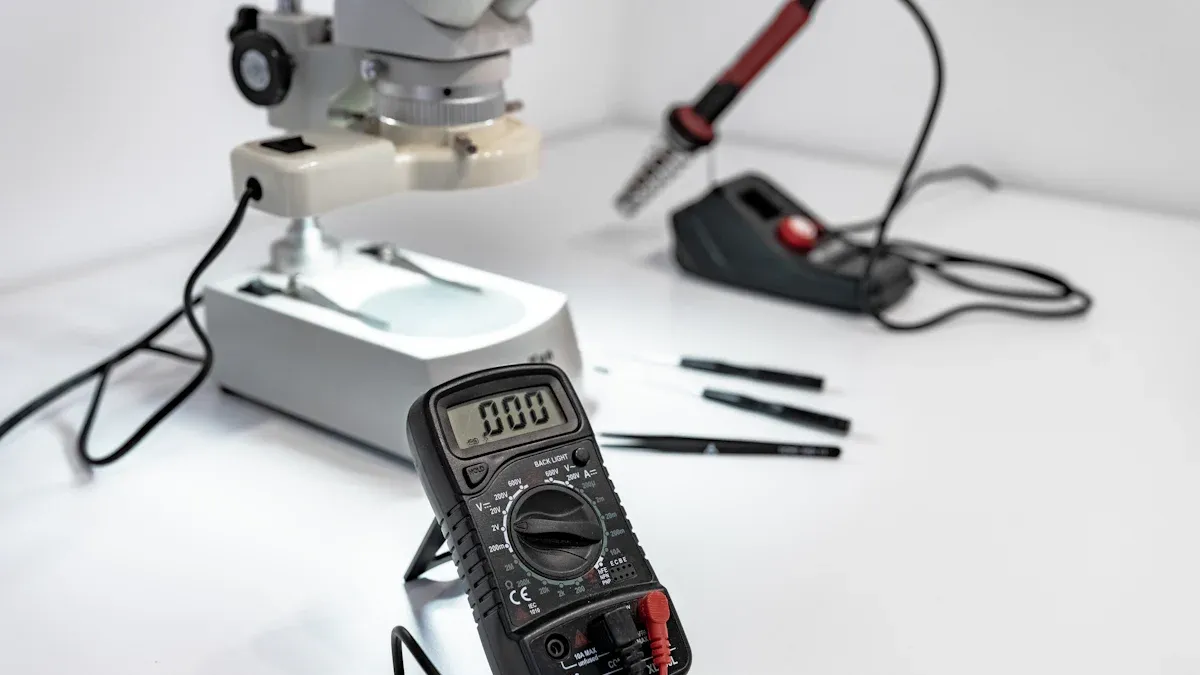
Before you start checking the pinout at home, you need the right tools. These tools help you work safely and get accurate results. You do not need expensive equipment. Most people already have what they need at home or can find it easily.
Multimeter
A digital multimeter is the most important tool for this task. You can use it to measure voltage, resistance, and check diode functions. Many multimeters also have a special socket for testing transistors, but you can still use the regular probes if yours does not. When you use a multimeter, you can test the pinout by measuring the voltage drop between pins. This helps you find the base, collector, and emitter.
Tip: Choose a multimeter that supports both ohmic (resistance) and diode modes. This gives you more options for testing.
Here are some features to look for in a multimeter:
Diode test mode and resistance mode.
Clear display for easy reading.
Good battery life for accurate results.
Firm and clean probes for solid contact.
Safety features like insulated probes.
When you use the multimeter, always turn off power to the circuit. Set the correct mode before testing. Connect the probes with the right polarity. Make sure you identify the pins using a datasheet or a clear reference image. This helps you avoid mistakes and keeps your components safe.
Reference Image or Datasheet
A reference image or datasheet is just as important as your multimeter. The datasheet shows the exact pin configuration. For the 2073, you will see pin 1 as the base, pin 2 as the collector, and pin 3 as the emitter. This information helps you avoid errors when you measure or build your circuit.
Note: Always compare your actual component with the datasheet or a trusted reference image. This step helps you confirm the pinout and prevents wiring mistakes.
Using a datasheet together with your multimeter makes your testing more accurate. You can check the pin functions by measuring resistance or voltage drop, then compare your results with the datasheet. This method improves your confidence and the reliability of your work.
How to Identify C2073 Transistor Pinout
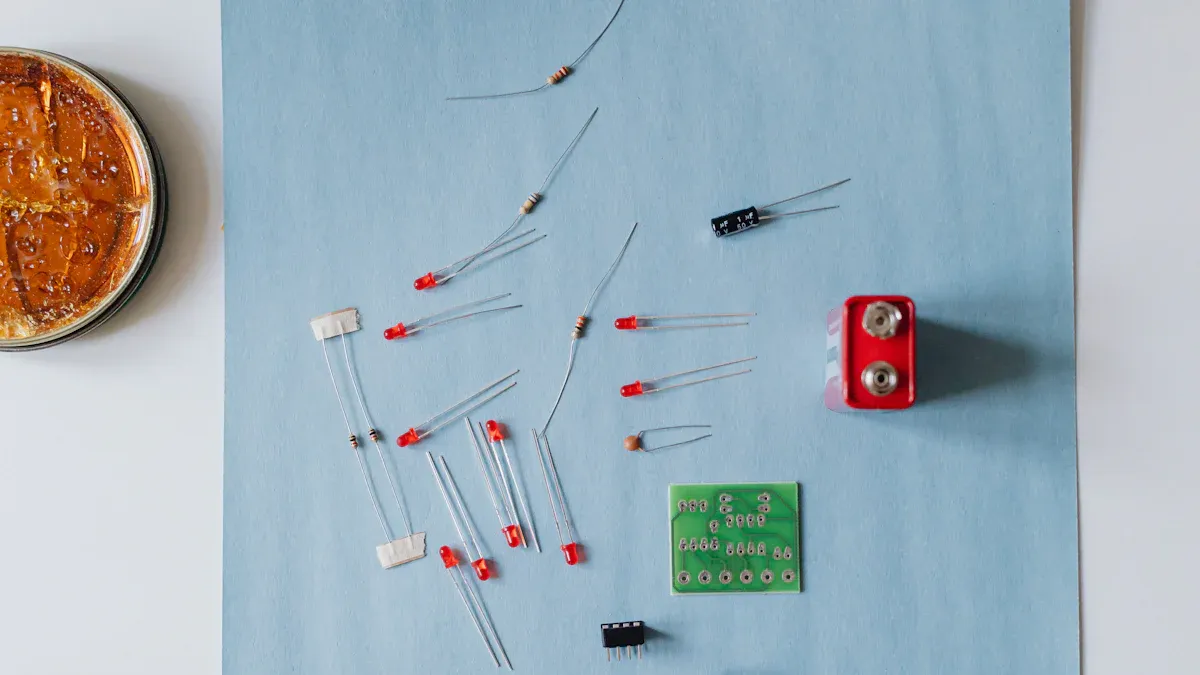
Visual Inspection
Start by looking closely at your c2073 transistor. Hold the flat side of the package facing you, with the pins pointing down. You will see three pins lined up in a row. The metal tab at the top helps you find the correct orientation. The emitter pin usually sits closest to this metal tab.
Check for any markings on the body. You might see "c2073" or "2sc2073" printed on the front. These markings confirm you have the right npn transistor. If the print is hard to read, use a magnifying glass.
Tip: Always compare your transistor with a clear reference image or datasheet. This step helps you avoid mistakes before you start testing.
Multimeter Testing Steps
You can use a digital multimeter to check the pinout of your c2073 transistor. Set your multimeter to diode mode. This mode lets you measure the voltage drop between two pins.
Follow these steps:
Hold the transistor with the flat side facing you and pins down.
Touch the black probe to one pin and the red probe to another pin.
Record the reading. Swap the probes and test again.
Repeat this process for all pin pairs: 1-2, 1-3, and 2-3.
You want to find the base pin first. In an npn transistor like the c2073, the base will show a voltage drop (usually 0.6V to 0.7V) when you connect the red probe to the base and the black probe to the emitter or collector. If you reverse the probes, the reading should show "OL" (open loop) or no voltage drop.
Here is a simple table to help you:
| Test Pair | Red Probe | Black Probe | Expected Reading |
|---|---|---|---|
| Base - Emitter | Base | Emitter | 0.6V - 0.7V |
| Base - Collector | Base | Collector | 0.6V - 0.7V |
| Collector - Emitter | Collector | Emitter | OL or High |
Note: If you get a reading in both directions, your transistor may be faulty.
Confirming Pin Functions
After you find the base, you need to confirm the collector and emitter. The collector usually connects to the metal tab at the top of the package. The emitter sits on the opposite side.
To confirm, place the red probe on the base and the black probe on each of the other two pins. The pin that gives a slightly higher voltage drop is the emitter. The other pin is the collector.
You can also check the datasheet for the c2073 pinout. The datasheet will show pin 1 as base, pin 2 as collector, and pin 3 as emitter when you look at the flat side with pins down.
Always double-check your results with a datasheet or trusted reference. This step keeps your circuit safe and prevents damage.
With these steps, you can identify the c2073 transistor pinout at home. You do not need special tools. A careful inspection and a simple multimeter test will help you work with confidence.
Tips and Troubleshooting
Avoiding Mistakes
When you check a 2073 transistor pinout at home, you can avoid many common mistakes by following a few simple steps:
Verify the pins: Always check the transistor terminals using a datasheet or a trusted reference image. Use your multimeter to confirm the pinout before wiring.
Insert pins correctly: Place each transistor pin into a separate row on your breadboard. Never put two pins in the same column, or you might cause a short circuit.
Use a limiting resistor: Add a current-limiting resistor, such as a 1kΩ resistor, to the base pin. This protects both the transistor and your circuit.
Check biasing: Connect the base, collector, and emitter according to the transistor type and your circuit design. Proper biasing ensures the transistor switches as expected.
Double-check connections: Before you power your circuit, review all connections. A quick check can prevent costly mistakes.
💡 Tip: If you use a component tester, you can reduce errors and confirm pin functions quickly.
Faulty Transistor Signs
Sometimes, your multimeter readings might not make sense, or the transistor may not work as expected. Here are steps you can take:
Clean the transistor pins with rubbing alcohol if you see dirt or corrosion.
Make sure the transistor is mounted correctly, especially if you use a heatsink.
Check if the transistor or nearby components feel hot. Overheating can mean a short or wrong connection.
Watch for drifting voltages or unstable readings. These can signal a faulty part.
Inspect solder joints and cable connections. Loose or cold joints often cause problems.
Test at a lower voltage if you worry about damaging parts.
If you still get unclear readings, compare your results with the datasheet. Sometimes, different manufacturers use different pinouts for the same part number. Always check the datasheet for your exact transistor. Never assume the pinout is standard. Careful checking helps you avoid errors and keeps your projects safe.
📝 Note: If you feel unsure, ask for help or use a verified library or footprint for your transistor. Double-checking now saves time and trouble later.
You can check the 2073 transistor pinout at home by following a few simple steps: inspect the transistor, use your multimeter, and compare your results with a datasheet. Always test carefully and safely—use antistatic protection, avoid touching the leads, and follow voltage limits.
Double-check your results with a component tester or by reviewing the datasheet’s pinout diagram.
With practice, you will gain confidence and skill in identifying transistor pins for any project.
FAQ
What if my multimeter shows no voltage drop between any pins?
Your transistor may be faulty or damaged. Try cleaning the pins and test again. If you still see no voltage drop, replace the transistor with a new one.
Can I use an analog multimeter to check the pinout?
Yes, you can use an analog multimeter. Set it to the lowest resistance range. You will see the needle move when you find the base pin. Always check the readings carefully.
How do I know if my 2073 transistor is NPN or PNP?
Look for the part number on the body. The 2073, C2073, and 2SC2073 are all NPN types. If you see a different part number, check the datasheet to confirm the type.
Why is the emitter pin usually closest to the metal tab?
The emitter pin sits near the metal tab for better heat transfer and easier identification. This design helps you quickly find the correct pin when you hold the transistor.
What should I do if the pinout does not match the datasheet?
Double-check your transistor’s part number.
Compare with a trusted reference image.
If you still see a mismatch, do not use the transistor.
Using the wrong pinout can damage your circuit.
 UTMEL
UTMEL
We are the professional distributor of electronic components, providing a large variety of products to save you a lot of time, effort, and cost with our efficient self-customized service. careful order preparation fast delivery service
 MOSFET vs. IGBT: Characteristics, Structure and Market AnalysisUTMEL25 December 202521330
With the rise of new energy in recent years, the market demand for MOSFETs and IGBTs is increasing steeply. Generally used as switching devices, they are widely used in electronic circuits. MOSFETs and IGBTs are relatively similar in appearance and characteristics parameters. So what is the difference between MOSFETs and IGBTs?
Read More Introduction to FinFETUTMEL18 March 202129031
The full name of FinFET is Fin Field-Effect Transistor. It is a new complementary metal oxide semiconductor transistor. The FinFET name is based on the similarity between the shape of the transistor and the fin.
Read More What is a MOSFET?UTMEL16 April 20216888
MOSFET, short for Metal-Oxide-Semiconductor Field-Effect Transistor, is a field-effect transistor that can be widely used in analog circuits and digital circuits. MOSFETs can be divided into N-channel type with the majority of electrons and P-channel type with the majority of holes according to their "channel" polarity. They are usually called NMOSFET and PMOSFET.
Read More NPN Transistors and PNP TransistorsUTMEL29 October 20209123
NPN and PNP are two types of transistors. Transistors are semiconductor devices made of doped p-type and n-type junctions. This article mainly introduces the differences between this two kinds of transistors, the methods of distinguishing them, and the application of them.
Read More An Overview of Bipolar TransistorsUTMEL27 August 20208329
Bipolar Transistor, full name bipolar junction transistor(BJT), is an electronic device with three terminals, made of three parts of semiconductors with different levels of doping. The charge flow in the transistor is mainly due to the diffusion and drift movement of carriers at the PN junction.
Read More
Subscribe to Utmel !
![DGD2136S28-13]() DGD2136S28-13
DGD2136S28-13Diodes Incorporated
![TEN-HS5]() TEN-HS5
TEN-HS5Traco Power
![RT1206DRE072K61L]() RT1206DRE072K61L
RT1206DRE072K61LYageo
![CRCW1206374RFKEAHP]() CRCW1206374RFKEAHP
CRCW1206374RFKEAHPVishay Dale
![HEF4044BT,652]() HEF4044BT,652
HEF4044BT,652NXP USA Inc.
![T9GV5L14-22]() T9GV5L14-22
T9GV5L14-22TE Connectivity
![7-2837156-2]() 7-2837156-2
7-2837156-2TE Connectivity
![DT13-12PB-B016]() DT13-12PB-B016
DT13-12PB-B016TE Connectivity
![HPBA015C500R050E]() HPBA015C500R050E
HPBA015C500R050ETE Connectivity
![151117-5404]() 151117-5404
151117-5404Molex