

 Product
 Brand
Brand Articles
 Tools
Tools
What is a Motherboard Chipset? A Guide to 2026 Architecture
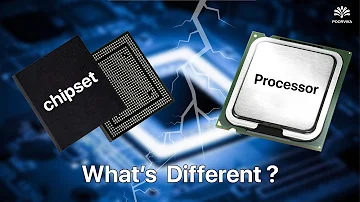
Chipset vs Processor Explained | A14 | Snapdragon | AMD | Intel | Mediatek | Exynos
Catalog
| Ⅰ What is a Motherboard Chipset? |
| Ⅱ What is the Function of a Chipset? |
| Ⅲ How Have Chipsets Evolved? |
| Ⅳ What Are Chipset Drivers? |
Summary: A motherboard chipset is the central data-routing hub that connects a computer's processor to its memory, storage, and peripherals. In 2026, modern chipsets like Intel's Z890 and AMD's X870E dictate system capabilities, including PCIe 5.0 bandwidth, USB4 connectivity, and overall performance limits. Choosing the right chipset is critical for ensuring hardware compatibility and maximizing your PC's potential.
Ⅰ What is a Motherboard Chipset?
A motherboard chipset is a specialized set of integrated circuits that acts as the central traffic controller, managing the high-speed data flow between the processor (CPU), memory, storage, and peripherals. While historically composed of multiple chips, modern chipsets often consolidate these functions into a single hub. The chipset determines compatibility; for instance, an Intel CPU requires a compatible Intel chipset (like the Z890 series), while AMD processors utilize their own specific chipsets (such as the X870E on the AM5 platform).

Classic Architecture: Intel x58 North Bridge Chipset
The chipset is arguably the "nervous system" of the motherboard. If the CPU is the heart, the chipset is the torso connecting all limbs. It defines the motherboard's capabilities, including the number of USB ports, supported storage speeds (like NVMe PCIe 5.0), and overclocking potential. In modern computing (2026), the role of the chipset has evolved. Functions traditionally handled by the "North Bridge"—such as memory control and primary graphics lanes—are now integrated directly into the CPU itself to reduce latency. The remaining component, often called the PCH (Platform Controller Hub), handles input/output tasks.
Historically, chipsets were identified by their North Bridge, such as the classic AMD 990FX. Today, naming conventions follow series tiers. For example, in 2026, mainstream users might look for Intel B860 or AMD B850 chipsets, while enthusiasts opt for the flagship Z-series or X-series platforms. This distinction remains vital: buying a high-end CPU with an entry-level chipset may throttle its potential connectivity.
Ⅱ What is the Function of a Chipset?
The primary function of a motherboard chipset is to dictate the connectivity limits, data bandwidth, and expansion capabilities of your entire system. While the CPU now largely controls system memory (DDR5) and the primary graphics slot, the chipset manages the "South Bridge" style I/O functions. This includes the number of PCIe lanes available for secondary SSDs, the speed of USB ports (including USB4 and Thunderbolt 5), and networking standards like Wi-Fi 7 and 10Gb Ethernet.

AMD chipset
Desktop vs. Laptop vs. Server:
Desktop: Requires high expandability. Enthusiast chipsets allow for CPU overclocking and multiple GPU/storage configurations.
Laptop: With the rise of SoC (System on Chip) designs, many laptop "chipsets" are fully integrated into the processor package to save space and power. They prioritize energy efficiency over massive expansion.
Server/Workstation: Stability and volume are key. Chipsets for CPUs like AMD EPYC or Intel Xeon support massive amounts of RAM (often measured in Terabytes) and error-correcting code (ECC) memory. They utilize enterprise interfaces like SAS instead of standard SATA and offer significantly more PCIe lanes for data center storage arrays.
Ⅲ How Have Chipsets Evolved?
Chipsets have evolved from multi-chip configurations handling basic logic into highly integrated, single-chip hubs that manage massive data bandwidth for modern peripherals. The landscape of chipset manufacturers has consolidated significantly over the last two decades into a strict duopoly. In the early 2000s, companies like VIA, SIS, ATI, and NVIDIA were major third-party players. Today, the x86 market is entirely dominated by Intel and AMD, who manufacture the chipsets for their respective processors. NVIDIA has pivoted entirely to GPUs and AI accelerators, while VIA/SIS have largely exited the consumer motherboard space.
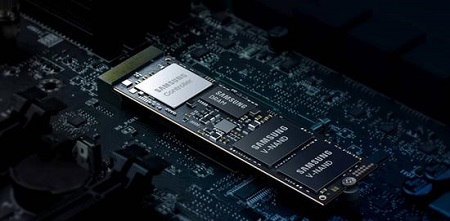
Samsung's memory chipset
Modern Market Dynamics:
Intel Platform: Intel maintains strict control over its ecosystem. The 800-series chipsets (e.g., Z890) introduced with Core Ultra processors push the boundaries of I/O speed, fully embracing PCIe 5.0 and Thunderbolt 5.
AMD Platform: AMD's AM5 platform (X870E/X870 chipsets) utilizes a "chiplet" design philosophy, often chaining two chips together on high-end boards to double connectivity without designing a massive monolithic die.
| Market Segment | Intel (LGA-1851) | AMD (AM5) | Key Features (2026) |
|---|---|---|---|
| Enthusiast / Flagship | Z890 | X870E / X870 | Maximum PCIe 5.0 lanes, extreme CPU overclocking, dual USB4 |
| Mainstream / Gaming | B860 | B850 | Balanced PCIe 5.0/4.0, memory overclocking, high value |
| Entry-Level / Budget | H810 | B840 | PCIe 4.0 focus, no CPU overclocking, basic connectivity |
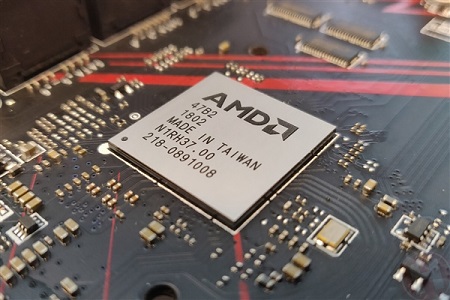
AMD chipset
Technological progress has been exponential. We have moved from the legacy PCI and AGP slots to PCI Express 5.0, which offers massive bandwidth for modern GPUs and storage. Similarly, the industry has transitioned from SATA SSDs to NVMe M.2 drives, which communicate directly through the chipset or CPU lanes at sequential read speeds up to 14,800 MB/s. Integration continues to be the trend; audio controllers, Wi-Fi 7 MACs, and 10Gb Ethernet logic are now standard features within the chipset silicon, reducing costs and complexity for motherboard manufacturers.
Ⅳ What Are Chipset Drivers?
A chipset driver (often called Chipset Device Software or INF Update Utility) is the essential software bridge that allows your operating system to communicate correctly with the motherboard hardware. While the OS may recognize basic functionality out of the box, specific drivers are required to optimize power management, identify specific I/O controllers, and ensure stability.
Key Components of Chipset Software:
INF Files: These inform the Operating System (like Windows 11) about the specific hardware names and resources required for the PCH/Chipset.
Management Engine / Platform Security: Drivers for security coprocessors (like Intel ME or AMD PSP) that handle boot security and encryption.
Storage Controllers: Specialized drivers (like Intel RST or AMD RAID) to manage hard drives and NVMe SSDs, especially in RAID configurations.
Peripheral Support: Drivers for integrated USB4 controllers, Thunderbolt 5, and onboard audio subsystems.
Without proper chipset drivers, a computer may suffer from sleep/wake issues, reduced data transfer speeds, or unrecognized USB devices. It is always recommended to install the latest chipset drivers directly from the CPU or motherboard manufacturer's website immediately after installing the operating system.
Frequently Asked Questions
What is the difference between a motherboard and a chipset?
The motherboard is the main printed circuit board connecting all computer components. The chipset is a specific silicon hub soldered onto the motherboard that directs data flow between the CPU, memory, and peripherals. Essentially, the motherboard is the physical foundation, while the chipset acts as its traffic controller.
Does the motherboard chipset affect gaming performance?
Yes, the chipset indirectly impacts gaming performance by determining the number of available PCIe lanes and their generation (like PCIe 5.0). A high-end chipset allows graphics cards and NVMe SSDs to run at maximum bandwidth without bottlenecking, while also enabling CPU and memory overclocking for higher frame rates.
How do I know which chipset my CPU needs?
CPU compatibility is dictated by the processor's socket and generation. For example, AMD Ryzen 9000 series CPUs require an AM5 socket motherboard with an 800-series chipset (like X870 or B850). Always check the motherboard manufacturer's official CPU support list before purchasing to ensure full compatibility.
Do I need to update my chipset drivers?
Yes, keeping chipset drivers updated is crucial for system stability and performance. Updated drivers ensure your operating system correctly identifies motherboard components, optimizes power management, and maintains maximum data transfer speeds for USB ports and storage drives. Install them directly from the manufacturer's website.
 UTMEL
UTMEL
We are the professional distributor of electronic components, providing a large variety of products to save you a lot of time, effort, and cost with our efficient self-customized service. careful order preparation fast delivery service
1.Is a chipset a CPU?
A central processing unit (CPU) is the part of the computer that processes the application requests and high-level computer functions. The chipset provides a way for the CPU to interact with programs and other parts of the computer. A Central Processing Unit (CPU).
2.What are the types of Intel chipset?
Pentium 4/Pentium D/Pentium EE chipsets. Pentium M/Celeron M mobile chipsets. Core/Core 2 mobile chipsets. Core 2 chipsets. Core 2 mobile chipsets. Southbridge 9xx and 3/4 Series chipsets.
3.What is the purpose of the chipset on a motherboard?
It is usually found on the motherboard. Chipsets are usually designed to work with a specific family of microprocessors. Because it controls communications between the processor and external devices, the chipset plays a crucial role in determining system performance.
4.Does the chipset matter?
For most users, this won't matter, but if you have a bunch of expansion cards, you'll need to count lanes and make sure the board you pick has enough bandwidth. The X99 chipset is only necessary if you need a serious CPU with four or more cores, more than 64 GB of RAM, or you need a lot of expansion cards.
5.Which chipset is best?
As far as the Android phone is concerned, the Qualcomm Snapdragon 888, Dimensity 1000+, and the Huawei Kirin 9000 are the best phone processors. Although the Snapdragon 888 has gotten higher scores than the Kirin 9000, but Kirin 9000 has a more powerful AI performance.
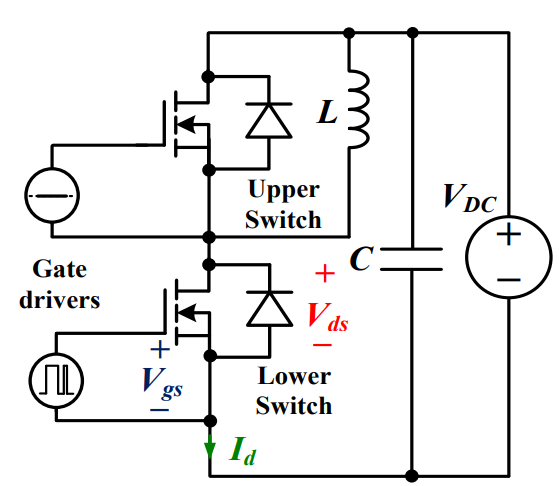 Discovering New and Advanced Methodology for Determining the Dynamic Characterization of Wide Bandgap DevicesSaumitra Jagdale15 March 20242852
For a long era, silicon has stood out as the primary material for fabricating electronic devices due to its affordability, moderate efficiency, and performance capabilities. Despite its widespread use, silicon faces several limitations that render it unsuitable for applications involving high power and elevated temperatures. As technological advancements continue and the industry demands enhanced efficiency from devices, these limitations become increasingly vivid. In the quest for electronic devices that are more potent, efficient, and compact, wide bandgap materials are emerging as a dominant player. Their superiority over silicon in crucial aspects such as efficiency, higher junction temperatures, power density, thinner drift regions, and faster switching speeds positions them as the preferred materials for the future of power electronics.
Read More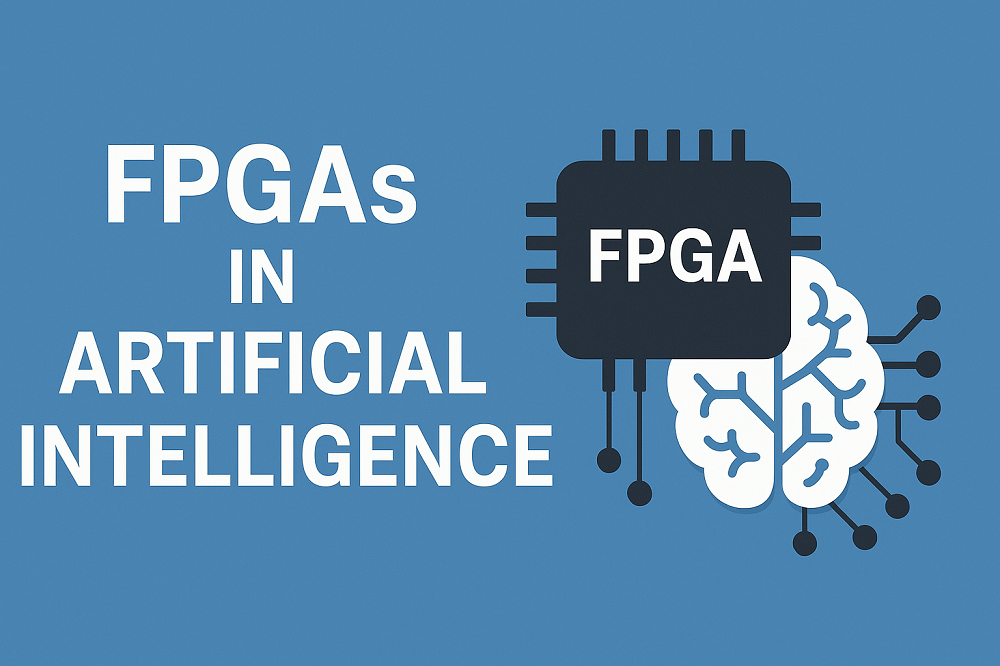 Applications of FPGAs in Artificial Intelligence: A Comprehensive GuideUTMEL29 August 20255521
This comprehensive guide explores FPGAs as powerful AI accelerators that offer distinct advantages over traditional GPUs and CPUs. FPGAs provide reconfigurable hardware that can be customized for specific AI workloads, delivering superior energy efficiency, ultra-low latency, and deterministic performance—particularly valuable for edge AI applications. While GPUs excel at parallel processing for training, FPGAs shine in inference tasks through their adaptability and power optimization. The document covers practical implementation challenges, including development complexity and resource constraints, while highlighting solutions like High-Level Synthesis tools and vendor-specific AI development suites from Intel and AMD/Xilinx. Real-world applications span telecommunications, healthcare, autonomous vehicles, and financial services, demonstrating FPGAs' versatility in mission-critical systems requiring real-time processing and minimal power consumption.
Read More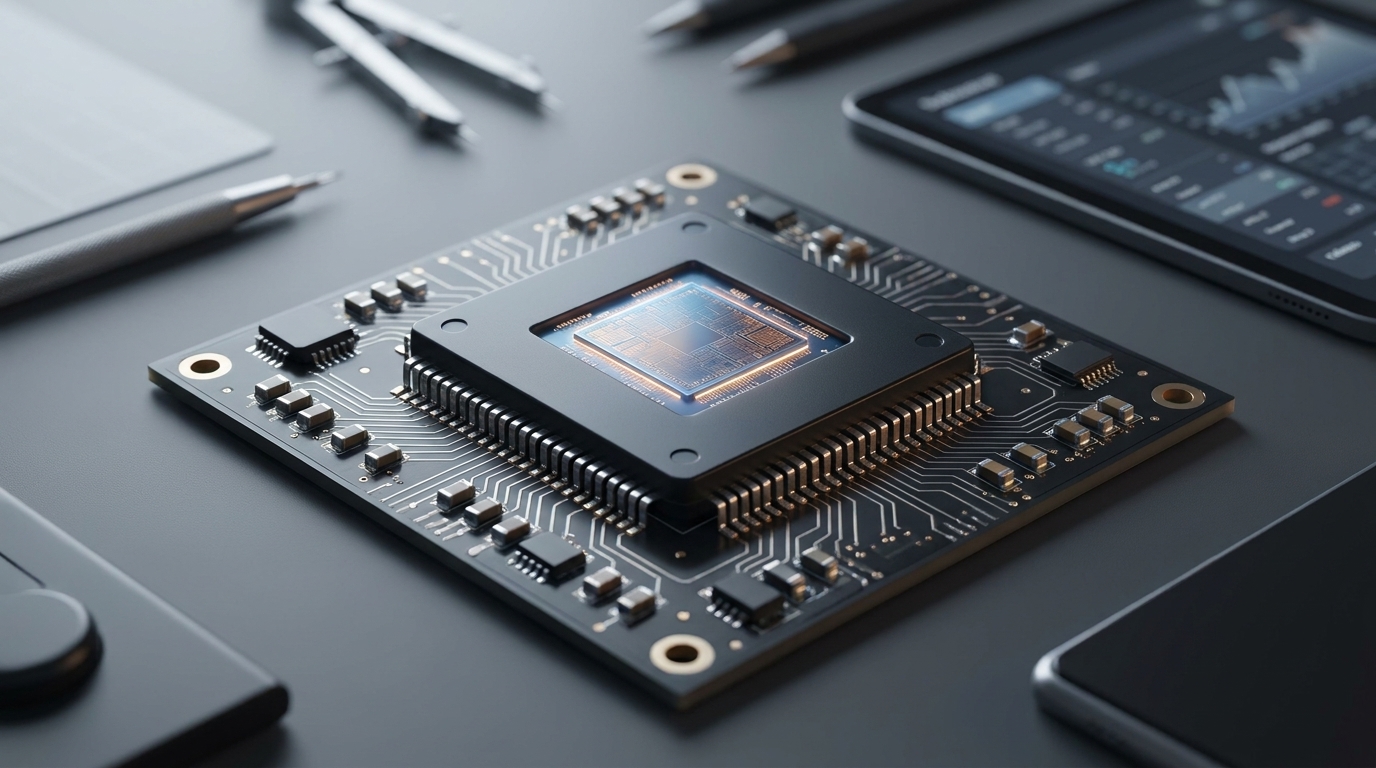 The 2026 Engineer’s Guide: Choosing the Right MCU for Your Next IoT & New Energy ProjectUTMEL30 April 20261724
A comprehensive comparison of 2026's leading MCUs from ST, NXP, and Microchip across power efficiency, processing performance, connectivity, and ecosystems to help engineers select the optimal chip for next-gen IoT and new energy projects.
Read More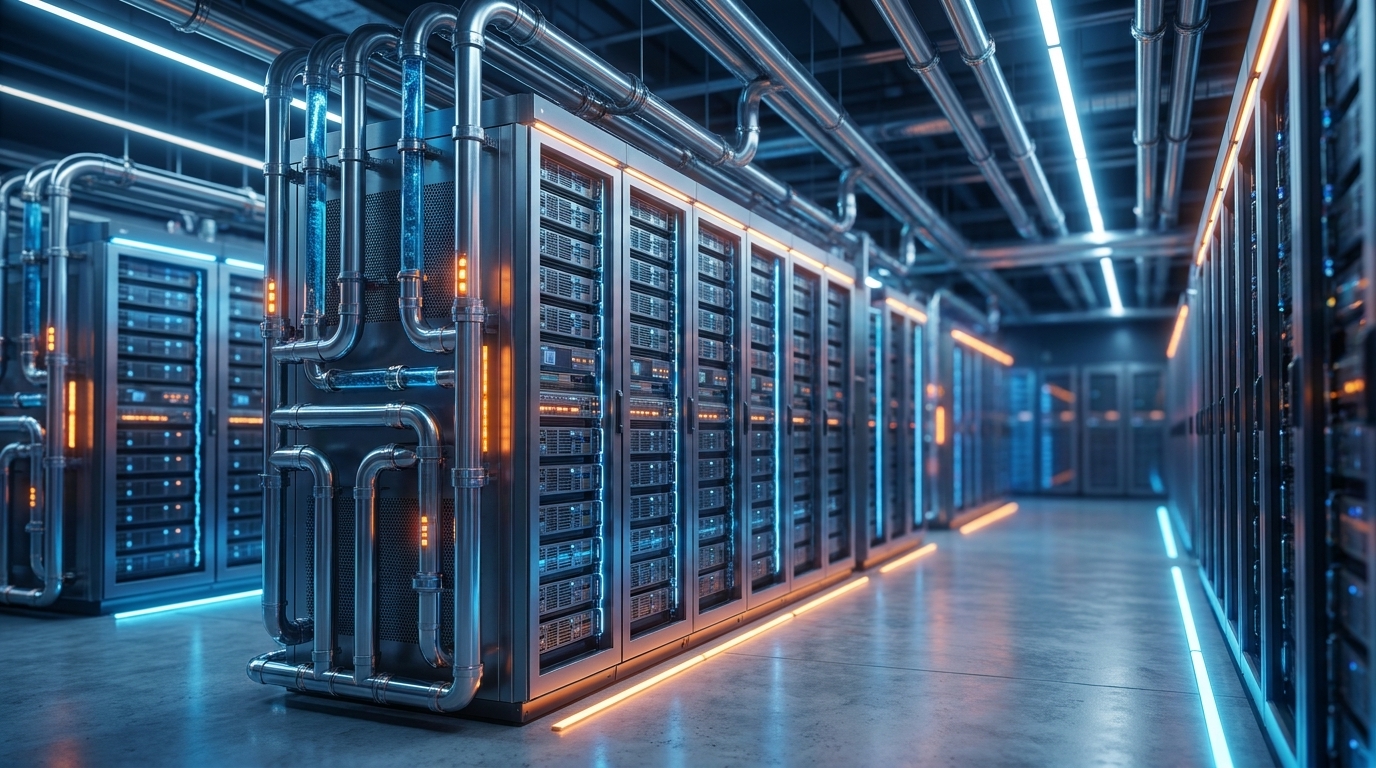 AI Server Components: Engineering Next-Gen Data Center Hardware for 100kW RacksUTMEL15 May 2026949
The transition from traditional enterprise IT to AI-driven workloads has rendered legacy data center hardware obsolete, forcing infrastructure planners to re-engineer server components for extreme thermal environments.
Read More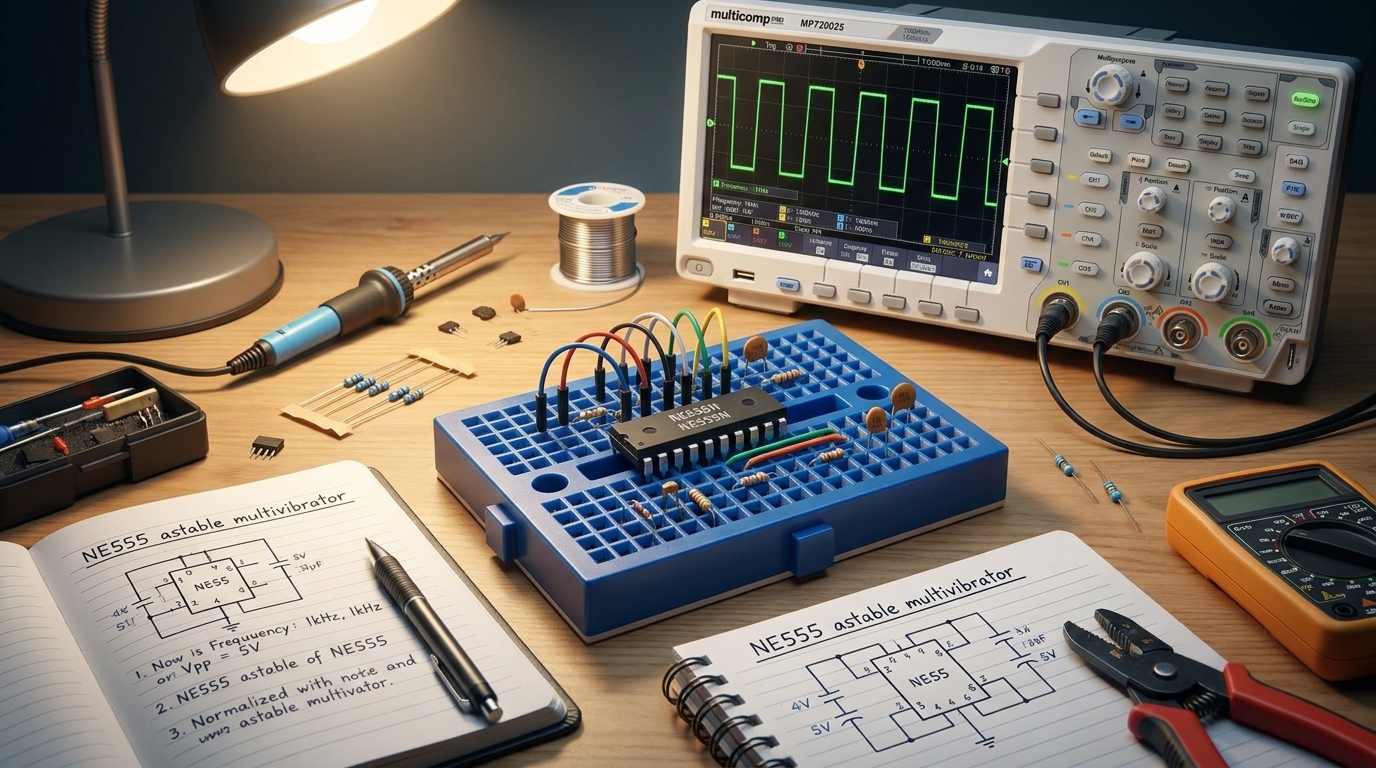 The Practical Engineer’s Guide to the NE555N Timer: Pinout, Setup, and TroubleshootingUTMEL29 May 2026735
This comprehensive guide explores the NE555N timer, detailing its 8-pin layout, internal architecture, and key datasheet specifications. It compares the bipolar IC to CMOS variants and details setup configurations for astable, monostable, and bistable modes. Additionally, the guide offers practical troubleshooting advice to prevent common breadboard failures, such as floating reset pins and electrical noise issues.
Read More
Subscribe to Utmel !
![KSZ8993ML]() KSZ8993ML
KSZ8993MLMicrochip Technology
![AT88SC0404CA-SH-T]() AT88SC0404CA-SH-T
AT88SC0404CA-SH-TMicrochip Technology
![ATECC508A-MAHDA-T]() ATECC508A-MAHDA-T
ATECC508A-MAHDA-TMicrochip Technology
![ATECC608A-SSHDA-T]() ATECC608A-SSHDA-T
ATECC608A-SSHDA-TMicrochip Technology
![HCS500-I/SM]() HCS500-I/SM
HCS500-I/SMMicrochip Technology
![AT88SC0404CA-SH]() AT88SC0404CA-SH
AT88SC0404CA-SHMicrochip Technology
![FSSD06BQX]() FSSD06BQX
FSSD06BQXON Semiconductor
![AD5522JSVDZ]() AD5522JSVDZ
AD5522JSVDZAnalog Devices Inc.
![HCS515-I/SL]() HCS515-I/SL
HCS515-I/SLMicrochip Technology
![AT88SC0104CA-SH-T]() AT88SC0104CA-SH-T
AT88SC0104CA-SH-TMicrochip Technology


