Product
 Brand
Brand Articles
 Tools
Tools
Introduction to Types of Motion Sensors
Motion Sensors as Fast As Possible
📅 Article Updated: October 2025
This article has been updated with the latest information on motion sensor technologies, including AI-powered detection, smart home integration, and emerging sensor types available in 2025.
📑 Catalog
Ⅰ Introduction
A motion sensor is a sophisticated device that detects the movement of objects or people, including gravity, linear acceleration, rotation vectors, vibration frequency, and various other motion parameters. Motion sensors have become integral components in modern technology, from smartphones and wearable devices to home security systems and industrial automation.
Motion sensors can monitor device movements such as tilt, shake, rotation, or swing with remarkable precision. Among the various types, rotation vector sensors and gravity sensors are the most commonly used for motion detection and monitoring. The rotation vector sensor is particularly versatile and can be employed for numerous motion-related tasks, including gesture detection, angle change monitoring, and relative orientation tracking.
💡 2025 Update: Modern motion sensors now incorporate artificial intelligence (AI) and machine learning algorithms to distinguish between different types of movement, significantly reducing false alarms and improving accuracy. Many sensors now feature seamless smartphone integration and can be controlled remotely through dedicated mobile applications. [[1]](#__1)
For developers creating games, augmented reality (AR) applications, 2D or 3D compass systems, or camera stabilization applications, rotation vector sensors provide the ideal solution. In most scenarios, these sensors offer superior performance compared to traditional accelerometers, geomagnetic sensors, or azimuth sensors alone.
Motion sensors employ various technologies to detect movement. Some utilize infrared radiation, others use ultrasonic sound pulses or microwave technology, and some rely on vibration-based fluctuations. In this comprehensive guide, we'll explore the various types of motion sensors, including Passive Infrared (PIR) sensors, accelerometers, tilt sensors, vibration sensors, rotation sensors, and the latest dual-technology and smart sensors available in 2025.
Ⅱ Types of Motion Sensors
1. Passive Infrared Sensor (PIR)
PIR (Passive Infrared) sensors, also known as pyroelectric sensors or motion detectors, are among the most widely used motion detection devices. The fundamental principle behind PIR sensors is that all objects emit infrared radiation based on their temperature. These sensors detect differences in infrared radiation between a moving target and its background, creating distinct infrared signatures.
PIR sensors excel at detecting infrared light emitted by moving people or animals. When motion is detected, the sensor outputs a switching signal, making them ideal for applications requiring human presence detection. The sensor operates without actively emitting any radiation, hence the term "passive."
Working Principle: PIR sensors are pyroelectric devices that generate voltage when experiencing temperature changes. They detect motion by sensing variations in radiant heat (infrared energy) emitted by surrounding objects. The core components include:
Optical System: Fresnel lens array that focuses infrared radiation
Pyroelectric Sensor: Detects thermal radiation changes in a three-dimensional detection zone
Signal Processing Circuit: Amplifies and processes the detected signals
Alarm Controller: Triggers appropriate responses when motion is detected
The detection wavelength range of PIR sensors typically spans 8 to 14 μm, which perfectly matches the peak infrared wavelength of human body radiation at approximately 10 μm. This makes PIR sensors highly effective for human detection while minimizing false triggers from other heat sources.
🔬 Technical Detail: The core component is a thin-film ferroelectric material that exhibits spontaneous polarization. When infrared radiation of sufficient intensity strikes this polarized material, it causes a decrease in polarization intensity, releasing surface charges that are converted into measurable voltage by an amplifier circuit.
Modern PIR sensors incorporate advanced signal processing. In digital PIR detectors, the weak electrical signals from the pyroelectric sensor are directly input to powerful microprocessors. All signal conversion, amplification, and filtering operations are performed within a single processing chip, significantly enhancing reliability and reducing false alarms.
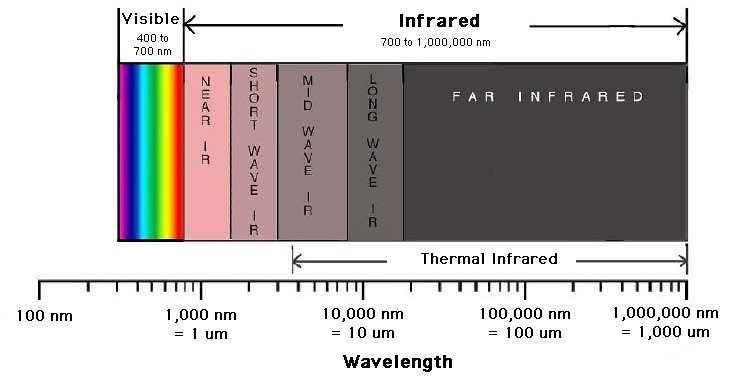
Visible spectrum and infrared spectrum: Infrared radiation exists beyond the range of human visual perception
Applications: PIR sensors are commonly used in:
Intruder alarm systems and home security
Automatic lighting control (e.g., driveway lights, stairwell illumination)
Energy-saving applications in commercial buildings
Smart home automation systems
Occupancy detection in HVAC systems
🆕 2025 Enhancement: Modern PIR sensors now feature pet-immunity technology that can distinguish between humans and small animals (typically up to 40-85 pounds), significantly reducing false alarms in homes with pets. Advanced models also include temperature compensation to maintain accuracy across varying environmental conditions. [[4]](#__4)

Modern PIR Motion Sensor with Fresnel lens array
2. Accelerometer
An accelerometer is a precision instrument that measures linear acceleration along one or more axes. Unlike remote sensing devices that measure external objects, accelerometers measure the motion of the device itself, making them essential for inertial measurement and motion tracking applications.
Thanks to the massive production volumes driven by smartphones and tablets, accelerometers have become remarkably affordable and accessible. Modern accelerometers are predominantly based on MEMS (Micro-Electromechanical Systems) technology, which enables miniaturization while maintaining high accuracy and reliability.
Key Applications:
Gravimetry: Measuring gravitational forces and variations
Inertial Navigation: Used in aircraft, rockets, ships, and autonomous vehicles to determine spatial position through continuous acceleration measurement and integration
Automotive Safety: Airbag deployment systems that detect sudden deceleration during collisions
Consumer Electronics: Screen orientation, step counting, gesture recognition
Industrial Monitoring: Vibration analysis and predictive maintenance
Wearable Devices: Fitness tracking, fall detection, activity monitoring
🔧 MEMS Technology: MEMS accelerometers represent some of the simplest yet most effective MEMS devices. Basic designs consist of a cantilever beam with an attached proof mass. When acceleration occurs, the mass deflects proportionally, and this deflection is measured using capacitive, piezoresistive, or piezoelectric sensing methods. Advanced MEMS accelerometers can measure accelerations ranging from micro-g levels to several thousand g.
Working Principle: Accelerometers operate on several fundamental principles:
Capacitive Sensing: The most common method in MEMS devices, where acceleration causes displacement of a proof mass, changing capacitance between fixed and movable plates
Piezoelectric Effect: Certain materials generate electrical charge when subjected to mechanical stress
Piezoresistive Effect: Resistance changes in materials under mechanical stress
Thermal Sensing: Measures convection changes in heated gas bubbles
Modern accelerometers typically measure acceleration in three orthogonal axes (X, Y, Z), providing complete three-dimensional motion tracking. The output signals are processed to determine:
Instantaneous acceleration values
Velocity (through integration of acceleration)
Position (through double integration)
Orientation relative to gravity
Vibration frequency and amplitude
🚀 2025 Advancement: Modern accelerometers now feature ultra-low power consumption modes, enabling always-on motion detection in battery-powered devices. Many incorporate on-chip signal processing and machine learning capabilities for intelligent motion pattern recognition, such as distinguishing between walking, running, and cycling activities. [[5]](#__5)

ST Microelectronics MEMS 3-axis accelerometer with advanced signal processing
3. Tilt Sensor
Tilt sensors, also known as inclinometers or tilt switches, are specialized devices designed to detect angular deviation from a reference plane, typically the horizontal plane. While conceptually similar to accelerometers, tilt sensors are optimized specifically for angle measurement rather than general acceleration detection.
(1) What are Tilt Sensors?
Tilt sensors detect orientation changes, particularly deviations from the horizontal plane. They are essential in applications requiring precise angle measurement or simple tilt detection. The most common type is the ball-type tilt switch, which operates through a remarkably simple yet effective mechanism.
Ball-Type Tilt Switch Operation: This design incorporates a conductive rolling ball housed within a cavity containing two or more electrical contacts. When the device tilts beyond a predetermined angle, gravity causes the ball to roll, either making or breaking electrical contact between the pins. This simple mechanical action translates physical tilt into an electrical signal.
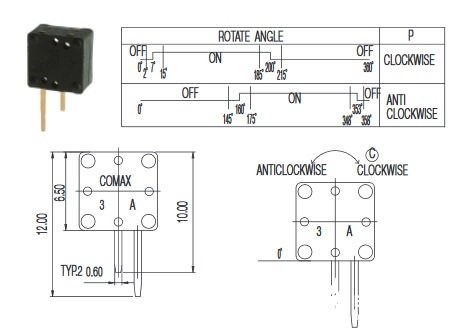
Ball-type tilt sensor switch mechanism
(2) Applications of Tilt Sensors
Tilt sensors have become indispensable measurement tools across numerous industries, including bridge construction, railway installation, civil engineering, oil drilling, aviation, navigation, industrial automation, intelligent platforms, and precision machining. Their small size, low cost, minimal power consumption, and ease of use make them ideal for diverse applications.
Specific Application Examples:
Rollover Detection and Prevention
Tilt sensors provide critical safety warnings for construction equipment and vehicles operating on unstable terrain. They alert operators when equipment approaches dangerous tilt angles, preventing potential rollovers. Modern sensors can trigger automatic safety responses, such as extending stabilizers or limiting boom movement.
🆕 2025 Update: Advanced tilt sensors now integrate with vehicle stability control systems, providing real-time data to electronic stability programs (ESP) that can automatically adjust braking and power distribution to prevent rollovers.
Automotive Applications
Historically, tilt sensors (particularly mercury switches) were used in automotive lighting control systems (such as trunk lid lights) and anti-lock braking systems (ABS). However, mercury-based switches have been phased out since 2003 due to environmental concerns regarding mercury contamination from end-of-life vehicles. Modern automotive tilt sensors use solid-state MEMS technology or electrolytic tilt sensors instead.
Fall Detection and Worker Safety
In confined space work environments (such as inside tanks, silos, or during welding operations), tilt sensors integrated into worker safety harnesses can detect falls or unusual body positions. When a worker falls or becomes incapacitated, the tilt sensor triggers an immediate alarm, enabling rapid emergency response.
Aviation Attitude Indication
Electronic attitude indicators in aircraft utilize tilt sensors in conjunction with gyroscopes to maintain accurate horizon reference. When the gyroscope deviates from vertical alignment, tilt sensors detect the error and trigger torque motors to correct the gyroscope position, ensuring reliable attitude information for pilots.
Pressure Sensing Applications
Tilt sensors can be combined with Bourdon tube pressure gauges to create highly sensitive pressure switches. The small mechanical force generated by pressure-induced tube deflection is sufficient to activate the tilt sensor, enabling precise pressure monitoring and control.
Security and Anti-Theft Systems
Tilt sensors are widely deployed in vending machines as "tilt alarms." When someone attempts to rock or tilt the machine to dislodge products without payment, the tilt sensor activates an audible alarm and can send alerts to security personnel. Similar systems are used in ATMs, display cases, and other valuable equipment.
🔬 Modern Tilt Sensor Technologies (2025):
MEMS Tilt Sensors: Solid-state devices with no moving parts, offering high reliability and precision (±0.1° accuracy)
Electrolytic Tilt Sensors: Use conductive fluid in a sealed cavity for highly accurate measurements
Capacitive Tilt Sensors: Measure capacitance changes as internal structures shift with tilt
Digital Output Sensors: Provide direct digital communication via I²C, SPI, or CAN bus interfaces
4. Vibration Sensor
Vibration sensors are specialized devices designed to detect and measure oscillatory motion, mechanical vibrations, and shock events. While accelerometers can serve as vibration sensors, dedicated vibration sensors are optimized for specific frequency ranges and sensitivity requirements.
Piezoelectric Vibration Sensors: The most common and effective technology for vibration sensing is based on the piezoelectric effect. Piezoelectric materials generate electrical charge when subjected to mechanical stress or vibration. This direct conversion of mechanical energy to electrical signals makes piezoelectric sensors ideal for vibration monitoring.
Key Characteristics of Piezoelectric Vibration Sensors:
Wide Frequency Response: Can detect vibrations from less than 1 Hz to over 10 kHz
High Sensitivity: Capable of detecting minute vibrations and micro-movements
Self-Generating: No external power required for basic operation
Robust Construction: Can withstand harsh industrial environments
Temperature Stability: Modern sensors operate reliably from -50°C to +250°C
Applications:
Predictive Maintenance: Monitoring machinery vibration patterns to detect bearing wear, misalignment, or imbalance before catastrophic failure occurs
Structural Health Monitoring: Assessing the integrity of bridges, buildings, and infrastructure
Seismic Detection: Earthquake monitoring and early warning systems
Quality Control: Detecting defects in manufacturing processes
Security Systems: Detecting forced entry attempts through vibration analysis
Automotive Testing: Measuring vehicle vibration characteristics for comfort and durability analysis
🆕 2025 Innovation: Modern vibration sensors now incorporate wireless connectivity and edge computing capabilities. They can perform on-board Fast Fourier Transform (FFT) analysis to identify specific vibration frequencies associated with different types of mechanical faults. Machine learning algorithms enable these sensors to learn normal vibration patterns and automatically alert when anomalies are detected, revolutionizing predictive maintenance programs. [[5]](#__5)

Piezoelectric vibration sensor with integrated signal conditioning
Advanced Vibration Sensing Technologies:
MEMS Vibration Sensors: Miniaturized sensors suitable for embedded applications
Laser Vibrometers: Non-contact measurement using laser interferometry for ultra-precise measurements
Fiber Optic Sensors: Immune to electromagnetic interference, ideal for high-voltage environments
Wireless Vibration Sensors: Battery-powered sensors with IoT connectivity for distributed monitoring networks
5. Rotation Sensor
Rotation sensors, also known as rotary encoders or angular position sensors, are devices that measure rotational movement, angular position, or rotational speed. These sensors are fundamental components in robotics, industrial automation, automotive systems, and consumer electronics.
Types of Rotation Sensors:
1. Potentiometric Rotation Sensors
The simplest form of rotation sensor uses a potentiometer configured as a voltage divider. As the shaft rotates, the wiper moves along a resistive element, producing an output voltage proportional to the angular position. While simple and inexpensive, these sensors have limited lifespan due to mechanical wear.
2. Optical Rotary Encoders
Optical encoders are among the most precise rotation sensors. They use a patterned disk with transparent and opaque segments. As the disk rotates, light passing through the pattern is detected by photodetectors, generating digital pulse trains.
Quadrature Encoders: The most sophisticated optical encoders are quadrature (incremental) encoders, which provide relative position feedback along with speed and direction information. These encoders feature two output channels (typically labeled A and B) that are phase-shifted by 90 electrical degrees.
🔍 How Quadrature Encoding Works:
The two channels produce square wave outputs as the encoder rotates. By monitoring which channel leads the other, the direction of rotation can be determined. The number of pulses indicates the amount of rotation, while the pulse frequency indicates rotational speed. This dual-channel design also allows for quadrature decoding, which effectively quadruples the resolution by detecting both rising and falling edges of both channels.

Quadrature encoder output signals showing 90° phase relationship
3. Magnetic Rotation Sensors (Hall Effect Sensors)
Hall effect rotary position sensors represent a modern, non-contact solution for angle measurement. These sensors use magnetic fields instead of mechanical contact or optical components, offering several advantages:
No Mechanical Wear: Contactless operation ensures unlimited rotational life
Environmental Resistance: Immune to dust, dirt, moisture, and vibration
Wide Temperature Range: Operate reliably from -40°C to +150°C or higher
Cost-Effective: Simplified mechanical design reduces manufacturing costs
Operating Principle: Hall effect rotation sensors incorporate a Hall effect integrated circuit (IC) with magnetic biasing. A permanent magnet is attached to the rotating shaft. As the shaft rotates, the magnet's position relative to the Hall IC changes, altering the magnetic flux density passing through the sensor. This flux variation is detected by the Hall element and converted into a proportional voltage output that represents the angular position.
Applications of Rotation Sensors:
Automotive: Throttle position sensing, steering angle detection, transmission position sensing
Robotics: Joint angle measurement, wheel rotation tracking
Industrial Automation: Motor position feedback, valve position indication
Consumer Electronics: Volume controls, user interface knobs, camera lens positioning
Medical Devices: Surgical robot positioning, prosthetic limb control
🆕 2025 Advancement: Modern rotation sensors now feature absolute position sensing with multi-turn capability, eliminating the need for homing routines after power loss. Advanced models incorporate redundant sensing elements for safety-critical applications and offer digital output protocols like SSI, BiSS, and EtherCAT for seamless integration with industrial control systems. [[5]](#__5)
6. Advanced Motion Sensors (2025)
The motion sensor landscape has evolved significantly with several advanced technologies now available:
Dual-Technology Motion Sensors
Dual-technology sensors combine two different sensing technologies, typically PIR and microwave or PIR and ultrasonic, in a single device. This combination dramatically reduces false alarms because both sensing technologies must detect motion before triggering an alert.
🎯 Advantages of Dual-Technology Sensors:
Significantly reduced false alarm rates (up to 90% reduction)
Better performance in challenging environments (temperature fluctuations, air currents)
Enhanced pet immunity - can reliably distinguish between humans and animals
Adjustable sensitivity for each sensing technology independently
[[1]](#__1), [[4]](#__4)
Microwave Motion Sensors
Microwave sensors emit continuous microwave radiation (typically 5.8 GHz or 10.525 GHz) and detect the Doppler shift in reflected waves caused by moving objects. Unlike PIR sensors, microwave sensors can penetrate non-metallic materials and detect motion through walls, doors, and other barriers.
Key Features:
Larger detection range than PIR sensors (up to 100+ feet)
Not affected by temperature changes
Can detect motion through barriers
More sensitive to small movements
Higher power consumption than PIR sensors
Ultrasonic Motion Sensors
Ultrasonic sensors emit high-frequency sound waves (typically 25-40 kHz) and measure the time for echoes to return. Changes in echo patterns indicate motion. These sensors work well in enclosed spaces but can be affected by soft materials that absorb sound waves.
Tomographic Motion Detectors
Tomographic sensors create a mesh network of radio waves. When an object moves through this mesh, it disrupts the radio frequency pattern, triggering detection. These sensors can cover large areas and detect motion through walls, making them ideal for perimeter security.
AI-Powered Smart Motion Sensors
The latest generation of motion sensors incorporates artificial intelligence and machine learning capabilities:
Person Detection: Can distinguish between humans, animals, and vehicles
Activity Recognition: Identifies specific activities (walking, running, falling)
Behavioral Learning: Learns normal patterns and detects anomalies
Privacy-Preserving: Processes data locally without transmitting video
Smart Home Integration: Seamlessly connects with voice assistants and home automation platforms
🤖 2025 AI Integration: Modern smart motion sensors can now integrate with home automation systems to create intelligent routines. For example, they can distinguish between family members and strangers, adjust lighting based on time of day and occupancy, and even monitor elderly residents for fall detection and unusual inactivity patterns. [[0]](#__0), [[1]](#__1)
Ⅲ Modern Applications and Smart Integration
Smart Home Ecosystems
Motion sensors have become central to modern smart home systems. Popular 2025 implementations include:
Automated Lighting: Lights that turn on when you enter a room and off when you leave, with adjustable sensitivity and delay times
Security Integration: Motion sensors that trigger cameras to record, send smartphone alerts, and activate alarms
Energy Management: HVAC systems that adjust based on room occupancy, reducing energy consumption by up to 30%
Elderly Care: Monitoring systems that detect falls or unusual inactivity patterns and alert caregivers
Smart Appliances: Devices that activate when you approach (coffee makers, bathroom fans, etc.)
Industrial IoT Applications
In industrial settings, motion sensors enable:
Predictive maintenance through vibration and motion pattern analysis
Worker safety monitoring in hazardous environments
Automated material handling and robotic systems
Quality control through precise motion and position measurement
Energy optimization in large facilities
Wearable Technology and Health Monitoring
Accelerometers and gyroscopes in wearable devices now provide:
Accurate activity tracking and calorie estimation
Sleep quality monitoring through movement analysis
Fall detection with automatic emergency alerts
Posture monitoring and correction suggestions
Rehabilitation progress tracking for physical therapy
📊 Market Insight 2025: The global motion sensor market is projected to reach $12.8 billion by 2027, driven by increasing adoption in smartphones, automotive safety systems, and IoT applications. The integration of AI and edge computing in motion sensors is expected to create new application opportunities in healthcare, smart cities, and industrial automation.
Ⅳ Conclusion
Motion sensors have evolved from simple detection devices to sophisticated, intelligent systems that play crucial roles in our daily lives. From the basic PIR sensors that control our outdoor lights to the advanced MEMS accelerometers in our smartphones, these devices have become indispensable in modern technology.
The integration of artificial intelligence, machine learning, and IoT connectivity has transformed motion sensors from passive detection devices into active participants in smart ecosystems. Today's motion sensors can distinguish between different types of movement, learn behavioral patterns, and make intelligent decisions without human intervention.
As we move forward, motion sensor technology continues to advance with:
Improved Energy Efficiency: Ultra-low power sensors that can operate for years on a single battery
Enhanced Accuracy: AI-powered algorithms that virtually eliminate false alarms
Better Integration: Seamless connectivity with smart home platforms and industrial control systems
Privacy Protection: Edge processing that analyzes data locally without transmitting sensitive information
Expanded Applications: New use cases in healthcare, autonomous vehicles, and augmented reality
Whether you're designing a home security system, developing a fitness tracker, creating an industrial monitoring solution, or building an augmented reality application, understanding the various types of motion sensors and their capabilities is essential. The right sensor choice can make the difference between a mediocre product and an exceptional one.
As sensor technology continues to evolve, we can expect even more innovative applications that will further enhance safety, convenience, and efficiency in both personal and professional environments. The future of motion sensing is not just about detecting movement—it's about understanding context, predicting needs, and creating truly intelligent responsive systems.
📅 Last Updated: October 24, 2025
This article has been comprehensively updated to reflect the latest motion sensor technologies, including AI-powered detection systems, dual-technology sensors, smart home integration capabilities, and current market trends. Information about discontinued technologies (such as mercury switches) has been corrected, and new sections on advanced sensor types and modern applications have been added.
📚 Recommended Reading:
Introduction to Temperature Sensors
What is an Accelerometer: Definition, Types and Applications
What is a Piezoelectric Sensor?
✅ Key Takeaways
Motion sensors use various technologies (infrared, ultrasonic, microwave, MEMS) to detect different types of movement
PIR sensors are ideal for human detection in security and automation applications
Accelerometers provide precise motion tracking for smartphones, wearables, and navigation systems
Dual-technology sensors significantly reduce false alarms by combining multiple detection methods
AI-powered motion sensors can now distinguish between different types of movement and learn behavioral patterns
Modern motion sensors integrate seamlessly with smart home platforms and IoT ecosystems
Choosing the right motion sensor depends on your specific application requirements, environment, and budget
 UTMEL
UTMEL
We are the professional distributor of electronic components, providing a large variety of products to save you a lot of time, effort, and cost with our efficient self-customized service. careful order preparation fast delivery service
What is a motion sensor used for?
A motion sensor, or motion detector, is an electronic device that uses a sensor to detect nearby people or objects. Motion sensors are an important component of any security system. When a sensor detects motion, it will send an alert to your security system, and with newer systems, right to your mobile phone.
What are the types of motion sensor?
Types of motion detectors
Microwave sensors.
Vibration motion sensors.
Ultrasonic motion sensors.
Reflective motion sensors.
What is a motion sensor called?
A motion sensor (or motion detector) is an electronic device that is designed to detect and measure movement. ... Active sensors have both a transmitter and a receiver. This type of sensor detects motion by measuring changes in the amount of sound or radiation reflecting back into the receiver.
What is needed to detect motion?
Motion can be detected by monitoring changes in: Infrared light (passive and active sensors) Visible light (video and camera systems) Radio frequency energy (radar, microwave and tomographic motion detection)
What are reflective motion sensors?
Unlike a Pyroelectric Infrared sensor (PIR) that is used in many motion detectors, the Reflective Infrared sensor (RIR) does not detect long wavelength infrared radiation emitted by a human or animal body. It can continuously detect the presence of both a moving and stationary object.
 The Key Role of Electronic Components in IoT DevicesUTMEL01 September 20235180
The article discusses the pivotal role of electronic components in Internet of Things (IoT) devices. IoT devices work by capturing real-world data using sensors, processing it through a microcontroller, and then sending it to the cloud for further analysis.
Read More How to Identify the Perfect Proximity Sensor for Your ApplicationUTMEL19 July 20251094
Find the best proximity sensors for your project by evaluating material, sensing range, environment, and system needs to ensure optimal performance and reliability.
Read More Trusted Vibration Sensors for Homeowners and Industry ProfessionalsUTMEL17 July 2025801
Compare top vibration sensors for home and industrial use. Find trusted options for security, predictive maintenance, and equipment protection.
Read More Wiring and Mounting Photoelectric Sensors in 2025UTMEL15 July 2025989
Wire and mount photoelectric sensors in 2025 with step-by-step safety, wiring, and alignment tips for reliable installation and optimal sensor performance.
Read More Essential Tips for Picking the Best Gas SensorUTMEL15 July 20252216
Find out how to select gas sensors by matching target gases, environment, and compliance needs for reliable and accurate gas detection in any setting.
Read More
Subscribe to Utmel !