

 Product
 Brand
Brand Articles
 Tools
Tools
Navigating the TLK100 Ethernet PHY Lifecycle: Specs, Pinout, and Modern Migration Strategies
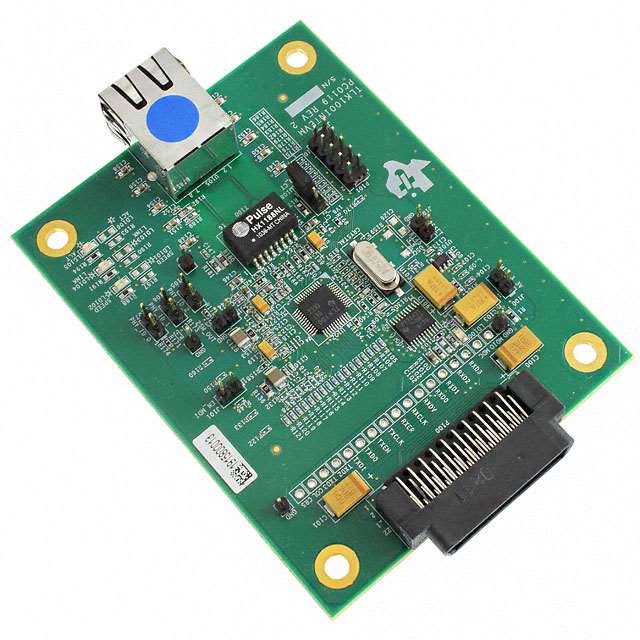


Ethernet Development Tools TLK100 Internal LDOs EVM
Analyze the TLK100 Ethernet PHY: A 10/100 Mbps industrial transceiver from TI. View pinout, specs, and find recommended DP83822 replacements for your BOM.
- Executive Summary: What is the TLK100?
- 1. Technical Specifications & Performance Analysis
- 2. Pinout, Package, and Configuration
- 3. Design & Integration Guide (For Engineers & Makers)
- 4. Typical Applications & Use Cases
- 5. Alternatives and Cross-Reference Guide
- 6. Frequently Asked Questions (FAQ)
- 7. Resources
- Specifications
- Datasheet PDF
Executive Summary: What is the TLK100?
The TLK100 is a single-port 10/100 Mbps Ethernet Physical Layer Transceiver (PHY) designed by Texas Instruments specifically for industrial-grade networking. It serves as the physical interface between the Media Access Controller (MAC) and the Ethernet magnetics.
Market Position: Legacy component. It was once a flagship industrial PHY but is now phased out in favor of more efficient models.
Top Features: IEEE 1588 hardware time-stamping, industrial temperature support (-40°C to 85°C), and integrated cable diagnostics (TDR).
Primary Audience: Maintenance engineers supporting legacy industrial systems and procurement managers sourcing EOL (End of Life) stock.
Supply Status: NRND (Not Recommended for New Designs) / EOL.
1. Technical Specifications & Performance Analysis
The TLK100 was engineered to provide robust connectivity in electrically noisy environments, such as factory floors and power substations.
1.1 Core Architecture (Logic & Interface)
The device utilizes a standard Media Independent Interface (MII) to communicate with the MAC layer of a processor or FPGA. Its internal architecture includes a DSP-based adaptive equalizer, which allows for error-free operation over cable lengths exceeding 200 meters, significantly surpassing the IEEE 802.3 standard.
1.2 Key Electrical Characteristics
Engineers should note the following power and protection benchmarks:
* Supply Voltage: Single 3.3V supply for simplified power rail design.
* Power Consumption: Typically < 200mW, which was competitive at launch but is outperformed by modern alternatives.
* ESD Protection: High-level ±16kV JEDEC HBM protection, essential for industrial reliability.
* Data Rate: Auto-negotiation for 10BASE-T and 100BASE-TX.
1.3 Interfaces and Connectivity
The TLK100 supports the MII interface for data transfer and the MDIO/MDC (Management Data Input/Output) interface for register configuration and status monitoring.
2. Pinout, Package, and Configuration
Understanding the physical layout is crucial for PCB repair or drop-in replacement evaluation.
2.1 Pin Configuration Guide
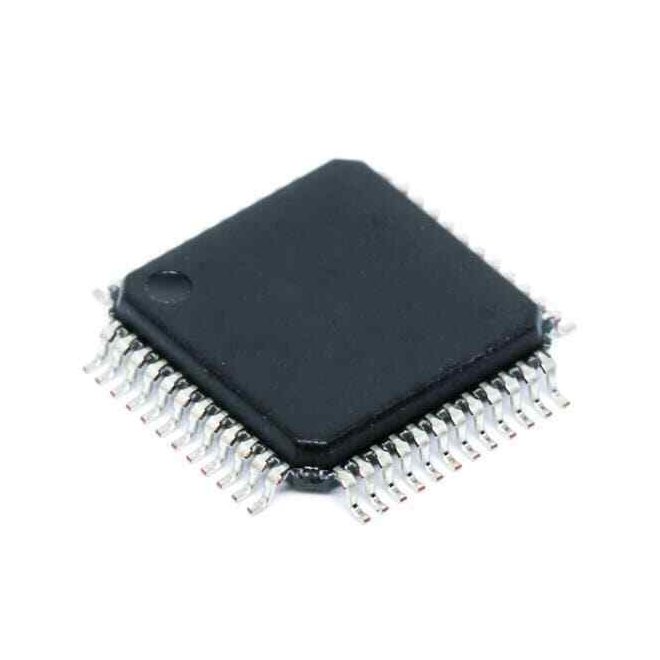
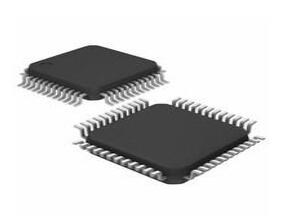
The TLK100 is housed in a 48-pin TQFP (Thin Quad Flat Pack). Key pin groupings include:
MII Interface (Pins 1-15 approx.): Includes TXD[0-3], RXD[0-3], TX_CLK, and RX_CLK for data exchange with the MCU.
Analog Front End: Pins for TD+/- and RD+/- which connect to the 1:1 Ethernet transformer (magnetics).
Management Pins: MDC and MDIO for serial configuration.
Clocking: Supports a 25 MHz crystal or external oscillator.
2.2 Naming Convention & Ordering Codes
Most TLK100 units follow the TI "PHP" package designation.
TLK100PHP: Standard industrial temperature tray.
TLK100PHPR: Tape and reel packaging for high-volume assembly.
2.3 Available Packages
| Package Type | Dimensions | Common Use Case |
|---|---|---|
| 48-pin TQFP (PHP) | 7mm x 7mm | Industrial PLCs, Motor Drives |
Note: The TQFP package is relatively "hand-soldering friendly" for prototyping compared to modern QFN or BGA PHYs.
3. Design & Integration Guide (For Engineers & Makers)
Pro Tip: If you are designing a new product, do not use the TLK100. Use the DP83822 for a modern, active alternative.
3.1 Hardware Implementation
Bypass Capacitors: Place 0.1µF and 10µF capacitors as close to the VCC pins as possible to filter high-frequency switching noise.
PCB Layout: Differential pairs (TD+/- and RD+/-) must be length-matched and kept away from high-speed digital lines to prevent EMI.
Magnetic Selection: Requires a standard 1:1 ratio transformer with integrated common-mode chokes.
3.2 Common Design Challenges
Issue: MII Clock Instability: Jitter on the MII clock can cause packet loss.
Fix: Ensure the 25MHz crystal has the correct load capacitance and minimize ground path inductance for bypass capacitors.
Issue: High Power/Heat: The 200mW consumption can lead to heat buildup in tight enclosures.
Fix: Ensure a solid ground plane to act as a heatsink through the TQFP's thermal pad.
4. Typical Applications & Use Cases
4.1 Real-World Example: Factory Robotics
In a factory robotics controller, the TLK100 provides the physical connection to the local area network. It utilizes IEEE 1588 Time-Stamping to ensure that motion control commands are synchronized across multiple robotic arms with microsecond precision.
5. Alternatives and Cross-Reference Guide
Because the TLK100 is NRND, finding an equivalent is a high priority for Procurement Managers.
Direct Replacement (TI Recommended): DP83822. It offers lower power consumption, better ESD, and is pin-to-pin compatible in many configurations (though register maps may differ slightly).
Industry Alternatives:
Microchip KSZ8041: A very popular 10/100 PHY known for low power.
Microchip LAN8720: Common in the hobbyist/Arduino space due to its small footprint.
Realtek RTL8201: A cost-effective alternative often found in consumer electronics.
6. Frequently Asked Questions (FAQ)
Q: Is the TLK100 pin-compatible with the DP83822?
A: Yes, the DP83822 was designed as a functional and pin-compatible upgrade for the TLK100 in the 48-pin TQFP package.
Q: Does the TLK100 support Gigabit Ethernet?
A: No, it is limited to 10/100 Mbps (Fast Ethernet). For Gigabit, look at the TI DP83867 series.
Q: Where can I find the TLK100 datasheet?
A: It is available on the Texas Instruments website, though it may be moved to the "Obsolete/Archive" section soon.
Q: Can the TLK100 be used in automotive applications?
A: While it has an industrial temperature range, it lacks the specific AEC-Q100 qualifications required for most automotive designs.
7. Resources
Development Tools: TI PHYTER Evaluation Modules (EVM).
Software: Linux kernel drivers for the TLK100 are generally included in standard Ethernet PHY driver packages (generic PHY support).
Migration Guide: Consult TI’s "DP83822 to TLK100 Migration Application Note" for register-level differences.
Disclaimer: The TLK100 is reaching the end of its lifecycle. Always check live distributor inventory for current availability.
Specifications
Datasheet PDF
- Datasheets :
 AT45DB321E SPI Serial Flash Memory: Pinout, Features and Datasheet
11 January 20222828
 Overcoming Interrupt Conflicts with AVR ATmega: An Advanced 8-Bit Design Tutorial
13 April 2026388
 AK8963 Electronic Compass: Pinout, Datasheet and Features
16 July 20212657
 TL082 JFET Dual Op-Amp: Where & How to Use TL082?
08 December 202113926
 C2073 NPN Transistor: Datasheet, Pinout and Equivalent
02 November 202141907
 UC3844 PWM Controller: Uses, Pinout and Datasheet
11 August 202115540
 MPM-10-24 vs MPM-15-12: A Detailed Comparison
27 May 2025520
 The Review of W5500 Hardwired TCP IP Embedded Ethernet Controller
14 April 202210804
 Essential Tips for Picking the Best Gas Sensor
15 July 20253177
 Comprehensive Analysis of Switching Power Supply Circuits
30 November 202111918
 Bearing: Features, Types and Uses
08 February 202210351
 Review of IoT-Based Smart Home Security Systems- Part 1
28 March 20244316
 US Energy Department Funds Next-Gen Semiconductor Projects to Improve Power Grids
09 December 20234138
 LDO vs Buck Converter: Which Power Regulator Is Best For Your Application?
28 August 20269223
 What is Oscilloscope?
24 September 20218380
 How does Lidar Work?
20 April 20219840
Texas Instruments
In Stock: 990
United States
China
Canada
Japan
Russia
Germany
United Kingdom
Singapore
Italy
Hong Kong(China)
Taiwan(China)
France
Korea
Mexico
Netherlands
Malaysia
Austria
Spain
Switzerland
Poland
Thailand
Vietnam
India
United Arab Emirates
Afghanistan
Åland Islands
Albania
Algeria
American Samoa
Andorra
Angola
Anguilla
Antigua & Barbuda
Argentina
Armenia
Aruba
Australia
Azerbaijan
Bahamas
Bahrain
Bangladesh
Barbados
Belarus
Belgium
Belize
Benin
Bermuda
Bhutan
Bolivia
Bonaire, Sint Eustatius and Saba
Bosnia & Herzegovina
Botswana
Brazil
British Indian Ocean Territory
British Virgin Islands
Brunei
Bulgaria
Burkina Faso
Burundi
Cabo Verde
Cambodia
Cameroon
Cayman Islands
Central African Republic
Chad
Chile
Christmas Island
Cocos (Keeling) Islands
Colombia
Comoros
Congo
Congo (DRC)
Cook Islands
Costa Rica
Côte d’Ivoire
Croatia
Cuba
Curaçao
Cyprus
Czechia
Denmark
Djibouti
Dominica
Dominican Republic
Ecuador
Egypt
El Salvador
Equatorial Guinea
Eritrea
Estonia
Eswatini
Ethiopia
Falkland Islands
Faroe Islands
Fiji
Finland
French Guiana
French Polynesia
Gabon
Gambia
Georgia
Ghana
Gibraltar
Greece
Greenland
Grenada
Guadeloupe
Guam
Guatemala
Guernsey
Guinea
Guinea-Bissau
Guyana
Haiti
Honduras
Hungary
Iceland
Indonesia
Iran
Iraq
Ireland
Isle of Man
Israel
Jamaica
Jersey
Jordan
Kazakhstan
Kenya
Kiribati
Kosovo
Kuwait
Kyrgyzstan
Laos
Latvia
Lebanon
Lesotho
Liberia
Libya
Liechtenstein
Lithuania
Luxembourg
Macao(China)
Madagascar
Malawi
Maldives
Mali
Malta
Marshall Islands
Martinique
Mauritania
Mauritius
Mayotte
Micronesia
Moldova
Monaco
Mongolia
Montenegro
Montserrat
Morocco
Mozambique
Myanmar
Namibia
Nauru
Nepal
New Caledonia
New Zealand
Nicaragua
Niger
Nigeria
Niue
Norfolk Island
North Korea
North Macedonia
Northern Mariana Islands
Norway
Oman
Pakistan
Palau
Palestinian Authority
Panama
Papua New Guinea
Paraguay
Peru
Philippines
Pitcairn Islands
Portugal
Puerto Rico
Qatar
Réunion
Romania
Rwanda
Samoa
San Marino
São Tomé & Príncipe
Saudi Arabia
Senegal
Serbia
Seychelles
Sierra Leone
Sint Maarten
Slovakia
Slovenia
Solomon Islands
Somalia
South Africa
South Sudan
Sri Lanka
St Helena, Ascension, Tristan da Cunha
St. Barthélemy
St. Kitts & Nevis
St. Lucia
St. Martin
St. Pierre & Miquelon
St. Vincent & Grenadines
Sudan
Suriname
Svalbard & Jan Mayen
Sweden
Syria
Tajikistan
Tanzania
Timor-Leste
Togo
Tokelau
Tonga
Trinidad & Tobago
Tunisia
Turkey
Turkmenistan
Turks & Caicos Islands
Tuvalu
U.S. Outlying Islands
U.S. Virgin Islands
Uganda
Ukraine
Uruguay
Uzbekistan
Vanuatu
Vatican City
Venezuela
Wallis & Futuna
Yemen
Zambia
Zimbabwe
![ISO1050EVM]() ISO1050EVM
ISO1050EVMTexas Instruments
![LMP91000EVM/NOPB]() LMP91000EVM/NOPB
LMP91000EVM/NOPBTexas Instruments
![ISO154XEVM]() ISO154XEVM
ISO154XEVMTexas Instruments
![BQ76PL536EVM-3]() BQ76PL536EVM-3
BQ76PL536EVM-3Texas Instruments
![ISO5852SEVM]() ISO5852SEVM
ISO5852SEVMTexas Instruments
![TPS3808G01DBVEVM]() TPS3808G01DBVEVM
TPS3808G01DBVEVMTexas Instruments
![BQ24610EVM]() BQ24610EVM
BQ24610EVMTexas Instruments
![XTR300EVM]() XTR300EVM
XTR300EVMTexas Instruments
![BQ24075TEVM]() BQ24075TEVM
BQ24075TEVMTexas Instruments
![BQ24075EVM]() BQ24075EVM
BQ24075EVMTexas Instruments


