

 Product
 Brand
Brand Articles
 Tools
Tools
CC2530 Zigbee SoC Deep Dive: Datasheet, Pinout, and Modern Design Challenges
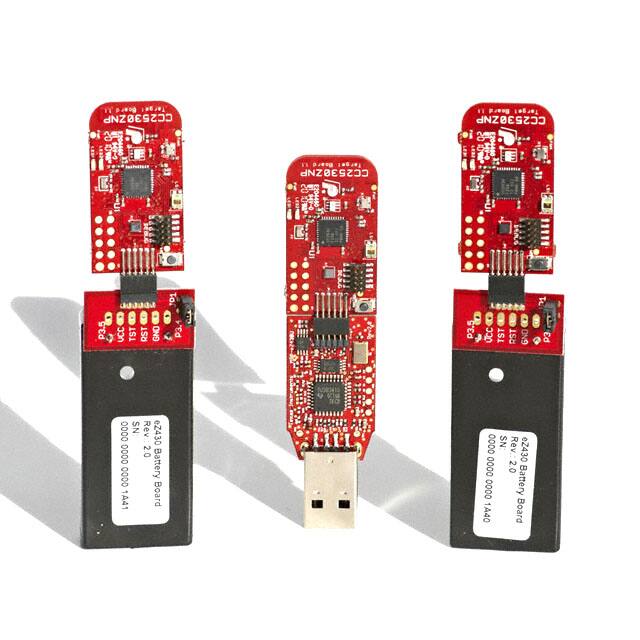


Transceiver; 802.15.4 (ZigBee®) Board(s), Accessories 2.4GHz 3V USB
The TI CC2530 is a 2.4GHz RF SoC for Zigbee and IEEE 802.15.4. Explore specs, pinout, and design tips to optimize your IoT BOM and wireless performance.
- Executive Summary: What is the CC2530?
- 1. Technical Specifications & Performance Analysis
- 2. Pinout, Package, and Configuration
- 3. Design & Integration Guide (For Engineers & Makers)
- 4. Typical Applications & Use Cases
- 5. Alternatives and Cross-Reference Guide
- 6. Frequently Asked Questions (FAQ)
- 7. Resources
- Specifications
- Datasheet PDF
Executive Summary: What is the CC2530?
The CC2530 is an RF System-on-Chip (SoC) from Texas Instruments designed for 2.4-GHz IEEE 802.15.4, Zigbee, and RF4CE applications. It integrates a high-performance 2.4-GHz transceiver with an industry-standard enhanced 8051 microcontroller core to provide a complete wireless networking solution on a single chip.
Market Position: A mature, cost-effective legacy solution widely used in the Zigbee ecosystem.
Top Features: Excellent -97 dBm receiver sensitivity, up to 256KB Flash memory, and a dedicated hardware AES security coprocessor.
Primary Audience: Ideal for industrial sensor network designers, smart lighting manufacturers, and developers maintaining legacy Zigbee PRO infrastructure.
Supply Status: Active; however, it is frequently bypassed for newer ARM-based architectures in greenfield projects.
1. Technical Specifications & Performance Analysis
1.1 Core Architecture (CPU/Logic/Power)
The CC2530 is built around an Enhanced 8051 MCU core, which is a specialized version of the classic architecture designed for faster instruction execution. By combining the RF front-end with the logic controller, TI reduced the Bill of Materials (BOM) cost significantly for early IoT adopters. While the 8051 is older than modern ARM cores, its simplicity allows for very deterministic timing in simple mesh networking tasks.
1.2 Key Electrical Characteristics
For procurement and design engineers, the power profile is a critical metric:
- Supply Voltage: Operates within a 2.0V to 3.6V range, making it compatible with standard lithium coin cells.
- Receiver Sensitivity: A high-performance -97 dBm sensitivity ensures reliable communication even in noisy 2.4GHz environments.
- Output Power: Native programmable output power up to 4.5 dBm.
- Memory Options: Available in four variants: 32KB, 64KB, 128KB, or 256KB of in-system-programmable flash.
1.3 Interfaces and Connectivity
The CC2530 offers flexible peripheral support for sensor integration:
- GPIO: 21 General-Purpose I/O pins for user interface or sensor control.
- Analog: A 12-Bit ADC with 8 channels for high-resolution sensor data acquisition.
- Security: Integrated AES Security Coprocessor for hardware-accelerated encryption, essential for secure Zigbee communication.
2. Pinout, Package, and Configuration
2.1 Pin Configuration Guide
The CC2530 is typically housed in a 40-pin QFN package.
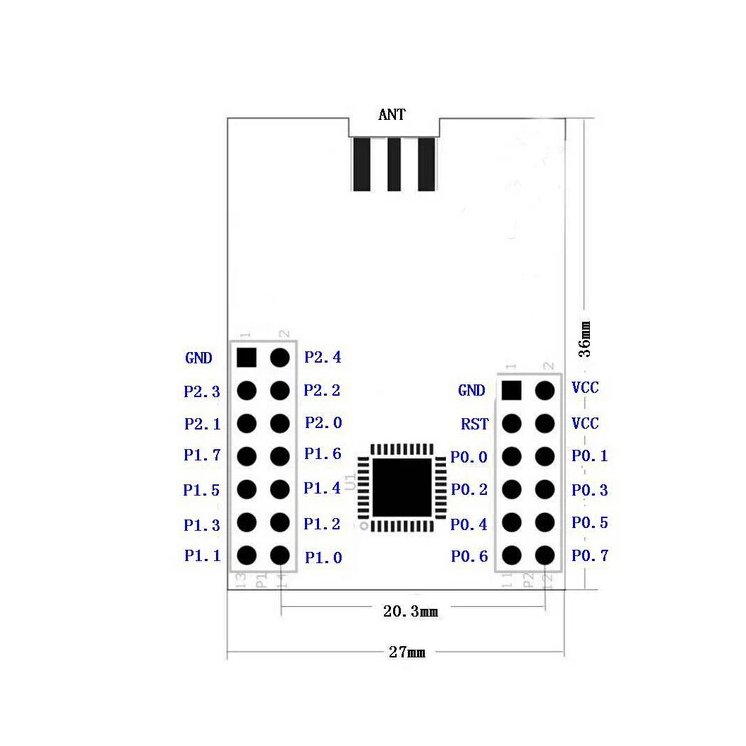
Power Pins (AVDD, DVDD): Must be decoupled with high-quality capacitors to ensure RF stability.
RF Pins (RF_P, RF_N): Differential RF port that requires a balun for connection to a 50-ohm antenna.
I/O Ports (P0, P1, P2): Configurable pins that support various digital functions including UART, SPI, and PWM.
2.2 Naming Convention & Ordering Codes
When ordering from distributors, pay attention to the suffix:
- CC2530F256RHAR: Indicates the 256KB Flash version in a 40-pin VQFN package (Reel).
- CC2530F128RHAT: Indicates the 128KB Flash version in a 40-pin VQFN package (Tray).
Always verify the Flash size requirement, as modern Zigbee stacks often require the full 256KB.
2.3 Available Packages
| Package Type | Dimensions | Common Use Case |
|---|---|---|
| QFN-40 | 6mm x 6mm | Standard SMT assembly; requires precise reflow. |
| Pre-certified Modules | Varies | Recommended for low-volume production to avoid FCC/CE testing costs. |
3. Design & Integration Guide (For Engineers & Makers)
Pro Tip: Always verify pin compatibility and RAM requirements before migrating from older CC2430 or CC2531 series.
3.1 Hardware Implementation
Bypass Capacitors: Place 100nF and 10pF capacitors as close to the VCC pins as possible to filter high-frequency switching noise.
PCB Layout: Use a 4-layer board if possible. Maintain a solid ground plane directly under the RF section to prevent interference.
Thermal Management: The bottom thermal pad of the QFN package must be soldered to the PCB ground to ensure proper heat dissipation and RF grounding.
3.2 Common Design Challenges
Issue: Insufficient RAM for Zigbee 3.0 -> Fix: The 8KB RAM is tight for modern stacks. If your mesh exceeds 20 nodes, use the CC2530 as a "Router" only and select a more powerful "Coordinator" like the CC2652.
Issue: Limited Range -> Fix: Native 4.5 dBm is often blocked by walls. Use a module with an integrated CC2591 or CC2592 Range Extender (PA/LNA) for whole-home coverage.
4. Typical Applications & Use Cases
🎬 Watch Tutorial: CC2530
4.1 Real-World Example: Smart Lighting System
In a smart LED bulb, the CC2530 acts as the "brain" and the "radio." It receives Zigbee commands (On/Off/Dim) from a gateway, processes the signal via the 8051 core, and outputs a PWM signal to the LED driver. Because it supports Zigbee Light Link (ZLL), it can be easily integrated into existing ecosystems like Philips Hue or IKEA TRÅDFRI.
5. Alternatives and Cross-Reference Guide
If the CC2530 does not meet your modern power or processing requirements, consider these alternatives:
Direct Successor: TI CC2652R (ARM Cortex-M4F, significantly more RAM/Flash, lower power).
Performance Alternative: Nordic nRF52840 (Industry leader for Multiprotocol support including Zigbee and Thread).
Cost-Effective Alternative: Silicon Labs EFR32MG (Excellent toolchain and mesh stability).
6. Frequently Asked Questions (FAQ)
Q: Can the CC2530 run Zigbee 3.0?
A: Yes, but with limitations. The 8KB RAM restricts the number of direct children and the complexity of the application layer.
Q: What software do I need to program it?
A: Most professional developers use IAR Embedded Workbench for 8051 along with the TI Z-Stack.
Q: Is the CC2530 suitable for battery-operated devices?
A: Yes, it features multiple sleep modes with RAM retention, drawing as little as 1 µA in its deepest sleep state.
Q: How does the CC2530 compare to the CC2531?
A: The CC2531 is virtually identical but includes a built-in USB 2.0 interface, making it popular for Zigbee USB dongles.
7. Resources
Development Tools: CC Debugger (Required for flashing).
Software Stacks: TI Z-Stack 3.0.x.
Documentation: Refer to the Texas Instruments CC2530 Datasheet (SWRS081) for full electrical timing diagrams.
Specifications
Datasheet PDF
- Datasheets :
 CR1632 Battery: Equivalent, Pinout and Application
03 September 202157442
 STM8L151K6U3 Microcontroller: Technical Overview and Applications
29 February 2024167
 What is TIP120?
22 November 20215512
 1N5062 Diode: Features, Pinout, and Datasheet
18 January 20222654
 1054500101 USB Connector TYPEC 24P SMD: Datasheet, Advantages, and Equivalents
15 February 20224573
 A1302 Hall Effect Sensor: Allegro A1302, Datasheet, A1302 Arduino
22 December 20218461
 MAX3311 Transceiver: Pinout, Equivalent and Datasheet
21 January 2022773
 ATMEGA162V Microcontroller: Pinout, Equivalent and Datasheet
18 April 20221172
 The Through Hole of the PCB Circuit Board Must be Plugged, Why?
14 February 20235328
 L1154F Battery Features and What Makes It Unique
22 August 20252254
 Intel Launches Industry's First Stackable, Shareable and Transferable One-Year Semiconductor Technician Certificate Program
26 September 20233192
 Revolutionizing Automotive Traction: A Comprehensive Review of Multiphase Drives for Next-Generation Vehicles
04 May 20234403
 What is ISP (Image Signal Processor)?
15 September 202137359
 How are Integrated Circuits produced?
20 October 202526808
 How to Choose the Best Deep Cycle Battery in 2024 | Reviews and Buying Guide
21 July 20253029
 Enhancing Wi-Fi Security and Its Impacts on IoT Connectivity
25 October 20242771
Texas Instruments
In Stock
United States
China
Canada
Japan
Russia
Germany
United Kingdom
Singapore
Italy
Hong Kong(China)
Taiwan(China)
France
Korea
Mexico
Netherlands
Malaysia
Austria
Spain
Switzerland
Poland
Thailand
Vietnam
India
United Arab Emirates
Afghanistan
Åland Islands
Albania
Algeria
American Samoa
Andorra
Angola
Anguilla
Antigua & Barbuda
Argentina
Armenia
Aruba
Australia
Azerbaijan
Bahamas
Bahrain
Bangladesh
Barbados
Belarus
Belgium
Belize
Benin
Bermuda
Bhutan
Bolivia
Bonaire, Sint Eustatius and Saba
Bosnia & Herzegovina
Botswana
Brazil
British Indian Ocean Territory
British Virgin Islands
Brunei
Bulgaria
Burkina Faso
Burundi
Cabo Verde
Cambodia
Cameroon
Cayman Islands
Central African Republic
Chad
Chile
Christmas Island
Cocos (Keeling) Islands
Colombia
Comoros
Congo
Congo (DRC)
Cook Islands
Costa Rica
Côte d’Ivoire
Croatia
Cuba
Curaçao
Cyprus
Czechia
Denmark
Djibouti
Dominica
Dominican Republic
Ecuador
Egypt
El Salvador
Equatorial Guinea
Eritrea
Estonia
Eswatini
Ethiopia
Falkland Islands
Faroe Islands
Fiji
Finland
French Guiana
French Polynesia
Gabon
Gambia
Georgia
Ghana
Gibraltar
Greece
Greenland
Grenada
Guadeloupe
Guam
Guatemala
Guernsey
Guinea
Guinea-Bissau
Guyana
Haiti
Honduras
Hungary
Iceland
Indonesia
Iran
Iraq
Ireland
Isle of Man
Israel
Jamaica
Jersey
Jordan
Kazakhstan
Kenya
Kiribati
Kosovo
Kuwait
Kyrgyzstan
Laos
Latvia
Lebanon
Lesotho
Liberia
Libya
Liechtenstein
Lithuania
Luxembourg
Macao(China)
Madagascar
Malawi
Maldives
Mali
Malta
Marshall Islands
Martinique
Mauritania
Mauritius
Mayotte
Micronesia
Moldova
Monaco
Mongolia
Montenegro
Montserrat
Morocco
Mozambique
Myanmar
Namibia
Nauru
Nepal
New Caledonia
New Zealand
Nicaragua
Niger
Nigeria
Niue
Norfolk Island
North Korea
North Macedonia
Northern Mariana Islands
Norway
Oman
Pakistan
Palau
Palestinian Authority
Panama
Papua New Guinea
Paraguay
Peru
Philippines
Pitcairn Islands
Portugal
Puerto Rico
Qatar
Réunion
Romania
Rwanda
Samoa
San Marino
São Tomé & Príncipe
Saudi Arabia
Senegal
Serbia
Seychelles
Sierra Leone
Sint Maarten
Slovakia
Slovenia
Solomon Islands
Somalia
South Africa
South Sudan
Sri Lanka
St Helena, Ascension, Tristan da Cunha
St. Barthélemy
St. Kitts & Nevis
St. Lucia
St. Martin
St. Pierre & Miquelon
St. Vincent & Grenadines
Sudan
Suriname
Svalbard & Jan Mayen
Sweden
Syria
Tajikistan
Tanzania
Timor-Leste
Togo
Tokelau
Tonga
Trinidad & Tobago
Tunisia
Turkey
Turkmenistan
Turks & Caicos Islands
Tuvalu
U.S. Outlying Islands
U.S. Virgin Islands
Uganda
Ukraine
Uruguay
Uzbekistan
Vanuatu
Vatican City
Venezuela
Wallis & Futuna
Yemen
Zambia
Zimbabwe
![LAUNCHXL-CC1310]() LAUNCHXL-CC1310
LAUNCHXL-CC1310Texas Instruments
![CC1125DK]() CC1125DK
CC1125DKTexas Instruments
![CC85XXDK]() CC85XXDK
CC85XXDKTexas Instruments
![CC3220S-LAUNCHXL]() CC3220S-LAUNCHXL
CC3220S-LAUNCHXLTexas Instruments
![CC2540EMK-USB]() CC2540EMK-USB
CC2540EMK-USBTexas Instruments
![CC1120EMK-420-470]() CC1120EMK-420-470
CC1120EMK-420-470Texas Instruments
![430BOOST-CC110L]() 430BOOST-CC110L
430BOOST-CC110LTexas Instruments
![CC3200STK-WIFIMK]() CC3200STK-WIFIMK
CC3200STK-WIFIMKTexas Instruments
![CC1200EMK-868-930]() CC1200EMK-868-930
CC1200EMK-868-930Texas Instruments
![CC2564MODNEM]() CC2564MODNEM
CC2564MODNEMTexas Instruments


