

 Product
 Brand
Brand Articles
 Tools
Tools
SE200 Gas Discharge Tube: Datasheet, Application, Advantage

Gas Discharge Tubes - GDTs / Gas Plasma Arrestors 200V
Unit Price: $2.221479
Ext Price: $2.22


Gas Discharge Tubes - GDTs / Gas Plasma Arrestors 200V
The SE200 is a gas discharge tube from Littelfuse SE series. This article mainly introduce its datasheet, application and more detailed information about SE200
SE200 Description
The SE200 is a gas discharge tube, coming from Littelfuse SE series. It offers high surge ratings in a miniature package designed for surface mounting on PCB with small size 3.2x1.6x1.6mm.
SE200 2D Model
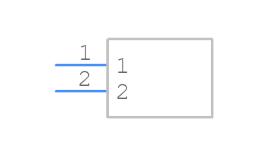
Symbol
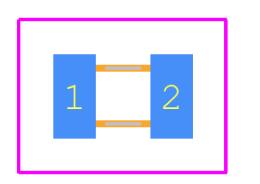
Footprint
SE200 Features
• RoHS compliant and Lead-free
• GHz working frequency
• Excellent stability on multiple pulse duty cycle
• Excellent response to fast rising transients.
• Ultra Low Insertion Loss
• 0.5-0.6KA surge capability tested with 8/20μS pulse as defined by IEC 61000-4-5
•Ultra small devices offered in a variety of mounting lead forms
• Non-Radioactive
• Low capacitance (<0.5pF)
• Voltage Ranges 140V to 500V
• UL recognized
• Conforms to ITU-T K12, IEC 1000-4-5
• Square Outline
Specifications
- TypeParameter
- Factory Lead Time12 Weeks
- Mount
In electronic components, the term "Mount" typically refers to the method or process of physically attaching or fixing a component onto a circuit board or other electronic device. This can involve soldering, adhesive bonding, or other techniques to secure the component in place. The mounting process is crucial for ensuring proper electrical connections and mechanical stability within the electronic system. Different components may have specific mounting requirements based on their size, shape, and function, and manufacturers provide guidelines for proper mounting procedures to ensure optimal performance and reliability of the electronic device.
Surface Mount - Mounting Type
The "Mounting Type" in electronic components refers to the method used to attach or connect a component to a circuit board or other substrate, such as through-hole, surface-mount, or panel mount.
Surface Mount - Package / Case
refers to the protective housing that encases an electronic component, providing mechanical support, electrical connections, and thermal management.
1206 (3216 Metric) - Packaging
Semiconductor package is a carrier / shell used to contain and cover one or more semiconductor components or integrated circuits. The material of the shell can be metal, plastic, glass or ceramic.
Tape & Reel (TR) - Series
In electronic components, the "Series" refers to a group of products that share similar characteristics, designs, or functionalities, often produced by the same manufacturer. These components within a series typically have common specifications but may vary in terms of voltage, power, or packaging to meet different application needs. The series name helps identify and differentiate between various product lines within a manufacturer's catalog.
SE - Part Status
Parts can have many statuses as they progress through the configuration, analysis, review, and approval stages.
Active - Moisture Sensitivity Level (MSL)
Moisture Sensitivity Level (MSL) is a standardized rating that indicates the susceptibility of electronic components, particularly semiconductors, to moisture-induced damage during storage and the soldering process, defining the allowable exposure time to ambient conditions before they require special handling or baking to prevent failures
1 (Unlimited) - Termination
Termination in electronic components refers to the practice of matching the impedance of a circuit to prevent signal reflections and ensure maximum power transfer. It involves the use of resistors or other components at the end of transmission lines or connections. Proper termination is crucial in high-frequency applications to maintain signal integrity and reduce noise.
SMD/SMT - Max Operating Temperature
The Maximum Operating Temperature is the maximum body temperature at which the thermistor is designed to operate for extended periods of time with acceptable stability of its electrical characteristics.
90°C - Min Operating Temperature
The "Min Operating Temperature" parameter in electronic components refers to the lowest temperature at which the component is designed to operate effectively and reliably. This parameter is crucial for ensuring the proper functioning and longevity of the component, as operating below this temperature may lead to performance issues or even damage. Manufacturers specify the minimum operating temperature to provide guidance to users on the environmental conditions in which the component can safely operate. It is important to adhere to this parameter to prevent malfunctions and ensure the overall reliability of the electronic system.
-40°C - Case Code (Metric)
Case Code (Metric) in electronic components refers to a standardized system that specifies the dimensions of surface-mount devices (SMD) in millimeters, consisting of a four-digit number where the first two digits represent the width and the last two digits represent the height of the component, measured in tenths of a millimeter. The metric case codes are standardized by organizations such as the EIA and IEC, and are often compared to the Imperial code which uses inches, allowing for easier identification and selection of components across different regions and industries. This coding system is widely used in the design and manufacturing of electronic devices, particularly in applications requiring compact and efficient component layouts, and is essential for engineers and designers to ensure proper component selection and facilitate the assembly process in electronic manufacturing.
3216 - Case Code (Imperial)
The term "Case Code (Imperial)" in electronic components refers to a standardized system used to specify the physical dimensions and package types of components, particularly capacitors and resistors. This code helps manufacturers and engineers identify the size and form factor of the component, ensuring compatibility with circuit designs and PCB layouts. In the context of electronic components, the Case Code (Imperial) typically follows a numerical format that indicates the length and width of the component in inches. For example, a Case Code of 1206 signifies a component that measures 0.12 inches by 0.06 inches. This coding system is essential for selecting the correct components for specific applications, as it provides a quick reference to the physical characteristics of the part, including its footprint and mounting style.
1206 - Insulation Resistance
The measurement of insulation resistance is carried out by means of a megohmmeter – high resistance range ohmmeter. A general rule-of-thumb is 10 Megohm or more.
1GOhm - Number of Poles2
- Peak Pulse Current
The peak pulse power rating of a TVS diode is defined as the instantaneous power dissipated by a device for a given pulse condition, and is a measure of the power that is dissipated in the TVS junction during a given transient event.
500A - Fail Short
Fail Short refers to a failure mode in electronic components where the component becomes conductive or creates a short circuit when it fails. This can lead to unintended current flow, potentially causing damage to surrounding components and circuits. Fail Short is a critical consideration in design and reliability, as it can result in safety hazards or system malfunctions.
No - Voltage - DC Spark Over (Nom)
Voltage - DC Spark Over (Nom) is a parameter that specifies the nominal DC voltage at which a sparkover or breakdown occurs in an electronic component, such as a spark gap or gas discharge tube. This parameter is important for determining the voltage level at which the component will conduct electricity and protect the circuit from overvoltage conditions. It is typically measured in volts and helps in selecting the appropriate component for a specific application based on the voltage requirements. Understanding this parameter is crucial for ensuring the reliable and safe operation of electronic circuits.
200V - Length3.2mm
- RoHS Status
RoHS means “Restriction of Certain Hazardous Substances” in the “Hazardous Substances Directive” in electrical and electronic equipment.
ROHS3 Compliant
SE200 Application
• Communication equipment
• CATV equipment
• Test equipment
• Data lines
• Power supplies
• Telecom SLIC protection
• Broadband equipment
• ADSL equipment, including ADSL2+
• XDSL equipment
• Satellite and CATV equipment
• General telecom equipment
SE200 Advantage
The SE200 is a popular gas discharge tube. Its low insertion loss is perfectly suited to broadband equipment applications. However, the capacitance does not vary with voltage, and will not cause operational problems with ADSL2+, where capacitance variation across Tip and Ring is undesirable. And it is extremely robust as well as is able to divert a 500A-600A pulse in a miniature package 1206 without destruction.
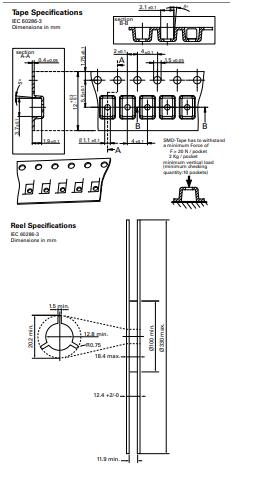
SE200 Dimensions
SE200 Dimensions
SE200 Manufacturer
Littelfuse products are vital components in applications that use electrical energy, from consumer electronics to vehicles and industrial facilities. They offer the industry’s broadest and deepest portfolio of circuit protection products, with growing platforms in power control and sensing.
Datasheet PDF
- Datasheets :
- PCN Design/Specification :
- Environmental Information :
Popularity by Region
What is the storage and operational temperature of SE200?
-40 to +90 °C.
What is the material of SE200?
Device Tin Plated 17.5±12.5 Microns, Construction Ceramic Insulator.
What is gas discharge tube?
GDTs (or simply gas tubes) are devices that employ an internal inert gas that ionizes and conducts during a transient event. Because the internal gas requires time to ionize, gas tubes can take a few microseconds to turn on or off “fire”.
Are gas discharge tubes polarized?
No, they have no “negative” or “positive” side.
What is a gas discharge tube used for?
Gas Discharge Tubes (GDTs) get used to protect personnel and sensitive equipment from hazardous transient voltages. Bourns® GDTs are used in primary and secondary applications and can withstand multiple applications of high surge current energy in excess of 25 KA.
 TL06xx Series (TL064) 200µA Low-Power JFET Op-Amp: Specs, Pinout, and Design Analysis
28 February 2026119
 LM317M Voltage Regulator: Pinout, Equivalent and Circuits
23 November 20212874
 STM32F446RET6 Microcontroller: 180MHz,64-LQFP, Pinout and Features
10 February 20226728
 SPC584Bx: 32-bit Power Architecture Microcontroller for Automotive ASIL-B Applications
29 February 2024408
 MCP1700 LDO voltage regulator: Datasheet, Pinout, Circuit
03 September 202112969
 SN74LVC1G14DBVR: Overview, Features, and Applications
20 November 2023668
 Improving Device Performance with the MPM-30-12 Power Supply
27 May 2025161
 DS18B20 1-Wire Digital Thermometer:Pinout, Datasheet, and Applications
17 April 202510965
 Clock&Timing - Application Specific: A Dedicated Chip That Helps Produce Signals on the Circuit Board
22 February 20232200
 Apple Will Help TSMC to Be in the Leading Position in the Next Era
16 March 20223494
 UTMEL Showcases One-Stop Electronic Component Sourcing Services at electronica Shanghai 2026
07 July 2026203
 Semiconductor Foundry Market Expected to Reach US$ 161.90 Billion By 2031
26 September 20232228
 Carbon Film vs Metal Film Resistors: Complete Comparison Guide
19 May 20256176
 ICinsights:MCUs Will Continue to Rise in Price
30 March 20226065
 Bluetooth Explained: Characteristics and Applications
02 June 202121401
 Basic Introduction to Power Amplifier
09 January 202610800
Littelfuse Inc.
In Stock: 50000
Minimum: 1 Multiples: 1
Qty
Unit Price
Ext Price
1
$2.221479
$2.22
10
$2.095735
$20.96
100
$1.977108
$197.71
500
$1.865197
$932.60
1000
$1.759619
$1,759.62
Not the price you want? Send RFQ Now and we'll contact you ASAP.
Inquire for More Quantity
![SL0902A090SM]() SL0902A090SM
SL0902A090SMLittelfuse Inc.
![CG31.5L]() CG31.5L
CG31.5LLittelfuse Inc.
![CG75L]() CG75L
CG75LLittelfuse Inc.
![SL1010A090SM]() SL1010A090SM
SL1010A090SMLittelfuse Inc.
![SG75]() SG75
SG75Littelfuse Inc.
![CG2350L]() CG2350L
CG2350LLittelfuse Inc.
![SL1021B090R]() SL1021B090R
SL1021B090RLittelfuse Inc.
![CG2600LTR]() CG2600LTR
CG2600LTRLittelfuse Inc.
![CG75LTR]() CG75LTR
CG75LTRLittelfuse Inc.
![CG21000MS]() CG21000MS
CG21000MSLittelfuse Inc.


