

 Product
 Brand
Brand Articles
 Tools
Tools
TP5100 VS TP4056: Differences between charging and protection modules

TOPPOWER(Nanjing Extension Microelectronics)
TP5100 datasheet pdf and Unclassified product details from TOPPOWER(Nanjing Extension Microelectronics) stock available at Utmel


Both the TP5100 and the TP4056 are charging and protection modules that do their jobs well. But how to know their differences in details, let’s check with this article to know this!

TP5100 Single 4.2V / Dual 8.4V 2A Lithium Battery Charging Board Review Test Tutorial
What is TP5100?
The TP5100 is a single lithium battery charge management module with a step-down voltage of 8.4V/4.2V. It has over current, under-voltage, and short circuit safety built-in. It also protects against overheating and reverse battery shutdown.

TP5100
What is TP4056?
The TP4056 chip is a single-cell lithium-ion battery charger that protects the cell against overcharging and undercharging. It features two status outputs, one for charging in progress and the other for charging completed. It also features a 1A charging current that can be programmed.
Because the functional input voltage range is 4V to 8V, you can charge batteries straight from a USB port. However, keep in mind that a USB port's maximum current is 500mA.

TP4056
TP5100 vs TP4056: Features
| TP5100 Features | TP4056 Features |
| Input voltage: 5V~15V DC | |
| Charge status: full and unloaded blue lights, charging red | Constant Current / Constant voltage charging method |
| Double 8.4v / 4.2v lithium rechargeable single | C/10 Charge termination |
| Programmable charge current. 0. 1A-2A | 2.9V trickle charge threshold (for deeply discharged batteries) |
| Programmable steady precharge current 10% -100% | Upper charge stop voltage: 4.2V |
| Wide operating voltage, maximum reaches I8V | Soft start inrush current limit |
| Red and green LED charging status indicator | Automatic recharge (keeps batteries optimally charged when connected to a charger) |
| Chip temperature protection, overcurrent protection, under-voltage protection | |
| Battery temperature protection, reverse battery shutdown, short circuit protection | |
| Switching frequency 400Khz, usable inductance 20uH, and more | |
| PWR_ON Power battery for switching control | |
| Size: 25mm x 17mm x 5mm (LxWxH) |
TP5100 vs TP4056: Specifications
| Specification | TP5100 | TP4056 |
| Input Voltage | 5V - 18V | -0.3V - 8V |
| Charge Current | 100mA - 2A | 10mA - 1A |
| BAT Short-Circuit Duration | Continuous | Continuous |
| Cell Type | Dual / single 8.4V / 4.2V rechargeable lithium battery | Single 4.2V rechargeable lithium battery |
| Charging Accuracy | 1% | 1.50% |
| Protection | reverse battery, shutdown, short circuit, and temperature protection | current monitor, under-voltage lockout, automatic recharge protection |
| Maximum Junction Temperature | 125℃ | 145℃ |
TP5100 vs TP4056: Applications
TP5100 | TP4056 |
Portable equipment, various chargers | Mobile Phones |
Smartphone, PDA, mobile cellular telephone | GPS Devices |
MP4, MP5 players, tablets | Digital Cameras |
HM | Power Banks |
Power Tools | USB Chargers |
Walkie-talkie | Handheld Computers |
TP5100 vs TP4056: Dimensions
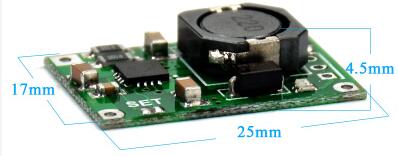
TP5100 Dimension

TP4056 Dimension
TP5100 vs TP4056: Conclusion
Both the TP5100 and the TP4056 are charging and protection modules that can do their jobs rather well. However, the TP5100 module outperforms the TP4056 module in terms of power and functionality, while the TP4056 module outperforms the TP5100 module in terms of cost and availability.
What is TP4056 used for?
The TP4056 is a complete constant-current/constant-voltage linear charger for single-cell lithium-ion batteries. Its SOP package and low external component count make the TP4056 ideally suited for portable applications.
How do I use the TP4056 charging module?
The TP4056 module is powered by a 5V supply from a micro USB cable or the IN+ and IN- solder pads. For the charger to correctly charge a battery connected at the output terminals, a current of at least 1A is necessary. Connect the B+ and B- connections to the cell you want to charge.
Does TP4056 have protection?
The TP4056 chip is a lithium-Ion battery charger for a single cell battery, protecting the cell from over and undercharging. It has two status outputs indicating charging in progress and charging complete.
Can I use TP4056 to charge LiPo?
Single-chip solutions are now widely available for Li-Po battery charging.
Does TP4056 have protection?
The TP4056 chip is a lithium-Ion battery charger for a single cell battery, protecting the cell from over and undercharging. It has two status outputs indicating charging in progress and charging complete.
 ADG1408 Multiplexer: Datasheet, Circuit and Price
12 November 20213838
 1N4728A Zener Diode: Datasheet, Voltage and Specifications
30 September 20214499
 Understanding the dsPIC33EPXXXGP50X, dsPIC33EPXXXMC20X/50X, and PIC24EPXXXGP/MC20X Microcontrollers
29 February 2024157
 MJE15030G NPN Transistor: Datasheet, Equivalent, and Pinout
28 August 20214564
 IRS2092S Audio Amplifier: Schematic, Datasheet Pdf, Typical Application Circuit
09 December 202163639
 AD595AQ vs AD595CQ: Thermocouple Amplifier Comparison
30 June 2025315
 Unraveling the Texas Instruments MSP430F1612IPM Microcontroller: A Comprehensive Technical Analysis
29 February 2024141
 A Comprehensive Guide to LTC6945IUFD#TRPBF PLL Frequency Synthesizer
06 March 2024293
 Comprehensive Introduction to Snapdragon 888
28 June 202113588
 What is a Decoder?
09 January 202620681
 Switching Regulator Noise: Comprehensive Understanding and Analysis
26 February 20222849
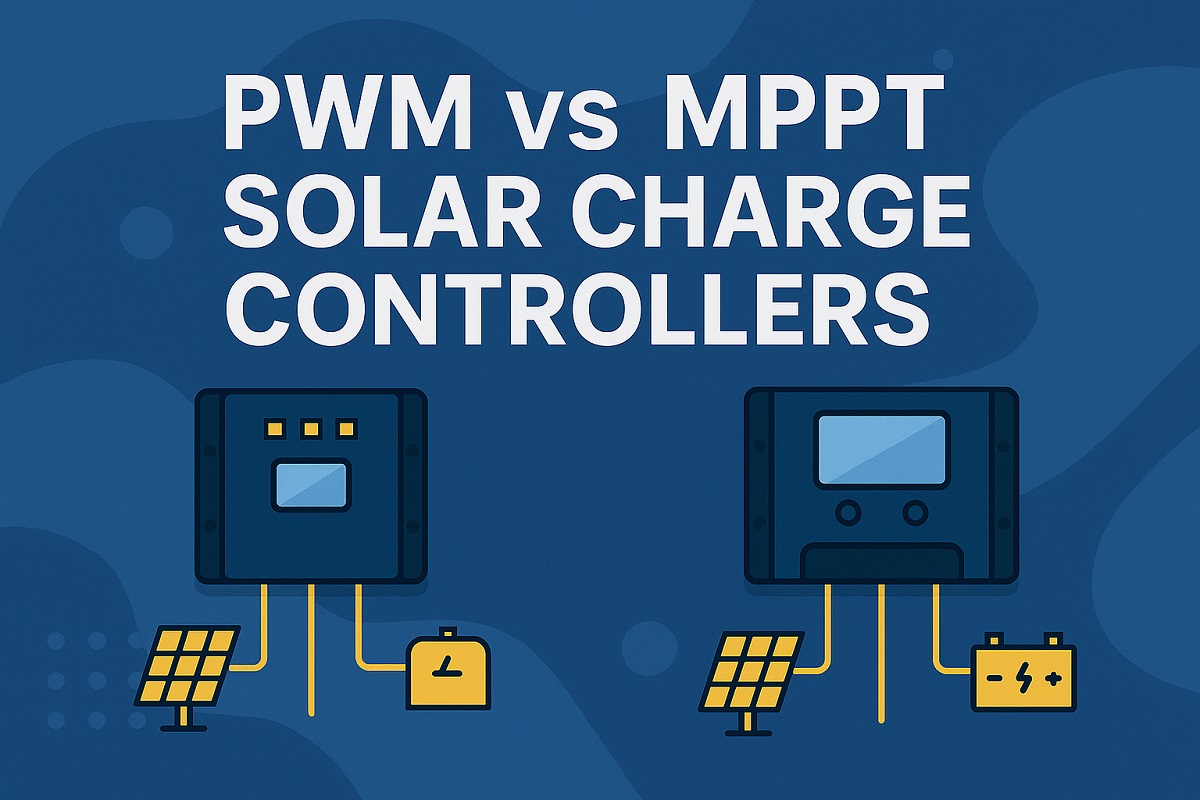 PWM vs MPPT Solar Charge Controllers: A Complete Comparison Guide
06 June 20253165
 Fuse Design and Selection Points
01 July 20227080
 Rheostat Basics: Types, Principle and Functions
25 December 202516880
 European Chipmakers Experience Decline Following SMIC's Profit Slump
20 November 20232966
 Foxconn Announces Investment of $9 Billion to Build a Chip Factory in Saudi Arabia
15 March 20226857
TOPPOWER(Nanjing Extension Microelectronics)
In Stock: 6270
United States
China
Canada
Japan
Russia
Germany
United Kingdom
Singapore
Italy
Hong Kong(China)
Taiwan(China)
France
Korea
Mexico
Netherlands
Malaysia
Austria
Spain
Switzerland
Poland
Thailand
Vietnam
India
United Arab Emirates
Afghanistan
Åland Islands
Albania
Algeria
American Samoa
Andorra
Angola
Anguilla
Antigua & Barbuda
Argentina
Armenia
Aruba
Australia
Azerbaijan
Bahamas
Bahrain
Bangladesh
Barbados
Belarus
Belgium
Belize
Benin
Bermuda
Bhutan
Bolivia
Bonaire, Sint Eustatius and Saba
Bosnia & Herzegovina
Botswana
Brazil
British Indian Ocean Territory
British Virgin Islands
Brunei
Bulgaria
Burkina Faso
Burundi
Cabo Verde
Cambodia
Cameroon
Cayman Islands
Central African Republic
Chad
Chile
Christmas Island
Cocos (Keeling) Islands
Colombia
Comoros
Congo
Congo (DRC)
Cook Islands
Costa Rica
Côte d’Ivoire
Croatia
Cuba
Curaçao
Cyprus
Czechia
Denmark
Djibouti
Dominica
Dominican Republic
Ecuador
Egypt
El Salvador
Equatorial Guinea
Eritrea
Estonia
Eswatini
Ethiopia
Falkland Islands
Faroe Islands
Fiji
Finland
French Guiana
French Polynesia
Gabon
Gambia
Georgia
Ghana
Gibraltar
Greece
Greenland
Grenada
Guadeloupe
Guam
Guatemala
Guernsey
Guinea
Guinea-Bissau
Guyana
Haiti
Honduras
Hungary
Iceland
Indonesia
Iran
Iraq
Ireland
Isle of Man
Israel
Jamaica
Jersey
Jordan
Kazakhstan
Kenya
Kiribati
Kosovo
Kuwait
Kyrgyzstan
Laos
Latvia
Lebanon
Lesotho
Liberia
Libya
Liechtenstein
Lithuania
Luxembourg
Macao(China)
Madagascar
Malawi
Maldives
Mali
Malta
Marshall Islands
Martinique
Mauritania
Mauritius
Mayotte
Micronesia
Moldova
Monaco
Mongolia
Montenegro
Montserrat
Morocco
Mozambique
Myanmar
Namibia
Nauru
Nepal
New Caledonia
New Zealand
Nicaragua
Niger
Nigeria
Niue
Norfolk Island
North Korea
North Macedonia
Northern Mariana Islands
Norway
Oman
Pakistan
Palau
Palestinian Authority
Panama
Papua New Guinea
Paraguay
Peru
Philippines
Pitcairn Islands
Portugal
Puerto Rico
Qatar
Réunion
Romania
Rwanda
Samoa
San Marino
São Tomé & Príncipe
Saudi Arabia
Senegal
Serbia
Seychelles
Sierra Leone
Sint Maarten
Slovakia
Slovenia
Solomon Islands
Somalia
South Africa
South Sudan
Sri Lanka
St Helena, Ascension, Tristan da Cunha
St. Barthélemy
St. Kitts & Nevis
St. Lucia
St. Martin
St. Pierre & Miquelon
St. Vincent & Grenadines
Sudan
Suriname
Svalbard & Jan Mayen
Sweden
Syria
Tajikistan
Tanzania
Timor-Leste
Togo
Tokelau
Tonga
Trinidad & Tobago
Tunisia
Turkey
Turkmenistan
Turks & Caicos Islands
Tuvalu
U.S. Outlying Islands
U.S. Virgin Islands
Uganda
Ukraine
Uruguay
Uzbekistan
Vanuatu
Vatican City
Venezuela
Wallis & Futuna
Yemen
Zambia
Zimbabwe