

 Product
 Brand
Brand Articles
 Tools
Tools
Overcoming Switched Capacitor Kickback with AD4000: A Precision ADC Deep Dive
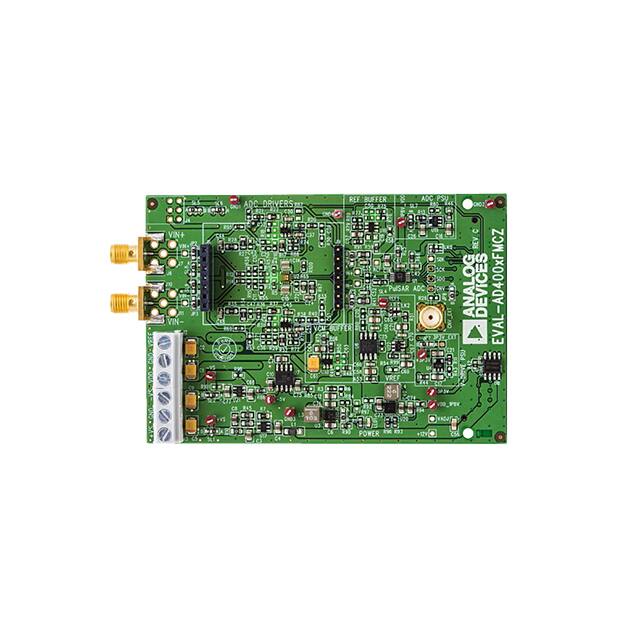


EVAL BOARD FOR AD4000
Discover the AD4000 16-bit 2 MSPS SAR ADC by Analog Devices. Solve kickback issues with Easy Drive tech. Read our technical review and design your next DAQ!
- Executive Summary: What is the AD4000?
- 1. Technical Specifications & Performance Analysis
- 2. Pinout, Package, and Configuration
- 3. Design & Integration Guide (For Engineers & Makers)
- 4. Typical Applications & Use Cases
- 5. Alternatives and Cross-Reference Guide
- 6. Frequently Asked Questions (FAQ)
- 7. Resources
- Specifications
- Datasheet PDF
Executive Summary: What is the AD4000?
The AD4000 is a 16-bit, 2 MSPS precision successive approximation register (SAR) Analog-to-Digital Converter designed for high-speed, low-power data acquisition systems. By integrating advanced features like Easy Drive technology, it significantly reduces signal chain complexity, allowing engineers to achieve high precision without the traditional power and footprint penalties of high-bandwidth driver amplifiers.
Market Position: High-performance, premium precision ADC tailored for low-power and high-accuracy applications.
Top Features: 16-bit resolution at a rapid 2 MSPS throughput, Easy Drive technology with High-Z mode, and ultra-low power consumption (14 mW at 2 MSPS).
Primary Audience: Ideal for hardware design engineers, procurement managers, and advanced hobbyists developing medical equipment, automated test equipment (ATE), and battery-powered instrumentation.
Supply Status: Active (Check authorized distributors for current reel/tray availability and lead times).
1. Technical Specifications & Performance Analysis
When evaluating the AD4000 datasheet, the component stands out for its ability to balance rapid sampling rates with exceptional power efficiency, directly impacting BOM cost by simplifying front-end requirements.
1.1 Core Architecture (CPU/Logic/Power)
The core of the AD4000 is a precision SAR architecture. Traditionally, SAR ADCs demand high-power, high-speed amplifiers to settle nonlinear charge kickback during the short acquisition phase. The AD4000's architecture introduces Easy Drive technology, which features an extended acquisition phase and a High-Z (high impedance) mode. This internal compensation allows designers to drive the ADC with lower-power, lower-bandwidth precision amplifiers, directly reducing overall system power and minimizing BOM component count.
1.2 Key Electrical Characteristics
Power efficiency and signal integrity are the AD4000's strongest traits. - Power Consumption: An impressive 14 mW at 2 MSPS, making it highly suitable for thermal-constrained environments. - Supply Voltage (VDD): Operates on a single 1.8 V supply. - Signal-to-Noise Ratio (SNR): 93 dB typical at 1 kHz. - Total Harmonic Distortion (THD): -115 dB typical at 1 kHz. - Integral Nonlinearity (INL): ±1.0 LSB maximum, ensuring strict DC accuracy. - Operating Temperature: Robust industrial range of -40°C to +125°C.
1.3 Interfaces and Connectivity
The AD4000 features a versatile serial interface that is SPI-/QSPI-/MICROWIRE-/DSP-compatible. The separate logic supply (VIO) supports a wide range from 1.71 V to 5.5 V, meaning a direct Arduino/STM32 interface is possible without external level shifters. This flexibility is crucial for rapid prototyping and seamless integration into varied digital ecosystems.
2. Pinout, Package, and Configuration
2.1 Pin Configuration Guide
When setting up your CAD library and creating the schematic symbol, group the pins logically to streamline your layout: - Power & Ground: VDD (1.8V core), VIO (Logic level supply), and GND. - Analog Inputs: IN+ and IN- (True differential or pseudo-differential depending on configuration). - Digital Interface: SDI, SDO, SCK, and CNV (Convert input).
2.2 Naming Convention & Ordering Codes
Understanding the Part Numbers:For procurement managers, ordering the exact part is critical. Analog Devices standard naming conventions typically include prefixes and suffixes indicating the package type, temperature grade, and packaging format (e.g., Tape & Reel vs. Tray). Always verify the specific suffix (like -RL7 for a 7-inch reel) in the latest AD4000 datasheet to ensure compatibility with your pick-and-place machine assembly.
2.3 Available Packages
| Package Type | Dimensions | Common Use Case |
|---|---|---|
| Surface Mount (LFCSP) | Refer to specific datasheet | Space-constrained, high-density PCBs; machine assembly. |
| Surface Mount (MSOP) | Refer to specific datasheet | Easier inspection; relatively hand-soldering friendly for advanced hobbyists. |
3. Design & Integration Guide (For Engineers & Makers)
Pro Tip: Always verify pin compatibility and logic voltage levels before migrating from older legacy SAR ADCs to the AD4000.
3.1 Hardware Implementation
Bypass Capacitors: Place high-quality ceramic bypass capacitors (typically 0.1 µF and 10 µF) as close to the VDD and VIO pins as possible to minimize inductive ringing.
PCB Layout: Use a solid, unbroken ground plane directly beneath the ADC. Keep digital traces (SCK, SDO) strictly separated from sensitive analog input traces (IN+, IN-).
Thermal Management: Given its ultra-low power consumption of 14 mW, the AD4000 typically does not require a heatsink, simplifying mechanical design.
3.2 Common Design Challenges
Issue: Switched Capacitor Kickback
Context: High-speed SAR ADCs usually require power-hungry driver amps to settle charge kickback.
Fix: Enable the AD4000's High-Z mode. This utilizes its extended acquisition phase, allowing you to use lower-power precision amplifiers, saving BOM cost and board space.
Issue: Amplifier Headroom/Footroom Limitations
Context: In single-supply designs, driving the ADC to absolute full scale is challenging without a negative supply for the amplifier.
Fix: Activate the input span compression feature. This reduces the required input range by 10% from the top and bottom rails while internally preserving the full 16-bit ADC code range.
Issue: SPI Clock Rate and Timing Issues
Context: SDO may go to high-Z prematurely if the CNV signal experiences extra edges or jitter.
Fix: Ensure the CNV signal strictly follows the datasheet timing (idling low, pulsing high without bounce). The AD4000's fast conversion time naturally allows for lower, more manageable SPI clock rates.
4. Typical Applications & Use Cases
Watch Tutorial: AD4000
The AD4000 excels in environments requiring precision, speed, and low power: - Automated test equipment (ATE) - Machine automation - Medical equipment (ECG, EEG, patient monitoring) - Battery-powered equipment - Precision data acquisition (DAQ) systems - Instrumentation and control systems
4.1 Real-World Example: Portable Medical Equipment
In a battery-powered patient monitor, power budget and PCB real estate are paramount. By leveraging the AD4000, engineers can eliminate dual-supply rails for the front-end amplifier (using input span compression) and downgrade the driver amplifier to a lower-power variant (using High-Z mode). This drastically increases the device's battery life while maintaining the 16-bit, high-SNR precision required for accurate medical diagnostics.
5. Alternatives and Cross-Reference Guide
When evaluating price vs performance ratios or navigating supply chain shortages, consider these market equivalents and competitors.
Direct Competitors / High-Performance Equivalents:
Texas Instruments ADC3660: A strong alternative for high-speed applications.
Texas Instruments ADS8412: Another 16-bit SAR ADC option, though power consumption and footprint should be compared against the AD4000's Easy Drive features.
Maxim Integrated MAX11904: Compares favorably in the 16-bit/20-bit precision space.
Linear Technology LTC2370: (Note: Linear Tech is now part of Analog Devices) A closely matched SAR ADC often used in similar precision DAQ environments.
Cost-Effective Options: If 2 MSPS is not strictly required, downgrading to a pin-compatible, lower-throughput variant in the AD4000 family (e.g., 1 MSPS or 500 kSPS versions) can significantly reduce BOM costs.
6. Frequently Asked Questions (FAQ)
Q: What is the difference between AD4000 and the TI ADS8412? A: While both are high-performance ADCs, the AD4000 features Analog Devices' proprietary Easy Drive technology (High-Z mode and input span compression), which specifically reduces the bandwidth and power requirements of the driving amplifier compared to standard SAR ADCs like the ADS8412.
Q: Can AD4000 be used in battery-operated devices? A: Yes, absolutely. With a power consumption of just 14 mW at 2 MSPS and the ability to operate on a 1.8 V core supply, it is exceptionally well-suited for battery-powered instrumentation.
Q: Where can I find the datasheet and library files for AD4000? A: The official AD4000 datasheet, application notes, and CAD models (schematic symbols, footprints, 3D models) can be downloaded directly from the Analog Devices website or authorized distributor portals.
Q: How do I program/configure the AD4000? A: The AD4000 is configured and read via a standard SPI-/QSPI-/MICROWIRE-/DSP-compatible serial interface. Configuration bits can be clocked in to enable features like High-Z mode and span compression.
7. Resources
Development Tools & Software: Analog Devices offers dedicated Evaluation Boards for the AD4000 series, complete with GUI software for rapid performance evaluation, noise analysis, and prototype testing. Check the manufacturer's site for the latest reference designs and signal chain calculators.
Specifications
Datasheet PDF
- Datasheets :
- ConflictMineralStatement :
- Software Download :
![LM338 VS LM317[Video&FAQ]: What are the differences between them?](https://res.utmel.com/Images/Article/ea8404de-6b1a-4bd8-ac49-4276642a1d49.png) LM338 VS LM317[Video&FAQ]: What are the differences between them?
LM338 VS LM317[Video&FAQ]: What are the differences between them?29 April 20228215
 A Comprehensive Guide to LTC6803IG-1#PBF Battery Management PMIC
06 March 2024221
 SN74LVC1T45DCKR Transceiver: Datasheet, Applications, Pinout
30 December 20222268
 STM32F410RBT7 Microcontroller: Pinout, Datasheet, and Circuit
30 June 20212441
 CA3140 Op-Amp: Circuit, Pinout and Datasheet
22 July 202113603
 KSA992 BJT Transistor: TO-92, KSA992 Pinout, Datasheet, Equivalent
05 May 20225508
 AO3400A 30V N-Channel MOSFET, 5.7A SOT23-3L and AO3400A Equivalents
24 February 202214126
![SN75176BP Transceiver: Circuit, Pinout, and Datasheet [Video&FAQ]](https://res.utmel.com/Images/Article/9f40e960-3fb4-4fbb-8c6d-bad8a572a550.png) SN75176BP Transceiver: Circuit, Pinout, and Datasheet [Video&FAQ]
SN75176BP Transceiver: Circuit, Pinout, and Datasheet [Video&FAQ]13 October 202110128
 Texas Semiconductor Summit: A Step Towards Overcoming Chip Shortage
14 October 20233010
 Introduction to Bandstop Filter
28 January 20219848
 High-Frequency WBG Power Devices Using Cascode GaN/SiC
08 August 20231766
 Circuit Breaker: Working Principle, Types and Structure
21 November 202512415
 Automatic Voltage Regulator: Ultimate Guide to Stable Power and Equipment Protection
06 May 202511049
 Comparison of Advantages and Disadvantages of Common Switch Mode Power Supply(SMPS)
21 January 20228601
 All You Need to Know About Rectifier Circuit
24 April 202518196
 Everything You Need to Know about RF Chip
14 January 202621794
Analog Devices Inc.
In Stock: 2008
Minimum: 1 Multiples: 1
Qty
Unit Price
Ext Price
1
$138.892016
$138.89
10
$131.030204
$1,310.30
100
$123.613400
$12,361.34
500
$116.616415
$58,308.21
1000
$110.015486
$110,015.49
Not the price you want? Send RFQ Now and we'll contact you ASAP.
Inquire for More Quantity
![LTC2157IUP-14#PBF]() LTC2157IUP-14#PBF
LTC2157IUP-14#PBFAnalog Devices
![LTC2247IUH#PBF]() LTC2247IUH#PBF
LTC2247IUH#PBFAnalog Devices
![LTC1608CG#PBF]() LTC1608CG#PBF
LTC1608CG#PBFAnalog Devices
![LTC2263IUJ-14#PBF]() LTC2263IUJ-14#PBF
LTC2263IUJ-14#PBFAnalog Devices
![LTC1407ACMSE]() LTC1407ACMSE
LTC1407ACMSELinear Technology / Analog Devices
![LTC1598IG]() LTC1598IG
LTC1598IGLinear Technology / Analog Devices
![LTC1594CS]() LTC1594CS
LTC1594CSLinear Technology / Analog Devices
![LTC2358CLX-16#PBF]() LTC2358CLX-16#PBF
LTC2358CLX-16#PBFAnalog Devices
![LTC2247CUH]() LTC2247CUH
LTC2247CUHLinear Technology / Analog Devices
![LTC2411CMS]() LTC2411CMS
LTC2411CMSLinear Technology / Analog Devices
