

 Product
 Brand
Brand Articles
 Tools
Tools
Laser diodes or LEDs what sets them apart
Laser diodes and LEDs both produce light, but they operate differently and serve unique purposes. Laser diodes create a focused, intense beam using light amplification by stimulated emission of radiation, making their output highly directional and coherent. LEDs emit light in many directions with less coherence, which suits general lighting. Studies show laser devices often face issues like threshold current increases or dark spot defects under high stress, while LEDs show different degradation patterns. Laser diodes usually offer higher power and efficiency, but LEDs tend to cost less and last longer in many conditions. These differences guide engineers and designers when choosing the best option for each application.
How Laser Diodes and LEDs Work
Laser Diode Operation
Laser diodes use the principle of light amplification by stimulated emission of radiation. This process begins when electrons move from a higher energy level to a lower one inside a semiconductor. As electrons drop, they release photons. These photons stimulate other electrons to emit more photons with the same wavelength and phase. The result is a beam of coherent, monochromatic, and highly directional light.
Laser diodes have a unique structure. Mirror-like surfaces at each end of the device form an optical cavity. This cavity traps photons and causes them to bounce back and forth, amplifying the light. The device only starts to emit laser light when the current reaches a certain threshold. Below this threshold, the laser diode behaves like a light emitting diode, producing incoherent light. Laser diodes can produce very short pulses, which makes them useful in optical fiber communication. Scientists have measured that laser diodes can achieve high power density and narrow spectral width. Studies also show that anti-reflection coated laser diodes provide better single-mode stability and less mode hopping than Fabry-Pérot types.
LED Operation
A light emitting diode works differently. When current passes through the LED, electrons and holes combine in the semiconductor material. This process, called spontaneous emission, releases photons. The light from an LED spreads out in many directions and covers a broad range of wavelengths. The emission is incoherent, meaning the photons do not match in phase or direction.
LEDs do not have an optical cavity, so photons escape immediately after creation. This makes the light less intense and more divergent than that from a laser diode. LEDs operate over a wide range of currents and do not require a threshold to emit light. They are efficient for general lighting and displays. Data shows that some LEDs can reach up to 50% efficiency, especially in royal blue and far red types. However, their brightness and power density remain lower than those of laser diodes.
Tip: Laser diodes suit applications needing focused, high-power beams, while LEDs work best for broad, even illumination.
| Parameter | Laser Diodes | LEDs |
|---|---|---|
| Typical Efficiency | Around 30% (blue) | Up to ~50% (royal blue, far red) |
| Brightness and Power Density | High, focused | Lower, more divergent |
| Threshold Current | Required for lasing | Not required |
Light Emission
Coherence and Directionality
Laser diodes and LEDs differ greatly in how they emit light. Laser diodes create light that is both highly directional and spatially coherent. This means the light waves move together in the same direction and phase. The resonant cavity inside a laser diode helps produce this focused beam. True lasers, like laser diodes, rely on stimulated emission, which gives them their unique properties.
LEDs, or light-emitting diodes, work differently. They use spontaneous emission, so the light spreads out in many directions. The light from an LED has low spatial coherence. Most LEDs show a Lambertian emission pattern, which means the light shines out broadly, not in a single direction. The degree of coherence for a red LED is about 0.4, while a green LED has a value near 0.2. These numbers show that LEDs do not match the coherence of laser diodes.
Note: Engineers often add lenses or reflectors to LEDs to improve directionality, but these extras can make the device bulkier and cause some loss of light.
| Light Source Type | Coherence Degree (Spectral Coherence) | Emission Pattern / Directionality Description |
|---|---|---|
| Red LED | ~0.4 | Lambertian; broad angular emission |
| Green LED | ~0.2 | Broad emission pattern, low coherence |
| Laser Diode | High (not quantified) | Highly directional, strong spatial coherence |
Wavelength and Beam
Laser diodes emit light at a single, precise wavelength. This makes the beam appear as one pure color. The narrow beam allows laser diodes to send light over long distances without much spreading. Many communication systems use laser diodes for this reason.
LEDs, on the other hand, emit light over a range of wavelengths. This gives the light a softer look and makes it useful for general lighting. A light emitting diode can produce white light by mixing different colors. The beam from an LED is much wider and less focused than that of a laser. Light-emitting diodes work well in displays and signs because their light covers a large area.
Structure and Performance
Internal Structure
Laser diodes and LEDs both use semiconductor materials, but their internal designs differ. Laser diodes have a complex, multi-layer structure. These layers form an active region where photons are generated. Waveguide structures inside laser diodes act as resonators, which help create coherent and narrow-bandwidth light. Some laser diodes, like quantum well types, use very thin layers to confine carriers and improve efficiency. Fabry-Perot laser diodes use two parallel mirrors to form a cavity, which supports multiple light modes. Surface-emitting lasers send light out from the top surface, while edge-emitting lasers send light from the side.
| Laser Diode Type | Structure Highlights | Emission Direction |
|---|---|---|
| Edge-Emitting | Waveguide along the chip | Side (edge) |
| Surface-Emitting (VCSEL) | Vertical cavity, light out the surface | Top (surface) |
| Quantum Well | Thin layers for carrier confinement | Varies |
| Fabry-Perot | Two mirrors form a resonant cavity | Along cavity axis |
LEDs also use a PIN diode structure but lack the resonant cavity. Their design allows light to escape in all directions. The larger intrinsic region in LEDs helps with heat dissipation, which improves durability.
Power and Efficiency
Laser diodes achieve higher power and efficiency than LEDs. They use stimulated emission, which requires a higher current but produces more light per unit of electricity. Their waveguide and optical confinement structures focus the light, resulting in high power density and efficiency. LEDs rely on spontaneous emission, which spreads light in all directions and leads to lower efficiency, often less than 10%. Experimental studies show that LED pump efficiency is about 60% to 66% of laser diode pump efficiency. Laser diodes can reach much higher output power, but they need careful thermal management.
Note: Laser diodes outperform LEDs in power and efficiency, but they also require more precise control and cooling.
Durability and Cost
LEDs offer excellent durability and low cost. Their simple structure and efficient heat dissipation make them rugged and long-lasting. LEDs are common in streetlights, electronics, and displays because they are affordable and reliable. Laser diodes, while sharing some advantages, have higher complexity and cost. Their lifespan ranges from 10,000 to over 50,000 hours, depending on design and cooling. Laser diodes need effective thermal management to maintain performance. Although their prices have dropped with new technology, they still cost more than LEDs. Complete laser systems can be expensive, especially when used in industrial or medical settings.
LEDs: Cost-effective, durable, and energy-efficient for everyday use.
Laser diodes: Higher performance, higher cost, and stricter cooling needs for specialized applications.
Laser Diodes vs LED: Comparison
Choosing between laser diodes and LEDs depends on understanding their core differences. The table below summarizes the most important characteristics side by side:
| Characteristic | Laser Diodes | LEDs |
|---|---|---|
| Coherence | High (spatial and temporal) | Low |
| Directionality | Highly directional | Broad, less focused |
| Power Output | High (up to hundreds of mW) | Lower (typically <200 mW) |
| Power Density | Very high (e.g., 204 mW/cm² at 830 nm) | Low (e.g., 0.56–8.89 mW/cm²) |
| Efficiency | Moderate to high (up to 30%–40%) | High (up to 50% for some colors) |
| Cost | Higher | Lower |
| Typical Current | 10–100 mA (threshold required) | 10–50 mA (no threshold) |
| Spectral Line Width | Very narrow (single wavelength) | Broad (multiple wavelengths) |
| Light Spot Shape | Elliptical, granular | Round, homogeneous |
| Modes of Operation | Continuous, modulated, pulsed | Continuous, modulated |
| Durability | Sensitive to heat, needs cooling | Very durable, good heat dissipation |
Note: Laser diodes produce a focused, intense beam with a single color, while LEDs emit a softer, spread-out light that covers a wider area.
Key Differences Explained
Coherence and Directionality
Laser diodes create light waves that move together in phase and direction. This property, called coherence, allows true lasers to focus their beams over long distances. LEDs, in contrast, emit light in many directions with low coherence, making them ideal for general lighting.
Power and Power Density
Laser diodes deliver much higher power density than LEDs. For example, a typical laser diode at 830 nm can reach 204 mW/cm², while LEDs at similar wavelengths provide less than 10 mW/cm². This difference matters in applications like low-level laser therapy, where high power density and short exposure times are critical.
Spectral Properties
LEDs emit a broad range of wavelengths, resulting in a round, even light spot. Laser diodes produce a very narrow spectral line, almost a single wavelength, and an elliptical spot. This narrow bandwidth gives lasers their unique ability to target specific applications, such as precise medical treatments or high-speed communication.
Modes of Operation
Laser diodes can operate in continuous, modulated, or pulsed modes. This flexibility supports advanced uses, including data transmission and medical therapies. LEDs usually work in continuous or modulated modes only, which limits their effectiveness in some specialized tasks.
Efficiency and Cost
LEDs often achieve higher efficiency, especially in certain colors like royal blue and far red. They also cost less and last longer under most conditions. Laser diodes, while more expensive and sensitive to heat, offer higher performance where needed.
Biological and Therapeutic Effects
Research shows that red LEDs (600–700 nm) can stimulate cell growth and bone formation, but laser diodes at specific wavelengths and power levels often produce stronger biological effects. Studies comparing red and near-infrared lasers report significant differences in tissue regeneration and cell activity, highlighting the importance of choosing the right light source for each application.
Summary List of Key Differences:
Laser diodes: High coherence, high directionality, high power density, narrow spectral width, higher cost, sensitive to heat.
LEDs: Low coherence, broad emission, lower power density, wide spectral width, lower cost, excellent durability.
💡 When selecting between laser diodes and LEDs, consider the need for focused power, beam quality, and application requirements. Laser diodes excel in precision tasks, while LEDs shine in general lighting and display roles.
Applications
Laser Diode Applications
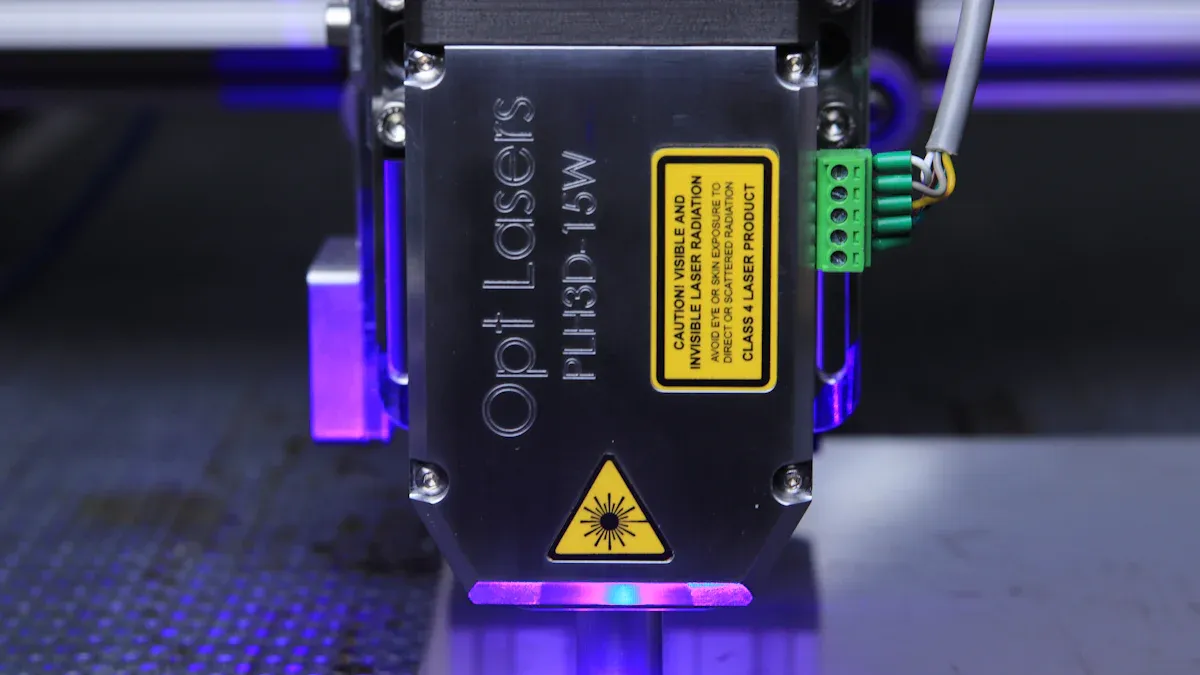
Laser diodes play a key role in many fields because of their high power, directionality, and coherence. These features make them ideal for tasks that need focused beams and precise control. Laser treatments use these devices to target specific tissues or cells. Doctors often choose laser diodes for low-level laser therapy, which helps reduce pain and speed up healing. Patients with chronic pain can benefit from these treatments, as the laser energy reaches deep into tissues.
Laser treatments also support wound healing and tissue repair. Medical applications include eye surgery, dental procedures, and skin treatments. In physical therapy, cold laser therapy uses laser diodes to treat injuries and manage pain. Laser treatments can help patients recover faster and experience less discomfort. Many clinics use laser treatments for arthritis, back pain, and sports injuries.
Laser diodes also serve in other areas:
Optical communication systems use laser diodes to send data over long distances.
Barcode scanners and laser pointers rely on the focused beam.
Industrial machines use laser treatments for cutting, welding, and marking materials.
Scientific research uses laser diodes for precise measurements and experiments.
Laser treatments offer targeted, effective solutions for pain relief and tissue repair. Patients often report improved outcomes after a series of treatments.
LED Applications
LEDs have become popular in many industries because of their energy efficiency, long life, and broad light emission. The applications of LEDs cover lighting, displays, and even health and wellness. LEDs use less power than traditional bulbs, which helps save energy and lower costs. Experiments show that LEDs consume about 75% less power than incandescent bulbs. Power analyzers confirm that LEDs meet strict efficiency standards, though they can affect power quality due to their non-linear loads.
LED lighting improves more than just visibility. Field studies show that dynamic LED lighting can boost the well-being of office workers. Researchers found that LED lighting affects both the body and mind, improving mood and cognitive performance. Post-occupancy evaluations in office buildings support the use of LEDs to create healthier work environments.
Common applications of LEDs include:
General lighting for homes, offices, and streets
Backlighting for TVs, computer monitors, and smartphones
Traffic signals and automotive lighting
Decorative and architectural lighting
Medical applications, such as phototherapy for skin conditions
LEDs also play a role in treatment for certain health issues. Some clinics use LEDs for pain management and wound healing. While laser treatments remain more powerful for deep tissue therapy, LEDs provide a safe and effective option for surface-level treatments.
LEDs offer reliable, energy-saving solutions for many applications. Their positive impact on human health and comfort makes them a top choice for modern lighting.
Choosing Between Laser Diodes and LEDs
Key Factors
Selecting between laser diodes and LEDs depends on several important factors. Each device has strengths that match different needs. Engineers and healthcare professionals often look at efficiency, safety, lifespan, and performance when making a choice.
A key factor is power conversion efficiency. LEDs can reach high efficiency, especially at low current densities. Their efficiency drops at higher currents, a problem called current droop. Laser diodes show moderate efficiency but perform better at high current densities. This makes laser diodes a good choice for tasks that need strong, focused beams, such as laser treatments for pain or low-level laser therapy.
Thermal management also matters. LEDs lose efficiency as they heat up, especially red types. Laser diodes handle heat better because of their cavity design. Size and directionality play a role, too. Laser diodes are much smaller and produce highly directional light. LEDs are larger and spread light out, which works well for general lighting.
Safety is another concern. Laser diodes can pose risks due to their intense, focused beams. LEDs are safer for most users and rarely cause harm. For treatments like cold laser therapy or low-level laser therapy, safety standards must be followed to protect patients from accidental exposure.
The table below compares key performance metrics:
| Performance Metric / Factor | LED Characteristics | Laser Diode Characteristics |
|---|---|---|
| Power Conversion Efficiency | High (~80% for blue LEDs at low current densities), drops at high current (current droop) | Moderate (~30-40% for blue lasers), peaks at high current densities |
| Current Droop | Significant at high current densities | Less affected, efficient at high current densities |
| Thermal Droop | Efficiency decreases with heat, especially in red LEDs | Present but less limiting |
| Size and Directionality | Larger, less directional | Smaller, highly directional |
| Application Suitability | General lighting, color-mixed LEDs | High-brightness, directed light, laser treatments |
| Efficiency at High Power Density | Drops due to droop effects | Maintains or increases efficiency |
| Safety Considerations | Lower acute hazard | Higher risk, needs safety controls |
LEDs last longer and resist damage better than laser diodes. Many LEDs work for over 50,000 hours. Laser diodes have a shorter lifespan because their mirrored structure is delicate. For general lighting, LEDs offer better color control and less risk. Laser diodes excel in specialized fields, such as medical laser treatments for chronic pain or targeted tissue treatment.
Tip: Always match the device to the task. For broad, safe lighting, choose LEDs. For focused, high-power needs like low-level laser therapy or cold laser therapy, laser diodes may work best.
Laser diodes and LEDs differ in how they create and emit light. Laser diodes produce focused, coherent beams with high power, while LEDs give off broad, safe, and energy-efficient light. Studies show both can improve biological outcomes in therapy, but their effects may appear at different times. A technical review highlights that lasers work best for tasks needing precision and speed, while LEDs suit general lighting and safety.
Laser diodes: best for communication, medical treatments, and precision tasks
LEDs: ideal for lighting, displays, and everyday use
Choose based on performance needs, cost, and safety for your project.
FAQ
What is the main difference between a laser diode and an LED?
A laser diode produces a focused, coherent beam of light. An LED emits light in many directions with low coherence. Laser diodes work best for precision tasks. LEDs suit general lighting.
Are laser diodes safer than LEDs?
Laser diodes can cause eye injury if misused. LEDs are much safer for everyday use. Always follow safety guidelines when working with lasers.
Which lasts longer, a laser diode or an LED?
LEDs usually last longer than laser diodes. LEDs can work for over 50,000 hours. Laser diodes may need careful cooling to reach their maximum lifespan.
Can both laser diodes and LEDs be used for medical treatments?
Both can help in medical treatments. Laser diodes treat deep tissues and pain. LEDs work well for surface treatments and skin therapy.
Why do LEDs cost less than laser diodes?
LEDs have a simpler structure and easier manufacturing process. This makes them cheaper to produce. Laser diodes need more precise materials and assembly.
 UTMEL
UTMEL
We are the professional distributor of electronic components, providing a large variety of products to save you a lot of time, effort, and cost with our efficient self-customized service. careful order preparation fast delivery service
 All You Need to Know About Rectifier CircuitUTMEL24 April 202516572
All You Need to Know About Rectifier Circuit
Read More 15 Key Elements of Diode SelectionUTMEL26 November 202118193
Hello everyone, I am Rose. Welcome back to the new post today. Diodes are one of the most common components in our circuit boards. So, what factors should be considered when selecting models?
Read More What is a PIN Diode?UTMEL04 February 20219414
While diodes with a simple PN junction are by far the most common type of diode in operation, in a variety of applications, other forms of diode may be used. The PIN diode is one type that is used for a number of circuits. In a variety of places, this diode type is used. For RF switching, the PIN diode is very fine, and the PIN structure in photodiodes is very useful as well.
Read More Microwave Diode: Introduction and TypesUTMEL07 January 202124220
Microwave diodes are diodes that work in the microwave frequency band. It is a solid-state microwave device. Microwave band usually refers to the frequency from 300 MHz to 3000 GHz. After the discovery of the point contact diode effect at the end of the 19th century, microwave diodes such as PIN diodes, varactor diodes, and Schottky diode tubes appeared one after another. Microwave diodes have the advantages of small size and high reliability, and are used in microwave oscillation, amplification, frequency conversion, switching, phase shifting and modulation.
Read More What Determines the Maximum Operating Frequency of a Diode?UTMEL29 June 202212089
Hello, wish you a wonderful day. In this essay, we first pose the following query: what determines the diode's maximum operating frequency? In regards to the solution, the first thing we need to understand is that the junction capacitance and the reverse recovery time of the diode are two distinct concepts. The charging and discharging times of the junction capacitance cannot match the reverse recovery time. You say that, why? Let's start by taking a look at these facts.
Read More
Subscribe to Utmel !
![BLM18PG121SN1D]() BLM18PG121SN1D
BLM18PG121SN1DMurata Electronics
![MPZ2012S102AT000]() MPZ2012S102AT000
MPZ2012S102AT000TDK Corporation
![BLM18PG221SN1D]() BLM18PG221SN1D
BLM18PG221SN1DMurata Electronics
![BLM18AG121SN1D]() BLM18AG121SN1D
BLM18AG121SN1DMurata Electronics
![BLM21AG102SN1D]() BLM21AG102SN1D
BLM21AG102SN1DMurata Electronics
![BLM18SG221TN1D]() BLM18SG221TN1D
BLM18SG221TN1DMurata Electronics
![BLM18SG331TN1D]() BLM18SG331TN1D
BLM18SG331TN1DMurata Electronics
![BLM18KG601SN1D]() BLM18KG601SN1D
BLM18KG601SN1DMurata Electronics
![BLM03AG102SN1D]() BLM03AG102SN1D
BLM03AG102SN1DMurata Electronics
![BLM18KG331SN1D]() BLM18KG331SN1D
BLM18KG331SN1DMurata Electronics


