

 Product
 Brand
Brand Articles
 Tools
Tools
What is Mini LED?

Why THIS New TV Matters! (Mini LED Explained)
Catalog
Ⅰ Concepts of different display technology
1. LCD (Liquid Crystal Display)
The structure of LCD is to place a liquid crystal cell between two parallel glass substrates, and TFT (thin-film transistor) is set on the lower substrate glass. A color filter is arranged on the upper substrate glass, and the rotation direction of the liquid crystal molecules is controlled by the signal and voltage changes on the TFT, so as to control whether the polarized light of each pixel point is emitted or not to achieve the display purpose.
2. OLED (Organic Light-Emitting Diode)
OLED does not require a backlight. It uses a very thin organic material coating and a glass substrate (or flexible organic substrate). When a current passes through, these organic materials emit light.
3. Micro LED
LED miniaturization and matrix technology integrate high-density and small-size LED arrays on a chip. The LED (light-emitting diode) backlight needs to be thinned, miniaturized, and arrayed. Micro LED can make the LED unit smaller than 50 microns, only 1% of ordinary LED. Each picture element can be individually addressed and driven to emit light separately, which is the same as OLED.
Its advantages are that it not only inherits the high efficiency, high brightness, high reliability, and fast response time of inorganic LEDs, but also has the characteristics of self-luminous without backlight, small size, light and thin, and can easily achieve energy-saving.

The difference between LCD, OLED, and Micro-LED (Image source: Trendforce)
4. Mini LED
Mini LED refers to an LED chip with a size of 100μm. The size is between the small-pitch LED and the Micro LED. It is the result of further refinement of the small-pitch LED. Among them, small-pitch LEDs refer to LED backlights or display products with the distance between adjacent lamp beads less than 2.5 mm.
Compared with small-pitch LEDs, the important feature of Mini LEDs is de-encapsulation. It is mainly positioned in the high-end small-pitch LED market and can achieve higher resolution and display effects.
Ⅱ Technical feasibility of Mini LED
1. The mass production capacity of economical Mini LED RGB direct display technology will make a breakthrough within two years
At present, the main difficulty faced by Mini LED direct display is the high cost. It will start trial promotion mainly in high-end hotel conference celebrations and another commercial leasing, large conference room video display, and higher-end glasses-free 3D, AR, VR, and other scenes. Since 2019, Mini LED RGB direct display technology has made significant progress. The LED chip size of some leading manufacturers can be 100μm×100μm, and the pixel pitch can already be 0.5mm.
2. Manufacturers and Mini LED projects are accelerating
The current market is unanimously optimistic about the application growth potential of Mini LED. Mainstream LED manufacturers have basically completed the Mini LED backlight R&D process and have entered the stage of small-batch samples or large-volume supply. With the vigorous promotion of leading manufacturers in all links of the LED industry chain, Mini LED as a new generation of backlight/display solutions is expected to rapidly penetrate, and the market scale is rapidly increasing.
3. The industrial chain can be quickly cultivated
Different from the OLED industry chain, both the LED and LCD industry chains are very mature. The essence of the mini LED backlight is the further development of LED and LCD. Once large-scale applications begin, its overall cost is expected to be further decline.
Ⅲ Mini LED technology application
1. Compatibility of traditional LED production equipment
Mini LED has special-shaped cutting characteristics. It can be used with a flexible substrate to achieve a form of a high-curved backlight. It has better color rendering through local dimming and can bring finer HDR partitions to LCD panels. The thickness is similar to that of OLED and is more energy-efficient.
Compared with Micro LED, Mini LED can be regarded as an improved version based on the small-pitch LED backlight. It does not need to overcome the technical threshold of the massive transfer. The technical difficulty is lower and the production yield is higher, making it easier to achieve mass production.
At present, some manufacturers have entered the stage of mass production. In terms of production equipment, Mini LED can be produced using most traditional LED production equipment, so it has higher economic efficiency.
2. High dynamic range and reduced halo effect are the outstanding advantages that Mini LED brings to LCD
The current LED backlight chip size is large, resulting in serious light leakage between black and white pixels. This phenomenon is called the halo effect. The small size of the Mini LED can solve this problem well. Although the light efficiency of the Mini LED is slightly lower than that of ordinary high-brightness LEDs, it can be compensated by dimming by partition. Each area corresponds to multiple pixels, and the brightness of each area can be independently controlled. By compensation, the contrast ratio of light and dark of the display can be increased to the same as that of OLED (1000000:1), and it can also save 3 to 4 times the power.
3. The cost of Mini LED backlight solutions is decreasing year by year
The Mini LED display production line has the characteristics of miniaturization, which is conducive to the rapid iteration of technical processes. In February 2019, Innolux's AM Mini LED trial production line was successfully lit, with an investment of only about 110 million yuan which significantly lower the barriers to entry for the industry. The average investment of domestic production lines for LCD, OLED, and flexible AMOLED panels is as high as 13.9 billion yuan, 27.9 billion yuan, and 46.5 billion yuan. Benefiting from the rapid iterative improvement of the manufacturing process, Mini LED technology and yield will make breakthrough progress, thereby reducing the cost of Mini LED display devices.
According to the latest survey by LEDinside of TrendForce, the current production cost of Mini LED backlight displays is still higher than that of traditional LCD and OLED screens. As the technology matures and the process yield increases, it is estimated that the cost of MiniLED backlight displays will decrease by 15-20% each year. Mini LED will have the opportunity to be lower than OLED displays in 2022.
4. Mini LED backlight is an important direction for an LCD panel upgrade
Mini LED backlight is an important direction for upgrading LCD panels. Compared with OLED, the advantage of Mini LED-backlit LCD is that it can achieve a display effect comparable to OLED panels at a lower cost. It is light and thin with large-scale mass production capabilities, longer life, and lower power consumption.
Ⅳ Future Development Analysis
Tech giants vigorously adopt Mini LED-backlit LCD

mini led backlight technology
According to TechCrunch, in 2014, Apple acquired LuxVue Technology, a micro-LED screen company. According to a report in the Economic Daily, Apple plans to invest about 10 billion New Taiwan dollars ($334 million) to open mini-LED and micro-LED in Taiwan Production plant.
Some analysts said in March that Apple plans to release at least six mini-LED products by the end of 2021, including 14-inch and 16-inch MacBook Pro models, iMac Pro, 12.9-inch iPad Pro, 10.2-inch iPad, and 7.9-inch iPad mini.
In January 2018, in 2019, Samsung released a 75-inch 4K Micro LED display and a 219-inch 8K Micro-LED display based on modular splicing.
Sony also introduced a corresponding crystal LED display. According to ledinside, Huawei's next-generation TV products are expected to adopt Mini LED backlight technology.
Possible market segments
Mini LED has attracted wide attention since its inception, and its downstream applications can cover many fields such as RGB display, laptop backlight, TV backlight, mobile phone backlight, and car display.
1. Mini LED backlight market prospects in large-size TV
Due to the limited mass production yield, high-resolution OLED TVs have long faced the problem of high costs, and mini LEDs can achieve curved and narrow-frame display effects within a relatively reasonable cost space. Moreover, it has the characteristics of wide color gamut, high contrast, and thin profile, so it is expected to show its skills in the field of large-size TV backlights.
The key sales sizes of TVs are 55 inches, 32 inches, and 65 inches, of which the largest increase is 65 inches. It can be seen that the continuous increase in screen size is an important trend in the development of TV.
In view of the unique technical advantages of the Mini LED backlight solution in high-definition large screens, we believe that it will definitely make a difference in the field of large-size TVs.
①Mini LED backlight is an important weapon for the LCD camp against OLED
In the battle for the high-end display market, although OLED once took away some of the LCD markets with its high-definition, high-quality, and high-contrast characteristics, with the development of mini LED technology, the display effect of the LCD solution is as good as OLED now.
Since the birth of OLED technology, the widely criticized high cost and low lifespan problems have not been effectively solved. This has given the LCD camp an excellent breakthrough in returning to the high-end display market.
In addition, we see that LCD and LED industries have become increasingly mature, and product prices have continued to decrease; therefore, there is reason to believe that the mini LED+LCD display solution is expected to achieve parity in the near future, from high-end penetration to the general public.
②The "Ultra HD" display era is coming, and the backlight upgrade drives the demand for Mini LED
4K and 8K TVs put forward new requirements for high dynamic range (HDR), high color gamut, high contrast, high light efficiency, and high resolution. Therefore, the development of new LED backlight technology and products is of great significance.
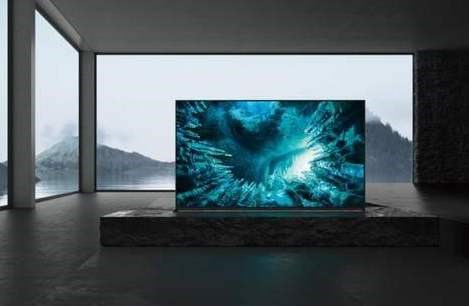
8K TV
The application of new fluorescent materials (such as narrow emission spectrum phosphors, quantum dots) and new packaging technology can achieve the high color gamut requirements of HD TV. At the same time, HDR or local dimming technology of the backlight is applied to realize the demand for high contrast has broad development prospects. By 2020, it is expected that the sales of 4K TV terminals that meet the requirements will account for more than 40% of the total TV sales.
By 2022, the global penetration rate of 4K TVs will exceed 70%, corresponding to 175 million 4K TV sales, and 8K TV terminal sales will account for more than 5% of total TV sales. At the same time, the larger the size of the LCD screen, the larger the number of LED devices required by the backlight module and the larger the size, so that the demand for LEDs is more obvious.
③The Internet of Everything opens up the space for ultra-high-definition display growth
In the long term, with the gradual optimization of people's life and production management methods, the market has continuously improved the requirements for display clarity, and the penetration of small pitch and Mini LEDs have become more and more extensive.
In the era of the Internet of Everything, smart terminals will show a spurt of growth, with more and more terminal display opportunities and platforms, which will also greatly expand the growth space of ultra-high-definition displays.
2. The application prospects of Mini LED in the small size devices
①Mini LED has unlimited potential to achieve a "high screen-to-body ratio"
Fullscreen is an important trend in mobile phone display technology. In 2017, all major first-tier mobile phone brands almost all crossed the threshold of 80% screen-to-body ratio. Because the traditional edge-lit backlight scheme needs to leave room for the side backlight LED lamp beads, the traditional "LCD + edge-lit LED" backlight method cannot provide a high screen ratio under the premise of a thinner profile.
The emergence of Mini LED has completely solved this problem-by minimizing the size of the LED chip, under the premise of achieving a thinner, the direct-lit LED backlight is used without occupying the side space of the mobile phone. Therefore, a "high screen-to-body ratio" display effect can be achieved. In addition, because it can achieve a high dynamic range screen effect through the Local Dimming design, it can present a more detailed screen picture.
Not only is the thickness of the screen similar to that of OLED, but the performance is also quite good. It can be seen that in the battlefield of small-size display, the mini LED with great potential also has the opportunity to compete with the hot OLED screen.
②Mini LED backlight high-end screen helps get rid of the monopoly
At present, the mainstream technology for high-end smartphones to achieve a high screen ratio is OLED. Subject to patent protection and technical barriers, the OLED market is almost monopolized by a few manufacturers such as Samsung, and terminal manufacturers have poor bargaining power.
In a sense, this hinders the penetration of high-screen-to-body mobile phones into low-end models. In addition, the reliability of OLED screens has yet to be tested by the broader market.
Terminal manufacturers urgently need to look for another affordable and more reliable high-end display solution beyond the OLED path, so Mini LED backlight solutions have begun to enter the field of vision of major mobile phone manufacturers.
3. The car display market will become another blue ocean for mini LED backlight after TVs and mobile phones
Regardless of whether the OLED display or the traditional TFT LCD display is used in the vehicle display, there are still many shortcomings in terms of manufacturing cost and driving safety.
The Mini LED is an improved version of the traditional LED backlight + TFT LCD display. It adopts direct lighting and a fine HDR partition display, which greatly improves the contrast.
In addition to achieving low afterglow standby, energy consumption is also greatly reduced, and it also has better high-temperature reliability than OLED and has the same life span as TFT LCD.
Based on the above logic, we believe that with the further maturity of technology, the automotive display market will become another blue ocean for mini LED backlights.
Ⅴ Summary
1. Mini LED backlight LCD and OLED coexist for a long time. LCD, Mini LED and OLED are all TFT technology, so it will not happen that LCD completely replaced CRT and PDP.
LCD is mainly used in the low-end market, and OLED and Mini LED are used in high-end display terminals. The technologies complement each other. Fierce competition is expected to allow consumers to obtain better display effects at lower prices.
2. Mini LED is expected to take the lead in forming a large-scale market, and micro-LED is not yet mature in terms of cost and mass-production technology. Mini LED has become the best choice at the moment. In the long run, it is a transitional solution from small-pitch LED to Micro LED.
3. The current Mini LED direct display backlight is suitable, but due to the relatively mature Mini LED backlight technology, the current Mini LED application is mainly an LCD backlight.
 UTMEL
UTMEL
We are the professional distributor of electronic components, providing a large variety of products to save you a lot of time, effort, and cost with our efficient self-customized service. careful order preparation fast delivery service
1.Is Mini led better than OLED?
However, Micro LED has higher brightness and is more stable than OLED because of its inorganic nature. In other words, red, green, and blue Micro LED pixels do not have luminance decay issues. Compared with that, each OLED pixel more or less suffers from luminance decay and the speed of decay varies.
2.Is Mini LED cheaper than OLED?
With the promise of better contrast, mini-LED has the potential to offer improved picture quality compared to "standard" LCD-based TVs, at a cheaper price than OLED TVs.
3.Is Mini LED worth waiting for?
Volume production will reportedly start in early 2021. If you're unfamiliar, mini-LED has some advantages over the LCD and OLED displays you find on most devices out there on the market right now including the 2020 iPad Pro models. Mini-LED displays offer higher contrast.
4.Is Mini LED expensive?
As an emerging technology, these new displays will be quite expensive at first. But costs could fall throughout 2021 and 2020, so we may see many more manufacturers adopt them across product segments in the coming years.
5.What is a mini LED TV?
LG says Mini LED allows for “a giant leap forward in LCD TV picture quality.” Mini LED changes up the strategy a bit by using much smaller LEDs (but way more of them) for greater contrast than TVs that might top out at a couple hundred dimming zones.
 All You Need to Know About Rectifier CircuitUTMEL24 April 202518044
All You Need to Know About Rectifier Circuit
Read More 15 Key Elements of Diode SelectionUTMEL26 November 202119160
Hello everyone, I am Rose. Welcome back to the new post today. Diodes are one of the most common components in our circuit boards. So, what factors should be considered when selecting models?
Read More What is a PIN Diode?UTMEL04 February 202110521
While diodes with a simple PN junction are by far the most common type of diode in operation, in a variety of applications, other forms of diode may be used. The PIN diode is one type that is used for a number of circuits. In a variety of places, this diode type is used. For RF switching, the PIN diode is very fine, and the PIN structure in photodiodes is very useful as well.
Read More Microwave Diode: Introduction and TypesUTMEL07 January 202126457
Microwave diodes are diodes that work in the microwave frequency band. It is a solid-state microwave device. Microwave band usually refers to the frequency from 300 MHz to 3000 GHz. After the discovery of the point contact diode effect at the end of the 19th century, microwave diodes such as PIN diodes, varactor diodes, and Schottky diode tubes appeared one after another. Microwave diodes have the advantages of small size and high reliability, and are used in microwave oscillation, amplification, frequency conversion, switching, phase shifting and modulation.
Read More What Determines the Maximum Operating Frequency of a Diode?UTMEL29 June 202213312
Hello, wish you a wonderful day. In this essay, we first pose the following query: what determines the diode's maximum operating frequency? In regards to the solution, the first thing we need to understand is that the junction capacitance and the reverse recovery time of the diode are two distinct concepts. The charging and discharging times of the junction capacitance cannot match the reverse recovery time. You say that, why? Let's start by taking a look at these facts.
Read More
Subscribe to Utmel !
![NFM15PC435R0E3D]() NFM15PC435R0E3D
NFM15PC435R0E3DMurata Electronics
![NFM18PC104R1C3D]() NFM18PC104R1C3D
NFM18PC104R1C3DMurata Electronics
![BLM03BD471SN1D]() BLM03BD471SN1D
BLM03BD471SN1DMurata Electronics
![NFM21PC105B1C3D]() NFM21PC105B1C3D
NFM21PC105B1C3DMurata Electronics
![BLM15PX181SN1D]() BLM15PX181SN1D
BLM15PX181SN1DMurata Electronics
![BLM03AG700SN1D]() BLM03AG700SN1D
BLM03AG700SN1DMurata Electronics
![BLM03BC330SN1D]() BLM03BC330SN1D
BLM03BC330SN1DMurata Electronics
![BK0603HS601-T]() BK0603HS601-T
BK0603HS601-TTaiyo Yuden
![BLM03HD102SN1D]() BLM03HD102SN1D
BLM03HD102SN1DMurata Electronics
![NFM21PC475B1A3D]() NFM21PC475B1A3D
NFM21PC475B1A3DMurata Electronics


