

 Product
 Brand
Brand Articles
 Tools
Tools
The Introduction to PCB Inspection Knowledge and Methods

PCB Inspection Methods & Common PCB Defects
| Topics covered in this article: |
| Ⅰ. 9 common sense of PCB inspection |
| Ⅱ. PCB board debugging method |
| Ⅲ. Finding the method of PCB board fault |
It's time for PCB board inspection to pay closer attention to some details so that product quality may be assured. The following 9 suggestions should be kept in mind when inspecting a PCB board.
Ⅰ. 9 common sense of PCB inspection
1. Using grounded test equipment to touch live TV, audio, video, or other equipment on the bottom plate to test the PCB board without an isolation transformer is strictly prohibited.
Direct testing of TV, audio, video, and other equipment without a power isolation transformer is strictly prohibited when using instruments and equipment with grounded shells. Although most radio cassette recorders have a power transformer, when dealing with more specialized TV or audio equipment, especially in terms of output power or the type of power supply used, you must first determine whether the machine's chassis is charged; otherwise, it will be very easy to damage the machine. The TV, audio, and other equipment that is charged with the bottom plate generate a power supply short circuit, which damages the integrated circuit and causes the problem to spread further.
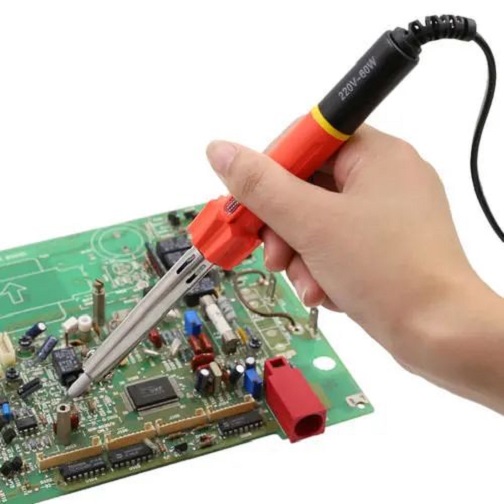
2. When testing the PCB board. pay attention to the soldering iron's insulation performance.
Using a soldering iron with electricity is prohibited. Make sure the soldering iron is turned off. It's best to ground the soldering iron casing. Pay extra attention to the MOS circuit. It is safer to use a 6V soldering iron with a low voltage.
3. Understand the functioning concept of integrated circuits and related circuits before testing the PCB board,
Before checking and repairing an integrated circuit, you must first understand its function, the internal circuit, the key electrical characteristics, the role of each pin, the normal voltage of each pin, the waveform, and the operating principle of the circuit formed of peripheral components. Analysis and inspection will be much easier if the above conditions are met.
4. When testing the PCB board, avoid causing a short circuit between the pins.
Do not produce a short circuit between the pins of the integrated circuit by sliding the test leads or probes when measuring voltage or testing the waveform with an oscilloscope probe. It's advisable to take measurements on the peripheral printed circuit that's connected to the pins directly. An integrated circuit can be quickly damaged by a brief short circuit. When evaluating flat-package CMOS integrated circuits, you must be more cautious.
5. The PCB board test instrument's internal resistance should be high.
When measuring the DC voltage of IC pins, use a multimeter with an internal resistance of the meter head larger than 20K/V; otherwise, the voltage of some pins will have a large measurement error.
6. When testing the PCB board. pay attention to the heat dissipation of the power integrated circuit.
The power integrated circuit must be able to dissipate heat well, and it cannot operate in a high-power mode without a heat sink.
7. The PCB board's lead wire should be thoroughly checked.
If external components must be used to replace a broken part of the integrated circuit, small components should be utilized and wiring should be acceptable to avoid parasitic coupling, particularly between the audio power amplifier integrated circuit and the preamplifier circuit end.
8. Inspecting the PCB board for quality of welding
It is certain to be welded firmly while soldering, and the accumulation of solder and pores is likely to produce erroneous soldering. Soldering should take no longer than 3 seconds, and the soldering iron should have a power of around 25W with internal heating. It's important to double-check the soldered integrated circuit. It's recommended to use an ohmmeter to check for a short circuit between the pins, then double-check for solder adherence before turning on the power.
9. When inspecting the PCB board. don't be too quick to judge the damage to the integrated circuit.
Don't assume that the integrated circuit is readily destroyed. Because most integrated circuits are directly connected, if a circuit is aberrant, various voltage fluctuations may occur, which may or may not be caused by the integrated circuit's damage. Furthermore, the measured voltage of each pin may deviate from the typical voltage in some instances. It is not always the case that when the values match or are close, the integrated circuit is good. Because some soft problems may not result in DC voltage fluctuations.
Ⅱ. PCB board debugging method
For the newly returned PCB board, we must first inspect it to see if there are any evident flaws, such as cracks, short circuits, or open circuits. Check that the resistance between the power source and the ground wire is large enough, if necessary.
Debugging a newly constructed circuit board can be challenging, especially when the board is large and contains many components, and it is frequently impossible to begin. Debugging, on the other hand, will yield twice the outcome with half the effort if you learn a set of sensible debugging approaches.
PCB board debugging steps:
1. For the newly returned PCB board. we must first inspect it to see if there are any evident flaws, such as cracks, short circuits, or open circuits. Check that the resistance between the power source and the ground wire is large enough, if necessary.
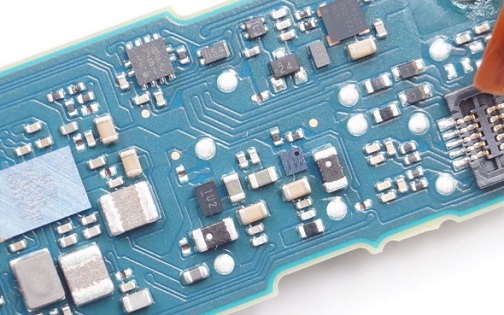
2. The components are then installed. If you are not confident that independent modules are working well, it is recommended to install them piece by piece (for relatively short circuits, you can install them all at once) so that the fault range can be easily determined. When you run into issues, don't have trouble getting started.
3. In general, you should install the power supply first, then turn it on to see if the output voltage of the power supply is normal. You can utilize an adjustable regulated power supply with a current limiting function if you don't have much confidence while powering up (even if you are confident, it is recommended that you add a fuse just in case).
Set the overcurrent protection current first, then gradually raise the regulated power supply's voltage value while monitoring the input current, input voltage, and output voltage. If there are no issues with over-current protection or other issues throughout the upward adjustment process, and the output voltage has returned to normal, the power supply is in good shape. Otherwise, turn off the power, locate the source of the problem, and repeat the steps above until the power supply returns to normal.
4. After that, progressively install the remaining modules. Power on and test each module after it has been installed. Follow the aforementioned measures when turning on to avoid over-current and component burnout caused by design or installation mistakes.
Ⅲ. Finding the method of PCB board fault
1. Find the faulty PCB board by measuring the voltage method
The first thing to verify is whether the voltage of each chip's power supply pins is normal, then the various reference voltages, and finally the working voltage of each point. When a general silicon transistor is turned on, for example, the BE junction voltage is approximately 0.7V, while the CE junction voltage is approximately 0.3V or less. The BE junction of a transistor may be open if the BE junction voltage is more than 0.7V (save for specific transistors such as Darlington, etc.).
2. Signal injection method to find faulty PCB board
To detect the failure site, connect the signal source to the input terminal and examine the waveform of each point individually to verify if it is normal. Simpler approaches, such as holding tweezers in our hands and touching the input terminals of all levels to test if the output terminals respond, are also sometimes used. This is commonly used in audio and video amplifier circuits (but pay attention to the hot bottom plate). This approach cannot be used in circuits with high voltage or high voltage, as it may produce electric shock). If there is no reaction to the previous level but a response to the following level, the problem is likely to be in the prior level, which should be investigated.
3. Other ways to find faulty PCB boards
There are a variety of alternative methods for locating faults, including watching, hearing, smelling, and touching.
"Seeing" means looking for obvious mechanical damage to the components, such as cracks, burns, deformation, and so on;
"Listening" means hearing if the working sound is normal, such as if something that shouldn't be ringing is ringing, the place where it should be ringing isn't ringing, or the sound is abnormal, and so on;
"Smelling" is to see if the device has any unusual odors, such as burning, capacitor electrolyte, and so on; experienced electronic repair professionals are particularly sensitive to these scents;
"Touching" is to see whether the item's temperature is normal, such as not too hot or too cold.
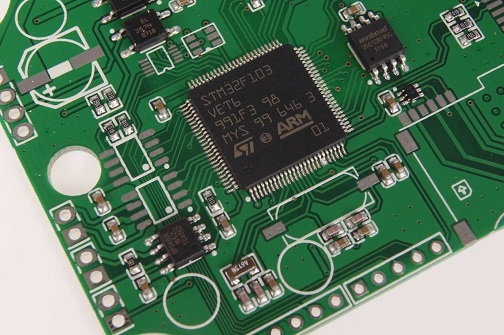
When some power devices are in use, they produce heat. It can be assumed that they are not working if they are cold to the touch. That won't work either if the place that shouldn't be hot is hot, or if the place that should be hot is too hot. Working below 70 degrees is no problem for general power transistors, voltage regulator chips, and so on.
So, what exactly is the 70-degree concept? If you can keep your hand up for more than three seconds after pressing it up, the temperature is below 70 degrees (note: touch it cautiously at first to avoid burning your hand).
 UTMEL
UTMEL
We are the professional distributor of electronic components, providing a large variety of products to save you a lot of time, effort, and cost with our efficient self-customized service. careful order preparation fast delivery service
1. How many kinds of PCB electrical test methods are there?
If it is a blank board test, according to the test principle, it can be divided into two types, one is the resistance method and the other is the capacitance method. The blank board test is mainly to test whether the pcb board has short circuit and open circuit.
There are two types of tests after soldering the components, one is the ict online test, which mainly tests the function of the components, and whether there are short circuits, virtual soldering and other faults in the welding process. The other is a functional test, which simulates the function of the circuit board to perform a power-on test, and whether there is any problem with the function of the board.
2. How to place test points in PCB?
1. To solve the problem of the test point at the root cause, when designing the circuit diagram, add a test point circuit symbol where you need to place the test point, and make a package you want, such as pads, vias, etc. Yes, you can import it directly into the PCB.
2. Add pads, over-empty, etc. directly in the PCB, and put them directly on the network you want to place, or by changing or adding the network name, so that the pads, vias, etc. have and need to add tests Click the same network name. The disadvantage is that if you do not pay attention to the operation when synchronizing with the schematic, it is easy to drop the test point. A waste of design time.
3. What is the IST test in PCB?
Interconnect Strength Test (IST) is an accelerated strength test method used to evaluate the integrity of the printed circuit board (PCB) interconnect structure. It is an objective test with timely, repeatable, reproducible, and unique test results.
 Pull-Down Circuit Guide: Working Principle, Resistor Value, Circuit Design, and ApplicationsUTMEL26 June 2026543
Learn how pull-down circuits work, how to choose a pull-down resistor value, and how to design reliable microcontroller inputs, MOSFET gates, reset pins, and sensor interfaces.
Read More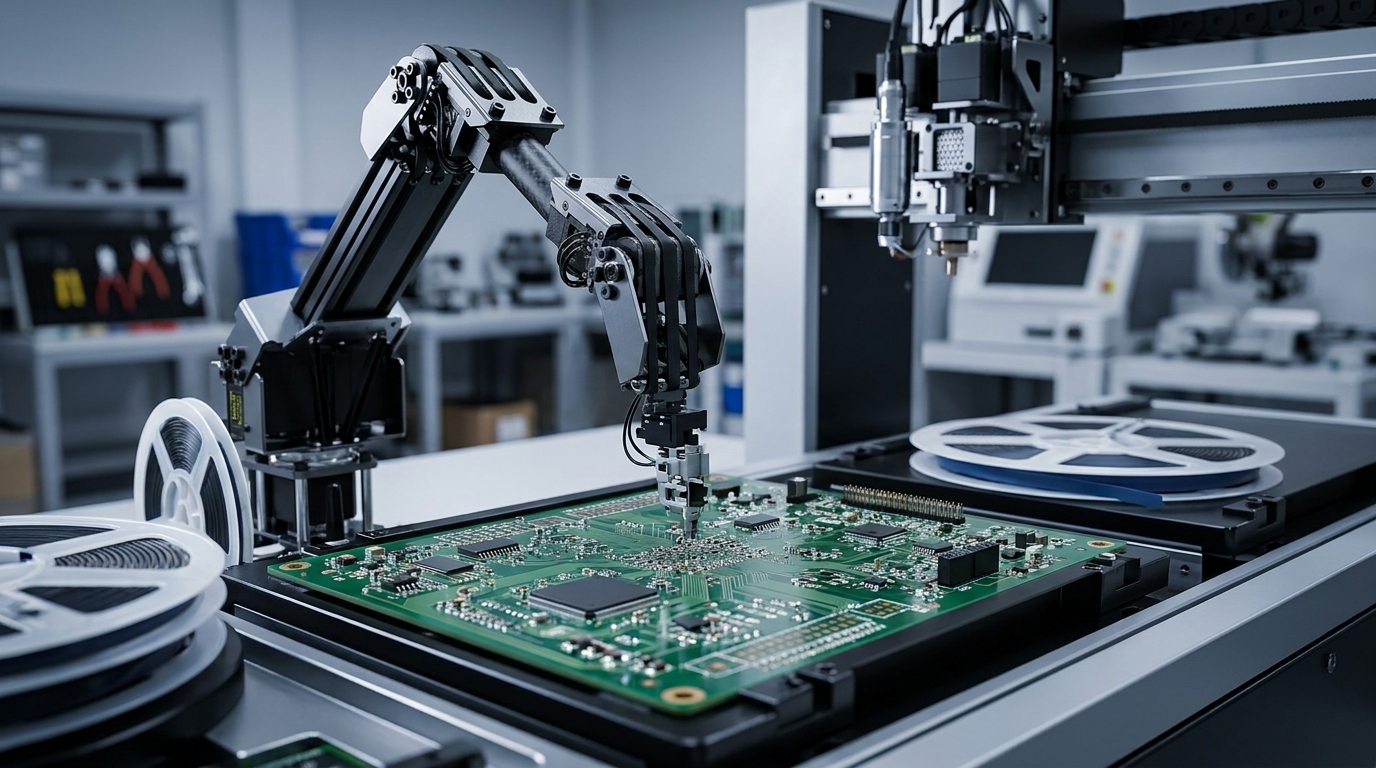 Smd Components Outlook 2026: Supply, Lead Times, and Sourcing OptionsUTMEL21 July 20261033
The 2026 electronic component market faces a selective shortage driven by AI infrastructure and electric vehicles. While active ICs face lead times up to 55 weeks, commodity SMD passives remain stable at 12–20 weeks. This procurement guide details key trends in MLCCs and circuit protection, outlining actionable strategy solutions like dual-sourcing and flexible footprints to mitigate supply chain risks.
Read More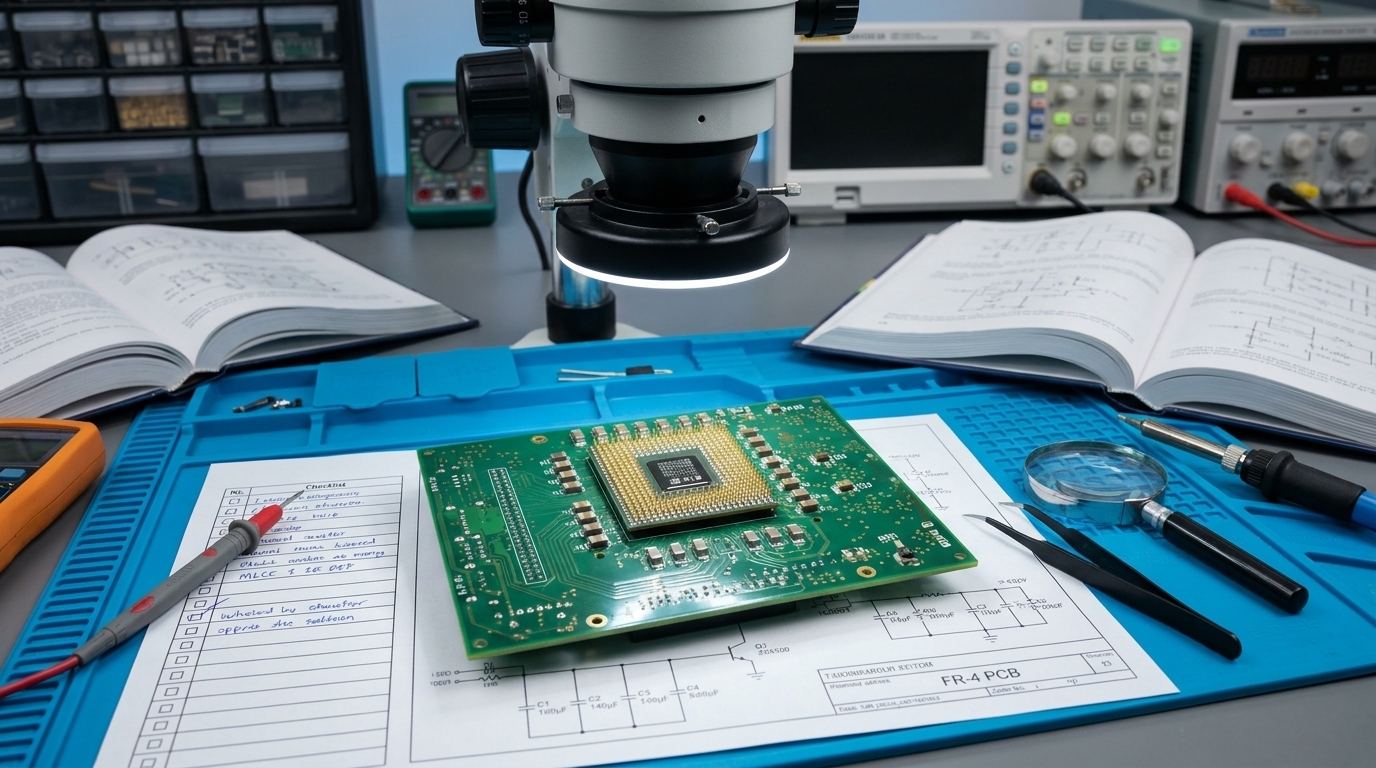 Decoupling Capacitor Placement Guide: Maximizing Power Integrity in High-Speed Digital PCBsUTMEL12 August 2026534
This technical guide details how to optimize decoupling capacitor layout to maximize Power Integrity (PI) in high-speed digital PCBs. It explains how switching ICs induce power rail noise, the physics of parasitic loop inductance, and the impact of stackup plane separation. Layout engineers will find practical strategies for via placement, anti-resonance mitigation across multi-value capacitor networks, and sourcing reliable low-ESR MLCCs.
Read More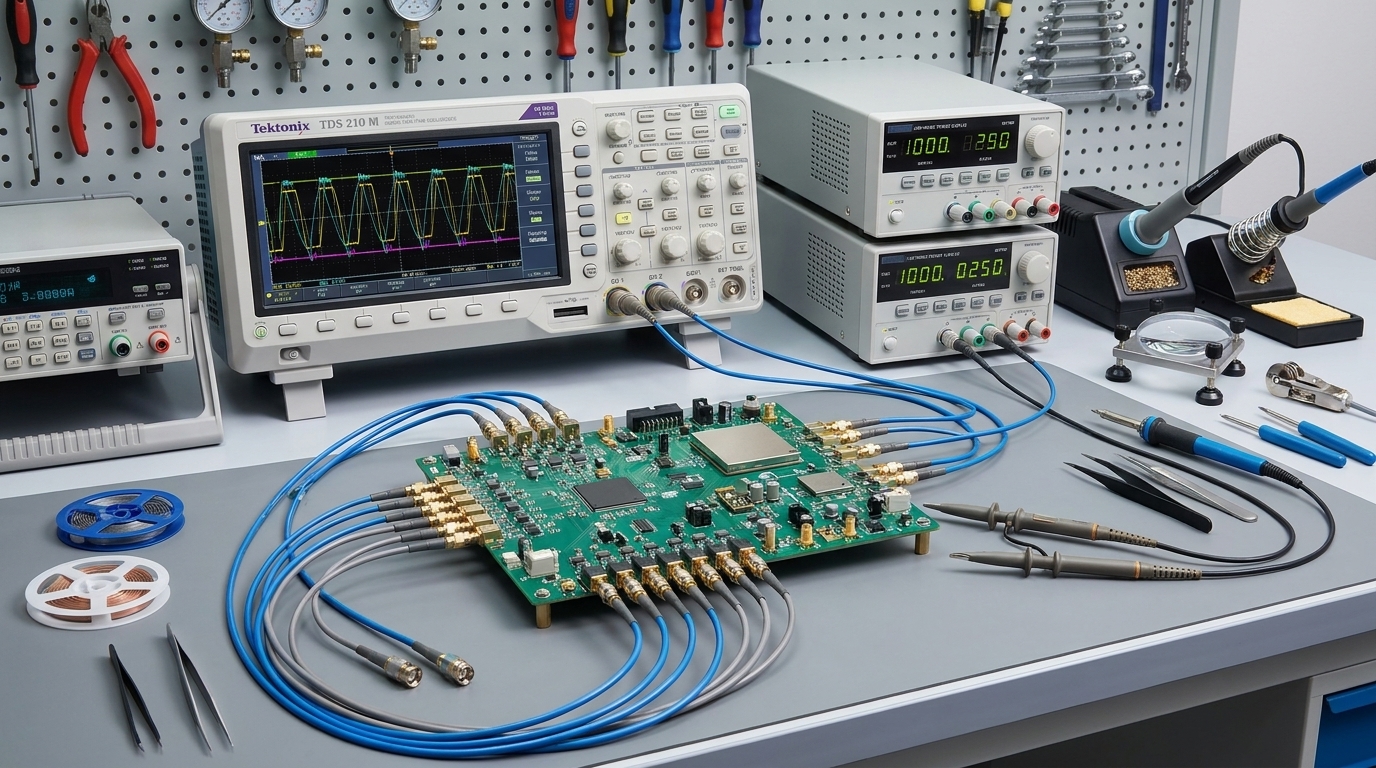 sar-adc-reference-driver-selection-managing-dynamic-kickback-noise-loop-stabilityUTMEL17 September 2026267
Precision SAR ADCs present high-speed dynamic switched-capacitor loads that demand instantaneous transient currents during bit trials. This guide details how to size local decoupling capacitors accounting for MLCC DC bias derating, stabilize reference buffers using dual-loop in-loop compensation, and minimize multiplicative noise degradation. It also provides layout directives and dynamic bench verification protocols across sampling rate sweeps and burst modes.
Read More HF PCB Circuit Design 10 QuestionsUTMEL16 March 20225544
Hello everyone, I am Rose. Today I want to give you a full explanation about PCB design. I Hope the following ten questions will give you a satisfied answer.
Read More
Subscribe to Utmel !
![LDD-500HS]() LDD-500HS
LDD-500HSMEAN WELL USA Inc.
![APA501-80-005]() APA501-80-005
APA501-80-005Artesyn Embedded Power
![RCD-24-0.70/PL/A-R]() RCD-24-0.70/PL/A-R
RCD-24-0.70/PL/A-RRecom Power
![RCD-24-0.50/PL/A]() RCD-24-0.50/PL/A
RCD-24-0.50/PL/ARecom Power
![RCD-24-0.60/PL/B]() RCD-24-0.60/PL/B
RCD-24-0.60/PL/BRecom Power
![LDD-600HS]() LDD-600HS
LDD-600HSMEAN WELL USA Inc.
![VI-RAM-I1]() VI-RAM-I1
VI-RAM-I1Vicor Corporation
![LDH-45B-700]() LDH-45B-700
LDH-45B-700MEAN WELL USA Inc.
![ISL8202MIRZ-T7A]() ISL8202MIRZ-T7A
ISL8202MIRZ-T7AIntersil (Renesas Electronics America)
![LDU0516S300]() LDU0516S300
LDU0516S300XP Power


