

 Product
 Brand
Brand Articles
 Tools
Tools
74HC73 Dual JK Flip-flop Trigger: Pinout, Equivalent and Datasheet

2V~6V 83MHz JK Type Flip Flop DUAL 74HC73 14 Pins 74HC Series 14-SOIC (0.154, 3.90mm Width)
Unit Price: $0.140858
Ext Price: $0.14


2V~6V 83MHz JK Type Flip Flop DUAL 74HC73 14 Pins 74HC Series 14-SOIC (0.154, 3.90mm Width)
The 74HC73 is a dual negative edge triggered JK flip-flop with individual J, K, clock and reset inputs and complementary nQ output. The J and K inputs must be stable one set-up time prior to the HIGH-to-LOW clock transition for predictable operation. Furthermore, Huge range of Semiconductors, Capacitors, Resistors and IcS in stock. Welcome RFQ.

https://i.ytimg.com/vi/j6krFp511HA/hq720.jpg?sqp=-…AFwAcABBg==&rs=AOn4CLAaJt0YO6rjZwCjaaUG-UPf0yDxjw
74HC73 Pinout

Pinout
74HC73 CAD Model

PCB Symbol
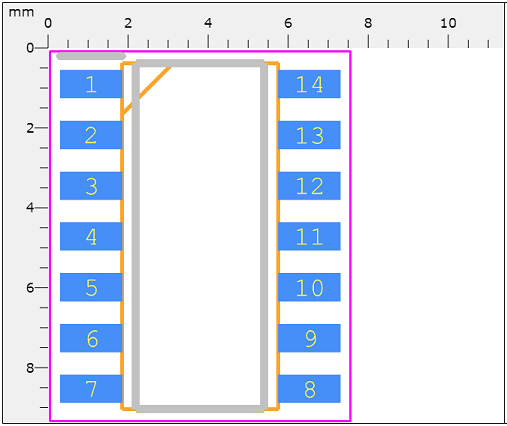
PCB Footprint
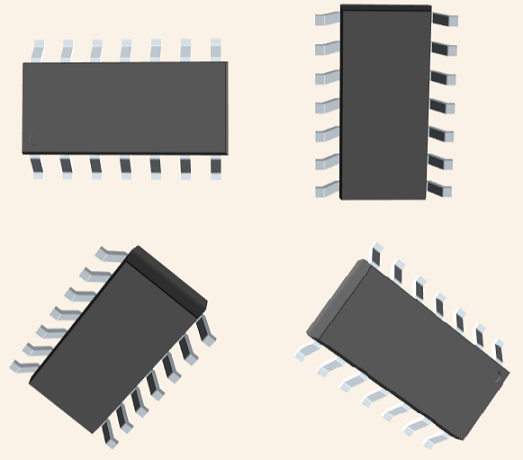
3D Model
74HC73 Overview
The 74HC73 is a dual negative edge triggered JK flip-flop with individual J, K, clock and reset inputs and complementary nQ output. The J and K inputs must be stable one set-up time prior to the HIGH-to-LOW clock transition for predictable operation. (nR) is asynchronous, when LOW it overrides the clock and data inputs, forcing the nQ output LOW and the nQ output HIGH. Schmitt-trigger action in the clock input makes the circuit highly tolerant to slower clock rise and fall times. Inputs include clamp diodes. This enables the use of current limiting resistors to interface inputs to voltages in excess of VCC.
This article provides you with a basic overview of the 74HC73, including its pin descriptions, features and specifications, etc., to help you quickly understand what 74HC73 is.
74HC73 Features
● Low-power dissipation
● Complies with JEDEC standard no. 7A
● ESD protection:
◆ HBM JESD22-A114F exceeds 2000 V
◆ MM JESD22-A115-A exceeds 200 V
● Multiple package options
● Specified from ﹣40 ℃ to ﹢80 ℃ and from ﹣40 ℃ to ﹢125 ℃
Specifications
- TypeParameter
- Factory Lead Time4 Weeks
- Contact Plating
Contact plating (finish) provides corrosion protection for base metals and optimizes the mechanical and electrical properties of the contact interfaces.
Gold - Mount
In electronic components, the term "Mount" typically refers to the method or process of physically attaching or fixing a component onto a circuit board or other electronic device. This can involve soldering, adhesive bonding, or other techniques to secure the component in place. The mounting process is crucial for ensuring proper electrical connections and mechanical stability within the electronic system. Different components may have specific mounting requirements based on their size, shape, and function, and manufacturers provide guidelines for proper mounting procedures to ensure optimal performance and reliability of the electronic device.
Surface Mount - Mounting Type
The "Mounting Type" in electronic components refers to the method used to attach or connect a component to a circuit board or other substrate, such as through-hole, surface-mount, or panel mount.
Surface Mount - Package / Case
refers to the protective housing that encases an electronic component, providing mechanical support, electrical connections, and thermal management.
14-SOIC (0.154, 3.90mm Width) - Number of Pins14
- Clock-Edge Trigger TypeNegative Edge
- Operating Temperature
The operating temperature is the range of ambient temperature within which a power supply, or any other electrical equipment, operate in. This ranges from a minimum operating temperature, to a peak or maximum operating temperature, outside which, the power supply may fail.
-40°C~125°C TA - Packaging
Semiconductor package is a carrier / shell used to contain and cover one or more semiconductor components or integrated circuits. The material of the shell can be metal, plastic, glass or ceramic.
Tape & Reel (TR) - Series
In electronic components, the "Series" refers to a group of products that share similar characteristics, designs, or functionalities, often produced by the same manufacturer. These components within a series typically have common specifications but may vary in terms of voltage, power, or packaging to meet different application needs. The series name helps identify and differentiate between various product lines within a manufacturer's catalog.
74HC - JESD-609 Code
The "JESD-609 Code" in electronic components refers to a standardized marking code that indicates the lead-free solder composition and finish of electronic components for compliance with environmental regulations.
e4 - Part Status
Parts can have many statuses as they progress through the configuration, analysis, review, and approval stages.
Active - Moisture Sensitivity Level (MSL)
Moisture Sensitivity Level (MSL) is a standardized rating that indicates the susceptibility of electronic components, particularly semiconductors, to moisture-induced damage during storage and the soldering process, defining the allowable exposure time to ambient conditions before they require special handling or baking to prevent failures
1 (Unlimited) - Number of Terminations14
- TypeJK Type
- Additional Feature
Any Feature, including a modified Existing Feature, that is not an Existing Feature.
MASTER SLAVE OPERATION - Voltage - Supply
Voltage - Supply refers to the range of voltage levels that an electronic component or circuit is designed to operate with. It indicates the minimum and maximum supply voltage that can be applied for the device to function properly. Providing supply voltages outside this range can lead to malfunction, damage, or reduced performance. This parameter is critical for ensuring compatibility between different components in a circuit.
2V~6V - Terminal Position
In electronic components, the term "Terminal Position" refers to the physical location of the connection points on the component where external electrical connections can be made. These connection points, known as terminals, are typically used to attach wires, leads, or other components to the main body of the electronic component. The terminal position is important for ensuring proper connectivity and functionality of the component within a circuit. It is often specified in technical datasheets or component specifications to help designers and engineers understand how to properly integrate the component into their circuit designs.
DUAL - Terminal Form
Occurring at or forming the end of a series, succession, or the like; closing; concluding.
GULL WING - Supply Voltage
Supply voltage refers to the electrical potential difference provided to an electronic component or circuit. It is crucial for the proper operation of devices, as it powers their functions and determines performance characteristics. The supply voltage must be within specified limits to ensure reliability and prevent damage to components. Different electronic devices have specific supply voltage requirements, which can vary widely depending on their design and intended application.
5V - Base Part Number
The "Base Part Number" (BPN) in electronic components serves a similar purpose to the "Base Product Number." It refers to the primary identifier for a component that captures the essential characteristics shared by a group of similar components. The BPN provides a fundamental way to reference a family or series of components without specifying all the variations and specific details.
74HC73 - Function
The parameter "Function" in electronic components refers to the specific role or purpose that the component serves within an electronic circuit. It defines how the component interacts with other elements, influences the flow of electrical signals, and contributes to the overall behavior of the system. Functions can include amplification, signal processing, switching, filtering, and energy storage, among others. Understanding the function of each component is essential for designing effective and efficient electronic systems.
Reset - Output Type
The "Output Type" parameter in electronic components refers to the type of signal or data that is produced by the component as an output. This parameter specifies the nature of the output signal, such as analog or digital, and can also include details about the voltage levels, current levels, frequency, and other characteristics of the output signal. Understanding the output type of a component is crucial for ensuring compatibility with other components in a circuit or system, as well as for determining how the output signal can be utilized or processed further. In summary, the output type parameter provides essential information about the nature of the signal that is generated by the electronic component as its output.
Differential - Operating Supply Voltage
The voltage level by which an electrical system is designated and to which certain operating characteristics of the system are related.
5V - Polarity
In electronic components, polarity refers to the orientation or direction in which the component must be connected in a circuit to function properly. Components such as diodes, capacitors, and LEDs have polarity markings to indicate which terminal should be connected to the positive or negative side of the circuit. Connecting a component with incorrect polarity can lead to malfunction or damage. It is important to pay attention to polarity markings and follow the manufacturer's instructions to ensure proper operation of electronic components.
Non-Inverting - Supply Voltage-Max (Vsup)
The parameter "Supply Voltage-Max (Vsup)" in electronic components refers to the maximum voltage that can be safely applied to the component without causing damage. It is an important specification to consider when designing or using electronic circuits to ensure the component operates within its safe operating limits. Exceeding the maximum supply voltage can lead to overheating, component failure, or even permanent damage. It is crucial to adhere to the specified maximum supply voltage to ensure the reliable and safe operation of the electronic component.
6V - Supply Voltage-Min (Vsup)
The parameter "Supply Voltage-Min (Vsup)" in electronic components refers to the minimum voltage level required for the component to operate within its specified performance range. This parameter indicates the lowest voltage that can be safely applied to the component without risking damage or malfunction. It is crucial to ensure that the supply voltage provided to the component meets or exceeds this minimum value to ensure proper functionality and reliability. Failure to adhere to the specified minimum supply voltage may result in erratic behavior, reduced performance, or even permanent damage to the component.
2V - Number of Circuits2
- Clock Frequency
Clock frequency, also known as clock speed, refers to the rate at which a processor or electronic component can execute instructions. It is measured in hertz (Hz) and represents the number of cycles per second that the component can perform. A higher clock frequency typically indicates a faster processing speed and better performance. However, it is important to note that other factors such as architecture, efficiency, and workload also play a significant role in determining the overall performance of a component. In summary, clock frequency is a crucial parameter that influences the speed and efficiency of electronic components in processing data and executing tasks.
83MHz - Propagation Delay
the flight time of packets over the transmission link and is limited by the speed of light.
240 ns - Quiescent Current
The quiescent current is defined as the current level in the amplifier when it is producing an output of zero.
4μA - Turn On Delay Time
Turn-on delay, td(on), is the time taken to charge the input capacitance of the device before drain current conduction can start.
15 ns - Family
In electronic components, the parameter "Family" typically refers to a categorization or classification system used to group similar components together based on their characteristics, functions, or applications. This classification helps users easily identify and select components that meet their specific requirements. The "Family" parameter can include various subcategories such as resistors, capacitors, diodes, transistors, integrated circuits, and more. Understanding the "Family" of an electronic component can provide valuable information about its compatibility, performance specifications, and potential uses within a circuit or system. It is important to consider the "Family" parameter when designing or troubleshooting electronic circuits to ensure proper functionality and compatibility with other components.
HC/UH - Logic Function
In electronic components, the term "Logic Function" refers to the specific operation or behavior of a component based on its input signals. It describes how the component processes the input signals to produce the desired output. Logic functions are fundamental to digital circuits and are used to perform logical operations such as AND, OR, NOT, and XOR.Each electronic component, such as logic gates or flip-flops, is designed to perform a specific logic function based on its internal circuitry. By understanding the logic function of a component, engineers can design and analyze complex digital systems to ensure proper functionality and performance. Different logic functions can be combined to create more complex operations, allowing for the creation of sophisticated digital devices and systems.
Flip-Flop, JK-Type - Number of Bits per Element1
- Max Propagation Delay @ V, Max CL
The parameter "Max Propagation Delay @ V, Max CL" in electronic components refers to the maximum amount of time it takes for a signal to propagate through the component from input to output when operating at a specific voltage (V) and driving a maximum specified load capacitance (CL). This parameter is crucial in determining the speed and performance of the component in a circuit. A shorter propagation delay indicates faster signal processing and better overall performance. Designers use this parameter to ensure that signals can be transmitted and received within the required timing constraints in their electronic systems.
27ns @ 6V, 50pF - Trigger Type
Trigger Type in electronic components refers to the mechanism or method by which a device, such as a flip-flop or timer, responds to an input signal. It defines how the device transitions between states based on specific conditions, such as rising or falling edges of a signal, levels, or pulses. Different trigger types such as edge-triggered, level-triggered, or pulse-triggered influence the timing and behavior of the circuit, thereby determining how input signals affect the output in various applications.
Negative Edge - Input Capacitance
The capacitance between the input terminals of an op amp with either input grounded. It is expressed in units of farads.
3.5pF - Length8.65mm
- Width3.9mm
- Radiation Hardening
Radiation hardening is the process of making electronic components and circuits resistant to damage or malfunction caused by high levels of ionizing radiation, especially for environments in outer space (especially beyond the low Earth orbit), around nuclear reactors and particle accelerators, or during nuclear accidents or nuclear warfare.
No - RoHS Status
RoHS means “Restriction of Certain Hazardous Substances” in the “Hazardous Substances Directive” in electrical and electronic equipment.
ROHS3 Compliant - Lead Free
Lead Free is a term used to describe electronic components that do not contain lead as part of their composition. Lead is a toxic material that can have harmful effects on human health and the environment, so the electronics industry has been moving towards lead-free components to reduce these risks. Lead-free components are typically made using alternative materials such as silver, copper, and tin. Manufacturers must comply with regulations such as the Restriction of Hazardous Substances (RoHS) directive to ensure that their products are lead-free and environmentally friendly.
Lead Free
74HC73 Functional Block Diagram

Functional diagram

Logic symbol

IEC logic symbol
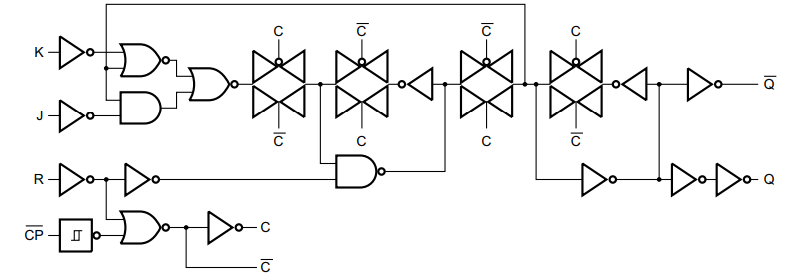
Logic diagram (one flip-flop)
74HC73 Equivalent
| Model number | Manufacturer | Description |
| M38510/75302BCX | QP Semiconductor | D Flip-Flop, 2-Func, Positive Edge Triggered, 1-Bit, Complementary Output, CMOS, CDIP14 |
| M74HC73M1R | STMicroelectronics | HC/UH SERIES, DUAL NEGATIVE EDGE TRIGGERED J-K FLIP-FLOP, COMPLEMENTARY OUTPUT, PDSO14, SOP-14 |
| 933713920652 | NXP Semiconductors | IC HC/UH SERIES, DUAL NEGATIVE EDGE TRIGGERED J-K FLIP-FLOP, COMPLEMENTARY OUTPUT, PDSO14, PLASTIC, SO-14, FF/Latch |
| 935190270118 | Nexperia | J-K Flip-Flop, HC/UH Series, 2-Func, Negative Edge Triggered, 1-Bit, Complementary Output, CMOS, PDSO14 |
| 74HC73DB,112 | NXP Semiconductors | 74HC73 - Dual JK flip-flop with reset; negative-edge trigger SSOP1 14-Pin |
| HD74HC73RP | Hitachi Ltd | J-K Flip-Flop, HC/UH Series, 2-Func, Negative Edge Triggered, 2-Bit, Complementary Output, CMOS, PDSO14, FP-14DN |
| M74HC107M1R | STMicroelectronics | HC/UH SERIES, DUAL NEGATIVE EDGE TRIGGERED J-K FLIP-FLOP, COMPLEMENTARY OUTPUT, PDSO14, SO-14 |
| CD74HC73M | Thomson Consumer Electronics | FF/Latch |
| 74HC73DB | Philips Semiconductors | J-K Flip-Flop, 2-Func, Negative Edge Triggered, CMOS, PDSO14 |
| 933714430652 | NXP Semiconductors | IC HC/UH SERIES, DUAL NEGATIVE EDGE TRIGGERED J-K FLIP-FLOP, COMPLEMENTARY OUTPUT, PDSO14, PLASTIC, SO-14, FF/Latch |
Parts with Similar Specs
- ImagePart NumberManufacturerPackage / CaseNumber of PinsLogic FunctionNumber of Bits per ElementPropagation DelayClock Edge Trigger TypeSupply VoltageQuiescent CurrentView Compare
![74HC73D,653]()
74HC73D,653
14-SOIC (0.154, 3.90mm Width)
14
Flip-Flop, JK-Type
1
240 ns
Negative Edge
5 V
4 μA
![74HC109D,653]()
14-SOIC (0.154, 3.90mm Width)
14
Flip-Flop, JK-Type
1
16 ns
Negative Edge
5 V
4 μA
![N74F74D,623]()
16-SOIC (0.154, 3.90mm Width)
16
AND, Flip-Flop, JK-Type
1
280 ns
Positive Edge
4.5 V
4 μA
![74HC107D,653]()
16-SOIC (0.154, 3.90mm Width)
16
AND, Flip-Flop, JK-Type
1
270 ns
Negative Edge
4.5 V
4 μA
![74HC112D,653]()
14-SOIC (0.154, 3.90mm Width)
14
AND, D-Type, Flip-Flop
1
6.2 ns
Positive Edge
5 V
-


74HC73 Package

Package outline
74HC73 Manufacturer
Nexperia is dedicated to Discretes, Logic and MOSFETs devices. This new company became independent at the beginning of 2017. Nexperia is a leading expert in the high-volume production of essential semiconductors, components that are required by every electronic design in the world. The company's extensive portfolio includes diodes, bipolar transistors, ESD protection devices, MOSFETs, GaN FETs and analog & logic ICs. With decades of experience in supplying to the world's leading companies, Nexperia has over 12,000 employees across Asia, Europe and the US. Nexperia creates efficient devices with best-in-class Quality. It has an extensive portfolio, produced to meet the stringent standards set by the Automotive industry. Its belief that efficiency wins is backed by flawless execution that meets the stringent requirements of the market and customers. Every Nexperia employee is tasked with the responsibility of maintaining Quality. Nexperia is a worldwide network built on passion and commitment to our work, belief in our goals and a drive to succeed.
Datasheet PDF
- PCN Packaging :
- PCN Design/Specification :
- Datasheets :
- PCN Assembly/Origin :
- RohsStatement :
Trend Analysis
What is the essential property of the 74HC73?
The 74HC73 is a dual negative edge triggered JK flip-flop with individual J, K, clock and reset inputs and complementary nQ output.
What are the JK flip-flop chips with working voltage in the range of 2.5~4.5v?
74HC73 Dual JK Flip-flop Trigger, 74HC76 Dual JK Flip-flop Trigger, 74HC78 Dual JK Flip-flop Trigger, 74HC109 Dual JK Flip-flop Trigger, 74HC113 Dual JK Flip-flop Trigger, etc.
 STM32F030C6T6 vs STM32F072C8T6 STMicroelectronics Microcontrollers
11 June 2025382
![LMR400 VS RG58 Coax Cable[Video]: Which one is better ? |LMR®-400](https://res.utmel.com/Images/Article/13b2e13d-70e7-4f84-8b02-55e1a13cb298.jpg) LMR400 VS RG58 Coax Cable[Video]: Which one is better ? |LMR®-400
LMR400 VS RG58 Coax Cable[Video]: Which one is better ? |LMR®-40012 June 202418361
 AMD Xilinx XC95108F-20PQG160I CPLD Overview
20 May 2025149
 KSC1845 Transistor: Datasheet, Pinout, Equivalent
06 December 20213542
 Lithium cr1620 Battery- Datasheet, Equivalent, and Applications
30 March 202214258
 OP27 Ultra-Low Noise Precision Op-Amp: Datasheet, Pinout, and Performance Review
05 February 202668
 TOP224YN: Features, Applications, and Datasheet
26 October 20231438
![What is TDA2009A 10 +10W STEREO AMPLIFIER? [FAQ&Video]](https://res.utmel.com/Images/Article/3e83d4ed-c8b7-4321-8a46-f24003f1dcb1.jpg) What is TDA2009A 10 +10W STEREO AMPLIFIER? [FAQ&Video]
What is TDA2009A 10 +10W STEREO AMPLIFIER? [FAQ&Video]25 April 202211352
 What is an LDO (Low Dropout Regulator)?
29 October 20215692
 A Practical Methodology to Simulate 4H-SiC and GaN p-n Diodes with Model Parameter Adjustment in Medici
07 February 20233846
 Xilinx FPGAs: From Getting Started to Advanced Application Development
09 September 20253847
 Understanding the Basics of I2C Interface Controllers
11 June 20251201
 A Decade-Long Investment in ON Semiconductor Corp. Yields Over 1200% Returns
18 September 20234072
 Latches, Flip-Flops, Registers and Buffers
15 February 202216654
 The Through Hole of the PCB Circuit Board Must be Plugged, Why?
14 February 20234648
 What is RFID?
23 March 20216475
Nexperia USA Inc.
In Stock: 1000
Minimum: 1 Multiples: 1
Qty
Unit Price
Ext Price
1
$0.140858
$0.14
10
$0.132885
$1.33
100
$0.125363
$12.54
500
$0.118267
$59.13
1000
$0.111573
$111.57
Not the price you want? Send RFQ Now and we'll contact you ASAP.
Inquire for More Quantity
![74HC74D,653]() 74HC74D,653
74HC74D,653Nexperia USA Inc.
![74HC574D,653]() 74HC574D,653
74HC574D,653Nexperia USA Inc.
![HEF4013BT,653]() HEF4013BT,653
HEF4013BT,653Nexperia USA Inc.
![74AHC74D,118]() 74AHC74D,118
74AHC74D,118Nexperia USA Inc.
![74HC273D,653]() 74HC273D,653
74HC273D,653Nexperia USA Inc.
![74LVC574APW,118]() 74LVC574APW,118
74LVC574APW,118Nexperia USA Inc.
![74LVC74APW,118]() 74LVC74APW,118
74LVC74APW,118Nexperia USA Inc.
![74HC373D]() 74HC373D
74HC373DNexperia
![74AHC273PW,118]() 74AHC273PW,118
74AHC273PW,118Nexperia USA Inc.


