

 Product
 Brand
Brand Articles
 Tools
Tools
AD4000/AD4004/AD4008 Series 16-Bit 1 MSPS ADC: Performance Deep Dive and Design Analysis

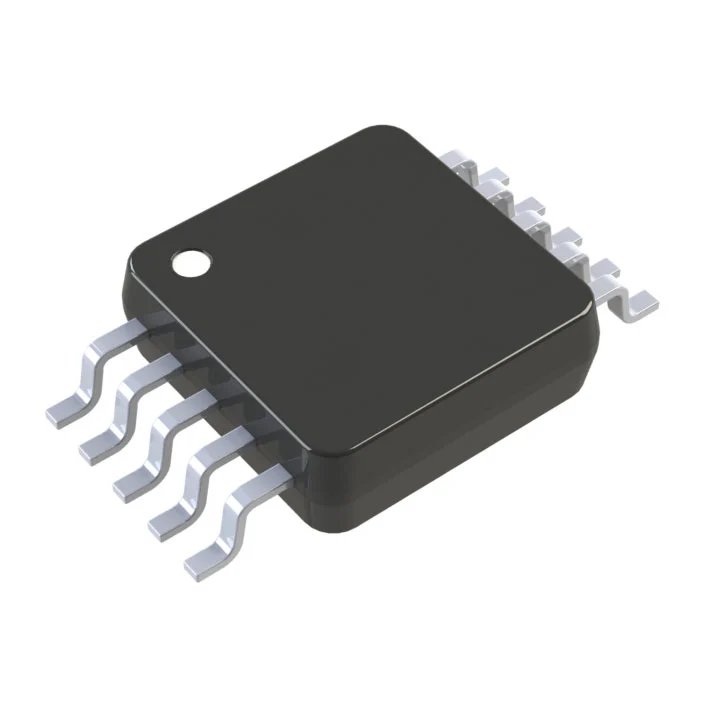
16 Bit 0.5mm ADC AD4004 10-TFSOP, 10-MSOP (0.118, 3.00mm Width)
Unit Price: $18.352258
Ext Price: $18.35


16 Bit 0.5mm ADC AD4004 10-TFSOP, 10-MSOP (0.118, 3.00mm Width)
Explore the AD4000/AD4004/AD4008 16-bit 1 MSPS SAR ADCs from Analog Devices. Featuring Easy Drive technology for precision designs. View specs and design guides.
- Executive Summary: What is the AD4000/AD4004/AD4008 Series?
- 1. Technical Specifications & Performance Analysis
- 2. Pinout, Package, and Configuration
- 3. Design & Integration Guide (For Engineers & Makers)
- 4. Typical Applications & Use Cases
- 5. Alternatives and Cross-Reference Guide
- 6. Frequently Asked Questions (FAQ)
- 7. Resources
- Specifications
- Datasheet PDF
Executive Summary: What is the AD4000/AD4004/AD4008 Series?
The AD4000/AD4004/AD4008 Series is a family of 16-bit, 1 MSPS, precision Successive Approximation Register (SAR) Analog-to-Digital Converters (ADC) designed to simplify signal chain design while maintaining high-speed accuracy. These devices utilize "Easy Drive" technology to reduce the burden on preceding driver amplifiers and reference buffers.
Market Position: High-performance precision ADC family with integrated features to reduce BOM (Bill of Materials) complexity.
Top Features: 16-bit resolution with no missing codes, 1 MSPS throughput, and ultra-low power consumption (5.5 mW at full speed).
Primary Audience: Ideal for system architects designing automated test equipment (ATE), medical imaging systems, and precision industrial instrumentation.
Supply Status: Active.
1. Technical Specifications & Performance Analysis
1.1 Core Architecture (SAR ADC with Easy Drive)
The series is built on a high-speed SAR architecture. Unlike traditional ADCs that require complex, power-hungry front-end circuitry, the AD4000 family incorporates Easy Drive features. This includes a high-impedance (High-Z) mode and an extended acquisition phase, which significantly relaxes the settling requirements of the input driver amplifier.
1.2 Key Electrical Characteristics
Engineers must note the tight power rails and high dynamic range: * Resolution: 16-bit performance with ±1.0 LSB Maximum Integral Nonlinearity (INL). * Signal-to-Noise Ratio (SNR): A robust 93 dB (typical at 1 kHz input). * Power Supplies: Operates on a 1.71 V to 1.89 V VDD core supply, with a flexible 1.71 V to 5.5 V VIO logic interface. * Input Protection: Includes an internal overvoltage clamp that can sink up to 50 mA, protecting the device from transient spikes.
1.3 Interfaces and Connectivity
The series supports a versatile serial interface compatible with SPI, QSPI, MICROWIRE, and DSPs. It allows for daisy-chaining multiple ADCs and offers several "Turbo" modes to speed up data clocking, which is essential when operating at the maximum 1 MSPS rate.
2. Pinout, Package, and Configuration
2.1 Pin Configuration Guide
IN+ / IN-: Pseudo-differential analog inputs (0 V to VREF range).
REF: Reference input (typically 2.5V to 5V) which determines the dynamic range.
CNV: Convert input. This pin initiates the conversion process and selects the SPI interface mode.
SDI/SCK/SDO: The standard SPI bus pins for data configuration and readout.
VIO/VDD: Separated digital I/O and core power pins to minimize noise coupling.
2.2 Naming Convention & Ordering Codes
While the series shares a common architecture, the specific part numbers usually denote throughput or package variations. Procurement managers should verify the suffix for temperature grades (typically industrial -40°C to +125°C) and packaging formats (Tape and Reel vs. Tray).
2.3 Available Packages
| Package Type | Dimensions | Common Use Case |
|---|---|---|
| 10-Lead MSOP | 3mm x 3mm | Prototyping and hand-soldering friendly |
| 10-Lead LFCSP | 3mm x 3mm | High-density machine assembly; superior thermal/grounding |
3. Design & Integration Guide (For Engineers & Makers)
Pro Tip: Always verify pin compatibility before migrating from older ADI series; while the pinout is often similar, the Easy Drive timing requirements are unique.
3.1 Hardware Implementation
Bypass Capacitors: Place a 10 µF ceramic capacitor as close as possible to the REF and VDD pins to handle high-frequency current demands during the SAR conversion bit-trials.
PCB Layout: Use a solid ground plane. Keep the analog input traces symmetrical and separate from high-speed digital lines to prevent crosstalk.
Driver Selection: To achieve the full 16-bit SNR, use precision drivers like the ADA4807-1 or ADA4077.
3.2 Common Design Challenges
SPI Mode Configuration: Users often struggle with 3-wire vs. 4-wire modes.
Fix: The state of the SDI pin during the rising edge of CNV determines the mode. Strictly follow the datasheet timing diagrams to ensure the ADC is in the correct register-read state.
CNV Signal Integrity: Glitches on the CNV line can corrupt data.
Fix: Use a clean, low-jitter clock source for CNV and ensure the trace is impedance-controlled.
4. Typical Applications & Use Cases
4.1 Real-World Example: Precision Medical Imaging
In medical ultrasound or CT scan data acquisition, the AD4000 series is used to digitize analog signals from transducers. Its low power consumption allows for high-channel-density boards without excessive heat buildup, while the 16-bit resolution ensures the subtle gradients in tissue density are captured accurately.
5. Alternatives and Cross-Reference Guide
If the AD4000 series is unavailable or if you are looking for alternatives:
Direct Replacements: The Texas Instruments ADS8860 is a frequent competitor offering similar 16-bit, 1 MSPS specs in a comparable package.
Lower Speed Options: If 1 MSPS is overkill, look at the ADS8319 (500 kSPS) to save on system cost.
Ultra-Small Footprint: For space-constrained IoT, consider the ADS7042, though it may lack the Easy Drive input stage found in the Analog Devices parts.
6. Frequently Asked Questions (FAQ)
Q: What is the difference between AD4000/AD4004/AD4008 Series and the TI ADS8860?
A: While both are 16-bit 1 MSPS ADCs, the AD4000 series features "Easy Drive" technology, which allows for a wider range of compatible driver amplifiers and simplifies the input filter design.
Q: Can AD4000/AD4004/AD4008 Series be used in Automotive applications?
A: Yes, provided the specific "W" grade (Automotive qualified) part number is selected, which supports the extended temperature range and AEC-Q100 standards.
Q: Is the AD4000 Series suitable for battery-operated devices?
A: Absolutely. With a power consumption of only 5.5 mW at 1 MSPS and the ability to scale power linearly with throughput, it is one of the most efficient converters in its class.
7. Resources
Development Tools: EVAL-AD4000FMCZ Evaluation Board.
Software: ADI Precision ADC Driver Tool for signal chain simulation.
Specifications
Datasheet PDF
- Datasheets :
- ConflictMineralStatement :
 AD9144 DAC Integration Notes: JESD204B Synchronization, Blanking Instability, and Replacements
13 July 2026428
 LM224 Operational Amplifier : Application, Pinout and Datasheet
06 September 20214956
![DRV8825 Stepper Motor Driver[Video&FAQ]: Pinout, Datasheet, and Applications](https://res.utmel.com/Images/Article/87a60013-0cc0-439a-ba73-ceceba8c8069.png) DRV8825 Stepper Motor Driver[Video&FAQ]: Pinout, Datasheet, and Applications
DRV8825 Stepper Motor Driver[Video&FAQ]: Pinout, Datasheet, and Applications28 April 202212219
 1N4728A Zener Diode: Datasheet, Voltage and Specifications
30 September 20215391
 AVR® ATtiny 2KB Flash MCU: Hardware UART & 20MHz Performance Analysis
05 February 2026236
 KSZ8863RLLI IC ETHERNET SWITCH 3PORT 48-LQFP: Datasheet, Pinout, and Applications
01 March 20221680
 SS34 Diode : Replacement, Price and Datasheet
06 August 202121335
 LM723CN: Voltage Regulator
12 March 20222572
 SRAM vs DRAM: Key Differences and Applications Guide
06 August 202613487
 SR44 vs LR44 Which Battery Should You Use
21 August 20253218
 IOT-Based Anti-theft Handbag
29 August 20238360
 Automotive Chips Rose Across the Board!
11 March 20223770
![50 Frequently Asked Questions about PCB Layout [Q&A]](https://res.utmel.com/Images/Article/b5ce2a0a-d37c-4243-aff3-df7b2da2db0f.jpg) 50 Frequently Asked Questions about PCB Layout [Q&A]
50 Frequently Asked Questions about PCB Layout [Q&A]16 November 20217449
 MLCC DC Bias Derating: How to Calculate and Compare Effective Capacitance Before Component Selection
11 September 2026834
 The Introduction to USB Type-C Pin Signal and PCB Layout
03 December 202127689
 Comprehensive Analysis of Each Functional Circuit of Switching Power Supply
06 May 20226041
Analog Devices Inc.
In Stock: 1000
Minimum: 1 Multiples: 1
Qty
Unit Price
Ext Price
1
$18.352258
$18.35
10
$17.313451
$173.13
100
$16.333444
$1,633.34
500
$15.408909
$7,704.45
1000
$14.536707
$14,536.71
Not the price you want? Send RFQ Now and we'll contact you ASAP.
Inquire for More Quantity
![ADV7513BSWZ]() ADV7513BSWZ
ADV7513BSWZAnalog Devices, Inc.
![AD9877ABSZ]() AD9877ABSZ
AD9877ABSZAnalog Devices, Inc.
![LTC2245CUH#TRPBF]() LTC2245CUH#TRPBF
LTC2245CUH#TRPBFLinear Technology/Analog Devices
![AD7791BRMZ-REEL]() AD7791BRMZ-REEL
AD7791BRMZ-REELAnalog Devices Inc.
![AD7799BRUZ-REEL]() AD7799BRUZ-REEL
AD7799BRUZ-REELAnalog Devices Inc.
![AD7190BRUZ-REEL]() AD7190BRUZ-REEL
AD7190BRUZ-REELAnalog Devices Inc.
![AD7705BRZ-REEL]() AD7705BRZ-REEL
AD7705BRZ-REELAnalog Devices Inc.
![AD7175-2BRUZ-RL7]() AD7175-2BRUZ-RL7
AD7175-2BRUZ-RL7Analog Devices Inc.
![AD7192BRUZ-REEL]() AD7192BRUZ-REEL
AD7192BRUZ-REELAnalog Devices Inc.
![AD9283BRSZ-RL100]() AD9283BRSZ-RL100
AD9283BRSZ-RL100Analog Devices Inc.


