

 Product
 Brand
Brand Articles
 Tools
Tools
AT24C08C EEPROM: Pinout, Equivalent and Datasheet

Surface Mount Memory IC AT24C08 8 kb kb 3.1mm mm 3mA mA
Unit Price: $1.033628
Ext Price: $1.03


Surface Mount Memory IC AT24C08 8 kb kb 3.1mm mm 3mA mA
The AT24C08C provides 8,192 bits of Serial Electrically Erasable and Programmable Read-Only Memory (EEPROM) organized as 1,024 words of 8 bits each. The device's cascadin feature allows up to two devices to share a common two-wire bus. Furthermore, Huge range of Semiconductors, Capacitors, Resistors and IcS in stock. Welcome RFQ.

Using an EEPROM to replace combinational logic
AT24C08C Pinout
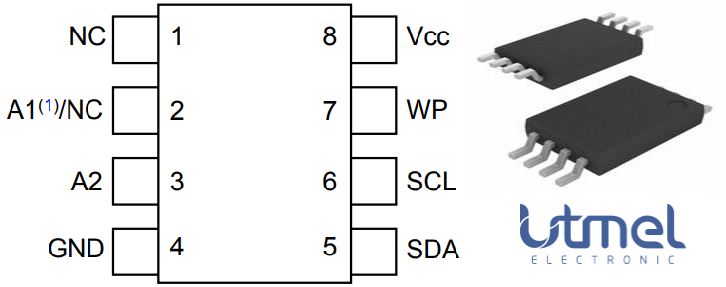
Pinout
AT24C08C CAD Model
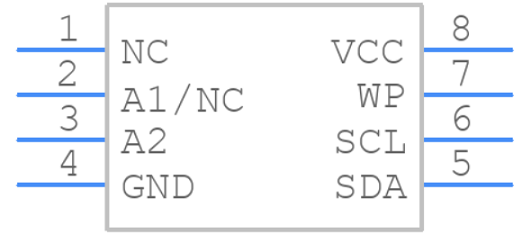
PCB Symbol
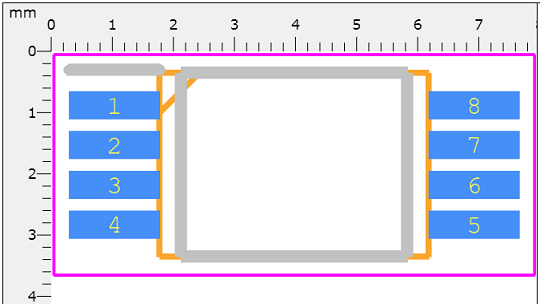
PCB Footprint

3D Model
AT24C08C Overview
The AT24C08C provides 8,192 bits of Serial Electrically Erasable and Programmable Read-Only Memory (EEPROM) organized as 1,024 words of 8 bits each. The device's cascadin feature allows up to two devices to share a common two-wire bus. The device is optimized for use in many industrial and commercial applications where low-power and low-voltage operations are essential. The devices is available in space-saving 8-lead TSSOP package. The package operates from 1.7V to 5.5V. The AT24C08C is internally organized as 64 pages of 16 bytes each. The AT24C08C supports the writing of a single 8-bit byte. Selecting a data word in the AT24C08C requires a 10-bit word address.
This article provides you with a basic overview of the AT24C08C EEPROM, including its pin descriptions, features and specifications, etc., to help you quickly understand what AT24C08C is.
AT24C08C Features
● Low-Voltage Operation: VCC = 1.7V to 5.5V
● Internally Organized as 512 x 8 (4K) or 1,024 x 8 (8K)
● Industrial Temperature Range: -40°C to +85°C
● I2C-Compatible (Two-Wire) Serial Interface:
◆ 100 kHz Standard mode, 1.7V to 5.5V
◆ 400 kHz Fast mode, 1.7V to 5.5V
◆ 1 MHz Fast Mode Plus (FM+), 2.5V to 5.5V
● Schmitt Triggers, Filtered Inputs for Noise Suppression
● Bidirectional Data Transfer Protocol
● Write-Protect Pin for Full Array Hardware Data Protection
● Ultra Low Active Current (3 mA maximum) and Standby Current (6 μA maximum)
● 16-byte Page Write Mode: Partial page writes allowed
● Random and Sequential Read Modes
● Self-Timed Write Cycle within 5 ms Maximum
● ESD Protection > 4,000V
● High Reliability:
◆ Endurance: 1,000,000 write cycles
◆ Data retention: 100 years
● Green Package Options (Lead-free/Halide-free/RoHS compliant)
● Die Sale Options: Wafer Form and Tape and Reel Available
Specifications
- TypeParameter
- Factory Lead Time7 Weeks
- Mount
In electronic components, the term "Mount" typically refers to the method or process of physically attaching or fixing a component onto a circuit board or other electronic device. This can involve soldering, adhesive bonding, or other techniques to secure the component in place. The mounting process is crucial for ensuring proper electrical connections and mechanical stability within the electronic system. Different components may have specific mounting requirements based on their size, shape, and function, and manufacturers provide guidelines for proper mounting procedures to ensure optimal performance and reliability of the electronic device.
Surface Mount - Mounting Type
The "Mounting Type" in electronic components refers to the method used to attach or connect a component to a circuit board or other substrate, such as through-hole, surface-mount, or panel mount.
Surface Mount - Package / Case
refers to the protective housing that encases an electronic component, providing mechanical support, electrical connections, and thermal management.
8-TSSOP (0.173, 4.40mm Width) - Number of Pins8
- Memory TypesNon-Volatile
- Operating Temperature
The operating temperature is the range of ambient temperature within which a power supply, or any other electrical equipment, operate in. This ranges from a minimum operating temperature, to a peak or maximum operating temperature, outside which, the power supply may fail.
-40°C~85°C TA - Packaging
Semiconductor package is a carrier / shell used to contain and cover one or more semiconductor components or integrated circuits. The material of the shell can be metal, plastic, glass or ceramic.
Tube - Published2005
- JESD-609 Code
The "JESD-609 Code" in electronic components refers to a standardized marking code that indicates the lead-free solder composition and finish of electronic components for compliance with environmental regulations.
e4 - Pbfree Code
The "Pbfree Code" parameter in electronic components refers to the code or marking used to indicate that the component is lead-free. Lead (Pb) is a toxic substance that has been widely used in electronic components for many years, but due to environmental concerns, there has been a shift towards lead-free alternatives. The Pbfree Code helps manufacturers and users easily identify components that do not contain lead, ensuring compliance with regulations and promoting environmentally friendly practices. It is important to pay attention to the Pbfree Code when selecting electronic components to ensure they meet the necessary requirements for lead-free applications.
yes - Part Status
Parts can have many statuses as they progress through the configuration, analysis, review, and approval stages.
Active - Moisture Sensitivity Level (MSL)
Moisture Sensitivity Level (MSL) is a standardized rating that indicates the susceptibility of electronic components, particularly semiconductors, to moisture-induced damage during storage and the soldering process, defining the allowable exposure time to ambient conditions before they require special handling or baking to prevent failures
3 (168 Hours) - Number of Terminations8
- Terminal Finish
Terminal Finish refers to the surface treatment applied to the terminals or leads of electronic components to enhance their performance and longevity. It can improve solderability, corrosion resistance, and overall reliability of the connection in electronic assemblies. Common finishes include nickel, gold, and tin, each possessing distinct properties suitable for various applications. The choice of terminal finish can significantly impact the durability and effectiveness of electronic devices.
Nickel/Palladium/Gold (Ni/Pd/Au) - Voltage - Supply
Voltage - Supply refers to the range of voltage levels that an electronic component or circuit is designed to operate with. It indicates the minimum and maximum supply voltage that can be applied for the device to function properly. Providing supply voltages outside this range can lead to malfunction, damage, or reduced performance. This parameter is critical for ensuring compatibility between different components in a circuit.
1.7V~5.5V - Terminal Position
In electronic components, the term "Terminal Position" refers to the physical location of the connection points on the component where external electrical connections can be made. These connection points, known as terminals, are typically used to attach wires, leads, or other components to the main body of the electronic component. The terminal position is important for ensuring proper connectivity and functionality of the component within a circuit. It is often specified in technical datasheets or component specifications to help designers and engineers understand how to properly integrate the component into their circuit designs.
DUAL - Peak Reflow Temperature (Cel)
Peak Reflow Temperature (Cel) is a parameter that specifies the maximum temperature at which an electronic component can be exposed during the reflow soldering process. Reflow soldering is a common method used to attach electronic components to a circuit board. The Peak Reflow Temperature is crucial because it ensures that the component is not damaged or degraded during the soldering process. Exceeding the specified Peak Reflow Temperature can lead to issues such as component failure, reduced performance, or even permanent damage to the component. It is important for manufacturers and assemblers to adhere to the recommended Peak Reflow Temperature to ensure the reliability and functionality of the electronic components.
260 - Number of Functions1
- Supply Voltage
Supply voltage refers to the electrical potential difference provided to an electronic component or circuit. It is crucial for the proper operation of devices, as it powers their functions and determines performance characteristics. The supply voltage must be within specified limits to ensure reliability and prevent damage to components. Different electronic devices have specific supply voltage requirements, which can vary widely depending on their design and intended application.
5V - Terminal Pitch
The center distance from one pole to the next.
0.65mm - Time@Peak Reflow Temperature-Max (s)
Time@Peak Reflow Temperature-Max (s) refers to the maximum duration that an electronic component can be exposed to the peak reflow temperature during the soldering process, which is crucial for ensuring reliable solder joint formation without damaging the component.
40 - Base Part Number
The "Base Part Number" (BPN) in electronic components serves a similar purpose to the "Base Product Number." It refers to the primary identifier for a component that captures the essential characteristics shared by a group of similar components. The BPN provides a fundamental way to reference a family or series of components without specifying all the variations and specific details.
AT24C08 - Supply Voltage-Max (Vsup)
The parameter "Supply Voltage-Max (Vsup)" in electronic components refers to the maximum voltage that can be safely applied to the component without causing damage. It is an important specification to consider when designing or using electronic circuits to ensure the component operates within its safe operating limits. Exceeding the maximum supply voltage can lead to overheating, component failure, or even permanent damage. It is crucial to adhere to the specified maximum supply voltage to ensure the reliable and safe operation of the electronic component.
5.5V - Supply Voltage-Min (Vsup)
The parameter "Supply Voltage-Min (Vsup)" in electronic components refers to the minimum voltage level required for the component to operate within its specified performance range. This parameter indicates the lowest voltage that can be safely applied to the component without risking damage or malfunction. It is crucial to ensure that the supply voltage provided to the component meets or exceeds this minimum value to ensure proper functionality and reliability. Failure to adhere to the specified minimum supply voltage may result in erratic behavior, reduced performance, or even permanent damage to the component.
1.7V - Interface
In electronic components, the term "Interface" refers to the point at which two different systems, devices, or components connect and interact with each other. It can involve physical connections such as ports, connectors, or cables, as well as communication protocols and standards that facilitate the exchange of data or signals between the connected entities. The interface serves as a bridge that enables seamless communication and interoperability between different parts of a system or between different systems altogether. Designing a reliable and efficient interface is crucial in ensuring proper functionality and performance of electronic components and systems.
2-Wire, I2C, Serial - Memory Size
The memory capacity is the amount of data a device can store at any given time in its memory.
8Kb 1K x 8 - Nominal Supply Current
Nominal current is the same as the rated current. It is the current drawn by the motor while delivering rated mechanical output at its shaft.
3mA - Clock Frequency
Clock frequency, also known as clock speed, refers to the rate at which a processor or electronic component can execute instructions. It is measured in hertz (Hz) and represents the number of cycles per second that the component can perform. A higher clock frequency typically indicates a faster processing speed and better performance. However, it is important to note that other factors such as architecture, efficiency, and workload also play a significant role in determining the overall performance of a component. In summary, clock frequency is a crucial parameter that influences the speed and efficiency of electronic components in processing data and executing tasks.
1MHz - Access Time
Access time in electronic components refers to the amount of time it takes for a system to retrieve data from memory or storage once a request has been made. It is typically measured in nanoseconds or microseconds and indicates the speed at which data can be accessed. Lower access time values signify faster performance, allowing for more efficient processing in computing systems. Access time is a critical parameter in determining the overall responsiveness of electronic devices, particularly in applications requiring quick data retrieval.
550ns - Memory Format
Memory Format in electronic components refers to the specific organization and structure of data storage within a memory device. It defines how data is stored, accessed, and managed within the memory module. Different memory formats include RAM (Random Access Memory), ROM (Read-Only Memory), and various types of flash memory. The memory format determines the speed, capacity, and functionality of the memory device, and it is crucial for compatibility with other components in a system. Understanding the memory format is essential for selecting the right memory module for a particular application or device.
EEPROM - Memory Interface
An external memory interface is a bus protocol for communication from an integrated circuit, such as a microprocessor, to an external memory device located on a circuit board.
I2C - Write Cycle Time - Word, Page
Write Cycle Time - Word, Page refers to the duration required to write data to a specific memory cell or a page of memory in electronic components, particularly in non-volatile memories like Flash or EEPROM. It indicates the time taken to complete a writing operation for a single word or an entire page of data. This parameter is crucial for determining the performance and speed of memory devices in applications where quick data storage is essential. It impacts the overall efficiency in data handling, affecting both read and write speeds in memory-related operations.
5ms - Density
In electronic components, "Density" refers to the mass or weight of a material per unit volume. It is a physical property that indicates how tightly packed the atoms or molecules are within the material. The density of a component can affect its performance and characteristics, such as its strength, thermal conductivity, and electrical properties. Understanding the density of electronic components is important for designing and manufacturing processes to ensure optimal performance and reliability.
8 kb - Standby Current-Max
Standby Current-Max refers to the maximum amount of current that an electronic component or device consumes while in a low-power standby mode. This parameter is critical for power management, especially in battery-operated devices, as it indicates how efficiently the device can conserve energy when not actively in use. A lower Standby Current-Max value is typically desirable, as it contributes to longer battery life and reduced energy consumption. Manufacturers specify this value to help engineers select components that meet specific power efficiency requirements in their designs.
0.000001A - Serial Bus Type
Serial bus type refers to the method by which data is transmitted between components in an electronic system using a serial communication protocol. It involves the sequential transfer of data bits over a single channel or wire, allowing for a reduced number of interconnections compared to parallel communication. Common examples of serial bus types include I2C, SPI, USB, and UART, each with its own specific protocol and applications. The choice of serial bus type can affect the speed, complexity, and power consumption of the communication between devices.
I2C - Endurance
In electronic components, "Endurance" refers to the ability of a component to withstand repeated cycles of operation without degradation in performance or failure. It is a crucial parameter, especially in components that are subjected to frequent switching or high levels of stress during operation. Endurance testing is often conducted to evaluate the reliability and durability of electronic components under real-world conditions. Components with high endurance ratings are more likely to have a longer lifespan and provide consistent performance over time. Manufacturers typically provide endurance specifications in datasheets to help engineers and designers select components that meet the required durability for their applications.
1000000 Write/Erase Cycles - Write Cycle Time-Max (tWC)
The parameter "Write Cycle Time-Max (tWC)" in electronic components refers to the maximum amount of time it takes for data to be written to a memory cell or storage device. It is a crucial specification in devices such as EEPROMs, flash memory, and other non-volatile memory technologies. The tWC value indicates the longest duration required for a write operation to be completed successfully, ensuring that the data is stored accurately and reliably. Designers and engineers use this parameter to optimize performance and ensure proper functioning of the electronic component within the specified time constraints.
5ms - Data Retention Time-Min
The parameter "Data Retention Time-Min" in electronic components refers to the minimum amount of time that data can be stored in a non-volatile memory device without requiring a refresh or rewrite operation to maintain its integrity. This parameter is crucial for applications where data integrity and reliability are essential, such as in embedded systems, IoT devices, and critical infrastructure. A longer data retention time indicates a more stable memory device that can retain data for extended periods without degradation or loss. It is important to consider the data retention time when selecting memory components for specific applications to ensure data reliability and longevity.
100 - Write Protection
Write protection is a feature found in electronic components, such as memory devices, that prevents data from being modified or erased. When write protection is enabled, the data stored in the component is locked and cannot be altered, ensuring the integrity and security of the information. This feature is commonly used in devices like USB flash drives, SD cards, and EEPROMs to prevent accidental data loss or unauthorized access. Write protection can be implemented through hardware mechanisms, such as physical switches or jumpers, or through software settings that restrict write access to the component.
HARDWARE - I2C Control Byte
The I2C Control Byte is a specific byte of data used in the Inter-Integrated Circuit (I2C) communication protocol for electronic components. It is a crucial part of the data transmission process as it contains information such as the address of the device being accessed and the type of operation to be performed, such as read or write. The Control Byte is typically the first byte sent in an I2C communication sequence and helps establish communication between the master and slave devices on the bus. By interpreting the Control Byte, devices can effectively communicate and exchange data in a synchronized manner within an I2C network.
1010DMMR - Height1.05mm
- Length3.1mm
- Width4.5mm
- Radiation Hardening
Radiation hardening is the process of making electronic components and circuits resistant to damage or malfunction caused by high levels of ionizing radiation, especially for environments in outer space (especially beyond the low Earth orbit), around nuclear reactors and particle accelerators, or during nuclear accidents or nuclear warfare.
No - RoHS Status
RoHS means “Restriction of Certain Hazardous Substances” in the “Hazardous Substances Directive” in electrical and electronic equipment.
ROHS3 Compliant - Lead Free
Lead Free is a term used to describe electronic components that do not contain lead as part of their composition. Lead is a toxic material that can have harmful effects on human health and the environment, so the electronics industry has been moving towards lead-free components to reduce these risks. Lead-free components are typically made using alternative materials such as silver, copper, and tin. Manufacturers must comply with regulations such as the Restriction of Hazardous Substances (RoHS) directive to ensure that their products are lead-free and environmentally friendly.
Lead Free
AT24C08C Functional Block Diagram

Block Diagram
AT24C08C Equivalent
| Model number | Manufacturer | Description |
| AT24C08C-MAPD-E | Atmel Corporation | EEPROM, 1KX8, Serial, CMOS, PDSO8, UDFN-8 |
| GT24C08-3ZLA2-TR | Giantec Semiconductor Inc | EEPROM |
| AT24C08C-WWU11 | Atmel Corporation | EEPROM, 1KX8, Serial, CMOS, DIE |
| AT24C08C-WWU11M | Microchip Technology Inc | AT24C08C-WWU11M |
| SLE5528M2 | Infineon Technologies AG | EEPROM, 1KX8, Serial, CMOS, DIE |
| AT24C08C-MAPD-T | Microchip Technology Inc | EEPROM, 1KX8, Serial, CMOS, PDSO8 |
| SLE5528C | Infineon Technologies AG | EEPROM, 1KX8, Serial, CMOS, DIE |
| SLE5518C | Infineon Technologies AG | EEPROM, 1KX8, Serial, CMOS, DIE |
| AT25080B-WWU11L | Atmel Corporation | EEPROM, 1KX8, Serial, CMOS, WAFER |
Parts with Similar Specs
- ImagePart NumberManufacturerPackage / CaseNumber of PinsDensityAccess TimeInterfaceSupply VoltageWrite Cycle Time - Word, PageMountView Compare
![AT24C08C-XHM-B]()
AT24C08C-XHM-B
8-TSSOP (0.173, 4.40mm Width)
8
8 kb
550ns
2-Wire, I2C, Serial
5 V
5ms
Surface Mount
![CAT24C08YI-GT3]()
8-TSSOP (0.173, 4.40mm Width)
8
8 kb
900ns
2-Wire, I2C, Serial
3.3 V
5ms
Surface Mount
![M24C08-RDW6TP]()
8-TSSOP (0.173, 4.40mm Width)
8
8 kb
900ns
2-Wire, I2C, Serial
3.3 V
5ms
Surface Mount
![BR24G08FVT-3GE2]()
8-TSSOP (0.173, 4.40mm Width)
8
8 kb
900ns
2-Wire, I2C, Serial
2.5 V
5ms
Surface Mount
![CAT24C08YI-G]()
8-TSSOP (0.173, 4.40mm Width)
8
8 kb
900 ns
2-Wire, I2C, Serial
2.5 V
5ms
Surface Mount


AT24C08C Package

Package
AT24C08C Package Marking Information
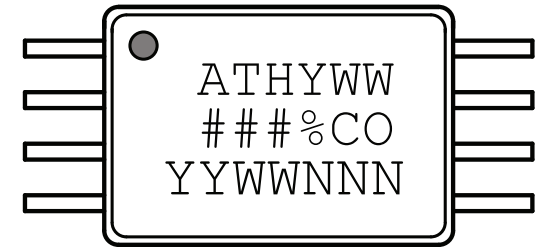
8-lead TSSOP Package Marking Information
AT24C08C Recommended Land Pattern
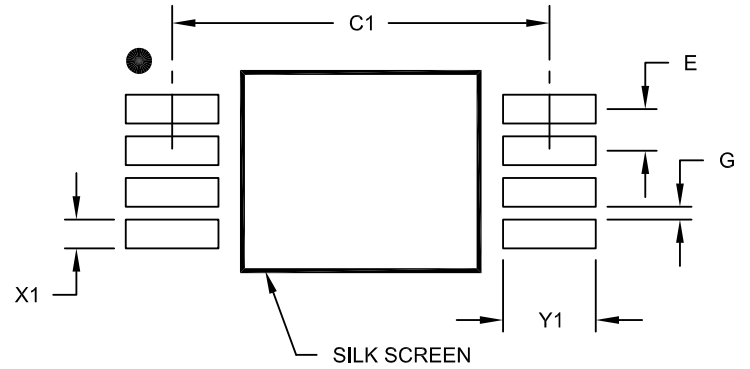
Recommended land pattern
AT24C08C Manufacturer
Microchip Technology Inc. is a leading provider of microcontroller and analog semiconductors, providing low-risk product development, lower total system cost and faster time to market for thousands of diverse customer applications worldwide. Headquartered in Chandler, Arizona, Microchip offers outstanding technical support along with dependable delivery and quality.
Trend Analysis
Datasheet PDF
- Datasheets :
- PCN Assembly/Origin :
- PCN Part Status Change :
- PCN Design/Specification :
- PCN Packaging :
- ConflictMineralStatement :
What is AT24C08 mainly used for?
Equivalent to a hard disk. After the power is off, the data still exists, which is an external rom.
Can AT24C08N and AT24C08C be used in common?
The two can be shared, because they only differ in Device Revision.
When the number in the storage area of AT24C08 is not assigned, is it 0 or an indeterminate number?
In fact, you only need to debug this problem yourself. Generally speaking, if the local variable is not initialized, it is a random number; if it is a global variable, it is 0.
![C106D Thyristor: Circuits, Pinout, and Datasheet [Video]](https://res.utmel.com/Images/Article/d67d29cd-e061-4abc-832a-4d1631d57c61.png) C106D Thyristor: Circuits, Pinout, and Datasheet [Video]
C106D Thyristor: Circuits, Pinout, and Datasheet [Video]11 January 202222377
 CD4050 hex buffer:Pinout, Alternatives, Datasheet PDF
02 July 20215321
 IRF520 MOSFET: Pinout, Datasheet, Test Circuit, and Equivalents
31 July 202118640
 LT3045:High Performance Regulator
22 March 20225936
 LM350 Voltage Regulator: Price, Pinout and Datasheet
13 September 20215397
![24C08 EEPROM: Features, Pinout, and Datasheet [Video&FAQ]](https://res.utmel.com/Images/Article/4f85bfc2-391c-4eb5-b831-167cba3f1a00.png) 24C08 EEPROM: Features, Pinout, and Datasheet [Video&FAQ]
24C08 EEPROM: Features, Pinout, and Datasheet [Video&FAQ]07 January 202213255
 AO6800:30V Dual N-Channel MOSFET
08 March 2022607
 NRF52832 Multiprotocol Bluetooth: Datasheet, Pinout and Schematic
17 July 202114130
 What is Oscilloscope?
24 September 20218133
 Semiconductor Devices: Impact on IoT and Modern Communication (Part- 2)
24 July 20242995
 A Selection of the Most Representative Charts——Artificial Intelligence Index Report
18 March 2022999
 Diode Basis: Symbol, Types and Applications
09 January 202615181
 Understanding the Flight Sensing Modules of Drones
06 September 20212021
 What is Cat 7 Cable?
04 January 20228407
 FPGA Tutorial: A Beginner's Guide to Programmable Logic Design in 2025
15 April 20255579
 Basic Introduction to Power Amplifier
09 January 202610778
Microchip Technology
In Stock: 4554
Minimum: 1 Multiples: 1
Qty
Unit Price
Ext Price
1
$1.033628
$1.03
10
$0.975121
$9.75
100
$0.919925
$91.99
500
$0.867854
$433.93
1000
$0.818730
$818.73
Not the price you want? Send RFQ Now and we'll contact you ASAP.
Inquire for More Quantity
![24LC16BT-I/OT]() 24LC16BT-I/OT
24LC16BT-I/OTMicrochip Technology
![AT93C46DN-SH-T]() AT93C46DN-SH-T
AT93C46DN-SH-TMicrochip Technology
![24LC32AT-I/SN]() 24LC32AT-I/SN
24LC32AT-I/SNMicrochip Technology
![AT24C01C-SSHM-T]() AT24C01C-SSHM-T
AT24C01C-SSHM-TMicrochip Technology
![AT24C04D-SSHM-T]() AT24C04D-SSHM-T
AT24C04D-SSHM-TMicrochip Technology
![AT93C66B-SSHM-T]() AT93C66B-SSHM-T
AT93C66B-SSHM-TMicrochip Technology
![AT25020B-SSHL-T]() AT25020B-SSHL-T
AT25020B-SSHL-TMicrochip Technology
![23K256T-I/SN]() 23K256T-I/SN
23K256T-I/SNMicrochip Technology
![AT93C46D-PU]() AT93C46D-PU
AT93C46D-PUMicrochip Technology
![24LC16BT-I/SN]() 24LC16BT-I/SN
24LC16BT-I/SNMicrochip Technology


