Product
 Brand
Brand Articles
 Tools
Tools
BT134 Series Triacs: Pinout, Datasheet, BT134 vs. BT136


TRIAC SENS GATE 600V 4A SOT82-3
BT134 series is planar passivated very sensitive gate four-quadrant triacs in a SOT82 plastic package. This post will unlock its pinout, datasheet, application, equivalent and more details about the BT134 series.

amazing BT134 projects how to use bt134 triacs How to Test Triac BT136 BT134
BT134 Series Pinout

BT134 Pinout
| Pin | Symbol | Description |
| 1 | T1 | main terminal 1 |
| 2 | T2 | main terminal 2 |
| 3 | G | gate |
| mb | T2 | mounting base; main terminal 2 |
BT134 Series CAD Model
Symbol
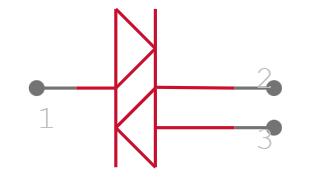
BT134 Symbol
Footprint
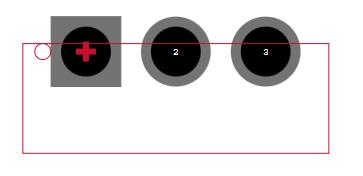
BT134 Footprint
3D Model

BT134 3D Model
BT134 Series Description
BT134 series is planar passivated very sensitive gate four quadrant triac s in a SOT82 plastic package intended for use in general-purpose bidirectional switching and phase control applications where high sensitivity is required in all four quadrants. This "series D " triac "is intended to be interfaced directly to microcontrollers, logic integrated circuits and other low power gate trigger circuits.
BT134 Series Feature
Compact package
Direct interfacing to logic level ICs
Direct interfacing to low power gate drive circuits
High blocking voltage capability
Low holding current for low current loads and lowest EMI at commutation
Planar passivated for voltage ruggedness and reliability
Triggering in all four quadrants
Very sensitive gate
BT134 Series Application
• General purpose low power motor control
• Home appliances
• Industrial process control
BT134 Series Package

BT134 Package
BT134 Series Manufacaturer
WeEn Semiconductors Co., Ltd, is the global joint venture between NXP Semiconductors N.V. and Beijing JianGuang Asset Management Co. Ltd (JAC Capital). WeEn Semiconductors was officially opened on 19th January 2016 with the business and operations centre located in Shanghai, China. WeEn Semiconductors is registered in Nanchang city which is the capital city of Jiangxi province, China. It fully owns subsidiaries and branches in Jilin city for bipolar production, in Shanghai and the United Kingdom for R&D and production support, in Hong Kong for Sales activities, and in many other countries for sales and customer services, respectively.
Specifications
- TypeParameter
- Mounting Type
The "Mounting Type" in electronic components refers to the method used to attach or connect a component to a circuit board or other substrate, such as through-hole, surface-mount, or panel mount.
Through Hole - Package / Case
refers to the protective housing that encases an electronic component, providing mechanical support, electrical connections, and thermal management.
SOT-82 - Surface Mount
having leads that are designed to be soldered on the side of a circuit board that the body of the component is mounted on.
NO - Number of Elements1
- Voltage-Off State600V
- Operating Temperature
The operating temperature is the range of ambient temperature within which a power supply, or any other electrical equipment, operate in. This ranges from a minimum operating temperature, to a peak or maximum operating temperature, outside which, the power supply may fail.
125°C TJ - Packaging
Semiconductor package is a carrier / shell used to contain and cover one or more semiconductor components or integrated circuits. The material of the shell can be metal, plastic, glass or ceramic.
Tube - JESD-609 Code
The "JESD-609 Code" in electronic components refers to a standardized marking code that indicates the lead-free solder composition and finish of electronic components for compliance with environmental regulations.
e3 - Part Status
Parts can have many statuses as they progress through the configuration, analysis, review, and approval stages.
Active - Moisture Sensitivity Level (MSL)
Moisture Sensitivity Level (MSL) is a standardized rating that indicates the susceptibility of electronic components, particularly semiconductors, to moisture-induced damage during storage and the soldering process, defining the allowable exposure time to ambient conditions before they require special handling or baking to prevent failures
1 (Unlimited) - Number of Terminations3
- Terminal Finish
Terminal Finish refers to the surface treatment applied to the terminals or leads of electronic components to enhance their performance and longevity. It can improve solderability, corrosion resistance, and overall reliability of the connection in electronic assemblies. Common finishes include nickel, gold, and tin, each possessing distinct properties suitable for various applications. The choice of terminal finish can significantly impact the durability and effectiveness of electronic devices.
Tin (Sn) - HTS Code
HTS (Harmonized Tariff Schedule) codes are product classification codes between 8-1 digits. The first six digits are an HS code, and the countries of import assign the subsequent digits to provide additional classification. U.S. HTS codes are 1 digits and are administered by the U.S. International Trade Commission.
8541.30.00.80 - Reach Compliance Code
Reach Compliance Code refers to a designation indicating that electronic components meet the requirements set by the Registration, Evaluation, Authorization, and Restriction of Chemicals (REACH) regulation in the European Union. It signifies that the manufacturer has assessed and managed the chemical substances within the components to ensure safety and environmental protection. This code is vital for compliance with regulations aimed at minimizing risks associated with hazardous substances in electronic products.
not_compliant - Base Part Number
The "Base Part Number" (BPN) in electronic components serves a similar purpose to the "Base Product Number." It refers to the primary identifier for a component that captures the essential characteristics shared by a group of similar components. The BPN provides a fundamental way to reference a family or series of components without specifying all the variations and specific details.
BT134 - Reference Standard
In the context of electronic components, the term "Reference Standard" typically refers to a specific set of guidelines, specifications, or requirements that serve as a benchmark for evaluating the quality, performance, and characteristics of the component. These standards are established by organizations such as the International Electrotechnical Commission (IEC), the Institute of Electrical and Electronics Engineers (IEEE), or specific industry bodies.Reference standards help ensure consistency and interoperability among different components, as they provide a common framework for manufacturers, designers, and users to adhere to. They outline parameters such as electrical properties, mechanical dimensions, environmental conditions, and safety considerations that the component must meet to be considered compliant.By referencing these standards, manufacturers can design and produce components that meet industry-recognized criteria, which in turn helps users select the right components for their applications with confidence. Adhering to reference standards also facilitates regulatory compliance and promotes overall quality and reliability in electronic systems.
IEC-60134 - JESD-30 Code
JESD-30 Code refers to a standardized descriptive designation system established by JEDEC for semiconductor-device packages. This system provides a systematic method for generating designators that convey essential information about the package's physical characteristics, such as size and shape, which aids in component identification and selection. By using JESD-30 codes, manufacturers and engineers can ensure consistency and clarity in the specification of semiconductor packages across various applications and industries.
R-PSIP-T3 - Configuration
The parameter "Configuration" in electronic components refers to the specific arrangement or setup of the components within a circuit or system. It encompasses how individual elements are interconnected and their physical layout. Configuration can affect the functionality, performance, and efficiency of the electronic system, and may influence factors such as signal flow, impedance, and power distribution. Understanding the configuration is essential for design, troubleshooting, and optimizing electronic devices.
Single - Case Connection
Case Connection refers to the method by which an electronic component's case or housing is connected to the electrical circuit. This connection is important for grounding purposes, mechanical stability, and heat dissipation. The case connection can vary depending on the type of component and its intended application. It is crucial to ensure a secure and reliable case connection to maintain the overall performance and safety of the electronic device.
MAIN TERMINAL 2 - Trigger Device Type
Trigger Device Type is a parameter in electronic components that refers to the type of device or mechanism used to initiate a specific action or function within the component. This parameter specifies the specific trigger device, such as a sensor, switch, or signal input, that is required to activate or control the operation of the component. Understanding the trigger device type is crucial for proper integration and operation of the electronic component within a larger system or circuit. By specifying the appropriate trigger device type, engineers and designers can ensure that the component functions correctly and responds to the intended input signals or conditions.
4 QUADRANT LOGIC LEVEL TRIAC - Voltage - Gate Trigger (Vgt) (Max)
Voltage - Gate Trigger (Vgt) (Max) refers to the maximum voltage level required to trigger the gate of a semiconductor device, such as a thyristor or triac, into the conductive state. When the gate receives this voltage, it initiates the device's conduction, allowing current to flow between its anode and cathode. Exceeding this voltage can lead to unwanted behavior or damage to the component, making it a critical parameter in designing circuits that utilize these devices. Understanding Vgt is essential for ensuring proper operation and reliability in electronic applications.
1.5V - Current - Non Rep. Surge 50, 60Hz (Itsm)
The parameter "Current - Non Rep. Surge 50, 60Hz (Itsm)" in electronic components refers to the maximum non-repetitive surge current that a component can withstand without damage during a single surge event at frequencies of 50Hz or 60Hz. This parameter is important for assessing the robustness and reliability of the component in handling sudden spikes or surges in current that may occur in the electrical system. It helps in determining the level of protection needed for the component to ensure its longevity and proper functioning in various operating conditions. Manufacturers provide this specification to guide engineers and designers in selecting the appropriate components for their applications based on the expected surge current levels.
25A 27A - Current - Gate Trigger (Igt) (Max)
Current - Gate Trigger (Igt) (Max) refers to the maximum gate trigger current required to activate a semiconductor device, such as a thyristor or triac. It is the minimum current that must flow into the gate terminal to ensure that the device turns on and conducts current between its anode and cathode. Exceeding this value can lead to unnecessary power consumption, while insufficient current may prevent the device from turning on effectively. This parameter is crucial for circuit design, as it influences the selection of gate driving circuits.
5mA - Current - Hold (Ih) (Max)
The parameter "Current - Hold (Ih) (Max)" in electronic components refers to the maximum current required to maintain the component in a latched or on-state after it has been triggered. This parameter is commonly associated with relays, switches, and other devices that have a latching function. It is important because it determines the minimum current that must be supplied to keep the component in its activated state, ensuring reliable operation. Exceeding the maximum Ih value can lead to the component failing to hold its state, potentially causing malfunctions or disruptions in the circuit.
10mA - Current - On State (It (RMS)) (Max)
The parameter "Current - On State (It (RMS)) (Max)" refers to the maximum root mean square (RMS) current that an electronic component, typically a semiconductor device like a thyristor or a transistor, can handle while in the on state without sustaining damage. This value is crucial for ensuring that the component operates safely under load conditions. Exceeding this maximum rating can result in overheating, degradation, or failure of the component over time. It is an important specification for designers to consider when selecting components for a circuit to ensure reliable performance.
4A - Repetitive Peak Off-state Voltage
The Repetitive Peak Off-state Voltage (Vdrm) is a key parameter in electronic components, particularly in devices like thyristors and triacs. It refers to the maximum voltage that can be applied across the component when it is in the off-state without triggering it to turn on. This parameter is crucial for ensuring the proper functioning and reliability of the component in various circuit applications. It helps determine the voltage level at which the component can safely operate without experiencing unintended conduction. Designers need to consider the Vdrm rating to prevent damage to the component and maintain the overall performance of the circuit.
600V - Triac Type
Triac Type refers to the classification of triacs based on their electrical characteristics and applications. Triacs are semiconductor devices that can control current flow in both directions and are commonly used in AC power control. Different types of triacs may have variations in parameters such as voltage rating, current rating, triggering method, and switching speed, making them suitable for specific applications like light dimmers, motor speed controls, and heating regulation. Understanding the triac type is crucial for selecting the appropriate component for a given circuit design.
Logic - Sensitive Gate - RoHS Status
RoHS means “Restriction of Certain Hazardous Substances” in the “Hazardous Substances Directive” in electrical and electronic equipment.
RoHS Compliant
Parts with Similar Specs
What is a BT134 Series?
A planar passivated very sensitive gate four quadrant triac.
What plastic package is intended for use in general-purpose bidirectional switching and phase control applications where high sensitivity is required in all four quadrants?
SOT82.
 LF351 Op-Amp: Pinout, Circuit and Replacement
29 July 20215770
 AOZ1280CI 1.2 A Simple Buck Regulator, SOT-23-6 1.5 MHz EZ Buck
12 February 20224824
 BC639 Transistor: How to Use it?
12 April 20228747
 TIP42C Power Transistor: Pinout, Datasheet, and Applications
22 July 202131545
 AG10 Battery, AG10 Battery Equivalents and AG10 VS LR44
14 March 202243046
 74HC165 Shift Registers: Features, Speicifications and Applications
25 May 20212621
 AD7777 10-Bit 4-Channel ADC: Technical Datasheet Analysis and Legacy Support Handbook
16 March 2026243
![What you need to know about using C1740 [FAQ]](https://res.utmel.com/Images/Article/442ff76b-77f0-4560-b4ce-44cea045365d.jpg) What you need to know about using C1740 [FAQ]
What you need to know about using C1740 [FAQ]31 March 20228795
 GaN-Based Transistors for High-Frequency DC-DC Converter Applications
06 July 20235397
 LVDT - Linear Variable Differential Transformer Basics
16 January 20219756
 Semiconductor Equipment Is in Short Supply
14 March 20223893
 Weak Current Control Strong Current: How to use the Relay?
28 November 20226886
 Semiconductor PCN Review Checklist: From Notification to Engineering Sign-Off
23 September 2026620
 Microwave Diode: Introduction and Types
07 January 202126556
 Multiplexers: Types, Functionality, and Applications
21 April 20253225
 Role of On-Chip Optical Communication in Overcoming CMOS Scaling Challenges
22 August 20242468
WeEn Semiconductors
In Stock: 226000
United States
China
Canada
Japan
Russia
Germany
United Kingdom
Singapore
Italy
Hong Kong(China)
Taiwan(China)
France
Korea
Mexico
Netherlands
Malaysia
Austria
Spain
Switzerland
Poland
Thailand
Vietnam
India
United Arab Emirates
Afghanistan
Åland Islands
Albania
Algeria
American Samoa
Andorra
Angola
Anguilla
Antigua & Barbuda
Argentina
Armenia
Aruba
Australia
Azerbaijan
Bahamas
Bahrain
Bangladesh
Barbados
Belarus
Belgium
Belize
Benin
Bermuda
Bhutan
Bolivia
Bonaire, Sint Eustatius and Saba
Bosnia & Herzegovina
Botswana
Brazil
British Indian Ocean Territory
British Virgin Islands
Brunei
Bulgaria
Burkina Faso
Burundi
Cabo Verde
Cambodia
Cameroon
Cayman Islands
Central African Republic
Chad
Chile
Christmas Island
Cocos (Keeling) Islands
Colombia
Comoros
Congo
Congo (DRC)
Cook Islands
Costa Rica
Côte d’Ivoire
Croatia
Cuba
Curaçao
Cyprus
Czechia
Denmark
Djibouti
Dominica
Dominican Republic
Ecuador
Egypt
El Salvador
Equatorial Guinea
Eritrea
Estonia
Eswatini
Ethiopia
Falkland Islands
Faroe Islands
Fiji
Finland
French Guiana
French Polynesia
Gabon
Gambia
Georgia
Ghana
Gibraltar
Greece
Greenland
Grenada
Guadeloupe
Guam
Guatemala
Guernsey
Guinea
Guinea-Bissau
Guyana
Haiti
Honduras
Hungary
Iceland
Indonesia
Iran
Iraq
Ireland
Isle of Man
Israel
Jamaica
Jersey
Jordan
Kazakhstan
Kenya
Kiribati
Kosovo
Kuwait
Kyrgyzstan
Laos
Latvia
Lebanon
Lesotho
Liberia
Libya
Liechtenstein
Lithuania
Luxembourg
Macao(China)
Madagascar
Malawi
Maldives
Mali
Malta
Marshall Islands
Martinique
Mauritania
Mauritius
Mayotte
Micronesia
Moldova
Monaco
Mongolia
Montenegro
Montserrat
Morocco
Mozambique
Myanmar
Namibia
Nauru
Nepal
New Caledonia
New Zealand
Nicaragua
Niger
Nigeria
Niue
Norfolk Island
North Korea
North Macedonia
Northern Mariana Islands
Norway
Oman
Pakistan
Palau
Palestinian Authority
Panama
Papua New Guinea
Paraguay
Peru
Philippines
Pitcairn Islands
Portugal
Puerto Rico
Qatar
Réunion
Romania
Rwanda
Samoa
San Marino
São Tomé & Príncipe
Saudi Arabia
Senegal
Serbia
Seychelles
Sierra Leone
Sint Maarten
Slovakia
Slovenia
Solomon Islands
Somalia
South Africa
South Sudan
Sri Lanka
St Helena, Ascension, Tristan da Cunha
St. Barthélemy
St. Kitts & Nevis
St. Lucia
St. Martin
St. Pierre & Miquelon
St. Vincent & Grenadines
Sudan
Suriname
Svalbard & Jan Mayen
Sweden
Syria
Tajikistan
Tanzania
Timor-Leste
Togo
Tokelau
Tonga
Trinidad & Tobago
Tunisia
Turkey
Turkmenistan
Turks & Caicos Islands
Tuvalu
U.S. Outlying Islands
U.S. Virgin Islands
Uganda
Ukraine
Uruguay
Uzbekistan
Vanuatu
Vatican City
Venezuela
Wallis & Futuna
Yemen
Zambia
Zimbabwe
![ACT108W-800EF]() ACT108W-800EF
ACT108W-800EFWeEn Semiconductors
![ACTT8X-800CTNQ]() ACTT8X-800CTNQ
ACTT8X-800CTNQWeEn Semiconductors
![ACTT6B-800E,118]() ACTT6B-800E,118
ACTT6B-800E,118WeEn Semiconductors
![ACTT10X-800CTNQ]() ACTT10X-800CTNQ
ACTT10X-800CTNQWeEn Semiconductors
![ACTT12X-800CTNQ]() ACTT12X-800CTNQ
ACTT12X-800CTNQWeEn Semiconductors
![ACTT6X-800E,127]() ACTT6X-800E,127
ACTT6X-800E,127WeEn Semiconductors
![ACTT16X-800CTNQ]() ACTT16X-800CTNQ
ACTT16X-800CTNQWeEn Semiconductors
![BT136-600E,127]() BT136-600E,127
BT136-600E,127WeEn Semiconductors
![BTA416Y-800B,127]() BTA416Y-800B,127
BTA416Y-800B,127WeEn Semiconductors