

 Product
 Brand
Brand Articles
 Tools
Tools
HDMI2C1-6C1 IC:Datasheet, Pinout, Function


0.5mm 18 Video Processing Linear IC HDMI2C1 18-UFQFN Exposed Pad
This article will unlock more details of the HDMI2C1-6C1, a fully integrated ESD protection and signal conditioning device for the control stage of HDMI transmitters.
HDMI2C1-6C1 Pinout
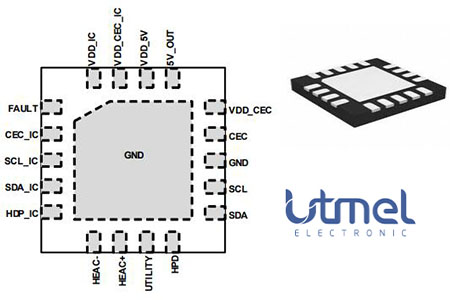
HDMI2C1-6C1 CAD Model
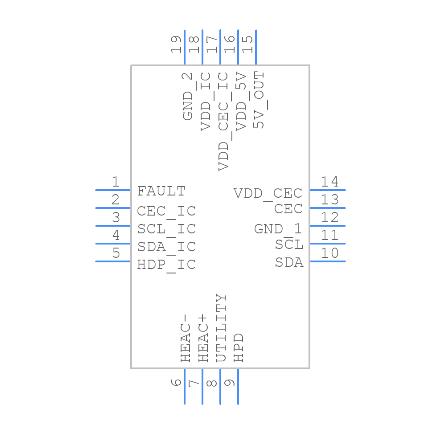
Symbol
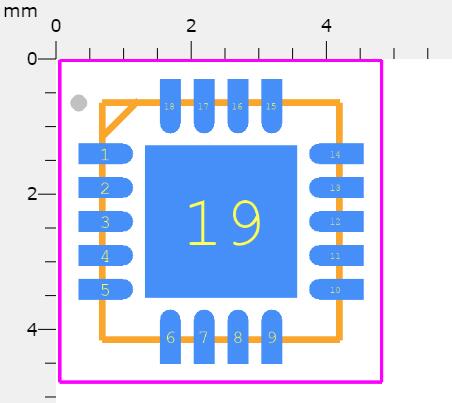
Footprint
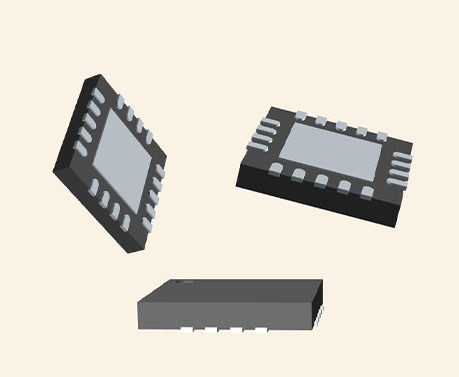
3D Model
HDMI2C1-6C1 Description
The HDMI2C1-6C1 is an integrated ESD protection and signal conditioning device for control links of HDMI transmitters (Source).
This device is a simple solution that provides HDMI designers with an easy and fast way to reach full compliance with the stringent HDMI CTS on a wide temperature range.
HDMI logo and high-definition multimedia interface are trademarks or registered trademarks of HDMI licensing LLC.
Specifications
- TypeParameter
- Lifecycle Status
Lifecycle Status refers to the current stage of an electronic component in its product life cycle, indicating whether it is active, obsolete, or transitioning between these states. An active status means the component is in production and available for purchase. An obsolete status indicates that the component is no longer being manufactured or supported, and manufacturers typically provide a limited time frame for support. Understanding the lifecycle status is crucial for design engineers to ensure continuity and reliability in their projects.
ACTIVE (Last Updated: 8 months ago) - Factory Lead Time9 Weeks
- Mount
In electronic components, the term "Mount" typically refers to the method or process of physically attaching or fixing a component onto a circuit board or other electronic device. This can involve soldering, adhesive bonding, or other techniques to secure the component in place. The mounting process is crucial for ensuring proper electrical connections and mechanical stability within the electronic system. Different components may have specific mounting requirements based on their size, shape, and function, and manufacturers provide guidelines for proper mounting procedures to ensure optimal performance and reliability of the electronic device.
Surface Mount - Mounting Type
The "Mounting Type" in electronic components refers to the method used to attach or connect a component to a circuit board or other substrate, such as through-hole, surface-mount, or panel mount.
Surface Mount - Package / Case
refers to the protective housing that encases an electronic component, providing mechanical support, electrical connections, and thermal management.
18-UFQFN Exposed Pad - Usage LevelIndustrial grade
- Packaging
Semiconductor package is a carrier / shell used to contain and cover one or more semiconductor components or integrated circuits. The material of the shell can be metal, plastic, glass or ceramic.
Cut Tape (CT) - Part Status
Parts can have many statuses as they progress through the configuration, analysis, review, and approval stages.
Active - Moisture Sensitivity Level (MSL)
Moisture Sensitivity Level (MSL) is a standardized rating that indicates the susceptibility of electronic components, particularly semiconductors, to moisture-induced damage during storage and the soldering process, defining the allowable exposure time to ambient conditions before they require special handling or baking to prevent failures
3 (168 Hours) - Number of Terminations18
- TypeSignal Conditioner
- Max Operating Temperature
The Maximum Operating Temperature is the maximum body temperature at which the thermistor is designed to operate for extended periods of time with acceptable stability of its electrical characteristics.
85°C - Min Operating Temperature
The "Min Operating Temperature" parameter in electronic components refers to the lowest temperature at which the component is designed to operate effectively and reliably. This parameter is crucial for ensuring the proper functioning and longevity of the component, as operating below this temperature may lead to performance issues or even damage. Manufacturers specify the minimum operating temperature to provide guidance to users on the environmental conditions in which the component can safely operate. It is important to adhere to this parameter to prevent malfunctions and ensure the overall reliability of the electronic system.
-40°C - Applications
The parameter "Applications" in electronic components refers to the specific uses or functions for which a component is designed. It encompasses various fields such as consumer electronics, industrial automation, telecommunications, automotive, and medical devices. Understanding the applications helps in selecting the right components for a particular design based on performance, reliability, and compatibility requirements. This parameter also guides manufacturers in targeting their products to relevant markets and customer needs.
Set-Top Boxes, Video Players - Terminal Position
In electronic components, the term "Terminal Position" refers to the physical location of the connection points on the component where external electrical connections can be made. These connection points, known as terminals, are typically used to attach wires, leads, or other components to the main body of the electronic component. The terminal position is important for ensuring proper connectivity and functionality of the component within a circuit. It is often specified in technical datasheets or component specifications to help designers and engineers understand how to properly integrate the component into their circuit designs.
QUAD - Terminal Form
Occurring at or forming the end of a series, succession, or the like; closing; concluding.
NO LEAD - Peak Reflow Temperature (Cel)
Peak Reflow Temperature (Cel) is a parameter that specifies the maximum temperature at which an electronic component can be exposed during the reflow soldering process. Reflow soldering is a common method used to attach electronic components to a circuit board. The Peak Reflow Temperature is crucial because it ensures that the component is not damaged or degraded during the soldering process. Exceeding the specified Peak Reflow Temperature can lead to issues such as component failure, reduced performance, or even permanent damage to the component. It is important for manufacturers and assemblers to adhere to the recommended Peak Reflow Temperature to ensure the reliability and functionality of the electronic components.
NOT SPECIFIED - Number of Functions1
- Terminal Pitch
The center distance from one pole to the next.
0.5mm - Time@Peak Reflow Temperature-Max (s)
Time@Peak Reflow Temperature-Max (s) refers to the maximum duration that an electronic component can be exposed to the peak reflow temperature during the soldering process, which is crucial for ensuring reliable solder joint formation without damaging the component.
NOT SPECIFIED - Base Part Number
The "Base Part Number" (BPN) in electronic components serves a similar purpose to the "Base Product Number." It refers to the primary identifier for a component that captures the essential characteristics shared by a group of similar components. The BPN provides a fundamental way to reference a family or series of components without specifying all the variations and specific details.
HDMI2C1 - JESD-30 Code
JESD-30 Code refers to a standardized descriptive designation system established by JEDEC for semiconductor-device packages. This system provides a systematic method for generating designators that convey essential information about the package's physical characteristics, such as size and shape, which aids in component identification and selection. By using JESD-30 codes, manufacturers and engineers can ensure consistency and clarity in the specification of semiconductor packages across various applications and industries.
S-XQCC-N18 - Temperature Grade
Temperature grades represent a tire's resistance to heat and its ability to dissipate heat when tested under controlled laboratory test conditions.
INDUSTRIAL - Length3.5mm
- Height Seated (Max)
Height Seated (Max) is a parameter in electronic components that refers to the maximum allowable height of the component when it is properly seated or installed on a circuit board or within an enclosure. This specification is crucial for ensuring proper fit and alignment within the overall system design. Exceeding the maximum seated height can lead to mechanical interference, electrical shorts, or other issues that may impact the performance and reliability of the electronic device. Manufacturers provide this information to help designers and engineers select components that will fit within the designated space and function correctly in the intended application.
0.65mm - Width3.5mm
- RoHS Status
RoHS means “Restriction of Certain Hazardous Substances” in the “Hazardous Substances Directive” in electrical and electronic equipment.
ROHS3 Compliant - Lead Free
Lead Free is a term used to describe electronic components that do not contain lead as part of their composition. Lead is a toxic material that can have harmful effects on human health and the environment, so the electronics industry has been moving towards lead-free components to reduce these risks. Lead-free components are typically made using alternative materials such as silver, copper, and tin. Manufacturers must comply with regulations such as the Restriction of Hazardous Substances (RoHS) directive to ensure that their products are lead-free and environmentally friendly.
Lead Free
HDMI2C1-6C1 Features
• For HDMI 1.4, 2.0 & 2.1 application, operating temperature from -40 to 85 °C
• 8 kV contact ESD protection on connector side (IEC 61000-4-2 level 4)
• Supports direct connection to low-voltage HDMI ASIC and/or CEC driver (down to 1.8 V)
• High integration level in 1 package
• DDC (I2C) link protection, bi-directional signal conditioning circuit and dynamic pull-up
• CEC bus protection, bi-directional level-shifter, back drive protection, and independent structure from the main power supply
• HEAC link protection and line matching
• HPD pull down, signal conditioning with level shifter and back drive protection
• Short-circuit protection on 5V output
• Proposed in 500 µm pitch QFN 18L 3.5 x 3.5
• Benefits:
– Minimal PCB footprint in tablet, set-top box, game console and other consumer application
– Protection of ultra-sensitive HDMI ASICs
– Wake-up from stand-by through CEC bus
– Ultra-low power consumption in standby mode
– Improved HDMI interface ruggedness and user experience
– Long and/or poor quality cable support with a dynamic pull-up on DDC bus
• Complies with the following standards:
– Dedicated for HDMI 1.4, 2.0 and 2.1 version
– IEC 61000-4-2 level 4
– JESD22-A114D level 2
HDMI2C1-6C1 Application
Consumer and computer electronics HDMI Source device such as:
• Tablet, smartphone and notebook
• HD set-top boxes
• Game console
• DVD and Blu-Ray Disk systems
• PC graphic cards
HDMI2C1-6C1 Function
The component offers two buffers, integrating signal conditioning dynamic pull-up on the DDC bus for maximum system robustness and signal integrity. A bidirectional CEC block is integrated, able to wake up the application from standby mode (all power supply off, except the CEC power supply). The +5 V supplied to the cable is protected against accidental surge current and short circuit. All these features are provided in an 18 leads QFN package featuring natural PCB routing, cost optimization and saving space on the board.
The HDMI2C1-6C1 is a simple solution that provides HDMI designers with an easy and fast way to reach full compliance with the stringent HDMI CTS on a wide temperature range. STMicroelectronics proposes also a large range of high-speed ESD protections and common mode filter (ECMF series) dedicated to the TMDS lanes giving the flexibility to the designer to filter and protect these (high-speed video link against ESD strikes and EMC issues).
HDMI2C1-6C1 Package
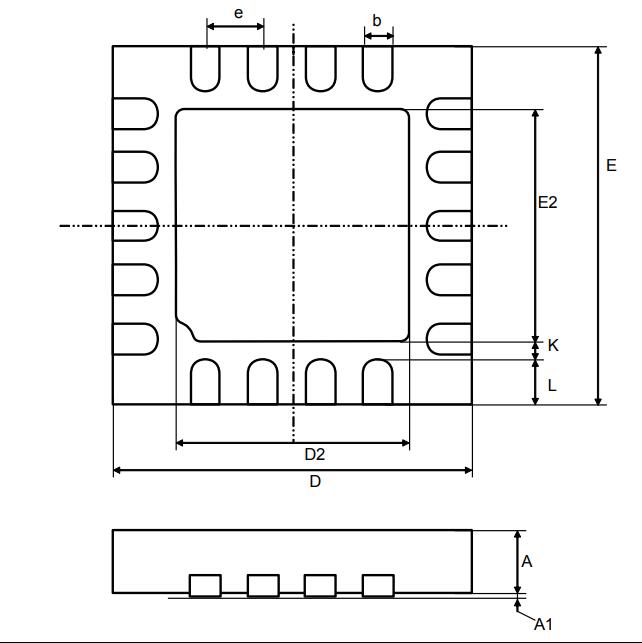
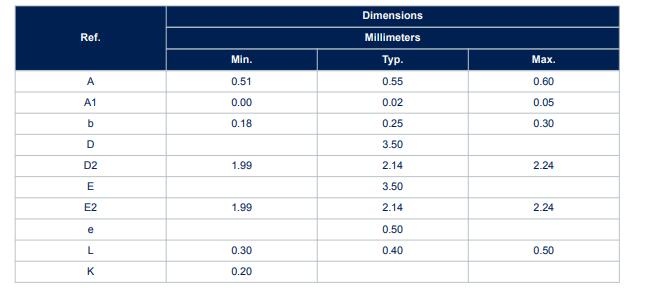
HDMI2C1-6C1 Manufacturer
Everywhere microelectronics make a positive contribution to people's lives, STMicroelectronics is there. By getting more from technology to get more from life, ST stands for life. augmented.
Datasheet PDF
- Datasheets :
Popularity by Region
What is HDMI2C1-6C?
The HDMI2C1-6C1 is an integrated ESD protection and signal conditioning device for control links of HDMI transmitters (Source). This device is a simple solution that provides HDMI designers with an easy and fast way to reach full compliance with the stringent HDMI CTS on a wide temperature range. HDMI logo and high-definition multimedia interface are trademarks or registered trademarks of HDMI licensing LLC.
What package is the HDMI2C1-6C available in?
The HDMI2C1-6C is available in 18-UFQFN Exposed Pad.
Which country is the HDMI2C1-6C most popular in?
According to the research, the HDMI2C1-6C is most popular in the USA, also, China.
 SN754410NEE4 Half-H Driver:Alternatives, Pinout, Schematic
09 September 20211917
 LM2904 Dual Op-Amp: Pinout, Features and Application
22 July 20214774
 STP16CPC26XTR LED Sink Driver: Circuit, Pinout, and Datasheet
21 January 20221689
 CY62128E 1-Mbit Static RAM: Pinout, Features and Datasheet
20 April 20222364
 rg6 vs rg11 Coaxials: What’s the Difference?
31 March 202258216
 TPS1H200AQDGNRQ1 High-Side Switch: Diagram, Pinout, and Datasheet
30 March 20222842
 1N4007 Rectifier Diode: Pinout, Datasheet, and Applications
30 July 202144926
 A Comprehensive Guide to ABLIC S-1702RBF00-I6T1U Voltage Regulator
07 March 2024241
 What is Instrument Transformer?
08 January 20227810
 Si vs SiC Diodes: A Performance Study of Interleaved Boost Converters for PV Applications
14 March 20233173
 What is a Servo Drive?
16 June 20215805
 What are the Types of Camera Lenses?
18 June 20212720
 Semiconductor Industry Poised for $1 Trillion Growth Opportunity by 2030
20 November 20234238
 What is Amplifier?
08 November 20258056
 How to Generate Negative Voltage: 5V to -5V Circuit Analysis & Schemes
05 January 202610141
 Introduction to Centrifugal Switch
27 January 202114163
STMicroelectronics
In Stock: 2856
United States
China
Canada
Japan
Russia
Germany
United Kingdom
Singapore
Italy
Hong Kong(China)
Taiwan(China)
France
Korea
Mexico
Netherlands
Malaysia
Austria
Spain
Switzerland
Poland
Thailand
Vietnam
India
United Arab Emirates
Afghanistan
Åland Islands
Albania
Algeria
American Samoa
Andorra
Angola
Anguilla
Antigua & Barbuda
Argentina
Armenia
Aruba
Australia
Azerbaijan
Bahamas
Bahrain
Bangladesh
Barbados
Belarus
Belgium
Belize
Benin
Bermuda
Bhutan
Bolivia
Bonaire, Sint Eustatius and Saba
Bosnia & Herzegovina
Botswana
Brazil
British Indian Ocean Territory
British Virgin Islands
Brunei
Bulgaria
Burkina Faso
Burundi
Cabo Verde
Cambodia
Cameroon
Cayman Islands
Central African Republic
Chad
Chile
Christmas Island
Cocos (Keeling) Islands
Colombia
Comoros
Congo
Congo (DRC)
Cook Islands
Costa Rica
Côte d’Ivoire
Croatia
Cuba
Curaçao
Cyprus
Czechia
Denmark
Djibouti
Dominica
Dominican Republic
Ecuador
Egypt
El Salvador
Equatorial Guinea
Eritrea
Estonia
Eswatini
Ethiopia
Falkland Islands
Faroe Islands
Fiji
Finland
French Guiana
French Polynesia
Gabon
Gambia
Georgia
Ghana
Gibraltar
Greece
Greenland
Grenada
Guadeloupe
Guam
Guatemala
Guernsey
Guinea
Guinea-Bissau
Guyana
Haiti
Honduras
Hungary
Iceland
Indonesia
Iran
Iraq
Ireland
Isle of Man
Israel
Jamaica
Jersey
Jordan
Kazakhstan
Kenya
Kiribati
Kosovo
Kuwait
Kyrgyzstan
Laos
Latvia
Lebanon
Lesotho
Liberia
Libya
Liechtenstein
Lithuania
Luxembourg
Macao(China)
Madagascar
Malawi
Maldives
Mali
Malta
Marshall Islands
Martinique
Mauritania
Mauritius
Mayotte
Micronesia
Moldova
Monaco
Mongolia
Montenegro
Montserrat
Morocco
Mozambique
Myanmar
Namibia
Nauru
Nepal
New Caledonia
New Zealand
Nicaragua
Niger
Nigeria
Niue
Norfolk Island
North Korea
North Macedonia
Northern Mariana Islands
Norway
Oman
Pakistan
Palau
Palestinian Authority
Panama
Papua New Guinea
Paraguay
Peru
Philippines
Pitcairn Islands
Portugal
Puerto Rico
Qatar
Réunion
Romania
Rwanda
Samoa
San Marino
São Tomé & Príncipe
Saudi Arabia
Senegal
Serbia
Seychelles
Sierra Leone
Sint Maarten
Slovakia
Slovenia
Solomon Islands
Somalia
South Africa
South Sudan
Sri Lanka
St Helena, Ascension, Tristan da Cunha
St. Barthélemy
St. Kitts & Nevis
St. Lucia
St. Martin
St. Pierre & Miquelon
St. Vincent & Grenadines
Sudan
Suriname
Svalbard & Jan Mayen
Sweden
Syria
Tajikistan
Tanzania
Timor-Leste
Togo
Tokelau
Tonga
Trinidad & Tobago
Tunisia
Turkey
Turkmenistan
Turks & Caicos Islands
Tuvalu
U.S. Outlying Islands
U.S. Virgin Islands
Uganda
Ukraine
Uruguay
Uzbekistan
Vanuatu
Vatican City
Venezuela
Wallis & Futuna
Yemen
Zambia
Zimbabwe
![HDMI2C1-14HD]() HDMI2C1-14HD
HDMI2C1-14HDSTMicroelectronics
![HDMI2C1-5DIJ]() HDMI2C1-5DIJ
HDMI2C1-5DIJSTMicroelectronics
![HDMI2C1-14HDS]() HDMI2C1-14HDS
HDMI2C1-14HDSSTMicroelectronics
![STVM100DS6F]() STVM100DS6F
STVM100DS6FSTMicroelectronics
![STHDLS101TQTR]() STHDLS101TQTR
STHDLS101TQTRSTMicroelectronics
![STHDLS101QTR]() STHDLS101QTR
STHDLS101QTRSTMicroelectronics
![STVM100DC6F]() STVM100DC6F
STVM100DC6FSTMicroelectronics
![TDA1175P]() TDA1175P
TDA1175PSTMicroelectronics
![STHDMI002ABTR]() STHDMI002ABTR
STHDMI002ABTRSTMicroelectronics


