

 Product
 Brand
Brand Articles
 Tools
Tools
Optimizing the AD7124 24-Bit ADC: Solving Startup Delays and Design Challenges


24 Bit 0.65mm ADC 24-TSSOP (0.173, 4.40mm Width)
Master the AD7124 24-bit Sigma-Delta ADC. Learn to fix startup delays, optimize excitation currents, and improve industrial designs. Buy or design with AD7124 today.
- Executive Summary: What is the AD7124?
- 1. Technical Specifications & Performance Analysis
- 2. Pinout, Package, and Configuration
- 3. Design & Integration Guide (For Engineers & Makers)
- 4. Typical Applications & Use Cases
- 5. Alternatives and Cross-Reference Guide
- 6. Frequently Asked Questions (FAQ)
- 7. Resources
- Specifications
- Datasheet PDF
Executive Summary: What is the AD7124?
The AD7124 is a low-power, low-noise, completely integrated analog front end (AFE) designed for high-precision measurement applications, featuring a 24-bit Sigma-Delta ADC. It serves as a comprehensive system-on-a-chip for sensors, integrating signal conditioning and conversion into a single package.
Market Position: High-performance, integrated precision AFE; a flagship choice for industrial sensing.
Top Features: 24-bit resolution, integrated Programmable Gain Amplifier (PGA), and triple power modes (low, mid, and full) for energy flexibility.
Primary Audience: Ideal for industrial design engineers, medical instrumentation developers, and procurement managers looking for a reliable, high-resolution BOM solution.
Supply Status: Active.
1. Technical Specifications & Performance Analysis
The AD7124 stands out in the Analog Devices portfolio due to its ability to handle extremely low-level signals directly from sensors without requiring external amplification.
1.1 Core Architecture (Sigma-Delta)
The AD7124 utilizes a Sigma-Delta architecture, which is the industry standard for high-resolution, low-frequency measurements. This architecture uses oversampling and noise shaping to achieve an effective number of bits (ENOB) that exceeds traditional SAR ADCs, making it perfect for "slow" signals like temperature or weight.
1.2 Key Electrical Characteristics
For procurement and design feasibility, the power profile of the AD7124 is its strongest selling point: - Analog Supply Voltage: 2.7 V to 3.6 V (unipolar) or ±1.8 V (bipolar). - Digital Supply Voltage: 1.65 V to 3.6 V, allowing for direct interfacing with low-voltage modern microcontrollers. - Current Consumption: Highly dependent on the selected power mode, allowing engineers to trade off noise performance for battery life.
1.3 Interfaces and Connectivity
The device communicates via a standard SPI (Serial Peripheral Interface). This interface handles data output, configuration register access, and status monitoring.
2. Pinout, Package, and Configuration
Understanding the physical layout is the first step toward a successful PCB prototype.
2.1 Pin Configuration Guide
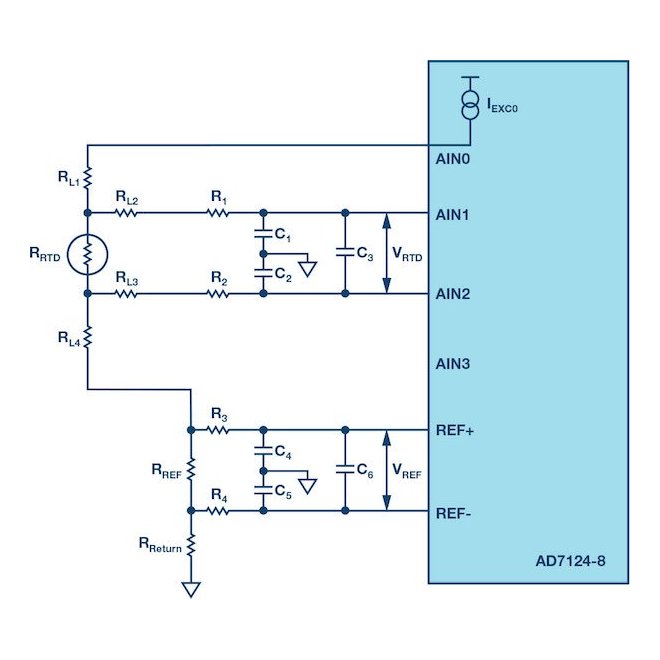
VCC/GND: Power supply pins for both analog and digital domains.
AIN0–AIN7: Analog input channels (4 or 8 depending on the model).
SYNC: A critical control pin. If left floating, it can cause significant startup delays.
DRDY (Data Ready): Indicates when a conversion is complete and ready to be read via SPI.
2.2 Naming Convention & Ordering Codes
The series is primarily split by channel count: - AD7124-4: Supports 4 differential or 7 pseudo-differential inputs. - AD7124-8: Supports 8 differential or 15 pseudo-differential inputs. - Suffixes like BCPZ or BRUZ indicate package types (LFCSP vs. TSSOP) and temperature grades.
2.3 Available Packages
| Package Type | Dimensions | Common Use Case |
|---|---|---|
| LFCSP | 5mm x 5mm | Space-constrained IoT and handheld devices. |
| TSSOP | 24-lead | Prototyping and easier manual inspection/soldering. |
3. Design & Integration Guide (For Engineers & Makers)
Pro Tip: Always verify pin compatibility before migrating from older series like the AD717x.
3.1 Hardware Implementation
Bypass Capacitors: Use a 0.1 µF capacitor in parallel with a 10 µF capacitor on the supply pins to minimize high-frequency noise.
PCB Layout: Keep the analog input traces away from high-speed digital SPI lines to prevent crosstalk.
Thermal Management: While low power, the LFCSP package benefits from a grounded thermal pad for both electrical stability and heat dissipation.
3.2 Common Design Challenges
Based on engineering feedback, several "gotchas" can delay your time-to-market:
Issue: Delayed Ready Reads at Power-Up
Fix: Ensure the SYNC pin is tied to a valid logic level (e.g., 3.3V). A floating SYNC pin can cause the ADC to wait minutes before outputting data.
Issue: Conversion Time Delays/Junk Values
Fix: When switching excitation currents, increase delay times (e.g., >10ms) to allow the analog front end to settle before reading.
Issue: Mode Bit Write Anomaly
Fix: Avoid changing multiple mode bits in a single write to the
ADC_CONTROLregister. Update bits sequentially or ensure synchronization with the internal clock.
4. Typical Applications & Use Cases
4.1 Real-World Example: Precision Weigh Scales
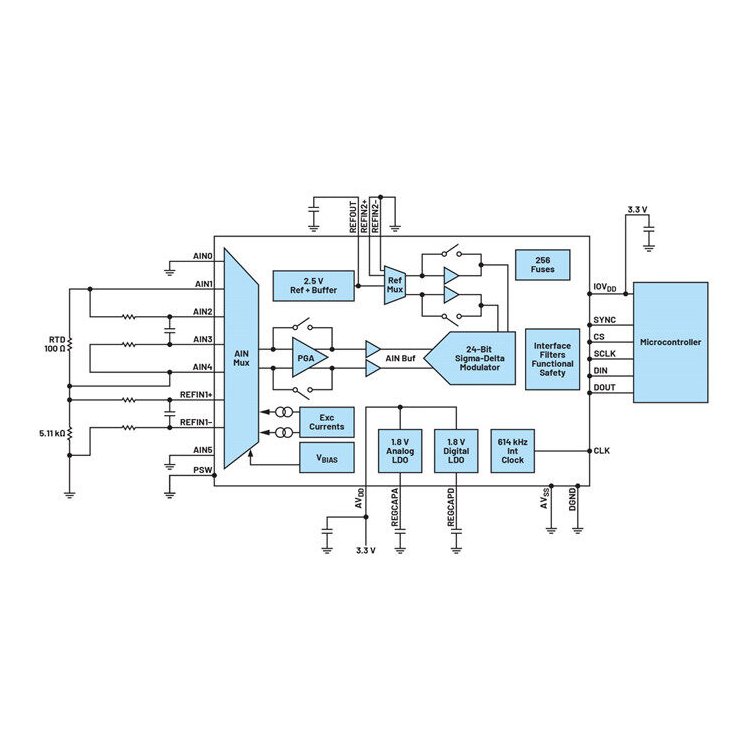
In a weigh scale application, the AD7124's integrated PGA allows it to interface directly with a load cell. The 24-bit resolution ensures that even the slightest change in weight is captured, while the 50 Hz/60 Hz rejection filters out power-line interference that often plagues industrial environments.
5. Alternatives and Cross-Reference Guide
If the AD7124 is unavailable or doesn't meet specific requirements, consider these alternatives:
Direct Replacements:
Texas Instruments ADS1232: A popular alternative for weigh scales, though it lacks some of the AD7124's integrated AFE features.
Higher Speed Requirements:
Analog Devices AD7177-2: If you need faster throughput while maintaining high resolution.
Lower Complexity:
Analog Devices AD7171: A simpler, 16-bit alternative for less demanding applications.
6. Frequently Asked Questions (FAQ)
Q: What is the difference between AD7124 and ADS1232?A: The AD7124 offers more integration (like excitation currents and more channels) and flexible power modes, whereas the ADS1232 is a more focused, lower-cost solution for bridge sensors.
Q: Can AD7124 be used for thermocouple measurement?A: Yes. Its integrated PGA and internal reference make it an excellent choice for thermocouples and RTDs.
Q: Why does my DRDY pin remain high and read zero?A: This usually happens if the external reference voltage is missing or if the ADC is not configured to use its internal reference. Check your REF_EN bit settings.
Q: Is AD7124 suitable for battery-operated devices?A: Absolutely. By using the "Low Power Mode," it consumes significantly less current, extending the life of portable instruments.
7. Resources
Datasheet: Visit the Analog Devices website for the full AD7124-4/AD7124-8 PDF.
Evaluation Boards: Look for the EVAL-AD7124-4SDZ for rapid prototyping.
Software Libraries: C-based drivers are available on the Analog Devices GitHub repository for easy integration with STM32 or Arduino.
Specifications
Datasheet PDF
- Datasheets :
 74LS04: Circuits, Applications, and Pinout
31 March 20224784
 LD1117S33CTR LDO Voltage Regulator: 3.3V 950mA, LD1117S33CTR Datasheet and Circuit
12 January 20223650
 GRM188R71H104KA93D Capacitor CER 0.1UF 50V: Datasheet, Features, and Equivalents
10 February 20224107
 1N5817 Schottky Diode: Pinout, Datasheet, and Alternatives
03 July 20217097
 MOC3021M Optocoupler: Circuit, Pinout, and Datasheet
02 March 20228507
 L6235 BLDC Motor Controller: Datasheet, Pinout, Specifications
20 October 20213779
 DRV8835DSSR: Pinout, Datasheet
18 March 20221436
 Renesas DF2268FA20V Technical Datasheet: Features, Applications, and Reference Designs
29 February 2024183
 Component Date Code Verification: How to Validate CoCs and Ensure Traceability
08 June 2026883
 Leading Fiber Optic Connectors Every Installer Should Know
17 July 20253321
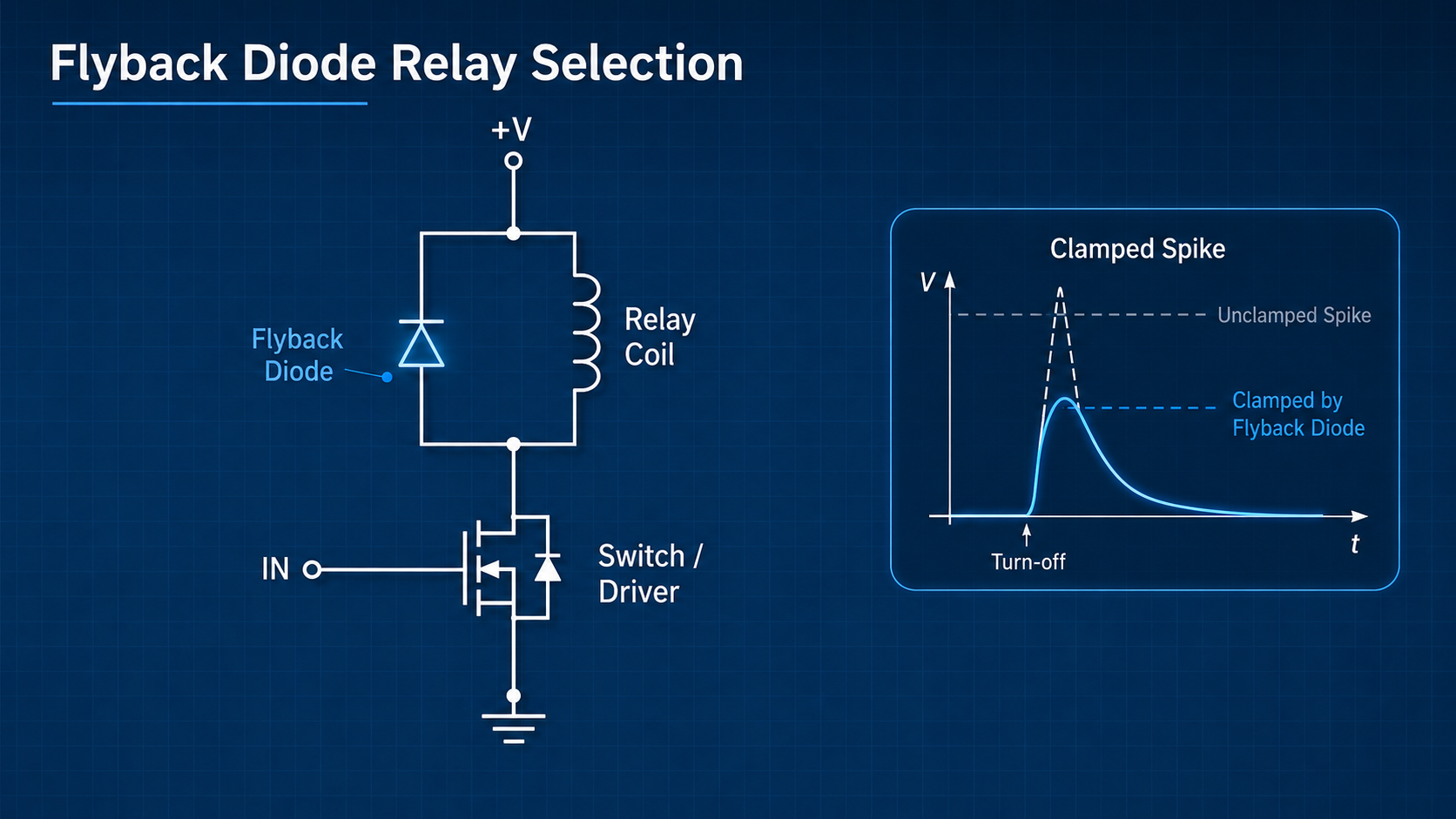 Flyback Diode Relay Selection: How to Choose the Right Diode for a Relay Coil
11 June 20263494
 Is ON Semiconductor's Stock Overvalued? A Detailed Analysis
28 September 20233878
 The Strongest Introductory Science on Semiconductor Storage
10 October 20223940
 ARM, FPGA, DSP and CPLD: Connection and Difference
15 March 20228673
 Metal Oxide Varistor: Specifications, Working and Construction
26 January 202111018
 Top 10 High-Performance End Mills for Metalworking in 2025
17 July 20255623
Analog Devices Inc.
In Stock
United States
China
Canada
Japan
Russia
Germany
United Kingdom
Singapore
Italy
Hong Kong(China)
Taiwan(China)
France
Korea
Mexico
Netherlands
Malaysia
Austria
Spain
Switzerland
Poland
Thailand
Vietnam
India
United Arab Emirates
Afghanistan
Åland Islands
Albania
Algeria
American Samoa
Andorra
Angola
Anguilla
Antigua & Barbuda
Argentina
Armenia
Aruba
Australia
Azerbaijan
Bahamas
Bahrain
Bangladesh
Barbados
Belarus
Belgium
Belize
Benin
Bermuda
Bhutan
Bolivia
Bonaire, Sint Eustatius and Saba
Bosnia & Herzegovina
Botswana
Brazil
British Indian Ocean Territory
British Virgin Islands
Brunei
Bulgaria
Burkina Faso
Burundi
Cabo Verde
Cambodia
Cameroon
Cayman Islands
Central African Republic
Chad
Chile
Christmas Island
Cocos (Keeling) Islands
Colombia
Comoros
Congo
Congo (DRC)
Cook Islands
Costa Rica
Côte d’Ivoire
Croatia
Cuba
Curaçao
Cyprus
Czechia
Denmark
Djibouti
Dominica
Dominican Republic
Ecuador
Egypt
El Salvador
Equatorial Guinea
Eritrea
Estonia
Eswatini
Ethiopia
Falkland Islands
Faroe Islands
Fiji
Finland
French Guiana
French Polynesia
Gabon
Gambia
Georgia
Ghana
Gibraltar
Greece
Greenland
Grenada
Guadeloupe
Guam
Guatemala
Guernsey
Guinea
Guinea-Bissau
Guyana
Haiti
Honduras
Hungary
Iceland
Indonesia
Iran
Iraq
Ireland
Isle of Man
Israel
Jamaica
Jersey
Jordan
Kazakhstan
Kenya
Kiribati
Kosovo
Kuwait
Kyrgyzstan
Laos
Latvia
Lebanon
Lesotho
Liberia
Libya
Liechtenstein
Lithuania
Luxembourg
Macao(China)
Madagascar
Malawi
Maldives
Mali
Malta
Marshall Islands
Martinique
Mauritania
Mauritius
Mayotte
Micronesia
Moldova
Monaco
Mongolia
Montenegro
Montserrat
Morocco
Mozambique
Myanmar
Namibia
Nauru
Nepal
New Caledonia
New Zealand
Nicaragua
Niger
Nigeria
Niue
Norfolk Island
North Korea
North Macedonia
Northern Mariana Islands
Norway
Oman
Pakistan
Palau
Palestinian Authority
Panama
Papua New Guinea
Paraguay
Peru
Philippines
Pitcairn Islands
Portugal
Puerto Rico
Qatar
Réunion
Romania
Rwanda
Samoa
San Marino
São Tomé & Príncipe
Saudi Arabia
Senegal
Serbia
Seychelles
Sierra Leone
Sint Maarten
Slovakia
Slovenia
Solomon Islands
Somalia
South Africa
South Sudan
Sri Lanka
St Helena, Ascension, Tristan da Cunha
St. Barthélemy
St. Kitts & Nevis
St. Lucia
St. Martin
St. Pierre & Miquelon
St. Vincent & Grenadines
Sudan
Suriname
Svalbard & Jan Mayen
Sweden
Syria
Tajikistan
Tanzania
Timor-Leste
Togo
Tokelau
Tonga
Trinidad & Tobago
Tunisia
Turkey
Turkmenistan
Turks & Caicos Islands
Tuvalu
U.S. Outlying Islands
U.S. Virgin Islands
Uganda
Ukraine
Uruguay
Uzbekistan
Vanuatu
Vatican City
Venezuela
Wallis & Futuna
Yemen
Zambia
Zimbabwe
![ADV7513BSWZ]() ADV7513BSWZ
ADV7513BSWZAnalog Devices, Inc.
![AD9877ABSZ]() AD9877ABSZ
AD9877ABSZAnalog Devices, Inc.
![LTC2245CUH#TRPBF]() LTC2245CUH#TRPBF
LTC2245CUH#TRPBFLinear Technology/Analog Devices
![AD7791BRMZ-REEL]() AD7791BRMZ-REEL
AD7791BRMZ-REELAnalog Devices Inc.
![AD7799BRUZ-REEL]() AD7799BRUZ-REEL
AD7799BRUZ-REELAnalog Devices Inc.
![AD7190BRUZ-REEL]() AD7190BRUZ-REEL
AD7190BRUZ-REELAnalog Devices Inc.
![AD7705BRZ-REEL]() AD7705BRZ-REEL
AD7705BRZ-REELAnalog Devices Inc.
![AD7175-2BRUZ-RL7]() AD7175-2BRUZ-RL7
AD7175-2BRUZ-RL7Analog Devices Inc.
![AD7192BRUZ-REEL]() AD7192BRUZ-REEL
AD7192BRUZ-REELAnalog Devices Inc.
![AD9283BRSZ-RL100]() AD9283BRSZ-RL100
AD9283BRSZ-RL100Analog Devices Inc.


