

 Product
 Brand
Brand Articles
 Tools
Tools
AD6623ASZ Transmit Signal Processor: Pinout, Specification, Datasheet

0.5mm Tin Specialized Interface IC AD6623 128 Pin 2.5V 128-BFQFP
Unit Price: $29.154947
Ext Price: $29.15


0.5mm Tin Specialized Interface IC AD6623 128 Pin 2.5V 128-BFQFP
The AD6623ASZ is a 4-channel Transmit Signal Processor (TSP) that creates high bandwidth data for Transmit Digital-to-Analog Converters (TxDACs) from baseband data provided by a Digital Signal Processor (DSP).
AD6623ASZ Pinout
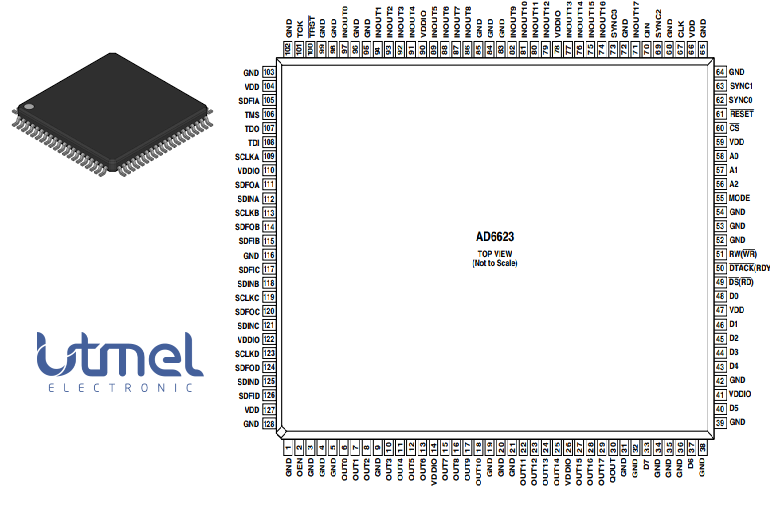
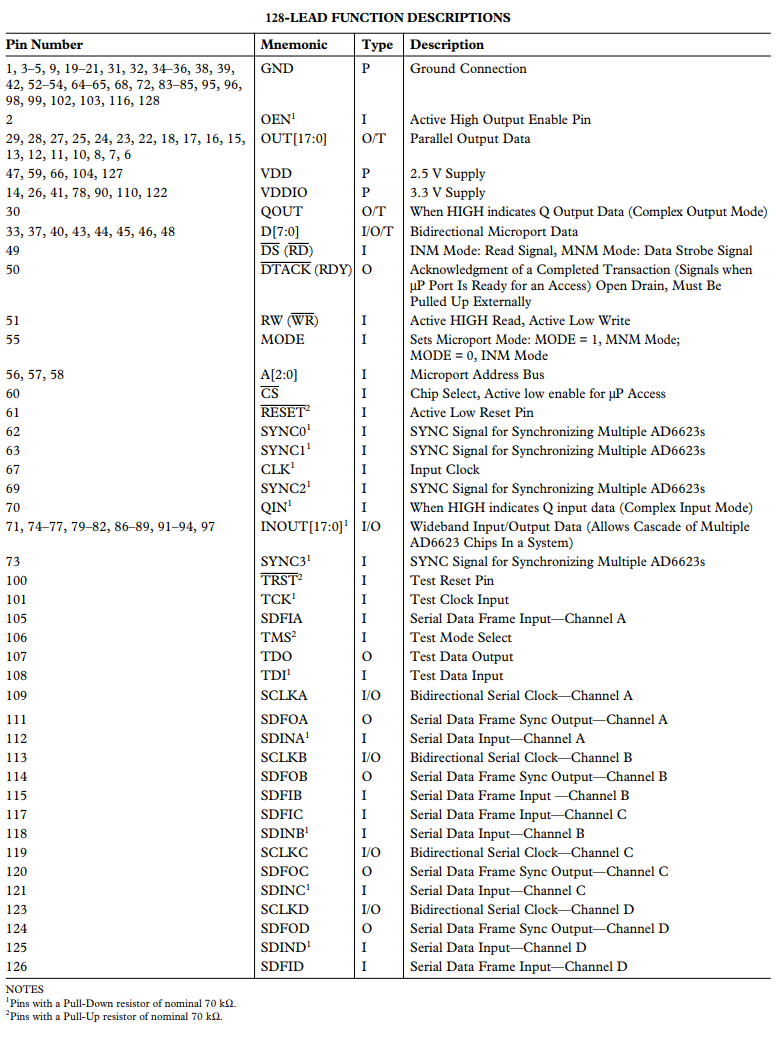
AD6623ASZ Description
Modern TxDACs have achieved sufficiently high sampling rates, analog bandwidth, and dynamic range to create the first Intermediate Frequency (IF) directly. The AD6623 synthesizes multicarrier and multistandard digital signals to drive these TxDACs. The RAM-based architecture allows easy reconfiguration for multimode applications. Modulation, pulse-shaping and anti-imaging filters, static equalization, and tuning functions are combined in a single, cost-effective device. Digital IF signal processing provides repeatable manufacturing, higher accuracy, and more flexibility than comparable high dynamic range analog designs. The AD6623 has four identical digital TSPs complete with synchronization circuitry and cascadable wideband channel summation. AD6623 is pin-compatible to AD6622 and can operate in AD6622-compatible control register mode. The AD6623 utilizes a 3.3 V I/O power supply and a 2.5 V core power supply. All I/O pins are 5 V tolerant. All control registers and coefficient values are programmed through a generic microprocessor interface. Intel and Motorola microprocessor bus modes are supported. All inputs and outputs are LVCMOS compatible.
AD6623ASZ Features
•Pin compatible with the AD6622
•18-Bit Parallel Digital IF Output
Real or interleaved complex
•18-Bit bidirectional parallel digital IF input/output
Allows cascade of chips for additional channels
Clipped or wrapped over a range
Two’s complement or offset binary output
•Four independent digital transmitters in a single package
•RAM coefficient filter (RCF)
Programmable IF and modulation for each channel
Programmable interpolating RAM coefficient filter
Π/4-DQPSK Differential Phase Encoder
Programmable GMSK look-up table
Programmable QPSK look-up table
All-pass phase equalizer
Programmable fine scaler
Programmable power ramp unit
•High-speed CIC interpolating filter
•Digital resampling for noninteger interpolation rates
•NCO frequency translation
Carrier output from DC to 52MHz
Spurious performance better than –100dBc
•Separate 3-Wire serial data input for each channel
Bidirectional serial clocks and frames
•Microprocessor control
•2.5V CMOS core, 3.3V outputs, 5V Inputs
•JTAG boundary scan
AD6623ASZ Applications
•Cellular/PCS base stations
•Micro/Pico cell base stations
•Wireless local loop base stations
•Multicarrier, multimode digital transmit
GSM, EDGE, IS136, PHS, IS95, TDS CDMA, UMTS, CDMA2000
•Phased array beamforming antennas
•Software-defined radio
Tuning Resolution Better than 0.025 Hz
Real or complex outputs
Specifications
- TypeParameter
- Lifecycle Status
Lifecycle Status refers to the current stage of an electronic component in its product life cycle, indicating whether it is active, obsolete, or transitioning between these states. An active status means the component is in production and available for purchase. An obsolete status indicates that the component is no longer being manufactured or supported, and manufacturers typically provide a limited time frame for support. Understanding the lifecycle status is crucial for design engineers to ensure continuity and reliability in their projects.
PRODUCTION (Last Updated: 1 week ago) - Factory Lead Time8 Weeks
- Contact Plating
Contact plating (finish) provides corrosion protection for base metals and optimizes the mechanical and electrical properties of the contact interfaces.
Tin - Mount
In electronic components, the term "Mount" typically refers to the method or process of physically attaching or fixing a component onto a circuit board or other electronic device. This can involve soldering, adhesive bonding, or other techniques to secure the component in place. The mounting process is crucial for ensuring proper electrical connections and mechanical stability within the electronic system. Different components may have specific mounting requirements based on their size, shape, and function, and manufacturers provide guidelines for proper mounting procedures to ensure optimal performance and reliability of the electronic device.
Surface Mount - Mounting Type
The "Mounting Type" in electronic components refers to the method used to attach or connect a component to a circuit board or other substrate, such as through-hole, surface-mount, or panel mount.
Surface Mount - Package / Case
refers to the protective housing that encases an electronic component, providing mechanical support, electrical connections, and thermal management.
128-BFQFP - Number of Pins128
- Packaging
Semiconductor package is a carrier / shell used to contain and cover one or more semiconductor components or integrated circuits. The material of the shell can be metal, plastic, glass or ceramic.
Tray - JESD-609 Code
The "JESD-609 Code" in electronic components refers to a standardized marking code that indicates the lead-free solder composition and finish of electronic components for compliance with environmental regulations.
e3 - Pbfree Code
The "Pbfree Code" parameter in electronic components refers to the code or marking used to indicate that the component is lead-free. Lead (Pb) is a toxic substance that has been widely used in electronic components for many years, but due to environmental concerns, there has been a shift towards lead-free alternatives. The Pbfree Code helps manufacturers and users easily identify components that do not contain lead, ensuring compliance with regulations and promoting environmentally friendly practices. It is important to pay attention to the Pbfree Code when selecting electronic components to ensure they meet the necessary requirements for lead-free applications.
no - Part Status
Parts can have many statuses as they progress through the configuration, analysis, review, and approval stages.
Active - Moisture Sensitivity Level (MSL)
Moisture Sensitivity Level (MSL) is a standardized rating that indicates the susceptibility of electronic components, particularly semiconductors, to moisture-induced damage during storage and the soldering process, defining the allowable exposure time to ambient conditions before they require special handling or baking to prevent failures
3 (168 Hours) - Number of Terminations128
- ECCN Code
An ECCN (Export Control Classification Number) is an alphanumeric code used by the U.S. Bureau of Industry and Security to identify and categorize electronic components and other dual-use items that may require an export license based on their technical characteristics and potential for military use.
5A991.B.1 - Max Operating Temperature
The Maximum Operating Temperature is the maximum body temperature at which the thermistor is designed to operate for extended periods of time with acceptable stability of its electrical characteristics.
85°C - Min Operating Temperature
The "Min Operating Temperature" parameter in electronic components refers to the lowest temperature at which the component is designed to operate effectively and reliably. This parameter is crucial for ensuring the proper functioning and longevity of the component, as operating below this temperature may lead to performance issues or even damage. Manufacturers specify the minimum operating temperature to provide guidance to users on the environmental conditions in which the component can safely operate. It is important to adhere to this parameter to prevent malfunctions and ensure the overall reliability of the electronic system.
-40°C - Applications
The parameter "Applications" in electronic components refers to the specific uses or functions for which a component is designed. It encompasses various fields such as consumer electronics, industrial automation, telecommunications, automotive, and medical devices. Understanding the applications helps in selecting the right components for a particular design based on performance, reliability, and compatibility requirements. This parameter also guides manufacturers in targeting their products to relevant markets and customer needs.
Transmit Signal Processor - HTS Code
HTS (Harmonized Tariff Schedule) codes are product classification codes between 8-1 digits. The first six digits are an HS code, and the countries of import assign the subsequent digits to provide additional classification. U.S. HTS codes are 1 digits and are administered by the U.S. International Trade Commission.
8542.31.00.01 - Max Power Dissipation
The maximum power that the MOSFET can dissipate continuously under the specified thermal conditions.
740mW - Terminal Position
In electronic components, the term "Terminal Position" refers to the physical location of the connection points on the component where external electrical connections can be made. These connection points, known as terminals, are typically used to attach wires, leads, or other components to the main body of the electronic component. The terminal position is important for ensuring proper connectivity and functionality of the component within a circuit. It is often specified in technical datasheets or component specifications to help designers and engineers understand how to properly integrate the component into their circuit designs.
QUAD - Terminal Form
Occurring at or forming the end of a series, succession, or the like; closing; concluding.
GULL WING - Peak Reflow Temperature (Cel)
Peak Reflow Temperature (Cel) is a parameter that specifies the maximum temperature at which an electronic component can be exposed during the reflow soldering process. Reflow soldering is a common method used to attach electronic components to a circuit board. The Peak Reflow Temperature is crucial because it ensures that the component is not damaged or degraded during the soldering process. Exceeding the specified Peak Reflow Temperature can lead to issues such as component failure, reduced performance, or even permanent damage to the component. It is important for manufacturers and assemblers to adhere to the recommended Peak Reflow Temperature to ensure the reliability and functionality of the electronic components.
260 - Number of Functions1
- Supply Voltage
Supply voltage refers to the electrical potential difference provided to an electronic component or circuit. It is crucial for the proper operation of devices, as it powers their functions and determines performance characteristics. The supply voltage must be within specified limits to ensure reliability and prevent damage to components. Different electronic devices have specific supply voltage requirements, which can vary widely depending on their design and intended application.
2.5V - Terminal Pitch
The center distance from one pole to the next.
0.5mm - Time@Peak Reflow Temperature-Max (s)
Time@Peak Reflow Temperature-Max (s) refers to the maximum duration that an electronic component can be exposed to the peak reflow temperature during the soldering process, which is crucial for ensuring reliable solder joint formation without damaging the component.
40 - Base Part Number
The "Base Part Number" (BPN) in electronic components serves a similar purpose to the "Base Product Number." It refers to the primary identifier for a component that captures the essential characteristics shared by a group of similar components. The BPN provides a fundamental way to reference a family or series of components without specifying all the variations and specific details.
AD6623 - Pin Count
a count of all of the component leads (or pins)
128 - Qualification Status
An indicator of formal certification of qualifications.
Not Qualified - Operating Supply Voltage
The voltage level by which an electrical system is designated and to which certain operating characteristics of the system are related.
9V - Temperature Grade
Temperature grades represent a tire's resistance to heat and its ability to dissipate heat when tested under controlled laboratory test conditions.
INDUSTRIAL - Interface
In electronic components, the term "Interface" refers to the point at which two different systems, devices, or components connect and interact with each other. It can involve physical connections such as ports, connectors, or cables, as well as communication protocols and standards that facilitate the exchange of data or signals between the connected entities. The interface serves as a bridge that enables seamless communication and interoperability between different parts of a system or between different systems altogether. Designing a reliable and efficient interface is crucial in ensuring proper functionality and performance of electronic components and systems.
Serial - Nominal Supply Current
Nominal current is the same as the rated current. It is the current drawn by the motor while delivering rated mechanical output at its shaft.
232mA - Data Bus Width
The data bus width in electronic components refers to the number of bits that can be transferred simultaneously between the processor and memory. It determines the amount of data that can be processed and transferred in a single operation. A wider data bus allows for faster data transfer speeds and improved overall performance of the electronic device. Common data bus widths include 8-bit, 16-bit, 32-bit, and 64-bit, with higher numbers indicating a larger capacity for data transfer. The data bus width is an important specification to consider when evaluating the speed and efficiency of a computer system or other electronic device.
18b - Max Frequency
Max Frequency refers to the highest frequency at which an electronic component can operate effectively without degradation of performance. It is a critical parameter for devices such as transistors, capacitors, and oscillators, indicating their limitations in speed and response time. Exceeding the max frequency can lead to issues like signal distortion, heat generation, and potential failure of the component. Understanding this parameter is essential for designing circuits to ensure reliable and efficient operation.
52MHz - Telecom IC Type
Telecom IC Type refers to integrated circuits specifically designed for telecommunications applications. These components facilitate various functions such as signal processing, data modulation and demodulation, and communication protocol handling. They can be used in devices like mobile phones, modems, and network equipment, ensuring reliable data transmission and reception. Telecom ICs support different standards and technologies, making them essential for modern communication systems.
TELECOM CIRCUIT - Height2.9mm
- Length14.2mm
- Width20.2mm
- RoHS Status
RoHS means “Restriction of Certain Hazardous Substances” in the “Hazardous Substances Directive” in electrical and electronic equipment.
ROHS3 Compliant - Lead Free
Lead Free is a term used to describe electronic components that do not contain lead as part of their composition. Lead is a toxic material that can have harmful effects on human health and the environment, so the electronics industry has been moving towards lead-free components to reduce these risks. Lead-free components are typically made using alternative materials such as silver, copper, and tin. Manufacturers must comply with regulations such as the Restriction of Hazardous Substances (RoHS) directive to ensure that their products are lead-free and environmentally friendly.
Contains Lead
AD6623ASZ Functional Block Diagram

AD6623ASZ Outline Dimension
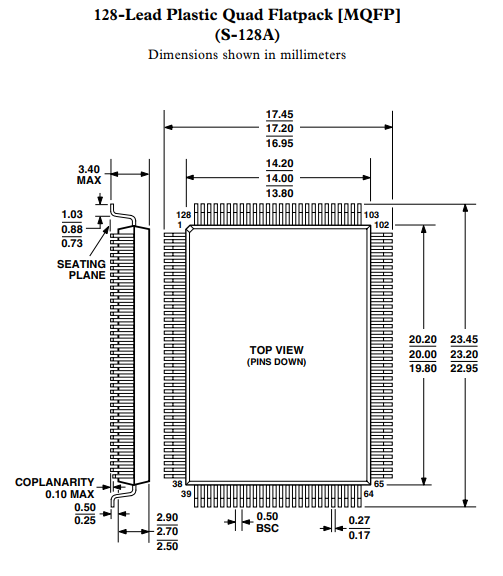
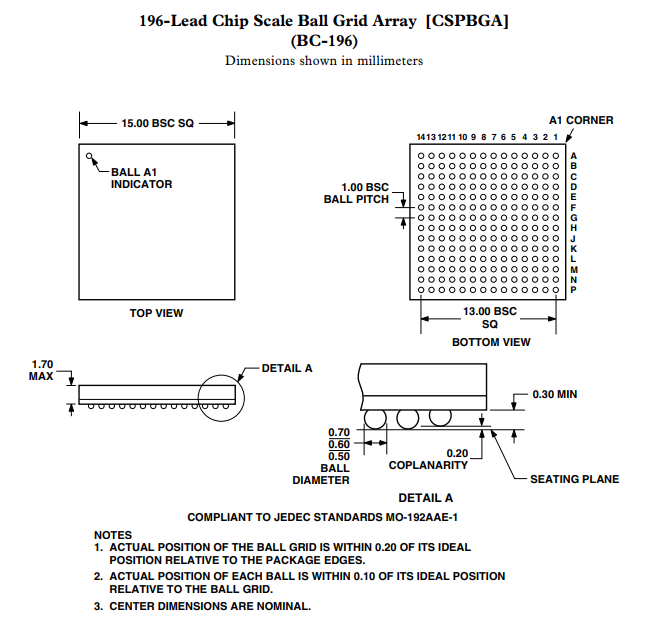
AD6623ASZ Manufacturer
Analog Devices (NASDAQ: ADI) is a world leader in the design, manufacture, and marketing of a broad portfolio of high-performance analog, mixed-signal, and digital signal processing (DSP) integrated circuits (ICs) used in virtually all types of electronic equipment. Since our inception in 1965, we have focused on solving the engineering challenges associated with signal processing in electronic equipment. Used by over 100,000 customers worldwide, our signal processing products play a fundamental role in converting, conditioning, and processing real-world phenomena such as temperature, pressure, sound, light, speed, and motion into electrical signals to be used in a wide array of electronic devices.
Trend Analysis
Datasheet PDF
- Datasheets :
- PCN Assembly/Origin :
- ConflictMineralStatement :
 Renesas RX24U Group Microcontroller: Advancements and Applications
29 February 2024213
 LD39200PUR Ultra Low Drop Linear Regulator: 2A, 6DFN, LD39200PUR Datasheet
22 January 20222085
 IRFP460A Power MOSFET: Datasheet, Equivalents, Application
11 October 20217342
 STM32C031C6T6 Datasheet Guide: Complete Beginner's Tutoria
03 July 2025568
 BSS138 N-Channel Transistor: Pinout, Datasheet and Equivalent
14 July 20213732
![CR1616 vs CR2025[Video+FAQ]: Differences and Similarities](https://res.utmel.com/Images/Article/d3326313-95c7-432b-8e03-693b4d48d556.jpg) CR1616 vs CR2025[Video+FAQ]: Differences and Similarities
CR1616 vs CR2025[Video+FAQ]: Differences and Similarities21 April 202213748
 MCP4922 Converter: Circuit, Pinout, and Datasheet
26 November 20215526
 ADXL335 Accelerometer: Datasheet, Pinout, Application
20 August 20217966
 Tech Giants Accelerate In-House Semiconductor Design, Threatening Fabless Chipmakers
27 September 20233453
 New Technology Helps Detect and Prevent Automated Browsing
13 November 20232668
 Electronic Components in the Smart Home System
24 April 20253034
 An Overview of Bipolar Transistors
27 August 20209376
 What's the Difference Between Operational Amplifier and Comparator?
01 April 20226377
 Revolutionizing Semiconductor Manufacturing with New Plasma Power Technologies
23 September 20232439
 What causes the Noise of Electronic Equipment when it is Running?
01 August 20223239
 Global Power Technology Authorized Distributor | UTMEL Electronics
21 November 20234360
Analog Devices Inc.
In Stock: 1000
Minimum: 1 Multiples: 1
Qty
Unit Price
Ext Price
1
$29.154947
$29.15
10
$27.504667
$275.05
100
$25.947799
$2,594.78
500
$24.479056
$12,239.53
1000
$23.093449
$23,093.45
Not the price you want? Send RFQ Now and we'll contact you ASAP.
Inquire for More Quantity
![ADN8102ACPZ]() ADN8102ACPZ
ADN8102ACPZAnalog Devices Inc.
![AD9985BSTZ-110]() AD9985BSTZ-110
AD9985BSTZ-110Analog Devices Inc.
![AD8174ARZ]() AD8174ARZ
AD8174ARZAnalog Devices Inc.
![AD8170ARZ]() AD8170ARZ
AD8170ARZAnalog Devices Inc.
![AD9888KSZ-170]() AD9888KSZ-170
AD9888KSZ-170Analog Devices Inc.
![ADV3003ACPZ]() ADV3003ACPZ
ADV3003ACPZAnalog Devices Inc.
![LTC6820IMS#PBF]() LTC6820IMS#PBF
LTC6820IMS#PBFAnalog Devices
![AD9883AKSTZ-140]() AD9883AKSTZ-140
AD9883AKSTZ-140Analog Devices Inc.
![AD9887AKSZ-140]() AD9887AKSZ-140
AD9887AKSZ-140Analog Devices Inc.
![ADV3003ACPZ-R7]() ADV3003ACPZ-R7
ADV3003ACPZ-R7Analog Devices Inc.


