

LM334Z Adjustable Current Sources


3 Pin LM334 Current regulator 1 Outputs 0°C~70°C
LM334Z is an adjustable current sources. This article mainly introduce its pinout, application, datasheet PDF and other detailed informations about STMicroelectronics LM334Z.

Quick look at my new LM334 LM334Z constant current source IC in TO92 package by electronzap
LM334Z Description
The LM334Z is 3-terminal adjustable current sources characterized by:
■ an operating current range of 10000
■ an excellent current regulation
■ a wide dynamic voltage range of 1V t 10V
The current is determined by an external resistor without requiring other external components. Reverse voltages of up to 20V will only draw a current of several microamperes.
This enables the circuit to operate as a rectifier and as a source of current in a.c. applications. For the LM334Z, the voltage on the control pin is 64mV at +25°C and is directly proportional to the absolute temperature (°K).
The simplest external resistor connection generates a current with approximately 0.33%/°C temperature dependence. Zero drift can be obtained by adding an additional resistor and a diode to the external circuit.
LM334Z Pinout
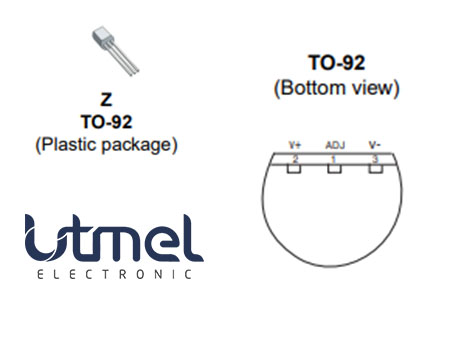
LM334Z CAD Model
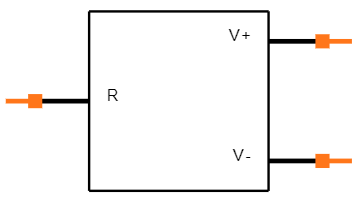
Symbol
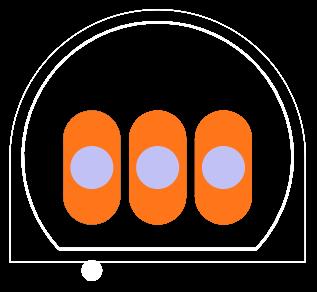
Footprint
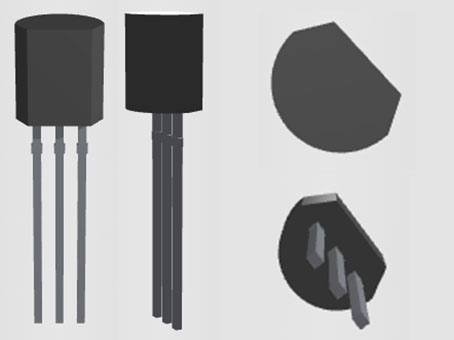
3D Model
LM334Z Schemetic Diagram
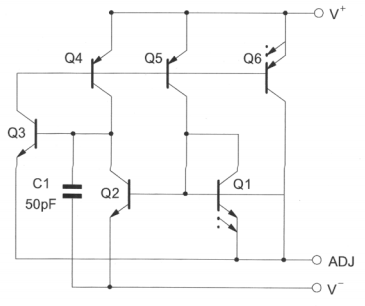
LM334Z Features
This section mentions some of the features of LM334Z Adjustable Current Sources
■ Operates from 1V to 40V
■ 0.02%/V current regulation
■ Programmable from 1µA to 10mA
■ ±3% initial accuracy
Specifications
- TypeParameter
- Mount
In electronic components, the term "Mount" typically refers to the method or process of physically attaching or fixing a component onto a circuit board or other electronic device. This can involve soldering, adhesive bonding, or other techniques to secure the component in place. The mounting process is crucial for ensuring proper electrical connections and mechanical stability within the electronic system. Different components may have specific mounting requirements based on their size, shape, and function, and manufacturers provide guidelines for proper mounting procedures to ensure optimal performance and reliability of the electronic device.
Through Hole - Mounting Type
The "Mounting Type" in electronic components refers to the method used to attach or connect a component to a circuit board or other substrate, such as through-hole, surface-mount, or panel mount.
Through Hole - Package / Case
refers to the protective housing that encases an electronic component, providing mechanical support, electrical connections, and thermal management.
TO-226-3, TO-92-3 (TO-226AA) - Number of Pins3
- Operating Temperature
The operating temperature is the range of ambient temperature within which a power supply, or any other electrical equipment, operate in. This ranges from a minimum operating temperature, to a peak or maximum operating temperature, outside which, the power supply may fail.
0°C~70°C - Packaging
Semiconductor package is a carrier / shell used to contain and cover one or more semiconductor components or integrated circuits. The material of the shell can be metal, plastic, glass or ceramic.
Bulk - Part Status
Parts can have many statuses as they progress through the configuration, analysis, review, and approval stages.
Obsolete - Moisture Sensitivity Level (MSL)
Moisture Sensitivity Level (MSL) is a standardized rating that indicates the susceptibility of electronic components, particularly semiconductors, to moisture-induced damage during storage and the soldering process, defining the allowable exposure time to ambient conditions before they require special handling or baking to prevent failures
1 (Unlimited) - Base Part Number
The "Base Part Number" (BPN) in electronic components serves a similar purpose to the "Base Product Number." It refers to the primary identifier for a component that captures the essential characteristics shared by a group of similar components. The BPN provides a fundamental way to reference a family or series of components without specifying all the variations and specific details.
LM334 - Function
The parameter "Function" in electronic components refers to the specific role or purpose that the component serves within an electronic circuit. It defines how the component interacts with other elements, influences the flow of electrical signals, and contributes to the overall behavior of the system. Functions can include amplification, signal processing, switching, filtering, and energy storage, among others. Understanding the function of each component is essential for designing effective and efficient electronic systems.
Current Source - Number of Outputs1
- Body Length or Diameter
Body length or diameter in electronic components refers to the physical dimensions of a component's housing, typically measured in millimeters or inches. It indicates the size of the component that affects its fit within a circuit board or system. This parameter is crucial for ensuring compatibility with the design and mounting of electronic devices. It can impact heat dissipation, electrical performance, and overall assembly efficiency. Accurate measurement of body length or diameter is essential for proper component selection and placement in electronic applications.
5mm - Body Breadth
Body breadth in electronic components refers to the width of the physical body of a component, such as a resistor, capacitor, or integrated circuit. This measurement is crucial for ensuring proper fit within a circuit board or enclosure. It can affect the component's thermal performance, mechanical stability, and overall compatibility with other components in a design. Body breadth is typically specified in millimeters or inches and is an important factor in the selection and design of electronic assemblies.
4 mm - Supply Voltage-Min (Vsup)
The parameter "Supply Voltage-Min (Vsup)" in electronic components refers to the minimum voltage level required for the component to operate within its specified performance range. This parameter indicates the lowest voltage that can be safely applied to the component without risking damage or malfunction. It is crucial to ensure that the supply voltage provided to the component meets or exceeds this minimum value to ensure proper functionality and reliability. Failure to adhere to the specified minimum supply voltage may result in erratic behavior, reduced performance, or even permanent damage to the component.
1V - Termination Type
Termination Type in electronic components refers to the method used to connect the component to a circuit board or other electronic devices. It specifies how the component's leads or terminals are designed for soldering or mounting onto a PCB. Common termination types include through-hole, surface mount, and wire lead terminations. The termination type is an important consideration when selecting components for a circuit design, as it determines how the component will be physically connected within the circuit. Different termination types offer varying levels of durability, ease of assembly, and suitability for specific applications.
SOLDER - Nominal Supply Current
Nominal current is the same as the rated current. It is the current drawn by the motor while delivering rated mechanical output at its shaft.
10mA - Output Current
The rated output current is the maximum load current that a power supply can provide at a specified ambient temperature. A power supply can never provide more current that it's rated output current unless there is a fault, such as short circuit at the load.
10μA - Accuracy
Accuracy in electronic components refers to the degree to which a measured value agrees with the true or accepted value. It evaluates the precision of a component in providing correct output or measurement under specified conditions. High accuracy indicates minimal deviation from the actual value, while low accuracy shows significant error in measurement. This parameter is crucial in applications where precise data is essential for reliable performance and decision-making.
±3% - Forward Voltage
the amount of voltage needed to get current to flow across a diode.
40V - Sensors/Transducers Type
In electronic components, the parameter "Sensors/Transducers Type" refers to the specific type of sensor or transducer that is integrated into the component. Sensors are devices that detect changes in physical properties and convert them into electrical signals, while transducers are devices that convert one form of energy into another. The type of sensor or transducer used in an electronic component can vary widely depending on the intended application, such as temperature sensors, pressure sensors, proximity sensors, accelerometers, and more. Understanding the Sensors/Transducers Type parameter is crucial for selecting the right component for a particular electronic system or device, as different types of sensors/transducers have different functionalities and performance characteristics.
TEMPERATURE SENSOR,ANALOG,RESISTANCE BASED - Housing
Housing in electronic components refers to the physical enclosure that protects the internal circuitry and components from environmental factors such as dust, moisture, and mechanical damage. It provides structural support and electrical insulation while facilitating heat dissipation. The design and materials used for housing are crucial for the reliability and performance of the electronic device, as they impact factors like thermal management, electromagnetic interference, and overall aesthetics.
PLASTIC - Body Height
In electronic components, "Body Height" refers to the vertical dimension of the component's physical body or package. It is the measurement from the bottom of the component to the top, excluding any leads or terminals. Body Height is an important parameter to consider when designing circuit boards or enclosures to ensure proper fit and clearance. It is typically specified in datasheets or technical drawings provided by the component manufacturer. Understanding the Body Height of electronic components is crucial for proper placement and integration within a circuit or system.
5mm - REACH SVHC
The parameter "REACH SVHC" in electronic components refers to the compliance with the Registration, Evaluation, Authorization, and Restriction of Chemicals (REACH) regulation regarding Substances of Very High Concern (SVHC). SVHCs are substances that may have serious effects on human health or the environment, and their use is regulated under REACH to ensure their safe handling and minimize their impact.Manufacturers of electronic components need to declare if their products contain any SVHCs above a certain threshold concentration and provide information on the safe use of these substances. This information allows customers to make informed decisions about the potential risks associated with using the components and take appropriate measures to mitigate any hazards.Ensuring compliance with REACH SVHC requirements is essential for electronics manufacturers to meet regulatory standards, protect human health and the environment, and maintain transparency in their supply chain. It also demonstrates a commitment to sustainability and responsible manufacturing practices in the electronics industry.
No SVHC - RoHS Status
RoHS means “Restriction of Certain Hazardous Substances” in the “Hazardous Substances Directive” in electrical and electronic equipment.
ROHS3 Compliant
LM334Z Application
Here are some of the applications of LM334Z Adjustable Current Sources
● Bias networks,
● Surge protection
●Low power reference
● Ramp generation
●LED driver
●Temperature sensing
LM334Z Package
TO-226-3, TO-92-3 (TO-226AA)
LM334Z Physical Dimensions
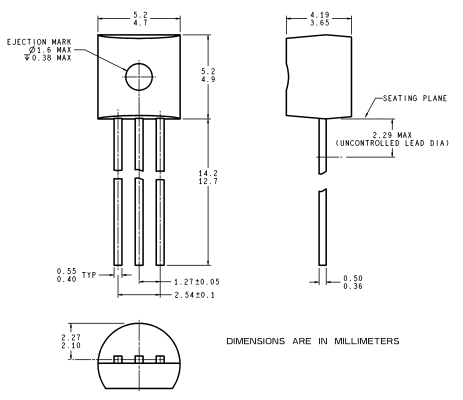
LM334Z Manufacturer
STMicroelectronics is a global independent semiconductor company and is a leader in developing and delivering semiconductor solutions across the spectrum of microelectronics applications. An unrivaled combination of silicon and system expertise, manufacturing strength, Intellectual Property (IP) portfolio and strategic partners positions the Company at the forefront of System-on-Chip (SoC) technology and its products play a key role in enabling today's convergence trends.
Trend Analysis
Datasheet PDF
- Datasheets :
1.How to connect LM334 when used as a temperature sensor?
The connection only needs to connect a resistor between the R terminal and the -VIN terminal, and the voltage is DC. A few hundred ohms of resistance Rset is almost the same.
2.What IC can measure the resistance value and convert it into a digital signal to be read by the single-chip microcomputer?
There are many ways to measure resistance:
Constant current source: Some chips such as LM334 itself are a constant current source. Let a constant current flow through the measured resistance, and then use AD to measure the voltage (when the voltage is too small, use a proportional amplifier circuit composed of an operational amplifier to amplify it), and send it to the single-chip microcomputer for analysis.
3.I now need to make a constant current source power supply circuit for the sensor. The system voltage is 5V, the sensor's internal resistance is 4.5K and 3.6K, and the constant current is 0.6mA or 0.8mA. Is LM334Z OK?
LM334 doesn't work, its current is 10mA. You can use TL317CLP to realize the constant current function.
 ADM2587EBRWZ Transceiver, RS-422/RS-485 20-SOIC, Signal and Power Isolated
09 February 20222939
 4N36 Optocoupler: Datasheet, Pinout, 4N35 vs.4N36 vs.4N37
25 October 20213568
 LM74700QDBVRQ1 Diode Controller: 12V, Pinout, Datasheet
07 March 20222725
 LM339AN: Comparator, Pinout, 36V
17 March 20223679
 STM32F411RET6 Microcontrollers: Pinout, Features and Application
13 July 20215377
 Intel EP1K30TI144-2N FPGA: Features, Pricing, and Selection Guide
07 June 202590
 LF353D Operational amplifier: Feature, Specification, and Datasheet
21 June 20212305
 TL072CP Operational Amplifier: Datasheet, Functional Block Diagram, and Pinout
16 July 20219592
 Robotics and Semiconductor Industries Face Challenges and Opportunities
09 September 20232165
 How to read Resistors Color Code?
16 October 202522579
 Detecting Wafer Patterns using Semi-Supervised Learning
21 October 20221207
 What Sensors are Used in Industrial Robots?
09 November 20215867
 Comprehensive Guide to Xilinx SoC Boards and Tools
04 June 2025456
 The Historical Milestones of Coaxial Cable Development
19 July 20251721
 Understanding Photodiodes: Working Principles and Applications - Part 2
24 May 20244057
 Core Components behind Smart Glasses
28 June 20239847
STMicroelectronics
In Stock: 5050
United States
China
Canada
Japan
Russia
Germany
United Kingdom
Singapore
Italy
Hong Kong(China)
Taiwan(China)
France
Korea
Mexico
Netherlands
Malaysia
Austria
Spain
Switzerland
Poland
Thailand
Vietnam
India
United Arab Emirates
Afghanistan
Åland Islands
Albania
Algeria
American Samoa
Andorra
Angola
Anguilla
Antigua & Barbuda
Argentina
Armenia
Aruba
Australia
Azerbaijan
Bahamas
Bahrain
Bangladesh
Barbados
Belarus
Belgium
Belize
Benin
Bermuda
Bhutan
Bolivia
Bonaire, Sint Eustatius and Saba
Bosnia & Herzegovina
Botswana
Brazil
British Indian Ocean Territory
British Virgin Islands
Brunei
Bulgaria
Burkina Faso
Burundi
Cabo Verde
Cambodia
Cameroon
Cayman Islands
Central African Republic
Chad
Chile
Christmas Island
Cocos (Keeling) Islands
Colombia
Comoros
Congo
Congo (DRC)
Cook Islands
Costa Rica
Côte d’Ivoire
Croatia
Cuba
Curaçao
Cyprus
Czechia
Denmark
Djibouti
Dominica
Dominican Republic
Ecuador
Egypt
El Salvador
Equatorial Guinea
Eritrea
Estonia
Eswatini
Ethiopia
Falkland Islands
Faroe Islands
Fiji
Finland
French Guiana
French Polynesia
Gabon
Gambia
Georgia
Ghana
Gibraltar
Greece
Greenland
Grenada
Guadeloupe
Guam
Guatemala
Guernsey
Guinea
Guinea-Bissau
Guyana
Haiti
Honduras
Hungary
Iceland
Indonesia
Iran
Iraq
Ireland
Isle of Man
Israel
Jamaica
Jersey
Jordan
Kazakhstan
Kenya
Kiribati
Kosovo
Kuwait
Kyrgyzstan
Laos
Latvia
Lebanon
Lesotho
Liberia
Libya
Liechtenstein
Lithuania
Luxembourg
Macao(China)
Madagascar
Malawi
Maldives
Mali
Malta
Marshall Islands
Martinique
Mauritania
Mauritius
Mayotte
Micronesia
Moldova
Monaco
Mongolia
Montenegro
Montserrat
Morocco
Mozambique
Myanmar
Namibia
Nauru
Nepal
New Caledonia
New Zealand
Nicaragua
Niger
Nigeria
Niue
Norfolk Island
North Korea
North Macedonia
Northern Mariana Islands
Norway
Oman
Pakistan
Palau
Palestinian Authority
Panama
Papua New Guinea
Paraguay
Peru
Philippines
Pitcairn Islands
Portugal
Puerto Rico
Qatar
Réunion
Romania
Rwanda
Samoa
San Marino
São Tomé & Príncipe
Saudi Arabia
Senegal
Serbia
Seychelles
Sierra Leone
Sint Maarten
Slovakia
Slovenia
Solomon Islands
Somalia
South Africa
South Sudan
Sri Lanka
St Helena, Ascension, Tristan da Cunha
St. Barthélemy
St. Kitts & Nevis
St. Lucia
St. Martin
St. Pierre & Miquelon
St. Vincent & Grenadines
Sudan
Suriname
Svalbard & Jan Mayen
Sweden
Syria
Tajikistan
Tanzania
Timor-Leste
Togo
Tokelau
Tonga
Trinidad & Tobago
Tunisia
Turkey
Turkmenistan
Turks & Caicos Islands
Tuvalu
U.S. Outlying Islands
U.S. Virgin Islands
Uganda
Ukraine
Uruguay
Uzbekistan
Vanuatu
Vatican City
Venezuela
Wallis & Futuna
Yemen
Zambia
Zimbabwe
![STEF01FTR]() STEF01FTR
STEF01FTRSTMicroelectronics
![LM234DT]() LM234DT
LM234DTSTMicroelectronics
![LM334DT]() LM334DT
LM334DTSTMicroelectronics
![STEF05PUR]() STEF05PUR
STEF05PURSTMicroelectronics
![LM334D]() LM334D
LM334DSTMicroelectronics
![STEF12PUR]() STEF12PUR
STEF12PURSTMicroelectronics
![STEF033APUR]() STEF033APUR
STEF033APURSTMicroelectronics
![STEF033PUR]() STEF033PUR
STEF033PURSTMicroelectronics
![STEF05DPUR]() STEF05DPUR
STEF05DPURSTMicroelectronics
![STEF12EPUR]() STEF12EPUR
STEF12EPURSTMicroelectronics


