

 Product
 Brand
Brand Articles
 Tools
Tools
Mastering the UA748 Op Amp: Customized Performance via External Compensation

30mA per Channel 25nA 80 dB Instrumentational OP Amps ±5V~20V UA748 8-DIP (0.300, 7.62mm)


30mA per Channel 25nA 80 dB Instrumentational OP Amps ±5V~20V UA748 8-DIP (0.300, 7.62mm)
Explore the UA748 Operational Amplifier. Features external frequency compensation for precision designs. View specs, pinout, and equivalents. Buy or design now!
- Executive Summary: What is the UA748?
- 1. Technical Specifications & Performance Analysis
- 2. Pinout, Package, and Configuration
- 3. Design & Integration Guide (For Engineers & Makers)
- 4. Typical Applications & Use Cases
- 5. Alternatives and Cross-Reference Guide
- 6. Frequently Asked Questions (FAQ)
- 7. Resources
- Specifications
- Datasheet PDF
Executive Summary: What is the UA748?
The UA748 is a precision single operational amplifier designed for applications requiring high performance and customized frequency compensation. Unlike its cousin, the UA741, which is internally compensated, the UA748 allows engineers to tailor the bandwidth and slew rate by choosing an external capacitor.
Market Position: A legacy precision component often used where standard internally compensated op amps lack the necessary frequency response flexibility.
Top Features: External frequency compensation (30pF), short-circuit protection, and offset voltage nulling capability.
Primary Audience: Ideal for analog design engineers, procurement specialists maintaining legacy industrial equipment, and advanced hobbyists working on precision filters.
Supply Status: Generally active but considered a legacy part; recommended for maintenance or specialized analog designs rather than high-volume new consumer products.
1. Technical Specifications & Performance Analysis
The UA748 stands out in the analog world due to its "uncompensated" nature, providing a level of design freedom that modern "one-size-fits-all" chips often lack.
1.1 Core Architecture (Analog Logic)
The UA748 utilizes a bipolar transistor architecture. The primary reason for choosing this architecture is its high gain and robustness. Because the compensation is external, the "Brain" of this op amp doesn't have a fixed roll-off point, allowing for much higher speeds or higher stability depending on the capacitor value connected between pins 1 and 8.
1.2 Key Electrical Characteristics
For procurement managers and engineers, these numbers define the component's boundaries:
Supply Voltage: Extremely versatile, operating from ±5V to ±22V.
Input Offset Voltage: Maximum of 6 mV, allowing for relatively high precision in DC applications.
Slew Rate: Typically 0.5 V/µs at unity gain with a 30pF capacitor.
Gain Bandwidth Product (GBW): 1 MHz, suitable for audio and low-frequency signal processing.
Power Consumption: Low draw of 1.8 mA (typical) and approximately 50mW at ±15V.
1.3 Interfaces and Connectivity
As an analog component, the UA748 interfaces via standard pins. It features high-impedance differential inputs and a low-impedance output capable of driving standard loads without latch-up.
2. Pinout, Package, and Configuration
Understanding the physical layout is critical for PCB design and drop-in replacement verification.
2.1 Pin Configuration Guide
The UA748 typically comes in an 8-pin configuration (DIP-8 or SO-8).
Pin 1 & 8: Frequency Compensation (Connect capacitor here).
Pin 2: Inverting Input (-).
Pin 3: Non-inverting Input (+).
Pin 4: V- (Negative Supply).
Pin 5: Offset Null (Used with a potentiometer to zero the output).
Pin 6: Output.
Pin 7: V+ (Positive Supply).
2.2 Naming Convention & Ordering Codes
STMicroelectronics and other manufacturers use suffixes to denote temperature grade and package:
UA748CN: Commercial temperature range (0°C to +70°C) in a Plastic DIP package.
UA748CD: Commercial temperature range in a SO-8 surface mount package.
2.3 Available Packages
| Package Type | Dimensions | Common Use Case |
|---|---|---|
| DIP-8 | 9.27mm x 6.35mm | Prototyping, Breadboards, Through-hole PCBs |
| SO-8 | 4.9mm x 3.9mm | Space-constrained modern SMT production |
Note: DIP packages are "Hand-soldering friendly," while SO-8 is intended for "Machine assembly only."
3. Design & Integration Guide (For Engineers & Makers)
Pro Tip: Always verify pin compatibility before migrating from older series. While the UA748 is pin-compatible with the LM101A, it is NOT a drop-in replacement for the UA741 without adding the compensation capacitor.
3.1 Hardware Implementation
Bypass Capacitors: To prevent power supply noise from affecting performance, place 0.1µF ceramic capacitors as close to Pins 4 and 7 as possible.
PCB Layout: Keep the traces to Pins 1 and 8 (compensation) as short as possible to avoid picking up stray capacitance, which can lead to unpredictable frequency response.
Thermal Management: With a power dissipation of only 50mW, the UA748 rarely requires a heatsink under standard operating conditions.
3.2 Common Design Challenges
Issue: Oscillation Risk. The UA748 lacks internal compensation; it is prone to oscillation if the external capacitor is omitted.
Fix: Connect a 30pF capacitor between pins 1 and 8 for unity gain stability. For higher gain applications, this value can sometimes be reduced to increase bandwidth.
Issue: PCB Real Estate. Requires external passives for stability.
Fix: If board space is at a premium and you don't need custom bandwidth, consider switching to the UA741.
4. Typical Applications & Use Cases
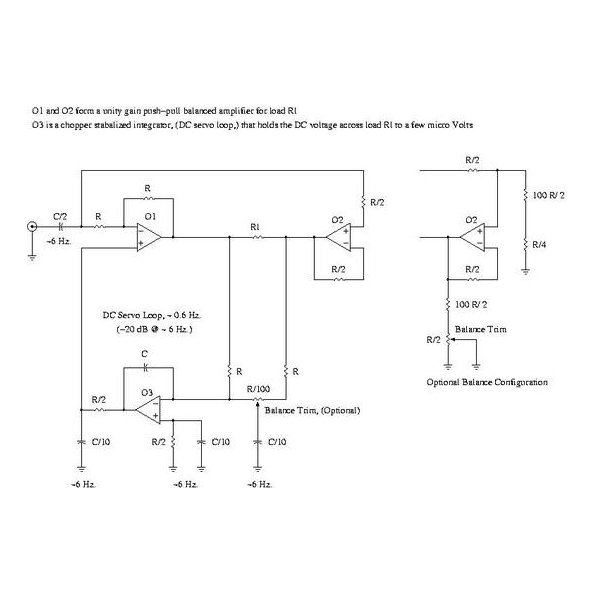
4.1 Real-World Example: Precision Integrator
The UA748 is frequently used in Integrators and Differentiators. Because you can control the frequency response, you can tune the integrator to avoid high-frequency noise saturation that would plague an internally compensated op amp.
Other common uses include:
Summing Amplifiers: Mixing multiple audio signals with low distortion.
Voltage Followers: Providing high input impedance for sensor buffering.
Narrow-band Filters: Tailoring the Q-factor using external components.
5. Alternatives and Cross-Reference Guide
If the UA748 is unavailable or if you are looking to modernize your Bill of Materials (BOM), consider these options:
Direct Replacements: LM101A or LM301. These share the same architecture and require the same external compensation.
Ease of Use Upgrade: UA741. This is the internally compensated version. It is easier to use but offers less flexibility for high-speed tuning.
Modern Performance: Texas Instruments OPA171 or Analog Devices OP07. These offer much lower offset voltages and better noise performance for modern precision instrumentation.
Cost-Effective Option: TL071. A JFET-input op amp that is very inexpensive and offers higher slew rates for audio applications.
6. Frequently Asked Questions (FAQ)
Q: What is the difference between UA748 and UA741?
A: The UA741 is internally compensated (easier to use, fixed speed), while the UA748 requires an external capacitor (harder to use, customizable speed).
Q: Can UA748 be used in Automotive applications?
A: Generally no. The standard UA748 is rated for 0°C to +70°C. Automotive environments usually require -40°C to +125°C.
Q: Where can I find the UA748 datasheet and library files?
A: Datasheets are available on the STMicroelectronics website. CAD symbols are found in standard libraries like Altium, Eagle, and KiCad under "Linear" or "Op Amps."
Q: Is UA748 suitable for battery-operated devices?
A: It is moderately suitable due to its 1.8mA current draw, but modern "Micropower" op amps are much more efficient for long-term battery use.
7. Resources
Development Tools: Analog Discovery 2 for circuit characterization.
Simulation Software: LTSpice or PSpice (UA748 models are widely available).
Datasheet Link: [Refer to STMicroelectronics official documentation]
Specifications
Datasheet PDF
- Datasheets :
![STM32F103RBT6 Microcontrollers: Features, Pinout, and Datasheet [Video&FAQ]](https://res.utmel.com/Images/Article/1cf82436-0d62-4a06-bc8a-c071fc2b7c53.png) STM32F103RBT6 Microcontrollers: Features, Pinout, and Datasheet [Video&FAQ]
STM32F103RBT6 Microcontrollers: Features, Pinout, and Datasheet [Video&FAQ]08 October 202114409
 Unveiling the Atmel SAM D21E / SAM D21G / SAM D21J Microcontroller
28 February 2024468
 TL072 JFET: Datasheet, Equivalent and Diagram
29 April 202211620
 Never Struggle Again With Microchip PG164140 Issues
16 August 2025201
![How to use TMC2130 Motor Driver IC? [FAQ]](https://res.utmel.com/Images/Article/38cad43a-2bc8-484d-bd1a-a156efda70fb.png) How to use TMC2130 Motor Driver IC? [FAQ]
How to use TMC2130 Motor Driver IC? [FAQ]05 May 20222908
 AD9850 DDS Synthesizer: Pinout, Schematic and Datasheet
20 July 20215553
 2N4401 vs 2N2222: Are They Interchangeable?
24 February 20227108
 AD5245 Digital Potentiometer: Specs, Application Fit, and I2C Design Cautions
23 April 2026330
 What is Optical Module?
08 December 20217391
 Working and Types of Touch Screen
20 March 20216417
 Four Proximity Sensors PK, Who can Win?
08 April 20222412
 Always charge the battery to 100%? Stop it!
15 October 20214655
 Three Phase Inverter - 180 Degree Conduction Mode
05 October 202321355
 2 Semiconductor Stocks to Buy Hand Over Fist in 2024 and 1 to Avoid Like the Plague
18 December 20234414
 Analog-to-Digital Converters (ADCs): Decrypting Resolutions and Sampling Rates
24 February 20225528
 Filter Circuit: Types, Characteristics and Principles
01 December 20219822
STMicroelectronics
In Stock
United States
China
Canada
Japan
Russia
Germany
United Kingdom
Singapore
Italy
Hong Kong(China)
Taiwan(China)
France
Korea
Mexico
Netherlands
Malaysia
Austria
Spain
Switzerland
Poland
Thailand
Vietnam
India
United Arab Emirates
Afghanistan
Åland Islands
Albania
Algeria
American Samoa
Andorra
Angola
Anguilla
Antigua & Barbuda
Argentina
Armenia
Aruba
Australia
Azerbaijan
Bahamas
Bahrain
Bangladesh
Barbados
Belarus
Belgium
Belize
Benin
Bermuda
Bhutan
Bolivia
Bonaire, Sint Eustatius and Saba
Bosnia & Herzegovina
Botswana
Brazil
British Indian Ocean Territory
British Virgin Islands
Brunei
Bulgaria
Burkina Faso
Burundi
Cabo Verde
Cambodia
Cameroon
Cayman Islands
Central African Republic
Chad
Chile
Christmas Island
Cocos (Keeling) Islands
Colombia
Comoros
Congo
Congo (DRC)
Cook Islands
Costa Rica
Côte d’Ivoire
Croatia
Cuba
Curaçao
Cyprus
Czechia
Denmark
Djibouti
Dominica
Dominican Republic
Ecuador
Egypt
El Salvador
Equatorial Guinea
Eritrea
Estonia
Eswatini
Ethiopia
Falkland Islands
Faroe Islands
Fiji
Finland
French Guiana
French Polynesia
Gabon
Gambia
Georgia
Ghana
Gibraltar
Greece
Greenland
Grenada
Guadeloupe
Guam
Guatemala
Guernsey
Guinea
Guinea-Bissau
Guyana
Haiti
Honduras
Hungary
Iceland
Indonesia
Iran
Iraq
Ireland
Isle of Man
Israel
Jamaica
Jersey
Jordan
Kazakhstan
Kenya
Kiribati
Kosovo
Kuwait
Kyrgyzstan
Laos
Latvia
Lebanon
Lesotho
Liberia
Libya
Liechtenstein
Lithuania
Luxembourg
Macao(China)
Madagascar
Malawi
Maldives
Mali
Malta
Marshall Islands
Martinique
Mauritania
Mauritius
Mayotte
Micronesia
Moldova
Monaco
Mongolia
Montenegro
Montserrat
Morocco
Mozambique
Myanmar
Namibia
Nauru
Nepal
New Caledonia
New Zealand
Nicaragua
Niger
Nigeria
Niue
Norfolk Island
North Korea
North Macedonia
Northern Mariana Islands
Norway
Oman
Pakistan
Palau
Palestinian Authority
Panama
Papua New Guinea
Paraguay
Peru
Philippines
Pitcairn Islands
Portugal
Puerto Rico
Qatar
Réunion
Romania
Rwanda
Samoa
San Marino
São Tomé & Príncipe
Saudi Arabia
Senegal
Serbia
Seychelles
Sierra Leone
Sint Maarten
Slovakia
Slovenia
Solomon Islands
Somalia
South Africa
South Sudan
Sri Lanka
St Helena, Ascension, Tristan da Cunha
St. Barthélemy
St. Kitts & Nevis
St. Lucia
St. Martin
St. Pierre & Miquelon
St. Vincent & Grenadines
Sudan
Suriname
Svalbard & Jan Mayen
Sweden
Syria
Tajikistan
Tanzania
Timor-Leste
Togo
Tokelau
Tonga
Trinidad & Tobago
Tunisia
Turkey
Turkmenistan
Turks & Caicos Islands
Tuvalu
U.S. Outlying Islands
U.S. Virgin Islands
Uganda
Ukraine
Uruguay
Uzbekistan
Vanuatu
Vatican City
Venezuela
Wallis & Futuna
Yemen
Zambia
Zimbabwe


