

 Product
 Brand
Brand Articles
 Tools
Tools
BSH103 N-Chanel MOSFET: MOS Transistor, 30V, Datasheet and Pinout

N-Channel Tape & Reel (TR) 400m Ω @ 500mA, 4.5V ±8V 83pF @ 24V 2.1nC @ 4.5V TO-236-3, SC-59, SOT-23-3


N-Channel Tape & Reel (TR) 400m Ω @ 500mA, 4.5V ±8V 83pF @ 24V 2.1nC @ 4.5V TO-236-3, SC-59, SOT-23-3
BSH103 is an N-channel enhancement mode MOS transistor in a SOT23 SMD package. This post will unlock its datasheet, Pinout, application and more details about BSH103.
BSH103 Pinout
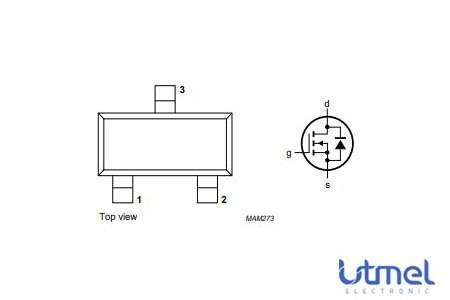
BSH103 Pinout
| Pin | Symbol | Name |
| 1 | G | GATE |
| 2 | S | SOURCE |
| 3 | D | DRAIN |
BSH103 CAD Model
Symbol
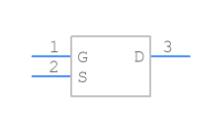
BSH103 Symbol
Footprint
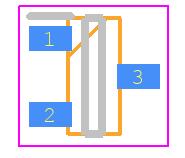
BSH103 Footprint
3D Model
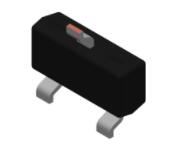
BSH103 3D Model
BSH103 Description
NXP's BSH103 is a TrenchMOS -based surface mount N channel enhancement mode MOS transistor in the SOT-23 package. This transistor has an extremely low threshold, high switching speed, no secondary breakdown, and a direct CMOS, TTL interface. BSH103 is intended for use in high-frequency applications, as a glue logic bridge between logic blocks or peripherals, in computing, and in battery-powered applications.
BSH103 Feature
Suitable for use with all 5V logic families
Suitable for very low gate drive sources
Drain to source voltage (Vds) of 30V
Gate to source voltage of ±8V
Drain current (Id) of 850mA
Power dissipation (Pd) of 750mW
Operating junction temperature range from -55 °C to 150 °C
BSH103 Application
Power Management
Consumer Electronics
Portable Devices
Industrial
BSH103 Alternatives
The alternative for BSH103:
BSH103 Test Circuit
The following circuit shows the BSH103 test circuit:
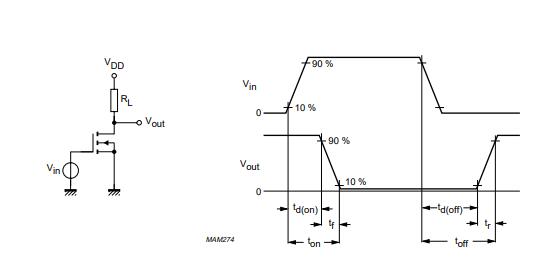
BSH103 Test Circuit
Specifications
- TypeParameter
- Factory Lead Time4 Weeks
- Contact Plating
Contact plating (finish) provides corrosion protection for base metals and optimizes the mechanical and electrical properties of the contact interfaces.
Tin - Mounting Type
The "Mounting Type" in electronic components refers to the method used to attach or connect a component to a circuit board or other substrate, such as through-hole, surface-mount, or panel mount.
Surface Mount - Package / Case
refers to the protective housing that encases an electronic component, providing mechanical support, electrical connections, and thermal management.
TO-236-3, SC-59, SOT-23-3 - Surface Mount
having leads that are designed to be soldered on the side of a circuit board that the body of the component is mounted on.
YES - Number of Pins3
- Transistor Element Material
The "Transistor Element Material" parameter in electronic components refers to the material used to construct the transistor within the component. Transistors are semiconductor devices that amplify or switch electronic signals and are a fundamental building block in electronic circuits. The material used for the transistor element can significantly impact the performance and characteristics of the component. Common materials used for transistor elements include silicon, germanium, and gallium arsenide, each with its own unique properties and suitability for different applications. The choice of transistor element material is crucial in designing electronic components to meet specific performance requirements such as speed, power efficiency, and temperature tolerance.
SILICON - Current - Continuous Drain (Id) @ 25℃850mA Ta
- Drive Voltage (Max Rds On, Min Rds On)2.5V
- Number of Elements1
- Power Dissipation (Max)540mW Ta
- Turn Off Delay Time
It is the time from when Vgs drops below 90% of the gate drive voltage to when the drain current drops below 90% of the load current. It is the delay before current starts to transition in the load, and depends on Rg. Ciss.
20 ns - Operating Temperature
The operating temperature is the range of ambient temperature within which a power supply, or any other electrical equipment, operate in. This ranges from a minimum operating temperature, to a peak or maximum operating temperature, outside which, the power supply may fail.
-55°C~150°C TJ - Packaging
Semiconductor package is a carrier / shell used to contain and cover one or more semiconductor components or integrated circuits. The material of the shell can be metal, plastic, glass or ceramic.
Tape & Reel (TR) - Published1998
- JESD-609 Code
The "JESD-609 Code" in electronic components refers to a standardized marking code that indicates the lead-free solder composition and finish of electronic components for compliance with environmental regulations.
e3 - Part Status
Parts can have many statuses as they progress through the configuration, analysis, review, and approval stages.
Active - Moisture Sensitivity Level (MSL)
Moisture Sensitivity Level (MSL) is a standardized rating that indicates the susceptibility of electronic components, particularly semiconductors, to moisture-induced damage during storage and the soldering process, defining the allowable exposure time to ambient conditions before they require special handling or baking to prevent failures
1 (Unlimited) - Number of Terminations3
- ECCN Code
An ECCN (Export Control Classification Number) is an alphanumeric code used by the U.S. Bureau of Industry and Security to identify and categorize electronic components and other dual-use items that may require an export license based on their technical characteristics and potential for military use.
EAR99 - HTS Code
HTS (Harmonized Tariff Schedule) codes are product classification codes between 8-1 digits. The first six digits are an HS code, and the countries of import assign the subsequent digits to provide additional classification. U.S. HTS codes are 1 digits and are administered by the U.S. International Trade Commission.
8541.21.00.75 - Terminal Position
In electronic components, the term "Terminal Position" refers to the physical location of the connection points on the component where external electrical connections can be made. These connection points, known as terminals, are typically used to attach wires, leads, or other components to the main body of the electronic component. The terminal position is important for ensuring proper connectivity and functionality of the component within a circuit. It is often specified in technical datasheets or component specifications to help designers and engineers understand how to properly integrate the component into their circuit designs.
DUAL - Terminal Form
Occurring at or forming the end of a series, succession, or the like; closing; concluding.
GULL WING - Peak Reflow Temperature (Cel)
Peak Reflow Temperature (Cel) is a parameter that specifies the maximum temperature at which an electronic component can be exposed during the reflow soldering process. Reflow soldering is a common method used to attach electronic components to a circuit board. The Peak Reflow Temperature is crucial because it ensures that the component is not damaged or degraded during the soldering process. Exceeding the specified Peak Reflow Temperature can lead to issues such as component failure, reduced performance, or even permanent damage to the component. It is important for manufacturers and assemblers to adhere to the recommended Peak Reflow Temperature to ensure the reliability and functionality of the electronic components.
260 - Time@Peak Reflow Temperature-Max (s)
Time@Peak Reflow Temperature-Max (s) refers to the maximum duration that an electronic component can be exposed to the peak reflow temperature during the soldering process, which is crucial for ensuring reliable solder joint formation without damaging the component.
30 - Pin Count
a count of all of the component leads (or pins)
3 - Element Configuration
The distribution of electrons of an atom or molecule (or other physical structure) in atomic or molecular orbitals.
Single - Operating Mode
A phase of operation during the operation and maintenance stages of the life cycle of a facility.
ENHANCEMENT MODE - Power Dissipation
the process by which an electronic or electrical device produces heat (energy loss or waste) as an undesirable derivative of its primary action.
500mW - Turn On Delay Time
Turn-on delay, td(on), is the time taken to charge the input capacitance of the device before drain current conduction can start.
2.5 ns - FET Type
"FET Type" refers to the type of Field-Effect Transistor (FET) being used in an electronic component. FETs are three-terminal semiconductor devices that can be classified into different types based on their construction and operation. The main types of FETs include Metal-Oxide-Semiconductor FETs (MOSFETs), Junction FETs (JFETs), and Insulated-Gate Bipolar Transistors (IGBTs).Each type of FET has its own unique characteristics and applications. MOSFETs are commonly used in digital circuits due to their high input impedance and low power consumption. JFETs are often used in low-noise amplifiers and switching circuits. IGBTs combine the high input impedance of MOSFETs with the high current-carrying capability of bipolar transistors, making them suitable for high-power applications like motor control and power inverters.When selecting an electronic component, understanding the FET type is crucial as it determines the device's performance and suitability for a specific application. It is important to consider factors such as voltage ratings, current handling capabilities, switching speeds, and power dissipation when choosing the right FET type for a particular circuit design.
N-Channel - Transistor Application
In the context of electronic components, the parameter "Transistor Application" refers to the specific purpose or function for which a transistor is designed and used. Transistors are semiconductor devices that can amplify or switch electronic signals and are commonly used in various electronic circuits. The application of a transistor can vary widely depending on its design and characteristics, such as whether it is intended for audio amplification, digital logic, power control, or radio frequency applications. Understanding the transistor application is important for selecting the right type of transistor for a particular circuit or system to ensure optimal performance and functionality.
SWITCHING - Rds On (Max) @ Id, Vgs
Rds On (Max) @ Id, Vgs refers to the maximum on-resistance of a MOSFET or similar transistor when it is fully turned on or in the saturation region. It is specified at a given drain current (Id) and gate-source voltage (Vgs). This parameter indicates how much resistance the component will offer when conducting, impacting power loss and efficiency in a circuit. Lower Rds On values are preferred for better performance in switching applications.
400m Ω @ 500mA, 4.5V - Vgs(th) (Max) @ Id
The parameter "Vgs(th) (Max) @ Id" in electronic components refers to the maximum gate-source threshold voltage at a specified drain current (Id). This parameter is commonly found in field-effect transistors (FETs) and is used to define the minimum voltage required at the gate terminal to turn on the transistor and allow current to flow from the drain to the source. The maximum value indicates the upper limit of this threshold voltage under specified operating conditions. It is an important parameter for determining the proper biasing and operating conditions of the FET in a circuit to ensure proper functionality and performance.
400mV @ 1mA (Min) - Input Capacitance (Ciss) (Max) @ Vds
The parameter "Input Capacitance (Ciss) (Max) @ Vds" in electronic components refers to the maximum input capacitance measured at a specific drain-source voltage (Vds). Input capacitance is a crucial parameter in field-effect transistors (FETs) and power MOSFETs, as it represents the total capacitance at the input terminal of the device. This capacitance affects the device's switching speed and overall performance, as it influences the time required for charging and discharging during operation. Manufacturers provide this parameter to help designers understand the device's input characteristics and make informed decisions when integrating it into a circuit.
83pF @ 24V - Gate Charge (Qg) (Max) @ Vgs
Gate Charge (Qg) (Max) @ Vgs refers to the maximum amount of charge that must be supplied to the gate of a MOSFET or similar device to fully turn it on, measured at a specific gate-source voltage (Vgs). This parameter is crucial for understanding the switching characteristics of the device, as it influences the speed at which the gate can charge and discharge. A higher gate charge value often implies slower switching speeds, which can impact the efficiency of high-frequency applications. This parameter is typically specified in nanocoulombs (nC) in the component's datasheet.
2.1nC @ 4.5V - Rise Time
In electronics, when describing a voltage or current step function, rise time is the time taken by a signal to change from a specified low value to a specified high value.
3.5ns - Vgs (Max)
Vgs (Max) refers to the maximum gate-source voltage that can be applied to a field-effect transistor (FET) without causing damage to the component. This parameter is crucial in determining the safe operating limits of the FET and helps prevent overvoltage conditions that could lead to device failure. Exceeding the specified Vgs (Max) rating can result in breakdown of the gate oxide layer, leading to permanent damage to the FET. Designers must ensure that the applied gate-source voltage does not exceed the maximum rating to ensure reliable and long-term operation of the electronic component.
±8V - Fall Time (Typ)
Fall Time (Typ) is a parameter used to describe the time it takes for a signal to transition from a high level to a low level in an electronic component, such as a transistor or an integrated circuit. It is typically measured in nanoseconds or microseconds and is an important characteristic that affects the performance of the component in digital circuits. A shorter fall time indicates faster switching speeds and can result in improved overall circuit performance, such as reduced power consumption and increased data transmission rates. Designers often consider the fall time specification when selecting components for their circuits to ensure proper functionality and efficiency.
3.5 ns - Continuous Drain Current (ID)
Continuous Drain Current (ID) is a key parameter in electronic components, particularly in field-effect transistors (FETs) such as MOSFETs. It refers to the maximum current that can flow continuously through the drain terminal of the FET without causing damage to the component. This parameter is crucial for determining the power handling capability of the FET and is specified by the manufacturer in the component's datasheet. Designers must ensure that the actual operating current does not exceed the specified Continuous Drain Current to prevent overheating and potential failure of the component.
850mA - Gate to Source Voltage (Vgs)
The Gate to Source Voltage (Vgs) is a crucial parameter in electronic components, particularly in field-effect transistors (FETs) such as MOSFETs. It refers to the voltage difference between the gate and source terminals of the FET. This voltage determines the conductivity of the FET and controls the flow of current through the device. By varying the Vgs, the FET can be switched on or off, allowing for precise control of electronic circuits. Understanding and properly managing the Vgs is essential for ensuring the reliable and efficient operation of FET-based circuits.
8V - Max Dual Supply Voltage
A Dual power supply is a regular direct current power supply. It can provide a positive as well as negative voltage. It ensures stable power supply to the device as well as it helps to prevent system damage.
30V - Drain Current-Max (Abs) (ID)
The parameter "Drain Current-Max (Abs) (ID)" in electronic components refers to the maximum current that can flow from the drain to the source terminal of a field-effect transistor (FET) or a similar device. It is a crucial specification that indicates the maximum current handling capability of the component before it reaches its saturation point or gets damaged. This parameter is typically specified in amperes (A) and helps designers ensure that the component can safely handle the expected current levels in a circuit without exceeding its limits. It is important to consider this parameter when designing circuits to prevent overloading the component and ensure reliable operation.
0.85A - Drain-source On Resistance-Max
Drain-source On Resistance-Max, commonly referred to as RDS(on) max, is a specification for MOSFETs that indicates the maximum resistance between the drain and source terminals when the device is turned on. This parameter is critical for assessing the efficiency of a MOSFET in a circuit, as lower values result in reduced power loss and heat generation during operation. It is measured in ohms and is influenced by factors such as temperature and gate-to-source voltage. Understanding RDS(on) max is essential for optimizing performance in power management and switching applications.
0.5Ohm - Drain to Source Breakdown Voltage
Drain to Source Breakdown Voltage, often denoted as V(BR) D-S, is a critical parameter in electronic components, particularly in field-effect transistors (FETs) and metal-oxide-semiconductor FETs (MOSFETs). It represents the maximum voltage that can be applied between the drain and source terminals of the device without causing breakdown or permanent damage. Exceeding this voltage can lead to excessive current flow, resulting in thermal failure or destruction of the component. It is essential for ensuring reliable operation in circuit designs where high voltages may be encountered.
30V - Radiation Hardening
Radiation hardening is the process of making electronic components and circuits resistant to damage or malfunction caused by high levels of ionizing radiation, especially for environments in outer space (especially beyond the low Earth orbit), around nuclear reactors and particle accelerators, or during nuclear accidents or nuclear warfare.
No - RoHS Status
RoHS means “Restriction of Certain Hazardous Substances” in the “Hazardous Substances Directive” in electrical and electronic equipment.
ROHS3 Compliant
Parts with Similar Specs
- ImagePart NumberManufacturerPackage / CaseContinuous Drain Current (ID)Current - Continuous Drain (Id) @ 25°CGate to Source Voltage (Vgs)Power DissipationPower Dissipation-MaxRoHS StatusMoisture Sensitivity Level (MSL)View Compare
![BSH103,235]()
BSH103,235
TO-236-3, SC-59, SOT-23-3
850 mA
850mA (Ta)
8 V
500 mW
540mW (Ta)
ROHS3 Compliant
1 (Unlimited)
![PMN25EN,115]()
TO-236-3, SC-59, SOT-23-3
3.8 A
3.8A (Ta)
20 V
1.08 W
1.08W (Ta)
ROHS3 Compliant
1 (Unlimited)
![PMGD175XN,115]()
6-TSSOP, SC-88, SOT-363
-
900mA
-
-
-
ROHS3 Compliant
1 (Unlimited)
![DMP3098L-7]()
SC-74, SOT-457
-
6.2A (Ta)
-
-
540mW (Ta), 6.25W (Tc)
ROHS3 Compliant
1 (Unlimited)
![PMF250XN,115]()
SC-70, SOT-323
-
900mA (Ta)
-
-
275mW (Ta), 1.065W (Tc)
ROHS3 Compliant
1 (Unlimited)


BSH103 Package
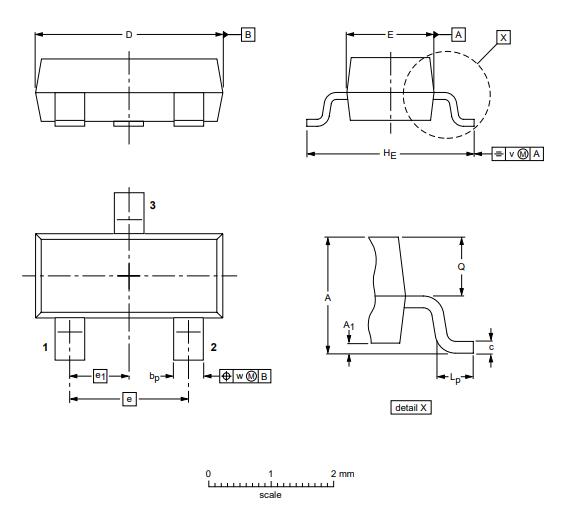
BSH103 Package
BSH103 Manufacturer
Nexperia is a dedicated global leader in Discretes, Logic and MOSFETs devices. This new company became independent at the beginning of 2017. Focused on efficiency, Nexperia produces consistently reliable semiconductor components at a high volume: 85 billion annually. The company’s extensive portfolio meets the stringent standards set by the Automotive industry. And industry-leading small packages, produced in their own manufacturing facilities, combine power and thermal efficiency with best-in-class quality levels. Built on over half a century of expertise, Nexperia has 11,000 employees across Asia, Europe and the U.S. supporting customers globally.
Datasheet PDF
- PCN Packaging :
- Datasheets :
- RohsStatement :
Trend Analysis
What is NXPs BSH103?
TrenchMOS -based surface mount N channel enhancement mode MOS transistor.
What is BSH103 intended for use in high-frequency applications?
Glue logic bridge.
What is basic MOS transistor?
A MOS transistor is primarily a switch for digital devices. ... Ideally, it works as follows: If the voltage at the gate electrode is "on", the transistor is "on", too, and current flow between the source and drain electrodes is possible (almost) without losses.
How does MOS transistor work?
It works by varying the width of a channel along which charge carriers flow (electrons or holes). The charge carriers enter the channel at the source and exit via the drain. The width of the channel is controlled by the voltage on an electrode is called a gate which is located between source and drain.
Is MOS and MOSFET same?
The name "metal–oxide–semiconductor" (MOS) typically refers to a metal gate, oxide insulation, and semiconductor (typically silicon). ... The MOS capacitor is also part of the MOSFET structure.
 AT89C51CC03: Enhanced 8-bit MCU with CAN Controller and Flash Memory
28 February 2024273
 MIC2560 PCMCIA Switch: Pinout, Equivalent and Datasheet
24 February 2022944
 ICL7660CPAZ Super Voltage Converter: Equivalents, Pinout, and Datasheet
16 August 20245587
 TPS54302DDCR: Synchronous Buck Converter, Pinout
25 February 20225445
 2SC2240 NPN Transistor: Datasheet pdf, Equivalent, and Pinout
18 November 20218242
 CD4013 Dual D Flip-Flop: Circuits, Flip Datasheet pdf and Equivalents
03 December 20218709
![TTP223 Capacitive Touch Switch, Touch Key Module[Video]](https://res.utmel.com/Images/Article/a6433cf5-b2b5-4ada-96ec-4ce62a6289bd.png) TTP223 Capacitive Touch Switch, Touch Key Module[Video]
TTP223 Capacitive Touch Switch, Touch Key Module[Video]21 April 20225325
 LTC6991IDCB#TRPBF Programmable Timer and Oscillator: A Versatile Timing Solution
06 March 2024337
 Electric Car Rechargeable Batteries: How Long Do They Last?
13 April 20234064
 Vision Capabilities Are at the Heart of AI's Evolutionary Possession of Intelligence
06 July 20222241
 Methodologies for Increasing Efficiency of Fuel Stack Technology for Energy Generation
19 November 20242894
 Voltage Supervisor ICs: Solutions for IoT, Automotive, and Industrial Applications
04 June 2025908
 General PCB Layout Design Guidelines for RF and Digital-to-Analog Circuits
20 January 202213462
 What are the Testing Method and Types of Transistors?
21 October 202514258
 Development Board History and Differences from Single Board Computers (SBCs)
16 May 20225931
 What is Inertial Measurement Unit (IMU)?
15 October 20258327
Nexperia USA Inc.
In Stock: 260000
United States
China
Canada
Japan
Russia
Germany
United Kingdom
Singapore
Italy
Hong Kong(China)
Taiwan(China)
France
Korea
Mexico
Netherlands
Malaysia
Austria
Spain
Switzerland
Poland
Thailand
Vietnam
India
United Arab Emirates
Afghanistan
Åland Islands
Albania
Algeria
American Samoa
Andorra
Angola
Anguilla
Antigua & Barbuda
Argentina
Armenia
Aruba
Australia
Azerbaijan
Bahamas
Bahrain
Bangladesh
Barbados
Belarus
Belgium
Belize
Benin
Bermuda
Bhutan
Bolivia
Bonaire, Sint Eustatius and Saba
Bosnia & Herzegovina
Botswana
Brazil
British Indian Ocean Territory
British Virgin Islands
Brunei
Bulgaria
Burkina Faso
Burundi
Cabo Verde
Cambodia
Cameroon
Cayman Islands
Central African Republic
Chad
Chile
Christmas Island
Cocos (Keeling) Islands
Colombia
Comoros
Congo
Congo (DRC)
Cook Islands
Costa Rica
Côte d’Ivoire
Croatia
Cuba
Curaçao
Cyprus
Czechia
Denmark
Djibouti
Dominica
Dominican Republic
Ecuador
Egypt
El Salvador
Equatorial Guinea
Eritrea
Estonia
Eswatini
Ethiopia
Falkland Islands
Faroe Islands
Fiji
Finland
French Guiana
French Polynesia
Gabon
Gambia
Georgia
Ghana
Gibraltar
Greece
Greenland
Grenada
Guadeloupe
Guam
Guatemala
Guernsey
Guinea
Guinea-Bissau
Guyana
Haiti
Honduras
Hungary
Iceland
Indonesia
Iran
Iraq
Ireland
Isle of Man
Israel
Jamaica
Jersey
Jordan
Kazakhstan
Kenya
Kiribati
Kosovo
Kuwait
Kyrgyzstan
Laos
Latvia
Lebanon
Lesotho
Liberia
Libya
Liechtenstein
Lithuania
Luxembourg
Macao(China)
Madagascar
Malawi
Maldives
Mali
Malta
Marshall Islands
Martinique
Mauritania
Mauritius
Mayotte
Micronesia
Moldova
Monaco
Mongolia
Montenegro
Montserrat
Morocco
Mozambique
Myanmar
Namibia
Nauru
Nepal
New Caledonia
New Zealand
Nicaragua
Niger
Nigeria
Niue
Norfolk Island
North Korea
North Macedonia
Northern Mariana Islands
Norway
Oman
Pakistan
Palau
Palestinian Authority
Panama
Papua New Guinea
Paraguay
Peru
Philippines
Pitcairn Islands
Portugal
Puerto Rico
Qatar
Réunion
Romania
Rwanda
Samoa
San Marino
São Tomé & Príncipe
Saudi Arabia
Senegal
Serbia
Seychelles
Sierra Leone
Sint Maarten
Slovakia
Slovenia
Solomon Islands
Somalia
South Africa
South Sudan
Sri Lanka
St Helena, Ascension, Tristan da Cunha
St. Barthélemy
St. Kitts & Nevis
St. Lucia
St. Martin
St. Pierre & Miquelon
St. Vincent & Grenadines
Sudan
Suriname
Svalbard & Jan Mayen
Sweden
Syria
Tajikistan
Tanzania
Timor-Leste
Togo
Tokelau
Tonga
Trinidad & Tobago
Tunisia
Turkey
Turkmenistan
Turks & Caicos Islands
Tuvalu
U.S. Outlying Islands
U.S. Virgin Islands
Uganda
Ukraine
Uruguay
Uzbekistan
Vanuatu
Vatican City
Venezuela
Wallis & Futuna
Yemen
Zambia
Zimbabwe
![2N7002,215]() 2N7002,215
2N7002,215Nexperia USA Inc.
![2N7002P,215]() 2N7002P,215
2N7002P,215Nexperia USA Inc.
![PMZ350UPEYL]() PMZ350UPEYL
PMZ350UPEYLNexperia USA Inc.
![PSMN4R8-100BSEJ]() PSMN4R8-100BSEJ
PSMN4R8-100BSEJNexperia USA Inc.
![BSS84,215]() BSS84,215
BSS84,215Nexperia USA Inc.
![BSS138AKAR]() BSS138AKAR
BSS138AKARNexperia USA Inc.
![BUK98150-55A/CUF]() BUK98150-55A/CUF
BUK98150-55A/CUFNexperia USA Inc.
![NX3008NBKW,115]() NX3008NBKW,115
NX3008NBKW,115Nexperia USA Inc.
![BSH205G2R]() BSH205G2R
BSH205G2RNexperia USA Inc.
![PMV40UN2R]() PMV40UN2R
PMV40UN2RNexperia USA Inc.


