

 Product
 Brand
Brand Articles
 Tools
Tools
HMC903 6-18 GHz Low Noise Amplifier: Datasheet and Performance Deep Dive


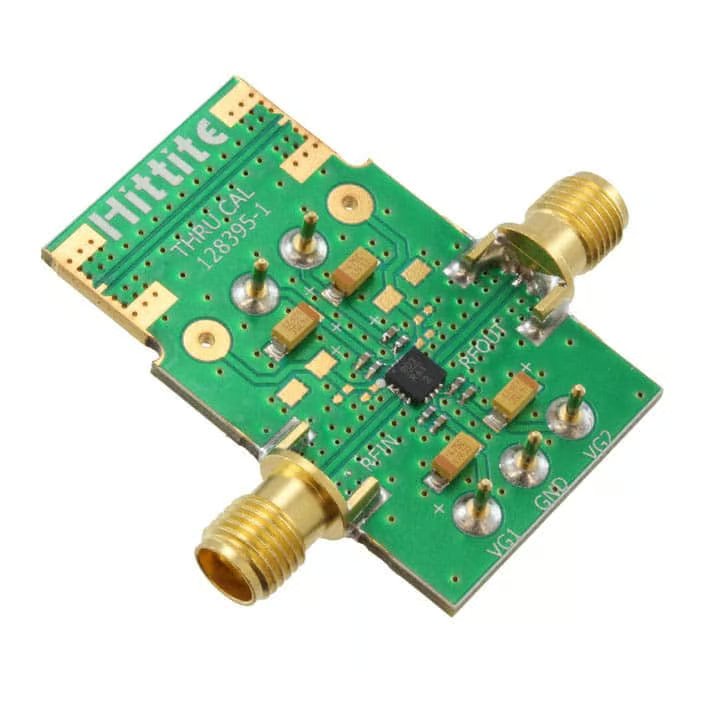
Amplifier Board(s) 6GHz~17GHz 3.5V HMC903 0 Pins PCB
Explore the HMC903 6-18GHz GaAs pHEMT Low Noise Amplifier by Analog Devices. Review specs, pinouts, and equivalents to optimize your next RF receiver design.
- Executive Summary: What is the HMC903?
- 1. Technical Specifications & Performance Analysis
- 2. Pinout, Package, and Configuration
- 3. Design & Integration Guide (For Engineers & Makers)
- 4. Typical Applications & Use Cases
- 5. Alternatives and Cross-Reference Guide
- 6. Frequently Asked Questions (FAQ)
- 7. Resources
- Specifications
- Parts with Similar Specs
- Datasheet PDF
Executive Summary: What is the HMC903?
The HMC903 is a gallium arsenide (GaAs), pseudomorphic high electron mobility transistor (pHEMT), monolithic microwave integrated circuit (MMIC), low noise amplifier (LNA) designed specifically for operation between 6 GHz and 18 GHz. By providing exceptional broadband performance with minimal noise, it serves as a critical frontend component for high-frequency receivers, ensuring weak signals are amplified without introducing significant distortion or interference.
Market Position: High-performance, broadband RF component tailored for specialized industrial, aerospace, and defense applications.
Top Features: 6 GHz to 18 GHz frequency range, an ultra-low 1.6 dB typical noise figure, and 19 dB typical small signal gain.
Primary Audience: RF design engineers, military/space communications developers, and instrumentation hardware architects.
Supply Status: Active (Always verify the latest lifecycle status via the official HMC903 datasheet before finalizing your Bill of Materials).
1. Technical Specifications & Performance Analysis
When evaluating the HMC903 for a receiver frontend, understanding the balance between noise figure, gain, and power consumption is crucial for both engineering feasibility and price vs performance metrics.
1.1 Core Architecture (CPU/Logic/Power)
The core of the HMC903 relies on advanced GaAs pHEMT technology. This architecture is specifically chosen for high-frequency microwave applications because it offers significantly higher electron mobility compared to standard silicon. This translates directly to its exceptionally low noise figure (1.6 dB) and wideband capabilities (up to 18 GHz), making it an ideal MMIC for amplifying ultra-weak RF signals right at the antenna feed.
1.2 Key Electrical Characteristics
Power and thermal management are critical when working with bare die MMICs. The HMC903 operates efficiently but requires strict adherence to its bias parameters:
Supply Voltage (Vdd): 3.5 V (Single-supply operation simplifies power delivery).
Supply Current (Idd): 90 mA typical.
Small Signal Gain: 19 dB typical across the band.
Noise Figure: 1.6 dB typical.
Output P1dB (1dB Compression Point): 16 dBm.
Output IP3 (Third-Order Intercept): 27 dBm (Indicating excellent linearity and resistance to intermodulation distortion).
1.3 Interfaces and Connectivity
The HMC903 features 50 Ω matched input and output ports, which drastically reduces the need for external matching networks and saves valuable PCB real estate. Furthermore, the amplifier is self-biased, though it offers optional bias control pins (Vgg1/Vgg2) for engineers who need to fine-tune the operating current or implement temperature compensation schemes.
2. Pinout, Package, and Configuration
2.1 Pin Configuration Guide
Because the HMC903 is frequently utilized as a bare die, understanding the pad layout (the RF equivalent to a schematic symbol) is essential for successful wire bonding:
RF IN: 50 Ω matched RF input. Requires proper coplanar waveguide routing leading up to the bond wire.
RF OUT: 50 Ω matched RF output.
VDD: Drain bias voltage (3.5 V). Requires extensive bypassing.
VGG1 / VGG2: Optional gate bias control pads. Used for adjusting the quiescent current or for dynamic temperature compensation.
GND: Die bottom. Must be bonded to a solid RF ground plane using conductive epoxy or eutectic die attach.
2.2 Naming Convention & Ordering Codes
Understanding the Part Numbers:Procurement managers should note that high-frequency MMICs like the HMC903 are often sold in different formats. Suffixes generally dictate the packaging type—whether it is shipped as a bare die in gel packs (waffle packs) for automated wire-bonding machines, or in specialized tape-and-reel formats for surface-mount equivalents. Always consult the ordering guide in the datasheet.
2.3 Available Packages
| Package Type | Dimensions | Common Use Case |
|---|---|---|
| Bare Die | Refer to Datasheet | High-frequency RF modules requiring minimal parasitic inductance. Machine assembly/wire bonding only. |
3. Design & Integration Guide (For Engineers & Makers)
Pro Tip: Bare die RF design is highly susceptible to parasitic inductance. Keep your RF bond wires as short as physically possible (ideally less than 12 mils) to maintain the 18 GHz bandwidth.
3.1 Hardware Implementation
Bypass Capacitors: High-frequency bypass capacitors (e.g., 100 pF single-layer capacitors) must be placed as close to the VDD pad as possible, followed by larger value decoupling capacitors (1 µF to 4.7 µF) further down the bias line.
PCB Layout: The bottom of the die is the RF and DC ground. Use a highly conductive silver epoxy and ensure the mounting surface has a direct, low-inductance path to the main ground plane.
Thermal Management: With a power dissipation of roughly 315 mW (3.5V × 90mA), the die attach material must also serve as an effective thermal conductor to prevent localized heating.
3.2 Common Design Challenges
Issue: Oscillation in Cascaded Designs
Fix: Cascading multiple LNAs can cause instability due to positive feedback. Connect Vgg1 and Vgg2 directly to GND, and ensure strict RF isolation (metal cavities/fences) between amplifier stages.
Issue: Phase Imbalance with Shielding
Fix: Placing a metal shield over the receiver can cause signal coupling. Ensure the shield has multiple solid vias to ground and that any I/Q traces remain perfectly symmetrical in length.
Issue: Gain Variation with Temperature
Fix: Gain can drift across the -55°C to 125°C military temp range. Implement an active temperature-compensation circuit using the Vgg1/Vgg2 pads to adjust the gate voltage dynamically.
Issue: Bare Die Handling Complexity
Fix: The fragile GaAs die requires precise thermosonic wire bonding. Follow strict manufacturer guidelines, using 1 mil gold wires and carefully calibrated bonding forces to avoid cracking the die.
4. Typical Applications & Use Cases
4.1 Real-World Example: Point-to-Point Microwave Radios
In a point-to-point microwave backhaul system operating at 15 GHz, signal attenuation over long distances is severe. The HMC903 is placed immediately after the receiving antenna. Its ultra-low 1.6 dB noise figure ensures that the weak incoming signal is amplified above the thermal noise floor of the subsequent mixer stages. The 27 dBm IP3 ensures that nearby interfering signals do not cause intermodulation products that could drown out the target data stream.
Other Common Applications:* Military and space communications (Radar receivers) * Test instrumentation (Spectrum analyzer frontends) * Local oscillator (LO) drivers
5. Alternatives and Cross-Reference Guide
If the HMC903 does not meet your specific packaging requirements, or if you are looking for an equivalent to optimize your supply chain, consider the following alternatives:
Direct Competitors / Similar Specs:
MACOM MAAL-011130: Another strong contender in the broadband LNA space.
Mini-Circuits AVA-6183MPS+: A viable alternative for wideband microwave amplification.
Analog Devices ADL8107: A newer generation LNA from the same manufacturer that may offer improved integration or packaging options.
Different Architectures (Application Dependent):
Texas Instruments LMH5401: A fully differential amplifier (silicon-based, lower frequency) used in different frontend architectures.
CML Micro CMX90G701QF: An alternative for specific RF/microwave bands.
(Note: Always verify exact frequency overlap, noise figure, and bias requirements before substituting an RF MMIC, as bare die footprints are rarely drop-in replacements for one another).
6. Frequently Asked Questions (FAQ)
Q: What is the primary advantage of the HMC903 over standard silicon amplifiers?
A: The HMC903 uses a GaAs pHEMT process, which allows for significantly higher frequency operation (up to 18 GHz) and a much lower noise figure (1.6 dB) than traditional silicon-based amplifiers.
Q: Can the HMC903 be used in battery-operated devices?
A: While possible, its 90 mA continuous current draw is relatively high for small, low-power IoT batteries. It is better suited for systems with robust power supplies, like base stations or vehicle-mounted radios.
Q: How do I program or configure the HMC903?
A: The HMC903 is a purely analog RF hardware component. It does not require software programming. Configuration is done entirely via hardware by setting the Vdd and optional Vgg bias voltages.
Q: Where can I find the exact HMC903 datasheet and S-parameters?
A: The official datasheet, application notes, and S-parameter files (crucial for ADS or Microwave Office simulations) can be downloaded directly from the Analog Devices website.
7. Resources
Development Tools & Software:
Keysight ADS / NI AWR Microwave Office (for S-parameter simulation)
Analog Devices Evaluation Boards (if available for packaged equivalents)
Automated Wire Bonding Equipment (Required for bare die assembly)
Specifications
Parts with Similar Specs
- ImagePart NumberManufacturerNumber of PinsMountEvaluation KitFrequencySupplied ContentsMoisture Sensitivity Level (MSL)Part StatusRoHS StatusView Compare
![129798-HMC903LP3E]()
129798-HMC903LP3E
0
PCB
Yes
6GHz ~ 17GHz
Board(s)
1 (Unlimited)
Active
ROHS3 Compliant
![115857-HMC633LC4]()
0
PCB
Yes
6GHz ~ 17GHz
Board(s)
1 (Unlimited)
Active
ROHS3 Compliant
![120408-HMC709LC5]()
-
PCB
Yes
2.4GHz
Board(s)
1 (Unlimited)
Active
ROHS3 Compliant
![122174-HMC694LP4]()
0
PCB
Yes
11GHz ~ 17GHZ
Board(s)
1 (Unlimited)
Active
ROHS3 Compliant
![ATREB233-XPRO]()
0
PCB
Yes
5.5GHz ~ 17GHz
Board(s)
1 (Unlimited)
Active
ROHS3 Compliant


Datasheet PDF
- Datasheets :
- ConflictMineralStatement :
 DHT11 Sensor: DHT11 Pinout, Application, Equivalent
15 April 20224075
 AD9520-0BCPZ Clock Generators: Pinout, Feature, Specification
14 August 2024628
 TDA2822M Low-Voltage Power Amplifier: Datasheet, Pinout and Circuit
20 October 202173656
![AT89C2051-24PU 8-bit Microcontroller: Circuit Diagram, Pinout, and Datasheet [Video&FAQ]](https://res.utmel.com/Images/Article/789f3a55-d7a1-41ca-9784-35cc175f9498.png) AT89C2051-24PU 8-bit Microcontroller: Circuit Diagram, Pinout, and Datasheet [Video&FAQ]
AT89C2051-24PU 8-bit Microcontroller: Circuit Diagram, Pinout, and Datasheet [Video&FAQ]16 February 202215371
 Intel EP1C12Q240C8N FPGA: Key Features and Applications
07 June 2025235
 MAXQ617 Microcontroller: Infrared Remote Control System-on-Chip - Features, Specifications, and Applications
29 February 2024345
 Optimizing the AD7124 24-Bit ADC: Solving Startup Delays and Design Challenges
10 March 2026336
![Difference Between BC547 Transistor vs. 2N2222 Transistor [Video&FAQ]](https://res.utmel.com/Images/Article/44f9ff79-5120-4f7d-bf83-d8602eca6431.jpg) Difference Between BC547 Transistor vs. 2N2222 Transistor [Video&FAQ]
Difference Between BC547 Transistor vs. 2N2222 Transistor [Video&FAQ]28 August 202340765
 Samsung Austin Semiconductor Pledges $1M to UIUC's Grainger College of Engineering to Support U.S. Semiconductor Ecosystem
20 September 20233875
 The 2026 Engineer’s Guide: Choosing the Right MCU for Your Next IoT & New Energy Project
30 April 20261649
 2026 Advanced Packaging Components Trends: Navigating Shortages and Ecosystem Impacts
20 July 20262427
 Review of IoT-Based Smart Home Security Systems- Part 1
28 March 20244227
 Hot Swap Controllers:Semiconductors That Provide In-circuit Protection and Control Functions
22 February 20234987
 Introduction to Microprocessors
18 August 202019178
 Advanced Aircraft Power Electronics Systems and Influence of Simulation, Standards, and Wide Band-Gap Devices
18 February 20243052
 Neural Processing Unit (NPU) Explained
15 October 202565670
Analog Devices Inc.
In Stock: 829
United States
China
Canada
Japan
Russia
Germany
United Kingdom
Singapore
Italy
Hong Kong(China)
Taiwan(China)
France
Korea
Mexico
Netherlands
Malaysia
Austria
Spain
Switzerland
Poland
Thailand
Vietnam
India
United Arab Emirates
Afghanistan
Åland Islands
Albania
Algeria
American Samoa
Andorra
Angola
Anguilla
Antigua & Barbuda
Argentina
Armenia
Aruba
Australia
Azerbaijan
Bahamas
Bahrain
Bangladesh
Barbados
Belarus
Belgium
Belize
Benin
Bermuda
Bhutan
Bolivia
Bonaire, Sint Eustatius and Saba
Bosnia & Herzegovina
Botswana
Brazil
British Indian Ocean Territory
British Virgin Islands
Brunei
Bulgaria
Burkina Faso
Burundi
Cabo Verde
Cambodia
Cameroon
Cayman Islands
Central African Republic
Chad
Chile
Christmas Island
Cocos (Keeling) Islands
Colombia
Comoros
Congo
Congo (DRC)
Cook Islands
Costa Rica
Côte d’Ivoire
Croatia
Cuba
Curaçao
Cyprus
Czechia
Denmark
Djibouti
Dominica
Dominican Republic
Ecuador
Egypt
El Salvador
Equatorial Guinea
Eritrea
Estonia
Eswatini
Ethiopia
Falkland Islands
Faroe Islands
Fiji
Finland
French Guiana
French Polynesia
Gabon
Gambia
Georgia
Ghana
Gibraltar
Greece
Greenland
Grenada
Guadeloupe
Guam
Guatemala
Guernsey
Guinea
Guinea-Bissau
Guyana
Haiti
Honduras
Hungary
Iceland
Indonesia
Iran
Iraq
Ireland
Isle of Man
Israel
Jamaica
Jersey
Jordan
Kazakhstan
Kenya
Kiribati
Kosovo
Kuwait
Kyrgyzstan
Laos
Latvia
Lebanon
Lesotho
Liberia
Libya
Liechtenstein
Lithuania
Luxembourg
Macao(China)
Madagascar
Malawi
Maldives
Mali
Malta
Marshall Islands
Martinique
Mauritania
Mauritius
Mayotte
Micronesia
Moldova
Monaco
Mongolia
Montenegro
Montserrat
Morocco
Mozambique
Myanmar
Namibia
Nauru
Nepal
New Caledonia
New Zealand
Nicaragua
Niger
Nigeria
Niue
Norfolk Island
North Korea
North Macedonia
Northern Mariana Islands
Norway
Oman
Pakistan
Palau
Palestinian Authority
Panama
Papua New Guinea
Paraguay
Peru
Philippines
Pitcairn Islands
Portugal
Puerto Rico
Qatar
Réunion
Romania
Rwanda
Samoa
San Marino
São Tomé & Príncipe
Saudi Arabia
Senegal
Serbia
Seychelles
Sierra Leone
Sint Maarten
Slovakia
Slovenia
Solomon Islands
Somalia
South Africa
South Sudan
Sri Lanka
St Helena, Ascension, Tristan da Cunha
St. Barthélemy
St. Kitts & Nevis
St. Lucia
St. Martin
St. Pierre & Miquelon
St. Vincent & Grenadines
Sudan
Suriname
Svalbard & Jan Mayen
Sweden
Syria
Tajikistan
Tanzania
Timor-Leste
Togo
Tokelau
Tonga
Trinidad & Tobago
Tunisia
Turkey
Turkmenistan
Turks & Caicos Islands
Tuvalu
U.S. Outlying Islands
U.S. Virgin Islands
Uganda
Ukraine
Uruguay
Uzbekistan
Vanuatu
Vatican City
Venezuela
Wallis & Futuna
Yemen
Zambia
Zimbabwe
![108721-HMC453QS16G]() 108721-HMC453QS16G
108721-HMC453QS16GAnalog Devices Inc.
![120202-HMC451LP3]() 120202-HMC451LP3
120202-HMC451LP3Analog Devices Inc.
![108709-HMC453QS16G]() 108709-HMC453QS16G
108709-HMC453QS16GAnalog Devices Inc.
![108718-HMC453ST89]() 108718-HMC453ST89
108718-HMC453ST89Analog Devices Inc.
![110957-HMC453ST89]() 110957-HMC453ST89
110957-HMC453ST89Analog Devices Inc.
![110865-HMC453QS16G]() 110865-HMC453QS16G
110865-HMC453QS16GAnalog Devices Inc.
![109994-HMC453QS16G]() 109994-HMC453QS16G
109994-HMC453QS16GAnalog Devices Inc.
![111560-HMC441LH5]() 111560-HMC441LH5
111560-HMC441LH5Analog Devices Inc.
![EVAL01-HMC996LP4E]() EVAL01-HMC996LP4E
EVAL01-HMC996LP4EAnalog Devices Inc.
![AD8314ACP-EVAL]() AD8314ACP-EVAL
AD8314ACP-EVALAnalog Devices Inc.


