

 Product
 Brand
Brand Articles
 Tools
Tools
LM111 Differential Comparators: Alternative, Pinout and Datasheet

Through Hole Tube 200 ns μs Linear Comparators 106.02dB dB 60nA pA 3mV mV Through Hole
Unit Price: $29.920748
Ext Price: $29.92


Through Hole Tube 200 ns μs Linear Comparators 106.02dB dB 60nA pA 3mV mV Through Hole
The LM111 devices is a single high-speed voltage comparators.This passage mainly introduce its alternative, pinout, datasheet and other detailed information about Texas Instrument LM111.
LM111 Description
The LM111 is a single high-speed voltage comparators.
This devices are designed to operate from a wide range of powersupply voltages, including ±15-V supplies for operational amplifiers and 5-V supplies for logic systems.
The output levels are compatible with most TTL and MOS circuits.
This comparators are capable of driving lamps or relays and switching voltages up to 50 V at 50 mA. All inputs and outputs can be isolated from system ground.
The outputs can drive loads referenced to ground, VCC+ or VCC−. Offset balancing and strobe capabilities are available, and the outputs can be wire-OR connected.
If the strobe is low, the output is in the off state, regardless of the differential input.
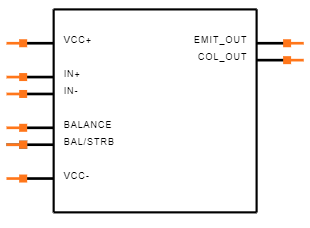
LM111 Pinout

LM111 CAD Model
Symbol
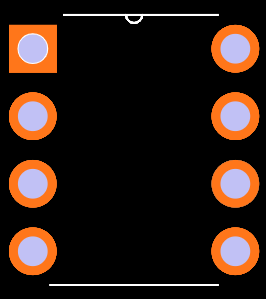
Footprint
3D Model

LM111 Features
• Fast Response Time: 165 ns
• Strobe Capability
• Maximum Input Bias Current: 300 nA
• Maximum Input Offset Current: 70 nA
• Can Operate From Single 5-V Supply
• Available in Q-Temp Automotive
– High-Reliability Automotive Applications
– Configuration Control and Print Support
– Qualification to Automotive Standards
• On products that comply with MIL-PRF-38535, all parameters are tested unless otherwise specified. For all other products, the production process does not necessarily include testing of all parameters.
Specifications
- TypeParameter
- Lifecycle Status
Lifecycle Status refers to the current stage of an electronic component in its product life cycle, indicating whether it is active, obsolete, or transitioning between these states. An active status means the component is in production and available for purchase. An obsolete status indicates that the component is no longer being manufactured or supported, and manufacturers typically provide a limited time frame for support. Understanding the lifecycle status is crucial for design engineers to ensure continuity and reliability in their projects.
ACTIVE (Last Updated: 5 days ago) - Factory Lead Time26 Weeks
- Contact Plating
Contact plating (finish) provides corrosion protection for base metals and optimizes the mechanical and electrical properties of the contact interfaces.
Lead, Tin - Mount
In electronic components, the term "Mount" typically refers to the method or process of physically attaching or fixing a component onto a circuit board or other electronic device. This can involve soldering, adhesive bonding, or other techniques to secure the component in place. The mounting process is crucial for ensuring proper electrical connections and mechanical stability within the electronic system. Different components may have specific mounting requirements based on their size, shape, and function, and manufacturers provide guidelines for proper mounting procedures to ensure optimal performance and reliability of the electronic device.
Through Hole - Mounting Type
The "Mounting Type" in electronic components refers to the method used to attach or connect a component to a circuit board or other substrate, such as through-hole, surface-mount, or panel mount.
Through Hole - Package / Case
refers to the protective housing that encases an electronic component, providing mechanical support, electrical connections, and thermal management.
8-CDIP (0.300, 7.62mm) - Number of Pins8
- Weight4.535924g
- Current - Supply (Nom)5.1mA
- Operating Temperature
The operating temperature is the range of ambient temperature within which a power supply, or any other electrical equipment, operate in. This ranges from a minimum operating temperature, to a peak or maximum operating temperature, outside which, the power supply may fail.
-55°C~125°C - Packaging
Semiconductor package is a carrier / shell used to contain and cover one or more semiconductor components or integrated circuits. The material of the shell can be metal, plastic, glass or ceramic.
Tube - JESD-609 Code
The "JESD-609 Code" in electronic components refers to a standardized marking code that indicates the lead-free solder composition and finish of electronic components for compliance with environmental regulations.
e0 - Part Status
Parts can have many statuses as they progress through the configuration, analysis, review, and approval stages.
Active - Moisture Sensitivity Level (MSL)
Moisture Sensitivity Level (MSL) is a standardized rating that indicates the susceptibility of electronic components, particularly semiconductors, to moisture-induced damage during storage and the soldering process, defining the allowable exposure time to ambient conditions before they require special handling or baking to prevent failures
1 (Unlimited) - Number of Terminations8
- ECCN Code
An ECCN (Export Control Classification Number) is an alphanumeric code used by the U.S. Bureau of Industry and Security to identify and categorize electronic components and other dual-use items that may require an export license based on their technical characteristics and potential for military use.
EAR99 - TypeGeneral Purpose
- Terminal Finish
Terminal Finish refers to the surface treatment applied to the terminals or leads of electronic components to enhance their performance and longevity. It can improve solderability, corrosion resistance, and overall reliability of the connection in electronic assemblies. Common finishes include nickel, gold, and tin, each possessing distinct properties suitable for various applications. The choice of terminal finish can significantly impact the durability and effectiveness of electronic devices.
Tin/Lead (Sn/Pb) - Max Power Dissipation
The maximum power that the MOSFET can dissipate continuously under the specified thermal conditions.
500mW - Terminal Position
In electronic components, the term "Terminal Position" refers to the physical location of the connection points on the component where external electrical connections can be made. These connection points, known as terminals, are typically used to attach wires, leads, or other components to the main body of the electronic component. The terminal position is important for ensuring proper connectivity and functionality of the component within a circuit. It is often specified in technical datasheets or component specifications to help designers and engineers understand how to properly integrate the component into their circuit designs.
DUAL - Number of Functions1
- Supply Voltage
Supply voltage refers to the electrical potential difference provided to an electronic component or circuit. It is crucial for the proper operation of devices, as it powers their functions and determines performance characteristics. The supply voltage must be within specified limits to ensure reliability and prevent damage to components. Different electronic devices have specific supply voltage requirements, which can vary widely depending on their design and intended application.
15V - Terminal Pitch
The center distance from one pole to the next.
2.54mm - Base Part Number
The "Base Part Number" (BPN) in electronic components serves a similar purpose to the "Base Product Number." It refers to the primary identifier for a component that captures the essential characteristics shared by a group of similar components. The BPN provides a fundamental way to reference a family or series of components without specifying all the variations and specific details.
LM111 - Pin Count
a count of all of the component leads (or pins)
8 - Current - Supply (Max)
The parameter "Current - Supply (Max)" in electronic components refers to the maximum amount of current that a component can draw from a power supply for its operation. This parameter is critical for ensuring that the power supply can adequately meet the demands of the component without causing damage or malfunction. Exceeding this specified maximum current can lead to overheating, reduced performance, or failure of the component. It is essential to consider this value when designing or integrating components into electronic circuits to maintain reliability and functionality.
6mA - Output Type
The "Output Type" parameter in electronic components refers to the type of signal or data that is produced by the component as an output. This parameter specifies the nature of the output signal, such as analog or digital, and can also include details about the voltage levels, current levels, frequency, and other characteristics of the output signal. Understanding the output type of a component is crucial for ensuring compatibility with other components in a circuit or system, as well as for determining how the output signal can be utilized or processed further. In summary, the output type parameter provides essential information about the nature of the signal that is generated by the electronic component as its output.
DTL, MOS, Open-Collector, Open-Emitter, RTL, TTL - Number of Circuits1
- Power Dissipation
the process by which an electronic or electrical device produces heat (energy loss or waste) as an undesirable derivative of its primary action.
500mW - Current - Output
Current - Output is a parameter in electronic components that refers to the maximum amount of current that can be delivered by the output of the component. It is a crucial specification as it determines the capability of the component to supply power to connected devices or circuits. The current output rating is typically specified in amperes (A) and is important for ensuring that the component can safely and effectively power the load it is connected to without overheating or failing. Designers and engineers must consider the current output rating when selecting components to ensure compatibility and reliable operation of the overall system.
50mA - Quiescent Current
The quiescent current is defined as the current level in the amplifier when it is producing an output of zero.
5.1mA - Response Time
the time taken for a circuit or measuring device, when subjected to a change in input signal, to change its state by a specified fraction of its total response to that change.
200 ns - Voltage - Supply, Single/Dual (±)
The parameter "Voltage - Supply, Single/Dual (±)" in electronic components refers to the power supply voltage required for the proper operation of the component. This parameter indicates whether the component requires a single power supply voltage (e.g., 5V) or a dual power supply voltage (e.g., ±15V). For components that require a single power supply voltage, only one voltage level is needed for operation. On the other hand, components that require a dual power supply voltage need both positive and negative voltage levels to function correctly.Understanding the voltage supply requirements of electronic components is crucial for designing and integrating them into circuits to ensure proper functionality and prevent damage due to incorrect voltage levels.
5V~36V ±2.5V~18V - Input Offset Voltage (Vos)
Input Offset Voltage (Vos) is a key parameter in electronic components, particularly in operational amplifiers. It refers to the voltage difference that must be applied between the two input terminals of the amplifier to nullify the output voltage when the input terminals are shorted together. In simpler terms, it represents the voltage required to bring the output of the amplifier to zero when there is no input signal present. Vos is an important parameter as it can introduce errors in the output signal of the amplifier, especially in precision applications where accuracy is crucial. Minimizing Vos is essential to ensure the amplifier operates with high precision and accuracy.
3mV - Neg Supply Voltage-Nom (Vsup)
The parameter "Neg Supply Voltage-Nom (Vsup)" in electronic components refers to the nominal negative supply voltage that the component requires to operate within its specified performance characteristics. This parameter indicates the minimum voltage level that must be provided to the component's negative supply pin for proper functionality. It is important to ensure that the negative supply voltage provided to the component does not exceed the maximum specified value to prevent damage or malfunction. Understanding and adhering to the specified negative supply voltage requirements is crucial for the reliable operation of the electronic component in a circuit.
-15V - Voltage Gain
Voltage gain is a measure of how much an electronic component or circuit amplifies an input voltage signal to produce an output voltage signal. It is typically expressed as a ratio or in decibels (dB). A higher voltage gain indicates a greater amplification of the input signal. Voltage gain is an important parameter in amplifiers, where it determines the level of amplification provided by the circuit. It is calculated by dividing the output voltage by the input voltage and is a key factor in determining the overall performance and functionality of electronic devices.
106.02dB - Max Input Current
Max Input Current is a parameter that specifies the maximum amount of electrical current that can safely flow into an electronic component without causing damage. It is an important consideration when designing or using electronic circuits to ensure that the component operates within its specified limits. Exceeding the maximum input current can lead to overheating, component failure, or even pose safety risks. Manufacturers provide this parameter in datasheets to help engineers and users understand the limitations of the component and ensure proper operation within the specified parameters.
100nA - Input Bias Current
Input Bias Current refers to the small amount of current that flows into the input terminals of an electronic component, such as an operational amplifier. It is primarily caused by the input impedance of the device and the characteristics of the transistors within it. This current is crucial in determining the accuracy of the analog signal processing, as it can affect the level of voltage offset and signal integrity in the application. In many precise applications, minimizing input bias current is essential to achieve optimal performance.
60nA - Voltage - Input Offset (Max)
Voltage - Input Offset (Max) is a parameter that refers to the maximum allowable difference in input voltage between two input terminals of an electronic component, such as an operational amplifier, before the output voltage deviates from the expected value. This parameter is crucial in precision applications where accurate voltage amplification or signal processing is required. A higher value for the input offset voltage indicates a greater potential for error in the output signal, so minimizing this parameter is important for maintaining the accuracy and reliability of the component's performance. Designers often take this parameter into consideration when selecting components for circuits that require precise voltage control and signal processing.
3mV @ ±15V - Current - Input Bias (Max)
The parameter "Current - Input Bias (Max)" in electronic components refers to the maximum amount of input bias current that can flow into the input terminal of the component without causing any adverse effects on its performance. Input bias current is the small amount of current that flows into the input terminal of an electronic component, such as an operational amplifier, transistor, or integrated circuit, even when no input signal is applied. This parameter is important because excessive input bias current can lead to errors in the output signal and affect the overall performance of the component. Manufacturers specify a maximum value for input bias current to ensure proper operation and reliability of the component in various applications. It is crucial for designers and engineers to consider this parameter when selecting components for their circuits to ensure optimal performance and functionality.
0.1μA @ ±15V - Height5.08mm
- Length10.16mm
- Width6.502mm
- Thickness
Thickness in electronic components refers to the measurement of how thick a particular material or layer is within the component structure. It can pertain to various aspects, such as the thickness of a substrate, a dielectric layer, or conductive traces. This parameter is crucial as it impacts the electrical, mechanical, and thermal properties of the component, influencing its performance and reliability in electronic circuits.
4.064mm - REACH SVHC
The parameter "REACH SVHC" in electronic components refers to the compliance with the Registration, Evaluation, Authorization, and Restriction of Chemicals (REACH) regulation regarding Substances of Very High Concern (SVHC). SVHCs are substances that may have serious effects on human health or the environment, and their use is regulated under REACH to ensure their safe handling and minimize their impact.Manufacturers of electronic components need to declare if their products contain any SVHCs above a certain threshold concentration and provide information on the safe use of these substances. This information allows customers to make informed decisions about the potential risks associated with using the components and take appropriate measures to mitigate any hazards.Ensuring compliance with REACH SVHC requirements is essential for electronics manufacturers to meet regulatory standards, protect human health and the environment, and maintain transparency in their supply chain. It also demonstrates a commitment to sustainability and responsible manufacturing practices in the electronics industry.
No SVHC - Radiation Hardening
Radiation hardening is the process of making electronic components and circuits resistant to damage or malfunction caused by high levels of ionizing radiation, especially for environments in outer space (especially beyond the low Earth orbit), around nuclear reactors and particle accelerators, or during nuclear accidents or nuclear warfare.
No - RoHS Status
RoHS means “Restriction of Certain Hazardous Substances” in the “Hazardous Substances Directive” in electrical and electronic equipment.
Non-RoHS Compliant - Lead Free
Lead Free is a term used to describe electronic components that do not contain lead as part of their composition. Lead is a toxic material that can have harmful effects on human health and the environment, so the electronics industry has been moving towards lead-free components to reduce these risks. Lead-free components are typically made using alternative materials such as silver, copper, and tin. Manufacturers must comply with regulations such as the Restriction of Hazardous Substances (RoHS) directive to ensure that their products are lead-free and environmentally friendly.
Contains Lead
Where to use LM111?
The LM111 differential comparator operational amplifier is a very popular comparator IC from Texas Instruments (TI) and has long been used for voltage comparison in electronic designs. Any op amp can be used as a voltage comparator, but the LM111 proved its advantage by placing an output transistor in its package. The collector and emitter pins of this transistor can also be controlled by hardware, which makes it suitable for many applications.
This transistor can drive loads up to 50V and 50mA and is suitable for driving most TTL, MOS and RTL loads. The transistor can also isolate the load from the system ground. Therefore, if you are looking for a voltage comparator to drive loads of these specifications, then this IC may be the right choice for you.
How to use LM111?
Like all voltage comparators, LM111 also has an inverting pin and a non-inverting pin. If the voltage on the non-inverting terminal (pin 2) is higher than the inverting terminal (pin 2), the output (pin 7) will also be high, otherwise the output will be low.
LM111 can work in single-supply voltage or dual-supply mode. Now, let's focus on the +5V supply voltage circuit, because this is the most commonly used design for digital circuits. In this type, VCC+ (pin 8) is connected to the +5V supply voltage, and VCC- (pin 4) is connected to ground to keep it at 0V potential.
If you want to manually adjust the DC offset voltage, pins 5 and 6 on the op amp are used to set the balance voltage. These pins are usually not used because the input offset itself is better controlled. When not in use, pins 5 and 6 should be short-circuited. You can also notice that the collector pin (pin 7) of the transistor is used for output, and the emitter pin (pin 1) is grounded. This type of design is called a "collector output circuit".
LM111 Applications
• Desktop PC
• Body control module
• White goods
• Building automation
• Oscillator
• Peak detector
LM111 Manufacturer
Texas Instruments (TI) is an American technology company headquartered in Dallas, Texas, which designs and manufactures semiconductors and various integrated circuits, and sells them to electronic designers and manufacturers worldwide. It is one of the top 10 semiconductor companies in global sales. The company focuses on the development of analog chips and embedded processors, which account for more than 80% of its revenue. TI also produces TI digital light processing technology and educational technology products, including calculators, microcontrollers and multi-core processors. As of 2016, the company has 45,000 patents worldwide.
Trend Analysis
Datasheet PDF
- Datasheets :
- PCN Assembly/Origin :
1.What kind of chip is LM111 and what is its main function?
LM111 is a voltage comparator. The power supply voltage can be plus or minus 15V, or a single power supply 5V. The output stage can be compatible with RTL, DTL, TTL, CMOS circuits. It can drive lights and relays. The voltage can reach 50V under a 50MA load.
2.What is the difference between LM111 and LM311 single voltage comparators
The functions achieved are the same, and the 1XX series can be used in more severe environments.
The 3XX series can only be used in commercial environments, typically the applicable temperature range of the device.
The price of 1xx is much more expensive than 3xx.
3.How to use 5 pins of LM111?
The 5-pin of LM111 can be suspended in general applications. Pin 5 is for balance adjustment. The manual gives a 3K potentiometer. One end of the 3K potentiometer is connected to pin 5 and the other end is connected to pin 6. The middle end of the 3K potentiometer is connected in series with a 30K resistor to 5V.
 STM32F427VIT6: 180MHz, 100-LQFP, Pinout and Datasheet
28 February 20226524
 STM32L031F6P6 vs STM32L011D4P6 STMicroelectronics Microcontroller
10 June 20251326
 LM5122 Boost Controller: Application, Datasheet, Circuit
08 April 20225304
![Is LM317 better than LM7805?[video+FAQ]](https://res.utmel.com/Images/Article/5cafb24b-3f28-4935-b123-c59a0f9c15eb.jpg) Is LM317 better than LM7805?[video+FAQ]
Is LM317 better than LM7805?[video+FAQ]27 April 20229734
 BC560 PNP Transistor: Datasheet, Equivalent, and Pinout
17 August 20215934
 2N3440 NPN transistor: Datasheet, Equivalent and Pinout
08 November 20214184
 STM32G070CBT6: Overview, Features, and Datasheet
11 December 20233618
 74HC74 Dual D Flip-Flop: Datasheet pdf, Pinout and Flip-Flop Diagram
17 December 202116688
 What are Types and Application of Gas Sensors?
18 November 202511288
 Electric Car Rechargeable Batteries: How Long Do They Last?
13 April 20234319
 What is PCB Reflow? High-Speed Signal Reflow Path Analysis
24 November 20214889
 Semiconductor Materials:Types, Properties and Production Process
21 October 202527513
 Eight Internet of Things (IoT) Trends for 2022
08 April 20225531
 A Complete Guide to 2025 Battery vs 2032 Swapping
29 August 20255319
 2026 ADAS Sensors: Supply Outlook and Alternative Sourcing
18 July 20261208
 Review of Flux-Concentrated Transverse Flux Permanent Magnet Machines
15 December 20232489
Texas Instruments
In Stock: 3000
Minimum: 1 Multiples: 1
Qty
Unit Price
Ext Price
1
$29.920748
$29.92
10
$28.227121
$282.27
100
$26.629359
$2,662.94
500
$25.122037
$12,561.02
1000
$23.700035
$23,700.04
Not the price you want? Send RFQ Now and we'll contact you ASAP.
Inquire for More Quantity
![LMC7225IM5X]() LMC7225IM5X
LMC7225IM5XTexas Instruments
![LM393ADR]() LM393ADR
LM393ADRTexas Instruments
![LM339DR]() LM339DR
LM339DRTexas Instruments
![LM393DR]() LM393DR
LM393DRTexas Instruments
![LM311DR]() LM311DR
LM311DRTexas Instruments
![LM311P]() LM311P
LM311PTexas Instruments
![LM311M/NOPB]() LM311M/NOPB
LM311M/NOPBTexas Instruments
![LM239DR]() LM239DR
LM239DRTexas Instruments
![LM293ADR]() LM293ADR
LM293ADRTexas Instruments
![LM2903DGKR]() LM2903DGKR
LM2903DGKRTexas Instruments


