

 Product
 Brand
Brand Articles
 Tools
Tools
tinyAVR® 1-series 20MHz MCU: Datasheet, Architecture, and Performance Deep Dive

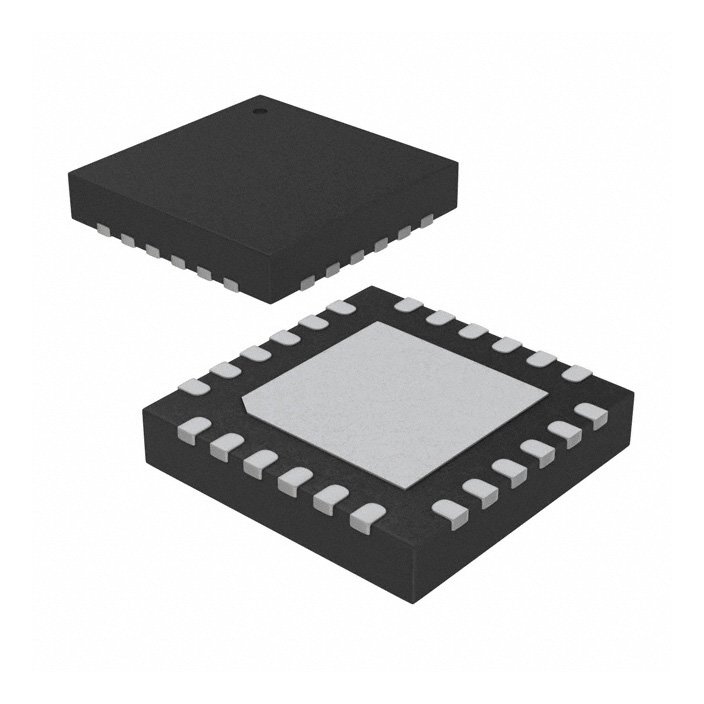
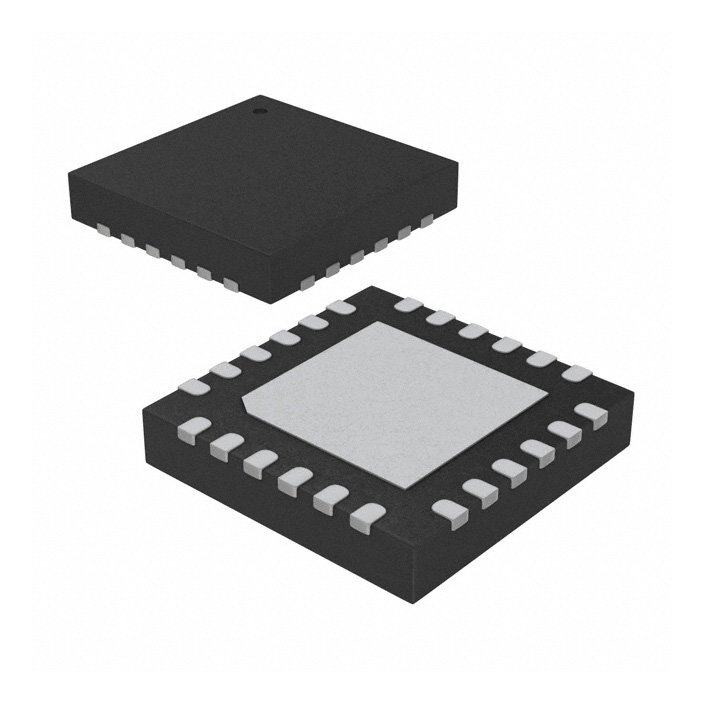
16KB 16K x 8 FLASH AVR 8-Bit Microcontroller tinyAVR™ 1 Series ATTINY1617 24-VFQFN Exposed Pad


16KB 16K x 8 FLASH AVR 8-Bit Microcontroller tinyAVR™ 1 Series ATTINY1617 24-VFQFN Exposed Pad
Discover the tinyAVR® 1-series (ATtiny1617) datasheet, specs, and UPDI pinout. Learn how this 20MHz 8-bit MCU optimizes IoT designs. Buy or sample today!
- Executive Summary: What is the tinyAVR® 1-series?
- 1. Technical Specifications & Performance Analysis
- 2. Pinout, Package, and Configuration
- 3. Design & Integration Guide (For Engineers & Makers)
- 4. Typical Applications & Use Cases
- 5. Alternatives and Cross-Reference Guide
- 6. Frequently Asked Questions (FAQ)
- 7. Resources
- Specifications
- Datasheet PDF
Executive Summary: What is the tinyAVR® 1-series?
The tinyAVR® 1-series is an 8-bit microcontroller family designed for responsive, low-latency applications like IoT edge devices, industrial automation, and consumer electronics. By integrating a hardware multiplier and Core Independent Peripherals (CIPs), it allows engineers to offload tasks from the CPU, significantly reducing power consumption while maintaining high performance.
Market Position: A modern, high-performance 8-bit architecture that bridges the gap between legacy 8-bit MCUs and entry-level 32-bit processors, offering an excellent price vs performance ratio.
Top Features: 20 MHz AVR CPU, single-pin Unified Program and Debug Interface (UPDI), and an advanced Event System for CPU-independent signaling.
Primary Audience: Ideal for Design Engineers, Procurement Managers, and Advanced Hobbyists looking to optimize Bill of Materials (BOM) costs in space-constrained, power-sensitive layouts.
Supply Status: Active. (Consult your distributor for specific reel/tray availability and lead times).
1. Technical Specifications & Performance Analysis
1.1 Core Architecture (CPU/Logic/Power)
At the heart of the tinyAVR® 1-series (such as the ATtiny1617) is an 8-bit AVR processor capable of running at up to 20 MHz. Unlike older AVR generations, this architecture includes a hardware multiplier that accelerates DSP-like operations and vector motor control calculations. The true defining feature is its Event System combined with Configurable Custom Logic (CCL). This allows peripherals to communicate directly with each other without CPU intervention, ensuring deterministic response times and drastically lowering active power draw.
1.2 Key Electrical Characteristics
Power efficiency and thermal robustness are core to this series. Always refer to the official tinyAVR® 1-series datasheet for absolute maximum ratings.
Operating Voltage Range: 1.8V to 5.5V (Ideal for both 3.3V logic and direct 5V industrial systems).
Program Memory (Flash): 16 KB (In-system self-programmable).
SRAM: 2 KB
EEPROM: 256 Bytes (Excellent for non-volatile parameter storage).
Operating Temperature: -40°C to 105°C (Extended variants available up to 125°C for harsh environments).
1.3 Interfaces and Connectivity
The MCU is heavily equipped with analog and digital I/O tailored for sensor nodes and control systems: * Analog: A robust 10-bit Analog-to-Digital Converter (ADC) and Analog Comparators. * Digital Buses: USART with a fractional baud rate generator (ensuring accurate timing even with internal oscillators), SPI, and I2C (TWI) for easy Arduino/STM32 interface integration.
2. Pinout, Package, and Configuration
2.1 Pin Configuration Guide
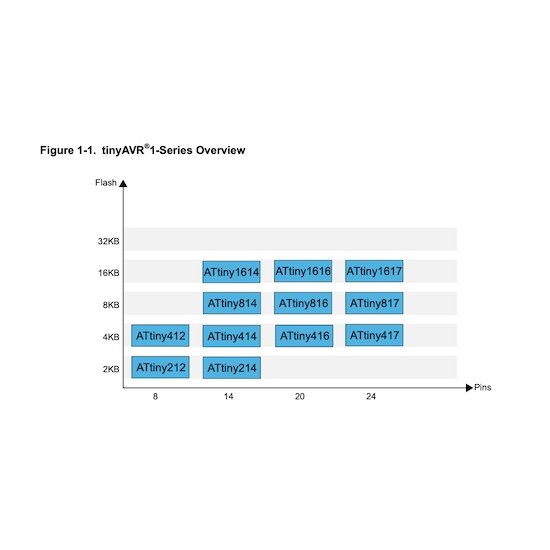
Modern MCUs rely heavily on multiplexed pins to save space. The ATtiny1617 utilizes a 24-pin layout designed to maximize I/O availability.
Power Pins (VCC / GND): Standard power rails requiring proper decoupling.
UPDI Pin: The Single-pin Unified Program and Debug Interface. This replaces the traditional 6-pin ISP, freeing up valuable GPIO pins for the application.
Port A/B/C (GPIO): Configurable digital I/O pins, many of which share functions with the ADC, USART, and CCL outputs.
2.2 Naming Convention & Ordering Codes
Understanding the Part Numbers:Procurement managers must pay attention to the part number breakdown to ensure correct ordering: * ATtiny: Base microcontroller family. * 16: Denotes the Flash memory size (16 KB). * 1: Indicates the 1-series generation (featuring CIPs and UPDI). * 7: Represents the pin-count/package identifier (e.g., 24-pin).
2.3 Available Packages
| Package Type | Pin Count | Common Use Case |
|---|---|---|
| VQFN | 24-pin | Space-constrained IoT devices, wearables. (Machine assembly recommended; requires reflow soldering). |
(Note: Check the datasheet for exact mechanical dimensions and alternative packages like SOIC or SSOP if hand-soldering is required for prototyping).
3. Design & Integration Guide (For Engineers & Makers)
Pro Tip: Always verify pin compatibility and UPDI programmer availability before migrating from older ATmega or ATtiny series. The schematic symbol will differ significantly from legacy ISP-based chips.
3.1 Hardware Implementation
Bypass Capacitors: Place a 0.1µF ceramic capacitor as close to the VCC and GND pins as possible to filter high-frequency noise.
PCB Layout: Utilize a solid ground plane. For the VQFN package, ensure the exposed center pad is properly soldered to the PCB ground for optimal thermal management and electrical stability.
Thermal Management: Due to its low power consumption, passive PCB copper cooling is generally sufficient up to 125°C ambients.
3.2 Common Design Challenges
Engineers integrating the tinyAVR® 1-series should be aware of the following known silicon behaviors and their fixes:
Analog Comparator False Triggers: False triggers may occur when sweeping the negative input of the AC with a negative slope while Low-Power mode is disabled.
Fix: Enable Low-Power mode in the AC CTRLA register.
ADC Performance Degradation: ADC functionality degrades if the ADC clock (CLKADC) exceeds 1.5 MHz.
Fix: Ensure the prescaler is set so the ADC clock frequency remains below 1.5 MHz.
CCL D-Latch Errata: The D-latch functionality in the CCL is reported as unreliable in Rev A/B silicon.
Fix: Use alternative logic configurations, implement software workarounds, or verify you are using a newer silicon revision.
UPDI Programming Sensitivity: 12V UPDI activation can fail if the programmer's USB supply drops under load.
Fix: Use a powered USB hub to ensure a robust 5V supply to your programmer.
4. Typical Applications & Use Cases
Watch Tutorial: ATTINY1617
4.1 Real-World Example: Sensor Nodes and IoT Edge Devices
In a battery-powered environmental sensor node, the tinyAVR® 1-series shines. The MCU can remain in a deep sleep state while the Event System monitors a peripheral (like an I2C temperature sensor). If a threshold is crossed, the CCL can trigger an alert or wake the CPU to transmit data via USART. This drastically extends battery life while maintaining immediate responsiveness—something traditional software-polled architectures cannot achieve.
5. Alternatives and Cross-Reference Guide
When navigating supply chain shortages or evaluating architectural upgrades, consider these direct competitors and equivalents:
Microchip ATmega168PB / ATmega328P: The legacy alternatives. Choose the tinyAVR® 1-series over these for lower cost, smaller footprint, UPDI debugging, and advanced CIPs. Stick to ATmega if you need massive existing Arduino library compatibility without modifications.
Microchip PIC16F Series: The equivalent 8-bit ecosystem on the PIC architecture. Offers similar CIP capabilities; choice usually depends on the engineer's familiarity with MPLAB vs Microchip Studio/AVR-GCC.
STMicroelectronics STM8 Series: A traditional 8-bit competitor. The tinyAVR® 1-series often wins on modern peripheral integration (CCL/Event System).
STMicroelectronics STM32G0 (Entry-level 32-bit): An ARM Cortex-M0+ alternative. Choose STM32G0 if your application requires advanced 32-bit math or USB integration, but stick to tinyAVR® for better 5V tolerance, simpler bare-metal programming, and lower sleep currents.
Texas Instruments MSP430 Series: The gold standard for ultra-low power. Highly competitive with tinyAVR® 1-series in battery-operated designs, though AVR often provides a gentler learning curve for hobbyists transitioning to professional engineering.
6. Frequently Asked Questions (FAQ)
Q: What is the difference between tinyAVR® 1-series and the ATmega328P? A: The 1-series utilizes a newer core architecture featuring Core Independent Peripherals (CIPs), an Event System, and a single-pin UPDI programming interface, making it more power-efficient and cheaper than the older ATmega328P.
Q: Can tinyAVR® 1-series be used in Automotive applications? A: Yes, certain variants of the series are rated for extended temperatures up to 125°C, making them suitable for under-hood automotive systems and vector motor control.
Q: Where can I find the datasheet and library files for tinyAVR® 1-series? A: The official datasheet is available on the Microchip Technology website. Library files and configuration tools are integrated into Atmel START, Microchip Studio, and MPLAB X IDE.
Q: Is tinyAVR® 1-series suitable for battery-operated devices? A: Absolutely. Its wide operating voltage (1.8V to 5.5V) and ability to perform tasks via the Event System while the main CPU sleeps make it ideal for coin-cell or LiPo battery operation.
Q: How do I program/configure the tinyAVR® 1-series? A: It is programmed using the Unified Program and Debug Interface (UPDI), which requires only one dedicated pin. You will need a UPDI-compatible programmer (like the Atmel-ICE or a modified serial adapter).
7. Resources
Development Tools & Software:
Microchip Studio (formerly Atmel Studio)
MPLAB® X IDE
Atmel START (Web-based configuration tool)
AVR-GCC Compiler
megaTinyCore (For Arduino IDE integration)
Specifications
Datasheet PDF
- PCN Design/Specification :
- PCN Assembly/Origin :
- ConflictMineralStatement :
 AD936x Series RF Agile Transceiver: Wideband Performance Review and SDR Design Guide
10 February 20261201
 ESP8266EX Wi-Fi Microchip: Pinout Schematic and Datasheet
11 August 202111874
 SC811 / SC813 Tri-Mode Adapter/USB:Pinout,Datasheet,Features
17 September 2021456
 AD8602 Amplifier Guide: Features, Applications & Benefits
03 July 2025361
 An Introduction to the AD7545 Digital to Analog Converter (DAC)
06 March 2024370
 DS3231M RTC: Pinout, Application, Circuit
16 August 20215238
 MCP73832T-2ACI/OT Li-Polymer Charge Management Controllers: Diagram, Pinout, and Datasheet
07 March 20223268
![Where & How to Use CA3240 Dual Op Amp? [FAQ]](https://res.utmel.com/Images/Article/a6a678b4-a01e-4ebb-b36c-ccdc7c268ed2.png) Where & How to Use CA3240 Dual Op Amp? [FAQ]
Where & How to Use CA3240 Dual Op Amp? [FAQ]04 May 20223369
 Basic Introduction to Hall Effect Sensors
13 November 202512832
 Things You Need to Know about Seven-segment Display
14 October 20218212
 What is Sequential Logic?
15 October 20208322
 What are Wire Wound Resistors?
19 January 202612850
 Role of On-Chip Optical Communication in Overcoming CMOS Scaling Challenges
22 August 20242469
 What is a Transmitter?
12 October 20216367
 The Introduction to USB Type-C Pin Signal and PCB Layout
03 December 202127640
 Detailed Introduction of the Chip Design Process
21 December 202118696
Microchip Technology
In Stock: 3000
United States
China
Canada
Japan
Russia
Germany
United Kingdom
Singapore
Italy
Hong Kong(China)
Taiwan(China)
France
Korea
Mexico
Netherlands
Malaysia
Austria
Spain
Switzerland
Poland
Thailand
Vietnam
India
United Arab Emirates
Afghanistan
Åland Islands
Albania
Algeria
American Samoa
Andorra
Angola
Anguilla
Antigua & Barbuda
Argentina
Armenia
Aruba
Australia
Azerbaijan
Bahamas
Bahrain
Bangladesh
Barbados
Belarus
Belgium
Belize
Benin
Bermuda
Bhutan
Bolivia
Bonaire, Sint Eustatius and Saba
Bosnia & Herzegovina
Botswana
Brazil
British Indian Ocean Territory
British Virgin Islands
Brunei
Bulgaria
Burkina Faso
Burundi
Cabo Verde
Cambodia
Cameroon
Cayman Islands
Central African Republic
Chad
Chile
Christmas Island
Cocos (Keeling) Islands
Colombia
Comoros
Congo
Congo (DRC)
Cook Islands
Costa Rica
Côte d’Ivoire
Croatia
Cuba
Curaçao
Cyprus
Czechia
Denmark
Djibouti
Dominica
Dominican Republic
Ecuador
Egypt
El Salvador
Equatorial Guinea
Eritrea
Estonia
Eswatini
Ethiopia
Falkland Islands
Faroe Islands
Fiji
Finland
French Guiana
French Polynesia
Gabon
Gambia
Georgia
Ghana
Gibraltar
Greece
Greenland
Grenada
Guadeloupe
Guam
Guatemala
Guernsey
Guinea
Guinea-Bissau
Guyana
Haiti
Honduras
Hungary
Iceland
Indonesia
Iran
Iraq
Ireland
Isle of Man
Israel
Jamaica
Jersey
Jordan
Kazakhstan
Kenya
Kiribati
Kosovo
Kuwait
Kyrgyzstan
Laos
Latvia
Lebanon
Lesotho
Liberia
Libya
Liechtenstein
Lithuania
Luxembourg
Macao(China)
Madagascar
Malawi
Maldives
Mali
Malta
Marshall Islands
Martinique
Mauritania
Mauritius
Mayotte
Micronesia
Moldova
Monaco
Mongolia
Montenegro
Montserrat
Morocco
Mozambique
Myanmar
Namibia
Nauru
Nepal
New Caledonia
New Zealand
Nicaragua
Niger
Nigeria
Niue
Norfolk Island
North Korea
North Macedonia
Northern Mariana Islands
Norway
Oman
Pakistan
Palau
Palestinian Authority
Panama
Papua New Guinea
Paraguay
Peru
Philippines
Pitcairn Islands
Portugal
Puerto Rico
Qatar
Réunion
Romania
Rwanda
Samoa
San Marino
São Tomé & Príncipe
Saudi Arabia
Senegal
Serbia
Seychelles
Sierra Leone
Sint Maarten
Slovakia
Slovenia
Solomon Islands
Somalia
South Africa
South Sudan
Sri Lanka
St Helena, Ascension, Tristan da Cunha
St. Barthélemy
St. Kitts & Nevis
St. Lucia
St. Martin
St. Pierre & Miquelon
St. Vincent & Grenadines
Sudan
Suriname
Svalbard & Jan Mayen
Sweden
Syria
Tajikistan
Tanzania
Timor-Leste
Togo
Tokelau
Tonga
Trinidad & Tobago
Tunisia
Turkey
Turkmenistan
Turks & Caicos Islands
Tuvalu
U.S. Outlying Islands
U.S. Virgin Islands
Uganda
Ukraine
Uruguay
Uzbekistan
Vanuatu
Vatican City
Venezuela
Wallis & Futuna
Yemen
Zambia
Zimbabwe
![ATMEGA8515L-8AU]() ATMEGA8515L-8AU
ATMEGA8515L-8AUMicrochip Technology
![DSPIC30F6014A-30I/PF]() DSPIC30F6014A-30I/PF
DSPIC30F6014A-30I/PFMicrochip Technology
![ATMEGA32A-AU]() ATMEGA32A-AU
ATMEGA32A-AUMicrochip Technology
![ATXMEGA128A1U-AU]() ATXMEGA128A1U-AU
ATXMEGA128A1U-AUMicrochip Technology
![PIC18F46K20-I/PT]() PIC18F46K20-I/PT
PIC18F46K20-I/PTMicrochip Technology
![PIC18F6722-I/PT]() PIC18F6722-I/PT
PIC18F6722-I/PTMicrochip Technology
![PIC16F883-I/SS]() PIC16F883-I/SS
PIC16F883-I/SSMicrochip Technology
![PIC16F877-20I/PT]() PIC16F877-20I/PT
PIC16F877-20I/PTMicrochip Technology
![ATMEGA8535L-8AU]() ATMEGA8535L-8AU
ATMEGA8535L-8AUMicrochip Technology
![PIC18F4685-I/PT]() PIC18F4685-I/PT
PIC18F4685-I/PTMicrochip Technology


