Product
 Brand
Brand Articles
 Tools
Tools
RS232 vs. RS485: What are the differences between these serial communications?


PUNCH UNIT-CONNECTOR 25 PIN
Today, serial interfaces are found in almost all electronic devices. RS-232 and RS-485, for example, are still frequently used serial interfaces. The contrasts between these two serial communications are summarized in this article. Furthermore, there is a huge in stock. Welcome your RFQ!

Difference between RS 232 RS 422 and RS 485 communication
- Introduction
- What is RS232?
- What is RS485?
- RS232 vs. RS485: Differences in Specifications
- RS232 vs. RS485: Differences in Operational Distance
- RS232 vs. RS485: Differences in Electrical Noise and Ground Potential Resistance
- RS232 vs. RS485: Differences in The total number of Transmitters and Receivers
- RS232 vs. RS485: Differences in DATA Speed
- RS232 vs. RS485: Applications
- RS232 vs. RS485: Summary
Introduction
RS232 vs. RS485: which is better? Both serial communication standards have significant industry effects. Even though they were launched more than half a century ago, they are still commonly utilized. They're two serial communicators who aren't all that dissimilar. Their application varies little in the industry. Before further reading, you may read our earlier articles on the RS232 and RS485 protocols.

What is RS232?
The RS232 interface, often known as TIA/EIA-232, is a serial communication control protocol. It organizes data flowing from a Data Terminal Equipment (DTE) such as a terminal or transmitter to a receiver or other sort of Data Communications Equipment (DCE).
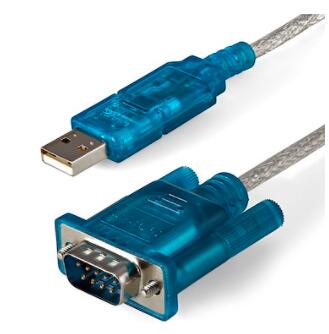
RS232
What is RS485?
The RS485 or EIA-485 protocol is the most extensively used serial interface in the industry. Compared to RS232 interfaces, it has a significant advantage. Multiple receivers and transmitters can be connected using multi-point topology. For more consistency, data is transmitted utilizing differential signals.
There are two forms of RS485 communication:
Half-duplex RS485 interfaces with two contacts work in half-duplex mode, delivering and receiving data at the same time.
RS485 ports can also include four contacts, allowing full-duplex operation. Data can be transferred and received at the same time when used in this manner.
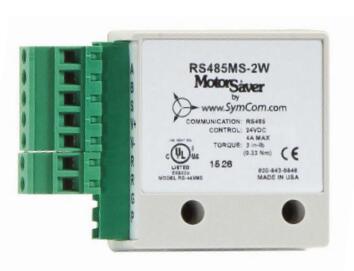
RS485
RS232 vs. RS485: Differences in Specifications
| RS232 | RS485 | |
| Voltage System | Voltage level-based | Differential |
| Total Drivers and Receivers on One Line | 1 Driver, 1 Receiver | 32 Drivers, 32 Receivers(One Driver active at a time) |
| Line Configuration | Point-to-point | Multidrop |
| Maximum Operational Distance | 15M / 50FT | 1,200M / 3000FT |
| Maximum Data Transmission Rate | 1MBit/s | 10MBit/s |
| Duplex Mode | Full Duplex | Half Duplex or Full Duplex |
| Maximum Driver Output Voltage | +/-25V | -7V to +12V |
| Receiver Input Resistance | 3 to 7 kΩ | 12 kΩ |
| Receiver Input Voltage Range | +/-15V | -7V to +12V |
| Receiver Sensitivity | +/-3V | ±200mV |
RS232 vs. RS485: Differences in Operational Distance
For RS232, the maximum distance between transmitter and receiver is around 50 feet, though this can be increased further if data rates are low. The operating distance for RS485 is substantially longer — up to 4,000 feet. An RS485 serial interface will almost certainly be required for equipment that operates at a distance from a transmitter.
There is one thing you should bear in mind that RS85 is a multidrop protocol, whereas RS232 is a point-to-point protocol.
RS232 vs. RS485: Differences in Electrical Noise and Ground Potential Resistance
RS232 is a voltage-level-based technology that works effectively when ground potential differences are small. RS232, on the other hand, is too delicate in electrically noisy situations with varying potential levels, allowing data corruption.
RS485, on the other hand, uses a differential voltage scheme. As a result, RS485 can achieve better levels of noise immunity. The RS485's differential voltage method also provides for greater data transfer distances and lower voltage usage, resulting in faster data transfer.
RS232 vs. RS485: Differences in The total number of Transmitters and Receivers
An RS232 Serial Interface is used to link two devices together. One transmitter and one receiver will be used. Up to 32 devices can be connected to a single transmitter using an RS485 Serial interface.
Also, keep in mind that RS232 and RS485 aren't fixed. A USB interface is more widely used on newer technology. As a result, converting from USB to RS232 or RS485 or RS232 to USB is required to let different types of equipment or older and newer devices operate together. Converting RS232 to RS485 or vice versa may also be required.
RS232 vs. RS485: Differences in DATA Speed
An RS232 serial interface is more than enough for short distances and low data speed needs. It transmits data at 1 Mbps over a distance of up to 50 feet. An RS485 interface, on the other hand, can transport data at a rate of 10 Mbps up to 50 feet. RS485 broadcasts at 100 kbps at a distance of up to 4,000 feet.
RS232 vs. RS485: Applications
Both RS232 and RS485 are used in a variety of applications, including:
Scientific equipment
Industrial wireless controls
Computers
Robots
Medical equipment
RS232 vs. RS485: Summary
If you only need a low data rate over a short distance, RS232 will most certainly suffice, however it is becoming obsolete.
If quicker data transfer over a longer distance is required, RS485 will most likely suffice. It's also possible to improve the performance of serial ports using readily available standard parts.
Can I connect RS232 to RS485?
To connect devices with a Serial RS232/RS485 port you need an adapter cable called a USB to RS232 adapter or USB to RS485 adapter, depending on if your device is using the RS232 protocol or the RS485 protocol. The major reason for this is that the low-cost adapter is made with a low-cost processor chip.
What are the 3 differences between RS232 and RS485?
RS232 is full-duplex, RS485 is half-duplex, and RS422 is full-duplex. RS485 and RS232 are only the physical protocol of communication (ie interface standard), RS485 is the differential transmission mode, RS232 is the single-ended transmission mode, but the communication program does not have much difference.
How many wires are RS485?
RS485 needs 3 conductors and a shield. Many people say it's a two-wire network but it is not. Two conductors are used to carry the RS485 Differential voltage signal. The Shield is connected to earth/ground at one end only and provides shielding against induced noise.
Is Modbus RTU same as RS485?
Is Modbus the same as RS485? The answer is no because both of these are relative concepts that need each other to fulfill their purposes. Modbus defines the protocol type and RS485 defines the signal level on the protocol.
 Microchip PIC16F1527IMR: In-Depth Overview of Features and Applications
29 February 2024212
 TCS3200 Color Sensor: Datasheet, Arduino, Working
19 November 20215751
 STM32F302K8U6TR Microcontroller: 32-Bit, 32-UFQFN, Pinout and Datasheet
10 January 20221180
 BMA020 Acceleration Sensor: Features, Specification and Datasheet
14 August 2024772
 BC557B Transistors: Pinout, Features and Datasheet
28 September 20214532
 STM32H745ZIT6U vs STM32F207ZG Microcontroller Detailed Comparison
09 June 2025539
![UVG100 SENSOR PHOTODIODE 254NM 10MM[FAQ]: Datasheet, Features, and Parameters](https://res.utmel.com/Images/Article/e04f0428-0626-4324-9216-3255cbf8f98c.jpg) UVG100 SENSOR PHOTODIODE 254NM 10MM[FAQ]: Datasheet, Features, and Parameters
UVG100 SENSOR PHOTODIODE 254NM 10MM[FAQ]: Datasheet, Features, and Parameters29 March 2022642
 High-Performance XC822/824 Microcontroller: Features, Applications, and Reference Designs
29 February 2024280
 The Ultimate Guide to Maintaining Your L1154 Battery
16 June 2025942
 Key Networking Solutions Trends Every IT Leader Should Know
17 July 20251047
 Practical Ways to Use Common Mode Chokes in 2025
10 July 20252860
 Basic Introduction to the Types of Capacitors
16 October 202510889
 Chiplet Brings Change to the Business Model of IP Design Companies
05 September 20224364
 Bridge Rectifier: Functions, Circuits and Applications
03 November 202015769
 Comparing Bridge Rectifiers and Full Wave Rectifiers for Beginners
09 June 202616456
 What is fluorescent lamp?
19 October 20214404
Greenlee Communications
In Stock
United States
China
Canada
Japan
Russia
Germany
United Kingdom
Singapore
Italy
Hong Kong(China)
Taiwan(China)
France
Korea
Mexico
Netherlands
Malaysia
Austria
Spain
Switzerland
Poland
Thailand
Vietnam
India
United Arab Emirates
Afghanistan
Åland Islands
Albania
Algeria
American Samoa
Andorra
Angola
Anguilla
Antigua & Barbuda
Argentina
Armenia
Aruba
Australia
Azerbaijan
Bahamas
Bahrain
Bangladesh
Barbados
Belarus
Belgium
Belize
Benin
Bermuda
Bhutan
Bolivia
Bonaire, Sint Eustatius and Saba
Bosnia & Herzegovina
Botswana
Brazil
British Indian Ocean Territory
British Virgin Islands
Brunei
Bulgaria
Burkina Faso
Burundi
Cabo Verde
Cambodia
Cameroon
Cayman Islands
Central African Republic
Chad
Chile
Christmas Island
Cocos (Keeling) Islands
Colombia
Comoros
Congo
Congo (DRC)
Cook Islands
Costa Rica
Côte d’Ivoire
Croatia
Cuba
Curaçao
Cyprus
Czechia
Denmark
Djibouti
Dominica
Dominican Republic
Ecuador
Egypt
El Salvador
Equatorial Guinea
Eritrea
Estonia
Eswatini
Ethiopia
Falkland Islands
Faroe Islands
Fiji
Finland
French Guiana
French Polynesia
Gabon
Gambia
Georgia
Ghana
Gibraltar
Greece
Greenland
Grenada
Guadeloupe
Guam
Guatemala
Guernsey
Guinea
Guinea-Bissau
Guyana
Haiti
Honduras
Hungary
Iceland
Indonesia
Iran
Iraq
Ireland
Isle of Man
Israel
Jamaica
Jersey
Jordan
Kazakhstan
Kenya
Kiribati
Kosovo
Kuwait
Kyrgyzstan
Laos
Latvia
Lebanon
Lesotho
Liberia
Libya
Liechtenstein
Lithuania
Luxembourg
Macao(China)
Madagascar
Malawi
Maldives
Mali
Malta
Marshall Islands
Martinique
Mauritania
Mauritius
Mayotte
Micronesia
Moldova
Monaco
Mongolia
Montenegro
Montserrat
Morocco
Mozambique
Myanmar
Namibia
Nauru
Nepal
New Caledonia
New Zealand
Nicaragua
Niger
Nigeria
Niue
Norfolk Island
North Korea
North Macedonia
Northern Mariana Islands
Norway
Oman
Pakistan
Palau
Palestinian Authority
Panama
Papua New Guinea
Paraguay
Peru
Philippines
Pitcairn Islands
Portugal
Puerto Rico
Qatar
Réunion
Romania
Rwanda
Samoa
San Marino
São Tomé & Príncipe
Saudi Arabia
Senegal
Serbia
Seychelles
Sierra Leone
Sint Maarten
Slovakia
Slovenia
Solomon Islands
Somalia
South Africa
South Sudan
Sri Lanka
St Helena, Ascension, Tristan da Cunha
St. Barthélemy
St. Kitts & Nevis
St. Lucia
St. Martin
St. Pierre & Miquelon
St. Vincent & Grenadines
Sudan
Suriname
Svalbard & Jan Mayen
Sweden
Syria
Tajikistan
Tanzania
Timor-Leste
Togo
Tokelau
Tonga
Trinidad & Tobago
Tunisia
Turkey
Turkmenistan
Turks & Caicos Islands
Tuvalu
U.S. Outlying Islands
U.S. Virgin Islands
Uganda
Ukraine
Uruguay
Uzbekistan
Vanuatu
Vatican City
Venezuela
Wallis & Futuna
Yemen
Zambia
Zimbabwe