Product
 Brand
Brand Articles
 Tools
Tools
AV101KE Through Hole Resistor: Datasheet, Application, Features
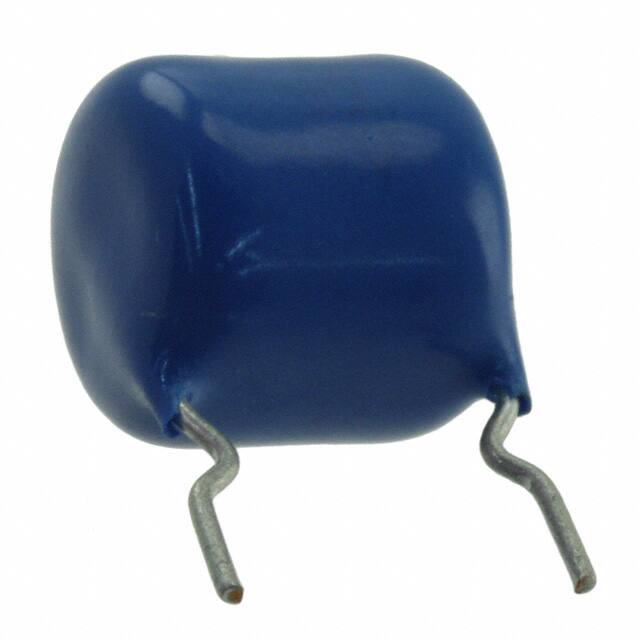


RES 100 OHM 2W 10% RADIAL
The AV101KE is a Through Hole Resistor, belonging to “A” Series of Ohmite. This article covers its application, features and more details about AV101KE.
AV101KE Description
The AV101KE is a 100 Ohms ±10% 2W Through Hole Resistor, belonging to the “A” Series of Ohmite designed for a variety of applications where high energy handling capabilities are crucial, which is ideal for any application which is subject to surges, high peak power, or impulse energy. And it has unique design which allows uniform distribution of energy throughout their structure which results in low thermal stress.
AV101KE Features
• High Surge Energy
• Non-Inductive
• Small Size
Specifications
- TypeParameter
- Factory Lead Time26 Weeks
- Mount
In electronic components, the term "Mount" typically refers to the method or process of physically attaching or fixing a component onto a circuit board or other electronic device. This can involve soldering, adhesive bonding, or other techniques to secure the component in place. The mounting process is crucial for ensuring proper electrical connections and mechanical stability within the electronic system. Different components may have specific mounting requirements based on their size, shape, and function, and manufacturers provide guidelines for proper mounting procedures to ensure optimal performance and reliability of the electronic device.
Through Hole - Package / Case
refers to the protective housing that encases an electronic component, providing mechanical support, electrical connections, and thermal management.
Radial - Terminal Shape
Terminal Shape in electronic components refers to the physical design of the connection points on the component that allow for electrical connections to be made. These terminals can come in various shapes such as pins, leads, pads, or terminals with specific configurations like surface mount or through-hole. The terminal shape is important as it determines how the component can be mounted on a circuit board or connected to other components. Different terminal shapes are used based on the specific requirements of the electronic circuit design and manufacturing process.
WIRE - Voltage Rated
RATED voltage is the voltage on the nameplate - the "design point" for maximum power throughput and safe thermal operation.
1kV - Operating Temperature
The operating temperature is the range of ambient temperature within which a power supply, or any other electrical equipment, operate in. This ranges from a minimum operating temperature, to a peak or maximum operating temperature, outside which, the power supply may fail.
-55°C~150°C - Packaging
Semiconductor package is a carrier / shell used to contain and cover one or more semiconductor components or integrated circuits. The material of the shell can be metal, plastic, glass or ceramic.
Bulk - Series
In electronic components, the "Series" refers to a group of products that share similar characteristics, designs, or functionalities, often produced by the same manufacturer. These components within a series typically have common specifications but may vary in terms of voltage, power, or packaging to meet different application needs. The series name helps identify and differentiate between various product lines within a manufacturer's catalog.
PulsEater® A - Published1997
- Size / Dimension
In electronic components, the parameter "Size / Dimension" refers to the physical dimensions of the component, such as its length, width, and height. These dimensions are crucial for determining how the component will fit into a circuit or system, as well as for ensuring compatibility with other components and the overall design requirements. The size of a component can also impact its performance characteristics, thermal properties, and overall functionality within a given application. Engineers and designers must carefully consider the size and dimensions of electronic components to ensure proper integration and functionality within their designs.
0.591Lx0.512W 15.00mmx13.00mm - Tolerance
In electronic components, "tolerance" refers to the acceptable deviation or variation from the specified or ideal value of a particular parameter, such as resistance, capacitance, or voltage. It indicates the range within which the actual value of the component can fluctuate while still being considered acceptable for use in a circuit. Tolerance is typically expressed as a percentage or a specific value and is important for ensuring the accuracy and reliability of electronic devices. Components with tighter tolerances are more precise but may also be more expensive. It is crucial to consider tolerance when selecting components to ensure proper functionality and performance of the circuit.
±10% - Part Status
Parts can have many statuses as they progress through the configuration, analysis, review, and approval stages.
Active - Moisture Sensitivity Level (MSL)
Moisture Sensitivity Level (MSL) is a standardized rating that indicates the susceptibility of electronic components, particularly semiconductors, to moisture-induced damage during storage and the soldering process, defining the allowable exposure time to ambient conditions before they require special handling or baking to prevent failures
1 (Unlimited) - Number of Terminations2
- ECCN Code
An ECCN (Export Control Classification Number) is an alphanumeric code used by the U.S. Bureau of Industry and Security to identify and categorize electronic components and other dual-use items that may require an export license based on their technical characteristics and potential for military use.
EAR99 - Temperature Coefficient
The resistance-change factor per degree Celsius of temperature change is called the temperature coefficient of resistance. This factor is represented by the Greek lower-case letter “alpha” (α). A positive coefficient for a material means that its resistance increases with an increase in temperature.
100 ppm/°C - Resistance
Resistance is a fundamental property of electronic components that measures their opposition to the flow of electric current. It is denoted by the symbol "R" and is measured in ohms (Ω). Resistance is caused by the collisions of electrons with atoms in a material, which generates heat and reduces the flow of current. Components with higher resistance will impede the flow of current more than those with lower resistance. Resistance plays a crucial role in determining the behavior and functionality of electronic circuits, such as limiting current flow, voltage division, and controlling power dissipation.
100Ohm - Composition
Parameter "Composition" in electronic components refers to the specific materials and substances used in the construction of the component. It encompasses the chemical and physical elements that make up the component, influencing its electrical, thermal, and mechanical properties. The composition can affect the performance, reliability, and durability of the component in various applications. Understanding the composition is essential for optimizing the design and functionality of electronic devices.
Ceramic - Power Rating
The "Power Rating" of an electronic component refers to the maximum amount of power that the component can handle or dissipate without being damaged. It is typically measured in watts and is an important specification to consider when designing or selecting components for a circuit. Exceeding the power rating of a component can lead to overheating, malfunction, or even permanent damage. It is crucial to ensure that the power rating of each component in a circuit is sufficient to handle the power levels expected during normal operation to maintain the reliability and longevity of the electronic system.
2W - Max Power Dissipation
The maximum power that the MOSFET can dissipate continuously under the specified thermal conditions.
2W - Terminal Pitch
The center distance from one pole to the next.
12.5mm - Construction
Construction in electronic components refers to the design and materials used in the manufacturing of the components. It encompasses the physical structure, arrangement, and integration of various parts like substrates, conductors, and insulators. The construction impacts the performance, reliability, and thermal properties of the component, influencing how it interacts with electrical signals and other components in a circuit. Different construction techniques can also affect the size, weight, and cost of the electronic component.
Epoxy Coating - Resistor Type
The parameter "Resistor Type" in electronic components refers to the specific material and construction of a resistor that determines its electrical properties and performance characteristics. There are various types of resistors available, such as carbon film, metal film, wirewound, and thick film resistors, each with its own advantages and applications. The resistor type affects factors like tolerance, temperature coefficient, power rating, and stability, which are important considerations when selecting a resistor for a particular circuit. Choosing the right resistor type is crucial for ensuring proper functionality and reliability of electronic devices and circuits.
FIXED RESISTOR - Reach Compliance Code
Reach Compliance Code refers to a designation indicating that electronic components meet the requirements set by the Registration, Evaluation, Authorization, and Restriction of Chemicals (REACH) regulation in the European Union. It signifies that the manufacturer has assessed and managed the chemical substances within the components to ensure safety and environmental protection. This code is vital for compliance with regulations aimed at minimizing risks associated with hazardous substances in electronic products.
unknown - Rated Power Dissipation (P)
Rated Power Dissipation (P) is a crucial parameter in electronic components that indicates the maximum amount of power the component can safely dissipate without being damaged. It is typically measured in watts and is important for determining the component's thermal management requirements. Exceeding the rated power dissipation can lead to overheating, reduced performance, or even permanent damage to the component. Designers must carefully consider the rated power dissipation when selecting and using electronic components to ensure reliable operation within specified limits.
2W - Lead Pitch
Lead pitch in electronic components refers to the distance between the center of one lead (or pin) of a component to the center of the adjacent lead. It is an important parameter to consider when designing and assembling electronic circuits, as it determines the spacing required on a circuit board for proper placement and soldering of the component. Lead pitch is typically specified in millimeters or inches and can vary depending on the type of component, such as integrated circuits, resistors, capacitors, and connectors. Choosing the correct lead pitch ensures proper alignment and connection of components on a circuit board, ultimately affecting the functionality and reliability of the electronic device.
12.5mm - Lead Length
Lead length refers to the distance from the body of an electronic component to the end of its leads or terminals. It is an important specification in component design and packaging, as it affects the ease of soldering, the overall fit within a circuit board, and the electrical performance. Longer leads can facilitate easier connections but may also introduce increased resistance or inductance in high-frequency applications. Proper lead length is crucial for ensuring reliable connections and optimal performance in electronic circuits.
4.7mm - Features
In the context of electronic components, the term "Features" typically refers to the specific characteristics or functionalities that a particular component offers. These features can vary depending on the type of component and its intended use. For example, a microcontroller may have features such as built-in memory, analog-to-digital converters, and communication interfaces like UART or SPI.When evaluating electronic components, understanding their features is crucial in determining whether they meet the requirements of a particular project or application. Engineers and designers often look at features such as operating voltage, speed, power consumption, and communication protocols to ensure compatibility and optimal performance.In summary, the "Features" parameter in electronic components describes the unique attributes and capabilities that differentiate one component from another, helping users make informed decisions when selecting components for their electronic designs.
Flame Retardant Coating, Moisture Resistant, Non-Inductive, Pulse Withstanding, Safety - Diameter
In electronic components, the parameter "Diameter" typically refers to the measurement of the width of a circular component, such as a resistor, capacitor, or inductor. It is a crucial dimension that helps determine the physical size and fit of the component within a circuit or on a circuit board. The diameter is usually measured in millimeters (mm) or inches (in) and is important for ensuring proper placement and soldering of the component during assembly. Understanding the diameter of electronic components is essential for selecting the right size for a specific application and ensuring compatibility with other components and the overall design of the circuit.
13mm - Height21.9964mm
- Height Seated (Max)
Height Seated (Max) is a parameter in electronic components that refers to the maximum allowable height of the component when it is properly seated or installed on a circuit board or within an enclosure. This specification is crucial for ensuring proper fit and alignment within the overall system design. Exceeding the maximum seated height can lead to mechanical interference, electrical shorts, or other issues that may impact the performance and reliability of the electronic device. Manufacturers provide this information to help designers and engineers select components that will fit within the designated space and function correctly in the intended application.
0.866 22.00mm - RoHS Status
RoHS means “Restriction of Certain Hazardous Substances” in the “Hazardous Substances Directive” in electrical and electronic equipment.
ROHS3 Compliant
AV101KE Application
• Motor Drives
• Power Supplies, UPS
• Power Conversion
• In-Rush Current Limiting
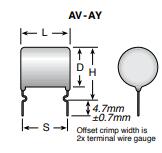
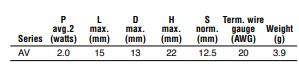
AV101KE Dimensions
AV101KE Manufacturer
Ohmite Manufacturing Company has been a leading provider of resistors for high current, high voltage, and high energy applications for over 80 years. Our full complement of products includes wirewound, wire element, thick film, and ceramic composition resistors, in addition to variable voltage controls and heatsinks.
Datasheet PDF
- Datasheets :
Popularity by Region
What is the AV101KE suitable for?
It is suitable for any application which is subject to surges, high peak power, or impulse energy. Also, its high-temperature, solvent-resistant epoxy coating carries a UL94V0 flammability rating which is suitable for almost any environment.
What model does the “A” series have?
The “A” series includes in AV, AW, AX, AY, AZ.
What are the dimensions of AV101KE?
0.591 L x 0.512 W (15.00mm x 13.00mm).
 SG3525A PWM Controller: Pinout, Equivalent and Datasheet
25 October 202115105
 Vicor Corporation PI3740-00-LGIZ Purchase Checklist
16 August 2025276
 Sensirion AG SHT11 Sensor Technical Specs and Features
29 September 2025620
 TPS2557DRBT Dual Timer IC: Features, Pinout, and Datasheet
15 April 20222457
 PIC12F508 Microcontroller: Datasheet, Programming, Block Diagram
13 October 20216383
 Exploring the STM32F103x8 and STM32F103xB Series Microcontrollers by STMicroelectronics
29 February 20241642
 PIC16F688 Microcontroller: Circuit, Pinout, and Datasheet
11 November 20215411
 LM1085 Positive Regulator: Pinout, Equivalent and Circuit
29 September 20215810
 What is Server and Why does a Server Crash?
14 September 202118702
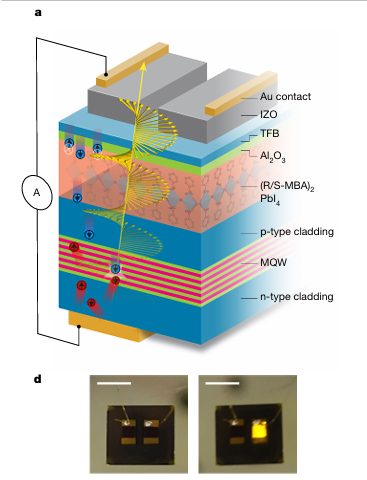 Enhancing the Efficiency of Semiconductors by Using the Spin of Electrons
11 February 20251517
 What is Graphics Processing Unit (GPU)?
18 October 20218062
 What is a USB Data Cable?
27 August 202114982
 Shenzhen: This Year Will Focus on Promoting SMIC and CR Micro 12-inch Project
13 April 20226963
 What Determines the Maximum Operating Frequency of a Diode?
29 June 202212889
 The Introduction to QFN Package
15 October 20258519
 What Is an Electrical Connector? Types and Selection Checklist
09 July 20269128
Ohmite
In Stock: 18
Minimum: 1 Multiples: 1
Qty
Unit Price
Ext Price
1
$19.410354
$19.41
10
$18.311655
$183.12
100
$17.275146
$1,727.51
500
$16.297308
$8,148.65
1000
$15.374818
$15,374.82
Not the price you want? Send RFQ Now and we'll contact you ASAP.
Inquire for More Quantity
![13FR050E]() 13FR050E
13FR050EOhmite
![5CJ5K1]() 5CJ5K1
5CJ5K1Ohmite
![TCH35P2R20JE]() TCH35P2R20JE
TCH35P2R20JEOhmite
![MOX91022505FTE]() MOX91022505FTE
MOX91022505FTEOhmite
![TCH35P10R0JE]() TCH35P10R0JE
TCH35P10R0JEOhmite
![ACS5S 2K2 J TR]() ACS5S 2K2 J TR
ACS5S 2K2 J TROhmite
![ACS5S R6 K TR]() ACS5S R6 K TR
ACS5S R6 K TROhmite
![ACS5S 1K2 J TR]() ACS5S 1K2 J TR
ACS5S 1K2 J TROhmite
![ACS5S 4K7 J TR]() ACS5S 4K7 J TR
ACS5S 4K7 J TROhmite
![ACS5S R56 K TR]() ACS5S R56 K TR
ACS5S R56 K TROhmite