

 Product
 Brand
Brand Articles
 Tools
Tools
LSM6DSOTR Motion Sensor: Datasheet, Application Note, Pinout


CONSUMER MEMS
The LSM6DSOTR is a system-in-package featuring a high-performance 3-axis digital accelerometer and 3-axis digital gyroscope. This post will unlock its datasheet, pinout, application,feature and more details about LSM6DSOTR.
LSM6DSOTR Overview
The LSM6DSOST is a system-in-package featuring a high-performance 3-axis digital accelerometer and 3-axis digital gyroscope.
The LSM6DSOST delivers best-in-class motion sensing that can detect orientation and gestures in order to empower application developers and consumers with features and capabilities that are more sophisticated than orienting their devices to portrait and landscape mode. The event-detection interrupts enable efficient and reliable motion tracking and contextual awareness, implementing hardware recognition of free-fall events, 6 D orientation, click and double-click sensing, activity or inactivity, stationary/motion detection and wakeup events.
The LSM6DSOST supports main OS requirements, offering real, virtual and batch mode sensors. In addition, the LSM6DSOST can efficiently run the sensor-related features specified in Android, saving power and enabling faster reaction time. In particular, the LSM6DSOST has been designed to implement hardware features such as significant motion detection, stationary/motion detection. tilt, pedometer functions, timestamping and to support the data acquisition of an external magnetometer.
The LSM6DSOST offers hardware flexibility to connect the pins with different mode connections to external sensors
to expand functionalities such as adding a sensor hub, auxiliary SPI, etc.
LSM6DSOTR Pinout
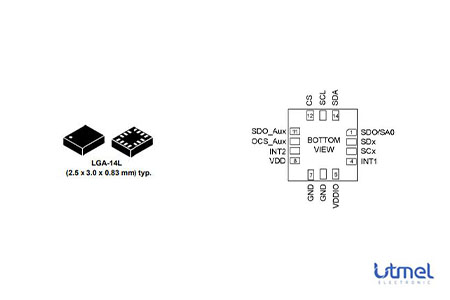
LSM6DSOTR Pinout
Pin connections
The LSM6DSO offers flexibility to connect the pins in order to have four different mode connections and
functionalities. In detail:
• Mode 1: I²C / MIPI I3CSM slave interface or SPI (3- and 4-wire) serial interface is available;
• Mode 2: I²C / MIPI I3CSM slave interface or SPI (3- and 4-wire) serial interface and I²C interface master for
external sensor connections are available;
• Mode 3: I²C / MIPI I3CSM slave interface or SPI (3- and 4-wire) serial interface is available for the application
processor interface while an auxiliary SPI (3- and 4-wire) serial interface for external sensor connections is
available for the gyroscope ONLY;
• Mode 4: I²C / MIPI I3CSM slave interface or SPI (3- and 4-wire) serial interface is available for the application
processor interface while an auxiliary SPI (3- and 4-wire) serial interface for external sensor connections is
available for the accelerometer and gyroscope.
LSM6DSO connection modes

LSM6DSO connection modes
LSM6DSOTR CAD Model
Symbol
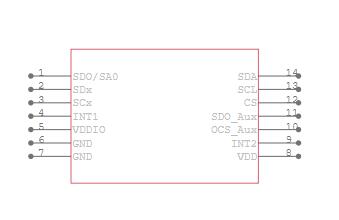
LSM6DSOTR Symbol
Footprint
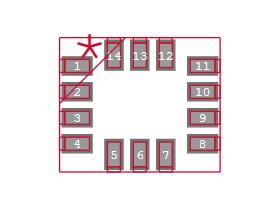
LSM6DSOTR Footprint
3D Model
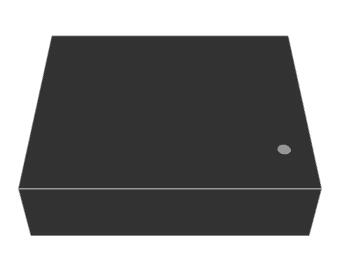
LSM6DSOTR 3D Model
LSM6DSOTR Feature
• 9 kybtes data buffering, data can be compressed two or three times
– 100 % efficiency with flexible configurations and partitioning
– Possibility to store timestamp
• Event-detection interrupts (fully configurable)
– Free-fall
– Wakeup
– 6D orientation
– Click and double-click sensing
– Activity/Inactivity recognition
– Stationary/Motion detection
• Specific IP blocks with negligible power consumption and high-performance
– Pedometer functions: step detector and step counters
– Tilt
– Significant Motion Detection
– Finite State Machine (FSM) for accelerometer, gyroscope, and external sensors
• Sensor hub
– Up to 6 total sensors: 2 internal (accelerometer and gyroscope) and 4 external sensors
LSM6DSOTR Application
• Motion tracking and gesture detection
• Sensor hub
• Indoor navigation
• IoT and connected devices
• Smart power saving for handheld devices
• EIS and OIS for camera applications
• Vibration monitoring and compensation
LSM6DSOTR Operation Modes
In the LSM6DSOTR, the accelerometer and the gyroscope can be turned on/off independently of each other and are
allowed to have different ODRs and power modes.
The LSM6DSOTR has three operating modes available:
• only accelerometer active and gyroscope in power-down
• only gyroscope active and accelerometer in power-down
• both accelerometer and gyroscope sensors active with independent ODR
The accelerometer is activated from power-down by writing ODR_XL [3:0] in CTRL1_XL (10h) while the gyroscope
is activated from power-down by writing ODR_G [3:0] in CTRL2_G (11h). For combo mode, the ODRs are totally
independent
Specifications
- TypeParameter
- Lifecycle Status
Lifecycle Status refers to the current stage of an electronic component in its product life cycle, indicating whether it is active, obsolete, or transitioning between these states. An active status means the component is in production and available for purchase. An obsolete status indicates that the component is no longer being manufactured or supported, and manufacturers typically provide a limited time frame for support. Understanding the lifecycle status is crucial for design engineers to ensure continuity and reliability in their projects.
ACTIVE (Last Updated: 6 months ago) - Factory Lead Time16 Weeks
- Mounting Type
The "Mounting Type" in electronic components refers to the method used to attach or connect a component to a circuit board or other substrate, such as through-hole, surface-mount, or panel mount.
Surface Mount - Package / Case
refers to the protective housing that encases an electronic component, providing mechanical support, electrical connections, and thermal management.
14-VFLGA Module - Surface Mount
having leads that are designed to be soldered on the side of a circuit board that the body of the component is mounted on.
YES - Usage LevelIndustrial grade
- Operating Temperature
The operating temperature is the range of ambient temperature within which a power supply, or any other electrical equipment, operate in. This ranges from a minimum operating temperature, to a peak or maximum operating temperature, outside which, the power supply may fail.
-40°C~85°C - Packaging
Semiconductor package is a carrier / shell used to contain and cover one or more semiconductor components or integrated circuits. The material of the shell can be metal, plastic, glass or ceramic.
Tape & Reel (TR) - Series
In electronic components, the "Series" refers to a group of products that share similar characteristics, designs, or functionalities, often produced by the same manufacturer. These components within a series typically have common specifications but may vary in terms of voltage, power, or packaging to meet different application needs. The series name helps identify and differentiate between various product lines within a manufacturer's catalog.
iNEMO - JESD-609 Code
The "JESD-609 Code" in electronic components refers to a standardized marking code that indicates the lead-free solder composition and finish of electronic components for compliance with environmental regulations.
e4 - Part Status
Parts can have many statuses as they progress through the configuration, analysis, review, and approval stages.
Active - Moisture Sensitivity Level (MSL)
Moisture Sensitivity Level (MSL) is a standardized rating that indicates the susceptibility of electronic components, particularly semiconductors, to moisture-induced damage during storage and the soldering process, defining the allowable exposure time to ambient conditions before they require special handling or baking to prevent failures
3 (168 Hours) - Number of Terminations14
- Terminal Finish
Terminal Finish refers to the surface treatment applied to the terminals or leads of electronic components to enhance their performance and longevity. It can improve solderability, corrosion resistance, and overall reliability of the connection in electronic assemblies. Common finishes include nickel, gold, and tin, each possessing distinct properties suitable for various applications. The choice of terminal finish can significantly impact the durability and effectiveness of electronic devices.
Nickel/Gold (Ni/Au) - electrolytic - Terminal Position
In electronic components, the term "Terminal Position" refers to the physical location of the connection points on the component where external electrical connections can be made. These connection points, known as terminals, are typically used to attach wires, leads, or other components to the main body of the electronic component. The terminal position is important for ensuring proper connectivity and functionality of the component within a circuit. It is often specified in technical datasheets or component specifications to help designers and engineers understand how to properly integrate the component into their circuit designs.
BOTTOM - Terminal Form
Occurring at or forming the end of a series, succession, or the like; closing; concluding.
NO LEAD - Peak Reflow Temperature (Cel)
Peak Reflow Temperature (Cel) is a parameter that specifies the maximum temperature at which an electronic component can be exposed during the reflow soldering process. Reflow soldering is a common method used to attach electronic components to a circuit board. The Peak Reflow Temperature is crucial because it ensures that the component is not damaged or degraded during the soldering process. Exceeding the specified Peak Reflow Temperature can lead to issues such as component failure, reduced performance, or even permanent damage to the component. It is important for manufacturers and assemblers to adhere to the recommended Peak Reflow Temperature to ensure the reliability and functionality of the electronic components.
260 - Number of Functions1
- Supply Voltage
Supply voltage refers to the electrical potential difference provided to an electronic component or circuit. It is crucial for the proper operation of devices, as it powers their functions and determines performance characteristics. The supply voltage must be within specified limits to ensure reliability and prevent damage to components. Different electronic devices have specific supply voltage requirements, which can vary widely depending on their design and intended application.
1.8V - Terminal Pitch
The center distance from one pole to the next.
0.5mm - Time@Peak Reflow Temperature-Max (s)
Time@Peak Reflow Temperature-Max (s) refers to the maximum duration that an electronic component can be exposed to the peak reflow temperature during the soldering process, which is crucial for ensuring reliable solder joint formation without damaging the component.
NOT SPECIFIED - Base Part Number
The "Base Part Number" (BPN) in electronic components serves a similar purpose to the "Base Product Number." It refers to the primary identifier for a component that captures the essential characteristics shared by a group of similar components. The BPN provides a fundamental way to reference a family or series of components without specifying all the variations and specific details.
LSM6D - JESD-30 Code
JESD-30 Code refers to a standardized descriptive designation system established by JEDEC for semiconductor-device packages. This system provides a systematic method for generating designators that convey essential information about the package's physical characteristics, such as size and shape, which aids in component identification and selection. By using JESD-30 codes, manufacturers and engineers can ensure consistency and clarity in the specification of semiconductor packages across various applications and industries.
R-PBGA-N14 - Output Type
The "Output Type" parameter in electronic components refers to the type of signal or data that is produced by the component as an output. This parameter specifies the nature of the output signal, such as analog or digital, and can also include details about the voltage levels, current levels, frequency, and other characteristics of the output signal. Understanding the output type of a component is crucial for ensuring compatibility with other components in a circuit or system, as well as for determining how the output signal can be utilized or processed further. In summary, the output type parameter provides essential information about the nature of the signal that is generated by the electronic component as its output.
I2C, SPI - Max Supply Voltage
In general, the absolute maximum common-mode voltage is VEE-0.3V and VCC+0.3V, but for products without a protection element at the VCC side, voltages up to the absolute maximum rated supply voltage (i.e. VEE+36V) can be supplied, regardless of supply voltage.
3.6V - Min Supply Voltage
The minimum supply voltage (V min ) is explored for sequential logic circuits by statistically simulating the impact of within-die process variations and gate-dielectric soft breakdown on data retention and hold time.
1.62V - Analog IC - Other Type
Analog IC - Other Type is a parameter used to categorize electronic components that are integrated circuits (ICs) designed for analog signal processing but do not fall into more specific subcategories such as amplifiers, comparators, or voltage regulators. These ICs may include specialized analog functions such as analog-to-digital converters (ADCs), digital-to-analog converters (DACs), voltage references, or signal conditioning circuits. They are typically used in various applications where precise analog signal processing is required, such as in audio equipment, instrumentation, communication systems, and industrial control systems. Manufacturers provide detailed specifications for these components to help engineers select the most suitable IC for their specific design requirements.
ANALOG CIRCUIT - Operating Supply Current
Operating Supply Current, also known as supply current or quiescent current, is a crucial parameter in electronic components that indicates the amount of current required for the device to operate under normal conditions. It represents the current drawn by the component from the power supply while it is functioning. This parameter is important for determining the power consumption of the component and is typically specified in datasheets to help designers calculate the overall power requirements of their circuits. Understanding the operating supply current is essential for ensuring proper functionality and efficiency of electronic systems.
550μA - Sensor Type
In electronic components, the parameter "Sensor Type" refers to the specific type of sensor technology used in a particular component to detect and measure physical phenomena such as light, temperature, pressure, motion, or proximity. Different sensor types utilize various principles and mechanisms to convert the detected input into an electrical signal that can be processed by the electronic component. Common sensor types include photodiodes, thermistors, accelerometers, and proximity sensors, each designed for specific applications and environments. Understanding the sensor type is crucial for selecting the right component for a given task and ensuring accurate and reliable sensing capabilities in electronic systems.
Accelerometer, Gyroscope, 6 Axis - Height860μm
- Length3mm
- Width2.5mm
- RoHS Status
RoHS means “Restriction of Certain Hazardous Substances” in the “Hazardous Substances Directive” in electrical and electronic equipment.
Non-RoHS Compliant
LSM6DSOTR Package
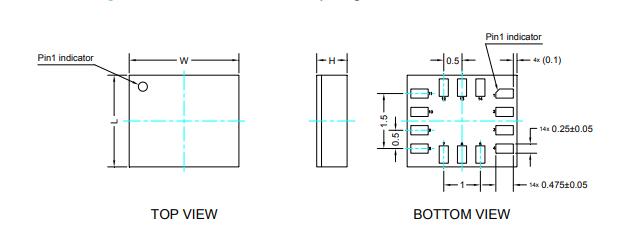
LSM6DSOTR Package
LSM6DSOTR Manufacturer
STMicroelectronics is a global independent semiconductor company and is a leader in developing and delivering semiconductor solutions across the spectrum of microelectronics applications. An unrivalled combination of silicon and system expertise, manufacturing strength, Intellectual Property (IP) portfolio and strategic partners positions the Company at the forefront of System-on-Chip (SoC) technology and its products play a key role in enabling today's convergence trends.
A similar part article:
Datasheet PDF
- Datasheets :
Trend Analysis
What are the features of the LSM6DSO?
3-axis digital accelerometer and 3-axis digital gyroscope.
What does the LSM6DSO do?}
Event-detection interrupts
How many kbytes does the LSM6DSO offer for dynamic data batching?
9 kbytes
What is the LSM6DSOs angular rate range?
Angular rate range.
What are the LSM6DSO configurable for?
Gyroscope and accelerometer.
 ATMEGA2560-16AU Microcontroller: Features, Pinout, and Datasheet
24 February 202213674
 STM32MP157CAA3 Development: From Setup and Configuration to Advanced Features Implementation
07 June 20251390
 Unraveling the Silicon Labs C8051F000/1/2/5/6/7 and C8051F010/1/2/5/6/7 Series Mixed-Signal 32KB ISP FLASH MCUs
29 February 2024232
 VL53L0X LIDAR Distance Sensor: Pinout, Datasheet, and Applications
11 September 20214410
 PMEG10010ELRX Schottky Barrier Rectifier: 100V, 1A, Datasheet
08 March 20221359
 BD140 PNP Transistor: Datasheet, Pinout, and Equivalents
11 August 202126551
 LTC2852 Transceiver: Pinout, Equivalent and Datasheet
24 November 20211387
 LTM4644IY DC/DC µModule Regulator: Circuit, Pinout, and Datasheet
11 February 20222820
 What is Cloud Storage?
07 October 20211916
 Is Digital Radio Frequency Memory (DRFM) Suitable for Spoofing Interference?
12 November 20215445
 BMW CEO: The Car Chip Problem Will Not Be Solved Until 2023
12 April 20225707
 Switch-mode Power Supply Basics
14 December 20208130
 What is the Ripple of the Power Supply, How to Measure its Value, and How to Suppress it?
23 November 202110313
 What is an Auto Transformer and Its Working?
01 April 20219271
 Trimmer Resistors: From Principles to Selection and Applications
11 August 20253702
 Semiconductor Market Predicted to Witness Significant Growth by 2023
19 September 20233476
STMicroelectronics
In Stock: 20
United States
China
Canada
Japan
Russia
Germany
United Kingdom
Singapore
Italy
Hong Kong(China)
Taiwan(China)
France
Korea
Mexico
Netherlands
Malaysia
Austria
Spain
Switzerland
Poland
Thailand
Vietnam
India
United Arab Emirates
Afghanistan
Åland Islands
Albania
Algeria
American Samoa
Andorra
Angola
Anguilla
Antigua & Barbuda
Argentina
Armenia
Aruba
Australia
Azerbaijan
Bahamas
Bahrain
Bangladesh
Barbados
Belarus
Belgium
Belize
Benin
Bermuda
Bhutan
Bolivia
Bonaire, Sint Eustatius and Saba
Bosnia & Herzegovina
Botswana
Brazil
British Indian Ocean Territory
British Virgin Islands
Brunei
Bulgaria
Burkina Faso
Burundi
Cabo Verde
Cambodia
Cameroon
Cayman Islands
Central African Republic
Chad
Chile
Christmas Island
Cocos (Keeling) Islands
Colombia
Comoros
Congo
Congo (DRC)
Cook Islands
Costa Rica
Côte d’Ivoire
Croatia
Cuba
Curaçao
Cyprus
Czechia
Denmark
Djibouti
Dominica
Dominican Republic
Ecuador
Egypt
El Salvador
Equatorial Guinea
Eritrea
Estonia
Eswatini
Ethiopia
Falkland Islands
Faroe Islands
Fiji
Finland
French Guiana
French Polynesia
Gabon
Gambia
Georgia
Ghana
Gibraltar
Greece
Greenland
Grenada
Guadeloupe
Guam
Guatemala
Guernsey
Guinea
Guinea-Bissau
Guyana
Haiti
Honduras
Hungary
Iceland
Indonesia
Iran
Iraq
Ireland
Isle of Man
Israel
Jamaica
Jersey
Jordan
Kazakhstan
Kenya
Kiribati
Kosovo
Kuwait
Kyrgyzstan
Laos
Latvia
Lebanon
Lesotho
Liberia
Libya
Liechtenstein
Lithuania
Luxembourg
Macao(China)
Madagascar
Malawi
Maldives
Mali
Malta
Marshall Islands
Martinique
Mauritania
Mauritius
Mayotte
Micronesia
Moldova
Monaco
Mongolia
Montenegro
Montserrat
Morocco
Mozambique
Myanmar
Namibia
Nauru
Nepal
New Caledonia
New Zealand
Nicaragua
Niger
Nigeria
Niue
Norfolk Island
North Korea
North Macedonia
Northern Mariana Islands
Norway
Oman
Pakistan
Palau
Palestinian Authority
Panama
Papua New Guinea
Paraguay
Peru
Philippines
Pitcairn Islands
Portugal
Puerto Rico
Qatar
Réunion
Romania
Rwanda
Samoa
San Marino
São Tomé & Príncipe
Saudi Arabia
Senegal
Serbia
Seychelles
Sierra Leone
Sint Maarten
Slovakia
Slovenia
Solomon Islands
Somalia
South Africa
South Sudan
Sri Lanka
St Helena, Ascension, Tristan da Cunha
St. Barthélemy
St. Kitts & Nevis
St. Lucia
St. Martin
St. Pierre & Miquelon
St. Vincent & Grenadines
Sudan
Suriname
Svalbard & Jan Mayen
Sweden
Syria
Tajikistan
Tanzania
Timor-Leste
Togo
Tokelau
Tonga
Trinidad & Tobago
Tunisia
Turkey
Turkmenistan
Turks & Caicos Islands
Tuvalu
U.S. Outlying Islands
U.S. Virgin Islands
Uganda
Ukraine
Uruguay
Uzbekistan
Vanuatu
Vatican City
Venezuela
Wallis & Futuna
Yemen
Zambia
Zimbabwe
![LSM303AHTR]() LSM303AHTR
LSM303AHTRSTMicroelectronics
![LSM6DSLUSTR]() LSM6DSLUSTR
LSM6DSLUSTRSTMicroelectronics
![LSM6DSOXTR]() LSM6DSOXTR
LSM6DSOXTRSTMicroelectronics
![LSM9DS1TR]() LSM9DS1TR
LSM9DS1TRSTMicroelectronics
![LSM6DSLTR]() LSM6DSLTR
LSM6DSLTRSTMicroelectronics
![LSM303AGRTR]() LSM303AGRTR
LSM303AGRTRSTMicroelectronics
![LSM6DS3TR]() LSM6DS3TR
LSM6DS3TRSTMicroelectronics
![ISM330DLCTR]() ISM330DLCTR
ISM330DLCTRSTMicroelectronics
![LSM303DLHC]() LSM303DLHC
LSM303DLHCSTMicroelectronics


