

 Product
 Brand
Brand Articles
 Tools
Tools
Stop Struggling with Weak Sensor Signals: AD8338 Makes High-Gain Amplification Dead Simple


5mA per Channel Instrumentational OP Amps 3V~5V AD8338 16-WFQFN Exposed Pad, CSP
Boost weak signals from ultrasonic or inductive sensors with the AD8338 Variable Gain Amplifier. Learn to wire, code, and build high-gain projects today.
- The Problem This Solves — and Why AD8338 Is the Answer
- 1. Meet the AD8338: What's Inside the Package?
- 2. Wiring It Up: Pinout and Connections
- 3. Getting It Running: Setup and Configuration
- 4. Project Ideas: What Can You Build?
- 5. When AD8338 Isn't Enough — Alternatives
- 6. Maker FAQ
- 7. Go Build Something
- Specifications
- Parts with Similar Specs
- Datasheet PDF
The Problem This Solves — and Why AD8338 Is the Answer
You’re building a long-range ultrasonic distance sensor or a DIY metal detector, and the signal coming back is so tiny your Arduino’s ADC can’t even "see" it. You try a standard op-amp, but the gain is fixed, and as soon as the signal gets a little stronger, it clips and ruins your data.
The AD8338 is the "automatic volume knob" your project has been missing. It is a Variable Gain Amplifier (VGA) that allows you to adjust signal strength on the fly, boosting faint whispers into clear data without the distortion of a standard fixed-gain circuit.
What it does in plain English: It takes a tiny, messy electrical signal and makes it up to 10,000 times stronger, controlled by a simple voltage from your microcontroller.
Who it's perfect for: Makers working with RF, ultrasonic transducers, inductive coils, or anyone needing to "normalize" a signal before it hits an ADC.
Why not just use a standard Op-Amp? Standard op-amps have fixed gain; if your input signal changes, your output might be too small or too large. The AD8338 lets you adjust that gain dynamically (AGC).
Availability note: Widely available from major distributors; look for "AD8338 breakout boards" if you aren't ready to solder tiny LFCSP chips!
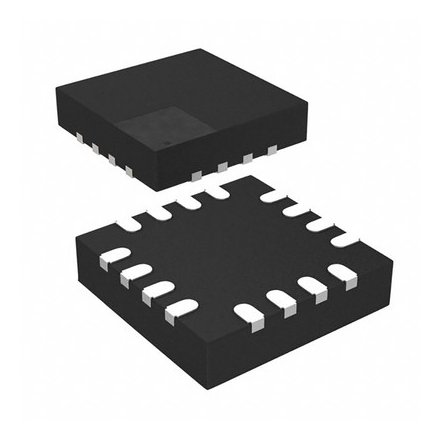
1. Meet the AD8338: What's Inside the Package?
Imagine you're trying to record a conversation in a noisy room. You need to turn the mic up when people whisper and down when they shout. That is exactly what the AD8338 does for your electronics.
1.1 The Core Capability in Plain English
The AD8338 is a "Linear-in-dB" amplifier. This means that for every small increase in the control voltage you send it, the gain increases by a predictable amount of decibels. It handles "differential" signals, which is a fancy way of saying it’s great at ignoring electrical noise from your power supply or nearby motors.
1.2 The Numbers That Actually Matter
| What You Care About | The Value | Why It Matters for Your Project |
|---|---|---|
| Supply Voltage | 3.0V to 5.0V | Perfect for Arduino (5V) or ESP32/STM32 (3.3V). |
| Gain Range | 0 dB to 80 dB | Can boost a signal by 1x all the way to 10,000x. |
| Bandwidth | 18 MHz | Fast enough for high-speed RF and ultrasonic signals. |
| Current Draw | ~3 mA | Very low power; won't drain your battery-powered projects. |
1.3 What Can It Talk To?
The AD8338 "speaks" analog. It takes an analog signal in, and you control its gain using an analog voltage (which you can easily create using a PWM pin and a low-pass filter or a DAC pin on an ESP32).
2. Wiring It Up: Pinout and Connections
Because the AD8338 comes in a tiny 3mm x 3mm package, most makers will use a breakout board. Here is how to get it talking to your favorite microcontroller.
2.1 The Pins You'll Actually Use
| AD8338 Pin | Connect To (Arduino Uno) | Connect To (ESP32) | Notes |
|---|---|---|---|
| VCC | 5V | 3.3V | Power supply |
| GND | GND | GND | Common ground |
| GAIN | Pin D3 (PWM) | Pin 25 (DAC) | Controls how much to boost the signal |
| INP / INN | Sensor (+) / (-) | Sensor (+) / (-) | Your weak input signal |
| OUTP / OUTN | Analog Pin A0 | Analog Pin 34 | The boosted signal for your ADC |
2.2 Which Version Should You Buy?
The AD8338 comes in an LFCSP package. This is NOT breadboard-friendly. Pro Tip: Look for "AD8338 Module" on Amazon or eBay. These modules include the necessary capacitors and resistors already soldered down, saving you a massive headache.
3. Getting It Running: Setup and Configuration
Maker Tip: Always check your GAIN voltage with a multimeter before connecting the output to your ADC. If the gain is too high, the output might stay at the rail voltage, making you think the chip is dead!
3.1 Minimum Viable Circuit
To keep the AD8338 stable, you need 0.1µF decoupling capacitors on the VCC line. If you are using it at high gain (>50dB), keep your input wires as short as possible to prevent the chip from picking up radio interference and oscillating.
3.2 Starter Code
This snippet shows how to sweep the gain of the AD8338 using an Arduino to find the "sweet spot" for your sensor.
// AD8338 Gain Sweep Example
// This uses PWM to control the gain pin via a simple RC filter
const int gainPin = 3; // Connect to GAIN pin through a 10k resistor/1uF cap filter

void setup() {
  pinMode(gainPin, OUTPUT);
  Serial.begin(9600);
}

void loop() {
  for (int level = 0; level <= 255; level++) {
    analogWrite(gainPin, level); // Increasing voltage = Increasing gain
    Serial.print("Current Gain Level: ");
    Serial.println(level);
    delay(100);
  }
}
3.3 The 3 Most Common Mistakes (and How to Avoid Them)
| Mistake | Symptom | Fix |
|---|---|---|
| Noisy Power Supply | Output "jitters" or has a hum | Add a 10uF and 0.1uF capacitor across VCC and GND. |
| Gain Too High | Output oscillates (1-2MHz wave) | Reduce the GAIN voltage or add a small capacitor (10pF) across OUTP/FBKP. |
| Floating Inputs | Random garbage data | Ensure INN is grounded if you are only using a single-ended input. |
4. Project Ideas: What Can You Build?
4.1 Quick-Start Project: The "Super-Ear" Ultrasonic Receiver
Using a 40kHz ultrasonic transducer and the AD8338, you can build a receiver that detects leaks in compressed air lines or "hears" bats from across a yard. Because the AD8338 can boost the signal by 80dB, you'll pick up sounds that standard Arduino ultrasonic modules would completely miss. Use the ESP32's ADC to sample the output and display the waveform on an OLED screen.
4.2 More Ideas to Explore
Inductive Telemetry: Read data transmitted wirelessly through coils of wire.
Hidden Wire Finder: Build a tool to find AC wiring behind walls by amplifying the 50/60Hz hum.
DIY Lightning Detector: Use a long wire antenna and the AD8338 to "hear" the radio bursts from distant storms.
Signal Compressor: Automatically level out audio signals before they enter a recording device.
5. When AD8338 Isn't Enough — Alternatives
If you need even more bandwidth: Try the AD8330 (up to 150 MHz).
If you need a simpler TI alternative: The VCA810 offers a similar wide gain range.
If you need multiple channels: The VCA2612 is a dual-channel version often used in medical imaging.
6. Maker FAQ
Q: How do I connect AD8338 to an Arduino?
A: Connect VCC to 5V, GND to GND, and use a PWM pin with a low-pass filter to drive the GAIN pin.
Q: Can I use AD8338 with a 3.3V system like ESP32?
A: Yes! It operates perfectly down to 3.0V.
Q: Why is my AD8338 getting hot?
A: Check for a short circuit on the output or ensure your supply voltage doesn't exceed 5.5V.
Q: Do I need a differential signal?
A: No. You can tie the negative input (INN) to ground for "single-ended" use, though differential is cleaner.
7. Go Build Something
The AD8338 is one of those "secret weapon" chips that takes a project from "it barely works" to "pro-level performance." Whether you're hunting for lightning or building a high-tech metal detector, this VGA is your best friend for signal conditioning.
Libraries & Code: No library needed! Just use
analogWrite()ordacWrite().Community: Share your high-gain builds on r/arduino or Hackaday.io!
Specifications
Parts with Similar Specs
- ImagePart NumberManufacturerPackage / CaseNumber of PinsSlew RateInput Offset Voltage (Vos)Operating Supply CurrentTerminal PitchMountPin CountView Compare
![AD8338ACPZ-R7]()
AD8338ACPZ-R7
16-WFQFN Exposed Pad, CSP
16
50V/μs
1 mV
3 mA
0.5 mm
Surface Mount
16
![AD8475ACPZ-R7]()
16-WFQFN Exposed Pad, CSP
16
50V/μs
200 μV
3 mA
0.5 mm
Surface Mount
16
![AD8330ACPZ-RL]()
16-WFQFN Exposed Pad, CSP
16
50V/μs
200 μV
3 mA
0.5 mm
Surface Mount
16
![AD8475ACPZ-WP]()
16-WFQFN Exposed Pad, CSP
16
1500V/μs
1 mV
20 mA
0.5 mm
Surface Mount
16


Datasheet PDF
- Datasheets :
- PCN Assembly/Origin :
- PCN Design/Specification :
- Other Related Documents :
- ConflictMineralStatement :
 TPS22965NQWDSGRQ1 On-Resistance Load Switch: Circuit, Pinout, and Datasheet
08 April 20221826
 Navigating the TLK100 Ethernet PHY Lifecycle: Specs, Pinout, and Modern Migration Strategies
25 February 2026306
 A Comprehensive Technical Guide to Microchip PIC16F1829TIML Microcontroller
29 February 2024285
 SHT15 Humidity Sensor: Datasheet, Pinout and Features
06 September 20212676
 AD8367 500 MHz Variable Gain Amplifier: Datasheet, Pinout, and AGC Design Analysis
17 March 2026539
 OP27CJ8 Linear Amplifier: Product Overview and Applications
06 March 2024226
![SN74HC00N IC GATE NAND 4CH 2-INP 14DIP[Video]: Datasheet, Pinout, and Equivalents](https://res.utmel.com/Images/Article/6db9b92c-ecea-4b5a-9210-6814abb3eb0f.jpg) SN74HC00N IC GATE NAND 4CH 2-INP 14DIP[Video]: Datasheet, Pinout, and Equivalents
SN74HC00N IC GATE NAND 4CH 2-INP 14DIP[Video]: Datasheet, Pinout, and Equivalents12 March 20223902
 TPS54232DR: MOSFET, Pinout, Datasheet
22 February 20221240
 Utmel Attends the PCIM Europe 2023– Excelling in Power Electronics
20 June 20236939
 How are Integrated Circuits produced?
20 October 202526982
 Image Sensor: How do CCD and CMOS Sensors work?
24 October 202515005
 Will MicroLED replace LCD and OLED?
31 August 20213945
 SiC MOSFET Shortage 2026: Supply, Lead Times & Alternatives
02 July 20261964
 General PCB Layout Design Guidelines for RF and Digital-to-Analog Circuits
20 January 202215148
 Introduction to DDIC (Display Driver IC)
07 August 202636180
 What is a Thermoelectric Cooler?
08 April 20217208
Analog Devices Inc.
In Stock: 7
United States
China
Canada
Japan
Russia
Germany
United Kingdom
Singapore
Italy
Hong Kong(China)
Taiwan(China)
France
Korea
Mexico
Netherlands
Malaysia
Austria
Spain
Switzerland
Poland
Thailand
Vietnam
India
United Arab Emirates
Afghanistan
Åland Islands
Albania
Algeria
American Samoa
Andorra
Angola
Anguilla
Antigua & Barbuda
Argentina
Armenia
Aruba
Australia
Azerbaijan
Bahamas
Bahrain
Bangladesh
Barbados
Belarus
Belgium
Belize
Benin
Bermuda
Bhutan
Bolivia
Bonaire, Sint Eustatius and Saba
Bosnia & Herzegovina
Botswana
Brazil
British Indian Ocean Territory
British Virgin Islands
Brunei
Bulgaria
Burkina Faso
Burundi
Cabo Verde
Cambodia
Cameroon
Cayman Islands
Central African Republic
Chad
Chile
Christmas Island
Cocos (Keeling) Islands
Colombia
Comoros
Congo
Congo (DRC)
Cook Islands
Costa Rica
Côte d’Ivoire
Croatia
Cuba
Curaçao
Cyprus
Czechia
Denmark
Djibouti
Dominica
Dominican Republic
Ecuador
Egypt
El Salvador
Equatorial Guinea
Eritrea
Estonia
Eswatini
Ethiopia
Falkland Islands
Faroe Islands
Fiji
Finland
French Guiana
French Polynesia
Gabon
Gambia
Georgia
Ghana
Gibraltar
Greece
Greenland
Grenada
Guadeloupe
Guam
Guatemala
Guernsey
Guinea
Guinea-Bissau
Guyana
Haiti
Honduras
Hungary
Iceland
Indonesia
Iran
Iraq
Ireland
Isle of Man
Israel
Jamaica
Jersey
Jordan
Kazakhstan
Kenya
Kiribati
Kosovo
Kuwait
Kyrgyzstan
Laos
Latvia
Lebanon
Lesotho
Liberia
Libya
Liechtenstein
Lithuania
Luxembourg
Macao(China)
Madagascar
Malawi
Maldives
Mali
Malta
Marshall Islands
Martinique
Mauritania
Mauritius
Mayotte
Micronesia
Moldova
Monaco
Mongolia
Montenegro
Montserrat
Morocco
Mozambique
Myanmar
Namibia
Nauru
Nepal
New Caledonia
New Zealand
Nicaragua
Niger
Nigeria
Niue
Norfolk Island
North Korea
North Macedonia
Northern Mariana Islands
Norway
Oman
Pakistan
Palau
Palestinian Authority
Panama
Papua New Guinea
Paraguay
Peru
Philippines
Pitcairn Islands
Portugal
Puerto Rico
Qatar
Réunion
Romania
Rwanda
Samoa
San Marino
São Tomé & Príncipe
Saudi Arabia
Senegal
Serbia
Seychelles
Sierra Leone
Sint Maarten
Slovakia
Slovenia
Solomon Islands
Somalia
South Africa
South Sudan
Sri Lanka
St Helena, Ascension, Tristan da Cunha
St. Barthélemy
St. Kitts & Nevis
St. Lucia
St. Martin
St. Pierre & Miquelon
St. Vincent & Grenadines
Sudan
Suriname
Svalbard & Jan Mayen
Sweden
Syria
Tajikistan
Tanzania
Timor-Leste
Togo
Tokelau
Tonga
Trinidad & Tobago
Tunisia
Turkey
Turkmenistan
Turks & Caicos Islands
Tuvalu
U.S. Outlying Islands
U.S. Virgin Islands
Uganda
Ukraine
Uruguay
Uzbekistan
Vanuatu
Vatican City
Venezuela
Wallis & Futuna
Yemen
Zambia
Zimbabwe
![AD826AR-REEL7]() AD826AR-REEL7
AD826AR-REEL7Analog Devices Inc.
![AD8062ARM]() AD8062ARM
AD8062ARMAnalog Devices Inc.
![AD8532ARU-REEL]() AD8532ARU-REEL
AD8532ARU-REELAnalog Devices Inc.
![OP113ES]() OP113ES
OP113ESAnalog Devices Inc.
![SSM2142P]() SSM2142P
SSM2142PAnalog Devices, Inc.
![LTC1050CS8]() LTC1050CS8
LTC1050CS8Linear Technology/Analog Devices
![AMP02EPZ]() AMP02EPZ
AMP02EPZAnalog Devices Inc.
![AD822ARZ-REEL7]() AD822ARZ-REEL7
AD822ARZ-REEL7Analog Devices Inc.
![OP2177ARZ-REEL7]() OP2177ARZ-REEL7
OP2177ARZ-REEL7Analog Devices Inc.
![AD8066ARZ-R7]() AD8066ARZ-R7
AD8066ARZ-R7Analog Devices Inc.


