

 Product
 Brand
Brand Articles
 Tools
Tools
ST-LINK/V2 Programmer/Debugger/Emulators STM8 and STM32 microcontrollers: Datasheet, Pinout


STM8/STM32 Microcontroller Debugger/Programmer
The single-wire interface module (SWIM) and JTAG/serial wire debugging (SWD) interfaces are used to communicate with any STM8 or STM32 microcontroller. This article is going to introduce the Pinout, 3D Model, and more detailed information about the ST-LINK/V2.

Blue-pill STM32 Programming Using ST-LINK V2 Dongle
Overview of ST-LINK/V2
The ST-LINK/V2 is an in-circuit debugger and programmer for the STM8 and STM32 microcontrollers. The single-wire interface module (SWIM) and JTAG/serial wire debugging (SWD) interfaces are used to communicate with any STM8 or STM32 microcontroller located on an application board. In addition to providing the same functionalities as the ST-LINK/V2, the ST-LINK/V2-ISOL features digital isolation between the PC and the target application board. It also withstands voltages of up to 1000 Vrms.
Product contents
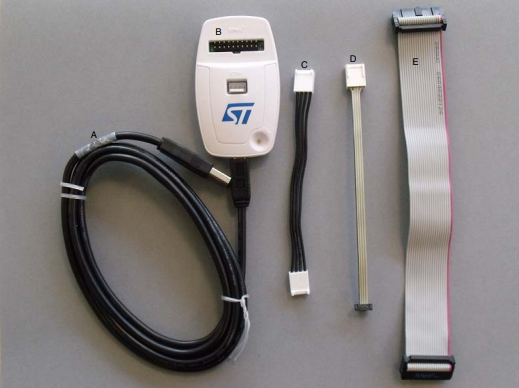
ST-LINK/V2 Pinout

ST-LINK/V2 Pinout
ST-LINK/V2 3D Model

ST-LINKV2 Symbol
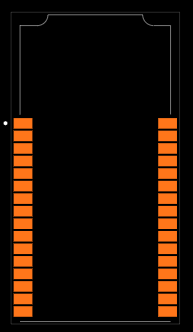
ST-LINKV2 Footprint

ST-LINKV2 3D Model
Specifications
- TypeParameter
- Weight145.149558g
- Packaging
Semiconductor package is a carrier / shell used to contain and cover one or more semiconductor components or integrated circuits. The material of the shell can be metal, plastic, glass or ceramic.
Box - Part Status
Parts can have many statuses as they progress through the configuration, analysis, review, and approval stages.
Active - Moisture Sensitivity Level (MSL)
Moisture Sensitivity Level (MSL) is a standardized rating that indicates the susceptibility of electronic components, particularly semiconductors, to moisture-induced damage during storage and the soldering process, defining the allowable exposure time to ambient conditions before they require special handling or baking to prevent failures
1 (Unlimited) - TypeDebugger, Programmer (In-Circuit/In-System)
- Operating Supply Voltage
The voltage level by which an electrical system is designated and to which certain operating characteristics of the system are related.
5V - Interface
In electronic components, the term "Interface" refers to the point at which two different systems, devices, or components connect and interact with each other. It can involve physical connections such as ports, connectors, or cables, as well as communication protocols and standards that facilitate the exchange of data or signals between the connected entities. The interface serves as a bridge that enables seamless communication and interoperability between different parts of a system or between different systems altogether. Designing a reliable and efficient interface is crucial in ensuring proper functionality and performance of electronic components and systems.
USB - Data Bus Width
The data bus width in electronic components refers to the number of bits that can be transferred simultaneously between the processor and memory. It determines the amount of data that can be processed and transferred in a single operation. A wider data bus allows for faster data transfer speeds and improved overall performance of the electronic device. Common data bus widths include 8-bit, 16-bit, 32-bit, and 64-bit, with higher numbers indicating a larger capacity for data transfer. The data bus width is an important specification to consider when evaluating the speed and efficiency of a computer system or other electronic device.
8b - Evaluation Kit
An Evaluation Kit is a collection of hardware and software components designed to help engineers and developers assess and test the functionality of a particular electronic component or system. It typically includes a development board, sample code, utilities, and documentation to facilitate development and prototype testing. Evaluation Kits enable users to quickly prototype applications, evaluate performance characteristics, and determine compatibility with other systems. They are commonly used in the design and development phases of electronic projects to simplify the integration of complex components.
Yes - Core Architecture
In electronic components, the term "Core Architecture" refers to the fundamental design and structure of the component's internal circuitry. It encompasses the arrangement of key components, such as processors, memory units, and input/output interfaces, within the device. The core architecture plays a crucial role in determining the component's performance, power efficiency, and overall capabilities. Different core architectures are optimized for specific applications and requirements, such as high-speed processing, low power consumption, or specialized functions. Understanding the core architecture of electronic components is essential for engineers and designers to select the most suitable components for their projects.
ARM - ContentsBoard(s), Cable(s)
- Height29.972mm
- Length154.94mm
- Width109.982mm
- REACH SVHC
The parameter "REACH SVHC" in electronic components refers to the compliance with the Registration, Evaluation, Authorization, and Restriction of Chemicals (REACH) regulation regarding Substances of Very High Concern (SVHC). SVHCs are substances that may have serious effects on human health or the environment, and their use is regulated under REACH to ensure their safe handling and minimize their impact.Manufacturers of electronic components need to declare if their products contain any SVHCs above a certain threshold concentration and provide information on the safe use of these substances. This information allows customers to make informed decisions about the potential risks associated with using the components and take appropriate measures to mitigate any hazards.Ensuring compliance with REACH SVHC requirements is essential for electronics manufacturers to meet regulatory standards, protect human health and the environment, and maintain transparency in their supply chain. It also demonstrates a commitment to sustainability and responsible manufacturing practices in the electronics industry.
No SVHC - Radiation Hardening
Radiation hardening is the process of making electronic components and circuits resistant to damage or malfunction caused by high levels of ionizing radiation, especially for environments in outer space (especially beyond the low Earth orbit), around nuclear reactors and particle accelerators, or during nuclear accidents or nuclear warfare.
No - RoHS Status
RoHS means “Restriction of Certain Hazardous Substances” in the “Hazardous Substances Directive” in electrical and electronic equipment.
ROHS3 Compliant - Lead Free
Lead Free is a term used to describe electronic components that do not contain lead as part of their composition. Lead is a toxic material that can have harmful effects on human health and the environment, so the electronics industry has been moving towards lead-free components to reduce these risks. Lead-free components are typically made using alternative materials such as silver, copper, and tin. Manufacturers must comply with regulations such as the Restriction of Hazardous Substances (RoHS) directive to ensure that their products are lead-free and environmentally friendly.
Lead Free
ST-LINK/V2 Features
• 5 V power supplied by a USB connector
• USB 2.0 full-speed compatible interface
• USB Type-A to Mini-B cable provided
• SWIM specific features:
– 1.65 V to 5.5 V application voltage support on the SWIM interface
– SWIM low-speed and high-speed modes support
– SWIM programming speed rates: 9.7 kbyte/s in low-speed, 12.8 kbyte/s in
high-speed
– SWIM cable for connection to an application with an ERNI standard
connector
◦ Vertical connector reference: 284697 or 214017
◦ Horizontal connector reference: 214012
– SWIM cable for connection to an application with pin headers or 2.54 mm
pitch connector
• JTAG/serial wire debug (SWD) specific features:
– 1.65 V to 3.6 V application voltage support on the JTAG/SWD interface and
5 V tolerant inputs
– JTAG cable for connection to a standard JTAG 20-pin 2.54 mm pitch
connector
– JTAG support
– SWD and serial wire viewer (SWV) communication support
• Direct firmware update support (DFU)
• Status LED blinking during the communication with the PC
• Operating temperature from 0 °C to 50 °C
• 1000 Vrms high isolation voltage (ST-LINK/V2-ISOL only)
ST-LINK/V2 (MINI) Vs ST-LINK/V2 Vs ST-LINK
| COMPARE | ST-LINK/V2 (MINI) | ST-LINK/V2 | ST-LINK | REMARKS |
| SWD voltage range | 1.65V - 3.6V | 1.65V - 3.6V | 3V - 3.6V | ST-LINK/V2 and ST-LINK/V2 (mini) support STM32 low voltage devices |
| SWIM voltage range | 1.65V - 5.5V | 1.65V - 5.5V | 1.65V - 5.5V | |
| Supports SWV | NO | YES | NO | For the moment, only STM32 supports SWV while STM8 doesn't |
| Debug interfaces | 2 | 2 | 1 | ST-LINK/V2 and ST-LINK/V2 (mini) support STM8/STM32 with separated interfaces |
| LED indicator | Dual-color LED | Dual-color LED | Red LED | Dual-color LED allows indicating more status |
| Fuse | YES | NO | NO | Fuse for avoiding harm by a short circuit |
STM32F070CBT6 Manufacturer
STMicroelectronics is a global independent semiconductor company and is a leader in developing and delivering semiconductor solutions across the spectrum of microelectronics applications. An unrivaled combination of silicon and system expertise, manufacturing strength, Intellectual Property (IP) portfolio, and strategic partners positions the Company at the forefront of System-on-Chip (SoC) technology, and its products play a key role in enabling today's convergence trends.
Datasheet PDF
- Datasheets :
- Design Resources :
Popularity by Region
Parts with Similar Specs
- ImagePart NumberManufacturerData Bus WidthInterfaceRoHS StatusREACH SVHCLead FreePart StatusOperating TemperatureProgram Memory TypeView Compare
![ST-LINK/V2]()
ST-LINK/V2
8 b
USB
ROHS3 Compliant
No SVHC
Lead Free
Active
-
-
![ATXMEGA16A4U-AU]()
8 b
I2C, IrDA, SPI, UART, USART, USB
ROHS3 Compliant
No SVHC
Lead Free
Active
-40°C ~ 85°C (TA)
FLASH
![ATXMEGA128A3U-AU]()
8 b
I2C, IrDA, SPI, UART, USART, USB
ROHS3 Compliant
No SVHC
Lead Free
Active
-40°C ~ 85°C (TA)
FLASH
![PIC16F716-I/P]()
8 b
RS-232, USB
ROHS3 Compliant
No SVHC
Lead Free
Active
-40°C ~ 85°C (TA)
FLASH


How many pins of ST-LINK/V2 ?
4 pins.
What is ST Link V2 used for?
The ST-LINK/V2 is an in-circuit debugger and programmer for the STM8 and STM32 microcontrollers.
 LP2985 Low-Dropout Regulator: Pinout, Application and Package
19 July 20212666
 LD1117 Voltage Regulator: Datasheet, Pinout, Circuit
01 December 20219637
 TIP117 PNP Power Transistor: Datasheet pdf, STM Darlington transistor
21 December 20213136
 TLE8209 8.6A H-Bridge Driver: Technical Datasheet, Pinout, and NRND Migration Analysis
18 March 2026175
 Top-Rated Suppliers of ADIS16209CCCZ Sensors
07 June 2025159
![DT06-12SA DC Connector 12 PIN FEMALE CONNECTOR[FAQ]:Datasheet, Features, and Equivalents](https://res.utmel.com/Images/Article/89b53618-6550-4b49-a345-17b1545b57d4.jpg) DT06-12SA DC Connector 12 PIN FEMALE CONNECTOR[FAQ]:Datasheet, Features, and Equivalents
DT06-12SA DC Connector 12 PIN FEMALE CONNECTOR[FAQ]:Datasheet, Features, and Equivalents08 March 20222734
 FT2232HL-REEL USB Controller: Pinout, Datasheet, Application
12 August 20214279
 2SB817 PNP Power Transistor: B817 Power Transistor, Datasheet pdf and Equivalent
15 December 202113275
 Facial Recognition: Features, Working and Applications
02 September 20219356
 Introduction to the Types of SDRAM
13 July 202114571
 What Makes Rocker Switches Unique
18 July 20251291
 DoD Allocates $238 Million for Semiconductor Centers under CHIPS and Science Act
23 September 20232820
 Top-Rated AG13 Battery Equivalent Substitutes
22 August 20253190
 FPGA: A Highly Customised Type of Chip Based on Digital Circuits
22 February 20234738
 Everything You Need to Know about RF Chip
14 January 202620817
 Active Electroacoustic Resonator-Silent Speaker
10 November 20215941
STMicroelectronics
In Stock: 297
United States
China
Canada
Japan
Russia
Germany
United Kingdom
Singapore
Italy
Hong Kong(China)
Taiwan(China)
France
Korea
Mexico
Netherlands
Malaysia
Austria
Spain
Switzerland
Poland
Thailand
Vietnam
India
United Arab Emirates
Afghanistan
Åland Islands
Albania
Algeria
American Samoa
Andorra
Angola
Anguilla
Antigua & Barbuda
Argentina
Armenia
Aruba
Australia
Azerbaijan
Bahamas
Bahrain
Bangladesh
Barbados
Belarus
Belgium
Belize
Benin
Bermuda
Bhutan
Bolivia
Bonaire, Sint Eustatius and Saba
Bosnia & Herzegovina
Botswana
Brazil
British Indian Ocean Territory
British Virgin Islands
Brunei
Bulgaria
Burkina Faso
Burundi
Cabo Verde
Cambodia
Cameroon
Cayman Islands
Central African Republic
Chad
Chile
Christmas Island
Cocos (Keeling) Islands
Colombia
Comoros
Congo
Congo (DRC)
Cook Islands
Costa Rica
Côte d’Ivoire
Croatia
Cuba
Curaçao
Cyprus
Czechia
Denmark
Djibouti
Dominica
Dominican Republic
Ecuador
Egypt
El Salvador
Equatorial Guinea
Eritrea
Estonia
Eswatini
Ethiopia
Falkland Islands
Faroe Islands
Fiji
Finland
French Guiana
French Polynesia
Gabon
Gambia
Georgia
Ghana
Gibraltar
Greece
Greenland
Grenada
Guadeloupe
Guam
Guatemala
Guernsey
Guinea
Guinea-Bissau
Guyana
Haiti
Honduras
Hungary
Iceland
Indonesia
Iran
Iraq
Ireland
Isle of Man
Israel
Jamaica
Jersey
Jordan
Kazakhstan
Kenya
Kiribati
Kosovo
Kuwait
Kyrgyzstan
Laos
Latvia
Lebanon
Lesotho
Liberia
Libya
Liechtenstein
Lithuania
Luxembourg
Macao(China)
Madagascar
Malawi
Maldives
Mali
Malta
Marshall Islands
Martinique
Mauritania
Mauritius
Mayotte
Micronesia
Moldova
Monaco
Mongolia
Montenegro
Montserrat
Morocco
Mozambique
Myanmar
Namibia
Nauru
Nepal
New Caledonia
New Zealand
Nicaragua
Niger
Nigeria
Niue
Norfolk Island
North Korea
North Macedonia
Northern Mariana Islands
Norway
Oman
Pakistan
Palau
Palestinian Authority
Panama
Papua New Guinea
Paraguay
Peru
Philippines
Pitcairn Islands
Portugal
Puerto Rico
Qatar
Réunion
Romania
Rwanda
Samoa
San Marino
São Tomé & Príncipe
Saudi Arabia
Senegal
Serbia
Seychelles
Sierra Leone
Sint Maarten
Slovakia
Slovenia
Solomon Islands
Somalia
South Africa
South Sudan
Sri Lanka
St Helena, Ascension, Tristan da Cunha
St. Barthélemy
St. Kitts & Nevis
St. Lucia
St. Martin
St. Pierre & Miquelon
St. Vincent & Grenadines
Sudan
Suriname
Svalbard & Jan Mayen
Sweden
Syria
Tajikistan
Tanzania
Timor-Leste
Togo
Tokelau
Tonga
Trinidad & Tobago
Tunisia
Turkey
Turkmenistan
Turks & Caicos Islands
Tuvalu
U.S. Outlying Islands
U.S. Virgin Islands
Uganda
Ukraine
Uruguay
Uzbekistan
Vanuatu
Vatican City
Venezuela
Wallis & Futuna
Yemen
Zambia
Zimbabwe
![ST-LINK/V2-ISOL]() ST-LINK/V2-ISOL
ST-LINK/V2-ISOLSTMicroelectronics
![STX-RLINK]() STX-RLINK
STX-RLINKSTMicroelectronics
![SPC5-UDESTK-FULL]() SPC5-UDESTK-FULL
SPC5-UDESTK-FULLSTMicroelectronics
![SPC5-UDESTK-EVAL]() SPC5-UDESTK-EVAL
SPC5-UDESTK-EVALSTMicroelectronics
![SPC5-UDESTK-PLUS]() SPC5-UDESTK-PLUS
SPC5-UDESTK-PLUSSTMicroelectronics
![STR-RVICE/ME]() STR-RVICE/ME
STR-RVICE/MESTMicroelectronics
![ST7MDTU3-EMU3]() ST7MDTU3-EMU3
ST7MDTU3-EMU3STMicroelectronics
![STELLARLINK]() STELLARLINK
STELLARLINKSTMicroelectronics
![STLINK-V3PWR]() STLINK-V3PWR
STLINK-V3PWRSTMicroelectronics
![STLINK-V3MINIE]() STLINK-V3MINIE
STLINK-V3MINIESTMicroelectronics


