

 Product
 Brand
Brand Articles
 Tools
Tools
TL071: Detailed Datasheet, Pinout, and Alternatives Guide


2.54 mm Amplifier
Maximize audio fidelity with the TL071 JFET Op-Amp. Review the complete datasheet, specs, pinout, and verified distributors to avoid low-speed counterfeits.
- Executive Summary: What is the TL071?
- 1. Technical Specifications & Performance Analysis
- 2. Pinout, Package, and Configuration
- 3. Design & Integration Guide (For Engineers & Makers)
- 4. Typical Applications & Use Cases
- 5. Alternatives and Cross-Reference Guide
- 6. Frequently Asked Questions (FAQ)
- 7. Datasheets & Resources
- Specifications
- Datasheet PDF
Executive Summary: What is the TL071?
The TL071 is a high-speed, low-noise JFET-input single operational amplifier designed by STMicroelectronics for high-fidelity audio preamplifiers, active filters, and high-impedance sensor interfaces. Combining high voltage JFET and bipolar transistors in a monolithic integrated circuit, it offers superior slew rates compared to standard general-purpose op-amps. - Market Position: A high-performance yet cost-effective industry standard for audio and instrumentation, sitting significantly above legacy parts like the LM741 in speed and precision. - Top Features: - High Slew Rate: 13 V/µs (typical) ensures accurate reproduction of fast transient signals. - Low Input Bias Current: 30 pA (typical), ideal for high-impedance sources. - Wide Bandwidth: 4 MHz Gain Bandwidth Product (GBP).
Primary Audience: Audio Design Engineers, IoT Systems Architects, and Advanced Hobbyists seeking affordable high-fidelity components.
Supply Status: Active. Widely available in both Surface Mount (SO-8) and Through-Hole (DIP-8) packages.
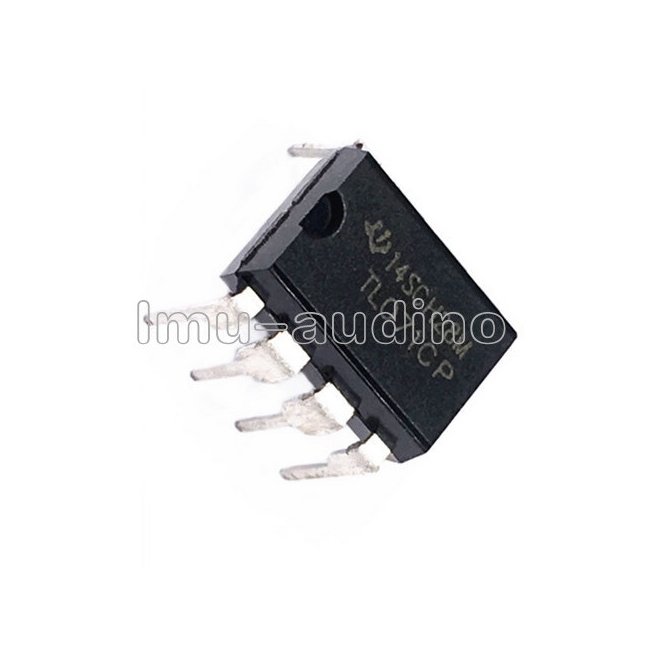
TL071 product photo
1. Technical Specifications & Performance Analysis
Detailed analysis of the STMicroelectronics TL071 specific data for bill-of-materials assessment and engineering verification.
1.1 Core Architecture (BiFET Technology)
The TL071 utilizes a BiFET (Bipolar + JFET) architecture. By incorporating high-voltage JFET transistors on the input stage, the device achieves extremely high input impedance (tera-ohms range) and very low input bias currents. This architecture is chosen specifically to minimize signal loading on preceding circuit stages, making it far superior to bipolar-only op-amps (like the LM741) for processing weak sensor signals or audio feeds.
1.2 Key Electrical Characteristics
Engineers must ensure their power supply rail design meets the following operational limits:
Supply Voltage Range: ±6V to ±18V (Dual Supply).
Slew Rate: 13 V/µs (Typical). Note: This is a critical metric for verifying authenticity.
Gain Bandwidth Product: 4 MHz.
Input Bias Current: 30 pA.
Temperature Range:
Commercial (C-suffix): 0°C to 70°C.
Industrial (I-suffix): -40°C to 105°C.
1.3 Interfaces and Connectivity
The TL071 is a continuous analog interface device. It excels in:
High-Impedance Inputs: Interfacing directly with piezoelectric sensors, guitar pickups, or photodiodes without signal degradation.
Analog Output: Capable of driving loads with varying voltages up to the rail limits (less overhead).
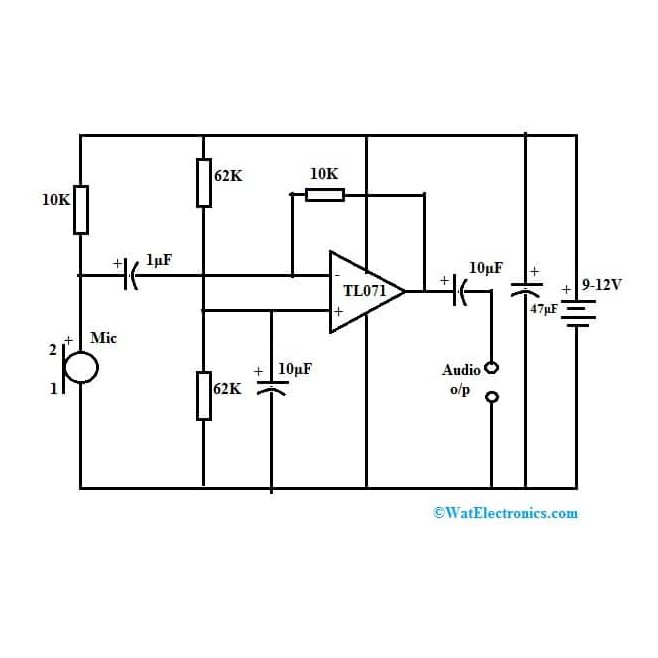
TL071 functional block diagram
2. Pinout, Package, and Configuration
Understanding the physical interface is essential for PCB layout and prototyping.
2.1 Pin Configuration Guide
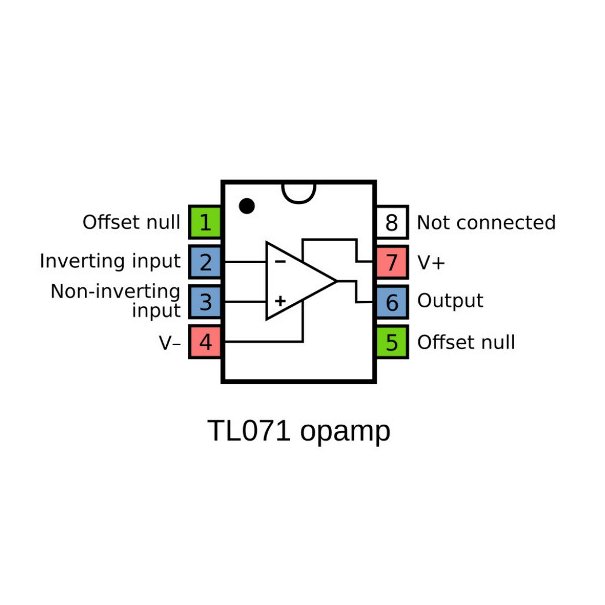
TL071 pinout diagram
The TL071 uses the industry-standard single op-amp 8-pin footprint:
Pin 6 (Output): The amplified signal exit.
Pin 2 (In-) & Pin 3 (In+): Inverting and Non-Inverting inputs (JFET stage).
Pin 7 (VCC+) & Pin 4 (VCC-): Power supply pins. Note: Ensure clean, decoupled power here.
Pin 1 & Pin 5 (Offset Null): Used to trim the input offset voltage to zero typically via a 100kΩ potentiometer.
Pin 8 (NC): Not Connected.
2.2 Naming Convention & Ordering Codes
Understanding the Part Numbers:The suffix dictates the thermal grade and package type, which impacts BOM cost and assembly method.
- Prefix: TL071 (Device type).
Temp Grade:
C= Commercial (0°C to 70°C),I= Industrial (-40°C to 105°C).Package:
P= Plastic DIP (Through-hole),DorDT= SO (Surface Mount).
Example: TL071IDT is an Industrial grade unit in a Surface Mount package, supplied on Tape & Reel.
2.3 Available Packages
| Package Type | Dimensions | Common Use Case |
|---|---|---|
| SO-8 (D/DT) | Small profile | High-density consumer electronics, automated assembly. |
| DIP-8 (P) | Standard 2.54mm pitch | Prototyping, breadboarding, repair friendly, DIY Audio. |
3. Design & Integration Guide (For Engineers & Makers)
Pro Tip: When upgrading from an LM741 to a TL071, verify that your circuit does not rely on the slow slew rate of the 741, as the TL071 may oscillate if not properly compensated in high-gain loops.
3.1 Hardware Implementation
Bypass Capacitors: Place 0.1µF ceramic capacitors as close as possible to Pin 7 and Pin 4, connecting to ground. This prevents high-frequency noise and oscillation.
PCB Layout: Keep input traces (Pins 2 and 3) short and shielded by a ground plane to prevent stray capacitance coupling, which can reduce bandwidth or cause instability.
Input Protection: While robust, JFET inputs can be sensitive to static. Adhere to ESD handling protocols.
3.2 Common Design Challenges
Based on market feedback and engineering forums:
Issue: Counterfeit Parts Risk (Re-marked Chips)- The Problem: The market is flooded with fake TL071 chips that are actually rebranded LM741s. The LM741 has a slew rate of only 0.5 V/µs compared to the TL071's 13 V/µs. - The Fix: Bench Verification. Before assembling a batch, test a sample using a function generator. Input a 20kHz square wave. - Authentic TL071: Will show a sharp square wave output. - Fake (LM741): Will output a triangular wave due to the inability to slew fast enough. - Sourcing: STRICTLY purchase from authorized distributors (DigiKey, Mouser, Arrow, etc.) to ensure valid supply chain provenance.
4. Typical Applications & Use Cases
The TL071 is dominantly used where "clean" signal processing is required before digitization.
4.1 Real-World Example: Audio Pre-Amplifier
In a high-fidelity audio mixer, the TL071 is used as the input stage pre-amp. - Why? Its high input impedance matches the high impedance of microphones or instrument pickups, preventing signal loss (voltage divider effect).
Function: It boosts the low-level millivolt signal to line level (approx 1V) while maintaining a low noise floor, ensuring the audio remains crisp without the "hiss" associated with older bipolar op-amps.
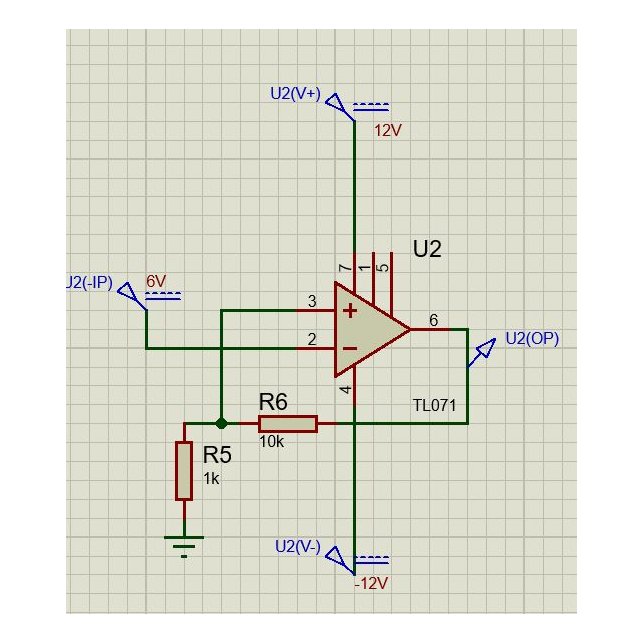
TL071 application circuit schematic
5. Alternatives and Cross-Reference Guide
Use this guide to select replacements if stock is unavailable or specs need upgrading.
Direct Replacements (Pin-Compatible):
Texas Instruments TL071: The original sourced part; identical specs.
LF351: A very similar JFET input op-amp, often interchangeable in legacy designs.
Performance UPGRADE:
Analog Devices AD711: Precision high-speed BiFET op-amp with tighter offset voltage specs.
OPA134 (Burr-Brown/TI): Superior audio performance, ultra-low distortion (0.00008%), ideal for audiophile-grade equipment.
Cost-Effective/General Purpose:
LM741: Not recommended for audio due to noise and low speed, but usable for slow DC control loops if cost is the only factor.
6. Frequently Asked Questions (FAQ)
Q: What is the main difference between TL071 and LM741? The TL071 uses JFET inputs giving it much higher input impedance and a Slew Rate (13 V/µs) that is ~26x faster than the LM741 (0.5 V/µs), making the TL071 suitable for audio.
Q: Can the TL071 be used in single-supply circuits? Yes, but it requires a virtual ground (typically VCC/2) reference at the inputs to bias the AC signal within the linear range of the op-amp.
Q: How do I identify a fake TL071? Test the slew rate with an oscilloscope. If it turns a high-frequency (20kHz) square wave into a triangle wave, it is likely a re-marked low-speed op-amp.
Q: Is the TL071 suitable for battery-operated devices? It consumes moderate quiescent current (1.4mA typ). For strictly battery-powered, low-power applications, modern CMOS op-amps (like the TLV series) may offer better battery life.
Q: Where can I find the datasheet and library files for TL071? Datasheets are available via STMicroelectronics or major distributors like Mouser/DigiKey. CAD models are widely available on SnapEDA or UltraLibrarian.
7. Datasheets & Resources
Official Datasheet: STMicroelectronics TL071 Datasheet
Development Tools & Software: ST eDesignSuite for filter simulation.
Specifications
Datasheet PDF
- Datasheets :
 HDMI2C1-6C1 IC:Datasheet, Pinout, Function
27 August 2021963
 A940 PNP Transistor: 2SA940 150V 1.5A Power Transistor, TO-220 and Equivalents
19 January 20228361
 RL207 Silicon Rectifier: Datasheet, Pinout and Equivalent
27 September 202129909
 STM32G030F6P6: Overview, Features, Applications
19 October 20235072
 STM32F072RBT6 Microcontroller: 48MHz, 64-LQFP, Pinout and Datasheet
14 February 20223845
 ES110-0017 Sensor: Datasheet, Application, Features
01 September 20211000
 AT89C51 Microcontroller: Pin Description, Datasheet, Programming
18 November 202124322
 AMD Xilinx XC95108F-20PQG160I CPLD Overview
20 May 2025307
 What is a Cell Phone Antenna?
21 July 202133614
 Analysis of Magnetic and Thermal Semiconductor Power Modules
13 March 20242333
 Crystal Oscillators Explained: How They Work and How to Specify One
14 July 202615563
 How to Choose the Right Spade Connector for Any Project
18 July 202511247
 Degson Authorized Distributor | UTMEL Electronics
21 November 20234279
 Automotive vs. Industrial Memory: How to Verify Grade Codes Before Sourcing In this guide
06 August 2026426
 What is an Integrated Circuit (ICs) and Why Integrated Circuit is shortage?
23 September 20218191
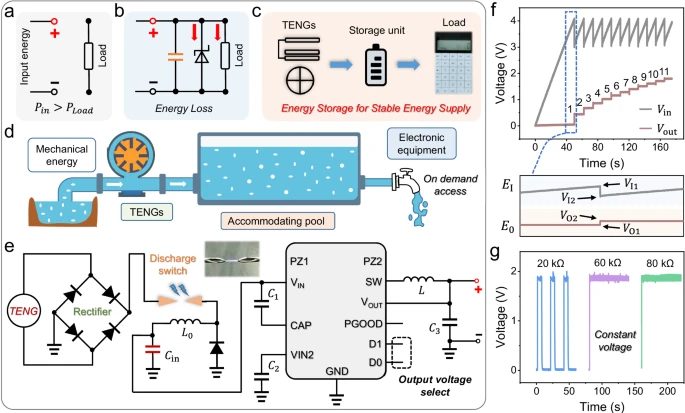 Improving the Energy Conversion Efficiency of Triboelectric Nanogenerators
19 November 20243317
STMicroelectronics
In Stock
United States
China
Canada
Japan
Russia
Germany
United Kingdom
Singapore
Italy
Hong Kong(China)
Taiwan(China)
France
Korea
Mexico
Netherlands
Malaysia
Austria
Spain
Switzerland
Poland
Thailand
Vietnam
India
United Arab Emirates
Afghanistan
Åland Islands
Albania
Algeria
American Samoa
Andorra
Angola
Anguilla
Antigua & Barbuda
Argentina
Armenia
Aruba
Australia
Azerbaijan
Bahamas
Bahrain
Bangladesh
Barbados
Belarus
Belgium
Belize
Benin
Bermuda
Bhutan
Bolivia
Bonaire, Sint Eustatius and Saba
Bosnia & Herzegovina
Botswana
Brazil
British Indian Ocean Territory
British Virgin Islands
Brunei
Bulgaria
Burkina Faso
Burundi
Cabo Verde
Cambodia
Cameroon
Cayman Islands
Central African Republic
Chad
Chile
Christmas Island
Cocos (Keeling) Islands
Colombia
Comoros
Congo
Congo (DRC)
Cook Islands
Costa Rica
Côte d’Ivoire
Croatia
Cuba
Curaçao
Cyprus
Czechia
Denmark
Djibouti
Dominica
Dominican Republic
Ecuador
Egypt
El Salvador
Equatorial Guinea
Eritrea
Estonia
Eswatini
Ethiopia
Falkland Islands
Faroe Islands
Fiji
Finland
French Guiana
French Polynesia
Gabon
Gambia
Georgia
Ghana
Gibraltar
Greece
Greenland
Grenada
Guadeloupe
Guam
Guatemala
Guernsey
Guinea
Guinea-Bissau
Guyana
Haiti
Honduras
Hungary
Iceland
Indonesia
Iran
Iraq
Ireland
Isle of Man
Israel
Jamaica
Jersey
Jordan
Kazakhstan
Kenya
Kiribati
Kosovo
Kuwait
Kyrgyzstan
Laos
Latvia
Lebanon
Lesotho
Liberia
Libya
Liechtenstein
Lithuania
Luxembourg
Macao(China)
Madagascar
Malawi
Maldives
Mali
Malta
Marshall Islands
Martinique
Mauritania
Mauritius
Mayotte
Micronesia
Moldova
Monaco
Mongolia
Montenegro
Montserrat
Morocco
Mozambique
Myanmar
Namibia
Nauru
Nepal
New Caledonia
New Zealand
Nicaragua
Niger
Nigeria
Niue
Norfolk Island
North Korea
North Macedonia
Northern Mariana Islands
Norway
Oman
Pakistan
Palau
Palestinian Authority
Panama
Papua New Guinea
Paraguay
Peru
Philippines
Pitcairn Islands
Portugal
Puerto Rico
Qatar
Réunion
Romania
Rwanda
Samoa
San Marino
São Tomé & Príncipe
Saudi Arabia
Senegal
Serbia
Seychelles
Sierra Leone
Sint Maarten
Slovakia
Slovenia
Solomon Islands
Somalia
South Africa
South Sudan
Sri Lanka
St Helena, Ascension, Tristan da Cunha
St. Barthélemy
St. Kitts & Nevis
St. Lucia
St. Martin
St. Pierre & Miquelon
St. Vincent & Grenadines
Sudan
Suriname
Svalbard & Jan Mayen
Sweden
Syria
Tajikistan
Tanzania
Timor-Leste
Togo
Tokelau
Tonga
Trinidad & Tobago
Tunisia
Turkey
Turkmenistan
Turks & Caicos Islands
Tuvalu
U.S. Outlying Islands
U.S. Virgin Islands
Uganda
Ukraine
Uruguay
Uzbekistan
Vanuatu
Vatican City
Venezuela
Wallis & Futuna
Yemen
Zambia
Zimbabwe
![TSM103WAIDT]() TSM103WAIDT
TSM103WAIDTSTMicroelectronics
![TSM103WIDT]() TSM103WIDT
TSM103WIDTSTMicroelectronics
![TSM102AIDT]() TSM102AIDT
TSM102AIDTSTMicroelectronics
![TSM103WAID]() TSM103WAID
TSM103WAIDSTMicroelectronics
![TSM102AID]() TSM102AID
TSM102AIDSTMicroelectronics
![TSM103WID]() TSM103WID
TSM103WIDSTMicroelectronics
![TSM102ID]() TSM102ID
TSM102IDSTMicroelectronics
![TSM103AIDT]() TSM103AIDT
TSM103AIDTSTMicroelectronics
![TSM102IDT]() TSM102IDT
TSM102IDTSTMicroelectronics
![TSM103IDT]() TSM103IDT
TSM103IDTSTMicroelectronics


