

 Product
 Brand
Brand Articles
 Tools
Tools
LT1016 10ns UltraFast Comparator: Datasheet, Pinout, and High-Speed Design Analysis

Linear Technology/Analog Devices
Through Hole Tube 10 ns μs Linear Comparators 69.54dB dB 10μA pA 2003 3mV mV
Unit Price: $25.678544
Ext Price: $25.68


Through Hole Tube 10 ns μs Linear Comparators 69.54dB dB 10μA pA 2003 3mV mV
Optimize high-speed signal timing with the LT1016 10ns UltraFast comparator. Access technical specs, pinout guides, and top equivalents for your BOM today.
- Executive Summary: What is the LT1016?
- 1. Technical Specifications & Performance Analysis
- 2. Pinout, Package, and Configuration
- 3. Design & Integration Guide (For Engineers & Makers)
- 4. Typical Applications & Use Cases
- 5. Alternatives and Cross-Reference Guide
- 6. Frequently Asked Questions (FAQ)
- 7. Resources
- Specifications
- Parts with Similar Specs
- Datasheet PDF
Executive Summary: What is the LT1016?
The LT1016 is an UltraFast 10ns comparator designed for high-speed signal processing and interfacing directly with TTL/CMOS logic while operating from a single 5V or dual ±5V supplies. It is engineered to provide precision switching without the common pitfalls of high-speed comparators, such as power supply current spiking or minimum input slew rate requirements.
Market Position: High-performance precision component; an industry standard for high-speed analog-to-digital interfacing.
Top Features: 10ns propagation delay, complementary TTL outputs, and integrated output latch capability.
Primary Audience: Ideal for RF engineers, high-speed digital designers, and procurement managers sourcing for industrial automation or communication infrastructure.
Supply Status: Active (Manufactured by Analog Devices / Linear Technology).
1. Technical Specifications & Performance Analysis
The LT1016 represents a significant leap over standard comparators by balancing raw speed with stable linear characteristics.
1.1 Core Architecture (Analog/Logic Hybrid)
The LT1016 utilizes a high-speed bipolar process. Unlike many competitors that suffer from instability when the input signal moves slowly, the LT1016's internal architecture is designed to remain stable even with low-slew-rate inputs. This makes it an excellent choice for "dirty" signal environments where precision is paramount.
1.2 Key Electrical Characteristics
Propagation Delay: A consistent 10 ns (typical) allows for high-frequency signal discrimination.
Supply Voltage Flexiblity: Operates on a standard Single 5V rail for digital-only boards or ±5V for split-rail analog systems.
Power Consumption: Features a quiescent negative supply current of only 3 mA, reducing the thermal load in dense PCB layouts.
Logic Compatibility: Provides complementary outputs (Q and Q) that interface directly with TTL and CMOS logic levels.
1.3 Interfaces and Connectivity
The device includes a Latch Enable pin. When the latch is driven high, the outputs are locked in their current state, allowing for precise timing synchronization with external microcontrollers or FPGAs.
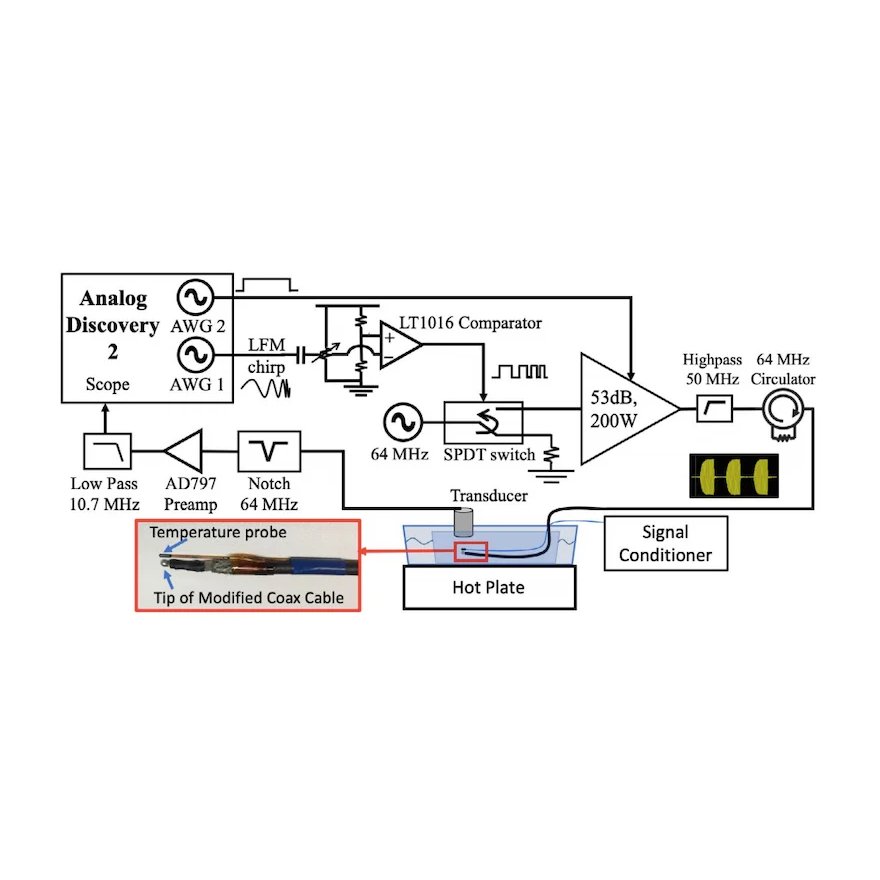
2. Pinout, Package, and Configuration
Understanding the physical layout of the LT1016 is critical for high-speed PCB routing, where trace length can impact propagation delay.
2.1 Pin Configuration Guide
V+ / V-: Power supply pins (Supports +5V/GND or +5V/-5V).
Inputs (+IN / -IN): High-impedance differential inputs.
Q / Q (Outputs): Complementary logic outputs; Q is the standard output, Q is the inverted version.
LATCH: Used to hold the output state for synchronous data acquisition.
GND: Ground reference.
2.2 Naming Convention & Ordering Codes
LT1016CN8: Commercial temperature range, 8-pin PDIP package.
LT1016CS8: Commercial temperature range, 8-pin SOIC package (Surface Mount).
LT1016IS8: Industrial temperature range for harsher environments.
2.3 Available Packages
| Package Type | Dimensions | Common Use Case |
|---|---|---|
| PDIP-8 | 9.27mm x 6.35mm | Prototyping, Breadboarding, and Through-hole production. |
| SOIC-8 | 4.90mm x 3.91mm | Standard automated SMT assembly; space-constrained designs. |
3. Design & Integration Guide (For Engineers & Makers)
Pro Tip: High-speed comparators like the LT1016 are sensitive to layout. Use a ground plane and keep input traces as short as possible to prevent oscillation.
3.1 Hardware Implementation
Bypass Capacitors: Use 0.1µF ceramic capacitors placed as close to the V+ and V- pins as possible to suppress high-frequency noise.
PCB Layout: Use a dedicated ground plane. Avoid running digital output traces near the high-impedance analog input traces to prevent parasitic feedback.
Thermal Management: With a low quiescent current, the LT1016 typically does not require a heatsink, but the SOIC package should have sufficient copper pour for heat dissipation in high-ambient environments.
3.2 Common Design Challenges
Issue: No Built-in Hysteresis. This can cause "chatter" on the output with noisy signals.
Fix: Add an external positive feedback resistor (typically 1MΩ to 10MΩ) from the Q output back to the non-inverting input.
Issue: Not Rail-to-Rail Output. The output follows TTL logic levels, not full supply rails.
Fix: If interfacing with 5V CMOS that requires high logic thresholds, use a pull-up resistor or a level shifter.
4. Typical Applications & Use Cases
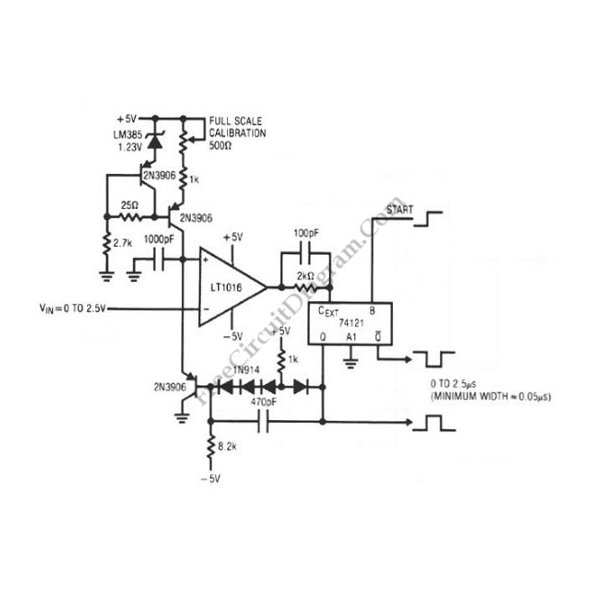
4.1 Real-World Example: Zero-Crossing Detector
In power electronics, the LT1016 is frequently used as a Zero-Crossing Detector. Because of its 10ns speed, it can identify the exact moment an AC sine wave crosses 0V with minimal phase lag. This is critical for SCR firing circuits or frequency measurement in precision power meters.
5. Alternatives and Cross-Reference Guide
If the LT1016 is out of stock or price-prohibitive, consider these alternatives:
Direct Replacements:
Texas Instruments TL3016: A very close functional equivalent with similar 10ns performance.
Maxim Integrated MAX913: Specifically designed to be a pin-compatible, high-speed alternative to the LT1016.
Higher Performance:
Analog Devices AD8561: Offers similar speed but with different power consumption profiles.
Cost-Effective Options:
For slower applications (e.g., >100ns), standard comparators like the LM311 or LM339 are significantly cheaper but lack the LT1016's speed.
6. Frequently Asked Questions (FAQ)
Q: What is the difference between LT1016 and LM311?
A: The LT1016 is significantly faster (10ns vs 200ns) and features complementary outputs and a latch, whereas the LM311 is a general-purpose, slower comparator.
Q: Can LT1016 be used in Automotive applications?
A: Yes, provided you select the industrial or automotive grade temperature versions (Suffix 'I' or 'H') and ensure the voltage rails are regulated to 5V.
Q: Where can I find the LT1016 datasheet?
A: Datasheets are available on the Analog Devices official website or through major distributors like Mouser, Digi-Key, and Arrow.
Q: Does the LT1016 require a negative supply?
A: No. While it can operate on ±5V, it is fully specified for single +5V supply operation.
7. Resources
Development Tools: LTspice (highly recommended for simulating the LT1016 in high-speed circuits).
Library Files: Available in Altium Designer, Eagle, and KiCad standard libraries.
Specifications
Parts with Similar Specs
- ImagePart NumberManufacturerPackage / CaseNumber of PinsInput Offset Voltage (Vos)Propagation DelayPower Supply Rejection Ratio (PSRR)Common Mode Rejection RatioMin Dual Supply VoltageMin Supply VoltageSupply VoltageMax Dual Supply VoltageView Compare
![LT1016IN8#PBF]()
LT1016IN8#PBF
8-DIP (0.300, 7.62mm)
8
3 mV
14 ns
75 dB
96 dB
2.25 V
4.5 V
5 V
5 V
![AD8561AN]()
8-DIP (0.300, 7.62mm)
8
7 mV
9.8 ns
65 dB
85 dB
-
-
5 V
-
![LT1116CN8#PBF]()
8-DIP (0.300, 7.62mm)
8
3 mV
16 ns
75 dB
90 dB
-
4.5 V
5 V
-


Datasheet PDF
- Datasheets :
- ConflictMineralStatement :
- Design Resources :
 RP2040 VS STM32: Which one is better?
09 April 202229847
![What you need to know about using C1740 [FAQ]](https://res.utmel.com/Images/Article/442ff76b-77f0-4560-b4ce-44cea045365d.jpg) What you need to know about using C1740 [FAQ]
What you need to know about using C1740 [FAQ]31 March 20228824
 What is the difference between them: 2N3904 vs. BC547?
10 November 202132459
 A Comprehensive Guide to LTC6945IUFD#TRPBF PLL Frequency Synthesizer
06 March 2024401
 SN74LV1T34DCKR Shifter: Pinout, Applications and Datasheet
12 December 2023898
 OP07 Operational Amplifier: Pinout, Datasheet, OP07 VS LM308
15 December 202111451
 TL082 JFET-Input Dual Operational Amplifier: Datasheet Breakdown and Design Guide
20 January 2026431
 TL3845P Current-Mode PWM Controller:Description;Features and Pinout
25 February 202211020
 What is a Switched Reluctance Motor?
09 July 20248989
 What is a Server CPU?
22 December 202112248
 Spiral wrap choices that keep hoses damage free
15 July 20251594
 What are Comparators?
03 December 20206442
 Types, Structure, and Packages of Integrated Circuits
23 October 202513848
 What is a Projector?
14 October 202116116
 A brief Analysis of the 555 Timer Circuit and its Project Applications
15 March 20243593
 A Complete Guide to Tantalum Capacitors in 2025
10 July 20254469
Linear Technology/Analog Devices
In Stock: 500
Minimum: 1 Multiples: 1
Qty
Unit Price
Ext Price
1
$25.678544
$25.68
10
$24.225042
$242.25
100
$22.853813
$2,285.38
500
$21.560201
$10,780.10
1000
$20.339812
$20,339.81
Not the price you want? Send RFQ Now and we'll contact you ASAP.
Inquire for More Quantity
![ADCMP562BRQ]() ADCMP562BRQ
ADCMP562BRQAnalog Devices Inc.
![AD8611ARZ]() AD8611ARZ
AD8611ARZAnalog Devices Inc.
![ADCMP553BRMZ]() ADCMP553BRMZ
ADCMP553BRMZAnalog Devices Inc.
![AD8561ARZ]() AD8561ARZ
AD8561ARZAnalog Devices Inc.
![ADCMP361YRJZ-REEL7]() ADCMP361YRJZ-REEL7
ADCMP361YRJZ-REEL7Analog Devices Inc.
![AD8564ARZ]() AD8564ARZ
AD8564ARZAnalog Devices Inc.
![ADCMP573BCPZ-RL7]() ADCMP573BCPZ-RL7
ADCMP573BCPZ-RL7Analog Devices Inc.
![AD790JRZ]() AD790JRZ
AD790JRZAnalog Devices Inc.
![ADCMP562BRQZ]() ADCMP562BRQZ
ADCMP562BRQZAnalog Devices Inc.
![AD8561ANZ]() AD8561ANZ
AD8561ANZAnalog Devices Inc.


