Product
 Brand
Brand Articles
 Tools
Tools
NodeMCU ESP8266[Video+FAQ]: ESP32 vs ESP8266

TxRx + MCU 2.4GHz 2.5V~3.6V I2C, I2S, SPI, UART 54Mbps 50mA~56mA - Receiving 120mA~170mA - Transmitting 8 32-VFQFN Exposed Pad


TxRx + MCU 2.4GHz 2.5V~3.6V I2C, I2S, SPI, UART 54Mbps 50mA~56mA - Receiving 120mA~170mA - Transmitting 8 32-VFQFN Exposed Pad
The ESP8266 is a Wi-Fi SoC that integrates all the needed components to create a fully functional Wi-Fi device. This article will introduce ESP8266 systematically from its features, pinout to its specifications, applications, and so much more.

5$ Arduino WiFi Module!? ESP8266 mini Tutorial/Review
- What are ESP8266 and NodeMCU?
- ESP8266 Overview
- ESP8266 Pinout and Configurations
- Specifications
- ESP8266 CAD Models
- ESP8266 Applications
- ESP8266 Features
- ESP8266 Manufacturer
- ESP8266 Functional Block Diagram
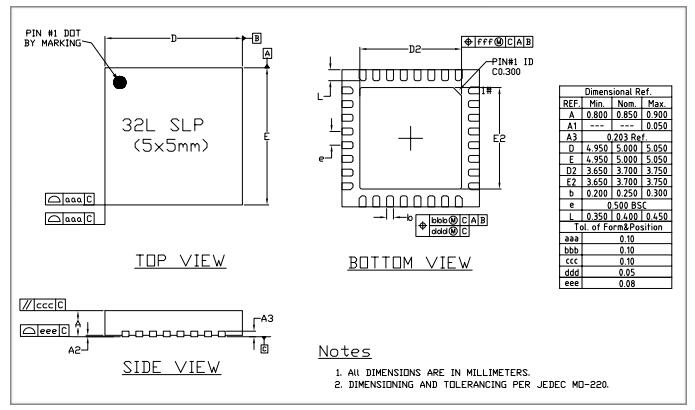
- ESP8266 Package
- ESP8266 with Arduino IDE
- Which one is better ESP32 or ESP8266?
- Trend Analysis
- Datasheet PDF
What are ESP8266 and NodeMCU?
Most people call ESP8266 a WIFI module, but it is actually a microcontroller. ESP8266 is the name of the microcontroller developed by Espressif Systems which is a company based out of shanghai. This microcontroller has the ability to perform WIFI-related activities hence it is widely used as a WIFI module. There are many types of ESP8266 modules available ranging from ESP8266-01 to ESP8266-12.

NodeMCU is a Firmware on ESP8266. It is ESP-12 and it is basically a System on Chip (SoC). It has Lua-based firmware which is used to develop IoT-based applications.
It is easy to work on this inexpensive SoC and make our device smart. It has analog and digital pins, which we can use to interface our sensors and can get the data over the internet.
ESP8266 Overview
The NodeMCU ESP8266 development board comes with the ESP-12E module containing the ESP8266 chip having Tensilica Xtensa 32-bit LX106 RISC microprocessor. This microprocessor supports RTOS and operates at 80MHz to 160 MHz adjustable clock frequency. NodeMCU has 128 KB RAM and 4MB of Flash memory to store data and programs. Its high processing power with in-built Wi-Fi / Bluetooth and Deep Sleep Operating features make it ideal for IoT projects.
NodeMCU can be powered using a Micro USB jack and VIN pin (External Supply Pin). It supports UART, SPI, and I2C interfaces.
ESP8266 Pinout and Configurations

| Pin Category | Name | Description |
| Power | Micro-USB, 3.3V, GND, Vin | Micro-USB: NodeMCU can be powered through the USB port 3.3V: Regulated 3.3V can be supplied to this pin to power the board GND: Ground pins Vin: External Power Supply |
| Control Pins | EN, RST | The pin and the button reset the microcontroller |
| Analog Pin | A0 | Used to measure analog voltage in the range of 0-3.3V |
| GPIO Pins | GPIO1 to GPIO16 | NodeMCU has 16 general purpose input-output pins on its board |
| SPI Pins | SD1, CMD, SD0, CLK | NodeMCU has four pins available for SPI communication. |
| UART Pins | TXD0, RXD0, TXD2, RXD2 | NodeMCU has two UART interfaces, UART0 (RXD0 & TXD0) and UART1 (RXD1 & TXD1). UART1 is used to upload the firmware/program. |
| I2C Pins | NodeMCU has I2C functionality support but due to the internal functionality of these pins, you have to find which pin is I2C. |
Specifications
- TypeParameter
- Factory Lead Time4 Weeks
- Mounting Type
The "Mounting Type" in electronic components refers to the method used to attach or connect a component to a circuit board or other substrate, such as through-hole, surface-mount, or panel mount.
Surface Mount - Package / Case
refers to the protective housing that encases an electronic component, providing mechanical support, electrical connections, and thermal management.
32-VFQFN Exposed Pad - Packaging
Semiconductor package is a carrier / shell used to contain and cover one or more semiconductor components or integrated circuits. The material of the shell can be metal, plastic, glass or ceramic.
Tape & Reel (TR) - Published2015
- Part Status
Parts can have many statuses as they progress through the configuration, analysis, review, and approval stages.
Active - Moisture Sensitivity Level (MSL)
Moisture Sensitivity Level (MSL) is a standardized rating that indicates the susceptibility of electronic components, particularly semiconductors, to moisture-induced damage during storage and the soldering process, defining the allowable exposure time to ambient conditions before they require special handling or baking to prevent failures
3 (168 Hours) - TypeTxRx + MCU
- Max Operating Temperature
The Maximum Operating Temperature is the maximum body temperature at which the thermistor is designed to operate for extended periods of time with acceptable stability of its electrical characteristics.
125°C - Min Operating Temperature
The "Min Operating Temperature" parameter in electronic components refers to the lowest temperature at which the component is designed to operate effectively and reliably. This parameter is crucial for ensuring the proper functioning and longevity of the component, as operating below this temperature may lead to performance issues or even damage. Manufacturers specify the minimum operating temperature to provide guidance to users on the environmental conditions in which the component can safely operate. It is important to adhere to this parameter to prevent malfunctions and ensure the overall reliability of the electronic system.
-40°C - Voltage - Supply
Voltage - Supply refers to the range of voltage levels that an electronic component or circuit is designed to operate with. It indicates the minimum and maximum supply voltage that can be applied for the device to function properly. Providing supply voltages outside this range can lead to malfunction, damage, or reduced performance. This parameter is critical for ensuring compatibility between different components in a circuit.
2.5V~3.6V - Frequency
In electronic components, the parameter "Frequency" refers to the rate at which a signal oscillates or cycles within a given period of time. It is typically measured in Hertz (Hz) and represents how many times a signal completes a full cycle in one second. Frequency is a crucial aspect in electronic components as it determines the behavior and performance of various devices such as oscillators, filters, and communication systems. Understanding the frequency characteristics of components is essential for designing and analyzing electronic circuits to ensure proper functionality and compatibility with other components in a system.
2.4GHz - Protocol
In electronic components, the parameter "Protocol" refers to a set of rules and standards that govern the communication between devices. It defines the format, timing, sequencing, and error checking methods for data exchange between different components or systems. Protocols ensure that devices can understand and interpret data correctly, enabling them to communicate effectively with each other. Common examples of protocols in electronics include USB, Ethernet, SPI, I2C, and Bluetooth, each with its own specifications for data transmission. Understanding and adhering to protocols is essential for ensuring compatibility and reliable communication between electronic devices.
802.11b/g/n - Power - Output
Power Output in electronic components refers to the amount of electrical power that a device can deliver to a load. It is typically measured in watts and indicates the effectiveness of the component in converting electrical energy into usable work or signal. Power Output can vary based on the component's design, operating conditions, and intended application, making it a critical factor in the performance of amplifiers, power supplies, and other electronic devices. Understanding the Power Output helps in selecting appropriate components for specific applications to ensure efficiency and reliability.
20dBm - RF Family/Standard
The parameter "RF Family/Standard" in electronic components refers to the specific radio frequency (RF) technology or standard that the component complies with or is designed for. RF technology encompasses a wide range of frequencies used for wireless communication, such as Wi-Fi, Bluetooth, cellular networks, and more. Different RF standards dictate the frequency bands, modulation techniques, data rates, and other specifications for communication systems. Understanding the RF family/standard of a component is crucial for ensuring compatibility and optimal performance in RF applications.
WiFi - Sensitivity
Sensitivity in electronic components refers to the degree to which the output of a device responds to changes in input. It indicates how effectively a component translates a specific input signal into an observable output. High sensitivity means that even small variations in input can produce significant changes in output, making the device more responsive to signals. Sensitivity is crucial in applications where precise measurements or signal detection are required.
-91dBm - Data Rate (Max)
Data Rate (Max) refers to the maximum rate at which data can be transferred or processed within an electronic component or device. It is typically measured in bits per second (bps) or megabits per second (Mbps). This parameter is important for determining the speed and efficiency of data transmission or processing in various electronic applications such as computer systems, networking devices, and memory modules. A higher data rate indicates that the component is capable of handling larger volumes of data at a faster pace, leading to improved performance and responsiveness in electronic systems. It is crucial to consider the Data Rate (Max) specification when selecting electronic components to ensure compatibility and optimal functionality for specific applications.
54Mbps - Serial Interfaces
A serial interface is a communication interface between two digital systems that transmits data as a series of voltage pulses down a wire. Essentially, the serial interface encodes the bits of a binary number by their "temporal" location on a wire rather than their "spatial" location within a set of wires.
I2C, I2S, SPI, UART - Current - Receiving
Current - Receiving refers to the amount of electrical current that an electronic component or device is capable of accepting from a power source or another component in a circuit. It indicates the maximum current that can be safely received without causing damage or malfunction. This parameter is crucial for ensuring compatibility and reliability in electronic designs, as exceeding the rated receiving current can lead to overheating or failure of the component.
50mA~56mA - Current - Transmitting
Current - Transmitting is a parameter used to describe the maximum amount of electrical current that an electronic component can handle while in the transmitting mode. This parameter is crucial for components such as transistors, diodes, and integrated circuits that are involved in transmitting signals or power within a circuit. Exceeding the specified current transmitting rating can lead to overheating, component failure, or even damage to the entire circuit. Designers and engineers must carefully consider this parameter when selecting components to ensure the reliability and performance of the electronic system.
120mA~170mA - GPIO
GPIO stands for General Purpose Input/Output. It is a type of electronic pin found on microcontrollers, microprocessors, and other integrated circuits that can be configured to either input or output digital signals. GPIO pins can be used to connect and communicate with external devices such as sensors, LEDs, motors, and more. They provide a flexible way to interact with the physical world by allowing the device to both receive and send digital signals. GPIO pins can be programmed and controlled by software to perform various functions based on the specific requirements of the electronic system.
8 - RoHS Status
RoHS means “Restriction of Certain Hazardous Substances” in the “Hazardous Substances Directive” in electrical and electronic equipment.
RoHS Compliant
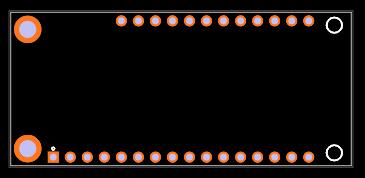
ESP8266 CAD Models
Symbol

Footprint
ESP8266 Applications
Prototyping of IoT devices
Low power battery operated applications
Network projects
Projects requiring multiple I/O interfaces with Wi-Fi and Bluetooth functionalities
Home appliances
Home automation
Smart plugs and lights
Industrial wireless control
Baby monitors
IP cameras
Sensor networks
Wearable electronics
Wi-Fi location-aware devices
Security ID tags
Wi-Fi position system beacons
ESP8266 Features
802.11 b/g/n support
802.11 n support (2.4 GHz), up to 72.2 Mbps
Defragmentation
2 x virtual Wi-Fi interface
Automatic beacon monitoring (hardware TSF)
Support Infrastructure BSS Station mode/SoftAP mode/Promiscuous mode
ESP8266 Manufacturer
Espressif Systems is a public multinational, fabless semiconductor company, headquartered in Shanghai and offices in China, India, Brazil, Singapore, and Czechia. As a complete solution provider, we specialize in producing highly-integrated, low-power, Wi-Fi-and-Bluetooth SoCs. Among our most popular IoT solutions are the ESP8266 and ESP32 series of chips, modules, and development boards.
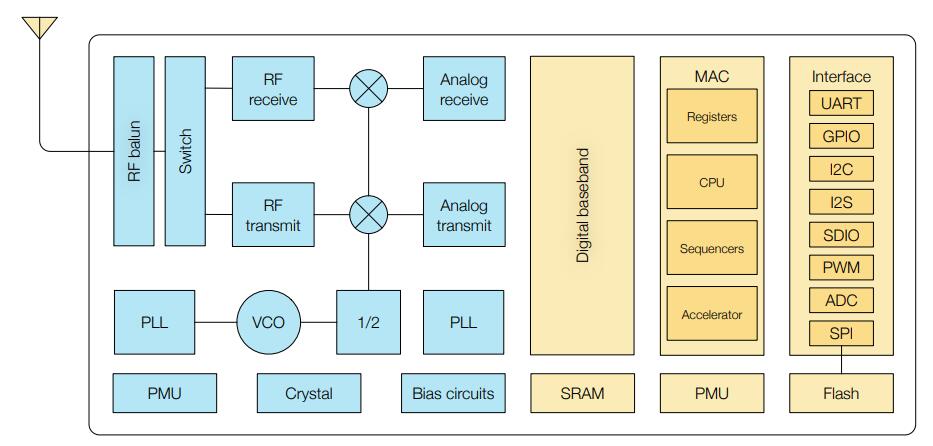
ESP8266 Functional Block Diagram
ESP8266 Package
ESP8266 with Arduino IDE
The NodeMCU Development Board can be easily programmed with Arduino IDE since it is easy to use.
Programming NodeMCU with the Arduino IDE will hardly take 5-10 minutes. All you need is the Arduino IDE, a USB cable, and the NodeMCU board itself.
Which one is better ESP32 or ESP8266?
Is it better to use an ESP32 or an ESP8266? It is up to you to decide what you want to do.
Because ESP32 has more functionality than ESP8266, such as a CPU core, faster Wi-Fi, Bluetooth 4.0 (BLE), touch sensitivity pins, and built-in Hall Effect sensors and temperature sensors, it is superior to ESP8266. In comparison to the ESP8266, the ESP32 features more GPIO pins. The ESP32 includes ten capacitive GPROS that can detect touch and activate events. A trigger event is a circuit in which an input pulse initiates action, such as in a radar module.
The ESP8266 is a more affordable version of the ESP32. Despite the fact that it lacks a few functions, it is adequate for the majority of simple DIY IoT applications. However, the GPIO mapping has significant limitations, and you may not have enough pins to accomplish your goals. An ESP32 is the way to go if that's the case.
Trend Analysis
Datasheet PDF
- Datasheets :
Parts with Similar Specs
What is PWM IC?
The TL494 fixed frequency PWM Controller can be used for DC to DC conversion regardless of buck or boost topology. ... This IC feature an output control circuit, a flip flop, a dead time comparator, two different error amplifiers, a 5V reference voltage, an oscillator, and a PWM comparator.
What is better esp32 vs esp8266?
The ESP32 is much more powerful than the ESP8266, comes with more GPIOs with multiple functions, faster Wi-Fi, and also supports Bluetooth. Many people think that the ESP32 is more difficult to deal with than the ESP8266 because it is more complex.
What is esp8266 used for?
The ESP8266 WiFi Module is a self-contained SOC with an integrated TCP/IP protocol stack that can give any microcontroller access to your WiFi network. The ESP8266 is capable of either hosting an application or offloading all WiFi networking functions from another application processor.
What is the ESP8266?
ESP8266 is a wifi SOC (system on a chip) produced by Espressif Systems. It is a highly integrated chip designed to provide full internet connectivity in a small package.
Why is ESP32 special?
ESP32 devices have more GPIO to work with, making them more useful in complex applications. Because many ESP32 development boards have small cameras, the ESP32 appears to be a very capable device.
 TPS2H160AQPWPRQ1: Dual-Channel, High-side, NMOs, FETs, Pinout
15 February 2022763
 BSS138-7-F N-Chanel MOSFET: BSS138-7-F, Datasheet, Pinout
26 March 20222044
 LTM8062IV#PBF Battery Charger: A Comprehensive Technical Overview
06 March 2024131
 Microchip PIC32MX130F064DVPT Technical Datasheet
29 February 2024136
 STM32F303CBT6 Microcontroller: 32-Bit, 48-LQFP, Pinout and Datasheet
20 January 20223227
 A Comprehensive Guide to LTC695ISW-3.3#TRPBF PMIC Supervisor from Linear Technology/Analog Devices
06 March 2024227
 PL133-47 Fanout Buffer IC: Pinout, Equivalent and Datasheet
09 April 2022279
 AD202 2000V Isolation Amplifier: Datasheet, Pinout, and Performance Deep Dive
03 March 2026168
 What is a Transmitter?
12 October 20215662
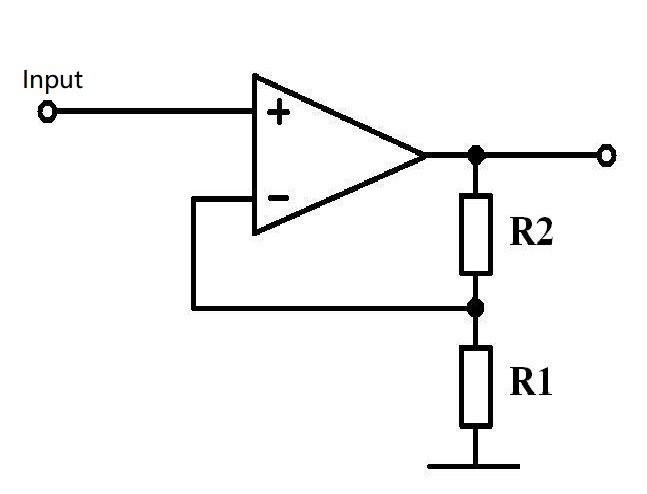 Introduction to DC Amplifier
07 November 202518103
 TSMC's Global Distribution
25 March 20223565
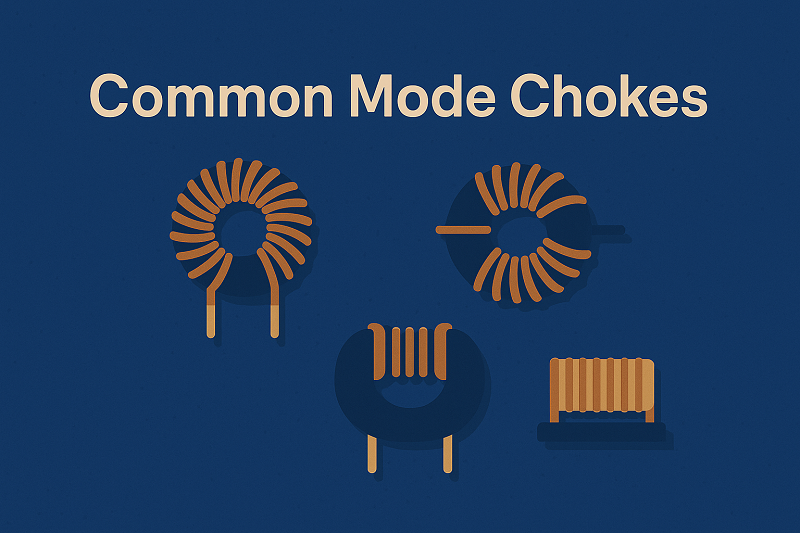 Practical Ways to Use Common Mode Chokes in 2025
10 July 20252732
 Detecting Wafer Patterns using Semi-Supervised Learning
21 October 20221279
 Best Practices for Panel Meter Maintenance
11 July 20251175
 Introduction to UFS (Universal Flash Storage)
23 July 20218016
 Facial Recognition: Features, Working and Applications
02 September 20219153
Espressif Systems
In Stock: 30
United States
China
Canada
Japan
Russia
Germany
United Kingdom
Singapore
Italy
Hong Kong(China)
Taiwan(China)
France
Korea
Mexico
Netherlands
Malaysia
Austria
Spain
Switzerland
Poland
Thailand
Vietnam
India
United Arab Emirates
Afghanistan
Åland Islands
Albania
Algeria
American Samoa
Andorra
Angola
Anguilla
Antigua & Barbuda
Argentina
Armenia
Aruba
Australia
Azerbaijan
Bahamas
Bahrain
Bangladesh
Barbados
Belarus
Belgium
Belize
Benin
Bermuda
Bhutan
Bolivia
Bonaire, Sint Eustatius and Saba
Bosnia & Herzegovina
Botswana
Brazil
British Indian Ocean Territory
British Virgin Islands
Brunei
Bulgaria
Burkina Faso
Burundi
Cabo Verde
Cambodia
Cameroon
Cayman Islands
Central African Republic
Chad
Chile
Christmas Island
Cocos (Keeling) Islands
Colombia
Comoros
Congo
Congo (DRC)
Cook Islands
Costa Rica
Côte d’Ivoire
Croatia
Cuba
Curaçao
Cyprus
Czechia
Denmark
Djibouti
Dominica
Dominican Republic
Ecuador
Egypt
El Salvador
Equatorial Guinea
Eritrea
Estonia
Eswatini
Ethiopia
Falkland Islands
Faroe Islands
Fiji
Finland
French Guiana
French Polynesia
Gabon
Gambia
Georgia
Ghana
Gibraltar
Greece
Greenland
Grenada
Guadeloupe
Guam
Guatemala
Guernsey
Guinea
Guinea-Bissau
Guyana
Haiti
Honduras
Hungary
Iceland
Indonesia
Iran
Iraq
Ireland
Isle of Man
Israel
Jamaica
Jersey
Jordan
Kazakhstan
Kenya
Kiribati
Kosovo
Kuwait
Kyrgyzstan
Laos
Latvia
Lebanon
Lesotho
Liberia
Libya
Liechtenstein
Lithuania
Luxembourg
Macao(China)
Madagascar
Malawi
Maldives
Mali
Malta
Marshall Islands
Martinique
Mauritania
Mauritius
Mayotte
Micronesia
Moldova
Monaco
Mongolia
Montenegro
Montserrat
Morocco
Mozambique
Myanmar
Namibia
Nauru
Nepal
New Caledonia
New Zealand
Nicaragua
Niger
Nigeria
Niue
Norfolk Island
North Korea
North Macedonia
Northern Mariana Islands
Norway
Oman
Pakistan
Palau
Palestinian Authority
Panama
Papua New Guinea
Paraguay
Peru
Philippines
Pitcairn Islands
Portugal
Puerto Rico
Qatar
Réunion
Romania
Rwanda
Samoa
San Marino
São Tomé & Príncipe
Saudi Arabia
Senegal
Serbia
Seychelles
Sierra Leone
Sint Maarten
Slovakia
Slovenia
Solomon Islands
Somalia
South Africa
South Sudan
Sri Lanka
St Helena, Ascension, Tristan da Cunha
St. Barthélemy
St. Kitts & Nevis
St. Lucia
St. Martin
St. Pierre & Miquelon
St. Vincent & Grenadines
Sudan
Suriname
Svalbard & Jan Mayen
Sweden
Syria
Tajikistan
Tanzania
Timor-Leste
Togo
Tokelau
Tonga
Trinidad & Tobago
Tunisia
Turkey
Turkmenistan
Turks & Caicos Islands
Tuvalu
U.S. Outlying Islands
U.S. Virgin Islands
Uganda
Ukraine
Uruguay
Uzbekistan
Vanuatu
Vatican City
Venezuela
Wallis & Futuna
Yemen
Zambia
Zimbabwe
![ESP32-D0WDQ6]() ESP32-D0WDQ6
ESP32-D0WDQ6Espressif Systems
![ESP32-D0WD]() ESP32-D0WD
ESP32-D0WDEspressif Systems
![ESP32-D2WD]() ESP32-D2WD
ESP32-D2WDEspressif Systems
![ESP8089]() ESP8089
ESP8089Espressif Systems
![ESP32-C6]() ESP32-C6
ESP32-C6Espressif Systems
![ESP32-D0WDR2-V3]() ESP32-D0WDR2-V3
ESP32-D0WDR2-V3Espressif Systems
![ESP32-S3R8V]() ESP32-S3R8V
ESP32-S3R8VEspressif Systems
![ESP32-S3R2]() ESP32-S3R2
ESP32-S3R2Espressif Systems
![ESP8685H2]() ESP8685H2
ESP8685H2Espressif Systems