Product
 Brand
Brand Articles
 Tools
Tools
SL100 NPN transistor: Datasheet, Equivalent and Application
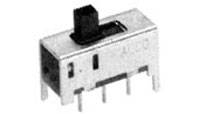


SWITCH SLIDE SP10T 250MA 125V
Sl100 transistor is a general-purpose, medium power NPN transistor. This article mainly covers datasheet, applications, specifications, pinout, and other details about the Sl100 transistor. Furthermore, there is a huge range of semiconductors, capacitors, and ICs in stock. Welcome your RFQ!

How to find transistor base emitter collector with multimeter? How to check pnp and npn? Electronics
What is SL100 Transistor?
The SL100 transistor is a medium-power NPN transistor that can be used for a variety of applications. The SL100 transistor is a general-purpose transistor that can be used in a wide range of electronic applications. To operate in the desired region of its characteristic curves, the transistor terminals require a constant DC voltage.
SL100 Pinout
A collector, a base, and an emitter are the three terminals of an SL100 transistor. The emitter is indicated by a projecting edge in the transistor casing. The emitter is closest to the base, while the collector is at the opposite end of the casing.

SL100 Pinout
| Pin Name | Description |
| C | Collector |
| B | Base |
| E | Emitter |
SL100 Features
Operating and Storage Temperature: -65℃ to 200℃
It is an NPN transistor with medium power
Collector-Emitter (CE) voltage is 50V
Output Capacitance is 20pf
Collector Base (CB) voltage is 60V
DC Current gain is 100 to 300 hfe
Emitter Base (EB) voltage is 5.0V
Dissipation of Collector Power (Max) is 0.8 W
Transistor Material is Si
Package is TO-39
NPN Polarity
The saturation voltage from Base to Emitter is 1.3V
Collector Current is 0.5A
The saturation voltage from Collector to Emitter is 0.6V
Designator Type is SL100
Ruggedness is high
Easy drive requirements
The operating area is high safe
For less distortion balancing designs
Easy to handle & carry
Specifications
- TypeParameter
- Mount
In electronic components, the term "Mount" typically refers to the method or process of physically attaching or fixing a component onto a circuit board or other electronic device. This can involve soldering, adhesive bonding, or other techniques to secure the component in place. The mounting process is crucial for ensuring proper electrical connections and mechanical stability within the electronic system. Different components may have specific mounting requirements based on their size, shape, and function, and manufacturers provide guidelines for proper mounting procedures to ensure optimal performance and reliability of the electronic device.
Through Hole - Mounting Type
The "Mounting Type" in electronic components refers to the method used to attach or connect a component to a circuit board or other substrate, such as through-hole, surface-mount, or panel mount.
Through Hole - Actuator Material
In smart material system, actuator materials have the ability to change the shape, stiffness, position, natural frequency, damping and/or other mechanical characteristics of the smart material systems in response to changes in temperature, electric field and/or magnetic field.
Steel, Zinc Plate - Contact MaterialsCopper Alloy
- ElectricalLife6,000 Cycles
- Operating Temperature
The operating temperature is the range of ambient temperature within which a power supply, or any other electrical equipment, operate in. This ranges from a minimum operating temperature, to a peak or maximum operating temperature, outside which, the power supply may fail.
-10°C~60°C - Packaging
Semiconductor package is a carrier / shell used to contain and cover one or more semiconductor components or integrated circuits. The material of the shell can be metal, plastic, glass or ceramic.
Bulk - Series
In electronic components, the "Series" refers to a group of products that share similar characteristics, designs, or functionalities, often produced by the same manufacturer. These components within a series typically have common specifications but may vary in terms of voltage, power, or packaging to meet different application needs. The series name helps identify and differentiate between various product lines within a manufacturer's catalog.
SL - Published2016
- Part Status
Parts can have many statuses as they progress through the configuration, analysis, review, and approval stages.
Obsolete - Moisture Sensitivity Level (MSL)
Moisture Sensitivity Level (MSL) is a standardized rating that indicates the susceptibility of electronic components, particularly semiconductors, to moisture-induced damage during storage and the soldering process, defining the allowable exposure time to ambient conditions before they require special handling or baking to prevent failures
Not Applicable - Termination
Termination in electronic components refers to the practice of matching the impedance of a circuit to prevent signal reflections and ensure maximum power transfer. It involves the use of resistors or other components at the end of transmission lines or connections. Proper termination is crucial in high-frequency applications to maintain signal integrity and reduce noise.
PC Pin - Number of Positions10
- Voltage - Rated DC
Voltage - Rated DC is a parameter that specifies the maximum direct current (DC) voltage that an electronic component can safely handle without being damaged. This rating is crucial for ensuring the proper functioning and longevity of the component in a circuit. Exceeding the rated DC voltage can lead to overheating, breakdown, or even permanent damage to the component. It is important to carefully consider this parameter when designing or selecting components for a circuit to prevent any potential issues related to voltage overload.
12V - Current Rating (Amps)
The parameter "Current Rating (Amps)" in electronic components refers to the maximum amount of electrical current that the component can safely handle without being damaged. It is typically measured in amperes (A) and is an important specification to consider when designing or selecting components for a circuit. Exceeding the current rating of a component can lead to overheating, malfunction, or even failure of the component. It is crucial to ensure that the current rating of a component matches the requirements of the circuit to prevent any potential issues and ensure reliable operation.
250mA AC 150mA DC - Orientation
In electronic components, the parameter "Orientation" refers to the specific alignment or positioning of the component with respect to its intended installation or operation. This parameter is crucial for ensuring proper functionality and performance of the component within a circuit or system. Orientation may include factors such as the physical orientation of the component on a circuit board, the direction of current flow through the component, or the alignment of specific features or terminals for correct connection. Manufacturers often provide orientation guidelines in datasheets or technical specifications to help users correctly install and use the component. Paying attention to the orientation of electronic components is essential to prevent errors, ensure reliability, and optimize the overall performance of electronic devices.
Vertical - Reach Compliance Code
Reach Compliance Code refers to a designation indicating that electronic components meet the requirements set by the Registration, Evaluation, Authorization, and Restriction of Chemicals (REACH) regulation in the European Union. It signifies that the manufacturer has assessed and managed the chemical substances within the components to ensure safety and environmental protection. This code is vital for compliance with regulations aimed at minimizing risks associated with hazardous substances in electronic products.
unknown - Contact Finish
Contact finish refers to the surface coating or treatment applied to the electrical contacts of electronic components. This finish is crucial for ensuring reliable electrical connections and preventing corrosion or oxidation of the contacts. Common contact finishes include gold, silver, tin, and nickel, each offering different levels of conductivity, durability, and resistance to environmental factors. The choice of contact finish depends on the specific application requirements, such as operating conditions, cost considerations, and compatibility with other components in the circuit. Selecting the appropriate contact finish is essential for maintaining the performance and longevity of electronic devices.
Silver - Termination Style
"Termination style" in electronic components refers to the method used to connect the component to a circuit board or other electronic devices. It determines how the component's leads or terminals are designed for soldering or mounting onto the circuit board. Common termination styles include through-hole, surface mount, and wire lead terminations.Through-hole components have leads that are inserted through holes in the circuit board and soldered on the other side. Surface mount components have flat terminals that are soldered directly onto the surface of the circuit board. Wire lead terminations involve attaching wires to the component for connection.The choice of termination style depends on factors such as the type of component, the manufacturing process, and the space available on the circuit board. Different termination styles offer various advantages in terms of ease of assembly, reliability, and space efficiency in electronic designs.
PC Pin - Voltage - Rated AC
Voltage - Rated AC is a parameter that specifies the maximum alternating current (AC) voltage that an electronic component can safely handle without being damaged. This rating is crucial for ensuring the proper functioning and longevity of the component within an electrical circuit. It is typically expressed in volts (V) and helps users determine the compatibility of the component with the voltage levels present in the circuit. Exceeding the rated AC voltage can lead to overheating, malfunction, or permanent damage to the component, so it is important to adhere to this specification when designing or using electronic systems.
125V - Actuator Type
The actuator type in electronic components refers to the specific mechanism or technology used to convert electrical energy into physical motion or action. Common actuator types include electric motors, solenoids, piezoelectric actuators, and hydraulic or pneumatic cylinders. Each type has its unique characteristics, advantages, and applications, allowing them to be utilized in diverse systems such as robotics, automation, and control processes. The choice of actuator type often influences the performance, efficiency, and functionality of the overall system.
Standard - Circuit
The parameter "Circuit" in electronic components refers to the interconnected arrangement of various electronic elements such as resistors, capacitors, inductors, and active devices like transistors. It defines the path through which electric current flows and establishes the operational behavior of the components within that system. Circuits can be classified as analog or digital, depending on the type of signals they handle, and can vary in complexity from simple series or parallel configurations to intricate designs used in advanced applications.
SP10T - ELV
ELV stands for Extra-Low Voltage, which refers to a specific voltage range used in electronic components and systems. This voltage range typically falls below 50 volts AC or 120 volts DC. ELV systems are designed to operate at lower voltages for safety reasons, as they pose a reduced risk of electric shock compared to higher voltage systems. Components and devices operating within the ELV range are commonly used in various applications, such as telecommunications, data centers, and low-power electronics. Adhering to ELV standards helps ensure the safety of both users and equipment in these systems.
Non-Compliant - Mechanical Life
Mechanical life is a parameter used to measure the durability and reliability of electronic components, particularly mechanical switches and connectors. It refers to the number of mechanical operations or cycles that a component can withstand before it fails or exhibits degraded performance. Components with a higher mechanical life rating are considered more robust and long-lasting, making them suitable for applications where frequent switching or physical stress is expected. Manufacturers typically test and specify the mechanical life of their components to help users understand their expected lifespan and performance under various operating conditions.
10,000 Cycles - Operating Force
Operating force is a key parameter in electronic components, particularly in devices such as switches and buttons. It refers to the amount of force required to actuate or trigger the component, typically measured in units like grams or newtons. The operating force determines the tactile feedback and feel of the component when it is pressed or activated. It is important for ensuring user comfort and usability, as components with too high or too low operating force may lead to user fatigue or accidental activations. Manufacturers specify the operating force of components to help designers select the right components for their applications based on the desired user experience and functionality.
100 ~ 300gf - Contact Timing
Contact Timing in electronic components refers to the specific moment when electrical contacts make or break during operation, impacting the overall performance and efficiency of a device. It is crucial for ensuring the proper synchronization of signals in circuits, particularly in relays and switches. Accurate contact timing minimizes signal distortion and reduces wear on components, thereby enhancing the reliability and longevity of electronic systems.
Non-Shorting (BBM) - Switch Travel
Switch travel refers to the distance that a switch or button must be pressed or moved in order to activate or deactivate a circuit. It is an important parameter in electronic components, as it determines the tactile feedback and user experience when interacting with the device. The switch travel can vary depending on the type of switch being used, such as membrane switches, tactile switches, or mechanical switches. Designers often consider switch travel when designing user interfaces to ensure that the switches provide the desired level of responsiveness and feedback to the user.
4.00mm - Features
In the context of electronic components, the term "Features" typically refers to the specific characteristics or functionalities that a particular component offers. These features can vary depending on the type of component and its intended use. For example, a microcontroller may have features such as built-in memory, analog-to-digital converters, and communication interfaces like UART or SPI.When evaluating electronic components, understanding their features is crucial in determining whether they meet the requirements of a particular project or application. Engineers and designers often look at features such as operating voltage, speed, power consumption, and communication protocols to ensure compatibility and optimal performance.In summary, the "Features" parameter in electronic components describes the unique attributes and capabilities that differentiate one component from another, helping users make informed decisions when selecting components for their electronic designs.
Epoxy Sealed Terminals - Length56.13mm
- Width9.6mm
- Length - Tail
"Length - Tail" is a parameter used in electronic components, particularly in the context of connectors and cables. It refers to the length of the tail or lead of the component, which is the portion that is intended to be soldered or connected to another component. The length of the tail is an important consideration in electronic design and assembly, as it can affect the overall performance and reliability of the connection. A longer tail may provide more flexibility in positioning the component, while a shorter tail may be more compact and space-saving.In summary, the "Length - Tail" parameter specifies the length of the solderable portion of an electronic component, and it is a critical factor in determining the ease of assembly, reliability, and performance of the component in a circuit.
4.26mm - Actuator Length
Actuator Length in electronic components refers to the physical length of the actuator, which is the part of the component responsible for initiating or controlling a mechanical action. The actuator length is an important parameter as it determines the range of motion or force that can be exerted by the component. In devices such as switches, valves, and motors, the actuator length directly impacts the efficiency and effectiveness of the component's operation. Designers and engineers consider the actuator length carefully to ensure that the component meets the required specifications and functions properly within the intended system.
14.00mm - RoHS Status
RoHS means “Restriction of Certain Hazardous Substances” in the “Hazardous Substances Directive” in electrical and electronic equipment.
Non-RoHS Compliant - Lead Free
Lead Free is a term used to describe electronic components that do not contain lead as part of their composition. Lead is a toxic material that can have harmful effects on human health and the environment, so the electronics industry has been moving towards lead-free components to reduce these risks. Lead-free components are typically made using alternative materials such as silver, copper, and tin. Manufacturers must comply with regulations such as the Restriction of Hazardous Substances (RoHS) directive to ensure that their products are lead-free and environmentally friendly.
Contains Lead
SL100 Applications
Sound reproduction and amplification
Switching
Logic Gates Manufacture
Reproduction of Sound
Processing of Signal
Radio Transmission
SL100 Equivalents
2N3904, MZT3055, P2N2369, P2N2369A, P2N2907A, PN100, PN200, 2CF2325, BC548B, 2N23867, 2N3055HV, 2N6371H, A1941, BD237S, BD675BPL, BF422BPL, BU908F, BC301
Where to Use SL100 Transistor
The SL100 transistor is inexpensive and widely available in the market, allowing it to be used in a wide range of circuits. A single SL100 transistor is enough to build a simple continuity tester circuit that emits visual and auditory signals when continuity is present at the probes. Automated water level indicator and rain detection alarm circuits are two such circuits that use SL100 transistors. Some uses include automatic street light circuits, automatic emergency lights, beeper circuits, gas sensor alarm circuits, automatic voltage stabilizers, and solar chargers.
How to Use SL100 Transistor
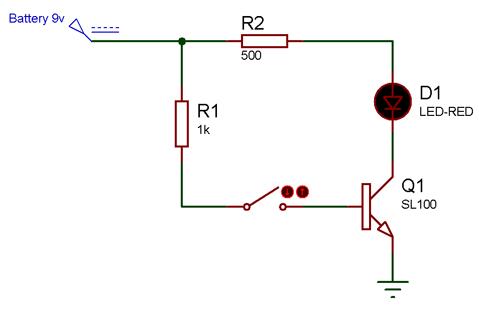
SL100 Transistor Circuit
Depending on the supply voltage, you can replace the LED with any DC load. The supply voltage of 9 volts is used to turn on an LED in this circuit. When we close the switch and apply the base voltage, the transistor begins to conduct from Collector to Emitter, and the LED turns on. R1 is utilized to minimize the overvoltage at the base, and R2 is used to safeguard the LED.
SL100 vs. BC107 Transistors
BC is for Buried Channel, and 107 is the product version that defines how many different types of materials were employed to make this transistor. In the CE setup, a medium power NPN transistor such as the SL100 is utilized as a switch. The terminal of this type of transistor requires a constant DC voltage to operate within the preferred range of its properties, which is referred to as bias.
| Specifications | SL100 | BC107 |
| Number of Pins | Three | Three |
| Polarity | NPN | PNP |
| Package | To39 | To18 |
| CE Voltage | 50V | 45V |
| Terminals | Emitter, Base & Collector | Emitter, Base & Collector |
| Complete Power Dissipation | 800mw | 600mw |
| Gain | Below 100dB | Below 30dB |
| hfe | 125 to 500 | 100 to 300 |
| The capacitance of Operating and Storage Junction | -65 – 200°C | -65 – 200°C |
| Applications | Switch and General Purpose Amplifier | Switch and Power Amplifier |
SL100 Dimensions
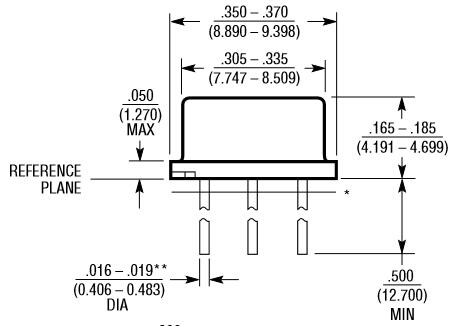

SL100 Dimensions
SL100 Manufacturer
TE Connectivity is a company that provides internet connectivity. Tyco Electronics was renamed ALCOSWITCH. ALCOSWITCH has a large selection of high-quality electronic components. OEM applications, utility/energy, outside plant, and premise networking installations, and more are among the services they provide. Connectors/interconnection systems, terminal blocks, relays, electronic modules, circuit protection devices, fiber optic components, wire and cable, switches, wireless components, sensors, printed circuit boards, touchscreens, and application tooling are examples of well-known brand names' products. Electrical harnesses are also insulated, protected, held, bundled, and identified with their goods.
Datasheet PDF
- Datasheets :
- RohsStatement :
- Environmental Information :
What is the use of SL100 transistor?
The transistor-like SL100 is a medium, general-purpose power NPN transistor. So this transistor is used in a wide range of electronic applications like switching, logic gates design, and reproduction of sound, amplification, and signal processing & radio transmission.
Is SL100 a PNP transistor?
An NPN transistor consists of a layer of p-doped semiconductor between two n-doped layers, whereas a PNP transistor consists of an n-doped semiconductor between two p-doped layers. The most common example in usage is the SL100 transistor. Sl100 transistor is a general-purpose, medium power NPN transistor.
 What is the difference between them: 2N3904 vs. BC547?
10 November 202132230
 TCMT4600 Input Phototransister: Pinout, Datasheet, and Circuit
16 March 20221090
 TPS51200DRCT DDR Voltage Regulator 10-VSON: Datasheet, Pinout, TPS51200DRCT VS NCP51200MNTXG
22 January 20222791
 CR2032 Battery: Benefits, Pinout and Datasheet
05 August 202141553
 LM224 Operational Amplifier : Application, Pinout and Datasheet
06 September 20214865
 TPS2559DRCR:Power-Distribution, Pinout, Low-Resistance
15 February 2022909
 MX25R1635FZUIL0 Flash Memory: Features, Pinout, and Datasheet
24 February 20222833
 PCF8574A Expander: Datasheet, Pinout, Comparison
20 August 20212487
 What is fluorescent lamp?
19 October 20214613
 AC Contactor: What is Self-Locking?
01 March 202212650
 Nickel-Cadmium Battery: Construction, Features and Working Principle
19 March 202633626
 The Introduction of Car Fuse
09 October 20217033
 What are the Applications of Filters?
17 January 202617080
 What is an Auto Transformer and Its Working?
01 April 20219399
 Semiconductor Market Predicted to Witness Significant Growth by 2023
19 September 20233542
 What is a Capacitive Sensor?
31 October 202511273
TE Connectivity ALCOSWITCH Switches
In Stock
United States
China
Canada
Japan
Russia
Germany
United Kingdom
Singapore
Italy
Hong Kong(China)
Taiwan(China)
France
Korea
Mexico
Netherlands
Malaysia
Austria
Spain
Switzerland
Poland
Thailand
Vietnam
India
United Arab Emirates
Afghanistan
Åland Islands
Albania
Algeria
American Samoa
Andorra
Angola
Anguilla
Antigua & Barbuda
Argentina
Armenia
Aruba
Australia
Azerbaijan
Bahamas
Bahrain
Bangladesh
Barbados
Belarus
Belgium
Belize
Benin
Bermuda
Bhutan
Bolivia
Bonaire, Sint Eustatius and Saba
Bosnia & Herzegovina
Botswana
Brazil
British Indian Ocean Territory
British Virgin Islands
Brunei
Bulgaria
Burkina Faso
Burundi
Cabo Verde
Cambodia
Cameroon
Cayman Islands
Central African Republic
Chad
Chile
Christmas Island
Cocos (Keeling) Islands
Colombia
Comoros
Congo
Congo (DRC)
Cook Islands
Costa Rica
Côte d’Ivoire
Croatia
Cuba
Curaçao
Cyprus
Czechia
Denmark
Djibouti
Dominica
Dominican Republic
Ecuador
Egypt
El Salvador
Equatorial Guinea
Eritrea
Estonia
Eswatini
Ethiopia
Falkland Islands
Faroe Islands
Fiji
Finland
French Guiana
French Polynesia
Gabon
Gambia
Georgia
Ghana
Gibraltar
Greece
Greenland
Grenada
Guadeloupe
Guam
Guatemala
Guernsey
Guinea
Guinea-Bissau
Guyana
Haiti
Honduras
Hungary
Iceland
Indonesia
Iran
Iraq
Ireland
Isle of Man
Israel
Jamaica
Jersey
Jordan
Kazakhstan
Kenya
Kiribati
Kosovo
Kuwait
Kyrgyzstan
Laos
Latvia
Lebanon
Lesotho
Liberia
Libya
Liechtenstein
Lithuania
Luxembourg
Macao(China)
Madagascar
Malawi
Maldives
Mali
Malta
Marshall Islands
Martinique
Mauritania
Mauritius
Mayotte
Micronesia
Moldova
Monaco
Mongolia
Montenegro
Montserrat
Morocco
Mozambique
Myanmar
Namibia
Nauru
Nepal
New Caledonia
New Zealand
Nicaragua
Niger
Nigeria
Niue
Norfolk Island
North Korea
North Macedonia
Northern Mariana Islands
Norway
Oman
Pakistan
Palau
Palestinian Authority
Panama
Papua New Guinea
Paraguay
Peru
Philippines
Pitcairn Islands
Portugal
Puerto Rico
Qatar
Réunion
Romania
Rwanda
Samoa
San Marino
São Tomé & Príncipe
Saudi Arabia
Senegal
Serbia
Seychelles
Sierra Leone
Sint Maarten
Slovakia
Slovenia
Solomon Islands
Somalia
South Africa
South Sudan
Sri Lanka
St Helena, Ascension, Tristan da Cunha
St. Barthélemy
St. Kitts & Nevis
St. Lucia
St. Martin
St. Pierre & Miquelon
St. Vincent & Grenadines
Sudan
Suriname
Svalbard & Jan Mayen
Sweden
Syria
Tajikistan
Tanzania
Timor-Leste
Togo
Tokelau
Tonga
Trinidad & Tobago
Tunisia
Turkey
Turkmenistan
Turks & Caicos Islands
Tuvalu
U.S. Outlying Islands
U.S. Virgin Islands
Uganda
Ukraine
Uruguay
Uzbekistan
Vanuatu
Vatican City
Venezuela
Wallis & Futuna
Yemen
Zambia
Zimbabwe
![MHS122K04]() MHS122K04
MHS122K04TE Connectivity / Alcoswitch
![TSD21DDG1RA]() TSD21DDG1RA
TSD21DDG1RATE Connectivity ALCOSWITCH Switches