Product
 Brand
Brand Articles
 Tools
Tools
SS430 Sensor Module: Datasheet, Application, Benefits
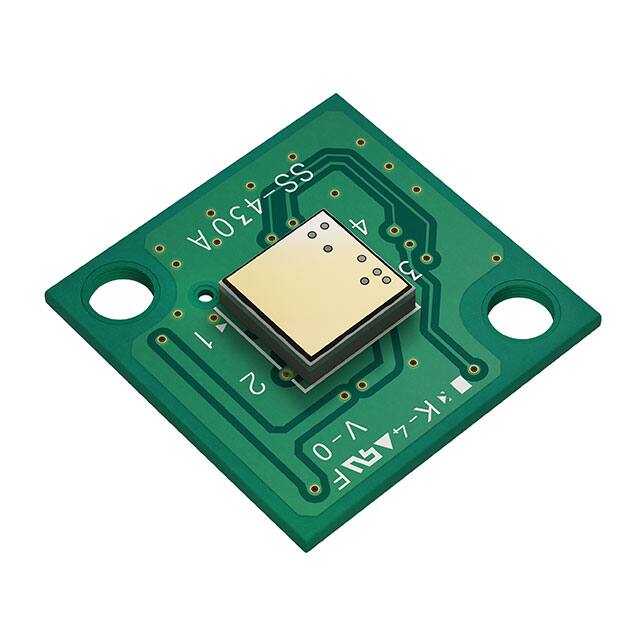


PYRO SENSOR MODULE 60DEG 2M DIST
The SS430 belongs to KEMET’s SS SS Pyroelectric Infrared Sensor Module. This article covers its more detailed information.
SS430 Pinout
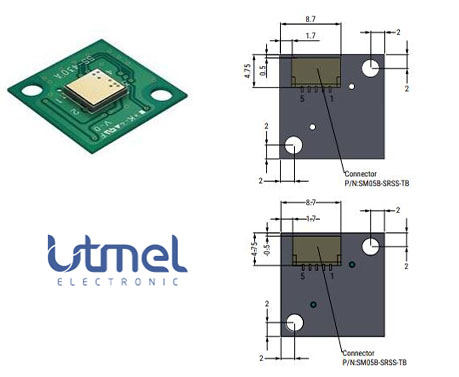
SS430 Description
The SS430 belongs to KEMET's SS Pyroelectric Infrared Sensor Module. KEMET's SS series pyroelectric infrared sensors use the pyroelectric effect of ceramic by absorbing infrared rays emitted from the human body. This detects the natural infrared signature produced by humans. Also, these proximity sensors can detect infrared rays without using lenses. By adding a proprietary lens, the detection distance can be further improved.
SS430 Benefits
• Equipped with AMP circuit and comparator circuit
• Digital output
• Available with or without lens
• Flat top surface of the lens
• Microcomputer installed
• Connector mounting
• Excellent radio wave performance in the high-frequency band
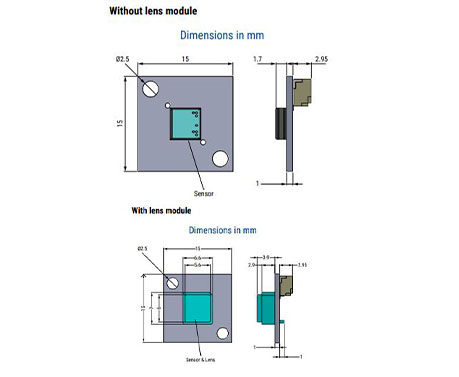
• Compact (15.00 x 15.00 x 5.65 mm)
Specifications
- TypeParameter
- Factory Lead Time23 Weeks
- Surface Mount
having leads that are designed to be soldered on the side of a circuit board that the body of the component is mounted on.
NO - Package / Case
refers to the protective housing that encases an electronic component, providing mechanical support, electrical connections, and thermal management.
Module - Mounting Feature
a process by which the operating system makes files and directories on a storage device (such as hard drive, CD-ROM, or network share) available for users to access via the computer's file system.
PANEL MOUNT - Usage LevelCommercial grade
- Series
In electronic components, the "Series" refers to a group of products that share similar characteristics, designs, or functionalities, often produced by the same manufacturer. These components within a series typically have common specifications but may vary in terms of voltage, power, or packaging to meet different application needs. The series name helps identify and differentiate between various product lines within a manufacturer's catalog.
SS - Packaging
Semiconductor package is a carrier / shell used to contain and cover one or more semiconductor components or integrated circuits. The material of the shell can be metal, plastic, glass or ceramic.
Bulk - Operating Temperature
The operating temperature is the range of ambient temperature within which a power supply, or any other electrical equipment, operate in. This ranges from a minimum operating temperature, to a peak or maximum operating temperature, outside which, the power supply may fail.
-20°C~60°C - Part Status
Parts can have many statuses as they progress through the configuration, analysis, review, and approval stages.
Active - Moisture Sensitivity Level (MSL)
Moisture Sensitivity Level (MSL) is a standardized rating that indicates the susceptibility of electronic components, particularly semiconductors, to moisture-induced damage during storage and the soldering process, defining the allowable exposure time to ambient conditions before they require special handling or baking to prevent failures
Not Applicable - Voltage - Supply
Voltage - Supply refers to the range of voltage levels that an electronic component or circuit is designed to operate with. It indicates the minimum and maximum supply voltage that can be applied for the device to function properly. Providing supply voltages outside this range can lead to malfunction, damage, or reduced performance. This parameter is critical for ensuring compatibility between different components in a circuit.
3.5V~5.5V - Output Type
The "Output Type" parameter in electronic components refers to the type of signal or data that is produced by the component as an output. This parameter specifies the nature of the output signal, such as analog or digital, and can also include details about the voltage levels, current levels, frequency, and other characteristics of the output signal. Understanding the output type of a component is crucial for ensuring compatibility with other components in a circuit or system, as well as for determining how the output signal can be utilized or processed further. In summary, the output type parameter provides essential information about the nature of the signal that is generated by the electronic component as its output.
Digital - Sensor Type
In electronic components, the parameter "Sensor Type" refers to the specific type of sensor technology used in a particular component to detect and measure physical phenomena such as light, temperature, pressure, motion, or proximity. Different sensor types utilize various principles and mechanisms to convert the detected input into an electrical signal that can be processed by the electronic component. Common sensor types include photodiodes, thermistors, accelerometers, and proximity sensors, each designed for specific applications and environments. Understanding the sensor type is crucial for selecting the right component for a given task and ensuring accurate and reliable sensing capabilities in electronic systems.
PIR (Passive Infrared) - Sensors/Transducers Type
In electronic components, the parameter "Sensors/Transducers Type" refers to the specific type of sensor or transducer that is integrated into the component. Sensors are devices that detect changes in physical properties and convert them into electrical signals, while transducers are devices that convert one form of energy into another. The type of sensor or transducer used in an electronic component can vary widely depending on the intended application, such as temperature sensors, pressure sensors, proximity sensors, accelerometers, and more. Understanding the Sensors/Transducers Type parameter is crucial for selecting the right component for a particular electronic system or device, as different types of sensors/transducers have different functionalities and performance characteristics.
INFRARED SENSOR,PYROELECTRIC - RoHS Status
RoHS means “Restriction of Certain Hazardous Substances” in the “Hazardous Substances Directive” in electrical and electronic equipment.
ROHS3 Compliant
SS430 Application
• Contact less switching
• Office automation equipment
• Home applicances
• Lighting
• Display products
• Air-conditioners
• TV
• PC monitors
• Rice cookers
• Smart toilets
How to use SS430
Detecting distance will vary by the chassis material used.
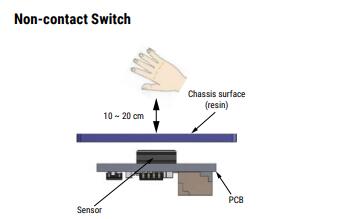
Detecting distance increased to a few meters by using a polyethene plate.
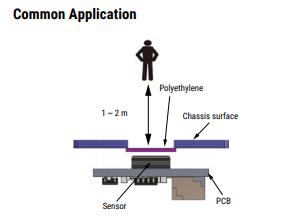
A lens is required to detect up to 5 m.
Detecting range variations will depend on the usage environment.
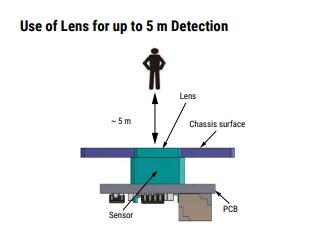
Note: Pyroelectric Infrared Sensors should be kept away from indirect and direct sunlight, the headlights of cars, wind, and exposure to strong vibration and strong shock. Do not use in water, alcohol ETA, corrosive gas or undersea breeze. Do not drop or apply any mechanical stress.
SS430 Dimensions
SS430 Manufacture
KEMET Corporation is a leading global supplier of electronic components. We offer our customers the broadest selection of capacitor technologies in the industry across all dielectrics, along with an expanding range of electromechanical devices, electromagnetic compatibility solutions and supercapacitors. Our vision is to be the preferred supplier of electronic component solutions for customers demanding the highest standards of quality, delivery and service.
Datasheet PDF
- Datasheets :
Popularity by Region
What is the SS series pyroelectric infrared sensors?
The SS series pyroelectric infrared sensors use the pyroelectric effect of ceramic by absorbing infrared rays emitted from the human body. This detects the natural infrared signature produced by humans. Also, these proximity sensors can detect infrared rays without using lenses. By adding a proprietary lens, the detection distance can be further improved. Three different colour lenses also enable some design flexibility. The SS series sensors are packaged in KEMET's module solution, are easy to install, and the drive already being included in the package makes them“plug and sense.”
What package is SS series available in?
The SS series sensors are available in KEMET's module solution, are easy to install, and the drive already being included in the package makes them “plug and sense.”
How to store pyroelectric infrared sensors?
Pyroelectric Infrared Sensors should be stored in normal working environments. Do not expose to high temperatures, high humidity, corrosive atmospheres, and avoid long-term storage. KEMET recommends that maximum storage temperature not exceed 25°C and maximum storage humidity not exceed 50% relative humidity. Atmospheres should be free of chlorine and sulfur-bearing compounds.
 NEMA17: Stepper Motor, Applications, Features
31 March 20229216
 POWERSTEP01: Overview, Features, and ApplicationsPOWERSTEP01: Overview, Features, and Applications
30 November 20231532
 STM32G431C8T6 Price Comparison: Best Deals and Vendor Analysis
16 June 2025611
 CR2450 vs. CR2032: Are they interchangeable?
01 August 2026240659
 Comprehensive Guide to XC7Z010-1CLG400C Specifications and Features
21 February 20251692
 DS26LV32ATM:CMOS Receiver, Pinout, Datasheet
24 March 20221391
 LM1117 Voltage Regulator: Pinout, Equivalents, Datasheets
06 July 202120459
 LTC8143FSW#PBF Digital to Analog Converter: A Comprehensive Technical Overview
06 March 2024356
 Discovering Optimal Materials for Wide Bandgap Semiconductors
20 January 20242285
 Semiconductor Cleaning: Processes, Methods and Reasons
20 April 202221199
 Reed Relays: 10 Key Applications in Modern Electronics
04 July 20253310
 Introduction to Lead Acid Battery: Construction, Working Principle and Types
04 March 202111017
 Understanding the Basics of I2C Interface Controllers
11 June 20251913
 The Different Types of Circuit Breakers and Their Applications
11 April 20236999
 What is Vacuum Circuit Breaker?
12 October 202110389
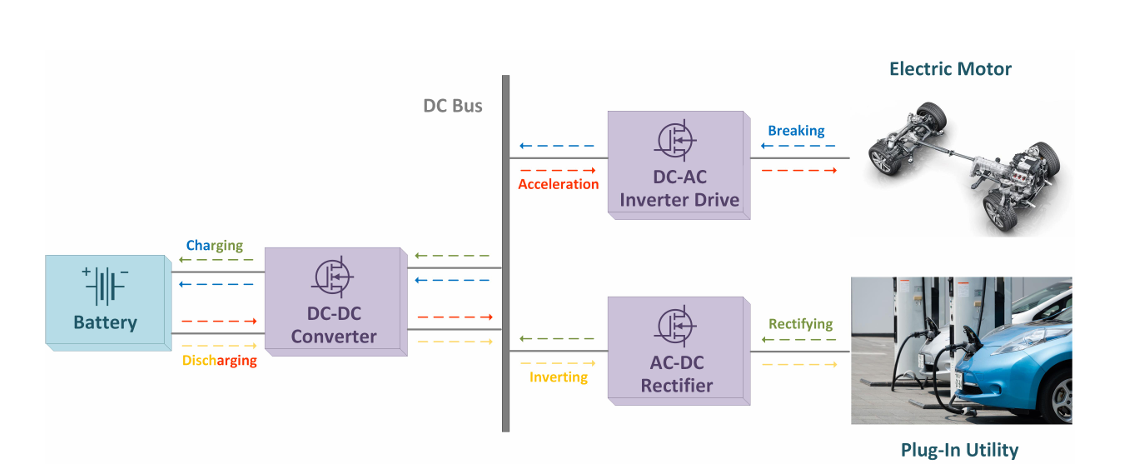 A Hybrid SiC and GaN-Based DC-DC Converter for EVs
20 September 20243058
KEMET
In Stock
United States
China
Canada
Japan
Russia
Germany
United Kingdom
Singapore
Italy
Hong Kong(China)
Taiwan(China)
France
Korea
Mexico
Netherlands
Malaysia
Austria
Spain
Switzerland
Poland
Thailand
Vietnam
India
United Arab Emirates
Afghanistan
Åland Islands
Albania
Algeria
American Samoa
Andorra
Angola
Anguilla
Antigua & Barbuda
Argentina
Armenia
Aruba
Australia
Azerbaijan
Bahamas
Bahrain
Bangladesh
Barbados
Belarus
Belgium
Belize
Benin
Bermuda
Bhutan
Bolivia
Bonaire, Sint Eustatius and Saba
Bosnia & Herzegovina
Botswana
Brazil
British Indian Ocean Territory
British Virgin Islands
Brunei
Bulgaria
Burkina Faso
Burundi
Cabo Verde
Cambodia
Cameroon
Cayman Islands
Central African Republic
Chad
Chile
Christmas Island
Cocos (Keeling) Islands
Colombia
Comoros
Congo
Congo (DRC)
Cook Islands
Costa Rica
Côte d’Ivoire
Croatia
Cuba
Curaçao
Cyprus
Czechia
Denmark
Djibouti
Dominica
Dominican Republic
Ecuador
Egypt
El Salvador
Equatorial Guinea
Eritrea
Estonia
Eswatini
Ethiopia
Falkland Islands
Faroe Islands
Fiji
Finland
French Guiana
French Polynesia
Gabon
Gambia
Georgia
Ghana
Gibraltar
Greece
Greenland
Grenada
Guadeloupe
Guam
Guatemala
Guernsey
Guinea
Guinea-Bissau
Guyana
Haiti
Honduras
Hungary
Iceland
Indonesia
Iran
Iraq
Ireland
Isle of Man
Israel
Jamaica
Jersey
Jordan
Kazakhstan
Kenya
Kiribati
Kosovo
Kuwait
Kyrgyzstan
Laos
Latvia
Lebanon
Lesotho
Liberia
Libya
Liechtenstein
Lithuania
Luxembourg
Macao(China)
Madagascar
Malawi
Maldives
Mali
Malta
Marshall Islands
Martinique
Mauritania
Mauritius
Mayotte
Micronesia
Moldova
Monaco
Mongolia
Montenegro
Montserrat
Morocco
Mozambique
Myanmar
Namibia
Nauru
Nepal
New Caledonia
New Zealand
Nicaragua
Niger
Nigeria
Niue
Norfolk Island
North Korea
North Macedonia
Northern Mariana Islands
Norway
Oman
Pakistan
Palau
Palestinian Authority
Panama
Papua New Guinea
Paraguay
Peru
Philippines
Pitcairn Islands
Portugal
Puerto Rico
Qatar
Réunion
Romania
Rwanda
Samoa
San Marino
São Tomé & Príncipe
Saudi Arabia
Senegal
Serbia
Seychelles
Sierra Leone
Sint Maarten
Slovakia
Slovenia
Solomon Islands
Somalia
South Africa
South Sudan
Sri Lanka
St Helena, Ascension, Tristan da Cunha
St. Barthélemy
St. Kitts & Nevis
St. Lucia
St. Martin
St. Pierre & Miquelon
St. Vincent & Grenadines
Sudan
Suriname
Svalbard & Jan Mayen
Sweden
Syria
Tajikistan
Tanzania
Timor-Leste
Togo
Tokelau
Tonga
Trinidad & Tobago
Tunisia
Turkey
Turkmenistan
Turks & Caicos Islands
Tuvalu
U.S. Outlying Islands
U.S. Virgin Islands
Uganda
Ukraine
Uruguay
Uzbekistan
Vanuatu
Vatican City
Venezuela
Wallis & Futuna
Yemen
Zambia
Zimbabwe
![USEQFCEA500100]() USEQFCEA500100
USEQFCEA500100KEMET
![USEYN823010000]() USEYN823010000
USEYN823010000KEMET
![USEQFCEA455100]() USEQFCEA455100
USEQFCEA455100KEMET
![USEQFCEA391100]() USEQFCEA391100
USEQFCEA391100KEMET
![USEQFCEA448100]() USEQFCEA448100
USEQFCEA448100KEMET
![PL-N823-01]() PL-N823-01
PL-N823-01KEMET
![SS-430L-N]() SS-430L-N
SS-430L-NKEMET
![SS-430L-W]() SS-430L-W
SS-430L-WKEMET
![SS-430L-BK]() SS-430L-BK
SS-430L-BKKEMET