

 Product
 Brand
Brand Articles
 Tools
Tools
NEMA17: Stepper Motor, Applications, Features
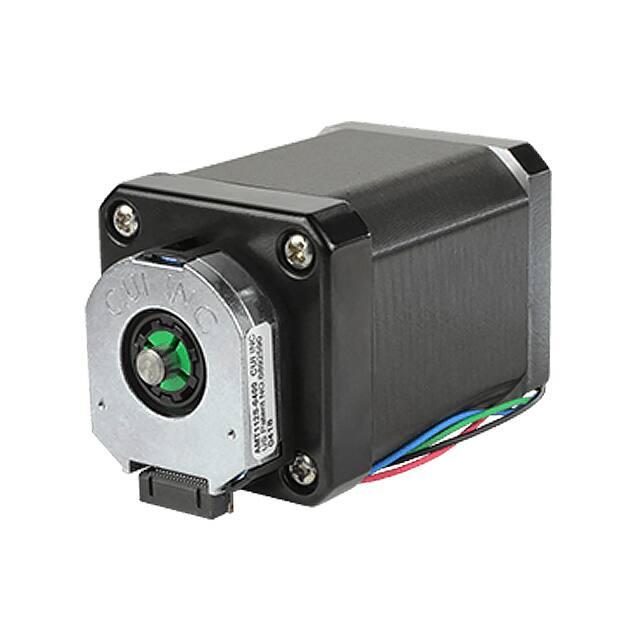


STEPPER MOTOR W/ INCREMENTAL ENC
NEMA 17 is a hybrid stepping motor with a step angle of 1.8° (200 steps per revolution). The article will show more details of the motor.

How to Drive Nema 17 stepper motor using A4988 Driver
NEMA17 Description
NEMA 17 is a hybrid stepping motor with a step angle of 1.8° (200 steps per revolution). At 4 V, each phase draws 1.2 A, resulting in a holding torque of 3.2 kg-cm. Stepper motors with NEMA 17 ratings are commonly found in printers, CNC machines, and laser cutters.
NEMA17 Pinout

NEMA17 Features
• CUI Devices AMT112S encoder + LIN Engineering stepper motor
• stepper motor with encoder for closed-loop mode when paired with a controller
• small, compact NEMA 17 frame size
• up to 110 oz-in (0.77 N-m) holding torque
• patented capacitive encoder ASIC technology
• incremental resolutions up to 4096 PPR
• resolutions programmable with AMT Viewpoint™ PC software
• digitally set zero position
Specifications
- TypeParameter
- Factory Lead Time17 Weeks
- Mounting Hole Spacing
The holes in the mounting brackets are spaced at 1 U (1.75 in. or 4.45 cm), so the router can be mounted in any rack that provides holes spaced at that distance.
1.220 (31.00mm) - CoilResistance2Ohm
- Voltage Rated
RATED voltage is the voltage on the nameplate - the "design point" for maximum power throughput and safe thermal operation.
24V~48VDC - Operating Temperature
The operating temperature is the range of ambient temperature within which a power supply, or any other electrical equipment, operate in. This ranges from a minimum operating temperature, to a peak or maximum operating temperature, outside which, the power supply may fail.
-20°C~50°C - Series
In electronic components, the "Series" refers to a group of products that share similar characteristics, designs, or functionalities, often produced by the same manufacturer. These components within a series typically have common specifications but may vary in terms of voltage, power, or packaging to meet different application needs. The series name helps identify and differentiate between various product lines within a manufacturer's catalog.
NEMA17-AMT112S - Size / Dimension
In electronic components, the parameter "Size / Dimension" refers to the physical dimensions of the component, such as its length, width, and height. These dimensions are crucial for determining how the component will fit into a circuit or system, as well as for ensuring compatibility with other components and the overall design requirements. The size of a component can also impact its performance characteristics, thermal properties, and overall functionality within a given application. Engineers and designers must carefully consider the size and dimensions of electronic components to ensure proper integration and functionality within their designs.
Square - 1.669 x 1.669 42.40mmx42.40mm - Part Status
Parts can have many statuses as they progress through the configuration, analysis, review, and approval stages.
Active - Moisture Sensitivity Level (MSL)
Moisture Sensitivity Level (MSL) is a standardized rating that indicates the susceptibility of electronic components, particularly semiconductors, to moisture-induced damage during storage and the soldering process, defining the allowable exposure time to ambient conditions before they require special handling or baking to prevent failures
Not Applicable - Current Rating (Amps)
The parameter "Current Rating (Amps)" in electronic components refers to the maximum amount of electrical current that the component can safely handle without being damaged. It is typically measured in amperes (A) and is an important specification to consider when designing or selecting components for a circuit. Exceeding the current rating of a component can lead to overheating, malfunction, or even failure of the component. It is crucial to ensure that the current rating of a component matches the requirements of the circuit to prevent any potential issues and ensure reliable operation.
2A - Termination Style
"Termination style" in electronic components refers to the method used to connect the component to a circuit board or other electronic devices. It determines how the component's leads or terminals are designed for soldering or mounting onto the circuit board. Common termination styles include through-hole, surface mount, and wire lead terminations.Through-hole components have leads that are inserted through holes in the circuit board and soldered on the other side. Surface mount components have flat terminals that are soldered directly onto the surface of the circuit board. Wire lead terminations involve attaching wires to the component for connection.The choice of termination style depends on factors such as the type of component, the manufacturing process, and the space available on the circuit board. Different termination styles offer various advantages in terms of ease of assembly, reliability, and space efficiency in electronic designs.
Connector - Approval Agency
The parameter "Approval Agency" in electronic components refers to the organization responsible for testing and certifying that a component meets specific safety, quality, and performance standards. These agencies evaluate products to ensure compliance with industry regulations and standards, providing assurance to manufacturers and consumers. Approval from recognized agencies can enhance a component's marketability and acceptance in various applications, particularly in sectors like automotive, aerospace, and healthcare. Common approval agencies include Underwriters Laboratories (UL), International Electrotechnical Commission (IEC), and the American National Standards Institute (ANSI).
CE - Accuracy
Accuracy in electronic components refers to the degree to which a measured value agrees with the true or accepted value. It evaluates the precision of a component in providing correct output or measurement under specified conditions. High accuracy indicates minimal deviation from the actual value, while low accuracy shows significant error in measurement. This parameter is crucial in applications where precise data is essential for reliable performance and decision-making.
±0.2% - Coil Type
There are 2 different types of 'coil'; one has copper on it (IUD) and the other contains hormone (Mirena IUS). Both are over 99% effective at protecting against pregnancy.
Bipolar - Step Angle
the angle at which the rotor of a stepper motor moves when one pulse is applied to the input of the stator.
1.8° - Steps per Revolution
Steps per Revolution is a parameter commonly associated with stepper motors, which are electronic components used for precise control of movement in various devices. It refers to the number of discrete steps required for the motor to complete one full revolution. The higher the number of steps per revolution, the finer the control and precision that can be achieved in positioning and movement. This parameter is crucial for determining the resolution and accuracy of the stepper motor in applications such as robotics, 3D printers, CNC machines, and other automated systems.
200 - Torque - Holding (oz-in / mNm)
The parameter "Torque - Holding (oz-in / mNm)" in electronic components refers to the maximum amount of force that can be applied to rotate or hold a component in place without causing it to slip or move. It is typically measured in units of ounce-inches (oz-in) or millinewton-meters (mNm). This specification is important in applications where precise positioning or holding of components is required, such as in robotics, motors, and actuators. A higher torque-holding capacity indicates that the component can withstand greater forces without losing its position, ensuring reliable performance in various mechanical systems.
110 / 776.77 - Features
In the context of electronic components, the term "Features" typically refers to the specific characteristics or functionalities that a particular component offers. These features can vary depending on the type of component and its intended use. For example, a microcontroller may have features such as built-in memory, analog-to-digital converters, and communication interfaces like UART or SPI.When evaluating electronic components, understanding their features is crucial in determining whether they meet the requirements of a particular project or application. Engineers and designers often look at features such as operating voltage, speed, power consumption, and communication protocols to ensure compatibility and optimal performance.In summary, the "Features" parameter in electronic components describes the unique attributes and capabilities that differentiate one component from another, helping users make informed decisions when selecting components for their electronic designs.
Integrated Encoder, Flatted Shaft - NEMA Frame Size
NEMA (National Electrical Manufacturers Association) frame size refers to mounting only and has no direct bearing on the motor body diameter. In any standard frame number designation there are either two or three numbers.
17 - Rotor Inertia
Rotor inertia is a measure of an electric motor's resistance to changes in its rotational speed. It is determined by the mass distribution of the rotor and impacts how quickly the motor can accelerate or decelerate. A higher rotor inertia indicates that more torque is needed to change the motor's speed, affecting the performance and responsiveness of the system in which the motor is used. Rotor inertia plays a critical role in applications requiring precise speed control and dynamic performance.
2.5gcm2 - Diameter - Shaft
Diameter - Shaft refers to the measurement of the circular cross-section of a shaft used in electronic components, typically motors or actuators. This parameter is crucial for ensuring proper fit and compatibility with other mechanical elements such as bearings, gears, or housings. It influences the torque transmission capabilities and overall mechanical integrity of the device, making it a key specification in the design and selection process. The diameter is usually expressed in millimeters or inches and plays a vital role in determining load capacity and performance characteristics of the component.
0.197 (5.00mm) - Length - Shaft and Bearing
Length - Shaft and Bearing is a parameter that refers to the physical dimensions of the shaft and bearing components within an electronic device or system. The length measurement typically specifies the distance between the two components, which are crucial for supporting and enabling the rotation of moving parts such as motors, fans, or other mechanical components. This parameter is important for ensuring proper alignment, stability, and functionality of the device, as variations in the length of the shaft and bearing can impact performance and reliability. Manufacturers provide specific length measurements to help engineers and designers select compatible components for their applications.
0.945 24.00mm - RoHS Status
RoHS means “Restriction of Certain Hazardous Substances” in the “Hazardous Substances Directive” in electrical and electronic equipment.
RoHS Compliant
NEMA17 Applications
CNC machines
Precise control machines
3D printer/prototyping machines (e.g. RepRap)
Laser cutters
Pick and place machines
Where To Use NEMA17
NEMA17 Stepper Motors are widely used in CNC machines, hard drives, and linear actuators. The motor has six lead wires and a rated voltage of twelve volts. It can be run at a lower voltage, but the torque will be reduced. These motors have a step angle of 1.8 deg., which means that it has 200 steps each revolution and each step covers a 1.8°, resulting in a high level of control.
NEMA17 Dimensions

NEMA17 Manufacturer
CUI Devices is an electronic components manufacturer specializing in an ever-expanding range of product technologies. Formerly part of CUI Inc, you can trace our roots back to 1989 just outside of Portland, Oregon. In September of 2019, a group of senior managers deeply involved in the historical growth of CUI Inc—and with over 15 years of average tenure—spun-off part of the business. Thus, CUI Devices was born, offering a wide range of Interconnect, Audio, Thermal Management, Motion, and Sensor solutions.
Trend Analysis
Parts with Similar Specs
Datasheet PDF
- Datasheets :
What is NEMA17?
NEMA 17 is a hybrid stepping motor with a step angle of 1.8° (200 steps per revolution). At 4 V, each phase draws 1.2 A, resulting in a holding torque of 3.2 kg-cm. Stepper motors with NEMA 17 ratings are commonly found in printers, CNC machines, and laser cutters.
What is the recommended operating temperature of the component?
-20°C~50°C.
 INA121 Instrumentation Amplifier: FET-Input Design Notes, SPICE Troubleshooting, and Alternatives
06 June 2026678
 TPS51200DRCT DDR Voltage Regulator 10-VSON: Datasheet, Pinout, TPS51200DRCT VS NCP51200MNTXG
22 January 20222800
 LM301AN Operational Amplifier: 1MHZ, DIP-8 LM301AN Amplifier, Circuit and Equivalents
11 January 20224700
 LF356 op-amp: Package, Pinout and Datasheet
22 June 202110487
 PIC18F25K80 Microcontrollers: Features, Pinout, and Datasheet
14 October 20216345
 MPSA18 Low Noise Transistor: Datasheet pdf, Pinout and Substitute
15 November 20213970
![The Guide to BD243 NPN Power Transistor [FAQ]](https://res.utmel.com/Images/Article/d2eaffd3-c961-4ded-aab0-cdd243058476.jpg) The Guide to BD243 NPN Power Transistor [FAQ]
The Guide to BD243 NPN Power Transistor [FAQ]29 March 20224628
 A Comprehensive Guide to LTM4661IY#PBF DC-DC Switching Regulator
06 March 2024216
 All You Need to Know about Wireless Access Point
26 October 20215049
 Stanford Engineer Sheds Light on Semiconductors: Their Importance, Challenges, and Future
22 September 20232062
 LLC Converter with Planar Matrix Transformer for High-Current-High-Power Applications
15 March 20245303
 Volkswagen Overhauls Semiconductor Sourcing Strategy Amid Supply Challenges
01 September 20234684
 Radiation Robustness of Gallium Nitride Power Devices
16 January 20243066
 MIT Technology Review Officially Released 2022 Top 10 Breakthrough Technologies in the World
26 April 20227671
 HDMI RF Modulators: Architecture, Setup, Types, and Commercial Applications
18 May 2026778
 Buffer Amplifier Guide: How It Works, Key Specifications, Applications and Selection
16 June 20261068
CUI Devices
In Stock
United States
China
Canada
Japan
Russia
Germany
United Kingdom
Singapore
Italy
Hong Kong(China)
Taiwan(China)
France
Korea
Mexico
Netherlands
Malaysia
Austria
Spain
Switzerland
Poland
Thailand
Vietnam
India
United Arab Emirates
Afghanistan
Åland Islands
Albania
Algeria
American Samoa
Andorra
Angola
Anguilla
Antigua & Barbuda
Argentina
Armenia
Aruba
Australia
Azerbaijan
Bahamas
Bahrain
Bangladesh
Barbados
Belarus
Belgium
Belize
Benin
Bermuda
Bhutan
Bolivia
Bonaire, Sint Eustatius and Saba
Bosnia & Herzegovina
Botswana
Brazil
British Indian Ocean Territory
British Virgin Islands
Brunei
Bulgaria
Burkina Faso
Burundi
Cabo Verde
Cambodia
Cameroon
Cayman Islands
Central African Republic
Chad
Chile
Christmas Island
Cocos (Keeling) Islands
Colombia
Comoros
Congo
Congo (DRC)
Cook Islands
Costa Rica
Côte d’Ivoire
Croatia
Cuba
Curaçao
Cyprus
Czechia
Denmark
Djibouti
Dominica
Dominican Republic
Ecuador
Egypt
El Salvador
Equatorial Guinea
Eritrea
Estonia
Eswatini
Ethiopia
Falkland Islands
Faroe Islands
Fiji
Finland
French Guiana
French Polynesia
Gabon
Gambia
Georgia
Ghana
Gibraltar
Greece
Greenland
Grenada
Guadeloupe
Guam
Guatemala
Guernsey
Guinea
Guinea-Bissau
Guyana
Haiti
Honduras
Hungary
Iceland
Indonesia
Iran
Iraq
Ireland
Isle of Man
Israel
Jamaica
Jersey
Jordan
Kazakhstan
Kenya
Kiribati
Kosovo
Kuwait
Kyrgyzstan
Laos
Latvia
Lebanon
Lesotho
Liberia
Libya
Liechtenstein
Lithuania
Luxembourg
Macao(China)
Madagascar
Malawi
Maldives
Mali
Malta
Marshall Islands
Martinique
Mauritania
Mauritius
Mayotte
Micronesia
Moldova
Monaco
Mongolia
Montenegro
Montserrat
Morocco
Mozambique
Myanmar
Namibia
Nauru
Nepal
New Caledonia
New Zealand
Nicaragua
Niger
Nigeria
Niue
Norfolk Island
North Korea
North Macedonia
Northern Mariana Islands
Norway
Oman
Pakistan
Palau
Palestinian Authority
Panama
Papua New Guinea
Paraguay
Peru
Philippines
Pitcairn Islands
Portugal
Puerto Rico
Qatar
Réunion
Romania
Rwanda
Samoa
San Marino
São Tomé & Príncipe
Saudi Arabia
Senegal
Serbia
Seychelles
Sierra Leone
Sint Maarten
Slovakia
Slovenia
Solomon Islands
Somalia
South Africa
South Sudan
Sri Lanka
St Helena, Ascension, Tristan da Cunha
St. Barthélemy
St. Kitts & Nevis
St. Lucia
St. Martin
St. Pierre & Miquelon
St. Vincent & Grenadines
Sudan
Suriname
Svalbard & Jan Mayen
Sweden
Syria
Tajikistan
Tanzania
Timor-Leste
Togo
Tokelau
Tonga
Trinidad & Tobago
Tunisia
Turkey
Turkmenistan
Turks & Caicos Islands
Tuvalu
U.S. Outlying Islands
U.S. Virgin Islands
Uganda
Ukraine
Uruguay
Uzbekistan
Vanuatu
Vatican City
Venezuela
Wallis & Futuna
Yemen
Zambia
Zimbabwe
![NEMA17-13-04PD-AMT112S]() NEMA17-13-04PD-AMT112S
NEMA17-13-04PD-AMT112SCUI Devices
![NEMA17-13-04SD-AMT112S]() NEMA17-13-04SD-AMT112S
NEMA17-13-04SD-AMT112SCUI Devices
![NEMA23-22-02SD-AMT112S]() NEMA23-22-02SD-AMT112S
NEMA23-22-02SD-AMT112SCUI Devices
![NEMA11-20-01D-AMT112S]() NEMA11-20-01D-AMT112S
NEMA11-20-01D-AMT112SCUI Devices
![NEMA23-17-15PD-AMT112S]() NEMA23-17-15PD-AMT112S
NEMA23-17-15PD-AMT112SCUI Devices
![NEMA23-31-01SD-AMT112S]() NEMA23-31-01SD-AMT112S
NEMA23-31-01SD-AMT112SCUI Devices
![NEMA14-10-08D-AMT112S]() NEMA14-10-08D-AMT112S
NEMA14-10-08D-AMT112SCUI Devices
![NEMA17-16-06PD-AMT112S]() NEMA17-16-06PD-AMT112S
NEMA17-16-06PD-AMT112SCUI Devices
![NEMA11-18-02D-AMT112S]() NEMA11-18-02D-AMT112S
NEMA11-18-02D-AMT112SCUI Devices
![NEMA11-18-01D-AMT112S]() NEMA11-18-01D-AMT112S
NEMA11-18-01D-AMT112SCUI Devices


