

 Product
 Brand
Brand Articles
 Tools
Tools
Types, Structure, and Packages of Integrated Circuits
Types of IC Packages
Types, Structure, and Packages of Integrated Circuits
Originally published in 2020 | Updated October 2025
Catalog
II Types of integrated circuits | |
III Structure and composition of integrated circuits | |
I Semiconductors, Integrated Circuits, Chips
An integrated circuit, abbreviated as IC, is a circuit with a specific function that integrates a certain number of commonly used electronic components, such as resistors , capacitors , transistors , and the connections between these components through semiconductor processes. In general, semiconductors , integrated circuits, and the chip can be equated. A semiconductor is a material, which is divided into four categories. They are Integrated circuits, sensitive devices, optoelectronic devices, and discrete components. Because the proportion of integrated circuits is very high, exceeding 80%, the semiconductor industry is called the integrated circuit industry. Chip, also known as an integrated circuit (IC) refers to the silicon chip containing integrated circuits, which is very small. Generally speaking, a chip (IC) refers to all semiconductor components, which is a circuit module that integrates a variety of electronic components on a silicon board. The chip is the carrier of the integrated circuit. Broadly speaking, we will equate the chip with the integrated circuit. It is the most important part of electronic equipment and bears the functions of computing and storage. It is widely used in almost all electronic equipment such as military industry and civilian use. CPU is a kind of semiconductor IC chip whose full name is the Central Processing Unit.

Central Processing Unit
II Types of integrated circuits
1. Function and structure
Integrated circuits, also known as ICs, can be divided into three categories: analog integrated circuits, digital integrated circuits, and mixed digital/analog integrated circuits.
Analog integrated circuits, also known as linear circuits, are used to generate, amplify and process various analog signals (referring to signals whose amplitude changes with time. For example, audio signals of semiconductor radios, tape signals of recorders, etc.), and their input signal and output signal are proportional.
Digital integrated circuits are used to generate, amplify, and process various digital signals (referring to signals that are discretely valued in time and amplitude. For example, 3G mobile phones, digital cameras, computer CPUs, digital TV logic control, and playback audio signals and video signals).
2. Manufacturing process
The manufacturing of ICs is a highly complex process involving steps like photolithography, etching, and deposition on a silicon wafer. A key metric is the "process node" (e.g., 7nm, 5nm), which historically related to the transistor's gate length. While now more of a marketing term, it still signifies a specific generation of manufacturing technology.
In 2020, 7nm and 5nm processes were leading-edge. As of 2025, the industry has advanced significantly. 3nm process nodes are in high-volume manufacturing , and 2nm nodes have entered risk production , with mass deployment expected in the 2025-2026 timeframe. This relentless miniaturization continues to drive increases in chip performance and energy efficiency.
3. Integration level
Integrated circuits are categorized by their level of integration , which refers to the number of transistors on a single chip. This classification has evolved significantly:
Small-Scale Integration (SSI): Contained up to a few tens of transistors. Used in early logic gates.
Medium-Scale Integration (MSI): Integrated hundreds of transistors, enabling more complex devices like counters and multiplexers.
Large-Scale Integration (LSI): Featured thousands of transistors, leading to the first microprocessors.
Very Large-Scale Integration (VLSI): Generally defined as containing tens of thousands to millions of transistors.
Ultra Large-Scale Integration (ULSI): The current standard as of the mid-2020s, integrating millions to billions of transistors . Modern CPUs, GPUs, and specialized AI accelerators are all ULSI devices.
SSIC (Small Scale Integrated Circuits)
MSIC (Medium Scale Integrated circuits)
LSIC (Large Scale Integrated Circuits)
VLSIC (Very Large Scale Integrated circuits)
ULSIC (Ultra Large Scale Integrated circuits)
GSIC (Giga Scale Integration)
4. Conductivity types
Integrated circuits can be divided into bipolar integrated circuits and unipolar integrated circuits according to their conductivity types. They are all digital integrated circuits .
The manufacturing process of bipolar integrated circuits is complex and the power consumption is large. Representative integrated circuits include TTL, ECL, HTL, LST-TL, STTL, and other types. The manufacturing process of the unipolar integrated circuit is simple, the power consumption is also low, and it is easy to make a large-scale integrated circuit. Representative integrated circuits include CMOS, NMOS, PMOS, and other types.
5. Purposes
Integrated circuits can be divided into integrated circuits for televisions, integrated circuits for audio, integrated circuits for video players, integrated circuits for video recorders, integrated circuits for computers (microcomputers), integrated circuits for electronic pianos, integrated circuits for communication, integrated circuits for cameras, integrated circuits for remote control, integrated circuits for language, integrated circuits for alarms and so on.
6. Appearance
Integrated circuits can be divided into a circular (metal-enclosed transistor package type, generally suitable for high power), flat type (good stability, small size), and dual in-line type.
III Structure and composition of integrated circuits
An integrated circuit is a micro electronic device or component. A certain process is used to interconnect the necessary transistors, resistors, capacitors, and inductors in a circuit and wiring together. It is made on a small piece or pieces of a semiconductor wafer or dielectric substrate. And then it will be packaged in a package and become a microstructure with the required circuit functions. All the components have been integrated into a structure, making electronic components a big step toward miniaturization, low power consumption, intelligence, and high reliability.
The internal structure of the integrated circuit is very complicated, especially its core micro unit-tens of thousands of transistors. Let's take a detailed explanation of the internal structure of semiconductor integrated circuits. In general, we use top-down levels to understand integrated circuits, which is easier to understand.
1. System level
Taking a mobile phone as an example, the entire mobile phone is a complex circuit system. It can make phone calls, play games, listen to music, and so on. It consists of multiple chips and resistors, inductors, and capacitors connected to each other, which is called the system level. (Of course, with the development of technology, the technology of making an entire system on one chip has also appeared for many years - SoC technology)
2. Module level
The entire system is divided into many functional modules to perform its duties. Some are responsible for power supply, some are responsible for communication, some are responsible for the display, some are responsible for utterance, some are responsible for the overall calculation, and so on. We call this module level. Each of these modules is a grand field, which gathers the crystallization of countless human wisdom and feeds many companies.
3. Register transfer level (RTL)
So what does each module consist of? Take the digital circuit module (which is specifically responsible for logical operations and the processed electrical signals are discrete 0 and 1) that account for a large proportion of the entire system as an example. It is composed of registers and combinational logic circuits. The so-called register is a circuit structure that can temporarily store logical values. It requires a clock signal to control the length of time the logical values are stored.
In reality, we need a clock to measure the length of time, and a clock signal is also needed in the circuit to make overall arrangements. The clock signal is a rectangular wave with a stable period. In reality, a second movement is a basic time scale for us, and a cycle of rectangular wave oscillation in a circuit is a time scale of their world. Circuit elements act accordingly and fulfill their obligations based on this time scale.

Rectangular wave oscillation
Combinatorial logic is a combination of logic gates of AND, OR, and NOT. For example, two bulbs connected in series and each with a switch. When both two switches are turned on, the light will be on, this is called AND logic.
A complex function module is composed of many registers and combinational logic. This level is called the register transfer level.

register and combinational logic
The triangle in the figure plus a circle is a NOT gate, the device next to it is a register, D is the input, Q is the output, and the clock signal is input to the CLK terminal.
4. Gate level
The register in the register transfer level is actually composed of NAND logic, and it is subdivided into AND, OR, NOR logic to reach the gate level (they are like a door, blocking/allowing the electrical signal in and out).
5. Transistor level
Whether it is a digital circuit or an analog circuit, its bottom is the transistor level. All logic gates (AND, OR, NOT, NAND, NOR, XOR, XOR, etc.) are composed of individual transistors. Therefore, from the macro to the micro-level, the integrated circuit reaches the bottom, and it is actually all transistors and wires connecting them.
In the early days, bipolar transistors (BJT) were commonly used, commonly known as triodes. It is connected to a resistor, power supply, and capacitor, which itself has the function of amplifying the signal. Like stacked wood, it can be used to form a variety of circuits, such as switches, voltage / current source circuits, logic gate circuits mentioned above, filters, comparators, adders, even integrators. The circuit constructed by BJT is called the TTL (Transistor-Transistor Logic) circuit. The circuit symbol of BJT looks like this:

But then the emergence of metal-oxide-semiconductor field-effect transistors (MOSFETs) swept the IC field with excellent electrical characteristics and ultra-low power consumption. In addition to the BJT in the analog circuit, there are basically integrated circuits now made up of MOS tubes.
Similarly, it can build thousands of circuits. And it can also be used as basic circuit elements such as resistors and capacitors through proper connection. The circuit symbol of MOSFET is as follows:

To sum up, in actual industrial production, the manufacture of chips is actually the manufacturing process of thousands of transistors. It's just that in reality, the hierarchical order of making chips is reversed, starting from the bottom transistor and building up layer by layer. Basically, in the order of "transistor-chip-circuit board", we can finally get the core component of the electronic products-circuit board.
IV Packages of Integrated circuit
1. SOP (small outline package)
SOP, also known as SOL and DFP, is a very common form of component. At the same time, it is also one of the surface-mount packages. The leads are drawn from both sides of the package into a seagull wing shape (L-shape). Packaging materials are divided into plastic and ceramic. It began in the late 1970s.
SOP package has a wide range of applications. In addition to being used in memory LSIs, and in areas where the input and output terminals do not exceed 10-40, SOP is the most popular surface mount package. Later, to meet the needs of production, some small-outline packages such as SOJ, SSOP, TSSOP, and SOIC were gradually derived.
2. PGA (pin grid array)
The PGA chip package is commonly used in the packaging of microprocessors. Generally, the integrated circuit (IC) is packaged in a ceramic chip. The bottom of the ceramic chip is arranged into square pins. These pins can be inserted or soldered to the circuit board. The corresponding socket is very suitable for applications requiring frequent wave insertion. For chips with the same pin, the PGA package usually requires a smaller area than the conventional dual in-line package.
The PGA package has the characteristics of more convenient plug-and-play operation, high reliability, and adaptability to higher frequencies. The early Pentium chips, 80486, Pentium, and PentiumPro in the InTel series CPU all adopt this package form.
3. BGA (ball grid array)
The BGA package is an improvement from the PGA. It is a packaging method in which a surface is covered with pins in a grid arrangement, which can conduct electronic signals from the integrated circuit to the printed circuit board where it is located. Under the BGA package, the pins are replaced by solder balls at the bottom of the package. These solder balls can be configured manually or through an automated machine, and they are positioned through flux.
The BGA package can provide more pins than other packages such as dual in-line packages or four-side flat packages. The ground surface of the entire device can be used as pins, which can be shorter than the surrounding package types. The average wire length is to have more high-speed performance.
4. DIP (dual in-line package)
The so-called DIP dual in-line package refers to an integrated circuit chip that is packaged in a dual in-line form. Most small and medium-sized integrated circuit ICs use this package form, and the number of pins generally does not exceed 100. The CPU chip with the DIP package has two rows of pins, which need to be inserted into the chip socket with a DIP structure. DIP-packaged chips should be especially careful when plugging and unplugging from the chip socket to avoid damage to the pins.
5. Advanced Packaging (Chiplets & 3D ICs)
Beyond traditional packages, the semiconductor industry increasingly uses advanced packaging to boost performance. As shrinking transistors becomes harder, these techniques integrate more functions into a smaller space. Key trends include:
Chiplets: A system is built from smaller, modular dies (chiplets) instead of one large die. This improves manufacturing yield and allows for combining chips from different process technologies.
2.5D and 3D IC Stacking: Multiple dies are integrated into one package. In 2.5D, dies sit on a silicon interposer. In 3D ICs, dies are stacked vertically, connected by Through-Silicon Vias (TSVs) for higher bandwidth and lower power use.
These methods are vital for high-performance computing (HPC), AI, and data centers.
Article Recommended:
Introduction to Photonic Integrated Circuits and PIC Technology
What is a Digital Integrated Circuit and How Do We Use It?
Article Update Information
This article was originally published in 2020. It was reviewed and comprehensively updated in October 2025 to reflect the latest advancements in semiconductor technology. This update includes:
Correction of factual errors (e.g., CPU full name corrected from "central processor unit" to "Central Processing Unit")
Updated data on manufacturing process nodes (2nm and 3nm developments)
Expanded information on integration levels, including ULSI (Ultra Large-Scale Integration)
New section on advanced packaging techniques (Chiplets, 2.5D/3D IC stacking)
Correction of catalog errors (duplicate SOP entry fixed)
All original images have been preserved. The updated content reflects the state of semiconductor technology as of October 2025.
Updating and Optimizing a 2020 Blog Post - Manus
 UTMEL
UTMEL
We are the professional distributor of electronic components, providing a large variety of products to save you a lot of time, effort, and cost with our efficient self-customized service. careful order preparation fast delivery service
What are the different types of integrated circuits?
SSI: Small scale integration. 3 – 30 gates per chip.
MSI: Medium scale integration. 30 – 300 gates per chip.
LSI: Large scale integration. 300 – 3,000 gates per chip.
VLSI: Very large scale integration. More than 3,000 gates per chip.
What are the three major types of integrated circuits?
Thin and thick film ICs.
Monolithic ICs.
Hybrid or multichip ICs.
How are integrated circuit packages classified?
ICs can be classified on the basis of their chip size as given below: Small scale integration (SSI)—3 to 30 gates/chip. Medium scale integration (MSI)—30 to 300 gates/chip. Large scale integration (LSI)—300 to 3,000 gates/chip.
What type of packing is suitable for integrated circuits?
Most packages can be made using ceramic or plastic. The integrated circuits are hermetically sealed for protection from the environment. The pins can be on one side (single inline or zigzag pattern of leads), two sides (dual inline package or DIP), or four sides of the package (quad package).
What are the two types of integrated circuit?
There are two main types of integrated circuits: digital ICs or analog ICs.
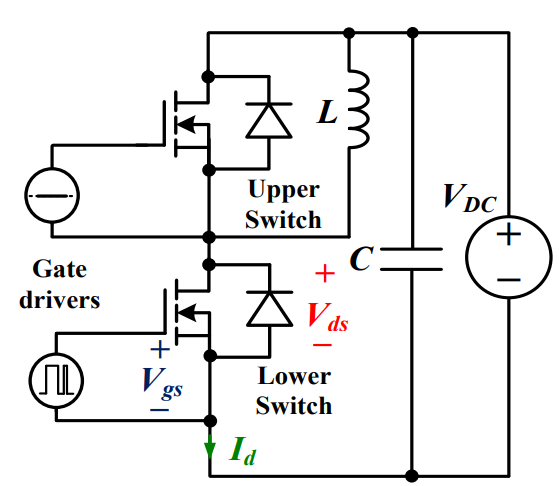 Discovering New and Advanced Methodology for Determining the Dynamic Characterization of Wide Bandgap DevicesSaumitra Jagdale15 March 20242529
For a long era, silicon has stood out as the primary material for fabricating electronic devices due to its affordability, moderate efficiency, and performance capabilities. Despite its widespread use, silicon faces several limitations that render it unsuitable for applications involving high power and elevated temperatures. As technological advancements continue and the industry demands enhanced efficiency from devices, these limitations become increasingly vivid. In the quest for electronic devices that are more potent, efficient, and compact, wide bandgap materials are emerging as a dominant player. Their superiority over silicon in crucial aspects such as efficiency, higher junction temperatures, power density, thinner drift regions, and faster switching speeds positions them as the preferred materials for the future of power electronics.
Read More A Comprehensive Guide to FPGA Development BoardsUTMEL11 September 202516892
This comprehensive guide will take you on a journey through the fascinating world of FPGA development boards. We’ll explore what they are, how they differ from microcontrollers, and most importantly, how to choose the perfect board for your needs. Whether you’re a seasoned engineer or a curious hobbyist, prepare to unlock new possibilities in hardware design and accelerate your projects. We’ll cover everything from budget-friendly options to specialized boards for image processing, delve into popular learning paths, and even provide insights into essential software like Vivado. By the end of this article, you’ll have a clear roadmap to navigate the FPGA landscape and make informed decisions for your next groundbreaking endeavor.
Read More Applications of FPGAs in Artificial Intelligence: A Comprehensive GuideUTMEL29 August 20254045
This comprehensive guide explores FPGAs as powerful AI accelerators that offer distinct advantages over traditional GPUs and CPUs. FPGAs provide reconfigurable hardware that can be customized for specific AI workloads, delivering superior energy efficiency, ultra-low latency, and deterministic performance—particularly valuable for edge AI applications. While GPUs excel at parallel processing for training, FPGAs shine in inference tasks through their adaptability and power optimization. The document covers practical implementation challenges, including development complexity and resource constraints, while highlighting solutions like High-Level Synthesis tools and vendor-specific AI development suites from Intel and AMD/Xilinx. Real-world applications span telecommunications, healthcare, autonomous vehicles, and financial services, demonstrating FPGAs' versatility in mission-critical systems requiring real-time processing and minimal power consumption.
Read More 800G Optical Transceivers: The Guide for AI Data CentersUTMEL24 December 20255449
The complete guide to 800G Optical Transceiver standards (QSFP-DD vs. OSFP). Overcome supply shortages and scale your AI data center with Utmel Electronic.
Read More The 2026 Engineer’s Guide: Choosing the Right MCU for Your Next IoT & New Energy ProjectUTMEL30 April 2026332
A comprehensive comparison of 2026's leading MCUs from ST, NXP, and Microchip across power efficiency, processing performance, connectivity, and ecosystems to help engineers select the optimal chip for next-gen IoT and new energy projects.
Read More
Subscribe to Utmel !
![ATA663254-GBQW]() ATA663254-GBQW
ATA663254-GBQWMicrochip Technology
![ATECC108A-RBHCZ-T]() ATECC108A-RBHCZ-T
ATECC108A-RBHCZ-TMicrochip Technology
![HCS362T-I/ST]() HCS362T-I/ST
HCS362T-I/STMicrochip Technology
![ACPL-H342-500E]() ACPL-H342-500E
ACPL-H342-500EBroadcom Limited
![AT88SC12816C-PU]() AT88SC12816C-PU
AT88SC12816C-PUMicrochip Technology
![ADUM4223WBRWZ]() ADUM4223WBRWZ
ADUM4223WBRWZAnalog Devices Inc.
![ADUM4223WARWZ]() ADUM4223WARWZ
ADUM4223WARWZAnalog Devices Inc.
![HCPL-3150-500E]() HCPL-3150-500E
HCPL-3150-500EBroadcom Limited
![FM3164-GTR]() FM3164-GTR
FM3164-GTRCypress Semiconductor Corp
![FOD3182S]() FOD3182S
FOD3182SON Semiconductor


