

 Product
 Brand
Brand Articles
 Tools
Tools
AI Compute Is Running Into the Memory Wall: Why HBM Became a 2026 Semiconductor Hotspot
AI compute is no longer only a GPU race. In 2026, HBM, memory bandwidth, advanced packaging, and system architecture are becoming decisive variables for AI infrastructure.
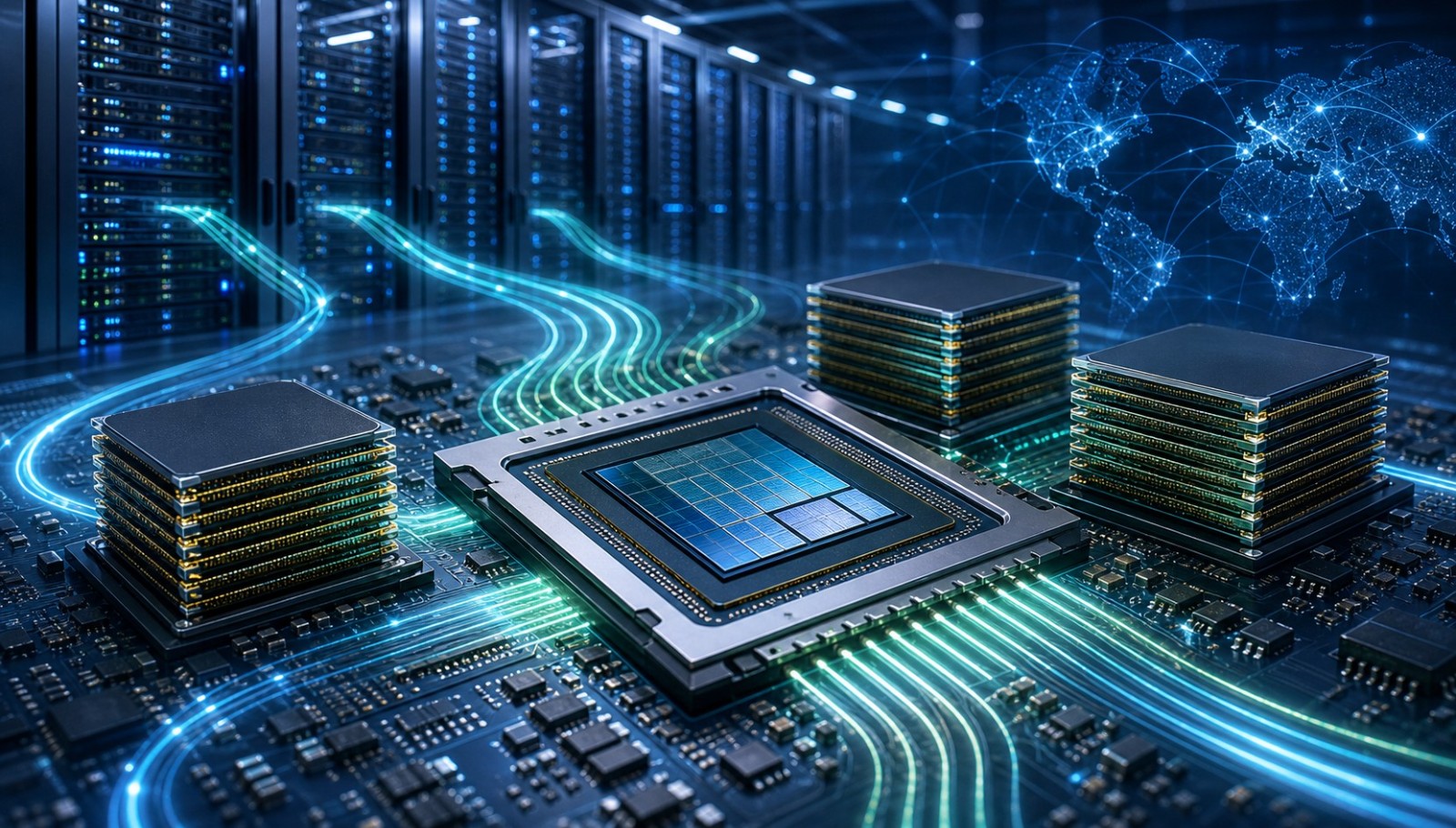
AI infrastructure used to be discussed mainly through the lens of accelerator supply: how many GPUs, which ASIC, which cloud region, and how quickly a cluster could be deployed. In 2026, that story is becoming more complicated. The industry is discovering that AI compute is not only limited by arithmetic throughput. It is also limited by how fast data can move into and around the accelerator package.
That is why HBM, or high bandwidth memory, has moved from a technical detail to a mainstream semiconductor headline. HBM is now one of the most important constraints behind AI training, long-context inference, accelerator roadmaps, server delivery schedules, and even broader memory pricing.
The News: HBM Is Moving From Supporting Role to Strategic Resource
Recent industry updates show how quickly the conversation has changed.
Micron reported record fiscal third-quarter 2026 results and framed memory as a strategic enabler for the AI era. That matters because the AI hardware cycle is no longer simply about selling more compute chips. It is also about supplying the memory bandwidth and capacity that make those chips useful.
Samsung, meanwhile, announced commercial HBM4 shipments and positioned HBM4 as a next-generation memory platform for AI computing. The company says its HBM4 design doubles the I/O pin count from 1,024 to 2,048 and can deliver up to 3.3 TB/s of bandwidth per stack. Samsung also expanded its collaboration with AMD around next-generation AI memory solutions, including HBM4 for future Instinct platforms and rack-scale AI infrastructure.
Qualcomm added another signal in June 2026 with its Dragonfly data-center roadmap. Alongside its AI accelerator plans, Qualcomm introduced High Bandwidth Compute, or HBC, as a response to the memory wall. The message is clear: even companies entering or expanding in AI acceleration are treating memory movement as a first-order design problem.
TrendForce has also described the memory wall as a central bottleneck in the AI compute cycle, connecting AI demand to HBM, DDR5, server DRAM, supply tightness, and pricing pressure. In other words, HBM is not a side market anymore. It is part of the core AI infrastructure stack.
Why AI Compute Gets Stuck at Memory
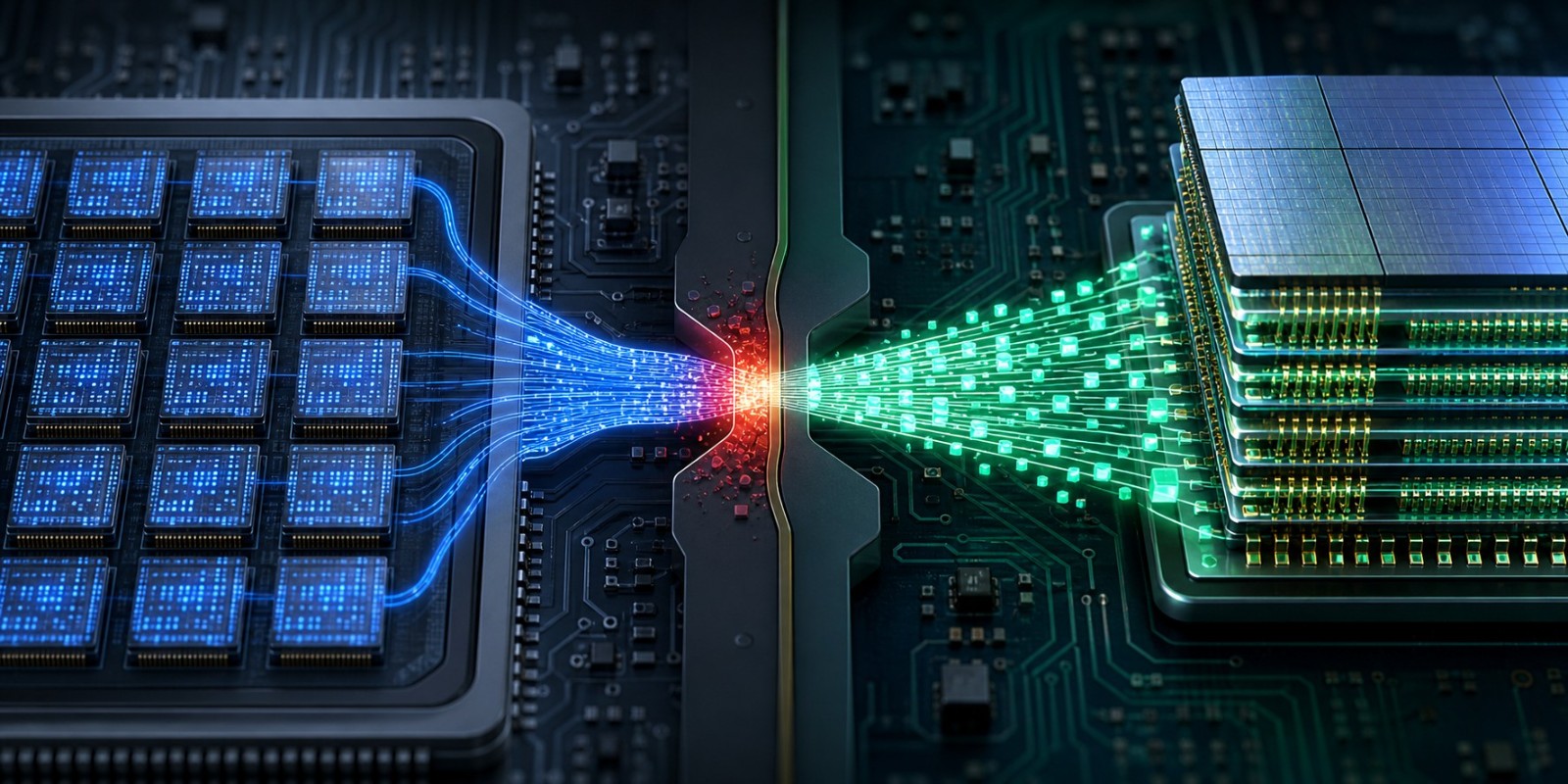
AI workloads perform enormous amounts of matrix math, but the accelerator cannot compute on data it cannot access quickly enough. When the compute engines wait for weights, activations, or key-value cache data, raw FLOPS stop translating into real throughput.
This is the memory wall.
HBM helps by placing stacked DRAM close to the accelerator die and connecting it through a very wide interface. Compared with conventional memory layouts, HBM offers much higher bandwidth per package area and lower data-movement overhead. That is why modern AI accelerators rely on HBM rather than treating memory as a separate commodity component.
The pressure becomes especially visible in three areas.
First, large-model training requires huge sustained bandwidth across accelerator clusters. Second, inference increasingly depends on long-context workloads, where KV cache management can consume significant memory capacity and bandwidth. Third, agentic AI and multimodal workloads can increase the number of tokens, retrieval steps, tool calls, and context windows a system must handle.
In that environment, more compute units do not automatically solve the bottleneck. If memory bandwidth and capacity do not scale with the model and workload, utilization falls.
HBM3E Is Still the Workhorse, but HBM4 Is Becoming the Next Battleground
HBM3 and HBM3E have been central to the current AI server generation. For many accelerator platforms, HBM3E is still the practical baseline for high-end AI deployment because it improves bandwidth and capacity while fitting into existing advanced packaging roadmaps.
HBM4 is now becoming the next major competitive step. Samsung says its HBM4 increases the I/O pin count from 1,024 to 2,048 and can reach up to 3.3 TB/s per stack. For AI and HPC systems, that points to a new phase of competition around bandwidth, capacity, power efficiency, and packaging integration.
| Technology stage | Industry position | AI compute impact |
|---|---|---|
| HBM3 / HBM3E | Current high-end deployment baseline | Supports today’s leading AI accelerators and high-bandwidth training/inference systems |
| HBM4 | Early next-generation ramp and platform qualification | Raises bandwidth expectations and tightens the link between memory vendors and accelerator roadmaps |
| HBM4E and later | Forward-looking roadmap | Aims to extend bandwidth, capacity, and efficiency as AI models and inference workloads grow |
| Near-memory and HBC-style approaches | Emerging architectural response | Attempts to reduce data movement rather than only increasing memory bandwidth |
The key point is not that HBM4 instantly replaces HBM3E. The important shift is that memory roadmap timing now affects accelerator competitiveness, AI server availability, and procurement planning.
HBM Supply Is Reshaping AI Hardware Economics
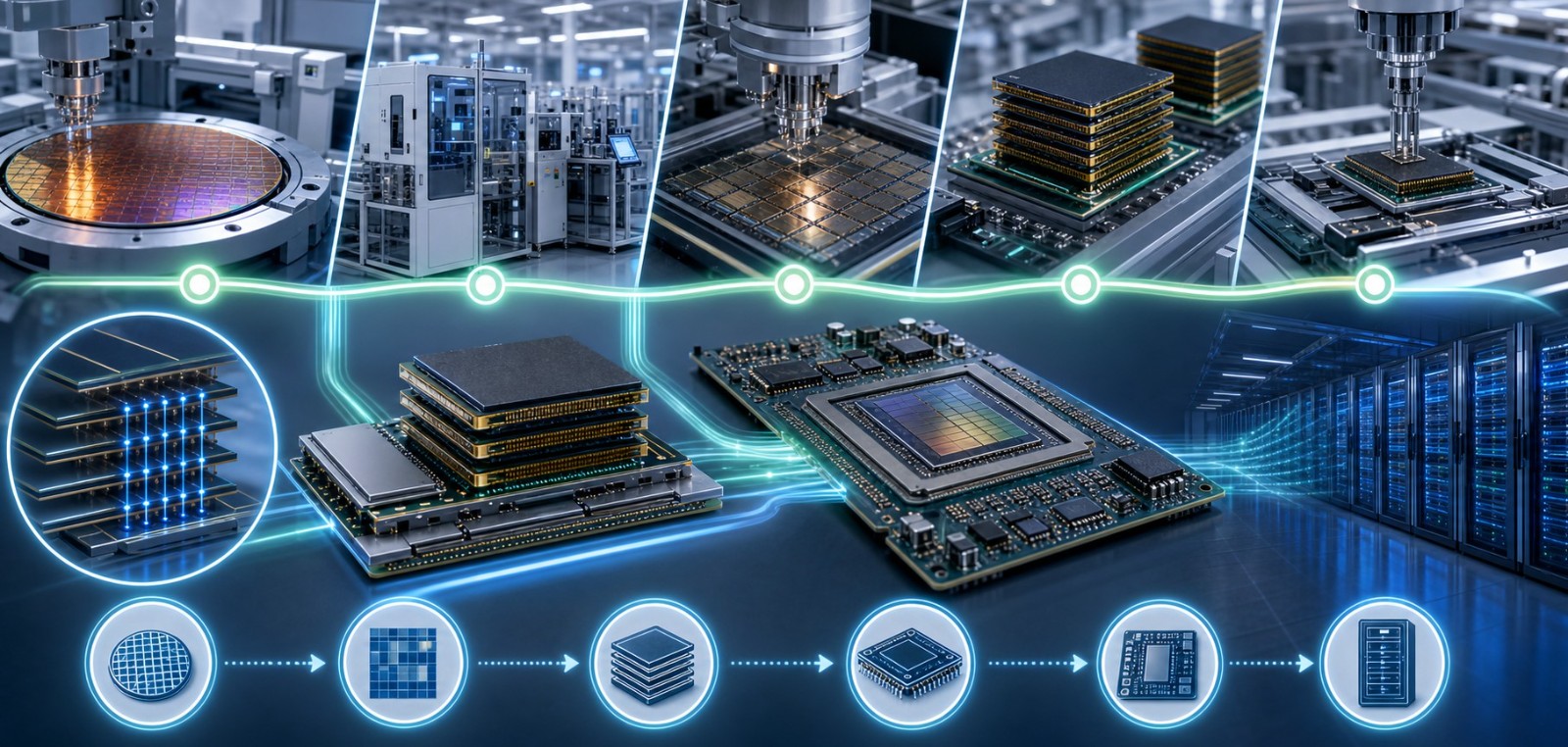
HBM is not ordinary DRAM that can be swapped into a system late in the design cycle. It requires close coordination among memory suppliers, accelerator designers, foundries, packaging providers, substrate suppliers, and server manufacturers.
This creates several supply-chain effects.
First, HBM availability can influence accelerator shipment timing. A GPU or ASIC package is not complete if the required HBM stack is not available, qualified, and integrated.
Second, customer qualification matters. HBM must be validated with specific accelerator packages and platforms, which can create tighter supplier-customer relationships than in some commodity memory markets.
Third, advanced packaging becomes a parallel bottleneck. AI accelerators need HBM integrated close to the compute die through complex packaging technologies. Even when memory wafers are available, packaging capacity and yield can still limit delivery.
Fourth, high-end AI demand can pull memory capacity away from other categories. TrendForce has warned that HBM and server DRAM demand can pressure broader DRAM supply, especially when production capacity shifts toward AI data-center needs.
For buyers, this means HBM affects more than accelerator list prices. It can influence lead times, platform availability, server configurations, memory pricing, and the cost structure of AI infrastructure.
Inference Makes HBM Demand More Durable
Training is often described as the most compute-intensive AI workload, but inference may be what makes HBM demand more persistent.
As AI services move from demos to always-on products, inference traffic grows continuously. Long-context models, coding agents, enterprise assistants, search systems, multimodal tools, and workflow automation all need low-latency access to model weights and context data. The larger the context window and the more concurrent users a system serves, the more important memory capacity and bandwidth become.
The KV cache is one reason. During autoregressive generation, the system stores intermediate attention data so it does not have to recompute the full context at every step. That improves efficiency, but it also creates a memory footprint that grows with context length, batch size, and concurrency.
This is why AI infrastructure planners increasingly think in terms of tokens per second per dollar, tokens per watt, and memory bandwidth per accelerator, rather than peak compute alone.
From HBM4 to HBC: The Industry Is Looking for Ways Around the Wall
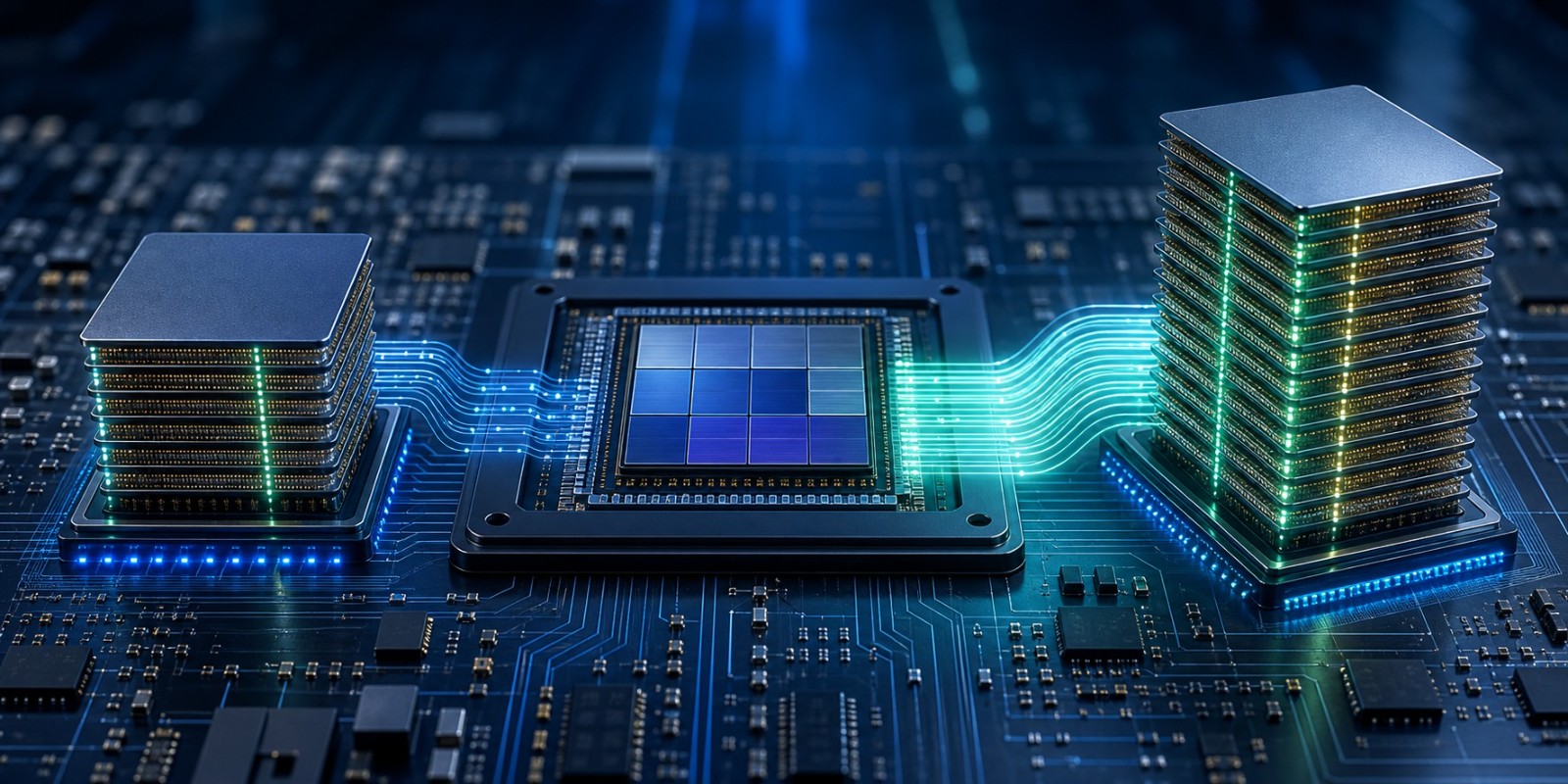
HBM4 is important, but the industry is not betting on one answer. The memory wall is a system-level problem, so the response is also system-level.
One path is better HBM: higher bandwidth, higher capacity, lower power per bit, and tighter packaging integration.
Another path is better packaging: 2.5D integration, 3D packaging, chiplets, and shorter links between memory and compute.
A third path is memory tiering: using CXL, offload strategies, and smarter data placement to improve utilization across local memory, pooled memory, and storage.
A fourth path is architectural change. Qualcomm’s HBC announcement is one example of the industry’s interest in reducing data movement rather than only increasing bandwidth. Near-memory compute, in-memory acceleration, and workload-specific dataflow designs all belong to this broader category.
Finally, software matters. KV cache optimization, quantization, sparsity, model routing, batching, and scheduler design can reduce memory pressure even when hardware is constrained.
The direction is clear: future AI performance will depend less on a single chip specification and more on the whole data path.
What It Means for the Electronics Supply Chain
The HBM boom will affect more than memory vendors.
For chip companies, memory interfaces, controllers, package design, and supplier alignment become part of AI accelerator differentiation. For server manufacturers, higher-density AI systems create new demands for power delivery, thermal design, PCBs, connectors, optical modules, switch chips, and rack architecture.
For component distributors and procurement teams, HBM-related pressure can translate into longer lead times, tighter allocation, changing platform roadmaps, and more frequent redesign decisions. Even companies that do not buy HBM directly may feel the effect through server pricing, memory availability, or component demand shifts.
For the broader electronics market, the risk is that AI data centers absorb high-end memory and advanced packaging capacity faster than supply can expand. That can influence PCs, smartphones, embedded systems, and general-purpose servers if production priorities shift toward AI infrastructure.
In short, the AI compute boom is not only a cloud or GPU story. It is becoming a full supply-chain story.
Four Signals to Watch Next
The first signal is real HBM4 ramp speed. Announcements matter, but the market will be shaped by qualification, yield, customer adoption, and deliverable volume.
The second signal is memory-vendor customer binding. If HBM supply is locked to major accelerator roadmaps, competition may increasingly depend on who secured capacity early.
The third signal is advanced-packaging availability. HBM cannot unlock AI performance if packaging capacity becomes the next bottleneck.
The fourth signal is adoption of alternatives. HBC, near-memory compute, CXL memory expansion, and software optimization are worth watching, but they need real workload validation before they can be treated as replacements for HBM scaling.
Conclusion
AI compute in 2026 is no longer just a race to add more accelerators. It is a race to move data faster, cheaper, and more efficiently through the entire system.
HBM became a hotspot because it sits at the intersection of model scale, inference cost, packaging technology, server delivery, and supply-chain negotiation. As models become larger and AI services become more persistent, memory bandwidth and capacity will increasingly decide how much usable compute a system can deliver.
The next phase of AI hardware competition will not be won by compute alone. It will be won by the companies that coordinate accelerators, HBM, packaging, networking, power, cooling, and software into a system that can actually keep the data flowing.
Sources and References Used for This Guide
Apify Google Search Scraper result for "AI compute HBM memory 2026"
Source type: SERP and AI-search evidence pool.
Used for: Search intent, recurring themes, AI-search consensus, and topic prioritization.
Caution: AI-search output was treated as a signal, not proof; weak SEO pages were not used as authority.Micron Technology, Fiscal Q3 2026 results
Source type: Official company financial release.
Used for: Current memory-market hotspot, AI-era memory framing, fiscal Q3 2026 results, and HBM roadmap context.
Caution: Company releases reflect vendor reporting and outlook; market-wide conclusions require additional sources.TrendForce, Memory Wall Bottleneck: AI Compute Sparks Memory Supercycle
Source type: Industry research and market analysis.
Used for: Memory-wall framing, HBM and DDR5 demand pressure, and broader memory-cycle context.
Caution: Forecasts and market-cycle judgments may change as supply, pricing, and demand evolve.Samsung, HBM4 mass-production announcement
Source type: Official company press release.
Used for: HBM4 commercial shipment, speed and bandwidth claims, 12-layer capacity range, and HBM4 positioning for AI computing.
Caution: Vendor-stated performance should be validated against platform-level benchmarks for procurement decisions.Samsung and AMD next-generation AI memory collaboration
Source type: Official partnership announcement.
Used for: HBM4 supply collaboration, AMD Instinct MI455X context, and rack-scale AI infrastructure framing.
Caution: Partnership announcements describe intent and alignment, not guaranteed deployment volume.Qualcomm Dragonfly data-center roadmap and HBC announcement
Source type: Official company press release.
Used for: Near-memory compute and High Bandwidth Compute as an emerging response to the memory wall.
Caution: HBC claims are vendor-stated and require real workload validation.
 UTMEL
UTMEL
We are the professional distributor of electronic components, providing a large variety of products to save you a lot of time, effort, and cost with our efficient self-customized service. careful order preparation fast delivery service
 Power Semiconductor Procurement After the Nexperia Shake-Up—NXP for Stability, ON for Technology, or Nexperia for Value?UTMEL04 November 20254880
The recent supply chain turmoil surrounding Netherlands-based Nexperia has sent shockwaves through the global semiconductor industry, forcing procurement professionals to re-evaluate their sourcing strategies.
Read More AI Computing Power Gap: How Token Consumption is Reshaping Server Component SourcingUTMEL23 June 2026955
As global token consumption drives the transition to high-density 100kW+ AI data centers, power delivery networks require advanced Wide-Bandgap semiconductors (SiC/GaN) and high-capacitance MLCCs. This shift has triggered a component procurement crisis with lead times exceeding 24 weeks. To bypass shortages, hardware buyers must abandon just-in-time manufacturing and leverage independent global distributor networks to secure critical power and passive components.
Read More The BSPDN Revolution: Overcoming IR Drop in Sub-2nm GAAFET Nodes with Backside Power DeliveryUTMEL25 June 2026933
As semiconductor manufacturing enters the sub-2nm era, Backside Power Delivery Networks (BSPDN) are replacing traditional front-side routing to overcome critical IR drop bottlenecks. By separating power and signal delivery, chipmakers like Intel and TSMC drastically improve performance and density in GAAFET designs. However, this radical shift introduces manufacturing complexities, thermal challenges, and demands advanced packaging and power management solutions.
Read More Power Management ICs Trends 2026: AI Demand, Supply Risks, and Sourcing StrategiesUTMEL06 July 20261433
As AI server racks surpass 100kW by 2026, data centers are shifting toward wide-bandgap semiconductors like SiC and GaN. However, this demand has triggered a critical shortage of mature-node Power Management ICs (PMICs). To prevent production halts, sourcing teams must abandon 'just-in-time' models, implement proactive 'just-in-case' strategies, and rapidly qualify pin-to-pin alternative components to secure their supply chains.
Read More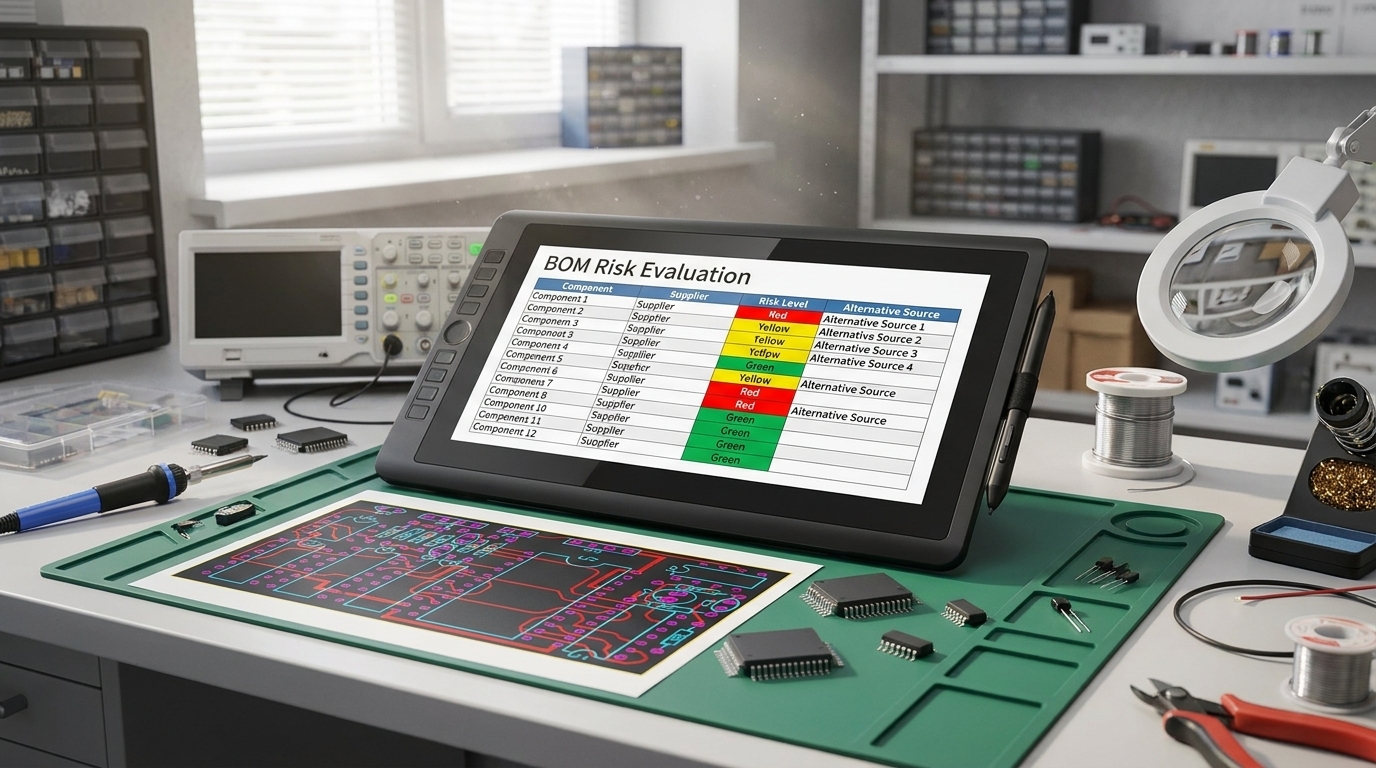 onsemi Synaptics Acquisition Impact: BOM Risk Checklist and Second-Source Strategy for Edge AI DesignsUTMEL27 July 2026346
The onsemi acquisition of Synaptics provides hardware program managers a 12-to-18-month window before potential product cancellations occur in mid-2027. This guide outlines how to audit BOM exposure across overlap and non-core product lines, calculate Last-Time-Buy volumes including hidden storage costs, establish proactive second-sourcing triggers, and implement supply chain monitoring to prevent line-down events.
Read More
Subscribe to Utmel !
![0201N120J500CT]() 0201N120J500CT
0201N120J500CTWalsin Technology Corporation
![04M030050HNDIN34814]() 04M030050HNDIN34814
04M030050HNDIN34814Essentra Components
![04M050080HNDIN34814]() 04M050080HNDIN34814
04M050080HNDIN34814Essentra Components
![0603B224K6R3CT]() 0603B224K6R3CT
0603B224K6R3CTWalsin Technology Corporation
![0825020TNA]() 0825020TNA
0825020TNAEssentra Components
![0525020SCN]() 0525020SCN
0525020SCNEssentra Components
![BLM18PG221SN1D]() BLM18PG221SN1D
BLM18PG221SN1DMurata Electronics
![BLM18AG121SN1D]() BLM18AG121SN1D
BLM18AG121SN1DMurata Electronics
![BLM21AG102SN1D]() BLM21AG102SN1D
BLM21AG102SN1DMurata Electronics
![BLM18SG221TN1D]() BLM18SG221TN1D
BLM18SG221TN1DMurata Electronics


