Product
 Brand
Brand Articles
 Tools
Tools
2N5401 PNP Transistor: Pinout, Datasheet, and Equivalents


TRANS PNP 150V 0.6A TO-92
The 2N5401 is a silicon PNP transistor designed for high voltage amplifier applications.

diy audio Amplifier using c5198 a1941 with 2n5401 2n5551 clear sound
2N5401 Description
The 2N5401 is a high voltage PNP transistor that can be used in a variety of general purpose electronic applications that are operating from 150V or below. It is often used in telephone circuits and simple switching applications or amplification on high voltage. The 2N5401 is also readily available and easy to work with.
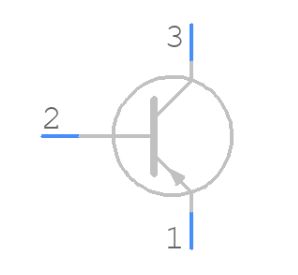
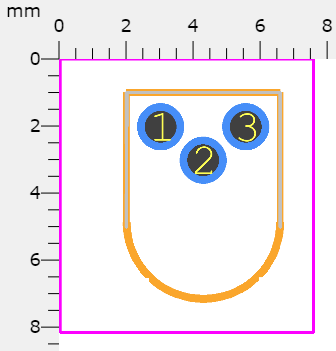
2N5401 Pinout


2N5401 CAD Model
Symbol
Footprint
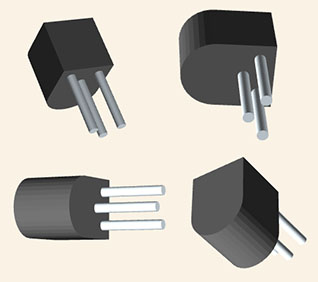
3D Model
2N5401 Features
Available in Pb−Free package
High collector breakdown voltage
With DC Current Gain (hFE) up to 100
Maximum voltage across collector and emitter: 150V
Maximum current allowed trough collector: 600mA
Maximum voltage across collector and base: 160 V
Maximum voltage across base and emitter: 5V
Operating temperature range: -55ºC to +150ºC
Maximum power dissipation : 0.62 W
Specifications
- TypeParameter
- Factory Lead Time8 Weeks
- Mount
In electronic components, the term "Mount" typically refers to the method or process of physically attaching or fixing a component onto a circuit board or other electronic device. This can involve soldering, adhesive bonding, or other techniques to secure the component in place. The mounting process is crucial for ensuring proper electrical connections and mechanical stability within the electronic system. Different components may have specific mounting requirements based on their size, shape, and function, and manufacturers provide guidelines for proper mounting procedures to ensure optimal performance and reliability of the electronic device.
Through Hole - Package / Case
refers to the protective housing that encases an electronic component, providing mechanical support, electrical connections, and thermal management.
TO-92 - Number of Pins3
- Collector-Emitter Breakdown Voltage150V
- Collector-Emitter Saturation Voltage500mV
- Frequency - Gain Bandwidth Product (GBP)300MHz
- Number of Elements1
- Power Dissipation (Max)625mW
- hFEMin50
- Packaging
Semiconductor package is a carrier / shell used to contain and cover one or more semiconductor components or integrated circuits. The material of the shell can be metal, plastic, glass or ceramic.
Bulk - Published2012
- JESD-609 Code
The "JESD-609 Code" in electronic components refers to a standardized marking code that indicates the lead-free solder composition and finish of electronic components for compliance with environmental regulations.
e0 - Pbfree Code
The "Pbfree Code" parameter in electronic components refers to the code or marking used to indicate that the component is lead-free. Lead (Pb) is a toxic substance that has been widely used in electronic components for many years, but due to environmental concerns, there has been a shift towards lead-free alternatives. The Pbfree Code helps manufacturers and users easily identify components that do not contain lead, ensuring compliance with regulations and promoting environmentally friendly practices. It is important to pay attention to the Pbfree Code when selecting electronic components to ensure they meet the necessary requirements for lead-free applications.
no - Part Status
Parts can have many statuses as they progress through the configuration, analysis, review, and approval stages.
Active - Number of Terminations3
- ECCN Code
An ECCN (Export Control Classification Number) is an alphanumeric code used by the U.S. Bureau of Industry and Security to identify and categorize electronic components and other dual-use items that may require an export license based on their technical characteristics and potential for military use.
EAR99 - Terminal Finish
Terminal Finish refers to the surface treatment applied to the terminals or leads of electronic components to enhance their performance and longevity. It can improve solderability, corrosion resistance, and overall reliability of the connection in electronic assemblies. Common finishes include nickel, gold, and tin, each possessing distinct properties suitable for various applications. The choice of terminal finish can significantly impact the durability and effectiveness of electronic devices.
Tin/Lead (Sn/Pb) - Max Operating Temperature
The Maximum Operating Temperature is the maximum body temperature at which the thermistor is designed to operate for extended periods of time with acceptable stability of its electrical characteristics.
150°C - Min Operating Temperature
The "Min Operating Temperature" parameter in electronic components refers to the lowest temperature at which the component is designed to operate effectively and reliably. This parameter is crucial for ensuring the proper functioning and longevity of the component, as operating below this temperature may lead to performance issues or even damage. Manufacturers specify the minimum operating temperature to provide guidance to users on the environmental conditions in which the component can safely operate. It is important to adhere to this parameter to prevent malfunctions and ensure the overall reliability of the electronic system.
-65°C - HTS Code
HTS (Harmonized Tariff Schedule) codes are product classification codes between 8-1 digits. The first six digits are an HS code, and the countries of import assign the subsequent digits to provide additional classification. U.S. HTS codes are 1 digits and are administered by the U.S. International Trade Commission.
8541.21.00.95 - Terminal Position
In electronic components, the term "Terminal Position" refers to the physical location of the connection points on the component where external electrical connections can be made. These connection points, known as terminals, are typically used to attach wires, leads, or other components to the main body of the electronic component. The terminal position is important for ensuring proper connectivity and functionality of the component within a circuit. It is often specified in technical datasheets or component specifications to help designers and engineers understand how to properly integrate the component into their circuit designs.
BOTTOM - Peak Reflow Temperature (Cel)
Peak Reflow Temperature (Cel) is a parameter that specifies the maximum temperature at which an electronic component can be exposed during the reflow soldering process. Reflow soldering is a common method used to attach electronic components to a circuit board. The Peak Reflow Temperature is crucial because it ensures that the component is not damaged or degraded during the soldering process. Exceeding the specified Peak Reflow Temperature can lead to issues such as component failure, reduced performance, or even permanent damage to the component. It is important for manufacturers and assemblers to adhere to the recommended Peak Reflow Temperature to ensure the reliability and functionality of the electronic components.
NOT SPECIFIED - Time@Peak Reflow Temperature-Max (s)
Time@Peak Reflow Temperature-Max (s) refers to the maximum duration that an electronic component can be exposed to the peak reflow temperature during the soldering process, which is crucial for ensuring reliable solder joint formation without damaging the component.
NOT SPECIFIED - JESD-30 Code
JESD-30 Code refers to a standardized descriptive designation system established by JEDEC for semiconductor-device packages. This system provides a systematic method for generating designators that convey essential information about the package's physical characteristics, such as size and shape, which aids in component identification and selection. By using JESD-30 codes, manufacturers and engineers can ensure consistency and clarity in the specification of semiconductor packages across various applications and industries.
O-PBCY-T3 - Qualification Status
An indicator of formal certification of qualifications.
Not Qualified - Polarity
In electronic components, polarity refers to the orientation or direction in which the component must be connected in a circuit to function properly. Components such as diodes, capacitors, and LEDs have polarity markings to indicate which terminal should be connected to the positive or negative side of the circuit. Connecting a component with incorrect polarity can lead to malfunction or damage. It is important to pay attention to polarity markings and follow the manufacturer's instructions to ensure proper operation of electronic components.
PNP - Element Configuration
The distribution of electrons of an atom or molecule (or other physical structure) in atomic or molecular orbitals.
Single - Transistor Application
In the context of electronic components, the parameter "Transistor Application" refers to the specific purpose or function for which a transistor is designed and used. Transistors are semiconductor devices that can amplify or switch electronic signals and are commonly used in various electronic circuits. The application of a transistor can vary widely depending on its design and characteristics, such as whether it is intended for audio amplification, digital logic, power control, or radio frequency applications. Understanding the transistor application is important for selecting the right type of transistor for a particular circuit or system to ensure optimal performance and functionality.
AMPLIFIER - Collector Emitter Voltage (VCEO)
Collector-Emitter Voltage (VCEO) is a key parameter in electronic components, particularly in transistors. It refers to the maximum voltage that can be applied between the collector and emitter terminals of a transistor while the base terminal is open or not conducting. Exceeding this voltage limit can lead to breakdown and potential damage to the transistor. VCEO is crucial for ensuring the safe and reliable operation of the transistor within its specified limits. Designers must carefully consider VCEO when selecting transistors for a circuit to prevent overvoltage conditions that could compromise the performance and longevity of the component.
500mV - Max Collector Current
Max Collector Current is a parameter used to specify the maximum amount of current that can safely flow through the collector terminal of a transistor or other electronic component without causing damage. It is typically expressed in units of amperes (A) and is an important consideration when designing circuits to ensure that the component operates within its safe operating limits. Exceeding the specified max collector current can lead to overheating, degradation of performance, or even permanent damage to the component. Designers must carefully consider this parameter when selecting components and designing circuits to ensure reliable and safe operation.
600mA - Transition Frequency
Transition Frequency in electronic components refers to the frequency at which a device can transition from one state to another, typically defining the upper limit of its operating frequency. It is a critical parameter in determining the speed and performance of active components like transistors and integrated circuits. This frequency is influenced by factors such as capacitance, resistance, and the inherent characteristics of the materials used in the component's construction. Understanding transition frequency is essential for optimizing circuit designs and ensuring reliable signal processing in various applications.
100MHz - Frequency - Transition
The parameter "Frequency - Transition" in electronic components refers to the maximum frequency at which a signal transition can occur within the component. It is a crucial specification for digital circuits as it determines the speed at which data can be processed and transmitted. A higher frequency transition allows for faster operation and better performance of the electronic component. It is typically measured in hertz (Hz) or megahertz (MHz) and is specified by the manufacturer to ensure proper functioning of the component within a given frequency range.
300MHz - Collector Base Voltage (VCBO)
Collector Base Voltage (VCBO) is the maximum allowable voltage that can be applied between the collector and base terminals of a bipolar junction transistor when the emitter is open. It is a critical parameter that determines the voltage rating of the transistor and helps prevent breakdown in the collector-base junction. Exceeding this voltage can lead to permanent damage or failure of the component.
160V - Emitter Base Voltage (VEBO)
Emitter Base Voltage (VEBO) is a parameter used in electronic components, particularly in transistors. It refers to the maximum voltage that can be applied between the emitter and base terminals of a transistor without causing damage to the device. Exceeding this voltage limit can lead to breakdown of the transistor and potential failure. VEBO is an important specification to consider when designing circuits to ensure the proper operation and reliability of the components. It is typically provided in the datasheet of the transistor and should be carefully observed to prevent any potential damage during operation.
5V - DC Current Gain-Min (hFE)
The parameter "DC Current Gain-Min (hFE)" in electronic components refers to the minimum value of the DC current gain of a bipolar junction transistor (BJT). It is a measure of how much the transistor amplifies the input current to produce the output current. The hFE value indicates the ratio of the output current to the input current when the transistor is operating in the active region. A higher hFE value signifies a higher current gain and better amplification capabilities of the transistor. It is an important parameter to consider when designing and analyzing transistor circuits for various electronic applications.
60 - Continuous Collector Current
Continuous Collector Current is the maximum amount of current that a transistor can continuously carry through its collector terminal without overheating or being damaged. This parameter is crucial for designing circuits as it determines the suitability of a transistor for specific applications. Exceeding this value can lead to reduced performance or failure of the component. It is typically specified in amperes (A) and varies based on the transistor's construction and cooling conditions.
-600mA - RoHS Status
RoHS means “Restriction of Certain Hazardous Substances” in the “Hazardous Substances Directive” in electrical and electronic equipment.
RoHS Compliant
2N5401 Equivalents
2N5551 (NPN), MPSA92, MPSA93, BF723, 2N5096
How to use 2N5401
2N5401 can be used like any general purpose PNP transistor, but for sake of understanding the working of this device let us look at a simple application circuit as shown below.

2N5096 Transistor Circuit
In the circuit above we are using 2N5401 as a simple switching device with the switching load being small DC motor. The button here is for providing the trigger to the transistor and 10KΩ resistor is for limiting the current to base and to avoid breaching maximum voltage allowed at the base. The circuit is powered from a negative voltage source of -5V DC as shown in diagram.
Before going for working let us revise the typical characteristics of a PNP transistor:
The device does not conduct when the current does not flow out of the base of the transistor or the device conducts only when the base current that flows out of the device reaches a threshold.
The current flow through collector is determined by the base current to a certain point. So with higher the gate current we have lower conduction resistance and higher the collector current.
The PNP transistor conducts only when a threshold current flows out the base, so the instant the base current reaches zero the device stops conducting.
Consider the button is not pressed: When the button is not pressed there will be no base current and with no base current the transistor will not conduct based on the characteristics of PNP transistor. When the transistor does not conduct the entire voltage appears across it and the motor will be OFF.
Consider the button is pressed: When the button is pressed, the base of 2N5401 will be connected to negative power supply and so there will be a path for the current flow. When the base current flows out from the device it will start conducting as stated in characteristics. In the presence of this collector current flow a voltage appears across the motor connected in series with collector pin. In the presence of the voltage the motor will start rotating and it will stay like that until the button is released. The moment the button is released the base current will reaches zero, there by turning OFF the transistor and the motor.
In this way we can turn motor ON and OFF by using simple button as a trigger and 2N5401 as switching device. In high speed switching the trigger is provided by microcontroller instead of button.
2N5401 Applications
General purpose switching and amplification
Telephony applications
High voltage application
2N5401 Dimensions

2N5401 Manufacturer
Since 1974, Central Semiconductor has manufactured innovative discrete semiconductors used in electronic products worldwide. Devices currently include standard and custom small signal transistors, bipolar power transistors, MOSFETs, diodes, rectifiers, protection devices, current limiting diodes, bridge rectifiers, thyristors, and silicon carbide devices. Central’s devices are available in industry standard surface mount and through-hole packages, bare die, TLMs (Tiny Leadless Modules™), and MDMs (Multi Discrete Modules™). Central has earned a reputation as a manufacturer of the highest quality products consistently delivered on-time, and a provider of exceptional value-added services.
Trend Analysis
Datasheet PDF
- ReachStatement :
- Datasheets :
1.What is 2N5401 transistor?
2N5401 is a PNP transistor designed specifically for high voltage - low power switching applications and amplifications. The NPN complementary for the device is 2N5551 and is available in TO-92, SOT54.
2.Can 2N5401 be replaced?
2N5401 parameters: silicon PNP, 170V /150V, 600mA, 625mW, β≥40. It can be replaced by 2SA1013 and 2SB1212. Parameters: Silicon PNP, 160V, 1A, 0.9W. In fact, the 2N5401 is readily available, so there is no need to replace it.
3.What’s the difference between 2N5401 and MMBT5401?
The 2N5401 is an electrical adaptor, and the MMBT5401 is a chip element, the electrical parameters of both are exactly the same.
4.How to get long term performance with 2N5401 in a circuit?
To get long term performance with this transistor the user must operate the transistor under its specs. Do not operate load more than 600mA, do not operate load more than 150V, always use a suitable base resistor with the transistor, avoid accidental wrong connection of legs of the transistor in the electronic circuits and always store of use this transistor in the temperature above -55 centigrade and +150 centigrade.
 STP30NF10:datasheet, pinout, package, and FAQ
10 March 2022674
 DS18S20 Temperature Sensor: Datasheet, Pinout and Comparison
01 November 20213116
 AOD4185:P-Channel Enhancement Mode Field Effect Transistor
09 March 20221826
 Buying the LTM8064? Read This First — Specs, Thermal Traps, and Cheaper Alternatives
23 March 2026321
 LM358 Dual Op-Amp: Pinout, Equivalent and Datasheet
03 December 202122552
 Microchip PIC24FJ64GA004IPT: Technical Overview
29 February 2024396
![CD4007 CMOS Inverter: 14 SOIC Inverter, Pinout and Datasheet pdf [Video]](https://res.utmel.com/Images/Article/c2022e28-6851-4487-8983-58a7ba99db80.jpg) CD4007 CMOS Inverter: 14 SOIC Inverter, Pinout and Datasheet pdf [Video]
CD4007 CMOS Inverter: 14 SOIC Inverter, Pinout and Datasheet pdf [Video]07 January 20227488
 Renesas DF2268FA20V Technical Datasheet: Features, Applications, and Reference Designs
29 February 2024171
 Understanding Power Management Units (PMUs)
06 June 20252794
 Understanding Machine Vision and Visual Sensor
27 September 20212332
 How Do We Seize Investment Opportunities on the Eve of the Ultimate Human Energy Final?
12 July 20222317
 Surge Protector Best Practices for Everyday Use
10 July 20252364
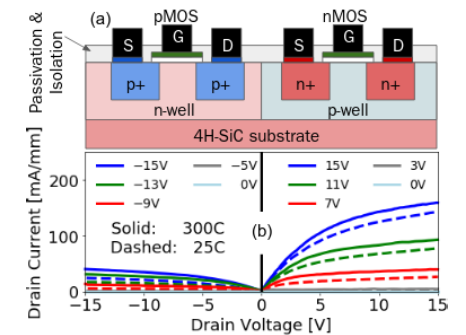 Advanced CMOS Devices with Wide Bandgap and Ultrawide Bandgap Technologies
15 March 20243462
 What Is an Electrical Connector? Types and Selection Checklist
14 July 20269783
 A User Guide to Automotive Relay
30 July 20217487
 TSMC's Global Distribution
25 March 20223987
Central Semiconductor
In Stock: 550
United States
China
Canada
Japan
Russia
Germany
United Kingdom
Singapore
Italy
Hong Kong(China)
Taiwan(China)
France
Korea
Mexico
Netherlands
Malaysia
Austria
Spain
Switzerland
Poland
Thailand
Vietnam
India
United Arab Emirates
Afghanistan
Åland Islands
Albania
Algeria
American Samoa
Andorra
Angola
Anguilla
Antigua & Barbuda
Argentina
Armenia
Aruba
Australia
Azerbaijan
Bahamas
Bahrain
Bangladesh
Barbados
Belarus
Belgium
Belize
Benin
Bermuda
Bhutan
Bolivia
Bonaire, Sint Eustatius and Saba
Bosnia & Herzegovina
Botswana
Brazil
British Indian Ocean Territory
British Virgin Islands
Brunei
Bulgaria
Burkina Faso
Burundi
Cabo Verde
Cambodia
Cameroon
Cayman Islands
Central African Republic
Chad
Chile
Christmas Island
Cocos (Keeling) Islands
Colombia
Comoros
Congo
Congo (DRC)
Cook Islands
Costa Rica
Côte d’Ivoire
Croatia
Cuba
Curaçao
Cyprus
Czechia
Denmark
Djibouti
Dominica
Dominican Republic
Ecuador
Egypt
El Salvador
Equatorial Guinea
Eritrea
Estonia
Eswatini
Ethiopia
Falkland Islands
Faroe Islands
Fiji
Finland
French Guiana
French Polynesia
Gabon
Gambia
Georgia
Ghana
Gibraltar
Greece
Greenland
Grenada
Guadeloupe
Guam
Guatemala
Guernsey
Guinea
Guinea-Bissau
Guyana
Haiti
Honduras
Hungary
Iceland
Indonesia
Iran
Iraq
Ireland
Isle of Man
Israel
Jamaica
Jersey
Jordan
Kazakhstan
Kenya
Kiribati
Kosovo
Kuwait
Kyrgyzstan
Laos
Latvia
Lebanon
Lesotho
Liberia
Libya
Liechtenstein
Lithuania
Luxembourg
Macao(China)
Madagascar
Malawi
Maldives
Mali
Malta
Marshall Islands
Martinique
Mauritania
Mauritius
Mayotte
Micronesia
Moldova
Monaco
Mongolia
Montenegro
Montserrat
Morocco
Mozambique
Myanmar
Namibia
Nauru
Nepal
New Caledonia
New Zealand
Nicaragua
Niger
Nigeria
Niue
Norfolk Island
North Korea
North Macedonia
Northern Mariana Islands
Norway
Oman
Pakistan
Palau
Palestinian Authority
Panama
Papua New Guinea
Paraguay
Peru
Philippines
Pitcairn Islands
Portugal
Puerto Rico
Qatar
Réunion
Romania
Rwanda
Samoa
San Marino
São Tomé & Príncipe
Saudi Arabia
Senegal
Serbia
Seychelles
Sierra Leone
Sint Maarten
Slovakia
Slovenia
Solomon Islands
Somalia
South Africa
South Sudan
Sri Lanka
St Helena, Ascension, Tristan da Cunha
St. Barthélemy
St. Kitts & Nevis
St. Lucia
St. Martin
St. Pierre & Miquelon
St. Vincent & Grenadines
Sudan
Suriname
Svalbard & Jan Mayen
Sweden
Syria
Tajikistan
Tanzania
Timor-Leste
Togo
Tokelau
Tonga
Trinidad & Tobago
Tunisia
Turkey
Turkmenistan
Turks & Caicos Islands
Tuvalu
U.S. Outlying Islands
U.S. Virgin Islands
Uganda
Ukraine
Uruguay
Uzbekistan
Vanuatu
Vatican City
Venezuela
Wallis & Futuna
Yemen
Zambia
Zimbabwe
![MPSA66 TIN/LEAD]() MPSA66 TIN/LEAD
MPSA66 TIN/LEADCentral Semiconductor
![MPSA77 APP TIN/LEAD]() MPSA77 APP TIN/LEAD
MPSA77 APP TIN/LEADCentral Semiconductor
![MM3007 TIN/LEAD]() MM3007 TIN/LEAD
MM3007 TIN/LEADCentral Semiconductor
![MPS3704 PBFREE]() MPS3704 PBFREE
MPS3704 PBFREECentral Semiconductor
![MPS6531 PBFREE]() MPS6531 PBFREE
MPS6531 PBFREECentral Semiconductor
![2N3505 TIN/LEAD]() 2N3505 TIN/LEAD
2N3505 TIN/LEADCentral Semiconductor
![2N2907A]() 2N2907A
2N2907ACentral Semiconductor
![2N4910 PBFREE]() 2N4910 PBFREE
2N4910 PBFREECentral Semiconductor
![2N2222A PBFREE]() 2N2222A PBFREE
2N2222A PBFREECentral Semiconductor Corp
![PN3569 TIN/LEAD]() PN3569 TIN/LEAD
PN3569 TIN/LEADCentral Semiconductor