

A Comprehensive Guide to LTC6906HS6#TRMPBF Programmable Timer and Oscillator

Linear Technology/Analog Devices
Oscillator, Silicon Programmable Timers LTC6906 6 Pins 10kHz~1MHz SOT-23-6 Thin, TSOT-23-6


Oscillator, Silicon Programmable Timers LTC6906 6 Pins 10kHz~1MHz SOT-23-6 Thin, TSOT-23-6
Explore the LTC6906HS6#TRMPBF, a versatile programmable timer and oscillator from Linear Technology/Analog Devices. This article delves into its features, applications, reference designs, alternative parts, and frequently asked questions to help you understand and utilize this component effectively.
Product Introduction
Description:
The LTC6906HS6#TRMPBF is a programmable timer and oscillator designed for various timing applications. It operates within a wide voltage range of 2.25V to 3.6V and offers a frequency range from 10kHz to 1MHz. With a compact SOT-23-6 Thin package, this device is suitable for surface mount applications in diverse electronic systems.
Features:
1. Wide voltage supply range for flexibility in different circuit configurations.
2. Programmable frequency output from 10kHz to 1MHz for customization.
3. Low operating supply current of 135μA for power efficiency.
4. Compact SOT-23-6 Thin package for space-constrained designs.
5. Fast rise and fall times of 25ns for precise timing control.
6. Symmetry control for duty cycle adjustment.
7. RoHS3 compliant for environmental sustainability.
Applications:
Primary Applications:
1. Clock generation in microcontroller-based systems.
2. Frequency modulation in communication equipment.
3. Timing control in industrial automation.
Secondary Applications:
1. Pulse-width modulation in power electronics.
2. Signal conditioning in sensor interfaces.
3. Synchronization in data acquisition systems.
Applicable Specific Modules:
1. Microcontroller timer modules.
2. Communication system timing modules.
3. Industrial control system timing modules.
Reference Designs:
1. Microcontroller clock generation circuit using LTC6906HS6#TRMPBF.
2. Frequency modulation circuit for RF applications.
3. Industrial timer circuit for automation systems.
Alternative Parts:
1. LTC6905 - Programmable Timer and Oscillator with different frequency range.
2. LTC6907 - Programmable Timer and Oscillator with additional features.
3. LTC6908 - Programmable Timer and Oscillator with extended temperature range.
FAQs:
Q1: What is the typical operating temperature range of LTC6906HS6#TRMPBF?
A1: The LTC6906HS6#TRMPBF operates within the temperature range of -40°C to 125°C.
Q2: Can the frequency output of LTC6906HS6#TRMPBF be adjusted in real-time?
A2: Yes, the frequency output of LTC6906HS6#TRMPBF is programmable and can be adjusted dynamically.
Q3: Is LTC6906HS6#TRMPBF suitable for battery-powered applications?
A3: Yes, LTC6906HS6#TRMPBF's low operating supply current makes it suitable for battery-powered applications.
In conclusion, the LTC6906HS6#TRMPBF programmable timer and oscillator offer a versatile solution for various timing applications with its customizable features and compact design. By understanding its capabilities and applications, engineers can effectively integrate this component into their designs for precise timing control.
Specifications
- TypeParameter
- Lifecycle Status
Lifecycle Status refers to the current stage of an electronic component in its product life cycle, indicating whether it is active, obsolete, or transitioning between these states. An active status means the component is in production and available for purchase. An obsolete status indicates that the component is no longer being manufactured or supported, and manufacturers typically provide a limited time frame for support. Understanding the lifecycle status is crucial for design engineers to ensure continuity and reliability in their projects.
PRODUCTION (Last Updated: 1 month ago) - Factory Lead Time8 Weeks
- Mount
In electronic components, the term "Mount" typically refers to the method or process of physically attaching or fixing a component onto a circuit board or other electronic device. This can involve soldering, adhesive bonding, or other techniques to secure the component in place. The mounting process is crucial for ensuring proper electrical connections and mechanical stability within the electronic system. Different components may have specific mounting requirements based on their size, shape, and function, and manufacturers provide guidelines for proper mounting procedures to ensure optimal performance and reliability of the electronic device.
Surface Mount - Mounting Type
The "Mounting Type" in electronic components refers to the method used to attach or connect a component to a circuit board or other substrate, such as through-hole, surface-mount, or panel mount.
Surface Mount - Package / Case
refers to the protective housing that encases an electronic component, providing mechanical support, electrical connections, and thermal management.
SOT-23-6 Thin, TSOT-23-6 - Number of Pins6
- Operating Temperature
The operating temperature is the range of ambient temperature within which a power supply, or any other electrical equipment, operate in. This ranges from a minimum operating temperature, to a peak or maximum operating temperature, outside which, the power supply may fail.
-40°C~125°C - Packaging
Semiconductor package is a carrier / shell used to contain and cover one or more semiconductor components or integrated circuits. The material of the shell can be metal, plastic, glass or ceramic.
Tape & Reel (TR) - Published2011
- JESD-609 Code
The "JESD-609 Code" in electronic components refers to a standardized marking code that indicates the lead-free solder composition and finish of electronic components for compliance with environmental regulations.
e3 - Part Status
Parts can have many statuses as they progress through the configuration, analysis, review, and approval stages.
Active - Moisture Sensitivity Level (MSL)
Moisture Sensitivity Level (MSL) is a standardized rating that indicates the susceptibility of electronic components, particularly semiconductors, to moisture-induced damage during storage and the soldering process, defining the allowable exposure time to ambient conditions before they require special handling or baking to prevent failures
1 (Unlimited) - ECCN Code
An ECCN (Export Control Classification Number) is an alphanumeric code used by the U.S. Bureau of Industry and Security to identify and categorize electronic components and other dual-use items that may require an export license based on their technical characteristics and potential for military use.
EAR99 - TypeOscillator, Silicon
- Terminal Finish
Terminal Finish refers to the surface treatment applied to the terminals or leads of electronic components to enhance their performance and longevity. It can improve solderability, corrosion resistance, and overall reliability of the connection in electronic assemblies. Common finishes include nickel, gold, and tin, each possessing distinct properties suitable for various applications. The choice of terminal finish can significantly impact the durability and effectiveness of electronic devices.
Matte Tin (Sn) - Additional Feature
Any Feature, including a modified Existing Feature, that is not an Existing Feature.
TAPE AND REEL - Voltage - Supply
Voltage - Supply refers to the range of voltage levels that an electronic component or circuit is designed to operate with. It indicates the minimum and maximum supply voltage that can be applied for the device to function properly. Providing supply voltages outside this range can lead to malfunction, damage, or reduced performance. This parameter is critical for ensuring compatibility between different components in a circuit.
2.25V~3.6V - Depth
In electronic components, "Depth" typically refers to the measurement of the distance from the front to the back of the component. It is an important parameter to consider when designing or selecting components for a project, as it determines how much space the component will occupy within a circuit or device. The depth of a component can impact the overall size and layout of the circuit board or enclosure in which it will be installed. It is usually specified in millimeters or inches and is crucial for ensuring proper fit and functionality within the intended application.
1.75mm - Frequency
In electronic components, the parameter "Frequency" refers to the rate at which a signal oscillates or cycles within a given period of time. It is typically measured in Hertz (Hz) and represents how many times a signal completes a full cycle in one second. Frequency is a crucial aspect in electronic components as it determines the behavior and performance of various devices such as oscillators, filters, and communication systems. Understanding the frequency characteristics of components is essential for designing and analyzing electronic circuits to ensure proper functionality and compatibility with other components in a system.
10kHz~1MHz - Base Part Number
The "Base Part Number" (BPN) in electronic components serves a similar purpose to the "Base Product Number." It refers to the primary identifier for a component that captures the essential characteristics shared by a group of similar components. The BPN provides a fundamental way to reference a family or series of components without specifying all the variations and specific details.
LTC6906 - Pin Count
a count of all of the component leads (or pins)
6 - Physical Dimension
The parameter "Physical Dimension" in electronic components refers to the measurable size and shape characteristics of a component. This includes dimensions such as length, width, height, and diameter, which are critical for ensuring proper fit and integration into electronic circuits and systems. Physical dimensions also influence the component's performance, thermal management, and overall reliability in application environments. Understanding these dimensions is essential for designers to maintain compatibility with circuit boards and reduce issues related to space constraints.
2.9mm x 1.75mm x 1.0mm - Rise Time-Max
Rise Time-Max is a parameter used in electronic components to indicate the maximum time it takes for a signal to transition from a low state to a high state. It is typically measured from 10% to 90% of the output voltage swing. This parameter is crucial for assessing the speed and performance of circuits, particularly in digital signal applications where fast switching times are essential. A shorter rise time generally signifies better performance and faster response in electronic devices.
25ns - Fall Time-Max
Fall Time-Max is a parameter used to describe the time it takes for a signal to transition from a high level to a low level in electronic components such as transistors, diodes, and integrated circuits. It is typically measured in nanoseconds or microseconds and is an important characteristic that affects the overall performance of the component. A shorter fall time indicates faster switching speeds and can be crucial in applications where high-speed signal processing is required. Designers often consider the fall time-max specification when selecting components for circuits that require precise timing and fast response times.
25ns - Symmetry-Max
Symmetry-Max is a parameter used in electronic components to describe the maximum level of symmetry that can be achieved within the component's design or operation. This parameter is important in ensuring that the component functions efficiently and reliably. In practical terms, Symmetry-Max refers to the degree of balance or uniformity in the component's structure or behavior, which can impact its performance and stability. Engineers and designers often consider Symmetry-Max when developing electronic components to optimize their functionality and minimize potential issues related to asymmetry.
55/45% - Operating Supply Current
Operating Supply Current, also known as supply current or quiescent current, is a crucial parameter in electronic components that indicates the amount of current required for the device to operate under normal conditions. It represents the current drawn by the component from the power supply while it is functioning. This parameter is important for determining the power consumption of the component and is typically specified in datasheets to help designers calculate the overall power requirements of their circuits. Understanding the operating supply current is essential for ensuring proper functionality and efficiency of electronic systems.
135μA - Output Load
The parameter "Output Load" in electronic components refers to the impedance or resistance that the output of a device is designed to drive. It is a crucial specification that indicates the maximum load that the output can handle while maintaining proper performance. The output load is typically expressed in ohms and can vary depending on the type of component, such as amplifiers, sensors, or microcontrollers. It is important to match the output load of a component with the load it is driving to prevent signal distortion, power loss, or damage to the component.
5 pF - Length2.9mm
- Radiation Hardening
Radiation hardening is the process of making electronic components and circuits resistant to damage or malfunction caused by high levels of ionizing radiation, especially for environments in outer space (especially beyond the low Earth orbit), around nuclear reactors and particle accelerators, or during nuclear accidents or nuclear warfare.
No - RoHS Status
RoHS means “Restriction of Certain Hazardous Substances” in the “Hazardous Substances Directive” in electrical and electronic equipment.
ROHS3 Compliant
Parts with Similar Specs
- ImagePart NumberManufacturerPackage / CaseNumber of PinsMounting TypeMoisture Sensitivity Level (MSL)PackagingECCN CodePin CountJESD-609 CodeView Compare
![LTC6906HS6#TRMPBF]()
LTC6906HS6#TRMPBF
SOT-23-6 Thin, TSOT-23-6
6
Surface Mount
1 (Unlimited)
Tape & Reel (TR)
EAR99
6
e3
![ASM3P2474AF-06OR]()
SOT-23-6 Thin, TSOT-23-6
6
Surface Mount
1 (Unlimited)
Tape & Reel (TR)
EAR99
6
e3
![ASM3P2863AF-06OR]()
SOT-23-6 Thin, TSOT-23-6
23
Surface Mount
1 (Unlimited)
Tape & Reel (TR)
EAR99
6
e3


Datasheet PDF
- Datasheets :
- ConflictMineralStatement :
- Design Resources :
 A Comprehensive Guide to LTC6955IUKG#TRPBF Clock Generator by Linear Technology/Analog Devices
06 March 2024179
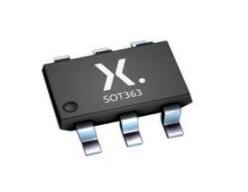 BCM857BS Transistor: SOT363 Package, BCM857BS Datasheet, Pinout
21 February 20223105
 STM32F722RET6: Overview, Features, and Applications
27 December 20233116
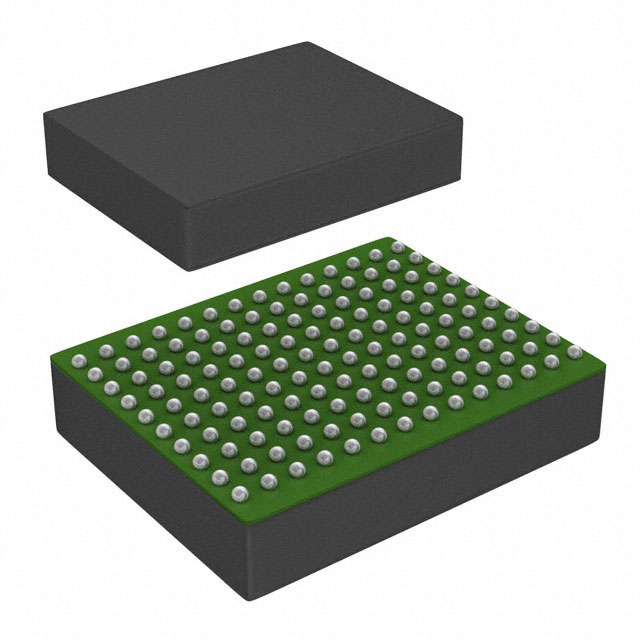 LTM9011IY-14#PBF Analog to Digital Converter: A Comprehensive Product Overview
06 March 2024215
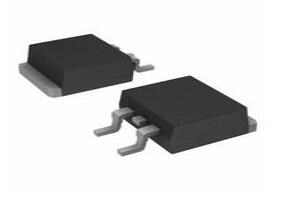 CL220 Regulator: Datasheet, Application, Circuit
06 September 2021516
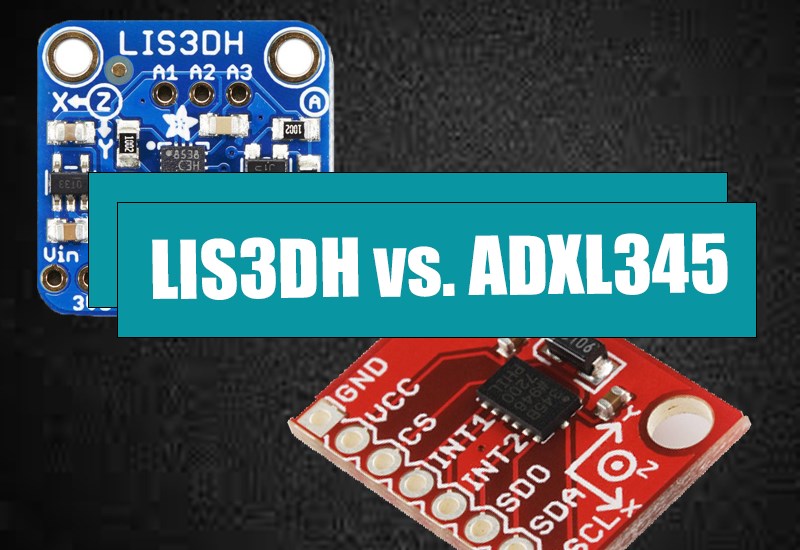 LIS3DH vs. ADXL345 Which one is better?
23 April 20226051
 MCP2200 Converter: Features, Pinout, and Datasheet
24 November 20212052
 Designing with ATmega328PB: Datasheet, Pinout, and IoT Node Guide
05 February 2026315
 What is a Knock Sensor?
08 January 202618160
 FPGAs in the Electric Cars: The Complete Guide to Powertrain, ADAS, and BMS
25 August 20251932
 How Do We Seize Investment Opportunities on the Eve of the Ultimate Human Energy Final?
12 July 2022923
 GaN-Based liquid-level UVsensors for Direct and Continuous Measurement
10 May 20232186
 What is an Operational Amplifier?
27 March 20253234
 How to Choose the Best Deep Cycle Battery in 2024 | Reviews and Buying Guide
21 July 20252435
 An Analysis of Current-Source Inverters Using High-Frequency WBG Switches
09 May 20233087
 What is a Hard Disk Drive (HDD)?
31 May 20214416
Linear Technology/Analog Devices
In Stock
United States
China
Canada
Japan
Russia
Germany
United Kingdom
Singapore
Italy
Hong Kong(China)
Taiwan(China)
France
Korea
Mexico
Netherlands
Malaysia
Austria
Spain
Switzerland
Poland
Thailand
Vietnam
India
United Arab Emirates
Afghanistan
Åland Islands
Albania
Algeria
American Samoa
Andorra
Angola
Anguilla
Antigua & Barbuda
Argentina
Armenia
Aruba
Australia
Azerbaijan
Bahamas
Bahrain
Bangladesh
Barbados
Belarus
Belgium
Belize
Benin
Bermuda
Bhutan
Bolivia
Bonaire, Sint Eustatius and Saba
Bosnia & Herzegovina
Botswana
Brazil
British Indian Ocean Territory
British Virgin Islands
Brunei
Bulgaria
Burkina Faso
Burundi
Cabo Verde
Cambodia
Cameroon
Cayman Islands
Central African Republic
Chad
Chile
Christmas Island
Cocos (Keeling) Islands
Colombia
Comoros
Congo
Congo (DRC)
Cook Islands
Costa Rica
Côte d’Ivoire
Croatia
Cuba
Curaçao
Cyprus
Czechia
Denmark
Djibouti
Dominica
Dominican Republic
Ecuador
Egypt
El Salvador
Equatorial Guinea
Eritrea
Estonia
Eswatini
Ethiopia
Falkland Islands
Faroe Islands
Fiji
Finland
French Guiana
French Polynesia
Gabon
Gambia
Georgia
Ghana
Gibraltar
Greece
Greenland
Grenada
Guadeloupe
Guam
Guatemala
Guernsey
Guinea
Guinea-Bissau
Guyana
Haiti
Honduras
Hungary
Iceland
Indonesia
Iran
Iraq
Ireland
Isle of Man
Israel
Jamaica
Jersey
Jordan
Kazakhstan
Kenya
Kiribati
Kosovo
Kuwait
Kyrgyzstan
Laos
Latvia
Lebanon
Lesotho
Liberia
Libya
Liechtenstein
Lithuania
Luxembourg
Macao(China)
Madagascar
Malawi
Maldives
Mali
Malta
Marshall Islands
Martinique
Mauritania
Mauritius
Mayotte
Micronesia
Moldova
Monaco
Mongolia
Montenegro
Montserrat
Morocco
Mozambique
Myanmar
Namibia
Nauru
Nepal
New Caledonia
New Zealand
Nicaragua
Niger
Nigeria
Niue
Norfolk Island
North Korea
North Macedonia
Northern Mariana Islands
Norway
Oman
Pakistan
Palau
Palestinian Authority
Panama
Papua New Guinea
Paraguay
Peru
Philippines
Pitcairn Islands
Portugal
Puerto Rico
Qatar
Réunion
Romania
Rwanda
Samoa
San Marino
São Tomé & Príncipe
Saudi Arabia
Senegal
Serbia
Seychelles
Sierra Leone
Sint Maarten
Slovakia
Slovenia
Solomon Islands
Somalia
South Africa
South Sudan
Sri Lanka
St Helena, Ascension, Tristan da Cunha
St. Barthélemy
St. Kitts & Nevis
St. Lucia
St. Martin
St. Pierre & Miquelon
St. Vincent & Grenadines
Sudan
Suriname
Svalbard & Jan Mayen
Sweden
Syria
Tajikistan
Tanzania
Timor-Leste
Togo
Tokelau
Tonga
Trinidad & Tobago
Tunisia
Turkey
Turkmenistan
Turks & Caicos Islands
Tuvalu
U.S. Outlying Islands
U.S. Virgin Islands
Uganda
Ukraine
Uruguay
Uzbekistan
Vanuatu
Vatican City
Venezuela
Wallis & Futuna
Yemen
Zambia
Zimbabwe