

 Product
 Brand
Brand Articles
 Tools
Tools
BTA16 Triacs: Features, Pinout, and Datasheet [Video&FAQ]


Thyristor TRIAC 700V 168A 3-Pin(3 Tab) TO-220AB Insulated Tube
Hope you are doing well today! The BTA16 Triac series is ideal for general use AC switching and is available in through-hole and surface-mount packaging. This article mainly introduces features, pinout, datasheet and other detailed information about STMicroelectronics BTA16.

Review of BTA16 600B 2000W AC Motor Speed Controller Dimmer - Robojax
BTA16 Description
The BTA16 Triac series is ideal for general use AC switching and is available in through-hole and surface-mount packaging. They can be employed as an ON/OFF function in applications like static relays, heating regulation, induction motor starting circuits, and so on, or for phase control in light dimmers and motor speed controllers.
Because of their great commutation performance, the snubbers versions are especially suited for use on inductive loads. The BTA series provides a voltage insulated tab (rated at 2500V RMS) that meets UL standards by using an internal ceramic pad.
BTA16 Pinout
The following figure is the Pinout of BTA16.

Pinout
BTA16 CAD Model
The following figures are the Footprint and 3D Model of BTA16.

Footprint
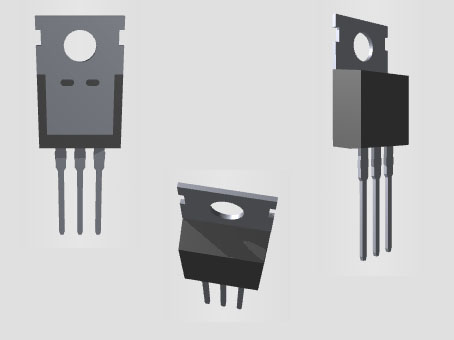
3D Model
BTA16 Features
• Medium Current Triac
• Low Thermal Resistance with Clip Bonding
• Low Thermal Resistance Insulation Ceramic for Insulated BTA
• High Commutation (4Q) or Very High Commutation (3Q, Snubberless™) Capability
• BTA Series UL1557 Certified (file ref: 81734)
• Packages are RoHS (2002/95/EC) Compliant
• Insulated Tab (BTA series, rated at 2500 VRMS)
Specifications
- TypeParameter
- Factory Lead Time11 Weeks
- Contact Plating
Contact plating (finish) provides corrosion protection for base metals and optimizes the mechanical and electrical properties of the contact interfaces.
Tin - Mount
In electronic components, the term "Mount" typically refers to the method or process of physically attaching or fixing a component onto a circuit board or other electronic device. This can involve soldering, adhesive bonding, or other techniques to secure the component in place. The mounting process is crucial for ensuring proper electrical connections and mechanical stability within the electronic system. Different components may have specific mounting requirements based on their size, shape, and function, and manufacturers provide guidelines for proper mounting procedures to ensure optimal performance and reliability of the electronic device.
Through Hole - Mounting Type
The "Mounting Type" in electronic components refers to the method used to attach or connect a component to a circuit board or other substrate, such as through-hole, surface-mount, or panel mount.
Through Hole - Package / Case
refers to the protective housing that encases an electronic component, providing mechanical support, electrical connections, and thermal management.
TO-220-3 - Number of Pins3
- Number of Elements1
- Operating Temperature
The operating temperature is the range of ambient temperature within which a power supply, or any other electrical equipment, operate in. This ranges from a minimum operating temperature, to a peak or maximum operating temperature, outside which, the power supply may fail.
-40°C~125°C TJ - Packaging
Semiconductor package is a carrier / shell used to contain and cover one or more semiconductor components or integrated circuits. The material of the shell can be metal, plastic, glass or ceramic.
Tube - JESD-609 Code
The "JESD-609 Code" in electronic components refers to a standardized marking code that indicates the lead-free solder composition and finish of electronic components for compliance with environmental regulations.
e3 - Pbfree Code
The "Pbfree Code" parameter in electronic components refers to the code or marking used to indicate that the component is lead-free. Lead (Pb) is a toxic substance that has been widely used in electronic components for many years, but due to environmental concerns, there has been a shift towards lead-free alternatives. The Pbfree Code helps manufacturers and users easily identify components that do not contain lead, ensuring compliance with regulations and promoting environmentally friendly practices. It is important to pay attention to the Pbfree Code when selecting electronic components to ensure they meet the necessary requirements for lead-free applications.
yes - Part Status
Parts can have many statuses as they progress through the configuration, analysis, review, and approval stages.
Active - Moisture Sensitivity Level (MSL)
Moisture Sensitivity Level (MSL) is a standardized rating that indicates the susceptibility of electronic components, particularly semiconductors, to moisture-induced damage during storage and the soldering process, defining the allowable exposure time to ambient conditions before they require special handling or baking to prevent failures
1 (Unlimited) - Number of Terminations3
- Additional Feature
Any Feature, including a modified Existing Feature, that is not an Existing Feature.
UL RECOGNIZED - Voltage - Rated DC
Voltage - Rated DC is a parameter that specifies the maximum direct current (DC) voltage that an electronic component can safely handle without being damaged. This rating is crucial for ensuring the proper functioning and longevity of the component in a circuit. Exceeding the rated DC voltage can lead to overheating, breakdown, or even permanent damage to the component. It is important to carefully consider this parameter when designing or selecting components for a circuit to prevent any potential issues related to voltage overload.
700V - Current Rating
Current rating is the maximum current that a fuse will carry for an indefinite period without too much deterioration of the fuse element.
16A - Base Part Number
The "Base Part Number" (BPN) in electronic components serves a similar purpose to the "Base Product Number." It refers to the primary identifier for a component that captures the essential characteristics shared by a group of similar components. The BPN provides a fundamental way to reference a family or series of components without specifying all the variations and specific details.
BTA16 - Pin Count
a count of all of the component leads (or pins)
3 - Configuration
The parameter "Configuration" in electronic components refers to the specific arrangement or setup of the components within a circuit or system. It encompasses how individual elements are interconnected and their physical layout. Configuration can affect the functionality, performance, and efficiency of the electronic system, and may influence factors such as signal flow, impedance, and power distribution. Understanding the configuration is essential for design, troubleshooting, and optimizing electronic devices.
Single - Case Connection
Case Connection refers to the method by which an electronic component's case or housing is connected to the electrical circuit. This connection is important for grounding purposes, mechanical stability, and heat dissipation. The case connection can vary depending on the type of component and its intended application. It is crucial to ensure a secure and reliable case connection to maintain the overall performance and safety of the electronic device.
ISOLATED - Max Repetitive Reverse Voltage (Vrrm)
The Max Repetitive Reverse Voltage (Vrrm) is a crucial parameter in electronic components, particularly in diodes and transistors. It refers to the maximum voltage that can be applied across the component in the reverse direction without causing damage. This parameter is important for ensuring the proper functioning and longevity of the component in circuits where reverse voltage may be present. Exceeding the Vrrm rating can lead to breakdown and failure of the component, so it is essential to carefully consider this specification when designing or selecting components for a circuit.
700V - JEDEC-95 Code
JEDEC-95 Code is a standardized identification system used by the Joint Electron Device Engineering Council to categorize and describe semiconductor devices. This code provides a unique alphanumeric identifier for various memory components, ensuring consistency in documentation and communication across the electronics industry. The format includes information about the type, capacity, and technology of the device, facilitating easier specification and understanding for manufacturers and engineers.
TO-220AB - RMS Current (Irms)
RMS Current (Irms) refers to the Root Mean Square value of the alternating current flowing through an electronic component or circuit. It is a measure of the effective current that produces the same heating effect as the equivalent DC current. In AC circuits, the current continuously changes direction, so using the RMS value helps in calculating power dissipation and determining the component's capability to handle the current without overheating. RMS Current is crucial in selecting components like resistors, capacitors, and inductors to ensure they can safely operate within their specified current ratings.
16A - Hold Current
the minimum current which must pass through a circuit in order for it to remain in the 'ON' state.
50mA - Trigger Device Type
Trigger Device Type is a parameter in electronic components that refers to the type of device or mechanism used to initiate a specific action or function within the component. This parameter specifies the specific trigger device, such as a sensor, switch, or signal input, that is required to activate or control the operation of the component. Understanding the trigger device type is crucial for proper integration and operation of the electronic component within a larger system or circuit. By specifying the appropriate trigger device type, engineers and designers can ensure that the component functions correctly and responds to the intended input signals or conditions.
4 QUADRANT LOGIC LEVEL TRIAC - Voltage - Gate Trigger (Vgt) (Max)
Voltage - Gate Trigger (Vgt) (Max) refers to the maximum voltage level required to trigger the gate of a semiconductor device, such as a thyristor or triac, into the conductive state. When the gate receives this voltage, it initiates the device's conduction, allowing current to flow between its anode and cathode. Exceeding this voltage can lead to unwanted behavior or damage to the component, making it a critical parameter in designing circuits that utilize these devices. Understanding Vgt is essential for ensuring proper operation and reliability in electronic applications.
1.3V - Current - Non Rep. Surge 50, 60Hz (Itsm)
The parameter "Current - Non Rep. Surge 50, 60Hz (Itsm)" in electronic components refers to the maximum non-repetitive surge current that a component can withstand without damage during a single surge event at frequencies of 50Hz or 60Hz. This parameter is important for assessing the robustness and reliability of the component in handling sudden spikes or surges in current that may occur in the electrical system. It helps in determining the level of protection needed for the component to ensure its longevity and proper functioning in various operating conditions. Manufacturers provide this specification to guide engineers and designers in selecting the appropriate components for their applications based on the expected surge current levels.
160A 168A - Current - Gate Trigger (Igt) (Max)
Current - Gate Trigger (Igt) (Max) refers to the maximum gate trigger current required to activate a semiconductor device, such as a thyristor or triac. It is the minimum current that must flow into the gate terminal to ensure that the device turns on and conducts current between its anode and cathode. Exceeding this value can lead to unnecessary power consumption, while insufficient current may prevent the device from turning on effectively. This parameter is crucial for circuit design, as it influences the selection of gate driving circuits.
50mA - Leakage Current (Max)
Leakage Current (Max) is a parameter that specifies the maximum amount of current that can flow through an electronic component when it is in an off state. It represents the amount of current that leaks through the component due to imperfections in its insulation or semiconductor materials. Excessive leakage current can lead to power loss, reduced efficiency, and potential reliability issues in electronic circuits. Manufacturers provide this specification to help designers ensure that the leakage current does not exceed acceptable limits for the intended application. It is typically measured in microamps (μA) or nanoamps (nA) and is an important consideration in low-power and high-precision electronic designs.
2mA - Critical Rate of Rise of Off-State Voltage-Min
The parameter "Critical Rate of Rise of Off-State Voltage-Min" in electronic components refers to the minimum rate at which the off-state voltage of a device must rise in order to trigger a critical event, such as a breakdown or failure. This parameter is crucial for ensuring the reliable operation of the component under various conditions. It helps determine the maximum allowable rate of voltage increase that the component can withstand without experiencing detrimental effects. Manufacturers specify this parameter to guide engineers and designers in selecting and using the component within its safe operating limits to prevent damage or malfunction. Understanding and adhering to this parameter is essential for maintaining the performance and longevity of electronic devices.
400V/us - Triac Type
Triac Type refers to the classification of triacs based on their electrical characteristics and applications. Triacs are semiconductor devices that can control current flow in both directions and are commonly used in AC power control. Different types of triacs may have variations in parameters such as voltage rating, current rating, triggering method, and switching speed, making them suitable for specific applications like light dimmers, motor speed controls, and heating regulation. Understanding the triac type is crucial for selecting the appropriate component for a given circuit design.
Standard - Critical Rate of Rise of Commutation Voltage-Min
The Critical Rate of Rise of Commutation Voltage-Min is a parameter in electronic components, particularly in thyristors and power electronics. It refers to the minimum speed at which the voltage across the device's terminals can rise during the turn-off process without causing unwanted turn-on events or false triggering. This parameter is crucial for ensuring the reliable operation of the component in high-frequency applications and helps prevent damage from voltage transients that exceed safe thresholds. In essence, it defines the limits for safe voltage rise times to maintain proper device performance.
10V/us - Radiation Hardening
Radiation hardening is the process of making electronic components and circuits resistant to damage or malfunction caused by high levels of ionizing radiation, especially for environments in outer space (especially beyond the low Earth orbit), around nuclear reactors and particle accelerators, or during nuclear accidents or nuclear warfare.
No - RoHS Status
RoHS means “Restriction of Certain Hazardous Substances” in the “Hazardous Substances Directive” in electrical and electronic equipment.
ROHS3 Compliant - Lead Free
Lead Free is a term used to describe electronic components that do not contain lead as part of their composition. Lead is a toxic material that can have harmful effects on human health and the environment, so the electronics industry has been moving towards lead-free components to reduce these risks. Lead-free components are typically made using alternative materials such as silver, copper, and tin. Manufacturers must comply with regulations such as the Restriction of Hazardous Substances (RoHS) directive to ensure that their products are lead-free and environmentally friendly.
Lead Free
BTA16 Ordering Information
The following figure is BTA16 Ordering Information.
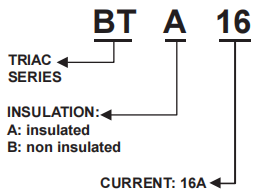
Ordering Information
BTA16 Triac Dimming Circuit Diagram
The working concept of the TRIAC dimmer circuit diagram is as follows: power, 220V bulb VR4 R19 through C23 charge. The two-terminal voltage capacitor is not modified as a result of this.

Triac Dimming Circuit Diagram
The smaller charge determines the charging time VR4 and the R19 size. When the voltage is about 33V, the bigger the charge on the C23 when it is turned on. The DB1 programmable silicon is also a conducting thyristor. After a current is passed through the bulb, the DB1 conducting voltage on C23 is totally released. The DB1 and thyristor bulbs will both be turned off. They were the same as at the start of the C23 cycle. Because the phenomenon of the human eye has a short persistence duration, it looks to have been light bulb brilliant, with a shorter charge and discharge time. The higher the wattage, the brighter the bulb, and vice versa. SCR is protected by R20 C24. If you're using a resistive load, you can skip this step.
BTA16 Alternatives
| Part Number | Description | Manufacturer |
| BTB16-700CTRIGGER DEVICES | 700V, 16A, 4 QUADRANT LOGIC LEVEL TRIAC, TO-220AB, PLASTIC PACKAGE-3 | STMicroelectronics |
| BTA16-700BTRIGGER DEVICES | 700V, 16A, 4 QUADRANT LOGIC LEVEL TRIAC, TO-220AB, PLASTIC, ISOLATED TO-220AB, 3 PIN | STMicroelectronics |
| BTB16-700CRGTRIGGER DEVICES | 700V, 16A, 4 QUADRANT LOGIC LEVEL TRIAC, TO-220AB, TO-220AB, 3 PIN | STMicroelectronics |
| Q7015R6TRIGGER DEVICES | Alternistor TRIAC, 700V V(DRM), 15A I(T)RMS, TO-220AB, | Littelfuse Inc |
| BTB16-700CWTRIGGER DEVICES | 700V, 16A, SNUBBERLESS TRIAC, TO-220AB, PLASTIC PACKAGE-3 | STMicroelectronics |
| BTB16-700SWRGTRIGGER DEVICES | 700V, 16A, 4 QUADRANT LOGIC LEVEL TRIAC, TO-220AB, TO-220AB, 3 PIN | STMicroelectronics |
| BTB16-700SWTRIGGER DEVICES | 700V, 16A, 4 QUADRANT LOGIC LEVEL TRIAC, TO-220AB, PLASTIC PACKAGE-3 | STMicroelectronics |
| BTB16-700BW/F5TRIGGER DEVICES | 700V, 16A, SNUBBERLESS TRIAC, TO-220AB, TO-220, 3 PIN | STMicroelectronics |
| Q7015L6TRIGGER DEVICES | Alternistor TRIAC, 700V V(DRM), 15A I(T)RMS, TO-220AB, ISOLATED TO-220AB, THERMOTAB-3 | Littelfuse Inc |
BTA16 Applications
• Because of their high commutation performances, snubberless versions (BTA/BTB...W and T1635) are especially suggested for use on inductive loads.
• Static relays, light dimmers, and appliance motor speed controllers all have on/off or phase angle functions.
• AC switching
• Through-hole
• Surface-mount packaging
• ON/OFF function in applications like static relays
• Heating regulation, induction motor starting circuits
• Phase control in light dimmers, motor speed controllers
• Motor Drive & Control
• Industrial
• Lighting
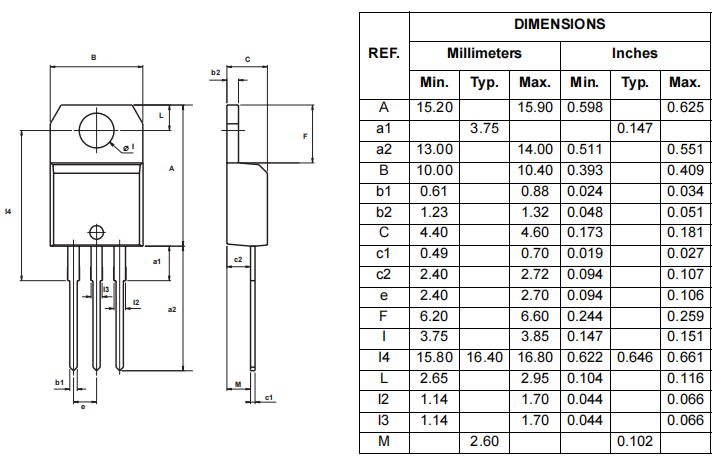
BTA16 Package
BTA16 Manufacturer
STMicroelectronics, headquartered in Plan-les-Ouates, Switzerland, near Geneva, is a multinational electronics and semiconductors firm. The company was created in 1987 by the merger of two government-owned semiconductor companies: "Thomson Semiconductors" in France and "SGS Microelettronica" in Italy. It is known as "ST" and is the most profitable semiconductor chip producer in Europe. While the corporate headquarters and EMEA regional offices of STMicroelectronics are in Geneva, the holding company, STMicroelectronics N.V., is based in the Netherlands.
The company's US headquarters are located in Coppell, Texas. The headquarters for the Asia-Pacific region is in Singapore, while Japan and Korea's activities are in Tokyo. The company's China regional headquarters are based in Shanghai.
Trend Analysis
Datasheet PDF
- Datasheets :
What is the difference between BTA16-800C and BTA16-800B?
1. The difference between BTA16-800C and BTA16-800B is that the trigger circuit IGT is different. The trigger circuit IGT of BTA16-800B is IGT<50mA, and the trigger circuit of BTA16-800C is IGT<25mA. The parameters of BTA16-800C are better.
2. BTA16-800C and BTA-800B are both STMicroelectronics (ST) products, and their naming methods are as follows:
(1) B is Bi-directional, which means bidirectional;
(2) T is Triode representing three terminals;
(3) A represents insulation, B represents non-insulation;
(4) 16 means the current is 16A;
(5) 800 means the voltage is 800V
(6) BDAIBAIO trigger circuit IGT<50mA, C stands for IGT<25mA.
Can SCR BTA16-600B be replaced by BTB16-600B?
BTA16-600B can have the same performance parameters as BTB16-600B, but the heat sink of BTA16-600B is not connected to the middle foot, and the heat sink of BTB16-600B is connected to the middle foot.
If the thyristor does not have a heat sink, replace it with OK. If there is a heat sink and the fixed contacts of the heat sink are electrically connected, check whether the connection logic is correct or if there is a heat sink and there are multiple thyristors on the heat sink, the above The situation cannot be directly replaced unless insulating particles and mica flakes are used to solve the insulation problem.
Can the triac BTA16 replace the BTB16 when used on the control panel of a fully automatic washing machine?
Can be interchanged, but according to the original circuit to take specific insulation measures, A is insulated, B is not insulated.
The BTA16 Triac series is available in what packaging?
Through-hole and surface-mount packaging.
What versions of the BTA16 Triac series are particularly suited for use on inductive loads?
Snubbers.
What is the voltage insulated tab in the BTA series?
2500V RMS.
 Quadruple Half-H Driver - L293DNE:Datasheet, Pinout, Circuit and Specification
12 April 20226897
 What is TIP120?
22 November 20215612
 ATMEGA32U4 Microcontroller: Pinout, Datasheet and Equivalents
09 July 202114783
 STM32F072C8T6 Microcontroller: 48MHz, 48-LQFP, Pinout and Datasheet
21 January 20226513
 ATmega48PB/88PB/168PB Microcontroller: Technical Insights
29 February 2024356
 SE200 Gas Discharge Tube: Datasheet, Application, Advantage
31 July 20211170
 2SD2499 NPN Transistor: 1500V, TO-3PF, 2SD2499 Equivalents and Pinout
08 January 20222408
 LPC1768 32-Bit Microcontroller: Datasheet, Pinout and Tutorial
25 September 20218437
 Sourcing Silicon Capacitors and MLCCs in the AI Hardware Era
13 August 2026731
 What is eFPGA?
06 January 20223372
 What are Avalanche Diodes?
02 April 202014318
 Low Temperature Drift Resistors Increase the Accuracy of Analog Circuits
11 February 20251815
 What is a Ceramic Filter?
10 April 20214877
 Basic Introduction to Memristor
12 January 202112953
 NOR Flash: Working, Structure and Applications
18 November 202115557
 What JEDEC JEP203 and JEP204 Actually Change for SiC Qualification Engineers and Component Buyers
29 July 2026590
STMicroelectronics
In Stock: 200
United States
China
Canada
Japan
Russia
Germany
United Kingdom
Singapore
Italy
Hong Kong(China)
Taiwan(China)
France
Korea
Mexico
Netherlands
Malaysia
Austria
Spain
Switzerland
Poland
Thailand
Vietnam
India
United Arab Emirates
Afghanistan
Åland Islands
Albania
Algeria
American Samoa
Andorra
Angola
Anguilla
Antigua & Barbuda
Argentina
Armenia
Aruba
Australia
Azerbaijan
Bahamas
Bahrain
Bangladesh
Barbados
Belarus
Belgium
Belize
Benin
Bermuda
Bhutan
Bolivia
Bonaire, Sint Eustatius and Saba
Bosnia & Herzegovina
Botswana
Brazil
British Indian Ocean Territory
British Virgin Islands
Brunei
Bulgaria
Burkina Faso
Burundi
Cabo Verde
Cambodia
Cameroon
Cayman Islands
Central African Republic
Chad
Chile
Christmas Island
Cocos (Keeling) Islands
Colombia
Comoros
Congo
Congo (DRC)
Cook Islands
Costa Rica
Côte d’Ivoire
Croatia
Cuba
Curaçao
Cyprus
Czechia
Denmark
Djibouti
Dominica
Dominican Republic
Ecuador
Egypt
El Salvador
Equatorial Guinea
Eritrea
Estonia
Eswatini
Ethiopia
Falkland Islands
Faroe Islands
Fiji
Finland
French Guiana
French Polynesia
Gabon
Gambia
Georgia
Ghana
Gibraltar
Greece
Greenland
Grenada
Guadeloupe
Guam
Guatemala
Guernsey
Guinea
Guinea-Bissau
Guyana
Haiti
Honduras
Hungary
Iceland
Indonesia
Iran
Iraq
Ireland
Isle of Man
Israel
Jamaica
Jersey
Jordan
Kazakhstan
Kenya
Kiribati
Kosovo
Kuwait
Kyrgyzstan
Laos
Latvia
Lebanon
Lesotho
Liberia
Libya
Liechtenstein
Lithuania
Luxembourg
Macao(China)
Madagascar
Malawi
Maldives
Mali
Malta
Marshall Islands
Martinique
Mauritania
Mauritius
Mayotte
Micronesia
Moldova
Monaco
Mongolia
Montenegro
Montserrat
Morocco
Mozambique
Myanmar
Namibia
Nauru
Nepal
New Caledonia
New Zealand
Nicaragua
Niger
Nigeria
Niue
Norfolk Island
North Korea
North Macedonia
Northern Mariana Islands
Norway
Oman
Pakistan
Palau
Palestinian Authority
Panama
Papua New Guinea
Paraguay
Peru
Philippines
Pitcairn Islands
Portugal
Puerto Rico
Qatar
Réunion
Romania
Rwanda
Samoa
San Marino
São Tomé & Príncipe
Saudi Arabia
Senegal
Serbia
Seychelles
Sierra Leone
Sint Maarten
Slovakia
Slovenia
Solomon Islands
Somalia
South Africa
South Sudan
Sri Lanka
St Helena, Ascension, Tristan da Cunha
St. Barthélemy
St. Kitts & Nevis
St. Lucia
St. Martin
St. Pierre & Miquelon
St. Vincent & Grenadines
Sudan
Suriname
Svalbard & Jan Mayen
Sweden
Syria
Tajikistan
Tanzania
Timor-Leste
Togo
Tokelau
Tonga
Trinidad & Tobago
Tunisia
Turkey
Turkmenistan
Turks & Caicos Islands
Tuvalu
U.S. Outlying Islands
U.S. Virgin Islands
Uganda
Ukraine
Uruguay
Uzbekistan
Vanuatu
Vatican City
Venezuela
Wallis & Futuna
Yemen
Zambia
Zimbabwe
![BTA16-600BRG]() BTA16-600BRG
BTA16-600BRGSTMicroelectronics
![BTA16-600BWRG]() BTA16-600BWRG
BTA16-600BWRGSTMicroelectronics
![BTA12-600BRG]() BTA12-600BRG
BTA12-600BRGSTMicroelectronics
![BTA24-600CWRG]() BTA24-600CWRG
BTA24-600CWRGSTMicroelectronics
![BTA12-600BWRG]() BTA12-600BWRG
BTA12-600BWRGSTMicroelectronics
![T835-600G-TR]() T835-600G-TR
T835-600G-TRSTMicroelectronics
![T1635T-8FP]() T1635T-8FP
T1635T-8FPSTMicroelectronics
![BTA06-600SWRG]() BTA06-600SWRG
BTA06-600SWRGSTMicroelectronics
![BTA16-600SWRG]() BTA16-600SWRG
BTA16-600SWRGSTMicroelectronics
![T835T-8FP]() T835T-8FP
T835T-8FPSTMicroelectronics


